 Talmud Bavli
Berakhot 47a : Youtube
Daf TubeYoutube
2 video classes :
Berakhot Page 47a
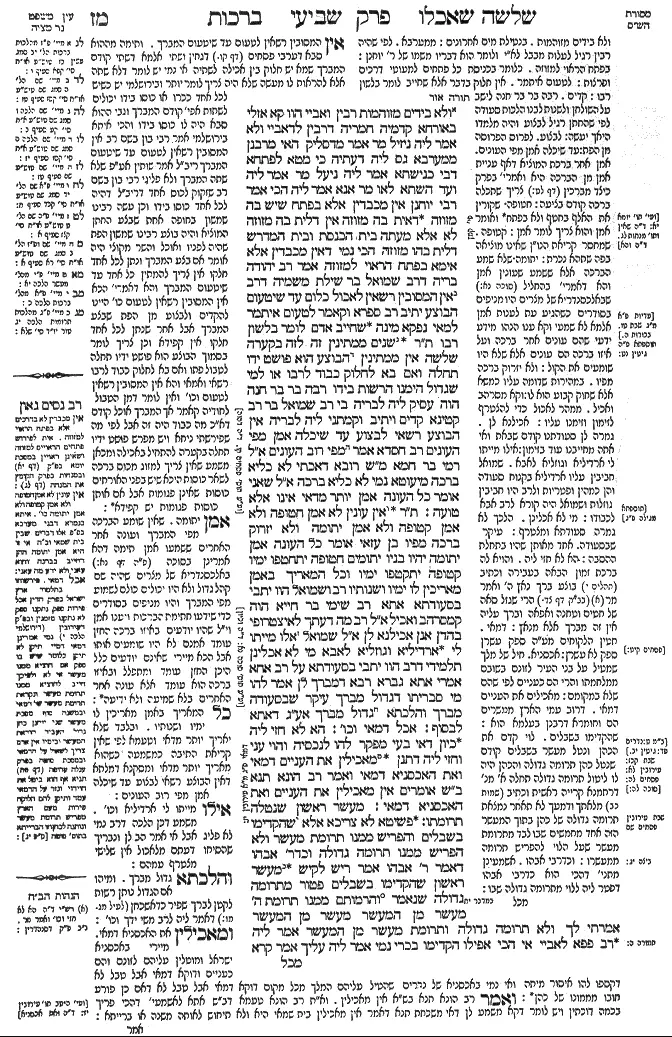
Berakhot 47a - Guemara
ולא בידים מזוהמות רבין ואביי הוו קא אזלי באורחא קדמיה חמריה דרבין לדאביי ולא אמר ליה ניזיל מר אמר מדסליק האי מרבנן ממערבא גס ליה דעתיה כי מטא לפתחא דבי כנישתא אמר ליה ניעל מר אמר ליה ועד השתא לאו מר אנא אמר ליה הכי אמר רבי יוחנן אין מכבדין אלא בפתח שיש בה מזוזה דאית בה מזוזה אין דלית בה מזוזה לא אלא מעתה בית הכנסת ובית המדרש דלית בהו מזוזה הכי נמי דאין מכבדין אלא אימא בפתח הראוי למזוזה אמר רב יהודה בריה דרב שמואל בר שילת משמיה דרב אין המסובין רשאין לאכול כלום עד שיטעום הבוצע יתיב רב ספרא וקאמר לטעום איתמר למאי נפקא מינה שחייב אדם לומר בלשון רבו תר שנים ממתינין זה לזה בקערה שלשה אין ממתינין הבוצע הוא פושט ידו תחלה ואם בא לחלוק כבוד לרבו או למי שגדול הימנו הרשות בידו רבה בר בר חנה הוה עסיק ליה לבריה בי רב שמואל בר רב קטינא קדים ויתיב וקמתני ליה לבריה אין הבוצע רשאי לבצוע עד שיכלה אמן מפי העונים רב חסדא אמר מפי רוב העונים אל רמי בר חמא מש רובא דאכתי לא כליא ברכה מיעוטא נמי לא כליא ברכה אל שאני אומר כל העונה אמן יותר מדאי אינו אלא טועה:
תר אין עונין לא אמן חטופה ולא אמן קטופה ולא אמן יתומה ולא יזרוק ברכה מפיו בן עזאי אומר כל העונה אמן יתומה יהיו בניו יתומים חטופה יתחטפו ימיו קטופה יתקטפו ימיו וכל המאריך באמן מאריכין לו ימיו ושנותיו רב ושמואל הוו יתבי בסעודתא אתא רב שימי בר חייא הוה קמסרהב ואכיל אל רב מה דעתך לאיצטרופי בהדן אנן אכילנא לן אל שמואל אלו מייתו לי ארדיליא וגוזליא לאבא מי לא אכלינן תלמידי דרב הוו יתבי בסעודתא על רב אחא אמרי אתא גברא רבא דמברך לן אמר להו מי סבריתו דגדול מברך עיקר שבסעודה מברך והלכתא גדול מברך אעג דאתא לבסוף:
אכל דמאי וכו':
הא לא חזי ליה כיון דאי בעי מפקר להו לנכסיה והוי עני וחזי ליה דתנן מאכילין את העניים דמאי ואת האכסניא דמאי ואמר רב הונא תנא בש אומרים אין מאכילין את העניים ואת האכסניא דמאי:
מעשר ראשון שנטלה תרומתו:
פשיטא לא צריכא אלא שהקדימו בשבלים והפריש ממנו תרומת מעשר ולא הפריש ממנו תרומה גדולה וכדר' אבהו דאמר ר' אבהו אמר ריש לקיש מעשר ראשון שהקדימו בשבלים פטור מתרומה גדולה שנאמר (במדבר יח כו) והרמותם ממנו תרומת ה' מעשר מן המעשר מעשר מן המעשר אמרתי לך ולא תרומה גדולה ותרומת מעשר מן המעשר אמר ליה רב פפא לאביי אי הכי אפילו הקדימו בכרי נמי אמר ליה עליך אמר קרא
Comments from Rashi on Masechet Berakhot Page 47a
ולא בידים מזוהמות . בנטילת מים אחרונים: ממערבא . לפי שהיה רבין רגיל לעלות מבבל לא"י ולומר הוא דבריו משמו של ר' יוחנן: בפתח הראוי למזוזה . כלומר בכניסת כל פתחים למעוטי דרכים ופרצות: לטעום איתמר . אין חלוק בדבר אלא שחייב לומר בלשון רבו: קדים . רבה בר בר חנה לישב על השולחן ולשנות לבנו הלכות סעודה לפי שהחתן רגיל לבצוע והיה מלמדו היאך יעשה: לבצוע . לפרוס הפרוסה מן הפת: עד שיכלה אמן מפי העונים . אמן אחר ברכת המוציא דאף עניית אמן מן הברכה היא ואמרי' בפרק כיצד מברכין (דף לט:) צריך שתכלה ברכה קודם בציעה: חטופה . שקורין את האלף בחטף ולא בפתח ואומר אמן והוא צריך לומר אמן: קטופה . שמחסר קריאת הנו"ן שאינו מוציאה בפה שתהא נכרת: יתומה . שלא שמע הברכה אלא ששמע שעונין אמן והא דאמרינן בהחליל (סוכה נא:) שבאלכסנדריא של מצרים היו מניפים בסודרים כשהגיע עת לענות אמן אלמא לא שמעי וקא ענו הנהו מידע ידעי שהם עונים אחר ברכה ועל איזו ברכה הם עונים אלא שלא היו שומעים את הקול: ולא יזרוק ברכה מפיו . במהירות שדומה עליו כמשא אלא שחוק קבוע הוא לו: וקא מסרהב ואכיל . ממהר לאכול כדי להצטרף לזימון וזימנו עליו: אכילנא לן . גמרה לן סעודתנו קודם שבאת ואי אתה מחייבנו עוד בזימון: אילו מייתו לי ארדיליא וגוזליא לאבא . שמואל חביבין עליו ארדיליא בקנוח סעודה והן כמהין ופטריות ולרב היו חביבין גוזלות ושמואל היה קורא לרב אבא לכבודו: מי לא אכלינן . הלכך לא גמרה סעודתא ומצטרף: עיקר שבסעודה . אחד מאותן שהיו בתחלת ההסבה: דמאי . חטין הלקוחים מע"ה ספק עשרן ספק לא עשרן: הא לא חזי ליה . והויא לה ברכת זמון הבאה בעבירה וכתיב (תהלים י) בוצע ברך נאץ ה' ואמר מר (בב"ק דף צד.) הרי שגזל סאה של חטים וטחנה ואפאה וברך עליה אין זה מברך אלא מנאץ: מאכילים את העניים דמאי . דרוב עמי הארץ מעשרים הם וחומרא דרבנן בעלמא הוא: אכסניא . חיל של מלך שמטיל על בני העיר לזונם בשובם ממלחמתו והרי הם כעניים לפי שהם שלא במקומם: שהקדימו בשבלים . לוי קדם את הכהן ונטל מעשר בשבלים קודם שנטל כהן תרומה גדולה והכהן היה לו ליטול תרומה גדולה תחלה א' מנ' דרחמנא קרייה ראשית וכתיב (שמות כב) מלאתך ודמעך לא תאחר נמצאת תרומה גדולה של כהן בתוך המעשר הזה אחד מחמשים שבו לבד מתרומת מעשר שעל הלוי להפריש תרומה ממעשרו: וכדרבי אבהו . אשמעינן מתניתין דהכי הוא כדרבי אבהו דפטר ליה ללוי מתרומה גדולה שבו:
Comments from Tosafot - Berakhot 47a
אין המסובין רשאין לטעום עד שיטעום המברך . ותימה מההוא סבא דערבי פסחים (דף קו.) דגחין ושתי אלמא דשתי קודם המברך שמא יש חלוק בין אכילה לשתיה אי נמי יש לומר דלא שתה אלא להראות לו מעשה שלא היה צריך לומר יותר ובירושלמי יש כשיש לכל אחד ככרו או כוסו בידו יכולים לשתות אפי' קודם המברך וגבי ההוא סבא היה לו כוסו בידו והכי איתא בירושלמי אמר רבי בון בשם רב אין המסובין רשאין לטעום עד שיטעום המברך ריב"ל אמר שותין אע"פ שלא שתה המברך ולא פליגי רבי בון בשם רב שזקוק לכוס אחד דריב"ל דהיה לכל אחד כוסו בידו וכן עשה רבינו שמשון בחופה אחת שבצע החתן המוציא והיה בוצע רבינו שמשון הפת שהיה לפניו ואוכל והשר מקוצי היה אומר אם בצע המברך ונתן לכל אחד חלקו אין צריך להמתין כל אחד עד שיטעום המברך והא דאמרי' הכא אין המסובין רשאין לטעום כו' היינו להקדים ולבצוע מן הפת שבצע המברך אבל אחר שנתן לכל אחד חלקו אין קפידא וכן צריך לומר בסמוך הבוצע הוא פושט ידיו תחלה לטבול פתו ואם בא לחלוק כבוד לרבו רשאי ואמאי והא אין המסובין רשאין לטעום וכו' ואין לומר דמן הטבול לחודיה קאמר אך המברך אוכל קודם דא"כ מה כבוד היה זה אבל לפי מה שפירשתי ניחא ויש מפרש פושט ידיו תחלה בקערה להתחיל באכילה ומכאן משמע שאין צריך למזוג מכוס ברכה לשאר כוסות היכא שיש בפני האורחים כוסות שאינן פגומות אבל אם אותן כוסות פגומות יש קפידא: אמן יתומה . שאין שומע הברכה מפי המברך ועונה אחר האחרים ששמעו אמן תימה דהא אמרינן בסוכה (פ"ה דף נא:) באלכסנדריא של מצרים שהיה שם קהל גדול ולא היו יכולים כולם לשמוע מפי המברך והיו מניפים בסודרים כדי שידעו חתימת הברכות ויענו אמן וי"ל שהיו יודעים באיזו ברכה החזן עומד אמנם לא היו שומעים אותו אבל הכא מיירי שאינם יודעים כלל היכן החזן עומד ומתפלל ובאיזו ברכה הוא עומד אלא עונה אחר האחרים בלא שמיעה ולא ידיעה: כל המאריך באמן מאריכין לו ימיו ושנותיו . ובלבד שלא יאריך יותר מדאי וטעמא לפי שאין קריאת התיבה כמשמעה כשהוא מאריך יותר מדאי ומסקנא דמלתא דאין הבוצע רשאי לבצוע עד שיכלה אמן מפי רוב העונים: אילו מייתו לי ארדיליא וכו' . משמע דכן הלכה דרב נמי לא פליג אבל אי אמר הב לן ונבריך שהסיחו דעתם מלאכול אין שלישי מצטרף עמהם: והלכתא גדול מברך . ומיהו אם הגדול נותן רשות לקטן לברך שפיר כדאשכחן (לעיל ברכות מג. מו:) דאמר ליה לרב משי ידך וכו': ומאכילין את האכסניא דמאי . מיירי באכסניא ישראל ומוטלין עליהם לזונם והם כעניים ודוקא דמאי אבל טבל לא דקספו להו איסור מיתה ואי נמי באכסניא של נכרים שהטיל עליהם המלך מכל מקום דוקא דמאי אבל טבל לא דאם כן פורע חובו מממונו של כהן: ואמר רב הונא תנא בש"א אין מאכילין . וא"ת רב הונא טעמא דב"ש אתא לאשמעי' דהכי פריך בכמה דוכתין ויש לומר דקא משמע לן דאי משכחת תנא דאמר אין מאכילין בית שמאי היא ולא תיחוש לאותה משנה או ברייתא:
Berakhot 47a - Mishnah translated into english
nor with regard to dirty hands, i.e., with regard to washing hands at the end of a meal.
The Gemara recounts: Ravin and Abaye were traveling along the road on donkeys. Ravin’s donkey preceded Abaye’s and Ravin did not say to Abaye: Let the Master go first. Abaye said to himself: Ever since this one of the Sages, Ravin, ascended from the West, Eretz Yisrael, he has become arrogant. When they reached the door of the synagogue, Ravin said to Abaye: Let the Master enter first. Abaye said to him: Until now was I not Master? Why do you only begin deferring to me now but did not do so while we were traveling? Ravin said to him: Rabbi Yoḥanan said the following: One only defers to those greater than he at a doorway that has a mezuza, as only there is it appropriate to allow him to go first.
The Gemara challenges: A doorway that has a mezuza, yes, one defers; a doorway that does not have a mezuza, no, one does not defer? If so, a synagogue or study hall that has no mezuza, there too, does one not defer at their doorways? Rather, say that this is the principle: One only shows deference at a doorway where it is worthy of affixing a mezuza, but not on a road or a bridge.
The Gemara continues with the subject of deferring to one’s superior during a meal: Rav Yehuda, son of Rav Shmuel bar Sheilat, said in the name of Rav: Those reclining at a meal may not eat anything until the one breaking bread has tasted the bread. Rav Safra sat and said: May not taste, was stated by Rav, and not: May not eat.
The Gemara asks: What difference does it make whether Rav said taste or eat? The Gemara explains that there is no difference and that Rav Safra’s insistence teaches that one must say what he was taught in the precise language employed by his teacher without altering a single detail.
The Gemara continues to discuss the subject of honors during a meal. The Sages taught: Two people who are eating from a single dish must wait for each other, but if there are three, everyone eats when he wishes and they need not wait for each other. Generally, the one who breaks bread extends his hand to take food first, but if he wishes to defer to his teacher or to one who is greater than he, he has permission to do so.
The Gemara relates: Rabba bar bar Ḥana engaged in preparations for his son’s wedding in the house of Rav Shmuel bar Rav Ketina. He arrived early and sat and taught his son the halakhot of meals: The one who breaks bread may not break the bread until amen has ended from the mouths of those responding. Rav Ḥisda said: One need only wait until amen has ended from the mouths of the majority of those responding.
Rami bar Ḥama said to him: What is different regarding the majority that one must wait until their amen ends before proceeding? That until then, the blessing has not yet concluded. If so, when the amen of the minority has not yet ended as well, the blessing has not yet concluded. Why doesn’t the one breaking bread need to wait in that case?
Rav Ḥisda said to him: Because I say that anyone who answers an amen of excessive duration is merely mistaken.
With regard to answering amen, the Sages taught: One should not respond with an abbreviated [ḥatufa] amen, in which the first syllable is not properly enunciated, and a truncated [ketufa] amen, in which the second syllable is not properly enunciated, and an orphaned [yetoma] amen, in which the respondent is unaware of the blessing to which he is responding. Similarly, one should not quickly and indifferently discharge a blessing from his mouth.
Ben Azzai says: Anyone who recites an orphaned amen, his children will be orphaned; one who recites an abbreviated amen, his days will be abbreviated and incomplete; one who recites a truncated amen, his days will be truncated. One who extends his amen, they will extend his days and years for him. Nonetheless, one should not prolong it extensively.
Returning to matters of zimmun, the Gemara relates: Rav and Shmuel were sitting at a meal when, much later, Rav Shimi bar Ḥiyya arrived and was hurrying and eating. Rav said to him: What is your thinking? Are you rushing in order to join together with us for a zimmun? We have already eaten and finished our meal before you arrived. Shmuel said to Rav: We have not really finished our meal, as if they brought me truffles or a young pigeon for Abba, Rav, wouldn’t we eat it? Since we would still eat, we have not yet finished our meal and Rabbi Shimi bar Ḥiyya can join us in the zimmun.
Rav’s students were seated at a meal when Rav Aḥa entered. The students said: A great man has come who can recite the blessing on our behalf. Rav Aḥa said to them: Do you think that the greatest recites the blessing? That is not so. Rather, one of the main participants who was present from the beginning of the meal recites the blessing. The Gemara concludes: The halakha, however, is that the greatest person present recites the blessing, even if he arrived at the end of the meal.
In the mishna, we learned that if, among the diners, one ate doubtfully tithed produce [demai], he is included among the three to obligate those with whom he ate in a zimmun. The Gemara raises an objection: But demai is not fit for his consumption. He is forbidden to eat demai. The Gemara responds: He may recite Grace after Meals over it because, if he wants, he could declare all of his property ownerless [hefker] and he would be a pauper, in which case the demai would be fit for his consumption. As we learned in a mishna: One may feed the impoverished demai and one may feed soldiers [akhsania], whose support is imposed upon the residents of the city, demai. And Rav Huna said: It was taught in a baraita that Beit Shammai say: One may not feed the impoverished and soldiers demai.
We learned in the mishna: If, among the diners, one ate first tithe from which its teruma was already taken, he may be included in a zimmun. The Gemara remarks: It is obvious that if the teruma was already taken there is no problem. Why was it necessary for the mishna to teach that one can join a zimmun? The Gemara explains: It was only necessary to teach this halakha in a case where the Levite preceded the priest while the grain was still on the stalks, and he separated the teruma of the tithes but did not separate the teruma gedola. Teruma gedola was not separated from the tithe that was eaten by the Levite. Although this should not be done ab initio, after the fact it is permitted, and one who eats first tithe produce under these circumstances may be included in a zimmun. And this is in accordance with the opinion of Rabbi Abbahu, as Rabbi Abbahu said that Reish Lakish said: First tithe in which the Levite preceded the priest while the grain was still on the stalks is exempt from teruma gedola, as it is stated: “And you shall set apart from it a gift for the Lord, even a tenth part of the tithe” (Numbers 18:26). This verse teaches that the Levite is obligated to set apart a tenth part of the tithe, i.e., the teruma of the tithe and not teruma gedola and the teruma of the tithe.
Rav Pappa said to Abaye: If so, even if the Levite preceded the priest after the kernels of grain were removed from the stalks and placed in a pile, the Levite should not have to separate teruma gedola. Abaye said to him: With regard to your claim, the verse stated:
Traduction : The William Davidson digital edition of the Koren Noé Talmud, with commentary by Rabbi Adin Even-Israel Steinsaltz.