 Talmud Bavli
Menachot 82b : Youtube
Daf TubeYoutube
2 video classes :
Menachot Page 82b
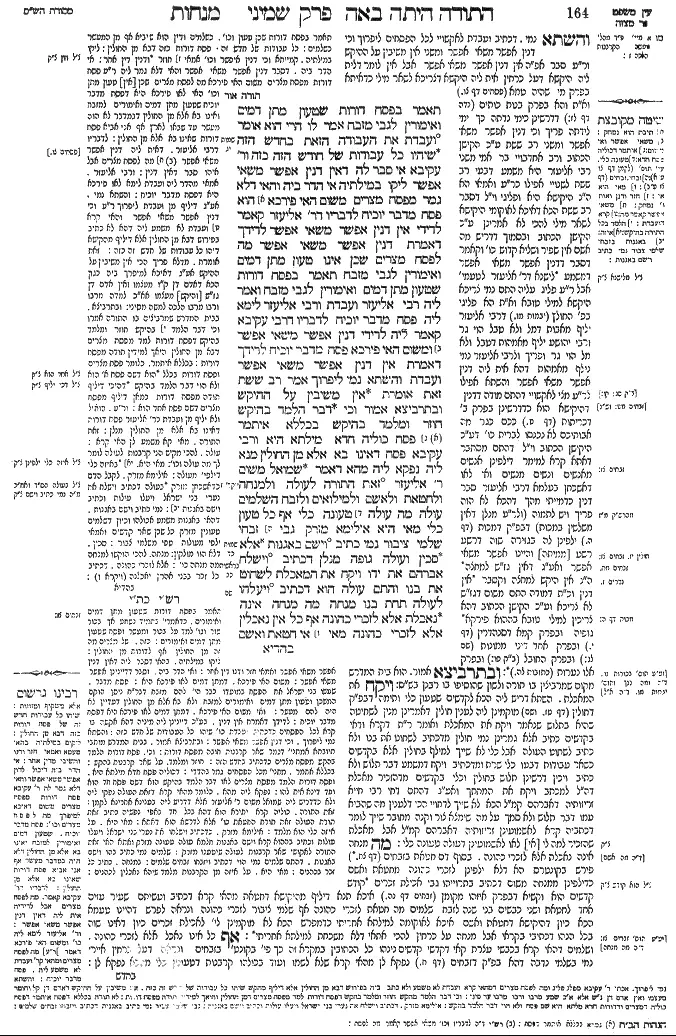
Menachot 82b - Guemara
תאמר בפסח דורות שטעון מתן דמים ואימורין לגבי מזבח אמר לו הרי הוא אומר (שמות יג, ה) ועבדת את העבודה הזאת בחדש הזה שיהיו כל עבודות של חודש הזה כזה ור' עקיבא אי סבר לה דאין דנין אפשר משאי אפשר ליקו במילתיה אי הדר ביה והאי דלא גמר מפסח מצרים משום האי פירכא הוא פסח מדבר יוכיח לדבריו דר' אליעזר קאמר לדידי אין דנין אפשר משאי אפשר לדידך דאמרת דנין אפשר משאי אפשר מה לפסח מצרים שכן אינו טעון מתן דמים ואימורין לגבי מזבח תאמר בפסח דורות שטעון מתן דמים ואימורין לגבי מזבח ואמר ליה רבי אליעזר ועבדת ורבי אליעזר לימא ליה פסח מדבר יוכיח לדבריו דרבי עקיבא קאמר ליה לדידי דנין אפשר משאי אפשר ומשום האי פירכא פסח מדבר יוכיח לדידך דאמרת אין דנין אפשר משאי אפשר ועבדת והשתא נמי ליפרוך אמר רב ששת זאת אומרת אין משיבין על ההיקש ובתרביצא אמור וכי דבר הלמד בהיקש חוזר ומלמד בהיקש בכללא איתמר פסח כוליה חדא מילתא היא ורבי עקיבא פסח דאינו בא אלא מן החולין מנא ליה נפקא ליה מהא דאמר שמואל משום ר' אליעזר (ויקרא ז, לז) זאת התורה לעולה ולמנחה ולחטאת ולאשם ולמילואים ולזבח השלמים עולה מה עולה טעונה כלי אף כל טעון כלי מאי היא אילימא מזרק גבי זבחי שלמי ציבור נמי כתיב (שמות כד, ו) וישם באגנות אלא סכין ועולה גופה מנלן דכתיב (בראשית כב, י) וישלח אברהם את ידו ויקח את המאכלת לשחוט את בנו והתם עולה הוא דכתיב (בראשית כב, יג) ויעלהו לעולה תחת בנו מנחה מה מנחה אינה נאכלת אלא לזכרי כהונה אף כל אין נאכלין אלא לזכרי כהונה מאי אי חטאת ואשם
Comments from Rashi on Masechet Menachot Page 82b
תאמר בפסח דורות שכן טעון וכו' . כשלמים ודין הוא שיביא אף מן המעשר כשלמים: כל עבודות של חדש זה . פסח דורות כזה דבא מן החולין: ליקו במילתיה . קמייתא וכי דנין איפשר וכו' אמאי חוזר ודנין דין אחר: אי הדר ביה . דסבר דנין אפשר משאי אפשר והאי דלא גמר ליה ר"ע פסח דורות מפסח מצרים משום האי פירכא מה לפסח מצרים שכן [אין] טעון מתן וכו' האי לאו פירכא היא דפסח מדבר יוכיח שטעון מתן דמים ואימורים למזבח ואינו בא אלא מן החולין דבמדבר לא הוה מעשר עד שבאו לארץ אף אני אביא פסח דורות שאינו בא אלא מן החולין: לדבריו דרבי אליעזר . דאית ליה דנין אפשר משאי אפשר מה לפסח מצרים אבל איהו סבר דאין דנין: ורבי אליעזר . אמאי מהדר ליה ועבדת לימא לאו פירכא היא דפסח מדבר יוכיח: והשתא נמי . אע"ג דיליף מן ועבדת ליפרוך ר"ע וכי דנין אפשר משאי אפשר והאי קרא ועבדת לא משמע ליה דהא לא כתיב בפירוש דבא מן החולין אלא דיליף מהקישא דיהו כל עבודות של חדש זה כזה: זאת אומרת . מדלא פריך הכי אין משיבין על ההיקש אע"ג דאיכא למיפרך ביה כגון הכא דאדם דן ק"ו מעצמו ואין אדם דן גז"ש [והיקש] מעצמו אא"כ למדה מרבו ורבו מרבו הלכה למשה מסיני: ובתרביצא . בבית המדרש שמרביצים בו התורה אמרו וכי דבר הלמד בהיקש חוזר ומלמד בהיקש דפסח דורות למד מפסח מצרים דבא מן החולין היאך למידין תודה מפסח דורות: בכללא איתמר . כלומר פסח מצרים ופסח דורות בכלל הוא דשם פסח א' הוא ולא הוי דבר הלמד בהיקש דהיכי דיליף תודה מפסח דורות כמאן דיליף מפסח מצרים דשם פסח אחד הוא: ור"ע . הואיל ולא יליף מן ועבדת כר' אליעזר פסח דורות דאינו בא אלא מן החולין מנלן: זאת התורה . מאי קא משמע לן האי קרא: עולה . להכי מקיש הני קרבנות לעולה לומר לך מה עולה וכו': מאי היא . באיזה כלי דילפי' מעולה: אילימא מזרק . לקבל הדם כדאשכחן מזרק בעולה דכתיב וישלח את נערי בני ישראל ויעלו עולות וכתיב וישם באגנות: נמי כתיב וישם באגנות . דהאי באגנות משמע אכולהו כיון דשלמים טעונין מזרק כל שכן שאר קדשים ואמאי ילפי מעולות טפי משלמי צבור: סכין . דלא הוו מולקין: מנחה . להכי הוקשו למנחה מה מנחה כו': אלא לזכרי כהונה . דכתיב כל זכר בבני אהרן יאכלנה (ויקרא ו):
Comments from Tosafot - Menachot 82b
והשתא נמי. דכתיב ועבדת לאקשויי לכל הפסחים ליפרוך וכי דנין אפשר משאי אפשר ומשני אין משיבין על ההיקש ור"ע סבר אפ"ה אין דנין אפשר משאי אפשר אבל אין לומר דלית ליה היקשא דעל כרחין אית ליה היקשא דצריכא לשאר מילי כדאיתא בפרק מי שהיה טמא (פסחים דף צו.) וא"ת והא בפרק בנות כותים (נדה דף לז:) דדרשינן כימי נדתה כך ימי לידתה פריך וכי דנין אפשר משאי אפשר ומשני רב ששת ע"כ הקישן הכתוב ורב אחדבויי בר אמי משני רבי אליעזר היא משמע דבעי רב ששת לשנויי אפילו כר"ע ואמאי הא ה"נ היקישא היא ופליגי וי"ל דסבר רב ששת הכא דאיכא לאוקומי היקישא לשאר מילי להכי לא אמרינן ע"כ הקישן הכתוב ובסמוך דדריש מה אשם אין שפיר ושליא קדוש כו' וקאמר דסבר דדנין אפשר משאי אפשר דמשמע לישנא דר' אליעזר לטעמי' אבל ר"ע פליג עליה התם נמי צריכא היקשא למילי טובא וא"ת הא פליגי בפ' החולץ (יבמות מו.) דרבי אליעזר יליף מאבות דמל ולא טבל הוי גר ורבי יהושע יליף מאמהות דטבל ולא מל הוי גר ופריך ולרבי אליעזר נמי נילף מאמהות דהא אית ליה דנין אפשר משאי אפשר והשתא אפילו לר"ע מצי לאקשויי דהתם מודה דדנין דהיקישא הוא כדדרשינן בפרק ב' דכריתות (דף ט.) ככם כגר מה אבותיכם לא נכנסו לברית כו' דע"כ היקישן הכתוב וי"ל דהתם מסתבר דאתא קרא למימר דילפינן אנשים מאנשים ונשים מנשים ואי לאו דאשכחן בעלמא דרבי אליעזר סבר דנין כדמייתי מהך דהכא לא הוה פריך ויש לתמוה (ולר"ע מנלן דאין משלשין במכות) דבפ"ק דמכות (דף ה.) ילפינן לה בגזירה שוה דרשע רשע [ממיתה] והיינו אפשר משאי אפשר ואע"ג דאין גז"ש למחצה ה"נ אין היקש למחצה וקסבר אין דנין וכ"ת דמודה התם משום דגז"ש לא צריכא וע"כ הקישן הכתוב דהא צריכין למילי טובא בההוא פירקא גופיה ובפרק קמא דסנהדרין (דף י.) ובפרק אחד דיני ממונות (שם לג:) ובפרק החובל (ב"ק פו:) ובפרק אלו נערות (כתובות לה.): ובתרביצא אמור. הוא בית המדרש מקום שמרביצין בו תורה ולשון שהוסיפו בו רבנן בש"ס: ויקח את המאכלת. השתא דריש ליה הכא לקדשים שטעון כלי ותימה דבפ"ק דחולין (דף טז. ושם) מוקמינן ליה לענין חולין דאמרינן מנין לשחיטה שהיא בתלוש שנאמר ויקח את המאכלת ואומר ר"ת דקרא ודאי בקדשים כתיב אלא גמרינן נמי חולין מדכתיב לשחוט את בנו ולא כתיב לשחוט העולה אבל כלי לא שייך למילף בחולין אלא בקדשים כשאר עבודות דבעו כלי שרת ומדכתיב ויקח דמשמע דבר תלוש ולא כתיב ויכין דרשינן תלוש בחולין וכלי בקדשים מדהזכיר מאכלת דה"ל למכתב ויקח את המחתך ואע"ג דהתם דחי רבי חייא זריזותיה דאברהם קמ"ל הכא לא שייך לדחויי הכי דלענין מה שהביא עמו דבר תלוש ולא סמך על מה שימצא צור וקנה מחובר שייך לומר דכתביה קרא לאשמועינן זריזותיה דאברהם קמ"ל אבל מאכלת שהזכיר למה לי [אי] לאו לאשמועינן דעולה טעונה כלי: מה מנחה אינה נאכלת אלא לזכרי כהונה. בסוף דם חטאת בזבחים (דף צח.) פירש בקונטרס הא דלא ילפינן לזכרי כהונה מחטאת ואשם כדילפינן ממנחה משום דכתיב בתרוייהו גבי אכילת זכרים קודש קדשים הוא וקשיא דבפרק איזהו מקומן (זבחים דף נה.) איכא תנא דיליף מהיקישא דחטאת מהאי קרא דכתיב ועשיתם שעיר עזים אחד לחטאת ושני כבשים בני שנה לזבח שלמים מה חטאת לזכרי כהונה אף שלמי ציבור לזכרי כהונה ונראה לפרש דהיינו טעמא הכא כיון דהיקישא דחטאת ואשם איכא לאוקומה למילתא אחריתי כדמפרש הכא לא מוקמינן לי' לאכילת זכרים כיון דאינו שוה בכל הנהו דכתיבי בקראי אבל מנחה על כרחין להכי אתאי דלא משכחת למילתא אחריתי: אף כל אינו נאכל אלא לזכרי כהונה. ושלמים דהאי קרא בכבשי עצרת קאי דקדשי קדשים נינהו כל הכתובין במקרא זה כך פי' בקונט' בזבחים ונראה דעל כרחין איירי נמי בשלמי נדבה דהא בפ"ק דזבחים (דף ח.) נפקא לן מהאי קרא שלא לשמו ועוד בכולהו קרבנות דטעונין כלי מהכא נפקא לן:
Menachot 82b - Mishnah translated into english
Can you say the same with regard to the Paschal offering of the generations, which requires the placement of blood on the altar and that the sacrificial portions be consumed by the altar?
Rabbi Eliezer said to him: The Paschal offerings should be compared, as the verse states with regard to the Paschal offering of the generations: “And it shall be when the Lord shall bring you into the land of the Canaanite, and the Hittite, and the Amorite, and the Hivite, and the Jebusite, which He swore to your fathers to give you, a land flowing with milk and honey, that you shall perform this service in this month” (Exodus 13:5). This indicates that all the services of this month for the generations shall be like this, the Paschal offering of Egypt.
The Gemara discusses the opinion of Rabbi Akiva: Initially, Rabbi Akiva rejects the statement of Rabbi Eliezer based on the claim that one cannot derive the possible from the impossible. He then rejects the statement of Rabbi Eliezer on a technicality, namely that the two Paschal offerings have different sacrificial requirements. The Gemara therefore challenges: And as for Rabbi Akiva, if he holds that one does not derive the possible from the impossible, then let him stand by his statement.
And if he retracted and conceded that one derives the possible from the impossible, and the fact that he did not derive the halakha with regard to the Paschal offering of the generations from the halakha of the Paschal offering in Egypt is due to that refutation that he proposed, i.e., that the Paschal offerings are different, then the Paschal offering that was sacrificed in the second year in the wilderness will prove that this refutation is incorrect. That offering did require placement of the blood and sacrificial portions on the altar, yet it was brought only from non-sacred money, as there were no tithes in the wilderness.
The Gemara explains: Rabbi Akiva stated this objection in accordance with the statement of Rabbi Eliezer. He meant as follows: According to my opinion, one does not derive the possible from the impossible, and this is a sufficient reason why one cannot derive the halakha with regard to the Paschal offering of the generations from the halakha of the Paschal offering in Egypt. And even according to your opinion, in which you said that one derives the possible from the impossible, this comparison can be refuted: What is notable about the Paschal offering sacrificed in Egypt? It is notable in that it did not require the placement of blood on the altar nor that the sacrificial portions be consumed by the altar. Can you say the same with regard to the Paschal offering of the generations, which requires the placement of blood on the altar and that the sacrificial portions be consumed by the altar?
And in response to this, Rabbi Eliezer said to him that the halakha with regard to the Paschal offering of the generations should be derived from the halakha of the Paschal offering in Egypt, since the verse states with regard to the Paschal offering of the generations: “That you shall keep this service in this month.”
The Gemara asks: But why must Rabbi Eliezer cite this verse? Let him say to Rabbi Akiva: The Paschal offering brought in the wilderness will prove that this refutation is incorrect, since it did require placement of the blood and consumption of sacrificial portions on the altar, yet it was brought only from non-sacred money.
The Gemara responds: Rabbi Eliezer stated his opinion in accordance with the statement of Rabbi Akiva. He meant as follows: In my opinion, one derives the possible from the impossible. And as for that refutation that you raised, that the Paschal offering in Egypt and the Paschal offering of the generations have different sacrificial requirements, the Paschal offering of the wilderness will prove that this is not a valid refutation. According to your opinion, in which you said that one does not derive the possible from the impossible, the verse states: “That you shall keep this service in this month,” indicating that the Paschal offering of the generations is compared to the Paschal offering in Egypt.
The Gemara challenges: But even now, let Rabbi Akiva refute this comparison by the same claim that one cannot derive the possible from the impossible. Rav Sheshet says: That is to say that one cannot refute a juxtaposition, i.e., one cannot refute such a derivation based on reasoning.
And in the study hall [uvetarbitza] they discussed the statement of the mishna that the halakha that all obligatory offerings must be brought from non-sacred property is derived from the Paschal offering of the generations, and they said: But can a matter derived via juxtaposition, i.e., the Paschal offering of the generations, whose halakha is derived by juxtaposition from the Paschal offering in Egypt, again teach a matter via another juxtaposition? The Gemara responds: This is not considered an instance of a matter derived by juxtaposition teaching a matter derived by another juxtaposition. Rather, the statement of the mishna that all offerings are juxtaposed to the Paschal offering was stated in a general manner, since the entire Paschal offering is one matter. The Paschal offering in Egypt and the Paschal offering of the generations are both referred to as a Paschal offering.
The Gemara asks: And as for Rabbi Akiva, who rejects the proofs of Rabbi Eliezer, from where does he derive that the Paschal offering comes only from non-sacred money? The Gemara responds: Rabbi Akiva derives it from that which Shmuel said in the name of Rabbi Eliezer: It is stated: “This is the law of the burnt offering, of the meal offering, and of the sin offering, and of the guilt offering, and of the inauguration offering, and of the sacrifice of peace offerings” (Leviticus 7:37). This verse connects all of the specified offerings, such that individual aspects of each offering are applicable to all of the offerings.
The Gemara details these aspects. The verse states: “Of the burnt offering,” to teach that all of the offerings are like a burnt offering in that just as a burnt offering requires a utensil in its preparation, so too do all animal offerings require a utensil. What is the utensil? If we say it is a bowl, a utensil used for collecting the blood, as is learned from the burnt offerings that were sacrificed at Mount Sinai, that cannot be correct, as a utensil for collecting blood does not need to be learned from a burnt offering. With regard to communal peace offerings it is also written: “And they offered burnt offerings, and they sacrificed peace offerings…And Moses took half of the blood and put it in basins” (Exodus 24:5–6).
Rather, the term utensil must be referring to a knife, as the slaughter may be performed only with a knife and not with a sharp stone or reed. The Gemara asks: And with regard to a burnt offering itself, from where do we derive that it must be slaughtered with a knife? This is learned from that which is written: “And Abraham stretched forth his hand, and took the knife to slaughter his son” (Genesis 22:10); and there, Abraham was sacrificing a burnt offering, as it is written: “And offered it up for a burnt offering instead of his son” (Genesis 22:13).
The Gemara continues to expound the aforementioned verse (Leviticus 7:37). When the verse mentions a meal offering, it teaches that just as a meal offering is eaten only by males of the priesthood (see Leviticus 6:9–11), so too are all of the offerings mentioned in this verse eaten only by males of the priesthood. The Gemara asks: With regard to what offering is it that this halakha must be derived? If one suggests that it is with regard to the sin offering and the guilt offering,
Traduction : The William Davidson digital edition of the Koren Noé Talmud, with commentary by Rabbi Adin Even-Israel Steinsaltz.
Menachot 82b : Significance
Next step
Finished studying Menachot 82b? Carry on with the rest of the tractate.
Study Menachot 83aFrequently asked questions: Menachot 82b
Where is Menachot 82b in tractate Menachot?
Menachot 82b is page 162 of 217 in tractate Menachot (Seder Kodashim).
When is daf 82 of Menachot studied in Daf Yomi?
Daf Yomi covers one daf a day, both sides. Daf 82 of Menachot will be studied on September 4, 2033.
Is there a video class on Menachot 82b?
Yes, by Daf Tube, Rabbi Dr. Moshe Weisblum. These classes were published on YouTube by their authors and are gathered on this site.
What is tractate Menachot about?
The Masechet Menahot is the second tractate of the Seder Kodashim. The Gemara Menahot is the study of the laws concerning the preparation and presentation of offerings of flour, grain, oil and drink. As well as the meal offering that was burnt on the altar and the rest that was to be consumed by the cohanim. The Menahot tractate has 13 chapters.
Your study is also dedicated to them
- L'ilui Nishmat Margalit bat Ledicia
- L'ilui Nishmat Nissim ben Barukh Malka
- L'ilui Nishmat Jamila bat Chlomo Abensour