 Talmud Bavli
Berakhot 62b : Youtube
Daf TubeYoutube
2 video classes :
Berakhot Page 62b
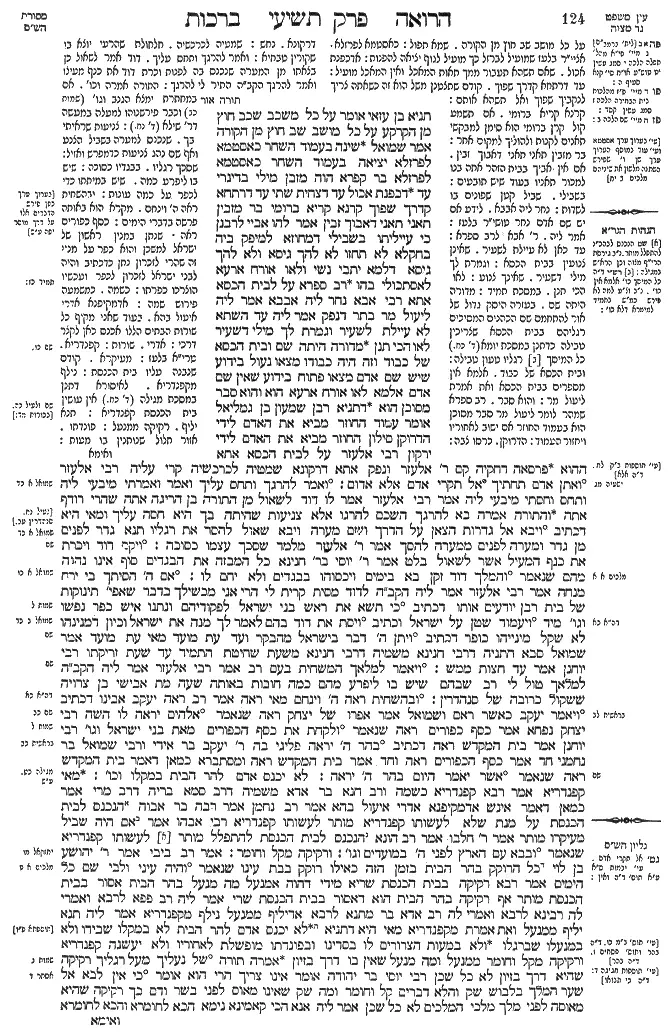
Berakhot 62b - Guemara
תניא בן עזאי אומר על כל משכב שכב חוץ מן הקרקע על כל מושב שב חוץ מן הקורה אמר שמואל שינה בעמוד השחר כאסטמא לפרזלא יציאה בעמוד השחר כאסטמא לפרזלא בר קפרא הוה מזבן מילי בדינרי עד דכפנת אכול עד דצחית שתי עד דרתחא קדרך שפוך קרנא קריא ברומי בר מזבין תאני תאני דאבוך זבין אמר להו אביי לרבנן כי עייליתו בשבילי דמחוזא למיפק ביה בחקלא לא תחזו לא להך גיסא ולא להך גיסא דלמא יתבי נשי ולאו אורח ארעא לאסתכולי בהו רב ספרא על לבית הכסא אתא רבי אבא נחר ליה אבבא אמר ליה ליעול מר בתר דנפק אמר ליה עד השתא לא עיילת לשעיר וגמרת לך מילי דשעיר לאו הכי תנן מדורה היתה שם ובית הכסא של כבוד וזה היה כבודו מצאו נעול בידוע שיש שם אדם מצאו פתוח בידוע שאין שם אדם אלמא לאו אורח ארעא הוא והוא סבר מסוכן הוא דתניא רבן שמעון בן גמליאל אומר עמוד החוזר מביא את האדם לידי הדרוקן סילון החוזר מביא את האדם לידי ירקון רבי אלעזר על לבית הכסא אתא ההוא פרסאה דחקיה קם ר' אלעזר ונפק אתא דרקונא שמטיה לכרכשיה קרי עליה רבי אלעזר (ישעיהו מג ד) ואתן אדם תחתיך אל תקרי אדם אלא אדום:
(שמואל א כד יא) ואמר להרגך ותחס עליך ואמר ואמרתי מיבעי ליה ותחס וחסתי מיבעי ליה אמר רבי אלעזר אמר לו דוד לשאול מן התורה בן הריגה אתה שהרי רודף אתה והתורה אמרה בא להרגך השכם להרגו אלא צניעות שהיתה בך היא חסה עליך ומאי היא דכתיב (שמואל א כד ד) ויבא אל גדרות הצאן על הדרך ושם מערה ויבא שאול להסך את רגליו תנא גדר לפנים מן גדר ומערה לפנים ממערה להסך אמר ר' אלעזר מלמד שסכך עצמו כסוכה:
(שמואל א כד ה) ויקם דוד ויכרת את כנף המעיל אשר לשאול בלט אמר ר' יוסי בר' חנינא כל המבזה את הבגדים סוף אינו נהנה מהם שנאמר (מלכים א א א) והמלך דוד זקן בא בימים ויכסוהו בבגדים ולא יחם לו:
(שמואל א כו יט) אם ה' הסיתך בי ירח מנחה אמר רבי אלעזר אמר ליה הקבה לדוד מסית קרית לי הרי אני מכשילך בדבר שאפי' תינוקות של בית רבן יודעים אותו דכתיב (שמות ל יב) כי תשא את ראש בני ישראל לפקודיהם ונתנו איש כפר נפשו וגו' מיד (דברי הימים א כא א) ויעמוד שטן על ישראל וכתיב (שמואל ב כד א) ויסת את דוד בהם לאמר לך מנה את ישראל וכיון דמנינהו לא שקל מינייהו כופר דכתיב (שמואל ב כד טו) ויתן ה' דבר בישראל מהבקר ועד עת מועד מאי עת מועד אמר שמואל סבא חתניה דרבי חנינא משמיה דרבי חנינא משעת שחיטת התמיד עד שעת זריקתו רבי יוחנן אמר עד חצות ממש:
(שמואל ב כד טז) ויאמר למלאך המשחית בעם רב אמר רבי אלעזר אמר ליה הקבה למלאך טול לי רב שבהם שיש בו ליפרע מהם כמה חובות באותה שעה מת אבישי בן צרויה ששקול כרובה של סנהדרין:
(דברי הימים א כא טו) ובהשחית ראה ה' וינחם מאי ראה אמר רב ראה יעקב אבינו דכתיב (בראשית לב ג) ויאמר יעקב כאשר ראם ושמואל אמר אפרו של יצחק ראה שנאמר (בראשית כב ח) אלהים יראה לו השה רבי יצחק נפחא אמר כסף כפורים ראה שנאמר (שמות ל טז) ולקחת את כסף הכפורים מאת בני ישראל וגו' רבי יוחנן אמר בית המקדש ראה דכתיב (בראשית כב יד) בהר ה' יראה פליגי בה ר' יעקב בר אידי ורבי שמואל בר נחמני חד אמר כסף הכפורים ראה וחד אמר בית המקדש ראה ומסתברא כמאן דאמר בית המקדש ראה שנאמר (בראשית כב יד) אשר יאמר היום בהר ה' יראה:
לא יכנס אדם להר הבית במקלו וכו':
מאי קפנדריא אמר רבא קפנדריא כשמה ורב חנא בר אדא משמיה דרב סמא בריה דרב מרי אמר כמאן דאמר אינש אדמקיפנא אדרי איעול בהא אמר רב נחמן אמר רבה בר אבוה הנכנס לבית הכנסת על מנת שלא לעשותו קפנדריא מותר לעשותו קפנדריא רבי אבהו אמר אם היה שביל מעיקרו מותר אמר ר' חלבו אמר רב הונא הנכנס לבית הכנסת להתפלל מותר לעשותו קפנדריא שנאמר (יחזקאל מו ט) ובבא עם הארץ לפני ה' במועדים וגו':
ורקיקה מקל וחומר:
אמר רב ביבי אמר ר' יהושע בן לוי כל הרוקק בהר הבית בזמן הזה כאילו רוקק בבת עינו שנאמר (מלכים א ט ג) והיה עיני ולבי שם כל הימים אמר רבא רקיקה בבית הכנסת שריא מידי דהוה אמנעל מה מנעל בהר הבית אסור בבית הכנסת מותר אף רקיקה בהר הבית הוא דאסור בבית הכנסת שרי אמר ליה רב פפא לרבא ואמרי לה רבינא לרבא ואמרי לה רב אדא בר מתנא לרבא אדיליף ממנעל נילף מקפנדריא אמר ליה תנא יליף ממנעל ואת אמרת מקפנדריא מאי היא דתניא לא יכנס אדם להר הבית לא במקלו שבידו ולא במנעלו שברגלו ולא במעות הצרורים לו בסדינו ובפונדתו מופשלת לאחוריו ולא יעשנה קפנדריא ורקיקה מקל וחומר ממנעל ומה מנעל שאין בו דרך בזיון אמרה תורה (שמות ג ה) של נעליך מעל רגליך רקיקה שהיא דרך בזיון לא כל שכן רבי יוסי בר יהודה אומר אינו צריך הרי הוא אומר (אסתר ד ב) כי אין לבא אל שער המלך בלבוש שק והלא דברים קל וחומר ומה שק שאינו מאוס לפני בשר ודם כך רקיקה שהיא מאוסה לפני מלך מלכי המלכים לא כל שכן אמר ליה אנא הכי קאמינא נימא הכא לחומרא והכא לחומרא
Comments from Rashi on Masechet Berakhot Page 62b
על כל מושב שב חוץ מן הקורה . שמא תפול: כאסטמא לפרזלא . אציי"ר בלע"ז שמועיל לברזל כך מועיל לגוף יציאה להפנות: אדכפנת אכול . שאם תשהא תעבור ממך תאות המאכל ואין המאכל מועיל: עד דרתחא קדרך שפוך . קודם שתצטנן משל הוא זה כשאתה צריך לנקביך שפוך ואל תשהא אותם: קרנא קריא ברומי . אם תשמע קול קרן ברומי הוא סימן למבקשי תאנים לקנות ולהוליך למקום אחר: בר מזבין תאני תאני דאבוך זבין . אם אין אביך בבית הזהר אתה בנו למכור תאניו בעוד שיש תובעים: בשבילי . שביל קטן שפונים בו לשדות: נחר ליה אבבא . לידע אם יש שם אדם נחר טושי"ר בלע"ז: אמר ליה . ר' אבא לרב ספרא: עד כאן לא עיילת לשעיר . שאינן צנועין בבית הכסא: וגמרת לך מילי דשעיר . שאינך צנוע: לאו הכי תנן . במסכת תמיד: מדורה היתה שם . בעזרה היסק גדול של אור להתחמם שם הכהנים המסיכים רגליהם בבית הכסא שצריכין טבילה כדתנן במסכת יומא (ד' כח.) כל המיסך רגליו טעון טבילה: ובית הכסא של כבוד . אלמא אין מספרים בבית הכסא ואת אמרת ליעול מר: והוא סבר . רב ספרא שמהר לומר ליעול מר סבר מסוכן הוא בעמוד החוזר אם ישוב לאחוריו ויחזור העמוד: הדרוקן . כרסו צבה: דרקונא . נחש: שמטיה לכרכשיה . חלחולת שהרעי יוצא בו שקורין טבחיא: ואמר להרגך ותחס עליך . דוד אמר לשאול כן בצאתו מן המערה שנכנס בה לפנות וכרת דוד את כנף מעילו ואמר להרגך הקב"ה התיר לי להרגך: התורה אמרה וכו' . אם במחתרת ימצא הגנב וגו' (שמות כב) וכבר פירשנוהו למעלה במעשה דר' שילא (דף נח.): צניעות שראיתי בך . שנכנס למערה בשביל הצנע ואף שם נהג צניעות כדמפרש ואזיל: שסכך רגליו . בבגדיו כסוכה: שיש בו ליפרע כמה . שיש במיתתו כדי לכפר על כמה עונות: ובהשחית ראה ה' וינחם . מקרא הוא באותה פרשה בדברי הימים: כסף כפורים ראה . שנתן במנין ראשון של ישראל למשכן והוא כפר על מנין זה שהרי לזכרון נתן כדכתיב והיה לבני ישראל לזכרון לכפר ועכשיו הוצרכו כפרתו: כשמה . כמשמעה פירוש שמה: אדמקיפנא אדרי איעול בהא . בעוד שאני מקיף כל שורות הבתים הללו אכנס כאן לקצר דרכי: אדרי . שורות: קפנדריא . טרי"א בלע"ז: מעיקרא . קודם שנבנה עליו בית הכנסת: נילף מקפנדריא . לאיסורא דתנן במסכת מגילה (ד' כח.) אין עושין בית הכנסת קפנדריא: תנא יליף . רקיקה ממנעל: פונדתו . אזור חלול שנותנין בו מעות:
Berakhot 62b - Mishnah translated into english
Continuing with the subject of health, it was taught in a baraita: Ben Azzai says: On all beds, lie, except for the ground. On all seats, sit, except for a beam, lest you fall off. Shmuel said: Sleeping at dawn is as effective as forging [istema] is to iron. A bowel movement at dawn is as beneficial as forging is to iron.
Similarly, the Gemara relates: Bar Kappara would sell sayings for dinars; he would express his ideas in brief maxims. For example: If you are hungry, eat; do not delay eating, as the hunger may pass and your food will be of no benefit. So too, if you are thirsty, drink; while the pot is still boiling, pour it out before it cools off. This is a metaphor for relieving oneself. Bar Kappara also said: When the horn is sounded in Rome, signifying that there is demand for figs in the Roman market, son of a fig seller, sell your father’s figs, even without his permission, so as not to miss the opportunity.
Abaye said to the Sages: When you enter the paths of the city of Meḥoza in order to go out and defecate in a field, look neither to one side nor to the other, as perhaps women are sitting there and it is improper to look at them.
The Gemara relates: Rav Safra once entered a bathroom, when Rabbi Abba came along. To determine if he could enter, Rabbi Abba coughed next to the door. Rav Safra said to him: Enter, master. When he came out, Rabbi Abba said to him: Until now, you never entered Seir, the land of the Edomites, who are not strict in their practice of modesty, and yet you already learned the customs of Seir? Didn’t we learn in the mishna concerning the Temple: There was a fire next to the ritual bath, and a bathroom of honor. And this was its honor: If one found it locked, it was known that someone was inside; if he found it open, it was known that no one was inside. Speaking in the bathroom is not a desired mode of behavior.
The Gemara explains the opinion of Rav Safra, who told Rabbi Abba that he could enter while in the bathroom: Rav Safra held that it was dangerous for Rabbi Abba. If he waited and was uncertain whether or not he could enter, he would endanger himself. As it was taught in a baraita: Rabbi Shimon ben Gamliel says: A column of feces that is held back because one cannot relieve himself causes dropsy [hidrokan]. A stream [silon] of urine that is held back causes jaundice.
The Gemara relates that Rabbi Elazar entered a bathroom. This Roman came and pushed him away. Rabbi Elazar stood and left, and a serpent came and ripped out the intestines of the Roman. Rabbi Elazar recited the following verse about the Roman: “Therefore I will give man [adam] for you” (Isaiah 43:4); do not read it as adam, but rather read it as Edom, meaning a Roman.
With regard to modesty in a bathroom, the Gemara cites an additional biblical allusion. When David found Saul in the cave and spared him, tearing the corner of his coat, he said to him: “Behold this day, your eyes have seen how the Lord has delivered you today into my hand in the cave, and he said to kill you; and you spared you” (I Samuel 24:10).
The Gemara asks: Why does the verse say: And he said? It should say: And I said. Why does the verse say: And you spared? It should say: And I spared. Rather, Rabbi Elazar said: David said to Saul: By Torah law, you should be killed, as you are a pursuer who seeks to kill me, and the Torah says: If one comes to kill you, kill him first. But it was the modesty that you displayed that spared you.
And what is this modesty? As it is written: “And he came to the sheepcotes by the way, where there was a cave, and Saul went in to cover his feet, to defecate. Now David and his men were sitting in the innermost parts of the cave” (I Samuel 24:3). It was taught that the Sages said: There was a fence within a fence, and a cave within a cave, and Saul entered to defecate in the interest of modesty. With regard to the use of the term, to cover his feet, Rabbi Elazar said: This teaches that, even there, he covered himself with his garment like a sukka.
The Gemara continues with a homiletic interpretation of the verse: “Then David arose, and cut off the corner of Saul’s robe privily” (I Samuel 24:4). Rabbi Yosei, son of Rabbi Ḥanina, said: Anyone who treats clothing with contempt, like David who tore Saul’s robe for no reason, will be punished in that ultimately he will not benefit from his garments, as it is stated: “Now King David was old and stricken in years; and they covered him with clothes, but he could get no heat” (I Kings 1:1).
As for David’s statement to Saul: “If it be the Lord that has incited you against me, let Him accept an offering” (I Samuel 26:19), Rabbi Elazar said that the Holy One, Blessed be He, said to David: Do you call Me an inciter? In retribution, I will cause you to fail in a matter that even schoolchildren know, as it is written: “When you take the sum of the children of Israel, according to their number, then shall they give every man a ransom for his soul unto the Lord, when you number them; that there be no plague among them, when you number them” (Exodus 30:12). Immediately after God said this to David, “Satan stood up against Israel and incited David to number Israel” (I Chronicles 21:1). Moreover, it is written: “And again the anger of the Lord was kindled against Israel, and He incited David against them, saying: Go, number Israel and Judea” (II Samuel 24:1). The proportional response to David’s calling God an inciter was that He incited David. And when he counted them, he did not take a ransom from them, and he was punished, as it is written: “So the Lord sent a pestilence upon Israel from the morning even to the appointed time” (II Samuel 24:15).
The Gemara asks: What is the meaning of the appointed time? Shmuel the elder, father-in-law of Rabbi Ḥanina, said in the name of Rabbi Ḥanina: It means from when the daily offering is slaughtered until when its blood is sprinkled. Rabbi Yoḥanan said: It means precisely until noon.
It is also stated there: “The Lord repented Him of the evil and said to the angel that destroyed the many [rav] people: It is enough; now stay your hand” (II Samuel 24:16). Explaining the meaning of the word rav, Rabbi Elazar said that the Holy One, Blessed be He, said to the angel: Take for me a great one [rav] from among them, who is worthy of defraying several of Israel’s debts. As a result, at that moment Avishai ben Tzeruya, who was equivalent to the majority of the Sanhedrin, died. His death atoned for the entire nation.
On a parallel note, it is said: “The Lord beheld, and He repented him of the evil” (I Chronicles 21:15). The Gemara asks: What did the Lord behold?
Rav said: He saw and remembered the patriarch, Jacob, about whom the term seeing is used: “And Jacob said when he saw them [ra’am]: This is God’s camp” (Genesis 32:3). And Shmuel said: He saw and remembered Isaac’s ashes, as it is said in the portion of the binding of Isaac: “God will provide [yireh] Himself the lamb for a burnt-offering” (Genesis 22:8).
Rabbi Yitzḥak Nappaḥa said: He saw the money of atonement that Israel gave when they were counted during the Exodus from Egypt, as it is stated: “And you shall take the atonement money from the children of Israel, and shall appoint it for the service of the tent of meeting, that it may be a memorial for the children of Israel before the Lord, to make atonement for your souls” (Exodus 30:16). Rabbi Yoḥanan said: He saw the Temple, as it is written: “On the mount where the Lord is seen [yera’e]” (Genesis 22:14).
Additional amora’im, Rabbi Ya’akov bar Idi and Rabbi Shmuel bar Naḥmani, differed in their opinions of what God saw. One said: He saw the money of atonement, and one said: He saw the Temple. And it stands to reason like the one who says that he saw the Temple, as it is stated: “And Abraham called the name of that place: The Lord will see; as it is said to this day: On the mount where the Lord is seen” (Genesis 22:14); generations later, they will recall the initial revelation on Mount Moria, as the angel also appeared to David on this mountain.
We learned in the mishna that, in deference to the Temple, a person may not enter the Temple Mount with his staff and his shoes. He may not make it a kappandarya. The Gemara asks: What is the meaning of kappandarya? Rava said: Kappandarya, as its name implies; a shortcut. Rav Ḥana bar Adda in the name of Rav Sama, son of Rav Mari, said: One may interpret this as an acrostic, as people say: Instead of circumventing the rows of houses [ademakifna adarei], I will enter this [ei’ol beha] one. Rav Naḥman said that Rabba bar Avuh said: This halakha applies in a synagogue as well. However, one who enters a synagogue not intending to make it a shortcut is permitted to make it a shortcut if he later changed his mind.
Similarly, Rabbi Abbahu said: If it was originally a path that passed through the site where the synagogue was erected, one is permitted to pass through, as the public right of passage is not negated by the construction of a synagogue. Rabbi Ḥelbo said that Rav Huna said: One who enters a synagogue to pray is permitted to make it a shortcut, as it is stated: “But when the people of the land shall come before the Lord in the appointed seasons, he that enters by way of the north gate to worship shall go forth by the way of the south gate” (Ezekiel 46:9).
We learned in the mishna that spitting on the Temple Mount is prohibited through an a fortiori inference. Rav Beivai said that Rabbi Yehoshua ben Levi said: Anyone who spits on the Temple Mount, even today, it is as if he spit in the pupil of God’s eye, as it is stated: “And My eyes and My heart shall be there perpetually” (I Kings 9:3).
Rava said: Spitting in a synagogue is permitted, just as in the case of shoes. Just as wearing shoes is prohibited on the Temple Mount but permitted in a synagogue, so, too, spitting is prohibited on the Temple Mount but permitted in a synagogue.
Rav Pappa said to Rava, and some say that Ravina said to Rava, and some say that Rav Adda bar Mattana said to Rava: Instead of deriving this from the case of wearing a shoe, derive it from the case of a shortcut. Just as a shortcut through a synagogue is prohibited, so too is spitting prohibited.
Rava said to him: The tanna derives the prohibition of spitting from the case of a shoe, and you say that it should be derived from the case of a shortcut? The Gemara elaborates: What is this derivation from the case of a shoe? As it was taught in a baraita: One may neither enter the Temple Mount with his staff in his hand, nor with his shoes on his feet, nor with money tied in his cloth and with his money-belt slung behind him, nor should one make it a shortcut. All the more so, spitting is prohibited a fortiori from the halakha with regard to wearing a shoe. Just as with regard to a shoe, which is generally not considered contemptuous, the Torah said: “Put off your shoes from off your feet, for the place upon which you stand is holy ground” (Exodus 3:5), all the more so spitting, which is considered contemptuous, should be prohibited.
Rabbi Yosei bar Yehuda, says: This a fortiori inference is unnecessary. It could be otherwise derived. It says: “For none may enter within the king’s gate clothed with sackcloth” (Esther 4:2). This matter can be inferred a fortiori: Just as sackcloth, which is generally not considered repulsive before one who is flesh and blood, is forbidden within the king’s gate, all the more so spitting, which is repulsive, should be forbidden before the King of Kings.
The one who challenged him, Rav Pappa or Ravina, said to Rava: I intended to say the following: Let us say, be stringent here, with regard to the Temple Mount, and be stringent here, with regard to the synagogue,
Traduction : The William Davidson digital edition of the Koren Noé Talmud, with commentary by Rabbi Adin Even-Israel Steinsaltz.