 Talmud Bavli
Berakhot 14b : Youtube
Daf TubeYoutube
2 video classes :
Berakhot Page 14b
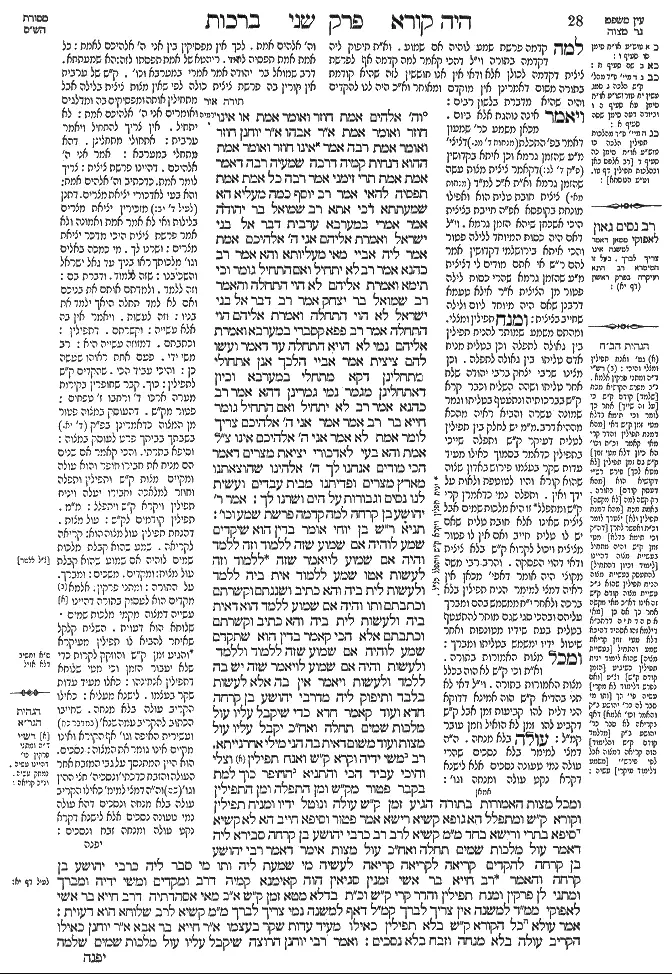
Berakhot 14b - Guemara
(ירמיהו י י) וה' אלהים אמת חוזר ואומר אמת או אינו חוזר ואומר אמת אר אבהו אר יוחנן חוזר ואומר אמת רבה אמר אינו חוזר ואומר אמת ההוא דנחית קמיה דרבה שמעיה רבה דאמר אמת אמת תרי זימני אמר רבה כל אמת אמת תפסיה להאי אמר רב יוסף כמה מעליא הא שמעתתא דכי אתא רב שמואל בר יהודה אמר אמרי במערבא ערבית דבר אל בני ישראל ואמרת אליהם אני ה' אלהיכם אמת אמר ליה אביי מאי מעליותא והא אמר רב כהנא אמר רב לא יתחיל ואם התחיל גומר וכי תימא ואמרת אליהם לא הוי התחלה והאמר רב שמואל בר יצחק אמר רב דבר אל בני ישראל לא הוי התחלה ואמרת אליהם הוי התחלה אמר רב פפא קסברי במערבא ואמרת אליהם נמי לא הויא התחלה עד דאמר ועשו להם ציצית אמר אביי הלכך אנן אתחולי מתחלינן דקא מתחלי במערבא וכיון דאתחלינן מגמר נמי גמרינן דהא אמר רב כהנא אמר רב לא יתחיל ואם התחיל גומר חייא בר רב אמר אמר אני ה' אלהיכם צריך לומר אמת לא אמר אני ה' אלהיכם אינו צל אמת והא בעי לאדכורי יציאת מצרים דאמר הכי מודים אנחנו לך ה' אלהינו שהוצאתנו מארץ מצרים ופדיתנו מבית עבדים ועשית לנו נסים וגבורות על הים ושרנו לך:
אמר ר' יהושע בן קרחה למה קדמה פרשת שמע וכו':
תניא רש בן יוחי אומר בדין הוא שיקדים שמע לוהיה אם שמוע שזה ללמוד וזה ללמד והיה אם שמוע לויאמר שזה ללמוד וזה לעשות אטו שמע ללמוד אית ביה ללמד ולעשות לית ביה והא כתיב ושננתם וקשרתם וכתבתם ותו והיה אם שמוע ללמד הוא דאית ביה ולעשות לית ביה והא כתיב וקשרתם וכתבתם אלא הכי קאמר בדין הוא שתקדם שמע לוהיה אם שמוע שזה ללמוד וללמד ולעשות והיה אם שמוע לויאמר שזה יש בה ללמד ולעשות ויאמר אין בה אלא לעשות בלבד ותיפוק ליה מדרבי יהושע בן קרחה חדא ועוד קאמר חדא כדי שיקבל עליו עול מלכות שמים תחלה ואחכ יקבל עליו עול מצות ועוד משום דאית בה הני מילי אחרנייתא. רב משי ידיה וקרא קש ואנח תפילין וצלי והיכי עביד הכי והתניא החופר כוך למת בקבר פטור מקש ומן התפלה ומן התפילין ומכל מצות האמורות בתורה הגיע זמן קש עולה ונוטל ידיו ומניח תפילין וקורא קש ומתפלל הא גופא קשיא רישא אמר פטור וסיפא חייב הא לא קשיא סיפא בתרי ורישא בחד ממ קשיא לרב רב כרבי יהושע בן קרחה סבירא ליה דאמר עול מלכות שמים תחלה ואחכ עול מצות אימר דאמר רבי יהושע בן קרחה להקדים קריאה לקריאה קריאה לעשיה מי שמעת ליה ותו מי סבר ליה כרבי יהושע בן קרחה והאמר רב חייא בר אשי זמנין סגיאין הוה קאימנא קמיה דרב ומקדים ומשי ידיה ומברך ומתני לן פרקין ומנח תפילין והדר קרי קש וכת בדלא מטא זמן קש אכ מאי אסהדתיה דרב חייא בר אשי לאפוקי ממד למשנה אין צריך לברך קמל דאף למשנה נמי צריך לברך ממ קשיא לרב שלוחא הוא דעוית:
אמר עולא כל הקורא קש בלא תפילין כאילו מעיד עדות שקר בעצמו אר חייא בר אבא אר יוחנן כאילו הקריב עולה בלא מנחה וזבח בלא נסכים:
ואמר רבי יוחנן הרוצה שיקבל עליו עול מלכות שמים שלמה
Comments from Rashi on Masechet Berakhot Page 14b
וה' אלהים אמת . לכך אין מפסיקין בין אני ה' אלהיכם לאמת: כל אמת אמת תפסיה להאי . ריהטא של אמת תפסתו לזה: הא שמעתתא . דרב שמואל בר יהודה אמר אמרי במערבא וכו'. ק"ש של ערבית אין קורין בה פרשת ציצית כולה לפי שאין מצות ציצית בלילה אבל מתחילין אותה ומפסיקים בה ומדלגים ואומרים אני ה' אלהיכם אמת: לא יתחיל . אין צריך להתחיל ויאמר ערבית: אתחולי מתחלינן . דהא מתחלי במערבא: אמר אני ה' אלהיכם . דהיינו פרשת ציצית: צריך לומר אמת . כדכתיב וה' אלהים אמת: והא בעי לאדכורי יציאת מצרים . דתנן (לעיל ברכות ד' יב:) מזכירין יציאת מצרים בלילות ואי לא אמר אמת ואמונה ולא אמר פרשת ציצית היכי מדכר יציאת מצרים: ושרנו לך . מי כמכה באלים וגו' מלכותך ראו בניך עד גאל ישראל והשכיבנו: שזה ללמוד . ודברת בם: וזה ללמד . ולמדתם אותם את בניכם ואם לא למד תחלה היאך ילמד את בניו: וזה לעשות . ויאמר אין בה אלא עשייה: וקשרתם . דתפילין: וכתבתם . דמזוזה עשייה היא: רב משי ידי . פעם אחת ראוהו שעשה כן: והיכי עביד הכי . שהקדים ק"ש לתפילין: כוך . קבר שחופרין בקירות מערה ארכו ד' ורחבו ז' טפחים: פטור מק"ש . דהעוסק במצוה פטור מן המצוה כדאמרינן בפ"ק (ד' יא.) בשבתך בביתך פרט לעוסק במצוה: וסיפא בתרתי . והכי קאמר אם שנים הם מניח את חבירו חופר והוא עולה ומקיים מצות ק"ש ותפילין ותפלה וחוזר למלאכה וחבירו יעלה ויניח תפילין ויקרא ק"ש ויתפלל: מ"מ . תפילין קודמים לק"ש: עול מצות . דהנחת תפילין עול מצוה הוא: קריאה לקריאה . שמע שהוא קבלת מלכות שמים לוהיה אם שמוע שהוא קבלת עול מצות: ומקדים . משכים: ומברך . על התורה: ומתני פרקין . אלמא מקדים הוא לעסוק בתורה דהיינו עשייה דמצוה מקמי מלכות שמים: שלוחא הוא דעוית . השליח קלקל שאיחר להביא לו תפילין מעיקרא והגיע זמן ק"ש והוזקק לקרות כדי שלא יעבור הזמן וכי מטי שלוחא דתפילין אנחינהו: כאלו מעיד עדות שקר בעצמו . לישנא מעליא: כאילו הקריב עולה בלא מנחה . שחייבו הכתוב להקריב עמה שנא' (במדבר כח) ועשירית האיפה וגו' אף הקורא ואינו מקיים אינו גומר את המצוה: נסכים . הוא היין המתנסך על גבי המזבח אחר העולה והזבח כדכת' ונסכיה' חצי ההין וגו'(שם) וה"ה דמצי למימ' כאילו הקריב עולה בלא מנחה ונסכים דהא עולה נמי טעונה נסכים אלא לישנא דקרא נקט עולה ומנחה זבח ונסכים:
Comments from Tosafot - Berakhot 14b
ומנח תפילין ומצלי . ומהתם משמע שמותר להניח תפילין בין גאולה לתפלה וכן בטלית מניח אדם טליתו בין גאולה לתפלה. וכן מצינו שרבי יצחק ברבי יהודה שלח אחר טליתו ושהה השליח וכבר קרא ק"ש בברכותיה ונתעטף בטליתו וגמר שמונה עשרה והביא ראיה מהכא מההיא דרב. מ"מ יש לחלק בין תפילין לטלית דעיקר ק"ש ותפלה שייכי בתפילין כדאמר בסמוך כאילו מעיד עדות שקר בעצמו פירוש באדון שצוה שהוא קורא והיו לטוטפת ולאות על ידך ואין. ותפלה נמי כדאמרן קרי ק"ש ומתפלל זו היא מלכות שמים אבל ציצית שאינו אלא חובת טלית שאם יש לו טלית חייב ואם אין לו פטור מציצית ויכול לקרוא ק"ש בלא ציצית ודאי דהוי הפסקה. והרב רבי משה מקוצי היה אומר דאפי' מכאן אין ראיה דמצי למימר הניח תפילין בלא ברכה ולאחר י"ח ממשמש בהם ומברך עליהם ובהכי סגי שגם מותר להתעטף בטלית בעת שידיו מטונפות ואחר שיטול ידיו ימשמש בטליתו ומברך: ומכל מצות האמורות בתורה . וא"ת וכי ק"ש לא הוה בכלל מצות האמורות בתורה. וי"ל דאי לא תני בהדיא ק"ש הוה אמינא דדוקא הני דלית להו קביעות זמן אבל ק"ש דקביע להו זמן לא הואיל וזמן עובר קמ"ל: עולה בלא מנחה . ה"ה דמצי למימר בלא נסכים שהרי עולה נמי טעונה נסכים אלא לישנא דקרא נקט עולה ומנחה וגו':
Berakhot 14b - Mishnah translated into english
“And the Lord, God, is True” (Jeremiah 10:10).
After the conclusion of the final paragraph of Shema along with the first word of the subsequent blessing, with the words: “The Lord, your God, is True [Hashem Eloheikhem emet],” the question is posed: Does one repeat emet when he begins the blessing of emet veyatziv, or does he not repeat emet?
Rabbi Abbahu said that Rabbi Yoḥanan said: He repeats emet. Rabba said: He does not repeat emet. The Gemara relates: This person who descended to lead the service before Rabba, Rabba heard that he said emet, emet twice. Rabba mocked him and said: Every emet, emet has caught this one; he must be passionate about the pursuit of truth.
Rav Yosef said: How excellent is this tradition that I heard, as when Rav Shmuel bar Yehuda came from Eretz Yisrael to Babylonia he said: In Eretz Yisrael, at the evening prayer they do not recite the entire third portion of Shema, which deals with ritual fringes, as there is no obligation to wear ritual fringes at night. Rather, they say a condensed version of that portion that includes an excerpt from the beginning and an excerpt from the end: “Speak to the children of Israel and say to them…I am the Lord, your God, True” (Numbers 15:38, Numbers 15:41).
Abaye said to him: What is excellent about this tradition? Didn’t Rav Kahana say that Rav said: One should not begin to recite the portion of ritual fringes at night, but if he does begin, he completes it? And if you say that: Speak to the children of Israel and say to them, is not considered the beginning of the portion of ritual fringes, didn’t Rav Shmuel bar Yitzḥak say that Rav said: Speak to the children of Israel, is not considered a beginning of the portion of ritual fringes, as many passages in the Torah begin this way; and say to them, is considered a beginning.
Rav Pappa said: In Eretz Yisrael, they hold that and say to them, is not considered a beginning, until he said: And make for them ritual fringes.
Abaye said: Therefore, we begin to recite the portion of ritual fringes, since they begin to recite it in Eretz Yisrael. And once we begin to recite it, we complete it as well, as Rav Kahana said that Rav said: One should not begin to recite the portion of ritual fringes at night, but if he does begin, he completes it.
Ḥiyya bar Rav said: If in the evening one recited the portion of ritual fringes concluding with: I am the Lord, your God, he must recite: True and Faithful [emet ve’emuna], and the entire blessing of redemption. However, if he did not recite: I am the Lord, your God, he need not recite emet ve’emuna.
The Gemara asks: Isn’t he required to mention the exodus from Egypt at night as well?
The Gemara responds: In place of reciting emet ve’emuna he said the following shorter passage: We give thanks to You, Lord, our God, Who took us out from Egypt and redeemed us from the house of bondage, and performed miracles and mighty deeds on our behalf on the sea, and we sang unto You, as this formula includes all of the content comprising emet ve’emuna.
We learned in the mishna: Rabbi Yehoshua ben Korḥa said: Why did the portion of Shema precede that of VeHaya im Shamoa? So that one will first accept upon himself the yoke of the kingdom of Heaven and only then accept upon himself the yoke of the mitzvot.
It was taught in a baraita that Rabbi Shimon ben Yoḥai offers a different explanation for the order of the portions of Shema. He says: By right, Shema should precede VeHaya im Shamoa because the Shema includes the directive to learn, while VeHaya im Shamoa includes the directive to teach. Similarly, VeHaya im Shamoa should precede VaYomer, the final paragraph of Shema, because VeHaya im Shamoa includes the directive to teach, while the portion of ritual fringes includes the directive to perform.
The Gemara asks: Is that to say that the portion of Shema contains the directive to learn but it does not contain the directive to teach and perform? Isn’t it written: “And you shall teach them to your children” (Deuteronomy 6:7), a directive to teach, as well as: “And you shall bind them as a sign upon your arm” (Deuteronomy 6:8) and: “And write them on your door posts of your house” (Deuteronomy 6:9), directives to perform? Furthermore, does VeHaya im Shamoa contain the directive to teach but it does not contain the directive to perform? Isn’t it written: “And you shall bind them as a sign upon your arm” (Deuteronomy 11:18), a directive to perform?
Rather, Rabbi Shimon ben Yoḥai said as follows: By right, the portion of Shema should precede VeHaya im Shamoa because the portion of Shema includes the directives to learn, to teach, and to perform, while VeHaya im Shamoa includes the directives to teach and to perform. VeHaya im Shamoa should precede VaYomer because VeHaya im Shamoa includes the directives to teach and to perform, while VaYomer only includes the directive to perform.
The Gemara asks: Let him derive this, that the portion of Shema is recited first, from the statement of Rabbi Yehoshua ben Korḥa. The Gemara responds: He stated one reason and another. Rabbi Shimon ben Yoḥai does not disagree with Rabbi Yehoshua ben Korḥa; he simply suggested as additional explanation as follows: One reason the portion of Shema is recited first is so that one will first accept the yoke of the kingdom of Heaven upon himself and afterward the yoke of the mitzvot; and the second reason is because the portion of Shema contains these other elements as well.
The Gemara relates: Rav washed his hands, recited Shema, donned phylacteries, and prayed in that order. The Gemara asks: How could he do that? Wasn’t it taught in a baraita: One who digs a grave for the dead in the wall of the family burial cave is exempt from the recitation of Shema, from prayer, from phylacteries, and from all mitzvot mentioned in the Torah. When the appointed time for the recitation of Shema arrives, he emerges from the cave, washes his hands, dons phylacteries, recites Shema, and prays.
Before clarifying the problem, the Gemara comments: This baraita itself is difficult; it appears to be contradictory. The first clause of the baraita stated that one digging a grave is exempt from the recitation of Shema, and the latter clause stated that he is obligated to emerge and recite Shema
The Gemara responds: That is not difficult. The latter clause of the baraita refers to a case of two individuals digging the grave together; one pauses to recite Shema while the other continues digging. The first clause of the baraita refers to a case of one individual digging alone, who may not stop.
In any case, this baraita contradicts Rav in terms of the order in which the mitzvot are performed. The Gemara responds: Rav holds in accordance with the opinion of Rabbi Yehoshua ben Korḥa, who said that the acceptance of the yoke of the kingdom of Heaven takes precedence and should come first, followed by the acceptance of the yoke of the mitzvot. Therefore, Rav first recited Shema, and only then donned phylacteries.
The Gemara challenges: Say that Rabbi Yehoshua ben Korḥa said to give precedence to recitation of the portion concerning the acceptance of the yoke of the kingdom of Heaven over recitation of other portions. But did you hear him say the halakha gives precedence to recitation over performance?
And furthermore, does Rav really hold in accordance with the opinion of Rabbi Yehoshua ben Korḥa? But didn’t Rav Ḥiyya bar Ashi say: Many times I stood before Rav, and he first washed his hands, recited a blessing, taught us our lesson, donned phylacteries, and then recited Shema. And if you say: This was when the time for the recitation of Shema had not yet arrived and that is why he donned his phylacteries first, then what is the point of the testimony of Rav Ḥiyya bar Ashi?
The Gemara responds: Rav Ḥiyya bar Ashi’s story comes to exclude the opinion of the one who said that one need not recite the blessing on Torah study for the study of mishna. It teaches us that even for mishna, one must recite a blessing.
In any case this baraita is difficult for Rav. The Gemara responds: The messenger was at fault and brought Rav his phylacteries late, so Rav recited Shema at its appropriate time and later donned phylacteries.
With regard to the recitation of Shema without phylacteries, Ulla said: Anyone who recites Shema without phylacteries, it is as if he has borne false testimony against himself, as in Shema, he mentions his obligation to don phylacteries and in this case fails to don them himself (Talmidei Rabbeinu Yona). Rabbi Ḥiyya bar Abba said that Rabbi Yoḥanan said: One who recites Shema without phylacteries, it is as if he has offered a burnt-offering without a meal-offering or a peace-offering without libations. Despite the fact that he fulfilled his obligation, his offering is incomplete.
And Rabbi Yoḥanan said: One who seeks to accept upon himself the complete yoke of the kingdom of Heaven
Traduction : The William Davidson digital edition of the Koren Noé Talmud, with commentary by Rabbi Adin Even-Israel Steinsaltz.