 Talmud Bavli
No video class on this page yet.
To add a video to this page please click here.Niddah Page 23a
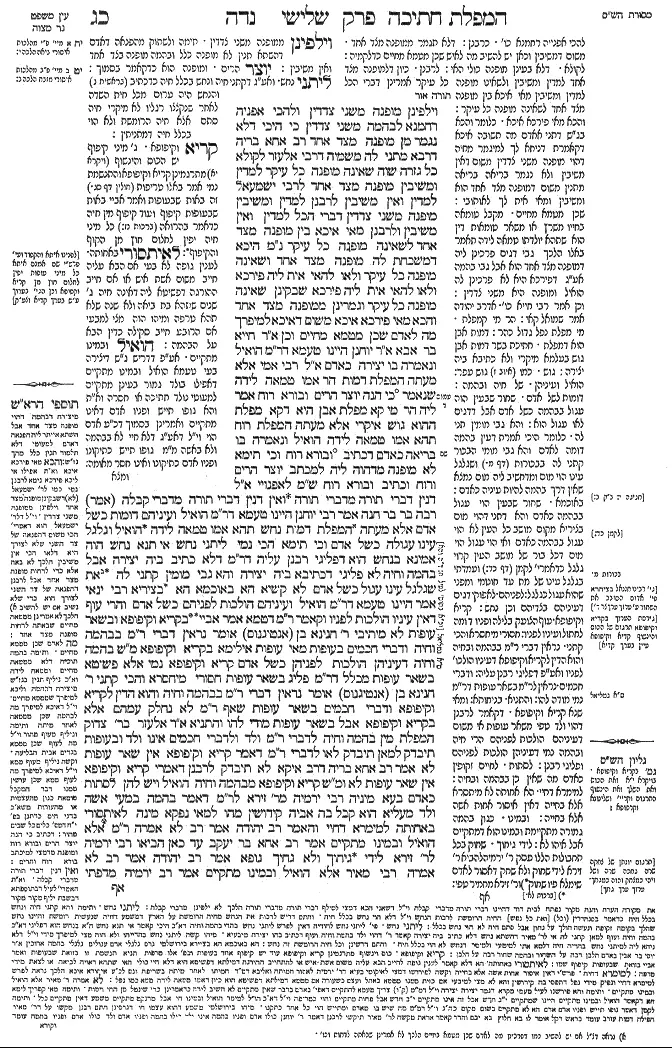
Niddah 23a - Guemara
וילפינן מופנה משני צדדין ולהכי אפניה רחמנא לבהמה משני צדדין כי היכי דלא נגמר מן מופנה מצד אחד רב אחא בריה דרבא מתני לה משמיה דרבי אלעזר לקולא כל גזרה שוה שאינה מופנה כל עיקר למדין ומשיבין מופנה מצד אחד לרבי ישמעאל למדין ואין משיבין לרבנן למדין ומשיבין מופנה משני צדדין דברי הכל למדין ואין משיבין ולרבנן מאי איכא בין מופנה מצד אחד לשאינה מופנה כל עיקר נ"מ היכא דמשכחת לה מופנה מצד אחד ושאינה מופנה כל עיקר ולאו להאי אית ליה פירכא ולאו להאי אית ליה פירכא שבקינן שאינה מופנה כל עיקר וגמרינן ממופנה מצד אחד והכא מאי פירכא איכא משום דאיכא למיפרך מה לאדם שכן מטמא מחיים וכן א"ר חייא בר אבא א"ר יוחנן היינו טעמא דר"מ הואיל ונאמרה בו יצירה כאדם א"ל רבי אמי אלא מעתה המפלת דמות הר אמו טמאה לידה שנאמר (עמוס ד:
יג) כי הנה יוצר הרים ובורא רוח אמר ליה הר מי קא מפלת אבן היא דקא מפלת ההוא גוש איקרי אלא מעתה המפלת רוח תהא אמו טמאה לידה הואיל ונאמרה בו בריאה כאדם דכתיב {עמוס ד } ובורא רוח וכי תימא לא מופנה מדהוה ליה למכתב יוצר הרים ורוח וכתיב ובורא רוח ש"מ לאפנויי א"ל דנין דברי תורה מדברי תורה ואין דנין דברי תורה מדברי קבלה (אמר) רבה בר בר חנה אמר רבי יוחנן היינו טעמא דר"מ הואיל ועיניהם דומות כשל אדם אלא מעתה המפלת דמות נחש תהא אמו טמאה לידה הואיל וגלגל עינו עגולה כשל אדם וכי תימא הכי נמי ליתני נחש אי תנא נחש הוה אמינא בנחש הוא דפליגי רבנן עליה דר"מ דלא כתיב ביה יצירה אבל בהמה וחיה לא פליגי דכתיבא ביה יצירה והא גבי מומין קתני לה את שגלגל עינו עגול כשל אדם לא קשיא הא באוכמא הא בציריא רבי ינאי אמר היינו טעמא דר"מ הואיל ועיניהם הולכות לפניהם כשל אדם והרי עוף דאין עיניו הולכות לפניו וקאמר ר"מ דטמא אמר אביי בקריא וקיפופא ובשאר עופות לא מיתיבי ר' חנינא בן (אנטיגנוס) אומר נראין דברי ר"מ בבהמה וחיה ודברי חכמים בעופות מאי עופות אילימא בקריא וקיפופא מ"ש בהמה וחיה דעיניהן הולכות לפניהן כשל אדם קריא וקיפופא נמי אלא פשיטא בשאר עופות מכלל דר"מ פליג בשאר עופות חסורי מיחסרא והכי קתני ר' חנינא בן אנטיגנוס אומר נראין דברי ר"מ בבהמה וחיה והוא הדין לקריא וקיפופא ודברי חכמים בשאר עופות שאף ר"מ לא נחלק עמהם אלא בקריא וקיפופא אבל בשאר עופות מודי להו והתניא א"ר אלעזר בר' צדוק המפלת מין בהמה וחיה לדברי ר"מ ולד ולדברי חכמים אינו ולד ובעופות תיבדק למאן תיבדק לאו לדברי ר"מ דאמר קריא וקיפופא אין שאר עופות לא אמר רב אחא בריה דרב איקא לא תיבדק לרבנן דאמרי קריא וקיפופא אין שאר עופות לא ומ"ש קריא וקיפופא מבהמה וחיה הואיל ויש להן לסתות כאדם בעא מיניה רבי ירמיה מר' זירא לר"מ דאמר בהמה במעי אשה ולד מעליא הוא קבל בה אביה קידושין מהו למאי נפקא מינה לאיתסורי באחותה למימרא דחיי והאמר רב יהודה אמר רב לא אמרה ר"מ אלא הואיל ובמינו מתקיים אמר רב אחא בר יעקב עד כאן הביאו רבי ירמיה לר' זירא לידי גיחוך ולא גחיך גופא אמר רב יהודה אמר רב לא אמרה רבי מאיר אלא הואיל ובמינו מתקיים אמר רב ירמיה מדפתי
Comments from Rashi on Masechet Niddah Page 23a
להכי אפנייה רחמנא כו' . כרבנן: דלא תגמר ממופנה מצד אחד . משום דמשיבין וכאן יש להשיב מה לאיש שכן מטמא מחיים כדלקמיה: לקולא . דלא בעינן מופנה כולי האי: לרבנן . כיון דלמופנה מצד אחד למדין ומשיבין ולשאינו מופנה כל עיקר אמרינן דברי הכל למדין ומשיבין מאי איכא בין מופנה מצד אחד לשאינה מופנה כל עיקר: והכא מאי פירכא איכא . כלומר והכא בג"ש דתני אאדם מה תשובה איכא דקאמרת דניחא לך למיגמר מחיה דהוי מופנה משני צדדין משום דאין משיבין ולא נגמר בריאה בריאה מתנין משום דמופנה מצד אחד הוא ומשיבין ומאי אית לך לאותובי: שכן מטמא מחיים . מקבל טומאה בחייו משרץ או משאר טומאות דין הוא שתהא יולדתו טמאה לידה תאמר באלו הלכך גבי דגים פרכינן ליה דמופנה מצד אחד הוא אבל גבי בהמה אע"ג דפירכא היא לא פרכינן לה הואיל ומופנה היא משני צדדין: וכן אמר רבי חייא כו' . אדרב יהודה אמר שמואל קאי: הר מי קמפלת . מי מפלת נפל גדול כהר: דמות אבן הוא דמפלת . חתיכת בשר דמות אבן גוש בעלמא מיקרי ולא כתיבא ביה יצירה: גוש . כמו (איוב ז) גוש עפר: הואיל ועיניהן . של חיה ובהמה: דומות לשל אדם . שחור שבעין הוה עגול בבהמה כשל אדם אבל דדגים לאו עגול הוא: והא גבי מומין תני לה . כלומר היכי אמרת דעין בהמה דומה לאדם והא גבי מומי הבכור קתני לה בבכורות (דף מ.) ושגלגל עינו הוי מום ומדחשיב ליה מום נמצא שאין דרך בהמה להיות עיניה כאדם: באוכמא . שחור שבעין הוי עגול בבהמה כאדם והא דתני דהוי מום בציריא מקום מושב כל העין לא הוי עגול בבהמה כאדם ואי הוי עגול הוי מום דכל בור של מושב העין קרוי גלגל כדאמרי' לקמן (נדה דף כד:) ועמדתי בגלגל עינו של מת עד חוטמי ומפני שהוא עגול כגלגל: לפניהם . לאפוקי דגים דעיניהם בצדיהם וכן נחש: קריא וקיפופא . עוף הצועק בלילה ופניו דומה לחתול ועיניו לפניו: חסורי מיחסרא והכי קתני נראין דברי ר"מ בבהמה ובחיה והוא הדין לקריא וקיפופא . דעיניו הולכו' לפניו ואע"פ דפליגי רבנן עליה: ודברי חכמים . נראין לר"מ בשאר עופות דר"מ נמי מודה להו: והתניא . בניחותא: ומאי שנא קריא וקיפופא . דקאמר לרבנן דהוי ולד טפי משאר עופות אי משום דעיניהם הולכות לפניהם הרי חיה ובהמה נמי דעיניהן הולכות לפניהם ופליגי רבנן: לסתות . לחיים זקופין כאדם מה שאין כן בבהמה ובחיה: למימרא דחיי . הא אחותה לא מיתסרא אלא בחייה דאין איסור אחות אשה אלא בחייה: ובמינו . כגון בהמה גמורה מתקיימת ובמינו הוא דמתקיים אבל איהו לא: לידי גיחוך . שחוק. בכל תחבולות הללו עסק ר' ירמיה להביא ר' זירא לידי שחוק ולא שחק דאסור לאדם שימלא פיו שחוק ור' זירא מחמיר טפי:
Comments from Tosafot - Niddah 23a
וילפינן ממופנה משני צדדין. תימה ולשתוק מהפנאה דאדם דהשתא תנין לא מופנה כלל ובהמה מופנה בצד אחד ואין משיבין: יוצר הרים. ומופנה הוא כדקאמר בסמוך: ליתני נחש. ואע"ג דקתני חיה ונחש בכלל חיה כדכתיב (בראשית ג) והנחש היה ערום מכל חית השדה לאחר שנקצצו רגליו לא מיקרי חיה סתם אלא חיה הרומשת ולא הוי בכלל חיה דמתניתין: קריא וקיפופא. ג' מיני קיפוף יש הכוס והינשוף (ויקרא יא) מתרגמינן קריא וקיפופא והתנשמת נמי אמר באלו טריפות (חולין דף סג.) זה באות שבעופות ואמר אביי באות שבעופות קיפוף ועוד קיפוף מין חיה כדאמר בהרואה (ברכות נז:) כל מיני חיה יפין לחלום חוץ מן הקוף והקיפוף: לאיתסורי באחותה. לענין גופה לא בעי אם הבא עליה חייב משום אשת איש או אם חייב ההורגה דפשיטא ליה דאינה חיה ג' שנים שתהא בת ביאה ולא שנה שלא תהא טרפה ומיהו הוה מצי למבעי אם הרובע חייב סקילה כדין הבא על הבהמה: הואיל ובמינו מתקיים. אע"פ דדריש ג"ש דיצירה בעי טעמא הואיל ובמינו מתקיים דאפילו בולד גמור בעינן מתקיים למעוטי נולד חתיכה או חסרה וא"ת והא גופו תייש ופניו אדם דאינו מתקיים ואמרינן בסמוך דכ"ע אדם הוי וי"ל דאע"ג דלא חיי לא בבהמה ולא באשה מ"מ גופו תייש כתיקונו ופניו אדם כתיקונו ואינו חסר מאומה:
Niddah 23a - Mishnah translated into english
and derive the halakha from the analogy that is free on both sides. And it is for this reason that the Merciful One rendered the verbal analogy between animal and man free on both sides, so that one would not derive the halakha from the verbal analogy between sea monster and man, which is free on only one side.
Rav Aḥa, son of Rava, teaches in the name of Rabbi Elazar a more lenient version of the aforementioned principle of exegesis of verbal analogy: With regard to any verbal analogy that is not free at all, one can derive halakhot from it, but one can also refute it logically. If the verbal analogy is free on one side, according to Rabbi Yishmael one can derive halakhot from it, and one cannot refute it. According to the Rabbis, one can derive halakhot from it, but one can also refute it. If the verbal analogy is free on both sides, everyone agrees that one can derive halakhot from it and one cannot refute it.
The Gemara asks: But if so, according to the Rabbis, what difference is there between a verbal analogy that is free on one side and one that is not free at all? In both cases, the Rabbis hold that one can derive halakhot from such a verbal analogy but one can also refute it.
The Gemara answers: The difference is in a case where you find two mutually exclusive verbal analogies, one that is free on one side and one that is not free at all, and neither does this one have a logical refutation nor does that one have a logical refutation. In such a case, we disregard the analogy that is not free at all, and we derive the halakha from the one that is free on one side.
The Gemara asks: And here, with regard to the verbal analogy between man and sea monster, which was rejected because it is free on only one side, what logical refutation is there on account of which this verbal analogy is rejected? The Gemara answers: The verbal analogy between man and sea monster is rejected because it can be refuted as follows: What is unique about man? Man is unique in that a person can become impure while he is alive, unlike an animal, which can become impure only after it dies, or a sea monster, which cannot become impure at all.
And likewise, Rabbi Ḥiyya bar Abba said that Rabbi Yoḥanan said: This is the reason for the opinion of Rabbi Meir, that a woman who discharges an item similar to a domesticated animal, an undomesticated animal, or a bird is impure: It is because formation is stated with regard to the creation of these animals, just as it is stated with regard to the creation of man.
Rabbi Ami said to him: If that is so, then in the case of a woman who discharges an item that has the shape of a mountain, its mother should be impure with the impurity of a woman after childbirth, as it is stated with regard to the creation of mountains: “For He Who forms the mountains and creates the wind” (Amos 4:13). Rabbi Ḥiyya bar Abba said to him: Does she discharge a mountain? The discharged item cannot possibly be that large. It is an item with the form of a stone that she discharges, and that is called a clod, not a mountain.
Rabbi Ami further inquired: If that is so, in the case of a woman who discharges an item having an amorphous form [ruaḥ], its mother should be impure with the impurity of a woman after childbirth, since creation is stated with regard to it, just as it is stated with regard to man, as it is written: “And creates the wind [ruaḥ].” And if you would say that no verbal analogy can be drawn here, because the verse is not free, i.e., it is not superfluous, as it is necessary to recount the creation of the wind, that is not so. Rabbi Ami explains: From the fact that the verse could have written: Who forms the mountains and the wind, and instead it is written: “Who forms the mountains and creates the wind,” conclude from it that the superfluous word “creates” serves to render it free for drawing a verbal analogy between ruaḥ and man.
Rabbi Ḥiyya bar Abba said to Rabbi Ami: One derives matters that are stated in the Torah from matters that are stated in the Torah, i.e., from verses in the Torah, but one does not derive matters that are stated in the Torah from the words of the tradition, i.e., verses in the Prophets or the Writings, such as the verse in Amos.
§ Rabba bar bar Ḥana said that Rabbi Yoḥanan said: This is the reason for the opinion of Rabbi Meir: Since the eyes of these animals are similar to those of a human, a woman who discharges an item of that type is impure.
The Gemara objects: If that is so, then in the case of a woman who discharges an item that has the form of a snake, its mother should likewise be impure with the impurity of a woman after childbirth, since the pupil of a snake is round, like that of a human. And if you would say that indeed, this is the halakha, then let the mishna teach this case of a woman who discharges an item that has the form of a snake among the other cases where the woman discharges an item of an unusual form.
The Gemara explains: If the mishna had taught the case of a snake, I would say that it is only in the case of a woman who discharges an item having the form of a snake that the Rabbis disagree with Rabbi Meir and rule that the woman is not impure, as a term of formation is not written with regard to the creation of the snake. But with regard to a woman who discharges an item having the form of a domesticated animal or an undomesticated animal, they do not disagree with Rabbi Meir, as the concept of formation is written with regard to them.
The Gemara raises a difficulty: But with regard to the halakhot of blemishes that render the slaughter of a firstborn animal permitted, it is taught in a mishna (Bekhorot 40a) that an animal whose pupil is round like that of a human is considered blemished. Evidently, the eyes of animals are dissimilar to those of humans. The Gemara answers that it is not difficult; this statement, that the eyes of animals are similar to those of humans, is referring to the pupil, and that statement, that the eyes of animals are not similar to those of humans, is referring to the entire eyeball in the socket.
§ Rabbi Yannai said: This is the reason for the opinion of Rabbi Meir: It is because the eyes of these animals are fixed in the front of their heads like those of a human, unlike the eyes of birds and snakes, a woman who discharges an item of that kind is impure. The Gemara raises a difficulty: But there is the case of a woman who discharges an item similar to a bird, whose eyes are not fixed in the front of its head, and nevertheless Rabbi Meir says that the woman is impure. This apparently contradicts Rabbi Yannai’s explanation. Abaye said: Rabbi Meir is referring to the little owl [bekarya] and the great owl [vekifofa], whose eyes are fixed in the front of their heads, but in the case of a woman who discharges any of the other species of birds, Rabbi Meir does not deem her impure.
The Gemara raises an objection to this answer from a baraita: Rabbi Ḥanina ben Antigonus says: The statement of Rabbi Meir seems correct in the case of a woman who discharges the form of a domesticated animal or an undomesticated animal, and the statement of the Rabbis seems correct in the case of birds.
The Gemara asks: To what birds is Rabbi Ḥanina ben Antigonus referring? If we say he is referring to the little owl and the great owl, what is the difference between this case and the cases of a domesticated animal or an undomesticated animal, with regard to which Rabbi Ḥanina ben Antigonus accepts the opinion of Rabbi Meir? If the key factor is that their eyes are fixed in the front of their heads like those of a human, Rabbi Ḥanina ben Antigonus should accept the opinion of Rabbi Meir in the case of a little owl or a great owl as well, as their eyes are also fixed in the front of their heads.
Rather, it is obvious that when Rabbi Ḥanina ben Antigonus says that he does not accept the opinion of Rabbi Meir, he is referring to the other species of birds. From the fact that it is necessary for Rabbi Ḥanina ben Antigonus to reject Rabbi Meir’s opinion in those cases, it may be concluded that Rabbi Meir himself disagrees with the Rabbis with regard to the other species of birds as well, despite the fact that their eyes are not fixed in the front of their heads.
The Gemara explains that the baraita is incomplete, and this is what it is teaching: Rabbi Ḥanina ben Antigonus says: The statement of Rabbi Meir seems correct in the case of a domesticated animal or an undomesticated animal, and the same is true with regard to a little owl or a great owl. And the statement of the Rabbis appears correct even to Rabbi Meir with regard to the other species of birds. The reason is that even Rabbi Meir agrees that if a woman discharges an item that has the form of one of the other species of birds, she is not impure, i.e., he disagrees with them only with regard to a little owl or a great owl, but he concedes to their opinion with regard to the other species of birds.
The Gemara cites proof for Abaye’s claim that Rabbi Meir differentiates between an owl and other species of birds, as it is taught in a baraita that Rabbi Elazar, son of Rabbi Tzadok, says: In the case of a woman who discharges an item that has the form of a type of domesticated animal or undomesticated animal, according to the statement of Rabbi Meir it has the halakhic status of a full-fledged offspring, and according to the statement of the Rabbis, it does not have the status of a full-fledged offspring. In the case of a woman who discharges an item that has the form of birds, it must be examined.
The Gemara asks: According to whom must it be examined? Is this not referring to the statement of Rabbi Meir, who said that if a woman discharges an item that has the form of a little owl or a great owl, yes, she is impure, but if she discharges an item that has the form of other birds, she is not impure? Consequently, the item must be examined to determine what type of bird it resembles.
Rav Aḥa, son of Rav Ika, said: No, this baraita does not prove that Rabbi Meir differentiates between owls and other species of birds, as perhaps the statement that the discharged item must be examined applies according to the Rabbis, as they say that if a woman discharges an item that has the form of a little owl or a great owl, yes, she is impure, but if a woman discharges an item that has the form of other birds, she is not impure.
The Gemara asks: But if the Rabbis hold that a woman who discharges an item similar to a land animal is not impure, why would they hold that if she discharges an item that has the form of owls she is impure? What is the difference between a little owl and a great owl on the one hand, and a domesticated animal and an undomesticated animal on the other? The Gemara answers: Since owls have cheeks like those of a human, therefore a woman who discharges an item similar to an owl is impure, whereas if she discharges an item that has the form of a land animal she is pure, despite the fact that their eyes are fixed in the front of their heads.
§ Rabbi Yirmeya asked Rabbi Zeira: According to Rabbi Meir, who said that an animal in the womb of a woman is considered a full-fledged offspring, what is the halakha in a case where it is a female, and her father accepted betrothal for her, i.e., he married her off by accepting betrothal money from a man, or a document of betrothal? Is such a betrothal valid? Rabbi Yirmeya elaborated: What practical difference is there whether it is valid? The difference is with regard to whether it is prohibited for the man to marry her sister. If the betrothal is valid, it is prohibited for the husband to marry her sister, as one may not marry his wife’s sister.
The Gemara asks: Is this to say that such an offspring can live? This factor is important, as a man is prohibited from marrying his wife’s sister only during his wife’s lifetime. But doesn’t Rav Yehuda say that Rav says: Rabbi Meir said that a woman who discharges an item that has the form of an animal is impure only since there are other animals of its type that can live, i.e., there are animals similar to the discharged item that do survive, but not that creature itself. Rav Aḥa bar Ya’akov says: Rabbi Yirmeya tried this hard to cause Rabbi Zeira to laugh, but he did not laugh. In other words, Rabbi Yirmeya was not asking his question seriously.
The Gemara discusses the matter itself. Rav Yehuda says that Rav says: Rabbi Meir said that a woman who discharges an item that has the form of an animal is impure only since there are animals of its type that can live. Rav Yirmeya of Difti says:
Traduction : The William Davidson digital edition of the Koren Noé Talmud, with commentary by Rabbi Adin Even-Israel Steinsaltz.