 Talmud Bavli
No video class on this page yet.
To add a video to this page please click here.Niddah Page 56a
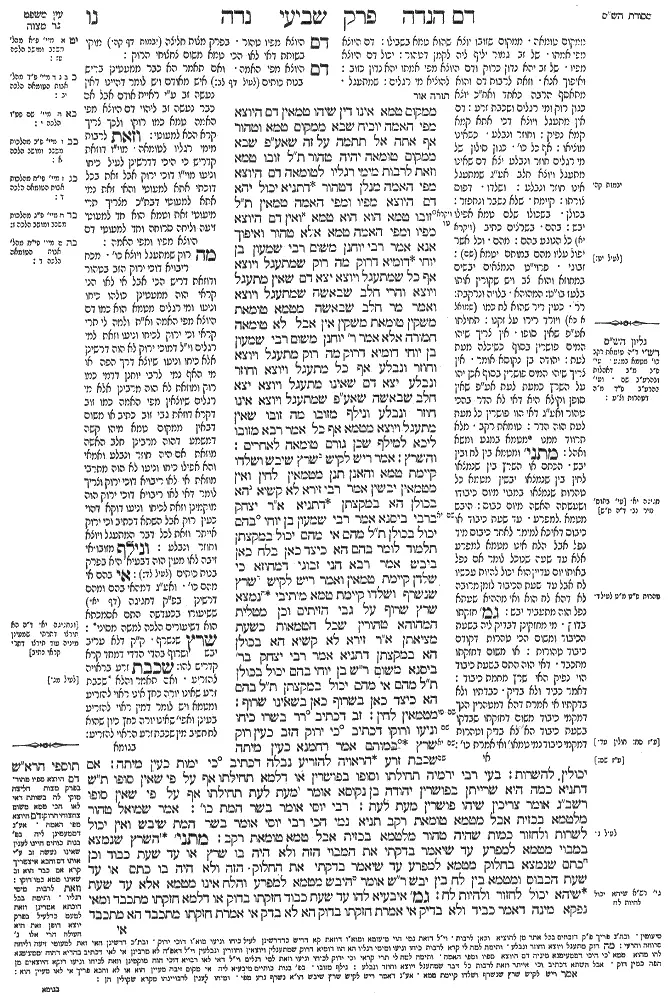
Niddah 56a - Guemara
ממקום טמא אינו דין שיהו טמאין דם היוצא מפי האמה יוכיח שבא ממקום טמא וטהור אף אתה אל תתמה על זה שאע"פ שבא ממקום טומאה יהיה טהור ת"ל זובו טמא וזאת לרבות מימי רגליו לטומאה דם היוצא מפי האמה מנלן דטהור דתניא יכול יהא דם היוצא מפיו ומפי האמה טמאין ת"ל (ויקרא טו, ב) זובו טמא הוא הוא טמא ואין דם היוצא מפיו ומפי האמה טמא אלא טהור ואיפוך אנא אמר רבי יוחנן משום רבי שמעון בן יוחי דומיא דרוק מה רוק שמתעגל ויוצא אף כל שמתעגל ויוצא יצא דם שאין מתעגל ויוצא והרי חלב שבאשה שמתעגל ויוצא ואמר מר חלב שבאשה מטמא טומאת משקין טומאת משקין אין אבל לא טומאה חמורה אלא אמר ר' יוחנן משום רבי שמעון בן יוחי דומיא דרוק מה רוק מתעגל ויוצא וחוזר ונבלע אף כל מתעגל ויוצא וחוזר ונבלע יצא דם שאינו מתעגל ויוצא יצא חלב שבאשה שאע"פ שמתעגל ויוצא אינו חוזר ונבלע ונילף מזובו מה זובו שאין מתעגל ויוצא מטמא אף כל אמר רבא מזובו ליכא למילף שכן גורם טומאה לאחרים והשרץ אמר ריש לקיש שרץ שיבש ושלדו קיימת טמא והאנן תנן מטמאין לחין ואין מטמאין יבשין אמר רבי זירא לא קשיא הא בכולן הא במקצתן דתניא א"ר יצחק ברבי ביסנא אמר רבי שמעון בן יוחי {ויקרא יא } בהם יכול בכולן ת"ל מהם אי מהם יכול במקצתן תלמוד לומר בהם הא כיצד כאן בלח כאן ביבש אמר רבא הני זבוגי דמחוזא כי שלדן קיימת טמאין ואמר ריש לקיש שרץ שנשרף ושלדו קיימת טמא מיתיבי נמצא שרץ שרוף על גבי הזיתים וכן מטלית המהוהא טהורין שכל הטמאות כשעת מציאתן א"ר זירא לא קשיא הא בכולן הא במקצתן דתניא אמר רבי יצחק בר' ביסנא משום ר"ש בן יוחי בהם יכול בכולן ת"ל מהם אי מהם יכול במקצתן ת"ל בהם הא כיצד כאן בשרוף כאן בשאינו שרוף מטמאין לחין זב דכתיב (ויקרא טו, ג) רר בשרו כיחו וניעו ורוקו דכתיב (ויקרא טו, ח) כי ירוק הזב כעין רוק שרץ {ויקרא יא } במותם אמר רחמנא כעין מיתה שכבת זרע הראויה להזריע נבלה דכתיב (ויקרא יא, לט) כי ימות כעין מיתה אם יכולין להשרות בעי רבי ירמיה תחילתו וסופו בפושרין או דלמא תחילתו אף על פי שאין סופו ת"ש דתניא כמה היא שרייתן בפושרין יהודה בן נקוסא אומר מעת לעת תחילתו אף על פי שאין סופו רשב"ג אומר צריכין שיהו פושרין מעת לעת רבי יוסי אומר בשר המת כו' אמר שמואל טהור מלטמא בכזית אבל מטמא טומאת רקב תניא נמי הכי רבי יוסי אומר בשר המת שיבש ואין יכול לשרות ולחזור כמות שהיה טהור מלטמא בכזית אבל טמא טומאת רקב מתני׳ השרץ שנמצא במבוי מטמא למפרע עד שיאמר בדקתי את המבוי הזה ולא היה בו שרץ או עד שעת כבוד וכן כתם שנמצא בחלוק מטמא למפרע עד שיאמר בדקתי את החלוק הזה ולא היה בו כתם או עד שעת הכבוס ומטמא בין לח בין יבש ר"ש אומר היבש מטמא למפרע והלח אינו מטמא אלא עד שעת שיהא יכול לחזור ולהיות לח גמ׳ איבעיא להו עד שעת כבוד חזקתו בדוק או דלמא חזקתו מתכבד ומאי נפקא מינה דאמר כביד ולא בדיק אי אמרת חזקתו בדוק הא לא בדק אי אמרת חזקתו מתכבד הא מתכבד
Comments from Rashi on Masechet Niddah Page 56a
ממקום טומאה . ממקום שזובו יוצא שהוא טמא בשבילו: דם היוצא מפי אמתו . של זב גמור יליף ליה לקמן דטהור: יכול דם היוצא מפיו . של זב יהא נדון כרוק ודם היוצא מפי אמתו יהא נדון כזוב: ואיפוך אנא . וזאת לרבות דם והוא להוציא מי רגלים: שמתעגל . מתאסף הרבה כאחד ואח"כ יוצא כגון רוק ומי רגלים ושכבת זרע: דם אין מתעגל ויוצא דכי אתא קמא קמא נפיק: וחוזר ונבלע . כשאינו מוציאו: אף כל כו' . כגון סילון של מי רגלים חוזר ונבלע יצא דם שאינו מתעגל ויוצא חלב אע"ג שמתעגל אינו חוזר ונבלע: ושלדו . דפוס צורתו: קיימת . שלא נשבר ונתפזר: בכולן . בשכולו שלם טמא אפילו יבש: בהם . בשרצים כתיב (ויקרא יא) כל הנוגע בהם: מהם . וכל אשר יפול עליו מהם במותם יטמא (שם): זבוגי . פרוי"ט הנמצאים יבשים במחוזא והוא צב ויש שקורין אותו בלע"ז בו"ט: המהוהא . בלויה ונרקבת: רר . כעין ריר שהוא לח כמו (שמואל א כא) ויורד רירו על זקנו: תחילתו אע"פ שאין סופו . אין צריך שיהו המים פושרין בסוף כשיכלה מעת לעת: יהודה בן נקוסא אומר . אין צריך שיהו המים פושרין בסוף אכן יהו על השרץ כמעת לעת אע"פ שאין סופן וקולא היא דאי לא הדר בהכי טהור ואע"ג דאי הוו פושרין כל מעת לעת הוה הדר: טומאת רקב . מלא תרווד ממנו מטמא במגע ומשא ואהל: מתני' ומטמא בין לח ובין יבש . הכתם או השרץ בין שנמצאו לחין בין שנמצאו יבשין מטמא כל טהרות שנמצאו במבוי מיום כיבודו ושעשתה האשה מיום כבוס: היבש מטמא למפרע . עד שעת כיבוד או כיבוס דאיכא למימר לאחר כיבוס מיד נפל. אבל הלח אינו מטמא למפרע אלא עד שעה שנוכל לומר אם נפל באותו יום עדיין הוא יכול להיות עכשיו לח אבל עד שעת הכיבוד לזמן מרובה לא דהא לח הוא ואי מההיא שעתא נפל הוה מתעביד יבש: גמ' חזקתו בדוק . מי מחזקינן דבדיק ליה בשעת הכיבוד ומשום הכי טהרות דקודם כיבוד טהורות: או משום דחזקתו מתכבד . דאי הוה התם בשעת כיבוד הוי נפיק האי שרץ מחמת כיבוד: דאמר כביד ולא בדיק . כבדתיו ולא בדקתיו. אי אמרת דהא דמטהרין הנך דמקמי כיבוד משום דחזקתו שבדקו בשעת כיבוד הא לא בדיק וטהרות דמקמי כיבוד נמי טמאו' ואי אמרת כו':
Comments from Tosafot - Niddah 56a
דם היוצא מפיו טהור. בפרק מצות חליצה (יבמות דף קה.) מוקי בשותת דאי לאו הכי טמא משום צחצוחי הרוק: דם היוצא מפי האמה. ואם תאמר הא כבר ממעטינן בריש בנות כותים (לעיל נדה דף לב:) איש מאודם ויש לומר דהיינו דאין נעשה זב ע"י ראיית אודם אבל אם כבר נעשה זב ליהוי דם היוצא מפי האמה טמא כמו רוקו ולכך צריך קרא הכא למעוטי: וזאת לרבות מימי רגליו לטומאה. מוי"ו דוזאת קדריש כי היכי דדרשינן לעיל כיחו וניעו מוי"ו דוכי ירוק אבל זאת בכל דוכתי אתא למעוטי והאי זאת נמי אתא למעוטי דבת"כ מצריך תרי מיעוטי זאת וטמא הוא חד למעוטי זיעה וליחה סרוחה וחד למעוטי דם היוצא מפיו ומפי האמה: מה רוק שמתעגל ויוצא כו'. מכח ריבויא דוכי ירוק הזב בטהור ודוזאת דריש הכי אבל אי לאו הני קראי הוה ממעטינן כולהו כיחו וניעו ומי רגלים מטמא הוא כמו דם היוצא מפי האמה וא"ת ולמה לי תרי קראי וכי ירוק לכיחו וניעו וזאת למי רגלים וי"ל דמוכי ירוק לא הוה דרשינן אלא כיחו וניעו שיוצא דרך הפה או מי האף נמי לרבי יוחנן דדמי כמו רוק ומוזאת לא הוה מרבינן אלא מי רגלים שיוצאין מפי האמה כמו זוב דקרא דוזאת גבי זוב כתיב או משום דבאין ממקום טמא מיהו קשה דמשמע דהוה מרבינן חלב האשה מוזאת אם היה חוזר ונבלע ואמאי והא אפילו כיחו וניעו לא הוה מתרבי מוזאת אי לאו ריבויא דוכי ירוק וצריך לומר דאי לאו ריבויא דוכי ירוק הוה מוקמינן וזאת לכיחו וניעו דוקא דהוי כעין רוק אבל השתא דכתיב וכי ירוק אייתר וזאת לכל דבר המתעגל ויוצא וחוזר ונבלע: ונילף מזובו. אי זיבה לאו מעין הוה דבעיא היא בפרק בנות כותים (לעיל נדה לד:): אי בהם אי מהם כו'. ואע"ג דמהאי בהם ומהם דרשינן בפ"ק דחגיגה (דף יא.) ששיעורו בכעדשה התם אסמכתא הוא דשיעורים הלכה למשה מסיני: שרץ שנשרף. ק"ק דלא עריב יבש ושרוף בהדי הדדי דמחד קרא קדריש להו: שכבת זרע בראויה להזריע. ואם תאמר והלא שכבת זרע שאינו יורה כחץ אינו ראוי להזריע ומטמא ויש לומר דמין ראוי להזריע בעינן ואפי' שאינו יורה כחץ כיון שהוא לח חשיב מין שכבת זרע הראוי להזריע:
Niddah 56a - Mishnah translated into english
from a place of impurity, the same place that emits ziva, is it not logical that it should be impure? The baraita answers: The case of blood that issues from the opening of the penis may prove that this inference is invalid, as the blood comes from a place of impurity and yet it is pure. Likewise, you should not be surprised about this, the urine of a zav, that even though it comes from a place of impurity it should be pure. Therefore, the verse states: “When any man has an issue out of his flesh, his issue, it is impure. And this shall be his impurity” (Leviticus 15:2–3). The term “and this” comes to include his urine with regard to the severe form of ritual impurity.
The Gemara asks: From where do we derive that blood that issues from the opening of the penis is pure? As it is taught in a baraita concerning a zav: One might have thought that blood that issues from his mouth or from the opening of the penis is impure, like his saliva and urine. Therefore, the verse states: “His issue, it is impure” (Leviticus 15:2). The term “it” is an exclusion, indicating that it, ziva, is impure, but blood that issues from his mouth or from the opening of the penis is not impure; rather, it is pure.
The Gemara suggests: But perhaps I should reverse the halakhot. One could derive from the amplification “and this” that blood issuing from the penis of the zav is impure, and from the exclusion “it” that his urine is pure. Rabbi Yoḥanan said in the name of Rabbi Shimon ben Yoḥai: Urine, rather than blood, should be included among the impure fluids of the zav, as it is similar to saliva: Just as saliva is a fluid that first gathers together and then comes out of the mouth, so too, all impure fluids are those that gather together and then come out of the body. Blood is therefore excluded, as it does not first gather together and then come out of the body.
The Gemara objects: But there is the case of the milk that is emitted from a woman, which first gathers together and then comes out of the body, and it should therefore transmit a severe form of ritual impurity, like saliva and ziva. And yet the Master said in the aforementioned baraita: The milk of a woman transmits the ritual impurity of liquids. One may infer that with regard to the ritual impurity of liquids, yes, it transmits impurity, but it does not transmit a severe form of ritual impurity.
Rather, Rabbi Yoḥanan said in the name of Rabbi Shimon ben Yoḥai: In order to transmit a severe form of impurity the fluid must be similar to saliva: Just as saliva first gathers together and then comes out of the mouth, and if it is not expectorated it is reabsorbed, so too, all impure fluids first gather together and then come out of the body, and are reabsorbed by the body if they are not emitted. Blood is therefore excluded, as it does not first gather together and then come out of the body. The milk that is emitted from a woman is also excluded, as even though it gathers together and then comes out of the body it cannot be reabsorbed.
The Gemara further objects: But let us derive from the case of ziva that both blood and breast milk transmit impurity: Just as his ziva does not first gather together and then come out of the body, and yet it transmits impurity, so too, all the fluids of a zav should transmit impurity, even if they do not gather together before they are emitted from the body. Rava said in explanation: One cannot derive the halakha with regard to the blood and breast milk of a zav or zava from the halakha with regard to his ziva, as the case of ziva is unique in that it causes impurity to others, i.e., to the one who emitted ziva.
§ The mishna teaches: And the carcass of a creeping animal transmits impurity when moist but not when dry. Reish Lakish says: With regard to the carcass of a creeping animal that dried up but its skeleton is intact, i.e., its bone structure remains in place, it is ritually impure. The Gemara asks: But didn’t we learn in the mishna that the items it lists, including the creeping animal, all transmit impurity when they are moist, but they do not transmit impurity when they are dry? Rabbi Zeira said: It is not difficult. This statement of Reish Lakish, that creeping animals transmit impurity even when dry, is referring to a case where all of the bones are intact. By contrast, that ruling of the mishna, that they do not transmit impurity when dry, is referring to a situation where only part of the bones are intact.
This is as it is taught in a baraita that Rabbi Yitzḥak, son of Rabbi Bisna, says that Rabbi Shimon ben Yoḥai says: The verse states with regard to creeping animals: “Whoever touches them when they are dead shall be impure until the evening” (Leviticus 11:31). One might have thought that the carcasses of creeping animals transmit impurity only if one comes into contact with all of them, i.e., with creeping animals that are completely intact. Therefore, the verse states: “And upon whatever any of them falls when they are dead shall be impure” (Leviticus 11:32). The term “any of them” indicates that this halakha applies even if one comes into contact with only part of a creeping animal.
If the halakha is derived from the term “of them,” one might have thought that even if one comes into contact with a part of them he is rendered impure. Therefore, the verse states: “Whoever touches them,” which indicates completely intact creeping animals. The baraita concludes: How can these texts be reconciled? Here, where the verse indicates that even part of them transmits impurity, it is referring to a moist creeping animal. There, where the verse teaches that only a complete creeping animal transmits impurity, it is speaking of a dry creature.
Rava said: With regard to these lizards of the city of Meḥoza, when their skeleton is intact they are impure. The dab lizard is one of the creeping animals listed in the Torah. And Reish Lakish says: With regard to the carcass of a creeping animal that was burned but its skeleton is intact, it is ritually impure.
The Gemara raises an objection from a mishna that indicates a burnt carcass of a creeping animal is pure (Teharot 9:9): In a case where a burnt creeping animal was found on top of a pile of olives, and likewise, if the tattered rag of a zav was found on a pile of olives, the olives and the rag are pure. One is not concerned that the carcass of the creeping animal touched the olives or rag before it was burned, because with regard to all matters of impurity, it is assumed that when the item in question came into contact with the potential sources of impurity, the potential sources of impurity were in the same state as they were at the time they were found, and a burnt carcass does not transmit impurity. Rabbi Zeira said: It is not difficult; this statement of Reish Lakish refers to a case where all of the bones are intact, whereas that ruling of the mishna is referring to a situation where only part of the bones are intact.
As it is taught in a baraita that Rabbi Yitzḥak, son of Rabbi Bisna, says in the name of Rabbi Shimon ben Yoḥai: When the verse states: “Whoever touches them when they are dead shall be impure” (Leviticus 11:31), one might have thought that creeping animals transmit impurity only if one comes into contact with all of them, i.e., with creeping animals that are completely intact. Therefore, the verse states: “And upon whatever any of them falls when they are dead shall be impure” (Leviticus 11:32), indicating that even a part of them transmits impurity.
If the halakha is derived from the term “of them,” one might have thought that even contact with a part of them transmits impurity. Therefore, the verse states: “Whoever touches them.” How can these texts be reconciled? Here, where the verse teaches that only the complete carcass of a creeping animal transmits impurity, it is referring to a burnt creeping animal. There, where the verse indicates that even a part of them transmits impurity, it is referring to the carcass of a creeping animal that is not burnt.
§ The mishna teaches that the ziva of a zav, the mucus and saliva of a zav, the carcass of a creeping animal, an animal carcass, and semen all transmit impurity when they are moist, but they do not transmit impurity when they are dry. The Gemara cites the sources for these halakhot: The ziva of a zav transmits impurity only when moist, as it is written: “His flesh runs with his issue” (Leviticus 15:3), which is referring to a moist discharge. His phlegm and his mucus and his saliva likewise transmit impurity only when moist, as it is written: “And if one who has an issue spits” (Leviticus 15:8), which is referring to a substance that is like saliva, which is moist.
The carcass of a creeping animal transmits impurity only when moist, as the Merciful One states: “Whoever touches them when they are dead shall be impure” (Leviticus 11:31). This indicates that they transmit impurity when they are in a state similar to their state at the time of death, when creatures are still moist. Semen transmits impurity only when moist, as it must be fit to inseminate. An animal carcass transmits impurity only when moist, as it is written: “And if any animal of which you may eat dies, he who touches its carcass shall be impure until the evening” (Leviticus 11:39), which teaches that the carcass transmits impurity when it is in a state similar to its state at the time of death.
§ The mishna teaches that if one could soak those dry substances in water and restore them to their previous state they would transmit impurity both when moist and when dry. The mishna further teaches that this is referring to soaking them in lukewarm water for a twenty-four-hour period. Rabbi Yirmeya raises a dilemma: Does the mishna mean that the soaking must be performed in lukewarm water from the beginning of the soaking until its end, or perhaps it is sufficient if the water is lukewarm at the beginning of the soaking, even if at the end of the soaking the water is not lukewarm?
The Gemara explains: Come and hear, as it is taught in a baraita: How much time is their soaking in lukewarm water? Yehuda ben Nekosa says: This is referring to a twenty-four-hour period, and it is sufficient if the water is lukewarm at its beginning, even if it is not lukewarm at its end. Rabban Shimon ben Gamliel says: The water must be lukewarm for the entire twenty-four-hour period.
§ The mishna teaches that Rabbi Yosei says: With regard to the flesh of a corpse that is dry and cannot be soaked to restore it to its previous state, it is ritually pure. Shmuel says: It is pure from transmitting impurity by the amount of an olive-bulk, but if there is a ladleful of the flesh it transmits the impurity of the decayed flesh of a corpse. This is also taught in a baraita: Rabbi Yosei says: With regard to the flesh of a corpse that dried up and cannot be soaked and restored to its previous state, it is ritually pure from transmitting impurity by the amount of an olive-bulk, but it is impure with the impurity of the decayed flesh of a corpse.
MISHNA: The carcass of a creeping animal that was found in an alleyway renders pure items impure retroactively. All items that passed through that alleyway from the time about which one may state: I examined this alleyway and there was no carcass of a creeping animal in it, or from the time of the sweeping of the alleyway, are impure.
And likewise, a blood stain that was discovered on the robe of a woman renders her impure retroactively. Any pure items that she handled from the time about which one may state: I examined this robe and there was no blood stain on it, or from the time of the laundering of the robe, are impure.
And the carcass of a creeping animal or a blood stain renders items impure retroactively whether they are still moist or are already dried out. Rabbi Shimon says: The dry one renders items impure retroactively, but the moist one does not render items impure from the aforementioned times, but only from such a time that it could still be moist from then up to the moment it was discovered.
GEMARA: With regard to the case of the carcass of a creeping animal that was found in an alleyway, a dilemma was raised before the Sages: The mishna teaches that any pure items that passed through that alleyway from the time of the sweeping of the alleyway are impure. Does this mean that once the alleyway is swept its presumptive status is that it has been examined, as it is examined during the sweeping and any impure item would have been discovered, and therefore any pure items that passed through the alleyway beforehand remain pure? Or perhaps the mishna means that once the alleyway is swept its presumptive status is that it has been entirely swept, and therefore any creeping animal would have been removed by the sweeping.
The Gemara asks: And what is the practical difference that arises from this dilemma? The Gemara answers: There is a difference in a case where the one who swept the alleyway said he swept it but did not examine it. If you say that items that were present in the alleyway before it was swept remain pure because the presumptive status of a swept alleyway is that it has been examined, in this case the man explicitly said that he did not examine it, so it does not have this presumptive status. By contrast, if you say that the items remain pure because the presumptive status of the alleyway is that it has been completely swept, in this case too it has been swept, and therefore the items that were present earlier remain pure.
Traduction : The William Davidson digital edition of the Koren Noé Talmud, with commentary by Rabbi Adin Even-Israel Steinsaltz.