 Talmud Bavli
No video class on this page yet.
To add a video to this page please click here.Niddah Page 39a
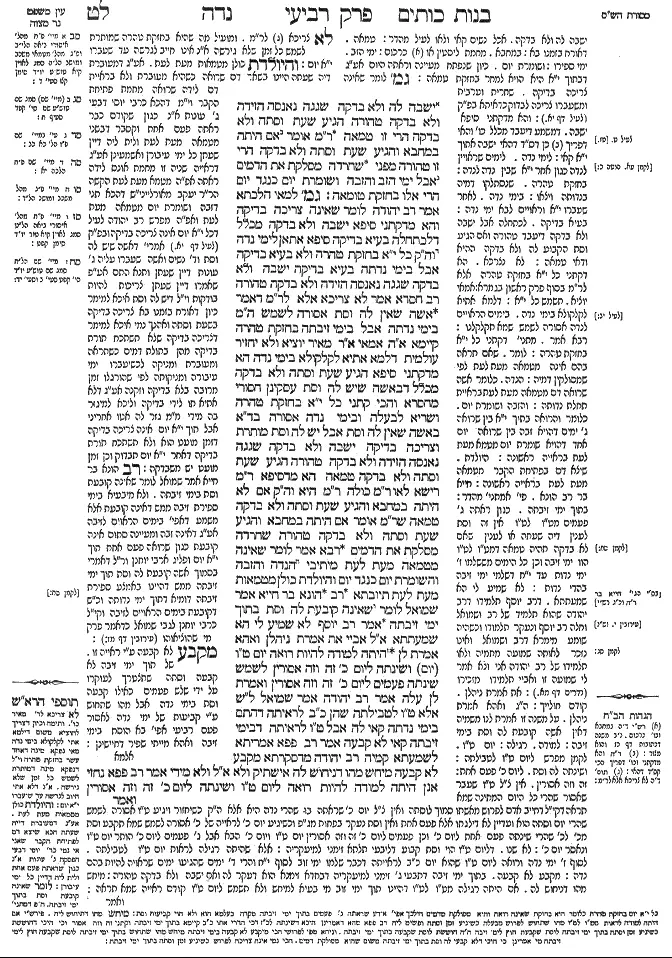
Niddah 39a - Guemara
ישבה לה ולא בדקה שגגה נאנסה הזידה ולא בדקה טהורה הגיע שעת וסתה ולא בדקה הרי זו טמאה ר"מ אומר אם היתה במחבא והגיע שעת וסתה ולא בדקה הרי זו טהורה מפני שחרדה מסלקת את הדמים אבל ימי הזב והזבה ושומרת יום כנגד יום הרי אלו בחזקת טומאה גמ׳ למאי הלכתא אמר רב יהודה לומר שאינה צריכה בדיקה והא מדקתני סיפא ישבה ולא בדקה מכלל דלכתחלה בעיא בדיקה סיפא אתאן לימי נדה וה"ק כל י"א בחזקת טהרה ולא בעיא בדיקה אבל בימי נדתה בעיא בדיקה ישבה ולא בדקה שגגה נאנסה הזידה ולא בדקה טהורה רב חסדא אמר לא צריכא אלא לר"מ דאמר אשה שאין לה וסת אסורה לשמש ה"מ בימי נדתה אבל בימי זיבתה בחזקת טהרה קיימא א"ה אמאי א"ר מאיר יוציא ולא יחזיר עולמית דלמא אתיא לקלקולא בימי נדה הא מדקתני סיפא הגיע שעת וסתה ולא בדקה מכלל דבאשה שיש לה וסת עסקינן חסורי מחסרא והכי קתני כל י"א בחזקת טהרה ושריא לבעלה ובימי נדה אסורה בד"א באשה שאין לה וסת אבל יש לה וסת מותרת וצריכה בדיקה ישבה ולא בדקה שגגה נאנסה הזידה ולא בדקה טהורה הגיע שעת וסתה ולא בדקה טמאה הא מדסיפא ר"מ רישא לאו ר"מ כולה ר"מ היא וה"ק אם לא היתה במחבא והגיע שעת וסתה ולא בדקה טמאה שר"מ אומר אם היתה במחבא והגיע שעת וסתה ולא בדקה טהורה שחרדה מסלקת את הדמים רבא אמר לומר שאינה מטמאה מעת לעת מיתיבי הנדה והזבה והשומרת יום כנגד יום והיולדת כולן מטמאות מעת לעת תיובתא רב הונא בר חייא אמר שמואל לומר שאינה קובעת לה וסת בתוך ימי זיבתה אמר רב יוסף לא שמיע לי הא שמעתתא א"ל אביי את אמרת ניהלן ואהא אמרת לן היתה למודה להיות רואה יום ט"ו (יום) ושינתה ליום כ' זה וזה אסורין לשמש שינתה פעמים ליום כ' זה וזה אסורין ואמרת לן עלה אמר רב יהודה אמר שמואל ל"ש אלא ט"ו לטבילתה שהן כ"ב לראיתה דהתם בימי נדתה קאי לה אבל ט"ו לראיתה דבימי זיבתה קאי לא קבעה אמר רב פפא אמריתא לשמעתא קמיה רב יהודה מדסקרתא מקבע לא קבעה מיחש מהו דניחוש לה אישתיק ולא א"ל ולא מידי אמר רב פפא נחזי אנן היתה למודה להיות רואה ליום ט"ו ושינתה ליום כ' זה וזה אסורין
Comments from Rashi on Masechet Niddah Page 39a
ישבה לה ולא בדקה . אכל נשים קאי ולאו לעיל מהדר: טמאה . דאורח בזמנו בא: במחבא . מחמת ליסטין או כרכום: ימי הזב . ימי ספירו: ושומרת יום . כיון שנפתח מעיינה וראתה היום אע"ג דבתוך י"א היא הויא למחר בחזקת טמאה: גמ' לומר שאינה צריכה בדיקה . שחרית וערבית ומשעברו צריכה לבדוק כדאיתא בפ"ק (לעיל נדה דף יא.): והא מדקתני סיפא ישבה . דמשמע דיעבד מכלל כו'. והאי דפריך כן דס"ד דהאי ישבה אתוך י"א קאי: לימי נדה . לימים שראויין לנדה כגון אחר י"א שבין נדה לנדה: בחזקת טהרה . שנסתלקו דמיה בנדותה ויצאו: בימי נדה . לאחר שעברו י"א וראויים לבא ימי נדה: בעיא בדיקה . לכתחלה אבל ישבה ולא בדקה דיעבד טהורה ואם הגיע וסת הקבוע לה ולא בדקה ההיא ודאי טמאה: לא נצרכא . הא דקתני כל י"א בחזקת טהרה אלא לר"מ בסוף פרק ראשון בגמרא: אמאי יוציא . תשמש כל י"א: דלמא אתיא לקלקולא בימי נדה . בימים הראויים לנדה אסורה לשמש שמא תקלקלנו: רבא אמר . מתני' דקתני כל י"א בחזקת טהרה: לומר . שאם תראה בהם אינה מטמאה מעת לעת לפי שמסולקין דמיה: הנדה . כלומר אשה שרואה דם מטמאה מעת לעת בראיית תחלת נדותה: והזבה ושומרת יום . כלומר והרואה בתוך י"א בין שרואה ג' ימים דהויא זבה בין שרואה יום אחד דהויא שומרת יום מטמא מעת לעת בראייה ראשונה: היולדת . שיצא דם בפתיחת הקבר מטמאה מעת לעת בראייה ראשונה: חייא בר רב הונא . פי' אמתני' מהדר: בתוך ימי זיבתה . כגון ראתה ג' פעמים מט"ו לט"ו אין זה וסת לענין דיה שעתה או לענין שאם לא בדקה תהיה טמאה דמט"ו לט"ו הוו ימי זיבה וכן כל הימים מששלמו ז' ימי נדות עד י"ח דשלמי ימי זיבה בהדי נדות: לא שמיע לי הא שמעתתא . דרב יוסף תלמידו דרב יהודה שהוא תלמיד של רב ושמואל וחלה רב יוסף ונעקר תלמודו וכשהיה שומע מימרא דרב ושמואל ואינו נזכר לאותה שמועה מתמיה ולאו תלמידו של רב יהודה אני ולא אמר לי שמועה זו ואביי תלמידו מזכירו (נדרים דף מא.): את אמרת ניהלן . קודם חולייך: ה"ג ואהא אמרת ניהלן . על משנה זו אמרת לנו משמיה דאין אשה קובעת לה וסת בימי זיבה: למודה . רגילה: יום ט"ו . לקמן מפרש ליום ט"ו לטבילתה: ושינתה . לה וסת ליום כ' פעם אחת: זה וזה אסורין . אין צ"ל ט"ו שעבר שאסור שהרי כל היום המתינה שמא תראה דקי"ל דחייב אדם לפרוש מאשתו סמוך לוסתה ואין צ"ל יום כ' שראתה בו שהרי נדה היא אלא ה"ק כשיחזור ויגיע ט"ו אסורה לשמש שהרי יום וסתה הוא ועדיין לא דילגתו אלא פעם אחת ואין וסת נעקר בפחות מג"פ וכשיגיע יום כ' לראייה של כ' אסורה לשמש שמא תקבע וסת מכ' לכ' שהרי שינתה פעם אחת ליום כ' וכן פעמים ליום כ' זה וזה אסורין יום ט"ו ויום כ' הבא אבל ג' פעמים ליום כ' הותר יום ט"ו ונאסר יום כ': לא שנו . דליום ט"ו הוי וסת קבוע דליבעי תלתא זימני למיעקריה: אלא . שהיתה רגילה לראות יום ט"ו לטבילתה לסוף ז' ימי נדה ורואה ליום ט"ו שהוא יום כ"ב לראייתה דכבר שלמו ימי זוב לסוף י"ח והרי ד' ימים שהגיעו ימים שראויה להיות בהם נדה: מקבע לא קבעה . בתוך ימי זיבה דתבעי ג' זימני למיעקריה דבחדא זימנא הוא דעקר לה ואם ישבה ולא בדקה טהורה: מיחש מהו דניחוש לה . אם היתה רגילה מט"ו לט"ו דהיינו תוך ימי זוב מי בעיא למיחש ולא תשמש ליום ט"ו קודם ראייה שמא תראה:
Comments from Tosafot - Niddah 39a
לא צריכא לר"מ. ומועיל מה שהיא בחזקת טהרה שמותרת לשמש כל זמן שלא גירשה א"נ אינו חייב לגרשה עד שעברו י"א יום: והיולדת כולן מטמאות מעת לעת. אע"ג דמעוברת דיה שעתה היינו בשאר דם שרואה כשהיא מעוברת ולא בראיית דם לידה שרואה מחמת פתיחת הקבר וי"מ דהכא כרבי יוסי דבעי ג' עונות א"נ כגון שקודם כבר ראתה פעם אחת וקסבר דבשני מטמאה מעת לעת ולית ליה דיין שעתן כל ימי עיבורן ואשמעינן אע"ג דראייה שניה זו מחמת אונס לידה ראתה אפ"ה מטמא מעת לעת הקשה הר"ר יעקב מאורלייני"ש דהכא תני דזבה ושומרת יום מטמאה מעת לעת ואפ"ה מפרש רב יהודה לעיל דכל י"א יום אינה צריכה בדיקה ובפ"ק (לעיל נדה דף יא.) אמרי' דאשה שיש לה וסת וד' נשים ואשה שעברו עליה ג' עונות דיין שעתן ותנא התם אע"פ שאמרו דיין שעתן צריכות להיות בודקות וי"ל דיש לה וסת איכא למימר כיון דאורח בזמנו בא צריכה בדיקה בשעת וסתה ואהנך נמי איכא למימר דצריכה בדיקה שלא תשתכח תורת בדיקה מהן בתולת דמים כשתראה ומעוברת ומניקה לכשיעברו ימי עיבורה ומניקותה לפי שהורגלו זמן מרובה בלא בדיקה וזקנה אע"ג דלא אתיא תו לידי בדיקה וליכא למיגזר בה מידי מ"מ גזר לה אטו אחריני אבל תוך י"א יום אינה צריכה בדיקה דזמן מועט הוא ולא תשתכח תורת בדיקה דאחר י"א יום תבדוק וכן זמן מועט יש משבדקה: רב הונא בר חייא אמר שמואל לומר שאינה קובעת וסת בימי זיבתה. ולא מיבעיא בימי ספירת זיבה ממש דאינה קובעת אלא משמע דאפי' בימים הראוים לזיבה אע"ג דאינה זבה ומעיינה סתום אינה קובעת כגון שרואה פעם אחת תוך י"א יום ופליג ארבי יוחנן ור"ל דאמרי בסמוך אשה קובעת לה וסת תוך ימי זיבתה ממש דהיינו באמצע ספירת זיבתה דומיא דתוך ימי נדותה וכ"ש דקובעת בימים הראויים לזיבה וקי"ל כרבי יוחנן לגבי שמואל כדאמר פרק מי שהוציאוהו (עירובין דף מז:): מקבע לא קבעה ע"י ראייה זו. של תוך ימי זיבה לא קבעה וסתה שתצטרך לעוקרו על ידי שלש פעמים כאילו קבעה וסת בימי נדה אבל מהו שתחוש ע"י קביעות של ימי נדה לאסור פעם רביעי אפי' בא הוסת בימי זיבה ואהא מייתי שפיר דחיישינן:
Niddah 39a - Mishnah translated into english
If a woman sat and did not examine herself every morning and evening to determine whether she emitted blood and is impure, it makes no difference whether she failed to examine herself unwittingly or due to circumstances beyond her control, or even if she acted intentionally and did not examine herself; she remains ritually pure. She is rendered impure only if she examined herself and was found to have emitted blood.
By contrast, if the time of her menstrual cycle arrived, when she is required to examine herself, and she did not examine herself, that woman is ritually impure, as it is typical for a woman to discharge blood at that time. Rabbi Meir says: If a woman was in hiding from danger, and the time of her menstrual cycle arrived and she did not examine herself on that day, that woman is pure, because fear drives away blood. There is therefore no concern that she might have emitted blood.
But with regard to the seven clean days of the zav and the zava, and with regard to a woman who observes a clean day for a day she experiences a discharge during her days of ziva, if she fails to examine herself on those days, these women have a presumptive status of ritual impurity, as they already experienced a discharge.
GEMARA: The mishna teaches that throughout the eleven days of ziva that follow the seven days of menstruation, a woman has the presumptive status of ritual purity. The Gemara asks: With regard to what halakha is this stated? Rav Yehuda says: This serves to say that she does not require an examination during these days. The Gemara objects: But from the fact that the latter clause teaches: If she sat and did not examine herself she remains ritually pure, it can be inferred that she requires examination ab initio.
The Gemara explains: In the latter clause we arrive at the case of a woman who is in the days of menstruation, not in the days of ziva. And this is what the mishna is saying: For all the eleven days of ziva that follow the days of menstruation, a woman has the presumptive status of ritual purity and she does not require examination. But during the days of her menstruation she requires examination. Nevertheless, if she sat and did not examine herself, whether unwittingly or due to circumstances beyond her control, or even if she acted intentionally and did not examine herself, she remains ritually pure.
Rav Ḥisda said a different answer: The first clause of the mishna is necessary only for the opinion of Rabbi Meir, who said: With regard to a woman who does not have a fixed menstrual cycle, she is forbidden to engage in intercourse, lest she emit blood during intercourse. The mishna is teaching that this statement applies only during the days of her menstruation, but during the days of her ziva even Rabbi Meir concedes that she stands in her presumptive status of purity and may engage in intercourse with her husband.
The Gemara asks: If so, that even according to Rabbi Meir there are days in which a woman who does not have a fixed menstrual cycle is permitted to engage in sexual intercourse with her husband, why did Rabbi Meir say that her husband must divorce her and he may never take her back, even if she eventually develops a fixed menstrual cycle? Let them engage in intercourse during the eleven days of ziva. The Gemara answers: He must divorce her lest the matter lead to failure during the days of menstruation, i.e., in case they come to engage in intercourse during the days of menstruation, when she might experience regular menstrual bleeding.
The Gemara objects: But from the fact that the latter clause teaches: If the time of her menstrual cycle arrived and she did not examine herself, that woman is ritually impure, it can be inferred that we are dealing with a woman who has a fixed menstrual cycle. The Gemara explains: The mishna is incomplete and this is what it is teaching: For all the eleven days of ziva that follow the days of menstruation, a woman has the presumptive status of ritual purity and she is permitted to her husband, but during the days of menstruation she is prohibited to her husband.
In what case is this statement said? In the case of a woman who does not have a fixed menstrual cycle, where there is a concern she might experience bleeding during any of the days of menstruation. But in the case of a woman who has a fixed menstrual cycle, she is permitted to engage in sexual intercourse with her husband, and she requires examination. Nevertheless, if she sat and did not examine herself, whether unwittingly or due to circumstances beyond her control, or even if she acted intentionally and did not examine herself, she remains ritually pure. If the time of her menstrual cycle arrived and she did not examine herself, she is impure.
The Gemara objects: But from the fact that the last clause is in accordance with the opinion of Rabbi Meir, it can be inferred that the first clause is not in accordance with the opinion of Rabbi Meir. The Gemara explains that the entire mishna is in accordance with the opinion of Rabbi Meir, and this is what it is saying: If she was not in hiding and the time of her menstrual cycle arrived and she did not examine herself, she is impure, as Rabbi Meir says: If a woman was in hiding and the time of her menstrual cycle arrived and she did not examine herself, she is pure, as fear drives away blood.
Rava says a different explanation of the first clause of the mishna: The mishna is coming to say that if a woman experiences bleeding during the eleven days of ziva, as she previously had the presumptive status of purity she does not impart impurity retroactively for a twenty-four-hour period to any ritually pure items she touched. It is assumed that she did not emit any blood before this emission.
The Gemara raises an objection from a baraita: With regard to a menstruating woman, and a zava, and a woman who observes a day for a day, and a woman who gave birth, they all impart impurity retroactively for a twenty-four-hour period. A woman who observes a day for a day is one who experiences bleeding for one or two days during her days of ziva, and the baraita teaches that even such a woman imparts impurity retroactively for a twenty-four-hour period. If so, this is a conclusive refutation of Rava’s explanation.
Rav Huna bar Ḥiyya says another explanation of the first clause of the mishna in the name of Shmuel: The mishna is coming to say that a woman does not fix a menstrual cycle for herself during the days of her ziva. In other words, a sighting during these days does not combine with sightings during the previous two periods of ziva to establish a fixed menstrual cycle. The Gemara relates that this statement was recited before Rav Yosef, who said: I did not hear this halakha from Shmuel.
Abaye said to him: But you yourself told us this halakha, and it was with regard to that mishna you told it to us, as we learned in a mishna (63b): If the woman was accustomed to see an emission of blood on the fifteenth day, so that this was her fixed menstrual cycle, and she deviated from her cycle to see an emission on the twentieth day, then on both this day, the fifteenth, and that day, the twentieth, it is prohibited for her to engage in sexual intercourse due to the concern that she might have an emission on either day. If she deviated from her cycle twice, to see an emission on the twentieth day, then on both this day and that day it is prohibited for her to engage in intercourse. If she deviates a third time to see on the twentieth she has established for herself a new fixed menstrual cycle.
Abaye continues: And you said to us with regard to this mishna that Rav Yehuda said that Shmuel said: They taught this halakha only with regard to a woman who normally experiences bleeding fifteen days from her immersion, which are twenty-two days from her sighting of menstrual blood. This means that there, she stands in her days of menstruation. But if she normally experiences bleeding fifteen days from her sighting of menstrual blood, so that she stands in her days of ziva, she has not fixed a menstrual cycle, and the previous cycle is uprooted even if she deviates from it only once.
§ With regard to the ruling that a woman’s menstrual cycle cannot be fixed during her days of ziva, Rav Pappa said: I said this halakha before Rav Yehuda of Diskarta, and I asked him for a clarification of the following matter: Granted, she does not fix a menstrual cycle during the days of ziva, and there is no need for three deviations to uproot her cycle; rather, it is uprooted by even one deviation. But what is the halakha with regard to whether we should be concerned that she might experience bleeding? In other words, if she normally experiences bleeding on a particular day during her days of ziva, must she avoid engaging in sexual intercourse with her husband on that day out of concern that she might emit blood?
Rav Yehuda of Diskarta was silent and did not say anything to Rav Pappa. Therefore, Rav Pappa said: Let us see and try to resolve this ourselves. The mishna cited above states: If the woman was accustomed to see an emission of blood on the fifteenth day, and she deviated from her cycle to see an emission on the twentieth day, then on both this day and that day it is prohibited for her to engage in sexual intercourse.
Traduction : The William Davidson digital edition of the Koren Noé Talmud, with commentary by Rabbi Adin Even-Israel Steinsaltz.