 Talmud Bavli
No video class on this page yet.
To add a video to this page please click here.Niddah Page 66a
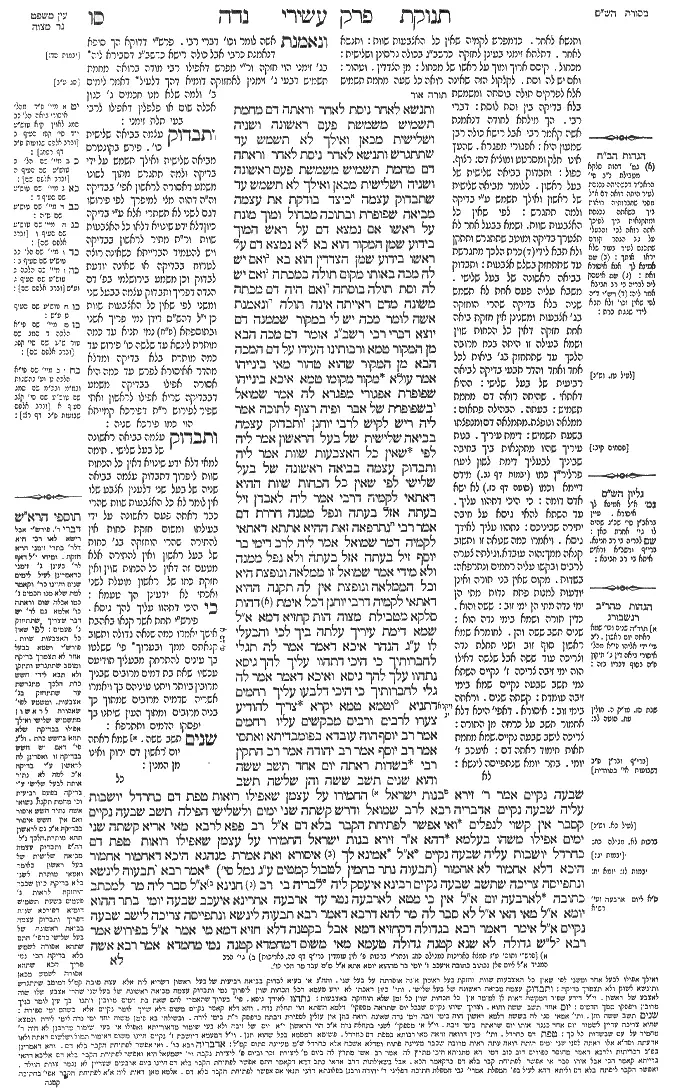
Niddah 66a - Guemara
ותנשא לאחר ניסת לאחר וראתה דם מחמת תשמיש משמשת פעם ראשונה ושניה ושלישית מכאן ואילך לא תשמש עד שתתגרש ותנשא לאחר ניסת לאחר וראתה דם מחמת תשמיש משמשת פעם ראשונה ושניה ושלישית מכאן ואילך לא תשמש עד שתבדוק עצמה כיצד בודקת את עצמה מביאה שפופרת ובתוכה מכחול ומוך מונח על ראשו אם נמצא דם על ראש המוך בידוע שמן המקור הוא בא לא נמצא דם על ראשו בידוע שמן הצדדין הוא בא ואם יש לה מכה באותו מקום תולה במכתה ואם יש לה וסת תולה בוסתה ואם היה דם מכתה משונה מדם ראייתה אינה תולה ונאמנת אשה לומר מכה יש לי במקור שממנה דם יוצא דברי רבי רשב"ג אומר דם מכה הבא מן המקור טמא ורבותינו העידו על דם המכה הבא מן המקור שהוא טהור מאי בינייהו אמר עולא מקור מקומו טמא איכא בינייהו שפופרת אפגורי מפגרא לה אמר שמואל בשפופרת של אבר ופיה רצוף לתוכה אמר ליה ריש לקיש לרבי יוחנן ותבדוק עצמה בביאה שלישית של בעל הראשון אמר ליה לפי שאין כל האצבעות שוות אמר ליה ותבדוק עצמה בביאה ראשונה של בעל שלישי לפי שאין כל הכחות שוות ההיא דאתאי לקמיה דרבי אמר ליה לאבדן זיל בעתה אזל בעתה ונפל ממנה חררת דם אמר רבי נתרפאה זאת ההיא אתתא דאתאי לקמיה דמר שמואל אמר ליה לרב דימי בר יוסף זיל בעתה אזל בעתה ולא נפל ממנה ולא מידי אמר שמואל זו ממלאה ונופצת היא וכל הממלאה ונופצת אין לה תקנה ההיא דאתאי לקמיה דרבי יוחנן דכל אימת דהות סלקא מטבילת מצוה הות קחזיא דמא א"ל שמא דימת עיריך עלתה ביך לכי והבעלי לו ע"ג הנהר איכא דאמר אמר לה תגלי לחברותיך כי היכי דתהוו עליך להך גיסא נתהוו עלך להך גיסא ואיכא דאמר אמר לה גלי לחברותיך כי היכי דלבעו עליך רחמים דתניא (ויקרא יג, מה) וטמא טמא יקרא צריך להודיע צערו לרבים ורבים מבקשים עליו רחמים אמר רב יוסף הוה עובדא בפומבדיתא ואתסי אמר רב יוסף אמר רב יהודה אמר רב התקין רבי בשדות ראתה יום אחד תשב ששה והוא שנים תשב ששה והן שלשה תשב שבעה נקיים אמר ר' זירא בנות ישראל החמירו על עצמן שאפילו רואות טפת דם כחרדל יושבות עליה שבעה נקיים אדבריה רבא לרב שמואל ודרש קשתה שני ימים ולשלישי הפילה תשב שבעה נקיים קסבר אין קשוי לנפלים ואי אפשר לפתיחת הקבר בלא דם א"ל רב פפא לרבא מאי אריא קשתה שני ימים אפילו משהו בעלמא דהא א"ר זירא בנות ישראל החמירו על עצמן שאפילו רואות טפת דם כחרדל יושבות עליה שבעה נקיים א"ל אמינא לך איסורא ואת אמרת מנהגא היכא דאחמור אחמור היכא דלא אחמור לא אחמור (תבעוה נתר בחמין לטבול קמטים ע"ג נמל סי') אמר רבא תבעוה לינשא ונתפייסה צריכה שתשב שבעה נקיים רבינא איעסק ליה לבריה בי רב חנינא א"ל סבר ליה מר למכתב כתובה לארבעה יום א"ל אין כי מטא לארבעה נטר עד ארבעה אחרינא איעכב שבעה יומי בתר ההוא יומא א"ל מאי האי א"ל לא סבר לה מר להא דרבא דאמר רבא תבעוה לינשא ונתפייסה צריכה לישב שבעה נקיים א"ל אימר דאמר רבא בגדולה דקחזיא דמא אבל בקטנה דלא חזיא דמא מי אמר א"ל בפירוש אמר רבא ל"ש גדולה לא שנא קטנה גדולה טעמא מאי משום דמחמדא קטנה נמי מחמדא אמר רבא אשה
Comments from Rashi on Masechet Niddah Page 66a
ותנשא לאחר . כדמפרש לקמיה שאין כל האצבעות שוות: ותנשא לאחר . דתלתא זימני בעינן לחזקה כרשב"ג. בכולה גרסינן ושלישית: מכחול . קיסם ארוך ומוך על ראשו של מכחול: מן הצדדין . וטהור: ואם יש לה וסת . לקלקול הזה שאינה רואה כל שעה מחמת תשמיש אלא לפרקים תולה בוסתה ומשמשת בלא בדיקה בין וסת לוסת: דברי רבי . הך מילתא לחודה דנאמנת אשה קאמר רבי אבל רישא כולה רבן שמעון היא: אפגורי מפגרא . שהעץ אינו חלק ומסרטט ומוציא דם: רצוף . כפול: ותבדוק בביאה שלישית של בעל ראשון . כלומר מביאה שלישית של ראשון ואילך תשמש ע"י בדיקה ולמה תתגרש: לפי שאין כל האצבעות שוות . ושמא בבעל אחר לא תצטרך בדיקה ומוטב שתתגרש ותתקן ולא תבא לידי כרת הלכך מתגרשת עד שתתחזק בשלש אצבעות: ותבדוק בביאה ראשונה של בעל שלישי . משבא עליה פעם אחת לא תשמש שניה בלא בדיקה שהרי הוחזקה בג' אצבעות. ומשנינן אין חזקת ביאה אחת חזקה דאין כל הכחות שוין ושמא בעילה זו היתה בכח מרובה הלכך עד שתתחזק בג' ביאות לכל אחד ואחד והדר תבעי בדיקה לביאה רביעית של בעל שלישי: ההיא דאתאי . שהיתה רואה דם מחמת תשמיש: בעתה . הבהילה פתאום: ממלאה ונופצת . מתמלאה דם ומנפצתו בשעת תשמיש: דימת עיריך . בנות עיריך שהיו מתקנאות ביך בחיבה שביניך לבעליך. דימת לשון ליעוז פרליר"ץ כמו (יבמות דף נב.) מידם דיימא וכמו (סוטה דף כז.) לא ישא אדם דומה: כי היכי דתהוו עליך . עד השתא להאי גיסא על חיבה יתירה שביניכם: נתהוו עליך לאידך גיסא . ויאמרו כמה שנואה זו ותשוב קנאה ממך: הוה עובדא . וגילתה צערה לרבים ובקשו עליה רחמים ונתרפאה: בשדות . מקום שאין בני תורה ואינן יודעות למנות פתח נדות מתי הן ימי נדה מתי הן ימי זוב: ששה והוא . כדין תורה ושמא בימי נדה הוא: שנים תשב ששה והן . לחומרא שמא ראשון סוף זוב ושני תחלת נדה וצריכה עוד ששה אבל שלשה דאילו הוה ימי זיבה צריכה ז' נקיים השתא נמי תשב שבעה נקיים שמא בימי זיבה עומדת: קשתה שנים . וראתה בימי זוב: איסורא . דאפי' היכא דלא אחמור תשב על כרחה מן התורה: צריכה לישב שבעה נקיים . שמא מחמת תאות חימוד ראתה דם: איעכב ז' יומי . בתר יומא שנתפייסה לינשא:
Comments from Tosafot - Niddah 66a
ונאמנת אשה לומר וכו' דברי רבי. פרש"י דדוקא הך סיפא דנאמנת כרבי אבל כולה רישא כרשב"ג דסבירא ליה בג' זימני הוי חזקה ור"י מפרש דאפילו רבי מודה ברואה מחמת תשמיש דבעי ג' זימנין לאחזוקה דומיא דהך דלעיל דאמר לימים ב' ולמה שלא מנו חכמים ג' כגון אכלה שום או פלפלין דאפילו לרבי בעי תלת זימני: ותבדוק עצמה בביאה שלישית כו'. פירש בקונטרס מביאה שלישית ואילך תשמש על ידי בדיקה ולמה תתגרש מתוך לשונו משמע דאסורה לראשון אפי' בבדיקה וה"ה דהוה מצי למיפרך לפי פירושו דגם לשני לא תשתרי אלא ע"י בדיקה כיון דלא ידע שינויא דלאו כל האצבעות שוות ור"ת מתיר לראשון בבדיקה ויש להעמיד הברייתא כשאינה רוצה לטרוח בבדיקה או שאינה יודעת לבדוק וכן משמע בירושלמי בפ' דם הנדה דפריך ותבדוק עצמה בבעל שני ומשני לפי שאין כל האצבעות שוות כן י"ל דהש"ס דידן נמי פריך אשני ובתוספתא (פ"ח) נמי תניא עד כמה מותרת לינשא עד שלשה כו' פירוש עד כמה מותרת בלא בדיקה ומדלא מהדר אאיסורא לפרש עד כמה היא אסורה אפילו בבדיקה משמע דבבדיקה שריא אפילו לראשון ואתי שפיר לפירוש ר"ת דפירכא קמייתא הוי כמו פירכא שניה: ותבדוק עצמה בביאה ראשונה של בעל שלישי. תימה למאי דלא ידע שינויא דאין כל הכחות שוות ליפרוך דתבדוק עצמה בביאה שניה של בעל שני דלענין אצבע שלו אין לומר לא כל האצבעות שוות שהרי כבר ראתה פעם ראשונה על ידי בעילתו ומשום חזקת כחות אין להתירה שהרי הוחזקה בג' כחות של בעל ראשון ואין להתירה אלא מטעם זה דאין כל הכחות שוין ואין חזקת כחו של ראשון מועלת לשני ואכתי לא ידעינן הך טעמא: כי היכי דתהוו עליך להך גיסא. פירש"י תחת אשר קנאו באהבת אישך יאמרו כמה שנאה גדולה ותשוב קנאתם ממך ובערוך פי' ששלטו בך עינים להתרחק מבעליך תודיעם עכשיו שאת בת דמים מרובים שבניך מרובין ביותר ויתנו עיניהם בך ויאמרו אשריה שדמיה מרובים שמתוך כך בניה מרובים ומתוך העין שיתנו בך יפסקו הדמים ותתרפא: שנים תשב ששה. שמא ראתה יום ראשון דם ירוק ואינו מן המנין:
Niddah 66a - Mishnah translated into english
and is married to another man. She is permitted to engage in intercourse with her second husband because it is possible that the bleeding was caused by engaging in intercourse with her first husband, and the issue will not reoccur when she engages in intercourse with a different man.
If she married another man and again saw blood due to sexual intercourse, she may engage in intercourse before the first time this occurs, before the second time this occurs, and before the third time this occurs. From this point forward she may not engage in intercourse until she is divorced from her second husband and is married to yet another man. If she married another man and again saw blood due to sexual intercourse, she may engage in intercourse the first time this occurs, the second time this occurs, and the third time this occurs. From this point forward there is a presumption that she always bleeds due to engaging in intercourse, and therefore she may not engage in intercourse or marry someone else until she examines herself.
How does she examine herself? She brings a tube, inside of which she places a cosmetic brush so that it is long enough to reach deeply into her vagina, and an absorbent cloth is placed on the tip of the brush. She inserts the tube with the brush and cloth within herself and then removes it. If blood is found on the top of the absorbent cloth, it is known that the blood comes from the uterus and she is ritually impure. If blood is not found on the top of the cloth, it is known that the blood comes from the sides of the vaginal walls and she is ritually pure, and she may resume engaging in intercourse with her husband.
And if she has a wound in that place, i.e., her vagina, she attributes the blood to her wound, and she is ritually pure, as it is assumed to not be uterine blood. And if she has a fixed menstrual cycle, i.e., she does not bleed every time she engages in intercourse with her husband, but only at fixed times, she attributes the blood to her fixed menstrual cycle, and she is permitted to engage in intercourse at other times.
And if the blood of her wound differed from the blood that she sees due to sexual intercourse, she may not attribute the blood to her wound. And a woman is deemed credible to say: I have a wound in my uterus, from where the blood is emerging. This is the statement of Rabbi Yehuda HaNasi.
Rabban Shimon ben Gamliel says: Blood of a wound that comes from the uterus is ritually impure as a primary category of impurity. Although this blood does not render it prohibited for her to engage in intercourse with her husband, it does render her impure with regard to eating ritually pure food. But our Sages testified that they had a tradition with regard to the blood of a wound that comes from the uterus, that it is ritually pure.
The Gemara asks: What is the difference between the opinion of those Sages and the opinion of Rabban Shimon ben Gamliel? Ulla said: The difference between them is whether the place of a woman’s uterus is impure, which means that any blood that passes through there is impure, even if it is blood from a wound. According to Rabban Shimon ben Gamliel, even the blood of a wound becomes impure if it passes through the uterus, whereas those Sages hold that only blood that originates in the uterus is impure.
With regard to the baraita that states that the test for a woman who experiences bleeding due to sexual intercourse is to insert a tube, the Gemara asks: But won’t a tube scratch her and cause her to bleed regardless? Shmuel said: The baraita is referring to a tube of lead, and the mouth, i.e., the end that is inserted, is folded inward so that it will not scratch her.
The baraita says that if a woman experiences bleeding on three occasions due to intercourse with her husband he must divorce her. Reish Lakish said to Rabbi Yoḥanan: But let her examine herself after the third act of intercourse with her first husband, so that he need not divorce her. Rabbi Yoḥanan said to him: It is preferable for her not to test herself and risk becoming forbidden to all men and instead to be divorced and remarry another, because not all fingers, i.e., penises, are equal. Since it is possible that sexual intercourse with her second husband might not cause her to bleed, she should not risk becoming forbidden to all men by performing the examination.
Reish Lakish further said to Rabbi Yoḥanan: Why does she examine herself only after the third time she experiences bleeding due to sexual intercourse with her third husband? But let her examine herself after the first act of intercourse with her third husband. After the first occurrence this woman already has a presumptive status that all acts of intercourse cause her to bleed. Rabbi Yoḥanan answered: She does not perform the examination then, because not all forces are equal. It is possible that the manner in which the couple has intercourse causes her to bleed, and therefore it is only after three times that she has a presumptive status of bleeding after every act of intercourse.
The Gemara relates: There was a certain woman who experienced bleeding due to sexual intercourse who came before Rabbi Yehuda HaNasi and asked him what she should do. Rabbi Yehuda HaNasi said to the Sage Abdon, who was present at the time: Go and suddenly frighten this woman. Abdon went and frightened her, and a mass of congealed blood fell from her vagina. Rabbi Yehuda HaNasi said: This woman is now cured. She will no longer experience bleeding due to sexual intercourse, as this mass of blood was the source of the blood.
The Gemara relates a similar incident: There was a certain woman who experienced bleeding due to sexual intercourse who came before Shmuel. Shmuel said to Rav Dimi bar Yosef: Go and frighten this woman. Rav Dimi went and frightened her, but nothing fell from her at all. Shmuel said: This woman is filled with blood, which falls out of her during intercourse. And any woman who is filled with blood that falls out during intercourse has no cure.
The Gemara relates another incident: There was a certain woman who came before Rabbi Yoḥanan and told him that every time she emerged from immersion in a ritual bath, after completing the mitzva of purifying herself for her husband, she would see blood before she engaged in intercourse with him. Rabbi Yoḥanan said to her: Perhaps the gossip of the women in your city, who are jealous of the love between you and your husband, has reached you, and this evil eye causes you to bleed before you engage in intercourse. Go and immerse in the river and engage in intercourse with your husband on the bank of the river, so that the other women will not see you leaving the ritual bath and gossip about you.
Some say that Rabbi Yoḥanan said to her: Reveal this fact to your friends, so that those women who were against you on this side, and gossiped about you, will be with you on that side, and be kind to you. And some say that Rabbi Yoḥanan said to her: Reveal this fact to your friends, in order that they will pray for mercy for you, as it is taught in a baraita discussing the verse: “And the leper in whom the mark is, his clothes shall be ripped and the hair of his head shall grow long and he will put a covering upon his upper lip and will cry: Impure, impure” (Leviticus 13:45). The leper publicizes the fact that he is ritually impure, as he must announce his pain to the masses, and then the masses will pray for mercy on his behalf.
Rav Yosef said: There was a similar incident in Pumbedita of a woman who experienced bleeding immediately after immersing in a ritual bath, and she followed the advice given by Rabbi Yoḥanan and she was cured.
§ Rav Yosef says that Rav Yehuda says that Rav says: Rabbi Yehuda HaNasi decreed that in the fields, i.e., in those distant places where there were no Torah scholars and whose residents were not well versed in the halakhot of menstruating women and did not know how to distinguish between the days of menstruation and the days of ziva, if she saw blood on one day, she must sit and count six days and that first day. She must observe six clean days without a discharge despite the possibility that she might have experienced bleeding only in her period of ziva, in which case she would be impure for only one day.
If she experiences bleeding for two days, she must sit and count six days and both of those first two days, for a total of eight days, in case the first day on which she bled was the last day of ziva, while the next day was the first day of her menstruation period. If she experiences bleeding for three days she must sit and count seven clean days, as she might be a greater zava, who must count seven clean days.
The Gemara cites a related statement. Rabbi Zeira says: Jewish women were stringent with themselves to the extent that even if they see a drop of blood the size of a mustard seed, they sit seven clean days for it. By Torah law, a woman who experiences menstrual bleeding waits seven days in total before immersing, regardless of whether she experienced bleeding on those days. If she experiences bleeding during the eleven days when she is not expected to experience menstrual bleeding, she is a lesser zava and waits one day without bleeding and then immerses. The Jewish women accepted upon themselves the stringency that if they experience any bleeding whatsoever, they treat it as the blood of a greater zava, which obligates one to count seven clean days before immersing (see Leviticus 15:25).
Rava authorized Rav Shmuel, and he taught: If a pregnant woman experienced labor pains for two days, and on the third day she miscarried, she must sit and count seven clean days. The Gemara explains that Rava holds that the principle that blood that emerges while the woman experiences labor pains is not ritually impure does not apply to miscarriages. And Rava further maintains that it is impossible for the womb to open without blood emerging. Therefore, when she miscarried she must have experienced a flow of blood, even if she did not notice it.
Rav Pappa said to Rava: For what reason did you teach this halakha specifically with regard to a woman who experiences labor pains for two days? Even if she merely discharges any amount of blood she should be impure, as Rabbi Zeira says: The Jewish women were stringent with themselves to the extent that even if they see a drop of blood of the size of a mustard seed, that woman sits seven clean days for it. Since it is impossible for the womb to open without the emergence of blood, when this woman miscarried there must have been blood, and therefore she must count seven clean days.
Rava said to Rav Pappa: I speak to you of a prohibition, i.e., that by Torah law a woman who experiences difficulty in childbirth for two days and on the third miscarries must count seven clean days as a greater zava, and you speak to me of a custom, a mere stringency. The stringency you mention does not apply in this case. Where the Jewish women were stringent, they were stringent, i.e., if they saw a drop of blood the size of a mustard seed. Where they were not stringent, i.e., in a case of blood due to labor, they were not stringent. By contrast, in the case I described the woman is obligated to count seven clean days by Torah law.
The Gemara provides a mnemonic for the following discussions: One who proposed to her; natron; with hot water; to immerse; folds; on top of; a port. Rava says: With regard to one who proposed marriage to a woman and she accepted it, the emotional excitement might have caused her to have a flow of menstrual blood, which would render her ritually impure and prohibit her from engaging in intercourse. Even if she was unaware of any flow, she must consider the possibility that it occurred. Therefore, to purify herself she must wait seven consecutive days that are clean from any flow of menstrual blood and then immerse in a ritual bath. Only after that process may she marry.
The Gemara cites a related incident: Ravina arranged for his son to marry into the family of Rav Ḥanina, i.e., to marry Rav Ḥanina’s daughter. Rav Ḥanina said to Ravina: Does the Master hold that it is appropriate to write the marriage contract as stating that the wedding will take place in four days, i.e., on Wednesday? Ravina said: Yes. When the fourth day, i.e., Wednesday arrived, he waited until another fourth day before marrying her, until the following Wednesday, i.e., he delayed seven days after that day when he had planned to marry her.
Rav Ḥanina said to Ravina: What is this? Why did you delay the wedding by an extra week? Ravina said to Rav Ḥanina: Doesn’t the Master hold in accordance with this statement of Rava, as Rava said: With regard to one who proposed marriage to a woman and she accepted it, she must wait seven consecutive days that are clean from any flow of menstrual blood and then immerse in a ritual bath? Rav Ḥanina said to Ravina: One can say that Rava said this statement with regard to an adult woman, who has seen menstrual blood. But did Rava actually say this with regard to a minor girl, who has not yet seen menstrual blood?
Ravina said to Rav Ḥanina: Rava said explicitly that there is no difference whether she is an adult woman and no difference whether she is a minor girl. What is the reason that an adult woman must wait for seven days? She must wait because she desires to marry her husband, and this might cause her to have a flow of blood. A minor girl also desires to marry her husband, which could cause a flow of blood.
§ Rava says: A woman who is about to immerse herself in a ritual bath for purification
Traduction : The William Davidson digital edition of the Koren Noé Talmud, with commentary by Rabbi Adin Even-Israel Steinsaltz.