 Talmud Bavli
No video class on this page yet.
To add a video to this page please click here.Niddah Page 47a
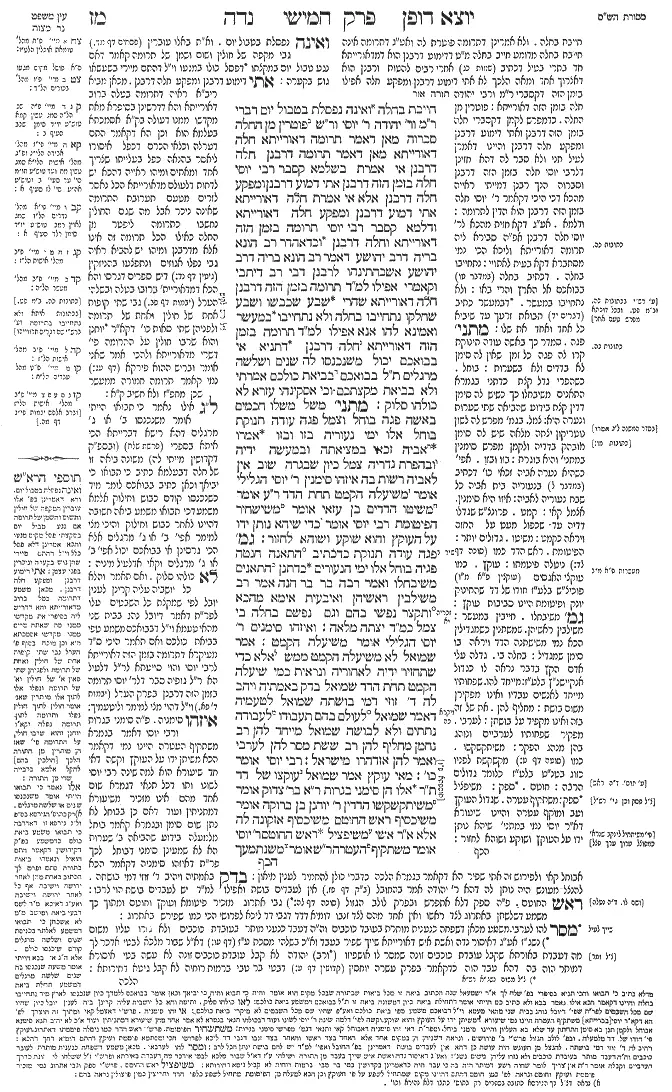
Niddah 47a - Guemara
חייבת בחלה ואינה נפסלת בטבול יום דברי ר"מ ור' יהודה ר' יוסי ור"ש פוטרין מן החלה סברוה מאן דאמר תרומה דאורייתא חלה דאורייתא מאן דאמר תרומה דרבנן חלה דרבנן אי אמרת בשלמא קסבר רבי יוסי חלה בזמן הזה דרבנן אתי דמוע דרבנן ומפקע חלה דרבנן אלא אי אמרת חלה דאורייתא אתי דמוע דרבנן ומפקע חלה דאורייתא ודלמא קסבר רבי יוסי תרומה בזמן הזה דאורייתא וחלה דרבנן וכדאהדר רב הונא בריה דרב יהושע דאמר רב הונא בריה דרב יהושע אשכחתינהו לרבנן דבי רב דיתבי וקאמרי אפילו למ"ד תרומה בזמן הזה דרבנן חלה דאורייתא שהרי שבע שכבשו ושבע שחלקו נתחייבו בחלה ולא נתחייבו במעשר ואמינא להו אנא אפילו למ"ד תרומה בזמן הזה דאורייתא חלה דרבנן דתניא אי בבואכם יכול משנכנסו לה שנים ושלשה מרגלים ת"ל בבואכם בביאת כולכם אמרתי ולא בביאת מקצתכם וכי אסקינהו עזרא לא כולהו סלוק מתני׳ משל משלו חכמים באשה פגה בוחל וצמל פגה עודה תנוקת בוחל אלו ימי נעוריה בזו ובזו אמרו אביה זכאי במציאתה ובמעשה ידיה ובהפרת נדריה צמל כיון שבגרה שוב אין לאביה רשות בה איזהו סימנין ר' יוסי הגלילי אומר משיעלה הקמט תחת הדד ר"ע אומר משיטו הדדים בן עזאי אומר משישחיר הפיטומת רבי יוסי אומר כדי שיהא נותן ידו על העוקץ והוא שוקע ושוהא לחזור גמ׳ פגה עודה תנוקת כדכתיב {שיר השירים ב } התאנה חנטה פגיה בוחל אלו ימי הנעורים כדתנן התאנים משיבחלו ואמר רבה בר בר חנה אמר רב משילבין ראשיהן ואיבעית אימא מהכא (זכריה יא, ח) ותקצר נפשי בהם וגם נפשם בחלה בי צמל כמ"ד יצתה מלאה ואיזהו סימנים ר' יוסי הגלילי אומר משיעלה הקמט אמר שמואל לא משיעלה הקמט ממש אלא כדי שתחזיר ידיה לאחוריה ונראית כמי שיעלה הקמט תחת הדד שמואל בדק באמתיה ויהב לה ד' זוזי דמי בושתה שמואל לטעמיה דאמר שמואל (ויקרא כה, מו) לעולם בהם תעבודו לעבודה נתתים ולא לבושה שמואל מייחד להן רב נחמן מחליף להן רב ששת מסר להן לערבי ואמר להן אזדהרו מישראל רבי יוסי אומר כו' מאי עוקץ אמר שמואל עוקצו של דד ת"ר אלו הן סימני בגרות ר"א בר' צדוק אומר משיתקשקשו הדדין ר' יוחנן בן ברוקה אומר משיכסיף ראש החוטם משיכסיף אזקונה לה אלא א"ר אשי משיפציל ראש החוטם ר' יוסי אומר משתקיף העטרה ר"ש אומר משנתמעך
Comments from Rashi on Masechet Niddah Page 47a
חייבת בחלה . ולא אמרינן דתרומה פוטרת לה ואע"ג דתרומה אינה חייבת בחלה מדומע חייב בחלה מ"ט דדימוע דרבנן הוא דמדאורייתא חד בתרי בטיל דכתיב (שמות כג) אחרי רבים להטות ורבנן הוא דאצרוך אחד ומאה הלכך לא אתי דימוע דרבנן ומפקע חלה אפילו בזמן הזה דקסברי ר"מ ורבי יהודה חלה בזמן הזה דאורייתא: פוטרין מן החלה . כדמפרש לקמן דקסברי חלה בזמן הזה דרבנן ואתי דימוע דרבנן ומפקע חלה דרבנן והיינו דאמרן לעיל תני ולא סבר לה דהא חזינן דלרבי יוסי חלה בזמן הזה דרבנן וסברוה הנך רבנן דמייתי ראייה מהכא דכי היכי דקאמר ר' יוסי חלה בזמן הזה דרבנן הוא הדין לתרומה: ודלמא . אע"ג דקא חזית מהכא לר' יוסי חלה דרבנן אפ"ה סבירא ליה תרומה דאורייתא וליכא הכי נמי מסתברא דקא בעית לאתויי: נתחייבו בחלה . דכתיב בחלה (במדבר טו) בבואכם אל הארץ והרי באו: ולא נתחייבו במעשר . דבמעשר כתיב (דברים יד) תבואת זרעך עד שיביא כל אחד ואחד את שלו: מתני' פגה . סמדר כך באשה עודה תינוקת קרו לה פגה כל זמן שאין לה סימן לא בדדים ולא בשערות: בוחל . כשהפרי גדל קצת כדתני בגמרא התאנים משיבחלו כך כשיש לה סימן דדין קצת בידוע שהביאה שתי שערות ונערה היא: צמל . בגמ' מפרש לה לשון נוטריקון יצתה מלאה שיש לה סימן מובהק בדדיה ולקמן מפרש סימנין במתני'. והיא בוגרת: בזו ובזו . אפי' כשהיא נערה אביה זכאי כו' דכתיב (במדבר ל) בנעוריה בית אביה כל שבח נעוריה לאביה: איזו היא סימנין . אצמל קאי: קמט . פרונצ"ש. שגדלו דדיה עד שכפול מעט על החזה ויראה כקמט: משיטו . גדולים יותר: הפיטומת . ראש הדד כמו (סוכה דף לד:) ניטלה פיטמתו: עוקץ . כמו עוקצי האגסים (עוקצין פ"א מ"ו). פוכיצ"ש בלע"ז. חודו של דד שהתינוק יונק ופיטומת היינו סביבות עוקץ: גמ' משיבחלו . חייבין במעשר: משילבין ראשיהן . שמשתנין כשמגדילין. הכא נמי משישתנה הדד ויראה בו סימן שמגדיל: בחלה בי . גדלה עלי. אדם הקץ בדבר נראה לו כגדול. אנקיישנ"ץ בלע"ז: מייחד להו . שפחותיו מייחד לאנשים עבדיו ואינו מפקירן משום בושת: מחליף להן . את של זה בזה ואינו מקפיד על בושתן: לערבי . מפקיר שפחותיו לערביים ונוהג בהן מנהג הפקר: משיתקשקשו . כמו (סוטה דף ט:) מקשקשת לפניו כזוג בטנ"ט בלע"ז. כלומר גדולים הרבה: חוטם . ספק: משיפציל . ספק: משתקיף עטרה . שגדול העוקץ ועב ומוקף עטרה והיינו שיעורא דא"ר יוסי נמי במתני' שיהא נותן ידו על העוקץ ושוקע ושוהא לחזור:
Comments from Tosafot - Niddah 47a
ואינה נפסלת בטבול יום. וא"ת באלו עוברין (פסחים דף מד.) גבי מקפה של חולין ושום ושמן של תרומה קאמר דאם נגע טבול יום במקצתו דפסל כולו במגעו וי"ל דהתם מיירי בשעשאו גוש בקערה: אתי דימוע דרבנן ומפקע חלה דרבנן. מכאן מביא ריב"א ראיה דתרומה בטלה ברוב דאורייתא והא דדרשינן בסיפרא מאת מקדשו ממנו דעולה בק"א אסמכתא בעלמא הוא וכן הא דקאמר התם דערלה וכלאי הכרם דכפל איסורו ליאסר בהנאה כפל בעלייתו שצריך אחד ומאתים ומיהו ראייה דהכא יש לדחות דלעולם מדאורייתא הכל נאסר לזרים מטעם תערובת התרומה שאינה ניכר אבל מה שגם החולין נחשבו כתרומה ליפטר מן החלה כאילו הכל תרומה זה אינו אלא מדרבנן ומיהו יש להביא ראיה גבי נפלו אגוזים ונתפצעו בהניזקין (גיטין דף נד:) דיש ספרים דגרסי והא הכא דמדאוריית' ברובו בטלה ובשלהי הערל (יבמות דף פב.) גבי שתי קופות אחת של חולין ואחת של תרומה ולפניהן שתי סאות כו' דקא"ר יוחנן והוא שרבו חולין על התרומה פי' דשרי מדאורייתא ולהכי אמר שאני אומר ובריש ההוא פירקא (דף עג:) נמי קאמר תרומה חמורה ממעשר שכן מחפ"ז ולא חשיב ק"א: ל"ג אילו נאמר כי תבואו הייתי אומר משנכנסו ב' או ג' מרגלים דהא רישא דברייתא הכי איתא בספרי (פרשת שלח) (ובספ"ק דקדושין מייתי לה) משונה ביאה זו של חלה דבעלמא כתיב כי תבואו כי יביאך וכאן כתיב בבואכם לומר מיד כשנכנסו קודם כבוש וחילוק אלמא משמע דכי תבואו משמע ביאה חשובה דהיינו לאחר כבוש וחילוק והיכי מצי למימר אפי' ב' או ג' מרגלים אלא הכי גרסינן אי בבואכם יכול אפי' ב' או ג' מרגלים וקאי אדלעיל מיניה: לא כולהו סלוק. ואם תאמר והלא כל יושביה עליה קרינן לענין יובל לפי שמקצת כל השבטים עלו לפר"ת דאמר דיובל נהג בבית שני מהאי טעמא וי"ל דבבואכם משמע טפי בביאת כולכם ואם תאמר היכי ס"ד מעיקרא דתרומה בזמן הזה דאורייתא לרבי יוסי והוי סייעתא לר"ל דלעיל הא ר"ל גופיה סבר דלר' יוסי תרומה בזמן הזה דרבנן בפרק הערל (יבמות ד' פא.) וי"ל דהוי מצי למימר וליטעמיך: איזהו סימניה. פ"ה סימני בגרות ורבי יוסי דאמר בגמרא משתקיף העטרה היינו נמי דקאמר הכא משיתן ידו על העוקץ וקשה דאי חד שיעורא הוא למה שינה רבי יוסי לשונו ותו דכל תנאי דגמרא שום אחד מהם אינו מזכיר משיעורא דמתניתין ועוד דאם כן בבוחל לא נתן שום סימן ובגמרא קאמר בוחל מלמעלה בידוע שהביאה ב' שערות הא לא שמעינן סימני דבוחל לכך פר"ת דאיזהו סימניה דקאמר הכא אבוחל קאי ולפירוש זה אתי שפיר הא דקאמר בגמרא הלכה כדברי כולן להחמיר לענין מיאון: בדק באמתיה ויהיב ד' זוזי דמי בושתה. להנצל מעונש היה נותן לה דהא ר' יהודה אמר בהחובל (ב"ק דף פז.) אין לעבדים בושת ואפילו למ"ד יש לעבדים בושת הוי לרבו: מסר להו לערבי. משמע מכאן דשפחה כנענית מותרת בעובד כוכבים וה"ה דעבד כנעני מותר בעובדת כוכבים ולא גזרו עליו משום נשג"ז אע"ג דאיסור נדה ואשת איש דאורייתא שייך שפיר בעבד וא"כ בשלהי מסכת ע"ז (דף עו:) דא"ל שבור מלכא לבטי אדכר לך מה דעבדת באורתא שקבל עובדת כוכבים זונה שמסר לו אושפיזו (ורב) יהודה לא קבל עובדת כוכבים זונה לא עשה בטי איסורא דמותר הוה בה דהא עבד הוה כדקאמר בפרק עשרה יוחסין (קדושין דף ע:) דבטי בר טבי ברמות רוחיה לא קבל גיטא דחירותא: ראש החוטם. פ"ה ספק דלא אתפרש ובפרק לולב הגזול (סוכה דף לה:) גבי אתרוג מזכיר פיטומא ועוקץ וחוטם ומתוך כך משמע דשלשתן באתרוג לצד ראשו ואין אחד מהם לצד זנבו דומיא דדד דגבי דד ליכא לפרושי הכי כמו שפירש באתרוג:
Niddah 47a - Mishnah translated into english
it is subject to the obligation of separating ḥalla, the portion of the dough designated for the priest. And although teruma fell into it, that produce does not have the status of teruma, as the teruma was nullified by a majority of non-sacred produce. Consequently, it is not rendered unfit for consumption, i.e., rendered ritually impure, by one who was ritually impure who immersed that day and is waiting for nightfall for his purification process to be completed. This is the statement of Rabbi Meir and Rabbi Yehuda. Rabbi Yosei and Rabbi Shimon deem the dough exempt from the obligation of separating ḥalla, as this obligation does not apply to teruma, and the entire dough is exempt due to the mixture of teruma it contains.
The Sages assumed that the one who said that teruma in the present applies by Torah law maintains that ḥalla likewise applies in the present by Torah law, whereas the one who said that teruma in the present applies by rabbinic law holds that ḥalla also applies by rabbinic law. If so, granted, if you say that Rabbi Yosei holds that ḥalla in the present applies by rabbinic law, one can understand that a mixture which has the status of teruma by rabbinic law comes and abrogates the obligation of separating ḥalla, which also applies by rabbinic law.
But if you say that ḥalla in the present applies by Torah law, can a mixture that has the status of teruma by rabbinic law come and abrogate the mitzva of ḥalla which is by Torah law? Evidently, according to Rabbi Yosei the obligation of separating ḥalla in the present is by rabbinic law, and therefore teruma likewise applies by rabbinic law. If so, Rabbi Yosei does not agree with the opinion he cites in Seder Olam, according to which teruma applies in the present by Torah law.
The Gemara rejects this proof: But perhaps Rabbi Yosei maintains that teruma in the present applies by Torah law and yet ḥalla applies by rabbinic law, and therefore the mixture discussed in the above baraita, which has the status of teruma by Torah law, abrogates the obligation of ḥalla, which is by rabbinic law.
The Gemara adds: And this answer is as Rav Huna, son of Rav Yehoshua, responded to the statement of the other Sages. As Rav Huna, son of Rav Yehoshua, said: I once found the Sages of the study hall of Rav sitting and saying: Even according to the one who said that teruma in the present applies by rabbinic law, the obligation to separate ḥalla is by Torah law.
The reason is that during the seven years that the Jewish people conquered Eretz Yisrael led by Joshua and during the seven years that they divided the land, they were obligated to separate ḥalla but they were not obligated to separate teruma and tithe. In the present as well, although there is no obligation to set aside teruma in Eretz Yisrael by Torah law, the obligation to separate ḥalla applies by Torah law.
Rav Huna, son of Rav Yehoshua, continued: And I said to them: On the contrary, even according to the one who said that teruma in the present applies by Torah law, the obligation to separate ḥalla applies by rabbinic law, as it is taught in a baraita: The verse states with regard to ḥalla: “When you come into the land where I bring you…from the first of your dough you shall set apart a cake for a gift” (Numbers 15:18–20). If the obligation applies “when you come” into the land, one might have thought that it took effect from the moment that two or three spies entered the land. Therefore the verse states: “When you come,” from which it is derived that the Torah is saying: I said that the obligation applies when all of you come, and not when some of you come.
According to this baraita, the separation of ḥalla is an obligation by Torah law only when the entire Jewish people come to Eretz Yisrael. And when Ezra brought the Jewish people to Eretz Yisrael at the beginning of the Second Temple period, not all of them ascended. Since the majority of the Jewish people stayed behind, separating ḥalla was not restored to the status of an obligation by Torah law.
MISHNA: The Sages stated a parable based on the development of the fruit of a fig tree with regard to the three stages of development in a woman: Minority, young womanhood, and grown womanhood. An unripe fig, a ripening fig, and a ripe fig. An unripe fig represents the stage when she is still a child and has not yet developed the signs of puberty; a ripening fig represents the days of her young womanhood, when she reaches twelve years and one day and has developed two pubic hairs.
With regard to the periods both during this stage, minority, and during that stage, young womanhood, the Sages said that her father is entitled to any lost object that she finds that cannot be returned to its owner, and to her earnings, and to nullification of her vows. A ripe fig represents the stage of grown womanhood: Once she has reached her majority, her father no longer has authority over her. He can no longer nullify her vows, and he does not have a claim to lost objects found by her and her earnings belong to her.
What are the signs that indicate grown womanhood? Rabbi Yosei HaGelili says: Grown womanhood begins from when her breast grows sufficiently so that a fold appears below the breast. Rabbi Akiva says: It begins from when the breasts sag onto the chest. Ben Azzai says: It begins from when the areola at the tip of the breast darkens. Rabbi Yosei says: It begins when the breasts have developed to a size where a person places his hand on the nipple and it depresses and slows to return.
GEMARA: The mishna teaches that an unripe fig [paga] represents the stage when a woman is still a child. The Gemara explains that the meaning of the word paga is as it is written: “The fig tree puts forth her green fruits [fageha]” (Song of Songs 2:13). The mishna further teaches that a ripening fig [boḥal] represents the days of her young womanhood. The Gemara explains that the meaning of this word is as we learned in a mishna (Ma’asrot 1:2): The obligation of tithes applies to the figs from when they begin to ripen [misheyyibaḥalu]; and Rabba bar bar Ḥana says that Rav says that this means from when the heads of the figs whiten.
The Gemara adds: And if you wish, say instead that the source is from here: “For My soul became impatient of them, and their soul also grew in disgust [baḥala] toward Me” (Zechariah 11:8). The verse indicates that this word denotes growth. As for the third term in the mishna, a ripe fig [tzemel], it is as one would say: A fruit has come forth complete [yatzeta mele’a].
§ The mishna teaches: And what are the signs that indicate grown womanhood? Rabbi Yosei HaGelili says: Grown womanhood begins from when her breast grows sufficiently so that a fold appears below the breast. Shmuel says: This does not literally mean from when her breast grows sufficiently so that a permanent fold appears below the breast. Rather, it means that the breast has grown enough so that if she were to stretch her hand behind her back, it would appear as though her breast has grown sufficiently that there is a fold below the breast.
The Gemara relates that Shmuel examined these stages in his Canaanite maidservant, and subsequently gave her four dinars as payment for her humiliation. The Gemara notes that in this regard Shmuel conforms to his line of reasoning, as Shmuel said that the verse: “You may enslave them forever” (Leviticus 25:46) teaches: I gave them to you for the service of slaves, but not for humiliation. Consequently, if a master humiliated his Canaanite slave, he must pay him damages.
The Gemara further relates, with regard to the attitude toward maidservants, that Shmuel would designate a particular slave for each of his maidservants for intercourse, and he would not allow his slaves to engage in intercourse with whichever maidservant they chose. By contrast, Rav Naḥman would exchange his maidservants between his slaves, while Rav Sheshet handed his maidservants to an Arab, and said to them: You may engage in intercourse with whomever you choose, but take care not to engage in intercourse with a Jew.
§ The mishna teaches that Rabbi Yosei says: Grown womanhood begins when the breasts have developed to a size where if a person places his hand on the nipple [oketz] it depresses and slows to return. The Gemara asks: What is the meaning of oketz? Shmuel said: It means the protrusion [oketz] of the breast, i.e., the nipple.
The Sages taught in a baraita: What are the signs of maturity? Rabbi Elazar, son of Rabbi Tzadok, says: From when the breasts knock against each other, due to their size. Rabbi Yoḥanan ben Beroka says: From when the head of the protrusion in the center of the nipple darkens. The Gemara asks with regard to this suggestion: From when it darkens? One thereby renders her old, i.e., if one accepts this sign, the beginning of maturity is delayed significantly. Rather, Rav Ashi said: From when the head of the protrusion splits. Rabbi Yosei says: From when the nipple grows to such an extent that it is surrounded by a circle. Rabbi Shimon says: From when there is a softening
Traduction : The William Davidson digital edition of the Koren Noé Talmud, with commentary by Rabbi Adin Even-Israel Steinsaltz.