 Talmud Bavli
No video class on this page yet.
To add a video to this page please click here.Niddah Page 33a
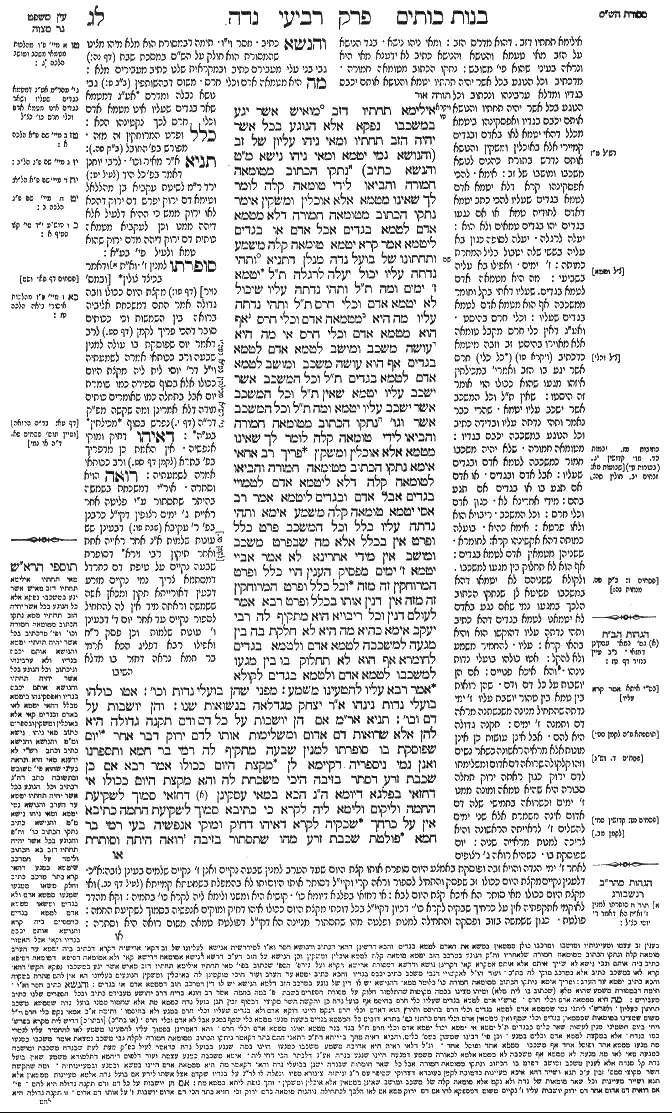
Niddah 33a - Guemara
אילימא תחתיו דזב {ויקרא טו } מואיש אשר יגע במשכבו נפקא אלא הנוגע בכל אשר יהיה הזב תחתיו ומאי ניהו עליון של זב והנושא נמי יטמא ומאי ניהו נישא מ"ט והנשא כתיב נתקו הכתוב מטומאה חמורה והביאו לידי טומאה קלה לומר לך שאינו מטמא אלא אוכלין ומשקין אימר נתקו הכתוב מטומאה חמורה דלא מטמא אדם לטמא בגדים אבל אדם או בגדים ליטמא אמר קרא יטמא טומאה קלה משמע ותחתונו של בועל נדה מנלן דתניא (ויקרא טו, כד) ותהי נדתה עליו יכול יעלה לרגלה ת"ל יטמא ז' ימים ומה ת"ל ותהי נדתה עליו שיכול לא יטמא אדם וכלי חרס ת"ל ותהי נדתה עליו מה היא מטמאה אדם וכלי חרס אף הוא מטמא אדם וכלי חרס אי מה היא עושה משכב ומושב לטמא אדם לטמא בגדים אף הוא עושה משכב ומושב לטמא אדם לטמא בגדים ת"ל וכל המשכב אשר ישכב עליו יטמא שאין ת"ל וכל המשכב אשר ישכב עליו יטמא ומה ת"ל וכל המשכב אשר וגו' נתקו הכתוב מטומאה חמורה והביאו לידי טומאה קלה לומר לך שאינו מטמא אלא אוכלין ומשקין פריך רב אחאי אימא נתקו הכתוב מטומאה חמורה והביאו לטומאה קלה דלא ליטמא אדם לטמויי בגדים אבל אדם ובגדים ליטמא אמר רב אסי יטמא טומאה קלה משמע אימא ותהי נדתה עליו כלל וכל המשכב פרט כלל ופרט אין בכלל אלא מה שבפרט משכב ומושב אין מידי אחרינא לא אמר אביי יטמא ז' ימים מפסיק הענין הוי כלל ופרט המרוחקין זה מזה וכל כלל ופרט המרוחקין זה מזה אין דנין אותו בכלל ופרט רבא אמר לעולם דנין וכל ריבויא הוא מתקיף לה רבי יעקב אימא כהיא מה היא לא חלקת בה בין מגעה למשכבה לטמא אדם ולטמא בגדים לחומרא אף הוא לא תחלוק בו בין מגעו למשכבו לטמא אדם ולטמא בגדים לקולא אמר רבא עליו להטעינו משמע מפני שהן בועלי נדות וכו' אטו כולהו בועלי נדות נינהו א"ר יצחק מגדלאה בנשואות שנו והן יושבות על דם וכו' תניא אר"מ אם הן יושבות על כל דם ודם תקנה גדולה היא להן אלא שרואות דם אדום ומשלימות אותו לדם ירוק דבר אחר יום שפוסקת בו סופרתו למנין שבעה מתקיף לה רמי בר חמא ותספרנו ואנן נמי ניספריה דקיימא לן מקצת היום ככולו אמר רבא אם כן שכבת זרע דסתר בזיבה היכי משכחת לה והא מקצת היום ככולו אי דחזאי בפלגא דיומא ה"נ הכא במאי עסקינן דחזאי סמוך לשקיעת החמה וליקום ולימא ליה לקרא כי כתיבא סמוך לשקיעת החמה כתיבא אין על כרחך שבקיה לקרא דאיהו דחיק ומוקי אנפשיה בעי רמי בר חמא פולטת שכבת זרע מהו שתסתור בזיבה רואה היתה וסותרת
Comments from Rashi on Masechet Niddah Page 33a
אילימא תחתיו דזב . דהוא מדרס הזב: ומאי ניהו נישא . בגד הנישא על הזב. מאי טעמא והנושא והנישא כתיב לא ידענא מאי היא ונראה בעיני שהוא פי' משובש: נתקו הכתוב מטומאה חמורה . מדכתיב וכל הנוגע בכל אשר יהיה תחתיו יטמא והנושא אותם יכבס בגדיו ומדלא ערבינהו ונכתוב וכל הנוגע בכל אשר יהיה תחתיו והנושא אותם יכבס בגדיו ואפסקינהו ביטמא מכלל דהאי יטמא לאו באדם ובגדים קמיירי אלא באוכלין ומשקין והנושא אותם נדרש בתורת כהנים לנושא משכבו ומושבו של זב: אימא . להכי אפסקינהו קרא דלא יטמא אדם לטמא בגדים שעליו להכי כתב יטמא דאדם לחודיה טמא או אם נגעו בגדים יהו בגדים טמאים ולא הוא: יעלה לרגלה . יעלה לסופה. כגון בא עליה בששי שלה יטבול בליל המחרת כמותה: ז' ימים . ואפילו בא עליה בשביעי: מה היא מטמאה אדם . לטמא בגדים שעליו דאתי בקל וחומר ממשכבה אף הוא מטמא אדם לטמא בגדים שעליו: וכלי חרס . בהיסט. ואע"ג דאין כלי חרס מקבל טומאה אלא מאוירו בהיסט זב וזבה מיטמא כדכתיב (ויקרא טו) (כל כלי) חרס אשר יגע בו הזב ואמרי' במכילתין איזהו מגעו שהוא ככולו הוי אומר זה היסטו: שאין ת"ל וכל המשכב אשר ישכב עליו יטמא . שהרי כבר נאמר ותהי נדתה עליו ובדידה כתיב וכל הנוגע במשכבה יכבס בגדיו: מטומאה חמורה . שלא יהיה משכבו חמור כמשכבה לטמא אדם ובגדים שעליו: אבל אדם ובגדים . או אדם אם תגע בו או בגדים אם תגע בהם: מידי אחרינא לא . כגון אדם וכלי חרס: וכל המשכב ריבויא הוא ולאו פרטא: אימא כהיא . בועלה כמותה דהא אקשינהו קרא: לחומרא . ששניהן מטמאין אדם לטמא בגדים: אף הוא לא תחלוק בין מגעו למשכבו . ולקולא ששניהם לא יטמאו דהא במשכבו פשיטא לן שנתקו הכתוב הלכך במגעו נמי שאם נגע באדם לא יטמאנו לטמא בגדים דהא כתיב ותהי נדתה עליו דהוקשו הוא והיא בהאי קרא: עליו . להחמיר משמע ולא להקל: אטו כולהו בועלי נדות נינהו . והא איכא פנויים: אם הן יושבות על כל דם ודם . שהן רואות בין טמא בין טהור יושבת עליו ז' ימי נדתה שהתחיל מנינה משנשתנה מראה דם ותמנה ז' ימים: תקנה גדולה היא להם . אבל אינן עושות כן אינן מונות אלא מראיה ראשונה כשאר נשים וזהו קלקולה שרואה דם אדום ומשלימתו לדם ירוק כגון ראתה ירוק תחלה סבורה היא שהיא טמאה ומונה ממנו ז' ימים וכשרואה בחמישי שלה דם אדום אינה משמרת אלא שני ימים להשלים ז' לראייתה הראשונה והיא צריכה למנות מראייה שניה: יום שפוסקת בו . כשהיא רואה ג' רצופים לאחר ז' ימי הנדה והויא זבה ופוסקת באמצע היום סופרת אותו קצת היום שעד הערב למנין שבעה נקיים ואנן ז' נקיים שלמים בעינן לזבה: א"כ . דלענין נקיים מקצת היום ככולו זב שפסק והתחיל לספור וראה קרי וקיי"ל דסותר אותו היום ותו לא בהמפלת בשמעתא קמייתא (לעיל נדה דף כב.) ואי מקצת היום ככולו מאי סותר הא איכא קצת היום לבא: אי דחזאי בפלגא דיומא כו' . קושיא היא. ומשני ולימא ליה לקרא כו' בתמיה: וקא מהדר לאוקמי אתקפתיה אין על כרחיך שבקיה לקרא כו' . דכיון דקיי"ל בכל דוכתי מקצת היום ככולו איהו דחיק ומוקים אנפשיה בסמוך לשקיעת החמה: פולטת . כגון ששמשה בזוב ופסקה והתחילה למנות ופלטה מהו שתסתור מניינה הא דקי"ל דפולטת טמאה משום רואה היא וסתרה:
Comments from Tosafot - Niddah 33a
והנשא כתיב. חסר וי"ו. תימה דבמסורת הוא מלא מיהו מצינו שהמסורת הוא חולק על הש"ס במסכת שבת (דף נה:) גבי בני עלי מעבירם כתיב ובמקראות שלנו כתיב מעבירים מלא: מה היא מטמאה אדם וכלי חרס. משום דבהשותפין (ב"ב ט:) גבי נושא נבלה ומדרס אע"ג דמטמא שאר בגדים שעליו אינו מטמא אדם וכלי חרס לכך נקטינהו הכא: כלל ופרט המרוחקין זה מזה. מפורש בפ' החובל (ב"ק פה.): תניא א"ר מאיר וכו'. לרבי יוחנן דאמר בפ' כל היד (לעיל נדה יט:) ירד ר"מ לשיטת עקביא בן מהללאל וטימא דם ירוק יפרש דם ירוק דהכא לאו ירוק ממש כי ההיא דלעיל אלא דיהה ממנו וכן לעקביא מטמאה כותית דם ירוק דיהה מדם ירוק שהוא טמא ולעיל פי' בע"א: סופרתו למנין ז'. וא"ת ודאמר בכיצד צולין [ובמס' נזיר] (דף טו:) מקצת היום ככולו וזבה גדולה אמר התם דמשכחת אליביה ברואה בין השמשות וכי ככותים סובר דהכי פריך לקמן (נדה דף סט.) לרב דאמר יום שפוסקת בו עולה למנין שבעה ורב ככותאי אמרה לשמעתיה וי"ל דר' יוסי לית ליה מקצת היום ככולו אלא בסוף ספירה כמו שומרת יום אבל בתחלה כמו שאומרים כותים מודה דלא אמרינן ומה שקשה מפ"ק דר"ה (דף י.) נפרש בסוף מכילתין בע"ה: דאיהו דחיק ומוקי אנפשיה. אין האמת כן מדפריך בפ' בתרא (לקמן נדה דף סט.) ורב ככותאי אמרה לשמעתיה: רואה הויא וסתרה. אור"י דמשכחת בשמשה בהיתר שתסתור ע"י פליטה אחר ראיית ג' ימים רצופין דקי"ל כרבנן בפ' ר' עקיבא (שבת פו:) דבעינן שש עונות שלמות א"נ אחר ראייה אחת ואחר תיקון רבי זירא דסופרת שבעה נקיים על טיפת דם כחרדל דמסתמא צריך נמי נקיים מזרע דכעין דאורייתא תקון ומכאן אשה ששמשה וראתה מיד אין לה להתחיל לספור נקיים עד אחר יום ד' דבעינן ו' עונות שלמות וכן פסק ר"ח ואפילו רבא דפליג הכא ארמי בר חמא נראה דחזר בו מדלא השיבו וכולהו אמוראי סברי פרק יוצא דופן (לקמן נדה דף מב.) דרואה הויא וסתרה אף לר"ש וכ"ש לרבנן והא דקאמר רבא לקמן (נדה דף לז.) ואחר תטהר שלא תהא טומאה מפסקת ביניהם אביי אומר שלא תהא זיבה מפסקת ביניהם משם אין להוכיח דרבא לא חזר בו דהתם איירי בטומאת לידה שטמאה ז' ועושה משכב ומושב כמו נדה ולכך קאמר שלא תהא מפסקת אבל קרי דלא סותר אלא יום א' לא מפסיק:
Niddah 33a - Mishnah translated into english
If we say the verse is teaching that a mattress beneath a zav is impure, this is already derived from the verse: “And whoever touches his bed” (Leviticus 15:5). Rather, the verse is referring to that which touches any item under which the zav will be. And what is this item? It is the bedding above a zav. The verse teaches that the bedding above a zav imparts ritual impurity.
The verse further states: “And he who bears [vehanoseh] these things shall wash his clothes and bathe himself in water, and be impure until the evening” (Leviticus 15:10), indicating that he who bears also becomes impure. And what is this? This is an item borne [nisa] by a zav. What is the reason, i.e., how is this indicated by the verse? The term vehanisa is written in the verse.
The Gemara continues: The verse removed the halakha of the bedding above a zav from the status of severe impurity and brought it to the status of lesser impurity, to tell you that it imparts impurity only to food and drink, but not to people or garments.
The Gemara objects: Say that the verse removed the bedding above a zav from severe impurity, in the sense that it does not impart impurity to a person to the extent that he may in turn impart impurity to the garments he is wearing. But let the bedding above a zav impart impurity to people or garments. The Gemara explains that the verse states: “And whoever touches anything that was under him shall be impure” (Leviticus 15:10), which indicates lesser impurity.
§ The mishna teaches that Samaritan men are considered men who engage in intercourse with menstruating women, and consequently they impart impurity to the bedding beneath them. The Gemara asks: And from where do we derive that the bedding beneath one who engages in intercourse with a menstruating woman is impure? As it is taught in a baraita: The verse states with regard to a menstruating woman: “And if any man lie with her, and her impurity be upon him, he shall be impure seven days, and every bed upon which he lies shall be impure” (Leviticus 15:24).
The baraita explains: One might have thought that the phrase: “And her impurity be upon him,” indicates that the man assumes the impure status of the menstruating woman with whom he engaged in intercourse, such that if they were together on the sixth day of her menstruation he may elevate himself at her time, i.e., he may immerse in a ritual bath the next day, just like the menstruating woman. Therefore, the verse states: “He shall be impure seven days.”
But if so, what is the meaning when the verse states: “And her impurity be upon him”? As, one might have thought that a man who engages in intercourse with a menstruating woman will not impart impurity to people and earthenware vessels. Therefore, the verse states: “And her impurity be upon him,” to teach that he imparts impurity like a menstruating woman. In other words, just as she imparts impurity to people and earthenware vessels, so too, he imparts impurity to people and earthenware vessels.
If so, i.e., that one who engages in intercourse with a menstruating woman is compared to the woman herself, then say: Just as she renders the bedding beneath her and the seat upon which she sits impure to the extent that they impart impurity to a person to in turn impart impurity to the garments he is wearing, so too, he renders the bedding beneath him and the seat upon which he sits impure to the extent that they impart impurity to a person to in turn impart impurity to the garments he is wearing. Therefore, the verse states: “And every bed upon which he lies shall be impure” (Leviticus 15:24).
The baraita elaborates: As, there is no need for the verse to state: “And every bed upon which he lies shall be impure,” since it is already written: “And her impurity be upon him,” which indicates that just as a menstruating woman imparts impurity to her bedding, so too does one who has intercourse with her. And if so, what is the meaning when the verse states: “And every bed upon which he lies shall be impure”? The verse separated the halakha of one who has intercourse with a menstruating woman from the severe impurity of the menstruating woman herself, and brought him to lesser impurity, to tell you that he imparts impurity only to food and drink, but not to people or garments.
Rav Aḥai refutes this derivation: Say that the verse removed the halakha of one who has intercourse with a menstruating woman from severe impurity and brought it to lesser impurity, in the sense that his bedding does not impart impurity to a person to in turn impart impurity to the garments upon him. But let his bedding impart impurity to people or garments. Rav Asi says: The verse states: “And every bed upon which he lies shall be impure,” which indicates a lesser impurity.
The Gemara objects: But say that the phrase: “And her impurity be upon him,” is a generalization, and the phrase: “And every bed upon which he lies shall be impure,” is a detail. If so, the verse constitutes a generalization and a detail, and it is a hermeneutical principle that in such a case the generalization is referring only to that which is specified in the detail. Accordingly, with regard to the bedding and seat upon which the man rests, yes, they are rendered impure, but other items are not.
Abaye says that when the verse states: “He shall be impure seven days,” between the generalization and the detail, this interrupts the matter. Accordingly, this is a case of a generalization and a detail that are distant from one another, and with regard to any generalization and detail that are distant from one another, one does not derive a halakha from them in accordance with the principle of a generalization and a detail.
Rava says: Actually, one may derive a halakha from a generalization and a detail that are distant from one another. But this verse does not constitute a case of a generalization and a detail, as the verse states: “And every bed upon which he lies.” The term “and every” is an amplification.
Rabbi Ya’akov objects to this: Say that as the verse compares a man who engages in intercourse with a menstruating woman to the woman herself, the man should be like her, i.e., just as with regard to her you did not differentiate between her touch and her bedding in terms of imparting impurity to a person and imparting impurity to garments, as the halakha is stringent concerning both in that her touch and her bedding impart impurity to people to in turn impart impurity to their garments; so too, with regard to him, you shall not differentiate between his touch and his bedding in terms of imparting impurity to a person and imparting impurity to garments, and the halakha should be lenient in both cases: Neither his bedding nor his touch should impart impurity to people to in turn impart impurity to their garments.
Rava says in response that when the verse states: “And her impurity be upon him,” this indicates that the Torah intends for the impurity to weigh upon him, i.e., in a stringent manner.
§ The mishna teaches that the impurity of Samaritan men is due to the fact that Samaritan men are considered men who engage in intercourse with menstruating women, and this is because they observe the seven-day menstrual period of impurity for each and every emission of blood. The Gemara asks: Is this to say that all Samaritan men are considered men who engage in intercourse with menstruating women? Aren’t there some unmarried men who do not engage in intercourse with menstruating women? Rabbi Yitzḥak of Migdal says: They taught this halakha only with regard to men to whom women are married.
The mishna further teaches: And Samaritan men are considered men who engage in intercourse with menstruating women because they observe the seven-day menstrual period of impurity for each and every emission of blood. In this regard it is taught in a baraita that Rabbi Meir said: If Samaritan women would begin observing a seven-day period of impurity for each and every emission of blood, it would be a great remedy for them, i.e., this practice would not lead to sin, as they would observe a seven-day period from each emission. But this is not their practice.
Rather, when Samaritan women see green blood, which does not render them impure, they begin counting seven days of impurity from that emission. As, if they see red blood, which is impure, during that period, they do not begin observing another seven days. Instead, they consider it an additional emission of blood and they complete the remaining days from the seven days they began observing for the green blood. Consequently, the women will have immersed in a ritual bath while still impure.
Alternatively, a Samaritan woman is considered ritually impure because she counts the day on which she ceases to experience three consecutive days of emissions of ziva toward the total of seven clean days that a zava must experience before being able to immerse in a ritual bath. Accordingly, she does not wait seven full days, as is required by halakha.
Rami bar Ḥama objects to this: And let her count that day on which she ceases to experience emissions of ziva, and we, i.e., Jewish women, shall also count it, as we maintain that the halakhic status of part of the day is like that of an entire day.
Rava says in response: If so, that even with regard to ziva the halakhic status of part of the day is like that of an entire day, one can object: It is taught in a baraita that if a zav experiences an emission of semen while counting seven clean days toward his purity, the seminal emission negates the day on which he experiences it. How can you find the circumstances of this halakha with regard to ziva? Isn’t the halakhic status of part of the day is like that of an entire day? If so, let the remainder of the day on which he experiences the emission count as a day.
The Gemara rejects this suggestion: Perhaps even with regard to ziva the halakhic status of part of the day is like that of an entire day, and if the zav sees the seminal emission in the middle of the day, the remainder of the day is indeed counted as a whole day. But here we are dealing with a zav who sees a seminal emission adjacent to sunset, when there is no remaining time in the day that can be counted as an entire day.
The Gemara objects: But the halakha that a seminal emission negates a day from the count of a zav is derived from the verse: “This is the law of the zav, and of him from whom the flow of seed goes out, so that he is impure thereby” (Leviticus 15:32). Is it right that one will stand and say about the verse that when it is written, it is written specifically with regard to a seminal emission that occurs adjacent to sunset? The Gemara explains: Yes, perforce you must leave aside the plain meaning of this verse, as it compels itself to be established as referring to such limited circumstances because it must conform to the principle that the halakhic status of part of the day is like that of an entire day.
§ The Gemara mentioned earlier that if a zav experiences a seminal emission while counting seven clean days toward his purity, the seminal emission negates the day on which he experiences it. On a similar note, Rami bar Ḥama raises a dilemma: In the case of a woman who discharges semen after engaging in intercourse with her husband, what is the halakha as to whether she negates her counting with regard to ziva? Rami bar Ḥama elaborates: In general, a woman who discharges semen is impure, but the reason for this halakha is uncertain. Is it because she was considered one who saw semen, i.e., the emission of semen itself renders her impure just like a man who experiences a seminal emission? And if so, this woman negates her count.
Traduction : The William Davidson digital edition of the Koren Noé Talmud, with commentary by Rabbi Adin Even-Israel Steinsaltz.