 Talmud Bavli
Niddah 13a : Youtube
Rabbi Dr. Moshe WeisblumYoutube
1 video class :
Niddah Page 13a
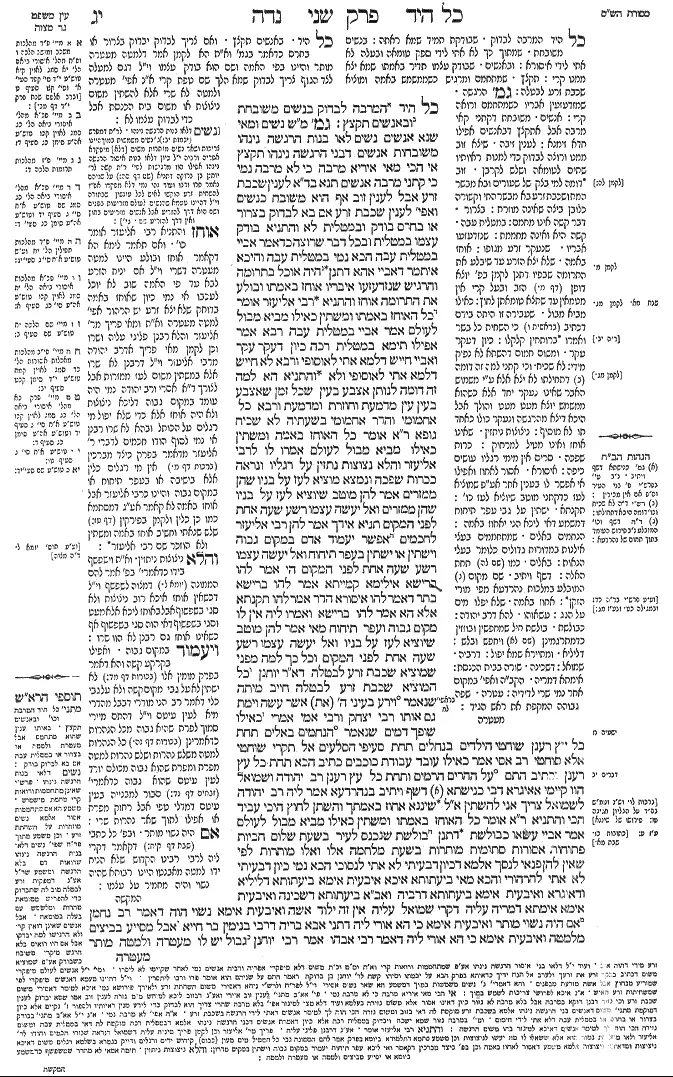
Niddah 13a - Guemara
מתני׳ כל היד המרבה לבדוק בנשים משובחת ובאנשים תקצץ גמ׳ מ"ש נשים ומאי שנא אנשים נשים לאו בנות הרגשה נינהו משובחות אנשים דבני הרגשה נינהו תקצץ אי הכי מאי איריא מרבה כי לא מרבה נמי כי קתני מרבה אנשים תנא בד"א לענין שכבת זרע אבל לענין זוב אף הוא משובח כנשים ואפי' לענין שכבת זרע אם בא לבדוק בצרור או בחרס בודק ובמטלית לא והתניא בודק עצמו במטלית ובכל דבר שרוצה כדאמר אביי במטלית עבה הכא נמי במטלית עבה והיכא איתמר דאביי אהא דתנן היה אוכל בתרומה והרגיש שנזדעזעו איבריו אוחז באמתו ובולע את התרומה אוחז והתניא רבי אליעזר אומר כל האוחז באמתו ומשתין כאילו מביא מבול לעולם אמר אביי במטלית עבה רבא אמר אפילו תימא במטלית רכה כיון דעקר עקר ואביי חייש דלמא אתי לאוסופי ורבא לא חייש דלמא אתי לאוסופי ולא והתניא הא למה זה דומה לנותן אצבע בעין שכל זמן שאצבע בעין עין מדמעת וחוזרת ומדמעת ורבא כל אחמומי והדר אחמומי בשעתיה לא שכיח גופא ר"א אומר כל האוחז באמה ומשתין כאילו מביא מבול לעולם אמרו לו לרבי אליעזר והלא נצוצות נתזין על רגליו ונראה ככרות שפכה ונמצא מוציא לעז על בניו שהן ממזרים אמר להן מוטב שיוציא לעז על בניו שהן ממזרים ואל יעשה עצמו רשע שעה אחת לפני המקום תניא אידך אמר להן רבי אליעזר לחכמים אפשר יעמוד אדם במקום גבוה וישתין או ישתין בעפר תיחוח ואל יעשה עצמו רשע שעה אחת לפני המקום הי אמר להו ברישא אילימא קמייתא אמר להו ברישא בתר דאמר להו איסורא הדר אמר להו תקנתא אלא הא אמר להו ברישא ואמרו ליה אין לו מקום גבוה ועפר תיחוח מאי אמר להן מוטב שיוציא לעז על בניו ואל יעשה עצמו רשע שעה אחת לפני המקום וכל כך למה מפני שמוציא שכבת זרע לבטלה דא"ר יוחנן כל המוציא שכבת זרע לבטלה חייב מיתה שנאמר (בראשית לח, י) וירע בעיני ה' (את) אשר עשה וימת גם אותו רבי יצחק ורבי אמי אמרי כאילו שופך דמים שנאמר (ישעיהו נז, ה) הנחמים באלים תחת כל עץ רענן שוחטי הילדים בנחלים תחת סעיפי הסלעים אל תקרי שוחטי אלא סוחטי רב אסי אמר כאילו עובד עבודת כוכבים כתיב הכא תחת כל עץ רענן וכתיב התם (דברים יב, ב) על ההרים הרמים ותחת כל עץ רענן רב יהודה ושמואל הוו קיימי אאיגרא דבי כנישתא דשף ויתיב בנהרדעא אמר ליה רב יהודה לשמואל צריך אני להשתין א"ל שיננא אחוז באמתך והשתן לחוץ היכי עביד הכי והתניא ר"א אומר כל האוחז באמתו ומשתין כאילו מביא מבול לעולם אמר אביי עשאו כבולשת דתנן בולשת שנכנס לעיר בשעת שלום חביות פתוחות אסורות סתומות מותרות בשעת מלחמה אלו ואלו מותרות לפי שאין להן פנאי לנסך אלמא דכיון דבעיתי לא אתי לנסוכי הכא נמי כיון דבעיתי לא אתי להרהורי והכא מאי ביעתותא איכא איבעית אימא ביעתותא דליליא ודאיגרא ואיבעית אימא ביעתותא דרביה ואב"א ביעתותא דשכינה ואיבעית אימא אימתא דמריה עליה דקרי שמואל עליה אין זה ילוד אשה ואיבעית אימא נשוי הוה דאמר רב נחמן אם היה נשוי מותר ואיבעית אימא כי הא אורי ליה דתני אבא בריה דרבי בנימין בר חייא אבל מסייע בביצים מלמטה ואיבעית אימא כי הא אורי ליה דאמר רבי אבהו אמר רבי יוחנן גבול יש לו מעטרה ולמטה מותר
Comments from Rashi on Masechet Niddah Page 13a
מתני' כל היד המרבה לבדוק . שבודקת תמיד שמא ראתה: בנשים משובחת . שמתוך כך לא אתי לידי ספק טומאה ובעלה לא אתי לידי איסורא: ובאנשים . שבודק עצמו תדיר באמתו שמא יצא ממנו קרי: תקצץ . שמתחמם ומרגיש כשממשמש באמה ומוציא שכבת זרע לבטלה: גמ' הרגשה . שמזדעזעין אבריו כשמתחמם ורואה קרי: אנשים . משובחת דקתני קאי מרבה אבל אתקצץ דבאנשים אפילו חדא זימנא: לענין זיבה . שיצא זוב ממנו ורוצה לבדוק כדי למנות ראיותיו שתים לטומאה ושלש לקרבן. זוב דומה למי בצק של שעורים ובא מבשר המת ושכבת זרע בא מבשר החי וקשורה כלובן ביצה שאינה מוזרת: בצרור . דבר קשה אינו מחמם: במטלית עבה . קשה היא ואינה מחממת: שנזדעזעו אבריו . שנעקר זרע מגופו: אוחז באמה . שלא יצא הזרע עד שיבלע את התרומה שבפיו דתנן לקמן בפ' יוצא דופן (נדה דף מ.) הזב ובעל קרי אין מטמאין עד שתצא טומאתן לחוץ: כאילו מביא מבול . שעבירה זו היתה בידם דכתיב (בראשית ו) כי השחית כל בשר ואמרו ברותחין קלקלו: כיון דעקר עקר . ומשום חמום דהשתא לא נפיק מידי: לא שכיח . וכי קתני למה זה דומה דתחילתו לא יצא אלא ע"י משמוש האבר שאינו נעקר יחד אלא כשהוא ממשמש יוצא מעט מעט והולך אבל היכא דיצא מהרגשה ונעקר כולו כאחד תו לא מוסיף: ניצוצות ניתזין . שאינו אוחז ואינו מטיל למרחוק: כרות שפכה . סריס אין מימי רגליו עושים כיפה: איסורא . אסור לאחוז ואפילו אי אפשר לו בענין אחר אע"פ שמוציא לעז כדקתני מוטב שיוציא לעז כו': תקנתא . ישתין על גבי עפר תיחוח דמשמע דאי ליכא הני יאחוז באמה: הנחמים באלים . שמתחממים בעצי אילנות במדורות גדולים כלומר בעלי הנאות: באלים . כמו (שם לה) תחת האלה: דשף ויתיב . שם מקום המובלע במלכות נהרדעא מפי מורי הזקן: אחוז באמה . שלא יפלו מים על הגג: עשאוהו . להא דרב יהודה: כבולשת . בולשת חיל שמחפשין ובוזזין כדמתרגמינן (שם לא) ויחפש ובלש: דליליא . ומתיירא שמא יפול: דרביה . שמואל: דשכינה . שורה בבית הכנסת: אימתא דמריה . הקב"ה ואפי' במקום אחר נמי שרי לדידיה: עטרה . שפה גבוהה המקפת את ראש הגיד:
Comments from Tosafot - Niddah 13a
מתני' כל היד. באנשים תקצץ. ואם צריך לבדוק יבדוק בצרור או בחרס כדאמר בגמ' וא"ת הא לקמן אמר דלמטה מעטרה מותר והיינו בפי האמה ושם הוא בודק עצמו וי"ל דגם למעלה לצד הגוף צריך לבדוק שמא הלך שם טפת קרי א"נ אפי' מעטרה ולמטה לא שרי אלא להשתין משום ניצוצות או משום בית הכנסת אבל כדי לבדוק עצמו לא: [נשים דלאו בנות הרגשה נינהו . לר"ת דמפרש (יבמות יב) ג' נשים משמשות במוך היינו צריכות ושאר נשים מותורות משום [דלא] מיפקדא אפריה ורביה י"ל כיון דלאו בנות איסור הרגשה נינהו אפילו הוו מרגישות לפי' ר"ת קשה לר' יוחנן בן ברוקה דתניא (שם דף ס"ה) על שניהם נאמר פרו ורבו ועוד נהי נמי דלא מפקידו אפ"ו להשחית זרע הוקשו לאיש לכל עונשין שבתורה וי"ל דהיינו טעמא שהנשים לעולם מזריעות בפנים ושם הוא דרך להזריע אבל אנשים מזריעים בחוץ ואין דרך להזריע אבל אנשים מזריעים בחוץ ואין דרך להזריע שם. גי']: אוחז והתניא רבי אליעזר אומר כו'. ואם תאמר לימא הא דקאמר אוחז ובולע היינו למטה מעטרה דשרי וי"ל אם יניח הזרע לבא עד פי האמה שוב לא יוכל לעכבו אי נמי כיון שאוחז באמה בדוחק שלא יצא זרע יש הרהור אפי' למטה מעטרה וא"ת ומאי פריך מר' אליעזר והלא רבנן פליגי עליה ושרו וכן לקמן מאי פריך. אדרב יהודה מרבי אליעזר וי"ל דרבנן לא שרו אלא במשתין משום לעז ממזרות אבל לצורך ד"א אסרי ורב יהודה נמי היה עומד במקום גבוה דליכא ניצוצות ולא היה אוחז אלא כדי שלא יפול מי רגלים על הכותל ובהא לא שרו רבנן אי נמי לסוף הודו חכמים לדברי ר' אליעזר מדאמר בפרק כיצד מברכין (ברכות דף מ.) אין מי רגלים כלין אלא בישיבה או בעפר תיחוח או במקום גבוה והיינו כרבי אליעזר אבל אוחז באמה לא קאמר אע"ג דמסתמא כמו כן כלין ולקמן בפירקין (נדה דף טז:) שלש שנאתי וחשיב אוחז באמה ומשתין ולא הוזכר שם רבי אליעזר: והלא ניצוצות ניתזין. וא"ת וישפשף בידו כדאמרי' בפ' אמר להם הממונה (יומא ל.) דמצוה לשפשף וי"ל דכשאין אוחז איכא רוב ניצוצות ולא סגי בשפשוף אבל באוחז ליכא אלא מעט וסגי בשפשוף דאי הוה סגי בשפשוף אף כשאינו אוחז גם רבנן לא הוו שרו: ויעמוד במקום גבוה. ואפילו בקרקע קשה והא דאמר בפרק מומין אלו (בכורות דף מד:) לא ישתין לא על גבי מקום קשה ולא על גבי כלי דאמר רב הני מודרי דבבל מהדרי מיא לעין עיטם וי"ל דהתם מיירי סמוך לפרת שהיא גבוה מכל הנהרות כדאמרינן (בכורות דף נה.) כל הנהרות למטה משלש נהרות ושלש נהרות למטה מפרת ומפרת שהוא גבוה מכולם יורד לעין עיטם שהוא גבוה כדאמרי' (זבחים דף נד:) סבור למבנייה בעין עיטם דמדלי טפי אבל רחוק מפרת או אפילו לתוך שאר נהרות שרי: אם היה נשוי מותר. ובפ' כל כתבי (שבת דף קיח:) דקאמר דקרי ליה לרבי רבינו הקדוש שלא הניח ידו למטה מאבנטו היינו רבותא שהיה נשוי והיה מחמיר על עצמו:
Niddah 13a - Mishnah translated into english
MISHNA: With regard to any hand that is diligent to examine bodily emissions to ascertain ritual impurity, among women such a hand is praiseworthy. But among men such a hand should be severed, as this action is apt to lead to a seminal emission for naught.
GEMARA: The Gemara asks: What is different about women and what is different about men, that women are praised for examining for bodily emissions while men are castigated for the same? The Gemara answers: Women are not susceptible to sexual arousal by this action, and therefore when a woman is diligent to examine herself she is considered praiseworthy; whereas men, who are susceptible to sexual arousal and may experience a seminal emission as a result of this contact, may not do so, and the hand of a man who conducts frequent examinations for emissions should be severed.
The Gemara asks: If so, why does the mishna state specifically among men that only the hand that is diligent to examine, i.e., that does so often, should be severed? Even when a man is not diligent to examine, but does so occasionally, this action is also apt to cause a seminal emission. The Gemara answers: When the mishna teaches: Any hand that is diligent to examine, it states this only with regard to women, as men should not examine even occasionally.
The Gemara continues to discuss the examination of men for seminal emissions. It is taught in a baraita: In what case is this statement, that men should not examine themselves, said? It is said with regard to an examination for semen. But with regard to a man who examines himself for gonorrhea-like discharge [zov], he too is praiseworthy for examining diligently, as women are. The reason is that a man who experiences two such discharges is ritually impure but is not obligated to bring an offering, whereas one who experiences three such emissions must bring an offering as a zav. Therefore, it is important for a man who experiences a gonorrhea-like discharge to examine and count his emissions carefully.
The baraita adds: And even with regard to semen, if one wants to examine himself with a rock or with a piece of earthenware, which are hard and will not warm the body, he may examine himself in this manner.
The Gemara asks: And may a man not examine himself with a linen cloth? But isn’t it taught in a baraita: A man may examine himself with a cloth, to see if he has emitted semen, or with any similar item that he wants? The Gemara answers: Just as Abaye said, with regard to a different issue, that it is referring to a coarse cloth, which will not warm one’s body, here too, the baraita is referring to a coarse cloth, which will not lead to a seminal emission.
The Gemara asks: And where was this statement of Abaye stated? It was stated with regard to that which we learned in a mishna (40a): If a priest was eating teruma and he sensed that his limbs quaked, indicating that a seminal emission was imminent, he should firmly hold his penis to prevent the emission from leaving his body, and swallow the teruma while ritually pure.
A difficulty was raised with regard to this mishna: May he actually hold his penis? But isn’t it taught in a baraita that Rabbi Eliezer says: With regard to anyone who holds his penis and urinates, it is considered as though he is bringing a flood to the world, as masturbation was one of the sins that led to the flood (Sanhedrin 108b)? Abaye says in resolution of this difficulty that the mishna is referring to one who holds his penis with a coarse cloth.
Rava says with regard to that mishna: You may even say that it is referring to a priest who holds his penis with a soft cloth, and the reason it is permitted is that once the semen has already been uprooted from his body, it is uprooted, and his subsequent holding of the penis, even with a soft cloth, does not increase the emission of semen. And Abaye prohibits the use of a soft cloth even here, as he is concerned that perhaps due to the contact of this cloth one might come to increase the emission of semen. But Rava is not concerned that perhaps one might come to increase the emission.
The Gemara asks: And is Rava not concerned for this possibility? But isn’t it taught in a baraita: To what is this repeated examination of a man comparable? To one who places a finger in his eye, for as long as the finger is in the eye, the eye will tear and continue to tear. Here too, the priest’s action will lead to an increased emission of semen.
The Gemara answers: And Rava would claim that if the priest’s limbs were not quaking and the semen was coming out in drops, there is indeed a concern that an examination might increase the emission. But when he feels his limbs quaking, this concern does not apply. The reason is that with regard to any warming of the body that leads to a seminal emission and that is then followed by another warming at the time when the semen is being uprooted, it is uncommon for the latter warming to increase the emission. Consequently, in this case the priest may hold his penis even with a soft cloth.
The Gemara discusses the matter itself. Rabbi Eliezer says: With regard to anyone who holds his penis and urinates, it is considered as though he is bringing a flood to the world. The Rabbis said to Rabbi Eliezer: But if one does not hold his penis, small drops are sprayed on his legs, and he appears as one whose penis has been severed. A man with that affliction is incapable of fathering children. People who see urine on his legs might suspect that he is suffering from that condition and as a result they will cast aspersions about his children and say that they are children born from a forbidden relationship [mamzerim].
Rabbi Eliezer said to them: It is preferable that people cast aspersions about his children that they are mamzerim, and he should not render himself wicked even one moment before the Omnipresent.
With regard to the same issue, it is taught in another baraita that Rabbi Eliezer said to the other Rabbis in response: It is possible for one to avoid spraying urine on his legs. How so? Let a person stand on an elevated place and urinate downward, or urinate into an area where there is loose soil, which absorbs the urine, so that it does not ricochet upward, and he should not render himself wicked even one moment before the Omnipresent.
The Gemara asks: Which of these replies did Rabbi Eliezer say to the Rabbis first? If we say that it was the first statement, i.e., that one should not hold his penis even if people might cast aspersions about his children, that he said to the Rabbis first, and subsequently he told them that there was a way to avoid urine being sprayed on his legs, this is difficult; after saying to them that it is a prohibition, would he then say to them a practical remedy? By saying that one can avoid urine being sprayed on his legs, Rabbi Eliezer indicated that if one cannot do so he may hold his penis, which contradicts his other statement.
Rather, clearly he said this practical solution to the Rabbis first, and they then said to him: If one does not have an elevated place or loose earth upon which he can urinate, what should he do? In response to this question, he said to them: It is preferable that people cast aspersions about his children that they are mamzerim, and he should not render himself wicked even one moment before the Omnipresent.
The Gemara asks: And why must one refrain to that extent from holding his penis? Because as the result of holding his penis he might emit semen for naught. As Rabbi Yoḥanan says: Anyone who emits semen for naught is liable to receive the punishment of death at the hand of Heaven, as it is stated with regard to Onan, son of Judah: “And it came to pass, when he engaged in intercourse with his brother’s wife, that he spilled it on the ground, lest he should give seed to his brother. And the thing that he did was evil in the eyes of the Lord, and He slew him also” (Genesis 38:9–10).
Rabbi Yitzḥak and Rabbi Ami say: One who emits semen for naught is considered as though he sheds blood, as it is stated: “But draw near here, you sons of the sorceress, the seed of the adulterer and the harlot…Are you not children of transgression, a seed of falsehood, you that inflame yourselves among the terebinths, under every leafy tree, that slay [shoḥatei] the children in the valleys, under the clefts of the rocks?” (Isaiah 57:3–5). Do not read this word as shoḥatei; rather, read it as soḥatei, i.e., one who squeezes out [soḥet] semen is considered to have shed the blood of the children who could have been born from that seed.
Rav Asi says: It is considered as though he worships idols, as it is written here: “Under every leafy tree,” and it is written there, with regard to the mitzva of eradicating idols from Eretz Yisrael: “You shall destroy all the places, where the nations that you are to dispossess worshipped their gods, upon the high mountains, and upon the hills, and under every leafy tree” (Deuteronomy 12:2).
§ With regard to the issue of holding one’s penis for the purpose of urinating, the Gemara relates that Rav Yehuda and Shmuel were standing on the roof of the synagogue that was destroyed and rebuilt in Neharde’a. Rav Yehuda said to Shmuel: What can I do? I need to urinate. Shmuel said to him: Shinnana, hold your penis, so that the water does not fall onto the synagogue roof, and urinate outward, away from the synagogue.
The Gemara asks: How could Rav Yehuda do so? But isn’t it taught in a baraita that Rabbi Eliezer says: With regard to anyone who holds his penis and urinates, it is considered as though he is bringing a flood to the world?
Abaye says: The Sages rendered the halakhic status of this situation like that of a troop of marauders, as we learned in a mishna (Avoda Zara 70b): With regard to a troop of marauders that entered a town, if they did so in a time of peace, open casks of wine are forbidden, in case the marauders used the wine for libations in idol worship, whereas sealed casks are permitted. In a time of war, both these and those are permitted, because the marauders do not have leisure to pour libations. Evidently, since these marauders are afraid, they will not come to pour libations. Here too, in this incident involving Rav Yehuda, since he is afraid he will not come to have sexual thoughts.
The Gemara asks: And what fear is there here, in the case of Rav Yehuda? The Gemara explains: If you wish, say that there is the fear of the night and of the roof, i.e., that he might fall. And if you wish, say that the awe of his teacher, Shmuel, is upon him. And if you wish, say that the awe of the Divine Presence that dwells in the synagogue is upon Rav Yehuda. And if you wish, say that the awe of his Master, God, is upon him. Rav Yehuda was renowned for his fear of Heaven, as Shmuel declared about him: This one is not born of a woman, but is like an angel.
And if you wish, say a different answer, that Rav Yehuda was allowed to hold his penis while urinating because he was married; as Rav Naḥman said: If one is married, it is permitted for him to hold his penis while urinating, as his improper sexual urges are not as strong.
And if you wish, say that Shmuel ruled for Rav Yehuda in accordance with this baraita, which Abba, son of Rabbi Binyamin bar Ḥiyya, teaches: One may not hold the penis itself while urinating, but a man who wishes to urinate may assist the process by holding the testicles from below. Shmuel instructed Rav Yehuda to act in this manner. And if you wish, say that Shmuel ruled for Rav Yehuda in accordance with that which Rabbi Abbahu said that Rabbi Yoḥanan says: There is a clear demarcation in the prohibition against holding one’s penis while urinating: From the corona and below, toward the tip of the penis, it is permitted to hold, as this will not lead to arousal.
Traduction : The William Davidson digital edition of the Koren Noé Talmud, with commentary by Rabbi Adin Even-Israel Steinsaltz.