 Talmud Bavli
No video class on this page yet.
To add a video to this page please click here.Niddah Page 53a
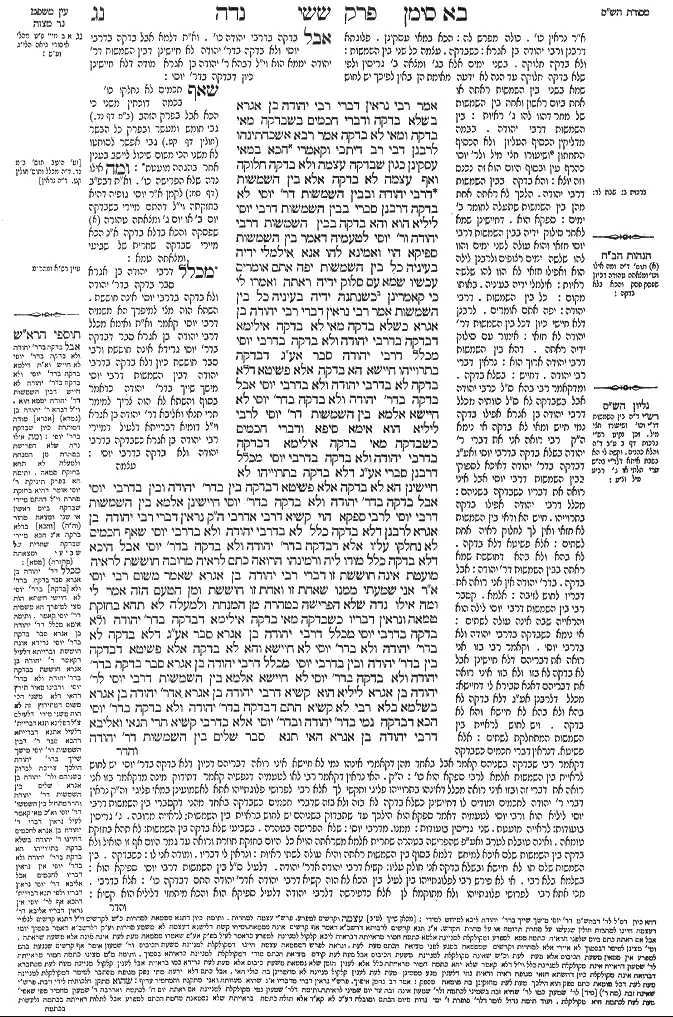
Niddah 53a - Guemara
אמר רבי נראין דברי רבי יהודה בן אגרא בשלא בדקה ודברי חכמים בשבדקה מאי בדקה ומאי לא בדקה אמר רבא אשכחתינהו לרבנן דבי רב דיתבי וקאמרי הכא במאי עסקינן כגון שבדקה עצמה ולא בדקה חלוקה ואף עצמה לא בדקה אלא בין השמשות דרבי יהודה ובבין השמשות דר' יוסי לא בדקה דרבנן סברי בבין השמשות דרבי יוסי ליליא הוא והא בדקה בבין השמשות דרבי יהודה ור' יוסי לטעמיה דאמר בין השמשות ספיקא הוי ואמינא להו אנא אילמלי ידיה בעיניה כל בין השמשות יפה אתם אומרים עכשיו שמא עם סלוק ידיה ראתה ואמרו לי כי קאמרינן כשנתנה ידיה בעיניה כל בין השמשות אמר רבי נראין דברי רבי יהודה בן אגרא כשלא בדקה מאי לא בדקה אילימא דבדקה בדרבי יהודה ולא בדקה בדרבי יוסי מכלל דרבי יהודה סבר אע"ג דבדקה בתרוייהו חיישא הא בדקה אלא פשיטא דלא בדקה לא בדרבי יהודה ולא בדרבי יוסי אבל בדקה בדר' יהודה ולא בדקה בדר' יוסי לא חיישא אלמא בין השמשות דר' יוסי לרבי ליליא הוא אימא סיפא ודברי חכמים כשבדקה מאי בדקה אילימא דבדקה בדרבי יהודה ולא בדקה בדרבי יוסי מכלל דרבנן סברי אע"ג דלא בדקה בתרוייהו לא חיישינן הא לא בדקה אלא פשיטא דבדקה בין בדר' יהודה ובין בדרבי יוסי אבל בדקה בדר' יהודה ולא בדקה בדר' יוסי חיישינן אלמא בין השמשות דרבי יוסי לרבי ספקא הוי קשיא דרבי אדרבי ה"ק נראין דברי רבי יהודה בן אגרא לרבנן דלא בדקה כלל לא בדרבי יהודה ולא בדרבי יוסי שאף חכמים לא נחלקו עליו אלא דבדקה בדר' יהודה ולא בדקה בדר' יוסי אבל היכא דלא בדקה כלל מודו ליה ורמינהו הרואה כתם לראיה מרובה חוששת לראיה מועטת אינה חוששת זו דברי רבי יהודה בן אגרא שאמר משום רבי יוסי אמר רבי אני שמעתי ממנו שאחת זו ואחת זו חוששת ומן הטעם הזה אמר לי ומה אילו נדה שלא הפרישה בטהרה מן המנחה ולמעלה לא תהא בחזקת טמאה ונראין דבריו כשבדקה מאי בדקה אילימא דבדקה בדר' יהודה ולא בדקה בדרבי יוסי מכלל דרבי יהודה בן אגרא סבר אע"ג דלא בדקה לא בדר' יהודה ולא בדר' יוסי לא חיישא והא לא בדקה אלא פשיטא דבדקה בין בדר' יהודה ובין בדרבי יוסי מכלל דרבי יהודה בן אגרא סבר בדקה בדר' יהודה ולא בדקה בדר' יוסי לא חיישא אלמא בין השמשות דרבי יוסי לר' יהודה בן אגרא ליליא הוא קשיא דרבי יהודה בן אגרא אדר' יהודה בן אגרא בשלמא בלא רבי לא קשיא התם דבדקה בדר' יהודה ולא בדקה בדר' יוסי הכא דבדקה נמי בדר' יהודה ובדר' יוסי אלא בדרבי קשיא תרי תנאי ואליבא דרבי יהודה בן אגרא האי תנא סבר שלים בין השמשות דר' יהודה
Comments from Rashi on Masechet Niddah Page 53a
א"ר נראין כו' . כולה מפרש לה: הכא במאי עסקינן . פלוגתא דרבנן ורבי יהודה בן אגרא: כשבדקה עצמה . כל שני בין השמשות: ולא בדקה חלוקה . בשני ימים אלא בג' ומצאה ב' גריסין ולפי שלא בדקה חלוקה עד הנה לא ידעה מאימת הן באין לפיכך יש לחוש שמא בשני בין השמשות ראתה או אחת ביום ראשון ואחת בין השמשות של מחר דהוו להו ג' ראיות: בין השמשות דרבי יהודה . בבמה מדליקין הכסיף העליון ולא הכסיף התחתון ושיעורו חצי מיל ולר' יוסי כהרף עין ובסוף היום הוא זה נכנס וזה יוצא: והא בדקה בבין השמשות דרבי יהודה . הלכך לא ראתה אחת מהן בין השמשות שתעלה לחומר ב' ימים: ספקא הוא . דחיישינן שמא לאחר סילוק ידיה בבין השמשות דרבי יוסי חזאי והוא עולה לשני ימים והוו להו שלשה ימים רצופים ולרבנן לילה הוא ואפילו חזאי לא הוו להו שלשה ראיות: אילמלי ידיה בעיניה . באותו מקום: כל בין השמשות . דרבי יהודה: יפה אתם אומרים . לרבנן דלא חיישי כיון דכל בין השמשות דר' יהודה לא חזאי: אימור עם סילוק ידיה ראתה . דהא בין השמשות דרבי יהודה ארוך הוא: נראין דברי רבי יהודה . דחייש: בשלא בדקה . ומדקאמר רבי בהא ס"ל כרבי יהודה אבל בשבדקה לא ס"ל כוותיה מכלל דרבי יהודה בן אגרא אפילו בדקה נמי חייש ומאי לא בדקה אי נימא ה"ק רבי רואה אני את דברי ר' יהודה בשלא בדקה בדרבי יוסי ואע"ג דבדקה בדר' יהודה דאיכא לספוקי בבין השמשות דרבי יוסי אבל איני רואה את דבריו כשבדקה בשניהם: מכלל דרבי יהודה אפילו בדקה בתרוייהו . חייש הא ודאי בין השמשות לא חזאי ואין לך לחלוק ראיה אחת לשתים: אלא פשיטא דלא בדקה לא . בהא ולא בהא דחוששת שמא ראתה בבין השמשות דר' יהודה: אבל בדקה בדר' יהודה . אין אני רואה את דבריו לחוש לזיבה: אלמא . קסבר רבי בין השמשות דרבי יוסי לילה הוא והראייה שבה אינה עולה לשתים: אי נימא כשבדקה בדרבי יהודה ולא בדרבי יוסי . וקאמר רבי בזו אני רואה את דבריהם דלא חיישינן אבל לא בדקה לא בזו ולא בזו איני רואה את דבריהם דאנא סבירא לי דחיישא: מכלל דלרבנן אע"ג דלא בדקה לא בהא ולא בהא לא חיישא והא לא בדקה. ויש לחוש לראיית בין השמשות המתחלקת לשתים: אלא פשיטא . דנראין דברי חכמים כשבדקה דקאמר רבי שבדקה בשניהם קאמר אבל באחד מהן דקאמרי אינהו נמי לא חיישא איני רואה דבריהם דכיון דלא בדקה בדר' יוסי יש לחוש לראיית בין השמשות. אלמא לרבי ספקא הוא כו': ה"ק . האי נראין דקאמר רבי לאו לטעמיה דנפשיה קאמר דתידוק מינה מדקאמר בזו אני רואה את דברי זה ובזו איני רואה מכלל דאינהו בתרוייהו פליגי ותקשי לך אלא רבי לפרושי פלוגתייהו אתא לאשמועינן במאי פליגי וה"ק נראין דברי ר' יהודה לחכמים ומודים לו דחיישינן כשלא בדקה לא בזה ולא בזה שדברי חכמים כשבדקה באחד מהני דקסברי בין השמשות דרבי יוסי ליליא הוא ורבי יוסי לטעמיה דאמר ספקא הוא הילכך עד שתבדוק בשניהם יש לחוש בראיית בין השמשות: לראייה מרובה . ג' גריסין בועודות: לראייה מועטת . שני גריסין בועודות: ממנו . מדרבי יוסי: שלא הפרישה בטהרה . בשביעי שלא בדקה בין השמשות: לא תהא בחזקת טומאה . ואינה טובלת לערב ואע"פ שהפרישה בטהרה שחרית. אלמא משראתה הויא כל היום בחזקת חוזרת ורואה עד גמר היום אף זו הואיל ולא בדקה בין השמשות שלם איכא למיחש דלמא בסוף בין השמשות ראתה והיא עולה לשתי ראיות: ונראין לי דבריו . ומודה אני לו: כשבדקה . בין השמשות שלם תו לא חיישא ובשלא בדקה אני חולק עליו: קשיא דרבי יהודה אדר' יהודה . דלעיל ס"ל בין השמשות דרבי יוסי ספיקא הוא: בשלמא בלא רבי . אי לא פירש רבי לפלוגתייהו בין לעיל בין הכא לא הוה קשיא דרבי יהודה אדר' יהודה התם דבדקה כו': אלא בדרבי . מכי אתא רבי לפרושי פלוגתייהו ולא מתוקמא לן אלא כדפירשה דלרבי יהודה דלעיל ספיקא הוא והכא מיתחזי דליליא הוא קשיא:
Comments from Tosafot - Niddah 53a
אבל בדקה בדרבי יהודה כו'. וא"ת דלמא אבל בדקה בדרבי יוסי ולא בדקה בדר' יהודה לא חיישינן דבין השמשות דר' יהודה יממא הוא וי"ל דבהא ר' יהודה בן אגרא מודה דלא חיישינן כיון דבדקה דדר' יוסי: שאף חכמים לא נחלקו כו' בכמה דוכתין משני כי הכא אבל בפרק הזהב (ב"מ דף נד.) גבי חומש ומעשר ובפרק כל הבשר (חולין דף קט.) גבי אפשר לסוחטו לא משני הכי משום שיכול ליישב בענין אחר בהגהה מועטת: ומה אילו נדה שלא הפרישה כו'. וא"ת דבפ"ב (דף סח:) לקמן א"ר יוסי גופיה דהיא בחזקתה וי"ל דהתם מיירי כשבדקה יום ב' או יום ג' ומצאתה טהורה שפסקה והכא בדלא בדקה א"נ הכא מיירי שבדקה שחרית של שביעי ומצאתה טמא: מכלל דרבי יהודה בן אגרא סבר בדקה בדר' יהודה ולא בדקה בדרבי יוסי אינה חוששת. השתא הוה מצי למיפרך הא משמיה דרבי יוסי קאמר וא"ת ואימא מכלל דרבי יהודה בן אגרא סבר דבדקה בדר' יוסי גרידא אינה חוששת ורבי סבר חוששת כיון דלא בדקה בדרבי יהודה דבין השמשות דרבי יוסי מישך שייך בדר' יהודה כדאמר בסוף והשתא לא הוה צריך למימר תרי תנאי ואליבא דר' יהודה בן אגרא וי"ל דומיא דברייתא דלעיל דמיירי רבי יהודה בן אגרא כשבדקה בדרבי יהודה ולא בדקה בדרבי יוסי:
Niddah 53a - Mishnah translated into english
Rabbi Yehuda HaNasi says that the dispute between Rabbi Yehuda ben Agra and the Rabbis should be decided as follows: The statement of Rabbi Yehuda ben Agra, who maintains that there is a concern for the possibility that the woman might have seen blood at twilight, appears to be correct in a case where she did not examine. And the statement of the Rabbis, who are not concerned about that possibility, appears to be correct in a case where she did examine.
The Gemara asks: What did Rabbi Yehuda HaNasi mean by: Where she did examine, and what did he mean by: Where she did not examine? Rava says: I found the Sages in the study hall of Rav sitting and saying the following explanation of the baraita: Here we are dealing with a case where the woman examined herself but did not examine her robe. And even with regard to herself, she examined herself only during twilight [bein hashemashot] as defined by Rabbi Yehuda, i.e., the time it takes to walk a half mil before the emergence of the stars. But during twilight as defined by Rabbi Yosei, i.e., the blink of an eye before the emergence of the stars, she did not examine herself.
As the Rabbis hold that during the period of twilight as defined by Rabbi Yosei it is already night, and therefore it does not matter that she did not examine herself then. And as she did examine herself during the period of twilight as defined by Rabbi Yehuda, and she found no blood, there is no concern that she saw during twilight, which would count as two sightings. And Rabbi Yosei conforms to his line of reasoning, as Rabbi Yosei, in whose name Rabbi Yehuda ben Agra said his ruling, stated that the time that he defines as twilight is considered uncertain, i.e., it is not definitely night or day, and therefore there is a concern that she might have seen blood at that time, which would count as seeing twice.
Rava continues: And I said to those Sages: Had the woman’s hands been in her eyes, a euphemism for her private parts, for the entire twilight period, what you say would be fine. But now that this is not the case, perhaps when she removed her hands from examining herself she saw blood. And those Sages said to me: The case about which we said that opinion was where she placed her hands in her eyes for the entire twilight period.
The Gemara further clarifies the baraita. Rabbi Yehuda HaNasi says: The statement of Rabbi Yehuda ben Agra in the name of Rabbi Yosei, who maintains that one needs to be concerned for the possibility that the woman saw blood at twilight, which would count as though she saw blood twice, appears to be correct in a case where she did not examine. The Gemara asks: What is meant by: Where she did not examine?
If we say that she examined herself during the period that is defined by Rabbi Yehuda as twilight, but she did not examine herself during the time period that is defined by Rabbi Yosei as twilight, this is difficult: If Rabbi Yehuda HaNasi accepted the opinion of Rabbi Yehuda ben Agra only in such a case, this indicates, by inference, that Rabbi Yehuda ben Agra himself, whose ruling is more strict than that of the Rabbis, holds that even though she examined herself during the twilight period as defined by both Rabbi Yehuda and Rabbi Yosei, she must be concerned. This conclusion is untenable, as she examined herself throughout twilight and there was no blood.
Rather, it is obvious that when Rabbi Yehuda HaNasi referred to a case where she did not examine herself, he meant that she examined herself neither during the period that Rabbi Yehuda defines as twilight, nor during the period that Rabbi Yosei defines as twilight. But if she examined herself during the period that Rabbi Yehuda defines as twilight, but she did not examine herself during the period that Rabbi Yosei defines as twilight, then she does not need to be concerned.
Evidently, the time period that Rabbi Yosei defines as twilight is considered nighttime according to Rabbi Yehuda HaNasi. But if so, say the latter clause: And the statement of the Rabbis appears to be correct in a case where she did examine. What is meant by: Where she did examine?
If we say that she examined herself during the period that is defined by Rabbi Yehuda as twilight, but she did not examine herself during the period that is defined by Rabbi Yosei as twilight, this is difficult: If Rabbi Yehuda HaNasi accepted the opinion of the Rabbis only in such a case, this indicates by inference that the Rabbis themselves hold that even though she did not examine herself during the twilight period as defined by both Rabbi Yehuda and Rabbi Yosei, nevertheless, we are not concerned. But in such a case, she did not examine herself at twilight at all.
Rather, it is obvious that she examined herself both during the period that Rabbi Yehuda defines as twilight, and during the period that Rabbi Yosei defines as twilight. But if she examined herself during the period that Rabbi Yehuda defines as twilight, and she did not examine herself during the period that Rabbi Yosei defines as twilight, then we are concerned.
Evidently, the time period that Rabbi Yosei defines as twilight is considered to be of uncertain status regarding whether it is day or night according to Rabbi Yehuda HaNasi. The Gemara asks: If so, one statement of Rabbi Yehuda HaNasi poses a difficulty for another statement of Rabbi Yehuda HaNasi, as the inferences from the two parts of Rabbi Yehuda HaNasi’s observation contradict one another.
The Gemara explains that this is what Rabbi Yehuda HaNasi is saying: The statement of Rabbi Yehuda ben Agra appears correct to the Rabbis in a case where she did not examine herself at all, neither during the period that Rabbi Yehuda defines as twilight, nor during the period that Rabbi Yosei defines as twilight. As, even the Rabbis disagree with Rabbi Yehuda ben Agra only in a case where she examined herself during the period that Rabbi Yehuda defines as twilight but she did not examine herself during the time period that Rabbi Yosei defines as twilight. But in a case where she did not examine herself at all, they concede to him that we are concerned that she might have emitted blood at twilight.
And the Gemara raises a contradiction from a baraita: In the case of a woman who sees a red stain, if she saw a large stain, covering an area the size of at least three split beans, she must be concerned that she might be a zava. But if she saw a small stain, covering an area of less than the size of three split beans, she does not need to be concerned that she is a zava. This is the statement of Rabbi Yehuda ben Agra, who said it in the name of Rabbi Yosei.
Rabbi Yehuda HaNasi said: I heard from Rabbi Yosei that with regard to both this one and that one, i.e., whether it is a large or small stain, she must be concerned that she is a zava. And Rabbi Yosei said this halakha to me based on this reasoning: And what would be the case if a menstruating woman did not perform the examination marking the first step in her transition from ritual impurity to ritual purity on the seventh day from minḥa time onward? Would she not have a presumptive status of ritual impurity? Rabbi Yehuda HaNasi added: And Rabbi Yosei’s statement appears to be correct with regard to the case where she examined.
Once again, the Gemara asks: What is meant by the term: Where she examined? If we say that she examined herself during the period that is defined by Rabbi Yehuda as twilight, but she did not examine herself during the period that is defined by Rabbi Yosei as twilight, this indicates by inference that Rabbi Yehuda ben Agra, who disagrees in the second baraita with this version of Rabbi Yosei’s opinion and rules more leniently, holds that even though she did not examine herself during the twilight period as defined by both Rabbi Yehuda and Rabbi Yosei, nevertheless, she does not need to be concerned that she is a zava. But this conclusion is untenable, as she did not examine herself at twilight at all.
Rather, it is obvious that Rabbi Yehuda HaNasi is referring to a case where she examined herself both during the period that Rabbi Yehuda defines as twilight and during the period that Rabbi Yosei defines as twilight. This indicates, by inference, that Rabbi Yehuda ben Agra holds that if she examined herself during the period that Rabbi Yehuda defines as twilight, but she did not examine herself during the time period that Rabbi Yosei defines as twilight, then she does not need to be concerned, as a sighting at that time would not count as two.
Evidently, the period that Rabbi Yosei defines as twilight is considered to be nighttime according to Rabbi Yehuda ben Agra. If so, one statement of Rabbi Yehuda ben Agra poses a difficulty with regard to another statement of Rabbi Yehuda ben Agra, as earlier it was stated that according to Rabbi Yehuda ben Agra twilight is not definitely night.
Granted, without the statement of Rabbi Yehuda HaNasi, the apparent contradiction between these statements of Rabbi Yehuda ben Agra in the two baraitot is not difficult, as one could explain as follows: There, with regard to the first baraita, it is referring to a case where she examined herself during the period that is defined by Rabbi Yehuda as twilight, but she did not examine herself during the period that is defined by Rabbi Yosei as twilight. By contrast, here it is referring to a case where she examined herself both during the period that is defined by Rabbi Yehuda as twilight and during the period that is defined by Rabbi Yosei as twilight. But in light of the statement of Rabbi Yehuda HaNasi, one cannot explain in this manner, and therefore the contradiction poses a difficulty.
The Gemara answers: This is not a contradiction, as there are two tanna’im and they disagree with regard to the opinion of Rabbi Yehuda ben Agra. This tanna holds that Rabbi Yehuda’s twilight ends,
Traduction : The William Davidson digital edition of the Koren Noé Talmud, with commentary by Rabbi Adin Even-Israel Steinsaltz.