 Talmud Bavli
No video class on this page yet.
To add a video to this page please click here.Niddah Page 72a
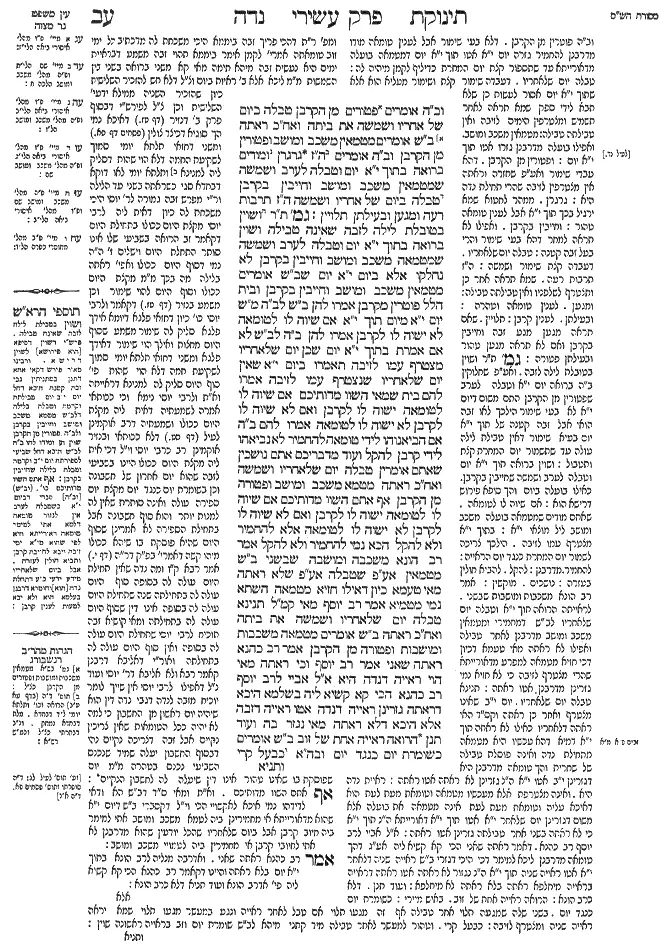
Niddah 72a - Guemara
וב"ה אומרים פטורים מן הקרבן טבלה ביום של אחריו ושמשה את ביתה ואח"כ ראתה ב"ש אומרים מטמאין משכב ומושב ופטורין מן הקרבן וב"ה אומרים ה"ז גרגרן ומודים ברואה בתוך י"א יום וטבלה לערב ושמשה שמטמאין משכב ומושב וחייבין בקרבן טבלה ביום של אחריו ושמשה ה"ז תרבות רעה ומגען ובעילתן תלויין גמ׳ ת"ר ושוין בטובלת לילה לזבה שאינה טבילה ושוין ברואה בתוך י"א יום וטבלה לערב ושמשה שמטמאה משכב ומושב וחייבין בקרבן לא נחלקו אלא ביום י"א יום שב"ש אומרים מטמאין משכב ומושב וחייבין בקרבן ובית הלל פוטרין מקרבן אמרו להן ב"ש לב"ה מ"ש יום י"א מיום תוך י"א אם שיוה לו לטומאה לא ישוה לו לקרבן אמרו להן ב"ה לב"ש לא אם אמרת בתוך י"א יום שכן יום שלאחריו מצטרף עמו לזיבה תאמרו ביום י"א שאין יום שלאחריו שנצטרף עמו לזיבה אמרו להם בית שמאי השוו מדותיכם אם שיוה לו לטומאה ישוה לו לקרבן ואם לא שיוה לו לקרבן לא ישוה לו לטומאה אמרו להם ב"ה אם הביאנוהו לידי טומאה להחמיר לא נביאהו לידי קרבן להקל ועוד מדבריכם אתם נושכין שאתם אומרין טבלה יום שלאחריו ושמשה ואח"כ ראתה מטמא משכב ומושב ופטורה מן הקרבן אף אתם השוו מדותיכם אם שיוה לו לטומאה ישוה לו לקרבן ואם לא שיוה לו לקרבן לא ישוה לו לטומאה אלא להחמיר ולא להקל הכא נמי להחמיר ולא להקל אמר רב הונא משכבה ומושבה שבשני ב"ש מטמאין אע"פ שטבלה אע"פ שלא ראתה מאי טעמא כיון דאילו חזיא מטמאה השתא נמי מטמיא אמר רב יוסף מאי קמ"ל תנינא טבלה יום שלאחריו ושמשה את ביתה ואח"כ ראתה ב"ש אומרים מטמאה משכבות ומושבות ופטורה מן הקרבן אמר רב כהנא ראתה שאני אמר רב יוסף וכי ראתה מאי הוי ראייה דנדה היא א"ל אביי לרב יוסף רב כהנא הכי קא קשיא ליה בשלמא היכא דראתה גזרינן ראייה דנדה אטו ראייה דזבה אלא היכא דלא ראתה מאי נגזר בה ועוד תנן הרואה ראייה אחת של זוב ב"ש אומרים כשומרת יום כנגד יום ובה"א כבעל קרי
Comments from Rashi on Masechet Niddah Page 72a
וב"ה פוטרין מן הקרבן . דלא בעי שימור. אבל לענין טומאה מודו מדרבנן להחמיר גזרה יום י"א אטו תוך י"א יום דמטמאה בועלה מדאורייתא עד שתספור קצת יום המחרת כדיליף לקמן מיהיה לה: טבלה יום שלאחריו . דעבדה שימור קצת ושימור מעליא הוא אלא שתוך י"א יום אסור לעשות כן שלא תבא לידי ספק שמא תראה לאחר תשמיש ומצטרפין הימים לזיבה ואין טבילתה טבילה: מטמאין משכב ומושב . ואפילו בועלה מדרבנן גזרו אטו תוך י"א יום: ופטורין מן הקרבן . דהא עבדי שימור ואע"פ שחזרה וראתה אין מצטרפין לזיבה שהרי תחילת נדה היא: גרגרן . ממהר לחטוא שמא ירגיל בכך תוך י"א אבל לענין טומאה טהור: וחייבין בקרבן . ואפילו לא תראה למחר דהא בעי שימור והרי בעל זבה קטנה: טבלה יום שלאחריו . דעבדה קצת שימור ושמשה: ה"ז תרבות רעה . שמא תראה אחר כן ותצטרף לשלפניו ואין טבילתה טבילה: ומגען . לענין טומאה וטהרה: ובעילתן . לענין קרבן: תלויין . שאם תראה מגען מגע זבה וחייבין בקרבן ואם לא תראה מגען טהור ובעילתן פטורה: גמ' ת"ר ושוין בטובלת לילה לזבה . ואע"פ שחלוקין ב"ה ברואה יום י"א וטבלה לערב שפטורין מן הקרבן התם משום דיום י"א לא בעי שימור הילכך לאו זבה הואי אבל זבה קטנה של תוך י"א יום בעיא שימור דאין טבילת לילה עולה עד שתשמור יום המחרת קצת ותטבול: ושוין ברואה תוך י"א יום וטבלה לערב ושמשה שחייבין בקרבן . כאילו בועלה ביום. והך סיפא פירוש דרישא הוא: אם שיוה לו לטומאה . שאתם מודים שמטמאה בועלה משכב ומושב ליל מוצאי י"א: בתוך י"א מצטרף עמו לזיבה . הילכך צריכה לשמור יום המחרת כנגד יום הראייה: להחמיר . מדרבנן: להקל . להביא חולין בעזרה: נושכים . מוקשין: אמר רב הונא משכבות ומושבות שבשני . לראייתה הרואה תוך י"א וטבלה יום שלאחריו לב"ש דמחמירי ומטמאין משכב ומושב מדרבנן לאחר טבילה ואפילו לא ראתה מאי טעמא דכיון דכי חזיא מטמאה למפרע מדאורייתא שהרי מצטרף לזיבה כי לא חזיא נמי גזרינן מדרבנן אטו ראתה: תנינא טבלה יום שלאחריו . יום י"ב שאינו מצטרף ואחר כן ראתה וקס"ד האי ראתה דלאחריו כאילו לא ראתה תוך י"א דמיא דהא עכשיו היא מטמאה מתחילת נדה ואינה פוסלת טבילה של שחרית והך טומאה מדרבנן היא דגזרינן י"ב אטו י"א ה"נ גזרינן לא ראתה אטו ראתה: ראיית נדה היא . ואינה מצטרפת אלא מעכשיו מטמאה וטומאת מעת לעת הוא דאיכא עליה וטומאת מעת לעת אינה מטמאה את בועלה אלא משום דגזרינן יום שלאחר י"א אטו תוך י"א דאורייתא ה"נ תוך י"א כי לא ראתה בשני אחר טבילתה גזרינן אטו ראתה: א"ל אביי לרב יוסף רב כהנא . דאמר ראתה שאני הכי קא קשיא ליה אע"ג דהך טומאה מדרבנן ליכא למימר דכי היכי דגזרי ב"ש ראייה שניה דלאחר י"א אטו ראייה שניה תוך י"א ה"נ נגזור לא ראתה אטו ראתה דראייה בראייה מיחלפא ראתה בלא ראתה לא מיחלפא: ועוד תנן . דלא כרב הונא: הרואה ראייה אחת של זוב . באיש מיירי: כשומרת יום כנגד יום . בשני שלה שמגעה תלוי אחר טבילה אף זה מגעו תלוי אם טבל לאחר ראייה ונגע במעשר מגעו תלוי שמא יראה ראייה שניה ומצטרף לזיבה: כבעל קרי . וטהור למעשר לאחר טבילה מיד. קתני מיהא לב"ש שומרת יום וזב בראייה ראשונה שוין:
Comments from Tosafot - Niddah 72a
אף אתם השוו מדותיכם. וא"ת ומאי ס"ד דב"ש הא ודאי לדידהו נמי איכא לאקשויי הכי וי"ל דקסברי ב"ש דיום י"א שהוא מדאורייתא אי מחמירינן ביה לטמא משכב ומושב אתי למימר ביה חיוב קרבן אבל ביום שלאחריו שהכל יודעין שהוא מדרבנן לא אתי לחיובי קרבן אי מחמירין ביה לטמויי משכב ומושב: אמר רב כהנא ראתה שאני. ואדרבה מנליה לרב הונא בתוך י"א יום בלא ראתה והיינו דקאמר רב כהנא הכי קא קשיא ליה פי' אדרב הונא ועוד תניא דלא כרב הונא:
Niddah 72a - Mishnah translated into english
And Beit Hillel say: Although they transmit impurity to items designated for lying or sitting, they are exempt from bringing the sin offering. Since the twelfth day is unfit for the flow of a zava, and even if she were to experience bleeding on the eleventh, twelfth, and thirteenth days she would not become a greater zava, one who experiences bleeding on the eleventh does not need to observe a corresponding clean day.
If the woman immersed on the day following the eleventh day and she engaged in intercourse with the man of her house, i.e., her husband, on that twelfth day and then saw blood, Beit Shammai say: They transmit impurity to items designated for lying or sitting by rabbinic law, as the Sages issued a decree of impurity in the case when the second day is the twelfth day, due to a case when the second day is within the eleven days fit for the flow of a zava. And they are exempt from bringing the sin offering, as she observed part of the twelfth day, and the bleeding she experienced after engaging in intercourse, which occurred during her period of menstruation, is not fit to be appended to the discharge of the zava on the eleventh day.
And Beit Hillel say: That husband is a glutton, as he could not wait for the conclusion of the twelfth day before engaging in intercourse. Nevertheless, the Sages did not issue a decree of impurity. And Beit Hillel concede to Beit Shammai in a case where the woman sees blood in the midst of the eleven-day period, and she immersed in the evening and engaged in intercourse with her husband without observing a corresponding clean day, that they transmit impurity to items designated for lying or sitting. And each of them is liable to bring a sin offering for participating in intercourse involving a zava.
If she saw blood in the midst of the eleven days and observed part of a corresponding clean day and immersed on the day following the day that she saw blood and engaged in intercourse with her husband, that is wayward conduct, as the possibility exists that she will experience bleeding after intercourse that will be appended to the bleeding of the previous day, rendering her a zava and disqualifying the immersion. And the status of ritually impure items with which they came into contact and the status of their intercourse is contingent upon whether she experiences bleeding on the day of her immersion, in which case the ritually pure items become impure and they are liable to bring a sin offering, or whether she does not experience bleeding that day, in which case the ritually pure items remain pure and the woman and man are exempt from bringing a sin offering.
GEMARA: The Sages taught in a baraita: And Beit Shammai and Beit Hillel agree with regard to a woman who immersed at night to purify herself after having been a lesser zava, that it is not a valid immersion. And Beit Shammai and Beit Hillel also agree with regard to a woman who sees blood in the midst of her eleven days of ziva, rendering her a lesser zava who must wait one clean day and immerse the day after, but she immersed in the first evening without waiting one clean day and engaged in intercourse with her husband, that she transmits impurity to items designated for lying or sitting that came in contact with the couple, and she and her husband are liable to bring a sin offering.
They disagree only in the case of a woman who sees blood on the eleventh day of her days of ziva, and immersed that evening, and engaged in intercourse with her husband. As Beit Shammai say: They transmit impurity to items designated for lying or sitting and are liable to bring a sin offering, and Beit Hillel deem them exempt from bringing a sin offering.
The baraita continues: Beit Shammai said to Beit Hillel: What the difference between the eleventh day itself and another day in the midst of the eleven days of ziva? If you equate the eleventh day to the other days with regard to ritual impurity, will you not equate it with regard to liability to bring an offering?
Beit Hillel said to Beit Shammai: No, if you say that she is liable to bring an offering if she experiences bleeding in the midst of the eleven days, that is because the following day combines with it as a day of ziva. Will you say the same with regard to the eleventh day, when the following day does not combine with it as a day of ziva?
Beit Shammai said to Beit Hillel: Apply your method equally. If you equate the two cases, bleeding on the eleventh day and bleeding on one of the other days of ziva, with regard to ritual impurity, equate them also with regard to liability to bring an offering. And if you do not equate them with regard to liability to bring an offering, do not equate them with regard to ritual impurity either.
Beit Hillel said to Beit Shammai: Even if we have brought a woman who experiences bleeding on the eleventh day and the man who engages in intercourse with her to ritual impurity, due to a decree to be stringent, so that people should not confuse one who experiences bleeding on the eleventh day with one who experiences bleeding during the other days with regard to ritual impurity, we will not bring them to the liability of bringing an offering, to be lenient. It would be a leniency to permit them to bring an unnecessary and therefore a non-sacred animal into the Temple courtyard.
And furthermore, from your own statement you are refuted, as you say that if she immersed on the following day and engaged in intercourse, and afterward she saw blood, she transmits impurity to items designated for lying or sitting, but she is exempt from bringing the offering. You too should apply your method equally. If you equate a zava who immersed on the twelfth day with one who immersed on the night after the eleventh day with regard to ritual impurity, equate these cases also with regard to liability to bring an offering.
And if you do not equate them with regard to liability to bring an offering, do not equate them with regard to ritual impurity either. Beit Hillel continued: Rather, you agree with us that the two are equated to be stringent, but not to be lenient. We say that here too, the two should be equated to be stringent but not to be lenient.
§ Rav Huna says, in further clarification of Beit Shammai’s opinion: If a woman experiences bleeding during the eleven days of ziva and must observe one clean day, but did not wait until the conclusion of that second day before immersing, with regard to her items designated for lying or sitting, on the second day, Beit Shammai render them impure by rabbinic law. This is the halakha even though she has immersed in a ritual bath and even though she did not see any blood after her immersion. What is the reason? Since if she would see blood she would render these surfaces ritually impure by Torah law, now too she renders them ritually impure by rabbinic law.
Rav Yosef said: What is Rav Huna teaching us? We already learn in the mishna: If the woman immersed on the day following the eleventh day and she engaged in intercourse with the man of her house on that twelfth day and then saw blood, Beit Shammai say: They transmit impurity to items designated for lying or sitting by rabbinic law. And they are exempt from bringing the sin offering. Her impurity applies by rabbinic law, lest this case be confused with one where she experiences bleeding during the eleven days when she would be impure by Torah law. By inference, if she experienced bleeding on one of her eleven days and immersed on the following day, she would likewise render items designated for lying or sitting ritually impure by rabbinic law.
Rav Kahana said: Rav Huna is teaching that Beit Shammai render her ritually impure even if she does not experience bleeding. Based on the mishna alone, one might have thought that the case where she saw blood is different, and it is only in this situation that Beit Shammai render her impure by rabbinic law.
Rav Yosef said, in refutation of Rav Kahana’s claim: And if she saw blood on the twelfth day, what of it? A discharge of blood on the twelfth day is a sighting of a menstruating woman, which does not render her a zava by Torah law. Therefore, it is comparable to a case where she experienced bleeding on one day during her eleven days of ziva and immersed on the following day, and she does not experience bleeding on that following day at all.
Abaye said to Rav Yosef: This is what is difficult for Rav Kahana: Granted, in a case where she saw blood on the twelfth day, it stands to reason that we decree impurity with regard to a sighting of a menstruating woman due to a sighting of a zava. But in a case where she did not see any blood at all, for what reason should the Sages decree impurity upon her?
Abaye continues: And furthermore, we learned in a mishna (Zavim 1:1): If a man sees one sighting of ziva (see 35b), Beit Shammai say: His status on the following day is like that of a woman who observes a clean day for a day she experiences a discharge. In other words, he must immerse and observe that day in purity, and if he touches tithes their status is suspended, since if he sees another discharge on that day, they are retroactively impure. And Beit Hillel say: His status is like that of a man who experiences a seminal emission, who is purified by his immersion, and therefore any tithes this man touches on the second day remain pure even if he later experiences a second discharge.
Traduction : The William Davidson digital edition of the Koren Noé Talmud, with commentary by Rabbi Adin Even-Israel Steinsaltz.