 Talmud Bavli
No video class on this page yet.
To add a video to this page please click here.Niddah Page 52a
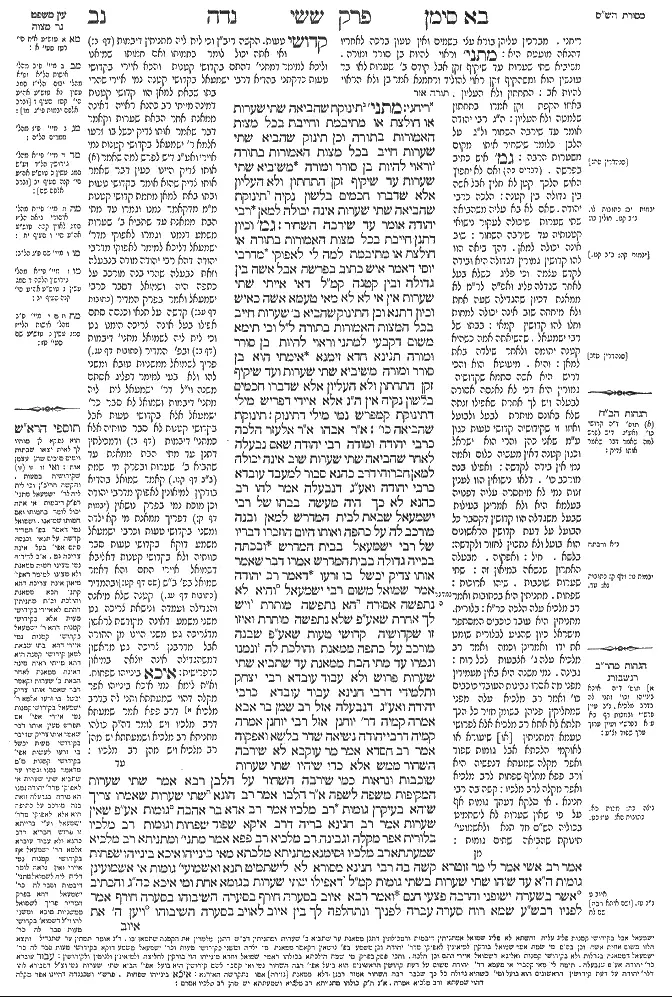
Niddah 52a - Guemara
ריחני מתני׳ תינוקת שהביאה שתי שערות או חולצת או מתיבמת וחייבת בכל מצות האמורות בתורה וכן תינוק שהביא שתי שערות חייב בכל מצות האמורות בתורה וראוי להיות בן סורר ומורה משיביא שתי שערות עד שיקיף זקן התחתון ולא העליון אלא שדברו חכמים בלשון נקיה תינוקת שהביאה שתי שערות אינה יכולה למאן רבי יהודה אומר עד שירבה השחור גמ׳ וכיון דתנן חייבת בכל מצות האמורות בתורה או חולצת או מתיבמת למה לי לאפוקי מדרבי יוסי דאמר איש כתוב בפרשה אבל אשה בין גדולה ובין קטנה קמ"ל דאי אייתי שתי שערות אין אי לא לא מאי טעמא אשה כאיש וכיון דתנא וכן התינוק שהביא ב' שערות חייב בכל המצות האמורות בתורה ל"ל וכי תימא משום דקבעי למתני וראוי להיות בן סורר ומורה תנינא חדא זימנא אימתי הוא בן סורר ומורה משיביא שתי שערות ועד שיקיף זקן התחתון ולא העליון אלא שדברו חכמים בלשון נקיה אין ה"נ אלא איידי דפריש מילי דתינוקת קמפרש נמי מילי דתינוק תינוקת שהביאה כו' א"ר אבהו א"ר אלעזר הלכה כרבי יהודה ומודה רבי יהודה שאם נבעלה לאחר שהביאה שתי שערות שוב אינה יכולה למאן חברוהי דרב כהנא סבור למעבד עובדא כרבי יהודה ואע"ג דנבעלה אמר להו רב כהנא לא כך היה מעשה בבתו של רבי ישמעאל שבאת לבית המדרש למאן ובנה מורכב לה על כתפה ואותו היום הוזכרו דבריו של רבי ישמעאל בבית המדרש ובכתה בכייה גדולה בבית המדרש אמרו דבר שאמר אותו צדיק יכשל בו זרעו דאמר רב יהודה אמר שמואל משום רבי ישמעאל (במדבר ה, יג) והיא לא נתפשה אסורה הא נתפשה מותרת ויש לך אחרת שאע"פ שלא נתפשה מותרת ואיזו זו שקדושיה קדושי טעות שאע"פ שבנה מורכב על כתפה ממאנת והולכת לה ונמנו וגמרו עד מתי הבת ממאנת עד שתביא שתי שערות פרוש ולא עבוד עובדא רבי יצחק ותלמידי דרבי חנינא עבוד עובדא כרבי יהודה ואע"ג דנבעלה אזל רב שמן בר אבא אמרה קמיה דר' יוחנן אזל רבי יוחנן אמרה קמיה דרבי יהודה נשיאה שדר בלשא ואפקוה אמר רב חסדא אמר מר עוקבא לא שירבה השחור ממש אלא כדי שיהיו שתי שערות שוכבות ונראות כמי שירבה השחור על הלבן רבא אמר שתי שערות המקיפות משפה לשפה א"ר חלבו אמר רב הונא שתי שערות שאמרו צריך שיהא בעיקרן גומות רב מלכיו אמר רב אדא בר אהבה גומות אע"פ שאין שערות אמר רב חנינא בריה דרב איקא שפוד שפחות וגומות רב מלכיו בלורית אפר מקלה וגבינה רב מלכיא רב פפא אמר מתני' ומתניתא רב מלכיא שמעתתא רב מלכיו וסימנא מתניתא מלכתא מאי בינייהו איכא בינייהו שפחות אמר רב אשי אמר לי מר זוטרא קשה בה רבי חנינא מסורא לא לישתמיט תנא ואשמועי' גומות אי אשמועינן גומות ה"א עד שיהו שתי שערות בשתי גומות קמ"ל דאפילו שתי שערות בגומא אחת ומי איכא כה"ג והכתיב (איוב ט, יז) אשר בשערה ישופני והרבה פצעי חנם ואמר רבא איוב בסערה חירף בסערה השיבוהו בסערה חירף אמר לפניו רבש"ע שמא רוח סערה עברה לפניך ונתחלפה לך בין איוב לאויב בסערה השיבוהו {איוב לח } ויען ה' את
Comments from Rashi on Masechet Niddah Page 52a
ריחני . מברכין עליהן בורא עצי בשמים ואין טעון ברכה לאחריו דהנאה מועטת היא: מתני' וראוי להיות בן סורר ומורה משיביא שתי שערות עד שיקיף זקן . אבל קודם ב' שערות לאו בר עונשין הוא ומשהקיף זקן ראוי להוליד ורחמנא אמר בן ולא הראוי להיות אב: התחתון ולא העליון . באיזו הקפת זקן אמרו בתחתון שלמטה ולא העליון: ה"ג רבי יהודה אומר עד שירבה השחור ול"ג על הלבן . כלומר שישחיר אותו מקום משערות הרבה: גמ' איש כתיב בפרשה . (דברים כה) ואם לא יחפוץ האיש הלכך קטן לא חליץ אבל אשה בין גדולה בין קטנה: הלכה כרבי יהודה . שאם לא בא עליה משהביאה שתי שערות שיכולה לעקור נישואי קטנותיה עד שירבה השחור: שוב אינה יכולה למאן . דהך ביאה הוו להו קדושין גמורין דגדולה היא ובידה לקדש עצמה וכי פליג כשלא בעל לאחר שגדלה פליג ואפ"ה לר"מ לא ממאנת דכיון שהגדילה שעה אחת ולא מיחתה שוב אינה יכולה למחות וחלו להו קדושין קמאי: בבתו של רבי ישמעאל . שהשיאתה אמה כשהיא קטנה יתומה ולאחר שילדה באת למאן: והיא . מיעוטא הוא והכי דריש היא אשה סתמא שקדושיה גמורין היא דכי לא נאנסה אסורה לבעלה ויש לך אחרת שאפילו זנתה שלא באונס מותרת לבעל ולבועל ואיזו זו שקידושיה קדושי טעות כגון ע"מ שאני כהן והרי הוא ישראל וכגון קטנה דאין מעשיה כלום ואמה נמי אין בידה לקדשה: ואפילו בנה מורכב כו' . דלאו נישואין הוו לענין זנות נמי לא מיתסרה עליה דפנויה בעלמא היא ולא אמרינן בעילות שבעל משגדלה הוו קדושין דקסבר כל הבועל על דעת קדושין הראשונים הוא בועל ולא נתכוין לחזור ולקדשה: בלשא . חיל: ואפקוה . מבעלה האחרון שנשאה במיאון זה: שתי שערות שוכבות . שיהו ארוכות: שפחות . מתניתין היא בכתובות ואמר רב מלכיא עלה הלכה כר"א: בלורית . מתניתין היא עובד כוכבים המסתפר מישראל כיון שהגיע לבלורית שומט את ידו ואמרינן וכמה ואמר רב מלכיא עלה ג' אצבעות לכל רוח: גבינה . נמי משנה היא באין מעמידין מפני מה אסרו גבינות העובדי כוכבים כו' ואמר רב מלכיא עלה מפני שמחליקין פניהן בשומן חזיר. כל הנך תלתא לא אתא רב מלכיא אלא לפרושי טעמא דמתניתין [או] שיעורא או לאוקמי הלכתא אבל גומות שפוד ואפר מקלה שמעתא דנפשיה היא ורב פפא מחליף שפחות לרב מלכיא ואפר מקלה לרב מלכיו: קשה בה רבי חנינא . אי סלקא דעתך גומות אף על פי שאין שערות לא לישתמיט בכוליה הש"ס חד תנא ולאשמועי' תינוקת שהביאה שתים גומות:
Comments from Tosafot - Niddah 52a
קדושי טעות. הקשה ריב"ן וכי לית ליה מתניתין דיבמות (דף ב:) ואי אתה יכול לומר בחמותו ואם חמותו שמיאנו וליכא למימר דמתני' דהתם בקדושי קטנות והכא איירי בקדושי טעות כדקתני בהדיא דרבי ישמעאל בקדושי קטנה נמי איירי שהרי בתו שבאת למאן הוו קדושי קטנות דמינה מייתי רב כהנא ראייה דאינה ממאנת אחר הבאת שערות וקאמר דבר שאמר אותו צדיק יכשל בו זרעו אלמא ר' ישמעאל בקדושי קטנות נמי איירי ואע"ג דיש לפרש למה שאמר אותו צדיק היינו כעין דבר שאמר אותו צדיק שהוא אומר בקדושי טעות ובתו באת למאן מחמת קדושי קטנות מ"מ מדקאמר נמנו וגמרו עד מתי הבת ממאנת עד שתביא ב' שערות משמע דנמנו וגמרו לאפוקי מדר' ישמעאל דליכא למימר לאפוקי מדרבי יהודה דהא רבי יהודה מודה בנבעלה וזאת נבעלה שהרי בנה מורכב על כתפה היה ושמואל דסבר כרבי ישמעאל ואמר בפרק המדיר (כתובות דף עב:) קדשה על תנאי וכנסה סתם אפילו בעל אינה צריכה הימנו גט וכי לית ליה לשמואל מתני' דיבמות (דף ב:) ובפ' המדיר (כתובות דף עג.) פריך לשמואל ממשניות טובא ומשני להו ולא בעי למימר דפליג אסתם משנה וי"ל דר' ישמעאל לית ליה מתני' דיבמות ושמואל לא סבר כר' ישמעאל אלא בקדושי טעות אבל בקדושי קטנות לא סבר כוותיה אלא כמתני' דיבמות (דף ב:) ודמכילתין דתנן עד מתי הבת ממאנת עד שתביא ב' שערות ובפרק מי שמת (ב"ב דף קנו.) קאמר שמואל בהדיא בודקין למיאונין לאפוקי מדרבי יהודה וכן מוכח נמי בפרק נושאין (יבמות דף ק:) דפריך ממאנת מי קא ילדה ומשני בקדושי טעות וכרבי ישמעאל משמע דוקא בקדושי טעות סבר כוותיה ולא בקדושי קטנות דאליבא דשמואל איירי התם והא דאמר שמואל בפ' ב"ש (שם דף קט:) ובהמדיר (כתובות דף עג.) קטנה שלא מיאנה והגדילה ועמדה ונישאת צריכה גט משני משמע דאינה מקודשת לראשון מדצריכה גט משני היינו מן התורה אבל מדרבנן צריכה גט מראשון דמשהגדילה אינה יוצאה במיאון כדפרישית: איכא בינייהו שפחות. וא"ת לימא נמי איכא בינייהו אפר מקלה דהוי שמעתתא ותני לה בדרב מלכיא דרב פפא אמר שמעתא דרב מלכיו ויש לומר דה"ק כולהו מתניתא רב מלכיא ושמעתתא יש מהן רב מלכיא ויש מהן רב מלכיו:
Niddah 52a - Mishnah translated into english
fragrant spices.
MISHNA: A young girl who reached the age of puberty and grew two pubic hairs is an adult. If her childless husband dies, she either performs ḥalitza and is thereby permitted to marry anyone, or enters into levirate marriage with her husband’s brother. And furthermore, such a girl is obligated to fulfill all the mitzvot stated in the Torah in which women are obligated.
And likewise, a young boy who reached the age of puberty and grew two pubic hairs is an adult and is obligated to fulfill all the mitzvot stated in the Torah. And he is fit to be declared a stubborn and rebellious son if he performs the actions that warrant that designation, from when he grows two pubic hairs until his beard will form a circle. During that period, although he is an adult and punishable for his actions, he is incapable of fathering a child. Consequently, as he is a son and not a father, he can be designated a stubborn and rebellious son.
The mishna explains that the reference is to the lower, pubic, hair, and not to the upper, facial, hair. But the term beard is used, despite its being subject to misinterpretation, due to the fact that the Sages spoke euphemistically.
A young girl who reached the age of puberty and grew two pubic hairs can no longer perform refusal to end a marriage with a husband to whom she was married as a minor by her mother and brothers after her father’s death. Rabbi Yehuda says: She retains the right to perform refusal until the pubic hair will grow to the extent that the black hair will be preponderant in the pubic area.
GEMARA: The Gemara raises an objection: But since we learned in the mishna that a young girl who reached the age of puberty and grew two pubic hairs is considered an adult and is obligated to fulfill all the mitzvot stated in the Torah, why do I need the mishna to also teach: She either performs ḥalitza or enters into levirate marriage. These specific examples are included in the broader statement.
The Gemara explains: This emphasis serves to exclude the opinion of Rabbi Yosei, who said: Man, i.e., an adult man, is written in the passage of ḥalitza: “And if the man does not wish to take his brother’s wife” (Deuteronomy 25:7). But with regard to the woman, whether she is an adult or whether she is a minor, she can be released by ḥalitza, as the Torah does not specify her age. The mishna teaches us that the halakha is not in accordance with the opinion of Rabbi Yosei. Rather, if she grew two pubic hairs, then yes, she can perform ḥalitza, whereas if she did not grow two hairs, she may not perform ḥalitza or enter into levirate marriage. What is the reason for this ruling? It is that the halakha of the woman is like that of the man, as a woman is juxtaposed to man in this passage.
The Gemara asks further: And since we learned in the continuation of the mishna: And likewise, a young boy who reached the age of puberty and grew two pubic hairs is an adult, why do I need the mishna to add explicitly: Is obligated to fulfill all the mitzvot stated in the Torah?
And if you would say that the mishna specified this because it wanted to teach the particular halakha: And he is fit to be declared a stubborn and rebellious son, that cannot be the reason, as we already learned that halakha on another occasion in a mishna (Sanhedrin 68b): When is such a boy liable to receive the death penalty imposed upon a stubborn and rebellious son? From when he grows two pubic hairs until his beard will form a circle. The reference is to the lower, pubic, hair and not to the upper, facial hair, but the term beard is used, due to the fact that the Sages spoke euphemistically.
The Gemara answers: Yes, it is indeed so, i.e., it is not necessary for the mishna to specify with regard to a boy that he is obligated to fulfill all the mitzvot stated in the Torah. But since the mishna specified this matter in the case of a young girl, it also specified this matter in the case of a young boy.
§ The mishna teaches: A young girl who reached the age of puberty and grew two pubic hairs can no longer perform refusal to end a marriage with a husband to whom she was married as a minor by her mother and brothers after her father’s death. Rabbi Yehuda maintains that she retains the right of refusal until the pubic hair grows to the extent that the black hair is preponderant in the pubic area. Rabbi Abbahu says that Rabbi Elazar says: The halakha is in accordance with the opinion of Rabbi Yehuda.
And Rabbi Yehuda concedes to the Rabbis that if she engaged in intercourse with her husband after she grew two pubic hairs, she can no longer perform refusal. This is because the act of intercourse renders her betrothed to him by Torah law, and refusal is a rabbinic enactment that is effective only with regard to a betrothal that applies by rabbinic law.
Rav Kahana’s colleagues thought to perform an action in accordance with the opinion of Rabbi Yehuda in the mishna, and to permit a young girl who had grown two pubic hairs to perform refusal, even though she had engaged in intercourse with her husband after growing two hairs. They held that until the pubic hair grows to the extent that the black hair is preponderant in the pubic area, her betrothal does not apply by Torah law.
Rav Kahana said to his colleagues: Didn’t the incident involving Rabbi Yishmael’s daughter, who was married as a minor by her mother and brothers after her father’s death, transpire in that manner? As she came to the study hall to refuse her marriage, and her son was riding on her shoulders. And on that very day, Rabbi Yishmael’s statement, that a young girl may perform refusal even if she engaged in intercourse with her husband after growing two hairs, was mentioned in the study hall. And she cried with a great weeping in the study hall, as a result of the incident.
The Sages who were in the study hall said: Could it be that with regard to a matter that that righteous Rabbi Yishmael said, i.e., that she can perform refusal, his offspring would stumble upon it? The consequence of her refusal is that she is considered to have borne the child retroactively out of wedlock.
As Rav Yehuda said that Shmuel says in the name of Rabbi Yishmael: The verse states with regard to a sota: “And neither was she taken” (Numbers 5:13), i.e., raped. In this case she is prohibited to her husband. It may be inferred that if she was taken forcefully she is permitted to her husband. And there is a case of another woman where, even though she was not taken forcefully, but was willing, she nevertheless remains permitted. And which case is this? This is referring to one whose betrothal was a mistaken betrothal, as, even if her son from this marriage is riding on her shoulders she may perform refusal and go off as pleases her. Although she engaged in intercourse with her husband after growing two pubic hairs, she was relying on the original betrothal, which was a mistaken betrothal, and did not intend to become betrothed to him by means of this intercourse, which would have rendered her betrothed by Torah law. She may therefore nullify the betrothal by means of refusal.
And the Gemara relates that as a result of the event involving Rabbi Yishmael’s daughter, the Sages assembled, counted the votes, and concluded: Until when may a young girl perform refusal? Until she grows two pubic hairs. Once Rav Kahana’s colleagues heard this, they retracted and did not perform an action in accordance with the opinion of Rabbi Yehuda in the mishna, to permit the girl to perform refusal as they had originally planned.
The Gemara further relates that Rabbi Yitzḥak and the disciples of Rabbi Ḥanina performed an action in accordance with the opinion of Rabbi Yehuda in the mishna, and permitted a young girl who had grown two pubic hairs to perform refusal, even though she had engaged in intercourse with her husband after growing two hairs. Rav Shemen bar Abba subsequently went and stated this story before Rabbi Yoḥanan, and Rabbi Yoḥanan went and stated it before Rabbi Yehuda Nesia. Rabbi Yehuda Nesia sent a constable [ballasha] and removed that girl from her second husband.
With regard to Rabbi Yehuda’s opinion, that the black hair must be preponderant in the pubic area, Rav Ḥisda says that Mar Ukva says: This does not mean that the black hair must literally be preponderant in the pubic area. Rather, there must be two hairs lying down, so that it appears as though the black hairs in the pubic area cover an area greater than the white area uncovered by hair. Rava says: Rabbi Yehuda means that there are two hairs that surround the pubic area from end to end.
§ The mishna teaches that the growth of two hairs is a sign of becoming an adult. The Gemara clarifies the details of this halakha. Rabbi Ḥelbo says that Rav Huna says: These two hairs that the Sages said are a sign of adulthood must have follicles at their roots. Rav Malkiyyu says that Rav Adda bar Ahava says: If there are two follicles next to each other, they constitute a sign of adulthood even if there are no hairs in them. The assumption is that follicles do not exist without hair, and therefore there must have been hairs there that fell out.
This halakha was stated by a Sage by the name of Rav Malkiyyu. To prevent confusion between his rulings and those of the similarly named Rav Malkiyya, Rabbi Ḥanina, son of Rav Ika, says: The halakha involving a skewer, the halakha with regard to maidservants, and the halakha involving hair follicles were all stated by Rav Malkiyyu. By contrast, the halakha with regard to the forelock [belorit], the halakha involving burnt ashes, and the halakha with regard to cheese were all stated by a different Sage named Rav Malkiyya.
Rav Pappa says: The aforementioned halakhot that relate to a mishna or a baraita were stated by Rav Malkiyya, whereas halakhot that do not refer to a mishna or baraita but are independent statements of amora’im were taught by Rav Malkiyyu. And a mnemonic to remember this is: The mishna is a queen [malketa], i.e., the comments that are referring to a mishna were issued by Rav Malkiyya, whose name is similar to the Aramaic term for queen.
The Gemara asks: What is the difference between the opinion of Rabbi Ḥanina, son of Rav Ika, and Rav Pappa? The Gemara answers: The difference between them is with regard to which Sage taught the halakha involving maidservants. Rav Pappa maintains that it was taught by Rav Malkiyya, as it is referring to a dispute in a mishna. By contrast, according to Rabbi Ḥanina, this halakha was stated by Rav Malkiyyu.
With regard to the halakha of Rav Malkiyyu itself, concerning follicles, Rav Ashi says: Mar Zutra told me that Rabbi Ḥanina of Sura posed the following difficulty: If it is correct that follicles suffice as a sign of adulthood, let the tanna of the mishna not evade the issue, but rather let him teach us explicitly that follicles are a sign of adulthood even if they do not contain hair. The Gemara answers: If the mishna had taught us the case of follicles, I would say that they are not considered a sign of adulthood until there are two hairs in two follicles. By omitting any mention of follicles in the mishna, the tanna teaches us that even two hairs in one follicle are a sign of adulthood.
The Gemara asks: And is there actually a case like this, of two hairs in one follicle? But isn’t it written: “He crushes me with a tempest, and multiplies my wounds without cause” (Job 9:17); and Rava said with regard to this verse: Job blasphemed with a tempest, and with a tempest he was answered. He blasphemed with a tempest, as Job said before God: Master of the Universe, perhaps a tempest passed before You and You confused Iyyov, Job, with oyev, enemy. With a tempest he was answered, as the verse states: “Then the Lord answered
Traduction : The William Davidson digital edition of the Koren Noé Talmud, with commentary by Rabbi Adin Even-Israel Steinsaltz.