 Talmud Bavli
No video class on this page yet.
To add a video to this page please click here.Niddah Page 21a
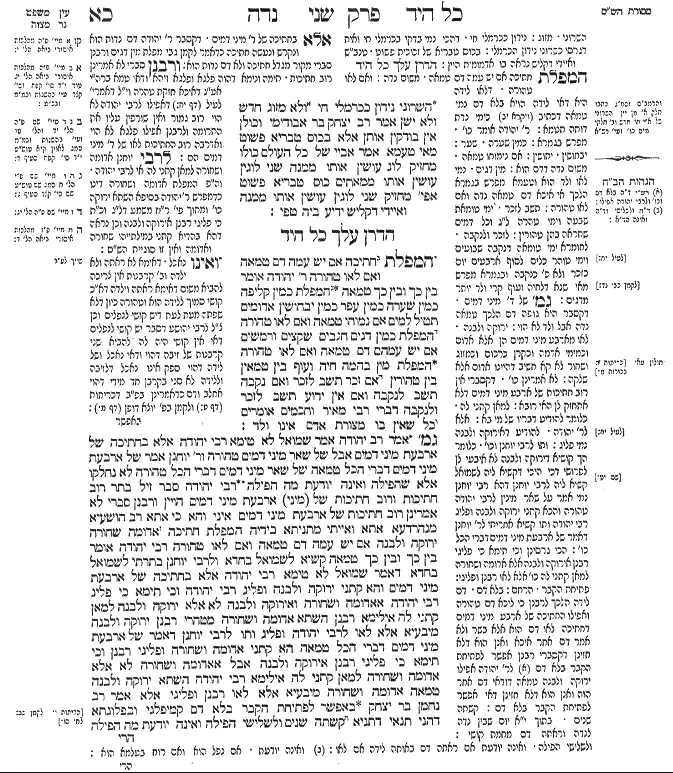
Niddah 21a - Guemara
השרוני נידון ככרמלי חי ולא מזוג חדש ולא ישן אמר רב יצחק בר אבודימי וכולן אין בודקין אותן אלא בכוס טבריא פשוט מאי טעמא אמר אביי של כל העולם כולו מחזיק לוג עושין אותו ממנה שני לוגין עושין אותו ממאתים כוס טבריא פשוט אפי' מחזיק שני לוגין עושין אותו ממנה ואיידי דקליש ידיע ביה טפי
הדרן עלך כל היד
מתני׳ המפלת חתיכה אם יש עמה דם טמאה ואם לאו טהורה ר' יהודה אומר בין כך ובין כך טמאה המפלת כמין קליפה כמין שערה כמין עפר כמין יבחושין אדומים תטיל למים אם נמוחו טמאה ואם לאו טהורה המפלת כמין דגים חגבים שקצים ורמשים אם יש עמהם דם טמאה ואם לאו טהורה המפלת מין בהמה חיה ועוף בין טמאין בין טהורין אם זכר תשב לזכר ואם נקבה תשב לנקבה ואם אין ידוע תשב לזכר ולנקבה דברי רבי מאיר וחכמים אומרים כל שאין בו מצורת אדם אינו ולד גמ׳ אמר רב יהודה אמר שמואל לא טימא רבי יהודה אלא בחתיכה של ארבעת מיני דמים אבל של שאר מיני דמים טהורה ור' יוחנן אמר של ארבעת מיני דמים דברי הכל טמאה של שאר מיני דמים דברי הכל טהורה לא נחלקו אלא שהפילה ואינה יודעת מה הפילה רבי יהודה סבר זיל בתר רוב חתיכות ורוב חתיכות של (מיני) ארבעת מיני דמים הויין ורבנן סברי לא אמרינן רוב חתיכות של ארבעת מיני דמים איני והא כי אתא רב הושעיא מנהרדעא אתא ואייתי מתניתא בידיה המפלת חתיכה אדומה שחורה ירוקה ולבנה אם יש עמה דם טמאה ואם לאו טהורה רבי יהודה אומר בין כך ובין כך טמאה קשיא לשמואל בחדא ולרבי יוחנן בתרתי לשמואל בחדא דאמר שמואל לא טימא רבי יהודה אלא בחתיכה של ארבעת מיני דמים והא קתני ירוקה ולבנה ופליג רבי יהודה וכי תימא כי פליג רבי יהודה אאדומה ושחורה ואירוקה ולבנה לא אלא ירוקה ולבנה למאן קתני לה אילימא רבנן השתא אדומה ושחורה מטהרי רבנן ירוקה ולבנה מיבעיא אלא לאו לרבי יהודה ופליג ותו לרבי יוחנן דאמר של ארבעת מיני דמים דברי הכל טמאה הא קתני אדומה ושחורה ופליגי רבנן וכי תימא כי פליגי רבנן אירוקה ולבנה אבל אאדומה ושחורה לא אלא אדומה ושחורה למאן קתני לה אילימא רבי יהודה השתא ירוקה ולבנה טמאה אדומה ושחורה מיבעיא אלא לאו רבנן ופליגי אלא אמר רב נחמן בר יצחק באפשר לפתיחת הקבר בלא דם קמיפלגי ובפלוגתא דהני תנאי דתניא קשתה שנים ולשלישי הפילה ואינה יודעת מה הפילה
Comments from Rashi on Masechet Niddah Page 21a
השרוני . מזוג: נידון ככרמלי חי . דהכי נמי בדקי בכרמלי חי. ואית דגרסי כשרוני נידון הכרמלי: בכוס טבריא של זכוכית פשוט . טנב"ש ואיידי דקליש נראה בו אדמומית היין: מתני' המפלת חתיכה אם יש עמה דם טמאה . משום נדה: ואם לאו טהורה . דלאו לידה היא דאי לידה הויא בלא דם נמי טמאה דכתיב (ויקרא יב) כימי נדת דותה תטמא: ר' יהודה אומר כו' . מפרש בגמרא: כמין שערה . שער: יבחושין . יתושין: אם נימוחו טמאה . משום נדה דדם הוא: מין דגים . נמי לאו ולד הוא וטעמא מפרש בגמרא הלכך אי איכא דם טמאה נדה ואם לאו טהורה: תשב לזכר . ימי טומאת שבעה וימי טהרה ל"ג וכל דמים שתראה בהן טהורין: לזכר ולנקבה . לחומרא ימי טומאה דנקבה שבועים וימי טוהר כלים לסוף ארבעים יום כזכר ולא פ' כנקבה. ובגמרא מפרש מאי שנא דלחיה ועוף קרי ולד יותר מדגים: גמ' של ד' מיני דמים . דקסבר היא גופה דם הלכך טמאה נדה אבל ולד לא הוי: לא אמרינן כו' . דקסברי אין רוב חתיכות של ארבע מיני דמים דלא אתחזק לן האי רובא: ירוקה ולבנה . לאו מארבע מיני דמים הן אלא אדום וכמימי אדמה וכקרן כרכום וכמזוג. ושחור לא קא חשיב דהיינו אדום אלא שלקה: למאן קתני לה . כלומר להודיע דבריו של מי בא: אלא לר' יהודה . להודיע דאירוקה ולבנה נמי פליג: ותו לרבי יוחנן וכו' . כלומר הך קושיא דירוקה ולבנה לא איבעי לן לפרושי דכי היכי דקשיא ליה לשמואל קשיא ליה לרבי יוחנן דהא רבי יוחנן נמי אמר על שאר מינין לרבי יהודה טהורה והכא קתני ירוקה ולבנה ופליג רבי יהודה ותו קשיא אחריתי לר' יוחנן דאמר של ארבעת מיני דמים דברי הכל כו': הכי גרסינן וכי תימא כי פליגי רבנן אירוקה ולבנה אלא אדומה ושחורה למאן קתני לה כו' אלא לאו רבנן ופליגי: פתיחת הקבר . הרחם: בלא דם . דם לידה הלכך לרבנן כי ליכא דם טהורה ואפילו החתיכה של ארבע מיני דמים דחתיכה לאו דם הוא אלא בשר ולא אמר דם אחר איכא ואנן הוא דלא חזינן דקסברי רבנן אפשר לפתיחת הקבר בלא דם לר' יהודה אפילו ירוקה ולבנה טמאה דודאי דם אחר הוה ואנן הוא דלא חזינן דאי אפשר לפתיחת הקבר בלא דם: קשתה שנים . בתוך י"א יום שבין נדה לנדה וראתה דם מחמת קושי: ולשלישי הפילה . ואינה יודעת אם ראתה דם באותה לידה אם לאו. ואינה יודעת . אם נפל הוא ואם רוח בעלמא הוא:
Comments from Tosafot - Niddah 21a
אלא בחתיכה של ד' מיני דמים. דקסבר ר' יהודה דם נדות הוא ונקרש ונעשה חתיכה כדאמר לקמן גבי מפלת מין דגים ורבנן סברי מקור מגדל חתיכה ולא דם נדות הוא: ורבנן סברי לא אמרינן רוב חתיכות. תימה ונימא דהוה פלגא ופלגא ויהא ודאי טמא ברה"י אע"ג דאיכא חזקת טהרה וי"ל דאמרי' לעיל (נדה דף יח:) דאפילו לרבי יהודה לא הוי רוב גמור ואין שורפין עליו את התרומה ולרבנן אפילו פלגא לא הוי ואדרבה רוב החתיכות לאו של ד' מיני דמים הם: לרבי יוחנן אדומה ושחורה למאן קתני לה אי לרבי יהודה. וה"פ המפלת אדומה ושחורה דינו כדמפרש ר' יהודה בסיפא השתא ירוקה כו' ומתוך פי' ר"ח משמע דל"ג וכ"ת כי פליגי רבנן אירוקה ולבנה וכן נראה דהא בהדיא קתני במילתייהו שחורה ואדומה ואין זו סוגיית הש"ס:
Niddah 21a - Mishnah translated into english
For the purposes of the examination of blood, the wine of the Sharon region in Eretz Yisrael has the same status as undiluted Carmelite wine and not diluted Carmelite wine, new Carmelite wine and not old Carmelite wine.
Rav Yitzḥak bar Avudimi says: And in all cases of blood that has the color of diluted wine, one examines blood only with a simple Tiberian cup. The Gemara asks: What is the reason? Abaye says: Containers are designed according to a universal standard, such that a cup that can contain a log of wine, one fashions it from material weighing one hundred dinars, whereas a cup that can contain two log, one fashions it from material weighing two hundred dinars. By contrast, in the case of a simple Tiberian cup, even one that can contain two log, one fashions it from material weighing one hundred dinars. And since the material from which the cup is made is weak, it is more transparent and therefore the redness of the wine inside is more noticeable. Consequently, one must compare the blood to wine in a cup of this kind.
MISHNA: In the case of a woman who discharges an amorphous piece of tissue, if there is blood that emerges with it, the woman is ritually impure with the impurity of a menstruating woman. And if not, she is pure, as she is neither a menstruating woman nor a woman after childbirth. Rabbi Yehuda says: In both this case, where blood emerged, and that case, where no blood emerged, the woman is impure with the impurity of a menstruating woman, as there was certainly undetected blood that emerged with the flesh.
In the case of a woman who discharges an item similar to a shell, or similar to a hair, or similar to soil, or similar to mosquitoes, if such items are red, she should cast them into water to ascertain their nature: If they dissolved, it is blood, and the woman is impure with the impurity of a menstruating woman; and if not, she is pure.
In the case of a woman who discharges an item similar to fish or to grasshoppers, repugnant creatures, or creeping animals, if there is blood that emerges with them, the woman is impure with the impurity of a menstruating woman. And if not, she is pure.
With regard to a woman who discharges tissue in the form of a type of domesticated animal, undomesticated animal, or bird, whether it had the form of a non-kosher species or a kosher species, if it was a male fetus, then she observes the periods of impurity, seven days, and purity, thirty-three days, established in the Torah (see Leviticus 12:2–5) for a woman who gives birth to a male. And if the fetus was a female, the woman observes the periods of impurity, fourteen days, and purity, sixty-six days, established in the Torah for a woman who gives birth to a female.
And if the sex of the fetus is unknown, she observes the strictures that apply to a woman who gave birth both to a male and to a female. Accordingly, she is prohibited from engaging in intercourse for fourteen days, but after that, she will be permitted to engage in intercourse despite a discharge of uterine blood until thirty-three days pass after the seven days she would have been prohibited if the fetus were male. The prohibition to enter the Temple will continue until eighty days have passed from the discharge of the fetus. This is the statement of Rabbi Meir. And the Rabbis say: Any fetus that is not of human form is not regarded as an offspring with regard to observance of these periods, and she is permitted to engage in intercourse provided that she does not experience a discharge of uterine blood.
GEMARA: The mishna teaches that if a woman discharges an amorphous piece of tissue and no blood emerges with it, the Rabbis say that she is pure, whereas Rabbi Yehuda says that she is impure. Rav Yehuda says that Shmuel says: Rabbi Yehuda deemed the woman impure, despite the fact that no blood emerged, only in the case of a piece of tissue that has the appearance of one of the four types of ritually impure blood, as in such a case the piece has the status of blood. But if it has the appearance of other types of blood, the woman is pure.
And Rabbi Yoḥanan says there is a different explanation of the dispute: If a woman discharges a piece of tissue that has the appearance of one of the four types of ritually impure blood, everyone, i.e., Rabbi Yehuda and the Rabbis, agrees that she is impure. Likewise, if it has the appearance of other types of blood, everyone agrees that she is pure.
They disagree only with regard to a case where the woman discharged an amorphous piece of tissue, and she herself does not know exactly what was the appearance of the piece of tissue that she discharged, e.g., if it was lost. Rabbi Yehuda holds: Follow the majority of discharges of amorphous pieces of tissue, and the majority of pieces of tissue are of the appearance of one of the four types of impure blood. And the Rabbis hold: We do not say that the majority of pieces of flesh have the appearance of one of the four types of impure blood.
The Gemara asks: Is that so? But when Rav Hoshaya came from Neharde’a, he came and brought a baraita with him that states: In the case of a woman who discharges a piece of tissue that is red, black, green, or white, if there is blood that emerges with it, the woman is impure, and if not, she is pure. Rabbi Yehuda says: Both in this case, where blood emerged, and in that case, where no blood emerged, the woman is impure. This baraita poses a difficulty to the statement of Shmuel with regard to one aspect of his opinion, and it poses a difficulty to the statement of Rabbi Yoḥanan with regard to two aspects of his opinion.
The Gemara elaborates: It poses a difficulty to the statement of Shmuel with regard to one aspect of his opinion, as Shmuel said that Rabbi Yehuda deemed the woman impure only in the case of a piece of tissue that has the appearance of one of the four types of impure blood, and yet the baraita teaches that according to the Rabbis the woman is pure if the piece of tissue is green or white, which are not among the four colors of ritually impure blood, and that Rabbi Yehuda disagrees with their opinion.
And if you would say that when Rabbi Yehuda disagrees with the Rabbis, it is with regard to the case of a red or black piece of tissue, as these are among the four colors of ritually impure blood, but with regard to the case of a green or white piece he does not disagree with them, i.e., he concedes that the woman is pure, this cannot be correct. The Gemara explains why that explanation of the baraita is not possible: But if so, for the sake of clarifying whose opinion does the baraita teach the case of a green or white piece of tissue?
If we say that it comes to clarify the opinion of the Rabbis, that is unnecessary: Now that in a case of a red or black piece of tissue, which are among the four colors of ritually impure blood, the Rabbis deem the woman pure, is it necessary to state that they deem her pure in a case of a green or white piece? Rather, is it not coming to clarify the opinion of Rabbi Yehuda, teaching that the Rabbis deem the woman pure in this case, but Rabbi Yehuda disagrees with them and deems her impure? This contradicts the explanation of Shmuel.
And furthermore, the baraita poses an additional difficulty to the opinion of Rabbi Yoḥanan, in addition to the first difficulty explained above, as he said that if the piece of tissue has the appearance of one of the four types of ritually impure blood then everyone agrees that the woman is impure, and yet the baraita teaches the case of a red or black piece and states that the Rabbis disagree with Rabbi Yehuda and deem the woman pure.
And if you would say that when the Rabbis disagree with Rabbi Yehuda, it is with regard to the case of a green or white piece of tissue, but in the case of a red or black piece they do not disagree with him, as they concede that the woman is impure; but if that is so, then for the sake of clarifying whose opinion does the baraita teach the case of a red or black piece?
If we say that it comes to clarify the opinion of Rabbi Yehuda, this is unnecessary: Now that Rabbi Yehuda holds that in a case of a green or white piece the woman is impure, despite the fact that they are not among the four colors of ritually impure blood, is it necessary to state that she is impure in a case of a red or black piece? Rather, is it not coming to clarify the opinion of the Rabbis, teaching that Rabbi Yehuda deems the woman impure in this case, but the Rabbis disagree with him and maintain that she is pure?
Rather, Rav Naḥman bar Yitzḥak says there is a different explanation of the dispute between the Rabbis and Rabbi Yehuda: They disagree with regard to whether or not opening of the womb is possible without a discharge of blood. And they disagree with regard to the issue that is the subject of the dispute between these tanna’im, as it is taught in a baraita: If a woman experienced difficulty in labor during which blood emerged on two consecutive days, and on the third day she discharged, but she does not know what she discharged, i.e., whether it was a stillborn human fetus, and whether blood emerged during the miscarriage,
Traduction : The William Davidson digital edition of the Koren Noé Talmud, with commentary by Rabbi Adin Even-Israel Steinsaltz.