 Talmud Bavli
No video class on this page yet.
To add a video to this page please click here.Niddah Page 34b
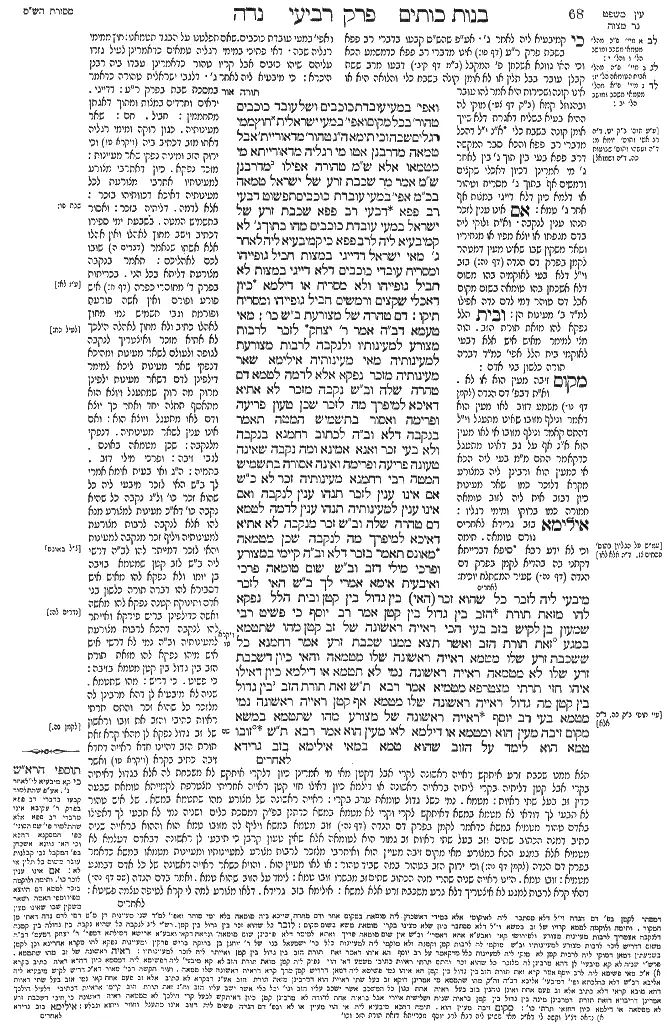
Niddah 34b - Guemara
ואפי' במעי עובדת כוכבים ושל עובד כוכבים טהור' בכל מקום ואפי' במעי ישראלית חוץ ממי רגלים שבה וכי תימא ה"נ טהור' מדאוריית' אבל טמאה מדרבנן אטו מי רגליה מדאורייתא מי מטמאו אלא ש"מ טהורה אפילו מדרבנן ש"מ אמר מר שכבת זרע של ישראל טמאה בכ"מ אפי' במעי עובדת כוכבים תפשוט דבעי רב פפא דבעי רב פפא שכבת זרע של ישראל במעי עובדת כוכבים מהו בתוך ג' לא קמיבעיא ליה לרב פפא כי קמיבעיא ליה לאחר ג' מאי ישראל דדייגי במצות חביל גופייהו ומסריח עובדי כוכבים דלא דייגי במצות לא חביל גופייהו ולא מסריח או דילמא כיון דאכלי שקצים ורמשים חביל גופייהו ומסריח תיקו דם טהרה של מצורעת ב"ש כו' מאי טעמא דב"ה אמר ר' יצחק לזכר לרבות מצורע למעינותיו ולנקבה לרבות מצורעת למעינותיה מאי מעינותיה אילימא שאר מעינותיה מזכר נפקא אלא לדמה לטמא דם טהרה שלה וב"ש נקבה מזכר לא אתיא דאיכא למיפרך מה לזכר שכן טעון פריעה ופרימה ואסור בתשמיש המטה תאמר בנקבה דלא וב"ה לכתוב רחמנא בנקבה ולא בעי זכר ואנא אמינא ומה נקבה שאינה טעונה פריעה ופרימה ואינה אסורה בתשמיש המטה רבי רחמנא מעינותיה זכר לא כ"ש אם אינו ענין לזכר תנהו ענין לנקבה ואם אינו ענין למעינותיה תנהו ענין לדמה לטמא דם טהרה שלה וב"ש זכר מנקבה לא אתיא דאיכא למיפרך מה לנקבה שכן מטמאה מאונס תאמר בזכר דלא וב"ה קיימי במצורע ופרכי מילי דזב וב"ש שום טומאה פרכי ואיבעית אימא אמרי לך ב"ש האי לזכר מיבעי ליה לזכר כל שהוא זכר (האי) בין גדול בין קטן ובית הלל נפקא להו מזאת תורת הזב בין גדול בין קטן אמר רב יוסף כי פשיט רבי שמעון בן לקיש בזב בעי הכי ראייה ראשונה של זב קטן מהו שתטמא במגע (ויקרא טו, לב) זאת תורת הזב ואשר תצא ממנו שכבת זרע אמר רחמנא כל ששכבת זרע שלו מטמא ראייה ראשונה שלו מטמאה והאי כיון דשכבת זרע שלו לא מטמאה ראייה ראשונה נמי לא תטמא או דילמא כיון דאילו איהו חזי תרתי מצטרפא מטמיא אמר רבא ת"ש זאת תורת הזב בין גדול בין קטן מה גדול ראייה ראשונה שלו מטמא אף קטן ראייה ראשונה נמי מטמא בעי רב יוסף ראייה ראשונה של מצורע מהו שתטמא במשא מקום זיבה מעין הוא ומטמא או דילמא לאו מעין הוא אמר רבא ת"ש (ויקרא טו, ב) זובו טמא הוא לימד על הזוב שהוא טמא במאי אילימא בזב גרידא
Comments from Rashi on Masechet Niddah Page 34b
ואפי' במעי עובדת כוכבים . שאם תפלטנו על הבגד תטמאנו: חוץ ממימי רגליה שבה . דאי פתיכי במימי רגליה טמאים כדאמרינן לעיל גזרו עליהם שיהו כזבים אבל קריו טהור כדאמרינן עבדו ביה רבנן היכרא: כי מיבעיא ליה לאחר ג' . דלגבי ישראלית טהורה כדאמר במסכת שבת בפרק ר"ע: דדייגי . יראים וחרדים במצות ומתוך דאגתן מתחממין: חביל . חם: שאר מעינותיה . כגון רוקה ומימי רגליה דאתו מזב דכתיב ביה (ויקרא טו) וכי ירוק הזב ומיניה נפקי שאר מעיינות: מזכר נפקא . כיון דאתרבי מצורע למעינותיו אתרבי מצורעת לכל מעינותיה דאיכא דכוותיהו בזכר: אלא לדמה . דליתיה בזכר: ואסור בתשמיש המטה . בשבעת ימי ספירו דכתיב וישב מחוץ לאהלו ואין אהלו אלא אשתו שנאמר (דברים ה) שובו לכם לאהליכם: תאמר בנקבה . מצורעת דליתא בכל הני. בכריתות בפרק ד' מחוסרי כפרה (דף ח:) איש פורע ופורם ואין אשה פורעת ופורמת וגבי תשמיש נמי מחוץ לאהלו כתיב ולא מחוץ לאהלה הילכך לא אתיא מזכר ואיצטריך לנקבה לגופה ולעולם לשאר מעינות. ומהיכא דנפקי שאר מעינות ליכא למימר דילפינן לדם דשאר מעינות ילפינן מרוק מה רוק שמתעגל ויוצא הוא מתאסף תחלה יחד ואחר כך יוצא ודם לאו מתעגל ויוצא הוא: ואם אינו ענין לשאר מעינותיה . דנפקי מלנקבה: שכן מטמאה באונס . לגבי זיבה: ופרכי מילי דזב . בתמיה: ה"ג ואי בעית אימא אמרי לך ב"ש האי לזכר מיבעי ליה כל שהוא זכר כו' . ול"ג נקבה כל שהיא נקבה כו' דא"כ מעינות למצורע מנא להו אלא לנקבה לרבות מצורעת למעינותיה ויליף זכר מנקבה למעינות והאי לזכר דמייתר להו לב"ה דרשי ליה ב"ש לזב קטן שמטמא בזיבה בן יומו ולא נפקא להו מאיש איש דסבירא להו דברה תורה כלשון בני אדם ותינוקת קטנה נפקא להו מאשה ואשה כדילפינן בריש פירקא ואייתר להו לנקבה דהכא לרבות מצורעת למעינותיה וב"ה נמי לא דרשי איש איש מיהו נפקא להו מזאת תורת הזב בין גדול בין קטן מטמא בזיבה: כי פשיט . כי דריש: מהו שתטמא . שניה לא מיבעיא לן דהא מרבינן לה מלזכר כל שהוא זכר והתם תרתי ראיות כתיבי והזב את זובו וראשון של זב גדול נפקא לן מהאי קרא זאת תורת הזב דהיינו חדא ראייה דחדא זיבה כתיב בקרא (ויקרא טו) ואשר תצא ממנו שכבת זרע איתקש ראייה ראשונה לקרי אבל דקטן מאי מי אמרינן כיון דלקרי איתקש לא משכחת לה אלא בגדול דאיתיה בקרי אבל קטן דליתיה בקרי ליתיה בראייה ראשונה. או דילמא כיון דאילו חזי קטן ראייה אחריתי מצטרפת לקמייתא טומאת שבעה כדין זב בעל שתי ראיות: מטמא . נמי כשל גדול טומאת ערב בקרי: ראייה ראשונה של מצורע מהו שתטמא במשא . של איש טהור לא תבעי לך דודאי לא מטמא במשא דאיתקש לקרי וקרי לא מטמא במשא כדתנן בפ"ק דמסכת כלים ושניה נמי לא תבעי לך דאפילו באדם טהור מטמיא במשא כדאמר לקמן בפרק דם הנדה (נדה דף נה.) זוב מטמא במשא ויליף לה מזובו טמא הוא וההוא בראייה שניה כתיב דמנה הכתוב שתים וזב בעל שתי ראיות זב גמור הוא לטומאה אלא שאין טעון קרבן כי תיבעי לן ראשונה דבאדם דעלמא לא מטמיא אלא במגע הכא במצורע מאי מקום זיבה מעיין הוא ואיתרבי מלזכר לרבות מצורע למעיינותיו ומעיינות מטמאו במשא כדאמר בפרק דם הנדה (לקמן נדה דף נה:) וכי ירוק הזב בטהור במה שביד טהור: או לאו מעיין הוא . והויא כשאר ראייה ראשונה של כל אדם דבמגע מטמיא: זובו טמא . היינו ראייה שניה שהרי מנה הכתוב שתים זב מבשרו זובו טמא: לימד על הזוב שהוא טמא . ואמר בדם הנדה (שם דף נה.) דהאי קרא לרבות למגע לא איצטריך דלא גרע משכבת זרע אלא למשא: אילימא בזב גרידא . דלאו מצורע למה לי קרא לטיפה עצמה פשיטא:
Comments from Tosafot - Niddah 34b
כי קמיבעיא ליה לאחר ג'. אע"פ שהש"ס קבעו בדברי רב פפא בשבת פרק ר"ע (דף פו:) אינו מדברי רב פפא כדמשמע הכא וכי האי גוונא אשכחן פ' המקבל (ב"מ דף קיב.) דבעו מרב ששת קבלן עובר בבל תלין או לא אומן קונה בשבח כלי והלואה היא או אינו קונה ושכירות היא אמר להו עובר ובהגוזל קמא (ב"ק דף צט.) מוקי לה ההיא בעיא בשליח דאגרת דלא שייך אומן קונה בשבח כלי א"נ י"ל דהכל מדברי רב פפא והכא סבר המקשה דרב פפא בעי בין תוך ג' בין לאחר ג' מי אמרינן דכיון דאכלי שקצים ורמשים אף בתוך ג' מסריח וטהור או דלמא כיון דלא דייגי במצות אף אחר ג' טמא: אם אינו ענין לזכר תנהו ענין לנקבה. וא"ת ולוקי ליה בדם מגפתו או יוצא מפיו או מנחיריו ושאר משקין שבו שאינו מעין דמטהר לקמן בפרק דם הנדה (נדה דף נה:) בזב וי"ל דלא בעי לאוקמיה בהו משום דלא אשכחן בהו טומאה בשום מקום אבל דם טוהר דמי לדם נדה אפילו למ"ד ב' מעינות הן: ובית הלל נפקא להו מזאת תורת הזב. הוה מצי למימר מאיש איש אלא דבעי לאוקמי בית הלל אפי' כמ"ד דברה תורה כלשון בני אדם: מקום זיבה מעין הוא או לא . וא"ת דבפ' דם הנדה (לקמן נדה דף נו.) משמע דזוב לאו מעין הוא דאמר ונילף מזובו שאינו מתעגל וי"ל דהתם קאמר ונילף מזובו אי לאו מעין הוא א"נ אף על גב דאינו מתעגל כדקאמר התם מ"מ בעי ליה הכא אי כמעין הוא ורבינן ליה במצורע מקרא דלזכר כמו שאר מעינות כיון דבזב אית ליה לזוב טומאה חמורה כמו ברוקו ומימי רגליו: אילימא בזב גרידא לאחרים גורם טומאה. תימה וכי לא ידע רבא סיפא דברייתא דקתני בה בהדיא לקמן בפרק דם הנדה (נדה דף נה.) שעיר המשתלח יוכיח:
Niddah 34b - Mishnah translated into english
even if it is in the womb of a gentile woman. If she discharges this semen, it imparts ritual impurity. And by contrast, the semen of a gentile is ritually pure wherever it is found, even if it is in the womb of a Jewish woman, except for any urine that intermingled with it. In other words, if the semen of a gentile intermingled with his urine, the mixture is impure due to the urine it contains, as the Sages decreed that a gentile is considered like a zav in all matters. Consequently, his urine imparts impurity.
The Gemara continues: And if you would say in rejection of this proof: Here as well, the baraita means that the semen of a gentile is ritually pure by Torah law but impure by rabbinic law, one may respond: Since the baraita states that the urine of a gentile is impure, is that to say that her urine, i.e., the urine of the gentile that intermingled with his semen and is now inside the womb of the Jewish woman, is ritually impure by Torah law? Isn’t it impure only by rabbinic law? Rather, conclude from the baraita that the semen of a gentile is pure even by rabbinic law. The Gemara concludes: Indeed, conclude from it that this is so.
The Master said above in a baraita: The semen of a Jew is impure wherever it is found, even if it is in the womb of a gentile woman. The Gemara suggests: Let one resolve from this baraita a dilemma that Rav Pappa raises. As Rav Pappa raises a dilemma: What is the halakha with regard to the semen of a Jew in the womb of a gentile woman? Let one conclude from the baraita that the semen is impure.
The Gemara rejects this suggestion: Rav Pappa does not raise his dilemma with regard to the semen of a Jew that is in the womb of a gentile woman within three days of their intercourse, as such semen is impure. Rather, when Rav Pappa raises his dilemma it is with regard to semen in the womb of the gentile more than three days after their intercourse. What is the halakha in such a case?
The Gemara explains the sides of the dilemma: Do we say that as Jewish women are concerned about the proper fulfillment of mitzvot, their bodies are hot and semen in their wombs becomes foul within three days, whereas gentile women are not concerned about the proper fulfillment of mitzvot and therefore their bodies are not hot and semen in their wombs does not become foul within three days? Or perhaps, since gentiles eat repugnant creatures and creeping animals, their bodies are also hot and semen in their wombs becomes foul within three days? Since no resolution is found, the Gemara concludes: The dilemma shall stand unresolved.
§ The mishna teaches: With regard to blood discharged by a female Jewish leper during the days of purity of a woman who gives birth, Beit Shammai deem it ritually pure and Beit Hillel say it imparts impurity only while moist. The Gemara asks: What is the reasoning of Beit Hillel, i.e., from where is their opinion derived? Rabbi Yitzḥak says: The verse states at the conclusion of the passage discussing impure individuals: “Whether it be a male or a female” (Leviticus 15:33). “Whether it be a male” serves to include the sources of bodily emissions of a male leper, teaching that they also impart impurity. Likewise, the phrase “or a female” serves to include the sources of bodily emissions of a female leper, teaching that they too impart impurity.
What is meant by the sources of bodily emissions of a female leper? If we say that this is referring to the rest of her sources, e.g., her saliva and urine, this can be derived from the halakha of a male leper. Rather, it is referring to her blood, and the verse serves to render impure the blood of a leper discharged during the days of her purity.
The Gemara asks: And how do Beit Shammai, who maintain the blood is ritually pure, interpret the verse? They contend that the halakha with regard to the emissions of a female leper cannot be derived from that of a male leper, as such a comparison can be refuted as follows: What is unique about a male leper? He is unique in that he is required to let his hair grow and rend his garments, and he is prohibited to engage in sexual intercourse. Can you say, then, that the same halakhot should apply to the emissions of a female leper, to whom all the aforementioned requirements do not apply? Consequently, the verse is necessary to teach that the saliva and urine of a female leper are impure.
The Gemara asks: And how do Beit Hillel respond? They respond as follows: If the verse serves to include only the saliva and urine of a female leper, then let the Merciful One write this halakha only with regard to a female leper. And there will be no need to write it with regard to a male leper, as I will say that the saliva and urine of a male leper are impure by an a fortiori inference: And what, if with regard to a female leper, who is not required to let her hair grow and rend her garments, and it is not prohibited for her to engage in sexual intercourse, the Merciful One nevertheless includes her sources of bodily emissions as impure, then in the case of a male leper, to whom all the aforementioned requirements apply, is it not all the more so that his emissions are impure?
Therefore, if the phrase “whether it be a male” is not needed for the matter of a male leper, as this halakha may be derived by an a fortiori inference, apply it to the matter of a female leper. And if it is not needed for the matter of her other sources of bodily emissions, as they are derived from the phrase “or a female,” apply it to the matter of her blood, i.e., to render impure the blood of her days of purity.
The Gemara asks: And how do Beit Shammai respond? They would answer that the halakha with regard to the emissions of a male leper cannot be derived by an a fortiori inference from the halakha of a female leper, as it can be refuted as follows: What is unique about a female? She is unique in that she is rendered impure as a zava even by sightings that occur due to circumstances beyond her control. Can you say that the same halakhot should apply to the emissions of a male, for whom this is not the case?
The Gemara asks: And how do Beit Hillel respond? They respond as follows: Can it be that we are standing and dealing with the halakhot of a leper, and Beit Shammai are attempting to refute the a fortiori inference by citing matters pertaining to a zav? The Gemara asks: And as for Beit Shammai? According to Beit Shammai, this is a legitimate refutation of the a fortiori inference, as they refute it through the common name of impurity that applies to both a leper and a zav.
And if you wish, say that Beit Shammai could say to you: That phrase “whether it be a male” is necessary to teach another halakha, that the phrase “whether it be a male” serves to include anyone who is a male, whether an adult or a minor, in the halakhot of a zav. And how do Beit Hillel respond? They derive this halakha from the following verse: “This is the law of the zav, and of him from whom the flow of seed goes out, so that he is unclean through it” (Leviticus 15:32). The verse indicates that the halakhot of a zav apply to any male, whether he is an adult or whether he is a minor.
§ The Gemara mentioned earlier that a minor is included in the halakhot of a zav. In this regard Rav Yosef says: When Rabbi Shimon ben Lakish taught the halakhot of a zav, he raised this dilemma: With regard to the first sighting of ziva of a zav who is a minor, what is the halakha as to whether it imparts impurity through contact? Does one say that as the Merciful One states: “This is the law of the zav, and of him from whom the flow of seed goes out” (Leviticus 15:32), one’s ziva is thereby compared to his semen?
Accordingly, with regard to any male whose semen imparts impurity, his first sighting of ziva imparts impurity. And with regard to this minor, since his semen does not impart impurity, his first sighting does not impart impurity either. Or perhaps, since if this minor sees two emissions of ziva the first sighting combines with the second sighting to render him impure as a zav for seven days, this indicates that the first sighting of a minor is significant, and consequently it should render him impure until the evening, just like an adult male.
Rava says: Come and hear a proof from a baraita: “This is the law of the zav,” whether he is an adult or whether he is a minor. Since the verse equates an adult and a minor, just as with regard to an adult his first sighting imparts impurity, so too, with regard to a minor, his first sighting imparts impurity as well.
The Gemara earlier stated that the phrase “whether it be a male” serves to include the sources of bodily emissions of a male leper, teaching that they impart impurity. In this regard Rav Yosef raises a dilemma: Granted, the first sighting of ziva of an otherwise ritually pure individual imparts impurity only through contact, as stated above, and only the second sighting imparts impurity through carrying. But with regard to the first sighting of ziva of a leper, what is the halakha as to whether it imparts impurity even through carrying? Does one say that the place of ziva in one’s body is considered a source, and therefore his ziva imparts impurity through carrying, like all the sources of bodily emissions of a leper? Or perhaps the place of ziva is not considered a source, in which case the first sighting of ziva does not impart impurity through carrying.
Rava says: Come and hear proof from a baraita: The verse states: “When any man has an issue out of his flesh, his issue [zovo] is unclean” (Leviticus 15:2). The verse teaches with regard to the zov that it is impure, and that it imparts impurity through carrying. To what case is the verse referring? If we say it is referring to one who is just a zav and not a leper as well, and the verse is teaching that any drop of ziva emitted by him imparts impurity through carrying,
Traduction : The William Davidson digital edition of the Koren Noé Talmud, with commentary by Rabbi Adin Even-Israel Steinsaltz.