 Talmud Bavli
Shevu'ot 31a : Youtube
Daf TubeYoutube
2 video classes :
Shevu'ot Page 31a
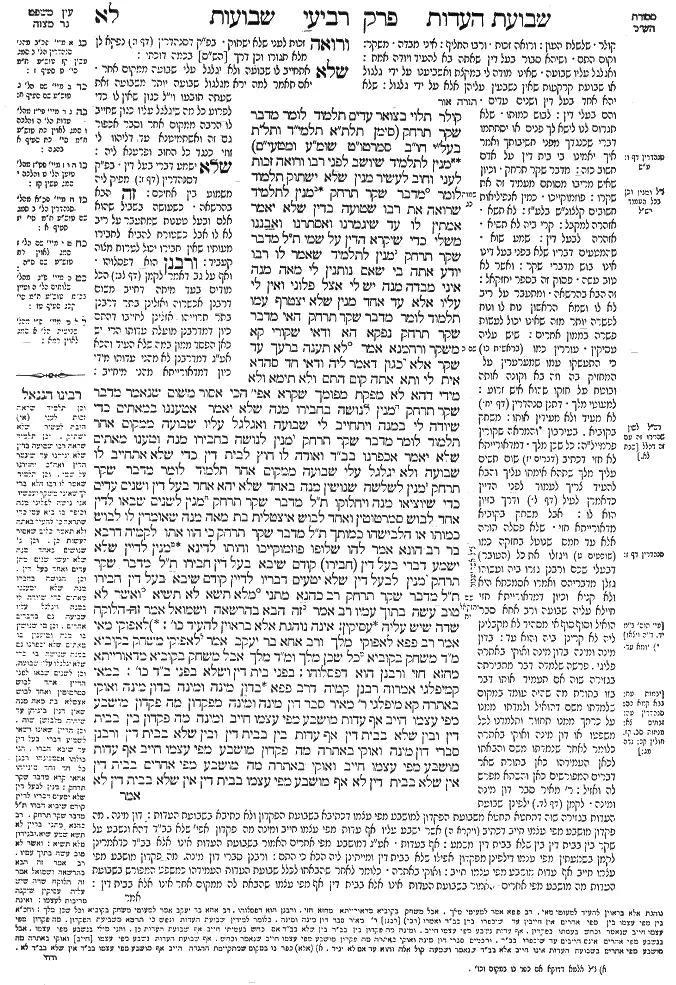
Shevu'ot 31a - Guemara
קולר תלוי בצואר עדים תלמוד לומר מדבר שקר תרחק (סימן תלת"א תלמי"ד ותל"ת בעל"י חו"ב סמרטו"ט שומ"ע ומטעי"ם) מנין לתלמיד שיושב לפני רבו ורואה זכות לעני וחוב לעשיר מנין שלא ישתוק תלמוד לומר (שמות כג, ז) מדבר שקר תרחק מנין לתלמיד שרואה את רבו שטועה בדין שלא יאמר אמתין לו עד שיגמרנו ואסתרנו ואבננו משלי כדי שיקרא הדין על שמי ת"ל מדבר שקר תרחק מנין לתלמיד שאמר לו רבו יודע אתה בי שאם נותנין לי מאה מנה איני מבדה מנה יש לי אצל פלוני ואין לי עליו אלא עד אחד מנין שלא יצטרף עמו תלמוד לומר מדבר שקר תרחק האי מדבר שקר תרחק נפקא הא ודאי שקורי קא משקר ורחמנא אמר (שמות כ, יב) לא תענה ברעך עד שקר אלא כגון דאמר ליה ודאי חד סהדא אית לי ותא אתה קום התם ולא תימא ולא מידי דהא לא מפקת מפומך שקרא אפי' הכי אסור משום שנאמר מדבר שקר תרחק מנין לנושה בחבירו מנה שלא יאמר אטעננו במאתים כדי שיודה לי במנה ויתחייב לי שבועה ואגלגל עליו שבועה ממקום אחר תלמוד לומר מדבר שקר תרחק מנין לנושה בחבירו מנה וטענו מאתים שלא יאמר אכפרנו בב"ד ואודה לו חוץ לבית דין כדי שלא אתחייב לו שבועה ולא יגלגל עלי שבועה ממקום אחר תלמוד לומר מדבר שקר תרחק מנין לשלשה שנושין מנה באחד שלא יהא אחד בעל דין ושנים עדים כדי שיוציאו מנה ויחלוקו ת"ל מדבר שקר תרחק מנין לשנים שבאו לדין אחד לבוש סמרטוטין ואחד לבוש איצטלית בת מאה מנה שאומרין לו לבוש כמותו או הלבישהו כמותך ת"ל מדבר שקר תרחק כי הוו אתו לקמיה דרבא בר רב הונא אמר להו שלופו פוזמוקייכו וחותו לדינא מנין לדיין שלא ישמע דברי בעל דין (חבירו) קודם שיבא בעל דין חבירו ת"ל מדבר שקר תרחק מנין לבעל דין שלא יטעים דבריו לדיין קודם שיבא בעל דין חבירו ת"ל מדבר שקר תרחק רב כהנא מתני (שמות כ, ו) מלא תשא לא תשיא (יחזקאל יח, יח) ואשר לא טוב עשה בתוך עמיו רב אמר זה הבא בהרשאה ושמואל אמר זה הלוקח שדה שיש עליה עסיקין:
אינה נוהגת אלא בראוין להעיד כו':
לאפוקי מאי אמר רב פפא לאפוקי מלך ורב אחא בר יעקב אמר לאפוקי משחק בקוביא מ"ד משחק בקוביא כל שכן מלך ומ"ד מלך אבל משחק בקוביא מדאורייתא מחזא חזי ורבנן הוא דפסלוהו:
בפני בית דין ושלא בפני ב"ד כו':
במאי קמיפלגי אמרוה רבנן קמיה דרב פפא בדון מינה ומינה בדון מינה ואוקי באתרה קא מיפלגי ר' מאיר סבר דון מינה ומינה מפקדון מה פקדון מושבע מפי עצמו חייב אף עדות מושבע מפי עצמו חייב ומינה מה פקדון בין בבית דין ובין שלא בבית דין אף עדות בין בבית דין ובין שלא בבית דין ורבנן סברי דון מינה ואוקי באתרה מה פקדון מושבע מפי עצמו חייב אף עדות מושבע מפי עצמו חייב ואוקי באתרה מה מושבע מפי אחרים בבית דין אין שלא בבית דין לא אף מושבע מפי עצמו בבית דין אין שלא בבית דין לא
Comments from Rashi on Masechet Shevu'ot Page 31a
קולר . שלשלת העון: ורואה זכות . ורבו החליף: איני מבדה . משקר: וקום התם . ושיהא סבור בעל דין שאתה בא להעיד ויודה אמת: ואגלגל עליו שבועה . שאינו מודה לי במקצת ואשביענו על ידי גלגול או שבועת קרקעות שאין נשבעין עליהן אלא על ידי גלגול: שלא יהא אחד בעל דין ושנים עדים . והם בעלי דין: לבוש כמותו . שלא תגרום לנו לישא לך פנים או יסתתמו דברי שכנגדך מפני חשיבותך ואמר איך יאמינו בי בית דין על אדם חשוב כזה: מדבר שקר תרחק . וכיון שאיש מריבו מסותם מעמיד זה את שקרו: פוזמוקייכו . כמין אנפיליאות חשובים קלצונ"ש בלע"ז: לא תשא . אזהרה למקבל: קרי ביה לא תשיא . אזהרה לבעל דין: שמע שוא . שהמטעים דבריו שלא בפני בעל דינו אינו בוש מדברי שקר: ואשר לא טוב עשה . פסוק זה בספר יחזקאל: זה הבא בהרשאה . ומתעבר על ריב לא לו ושמא הראשון נוח לו ונוח לפשרה יותר מזה שאינו יכול לעשות פשרה בממון אחרים: שיש עליה עסיקין . עוררין כמו (בראשית כו) כי התעשקו עמו שמערערין על המחזיק בה וזה בא וקונה אותה ובוטח על חזקו שהוא איש זרוע: למעוטי מלך . דתנן סנהדרין (דף יח.) לא מעיד ולא מעידין אותו: משחק בקוביא . בעירבון. והמראה שקורין פרמייל"ה: כל שכן מלך . דמדאורייתא לא חזי דכתיב (דברים יז) שום תשים עליך מלך שתהא אימתו עליך והבא להעיד צריך לעמוד לפני הדיין כדאמרן לעיל (שבועות דף ל.) ודרך בזיון הוא לו: אבל משחק בקוביא מדאורייתא חזי . שלא פסלה תורה אלא עד חמס שנוטל בחזקה כמו (שופטים ט) ויגזלו את כל (העובר) דבעלי שכם ורבנן גזרו ביה ועשוהו גזלן מדבריהם ואמרו אסמכתא היא ולא קניא וכיון דמדאורייתא חזי חיילא עליה שבועה ורב אחא סבר הואיל וסוף סוף אי מסהיד לא מקבלינן ליה לא קרינן ביה והוא עד: בדון מינה ומינה בדון מינה ואוקי באתרה פליגי . פרשה שלמדה דבר מחבירתה בגזירה שוה אם תעמיד אותו דבר בזו בתורת מה שהיה עומד במקום שלמדתו משם דהואיל ולמדתו ממנו על כרחך ממנו תחזור ותלמדנו לכל משפטו או דון מינה ואוקי באתרה כלומר לאחר שלמדתו משם והבאתו לכאן העמידהו כאן בתורת שאר דברים המפורשים כאן והשתא מפרש לה ואזיל: ר' מאיר סבר דון מינה ומינה . לקמן (שבועות דף לד.) ילפינן שבועת העדות בגזירה שוה דתחטא תחטא משבועת הפקדון למושבע מפי עצמו דכתיבא בשבועת הפקדון ולא כתיבא בשבועת העדות: דון מינה . מה פקדון מושבע מפי עצמו חייב דכתיב (ויקרא ה) אשר ישבע עליו אף עדות מפי עצמו חייב ומינה מה פקדון אפי' שלא בב"ד דהא ונשבע על שקר בין בבית דין בין שלא בבית דין משמע: אף בעדות . אע"ג דמושבע מפי אחרים האמור בשבועת העדות אינו אלא בב"ד כדאמרינן לקמן בשמעתין מפי עצמו דילפינן מפקדון אפילו שלא בבית דין ומייתינן ליה הכא כי התם: ורבנן סברי דון מינה . מה פקדון מושבע מפי עצמו חייב אף עדות מושבע מפי עצמו חייב: ואוקי באתרה . כלומר לאחר שהבאתו לכלל שבועת העדות העמידהו כמשפט המפורש בשבועת העדות מה מושבע מפי אחרים האמור בשבועת העדות אינו אלא בבית דין אף מפי עצמו שהבאת לה ממקום אחר אינו אלא בבית דין:
Comments from Tosafot - Shevu'ot 31a
ורואה זכות לעני שלא ישתוק. בפ"ק דסנהדרין (דף ו:) נפקא לן מלא תגורו וכן דרך [הש"ס] בכמה דוכתי: שלא אתחייב לו שבועה ולא יגלגל עלי שבועה ממקום אחר. ואם תאמר למה ירא מגלגול שבועה יותר משבועה זאת שעתה תובעו וי"ל כגון שאין לו כדי לפרוע כל מה שיגלגל עליו כגון שחייב לו הרבה ממקום אחר וסבר אכפור גם זה ואשתמיטנא עד דליהוו לי זוזי כנגד כל החוב ופרענא ליה: שלא ישמע דברי בעל דין. בפ"ק דסנהדרין (דף ז:) מפיק ליה משמוע בין אחיכם: זה הבא בהרשאה. כשעושה בשביל שהוא אלם ובעל טענות שמתעבר על ריב לא לו אבל כשטורח להביא לחבירו מעותיו שאין חבירו יכול לטרוח מצוה קעביד: ורבנן הוא דפסלוהו. ואף על גב דאמר לקמן (שבועות דף לב:) הכל מודים בעד מיתה דחייב משום דרבנן אכשרוה ואזלינן בתר דרבנן בתר תרוייהו אזלינן לחייבו דהתם כיון דמדרבנן מועלת עדותו הרי יש כאן הפסד ממון במה שלא העיד והכא אע"ג דמדרבנן לא מהני עדותו מידי כיון דמדאורייתא מהני מיחייב:
Shevu'ot 31a - Mishnah translated into english
the chain [kolar] of culpability for the miscarriage of justice be placed around the neck of the false witnesses? It is derived as the verse states: “Distance yourself from a false matter.”
The Gemara provides a mnemonic for additional halakhot derived from the verse: “Distance yourself from a false matter.” Three relating to a student; and three relating to creditors; and three relating to a judge: Rags, hears, and explain.
From where is it derived with regard to a student who is sitting before his teacher and sees a claim that provides advantage for a poor person and disadvantage for a wealthy person that he shall not remain silent? It is derived as the verse states: “Distance yourself from a false matter.”
From where is it derived with regard to a student who sees his teacher who is erring in judgment that he shall not say: I will wait for my teacher until he concludes the trial and then I will contradict him and construct a ruling of my own so that the verdict will be attributed to my name? It is derived as the verse states: “Distance yourself from a false matter.”
From where is it derived with regard to a student whose teacher said to him: You know concerning me that even if one were to give me one hundred times one hundred dinars, I would not fabricate a claim. Now, I have one hundred dinars in the possession of so-and-so, to whom I lent money, but I have only one witness of the two required to testify about the loan and enable me to collect payment; from where is it derived that the student shall not join with the other witness and testify? It is derived as the verse states: “Distance yourself from a false matter” (Exodus 23:7).
The Gemara asks: Is it from the verse “Distance yourself from a false matter” that this matter is derived? But isn’t he certainly lying in that case, and this is already stated, as the Merciful One states: “You shall not bear false witness against your neighbor” (Exodus 20:13)? Rather, the reference is to a case where the teacher said to him: It is certain that I have one witness, and you come and stand there beside him and do not say anything, as in that manner you do not express a lie from your mouth. Your silent presence will create the impression that I have two witnesses and lead the debtor to admit his debt. Even so, it is prohibited to do this, due to that which is stated: “Distance yourself from a false matter.”
There are three halakhot with regard to a creditor: From where is it derived with regard to one who is seeking repayment from another of a debt of one hundred dinars, and there are no witnesses to that effect, that he shall not say: I will claim that he owes me two hundred dinars so that he will admit that he owes me one hundred dinars, and he will become liable to take an oath to me, the oath of one who admits to part of a claim, and on that basis I will extend the oath and compel him to take an oath with regard to a debt that he owes me from another place? It is derived as the verse states: “Distance yourself from a false matter.”
From where is it derived with regard to one who is seeking repayment from another of a debt of one hundred dinars and claims that the debtor owes him two hundred dinars, that the debtor shall not say: I will completely deny his claim in court, and I will admit to him outside court so that I will not become liable to take an oath to him and he will not extend the oath and compel me to take an oath with regard to a debt that I owe him from another place? It is derived as the verse states: “Distance yourself from a false matter.”
From where is it derived with regard to three who are seeking repayment from one individual for a total of one hundred dinars, that one of the three should not assume the role of a sole litigant and claim one hundred dinars, and the other two will assume the role of witnesses so that they will exact payment of one hundred dinars from the debtor and divide it among them? It is derived as the verse states: “Distance yourself from a false matter.”
There are three halakhot with regard to a judge: From where is it derived with regard to two individuals who came to judgment, one dressed in rags and one dressed in a garment worth one hundred times one hundred dinars, that the judges say to the wealthy person: Dress like the poor person or dress the poor person in a garment like yours? It is derived as the verse states: “Distance yourself from a false matter.” The Gemara relates: When individuals would come before Rava bar Rav Huna for judgment he would say to them: Remove your fine shoes [puzmukaikhu] and descend for judgment, so you will not appear more distinguished than the other litigant.
From where is it derived that a judge should not hear the statement of one litigant before the other litigant comes to court? It is derived as the verse states: “Distance yourself from a false matter.”
From where is it derived that a litigant shall not explain the rationale behind his statements to the judge before the other litigant comes to court? It is derived as the verse states: “Distance yourself from a false matter.” Rav Kahana teaches that this halakha is derived from that which is written: “You shall not accept [lo tissa] a false report” (Exodus 23:1), which he interprets as though it is written: You shall not cause others [lo tassi] to accept a false report.
The verse states: “And did that which is not good among his people” (Ezekiel 18:18). Rav says: This is referring to one who comes to court with authorization to present claims on behalf of another. And Shmuel says: This is referring to one who purchases a field concerning which there are those who contest ownership of it, as in that way, he involves himself in the disputes of others.
§ The mishna teaches that the oath of testimony is practiced only with regard to those fit to testify. The Gemara asks: This statement serves to exclude what person not allowed to testify who was not mentioned explicitly in the mishna? Rav Pappa said: It serves to exclude a king who, although he is neither a relative nor otherwise disqualified from testifying, does not testify in court. And Rav Aḥa bar Ya’akov said: It serves to exclude one who plays with dice, who is disqualified as a witness by rabbinic law.
The Gemara notes: According to the one who says that the mishna excludes one who plays with dice from the oath of testimony, all the more so should a king be excluded, as he does not testify by Torah law. And according to the one who says that the mishna excludes a king from the oath of testimony, it may exclude only a king, but perhaps one who plays with dice is not excluded, as by Torah law he is fit to testify and it is the Sages who disqualified him. Therefore, he is not excluded from the oath of testimony, which is by Torah law.
§ The mishna teaches: The oath of testimony is practiced both in the presence of the court and not in the presence of the court, when the potential witness takes the oath on his own. And if the oath is administered by others he is liable only when he denies, in court, any knowledge of the incident in question. This is the statement of Rabbi Meir. And the Rabbis say: Whether the witness takes the oath on his own or whether the oath is administered by others, he is liable only when he denies, in court, any knowledge of the incident in question. The Gemara asks: With regard to what do they disagree?
The Sages said the explanation before Rav Pappa: They disagree with regard to the method of derivation by means of a verbal analogy. Is the method to infer the halakha from the source of the verbal analogy and derive the details from that source as well, or is the method to infer the halakha from it but interpret the halakha according to its own place?
The Gemara elaborates: Rabbi Meir holds: Infer from it and derive the details from it. The halakha of the oath of testimony is derived from the halakha of an oath on a deposit: Just as in the case of the oath on a deposit, one who takes the oath on his own is liable, so too in the case of the oath of testimony, one who takes the oath on his own is liable. And derive the details from it: Just as in the case of the oath on a deposit one is liable whether he took the oath in court or he took the oath not in court, so too in the case of the oath of testimony, one is liable whether he took the oath in court or he took the oath not in court.
And the Rabbis hold: Infer the halakha from it but interpret the halakha according to its own place. The halakha of the oath of testimony is derived from the halakha of an oath on a deposit: Just as in the case of the oath on a deposit, one who takes the oath on his own is liable, so too in the case of the oath of testimony, one who takes the oath on his own is liable. But interpret the halakha according to its own place and derive the details of the halakha from the halakhot of the oath of testimony: Just as in the case of one who was administered an oath by others, if he denies knowledge of the matter in court, yes, he is liable, and if his denial does not take place in court, no, he is not liable; so too, one who took the oath on his own, if he did so in court, yes, he is liable, and if he did not take the oath in court, no, he is not liable.
Traduction : The William Davidson digital edition of the Koren Noé Talmud, with commentary by Rabbi Adin Even-Israel Steinsaltz.
Shevu'ot 31a : Significance
Next step
Finished studying Shevu'ot 31a? Carry on with the rest of the tractate.
Study Shevu'ot 31bFrequently asked questions: Shevu'ot 31a
Where is Shevu'ot 31a in tractate Shevu'ot?
Shevu'ot 31a is page 59 of 96 in tractate Shevu'ot (Seder Nezikin).
When is daf 31 of Shevu'ot studied in Daf Yomi?
Daf Yomi covers one daf a day, both sides. Daf 31 of Shevu'ot will be studied on November 2, 2032.
Is there a video class on Shevu'ot 31a?
Yes, by Daf Tube, Rabbi Dr. Moshe Weisblum. These classes were published on YouTube by their authors and are gathered on this site.
What is tractate Shevu'ot about?
The Masechet Shevuot is the sixth tractate of the Seder Nezikin. The Shevuot Gemara is the study of the laws relating to oaths. The Shevuot tractate is a gemara which contains 8 chapters.
Your study is also dedicated to them
- L'ilui Nishmat Yechayahou ben Moche
- L'ilui Nishmat אסתר בת חיים
- L'ilui Nishmat Reuven ben Rivka SEBBAG