 Talmud Bavli
The learning on the whole site is dedicated : L'ilui Nishmat יוסף בן מושה
The learning on the whole site is dedicated : For the success of Elyahou ben H'anna & family
The learning on the whole site is dedicated : L'ilui Nishmat Rav Chlomo Ben Jamilla
Shevu'ot 41a : Youtube
Daf TubeYoutube
2 video classes :
Shevu'ot Page 41a
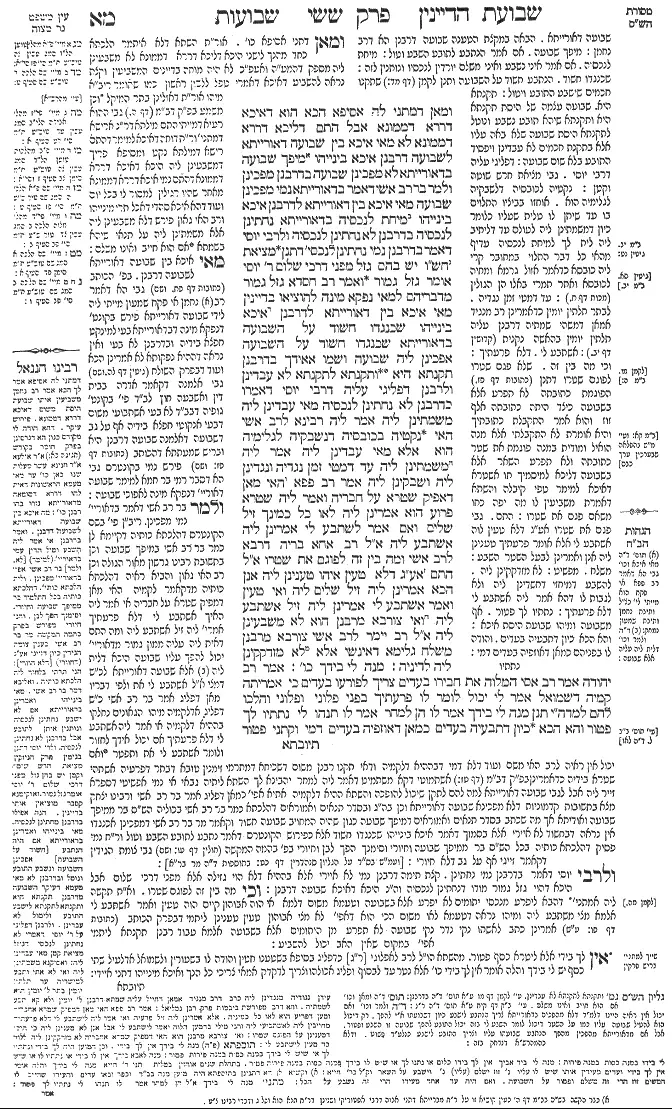
Shevu'ot 41a - Guemara
ומאן דמתני לה אסיפא הכא הוא דאיכא דררא דממונא אבל התם דליכא דררא דממונא לא מאי איכא בין שבועה דאורייתא לשבועה דרבנן איכא בינייהו מיפך שבועה בדאורייתא לא מפכינן שבועה בדרבנן מפכינן ולמר בר רב אשי דאמר בדאורייתא נמי מפכינן שבועה מאי איכא בין דאורייתא לדרבנן איכא בינייהו מיחת לנכסיה בדאורייתא נחתינן לנכסיה בדרבנן לא נחתינן לנכסיה ולרבי יוסי דאמר בדרבנן נמי נחתינן לנכסי' דתנן מציאת חש"ו יש בהם גזל מפני דרכי שלום ר' יוסי אומר גזל גמור ואמר רב חסדא גזל גמור מדבריהם למאי נפקא מינה להוציאו בדיינין מאי איכא בין דאורייתא לדרבנן איכא בינייהו שכנגדו חשוד על השבועה בדאורייתא שכנגדו חשוד על השבועה אפכינן ליה שבועה ושמו אאידך בדרבנן תקנתא היא ותקנתא לתקנתא לא עבדינן ולרבנן דפליגי עליה דרבי יוסי דאמרו בדרבנן לא נחתינן לנכסיה מאי עבדינן ליה משמתינן ליה אמר ליה רבינא לרב אשי האי נקטיה בכובסיה דנשבקיה לגלימיה הוא אלא מאי עבדינן ליה אמר ליה משמתינן ליה עד דמטי זמן נגדיה ונגדינן ליה ושבקינן ליה אמר רב פפא האי מאן דאפיק שטרא על חבריה ואמר ליה שטרא פרוע הוא אמרינן ליה לאו כל כמינך זיל שלים ואם אמר לשתבע לי אמרינן ליה אשתבע ליה א"ל רב אחא בריה דרבא לרב אשי ומה בין זה לפוגם את שטרו א"ל התם אע"ג דלא טעין איהו טענינן ליה אנן הכא אמרינן ליה זיל שלים ליה ואי טעין ואמר אשתבע לי אמרינן ליה זיל אשתבע ליה ואי צורבא מרבנן הוא לא משבעינן ליה א"ל רב יימר לרב אשי צורבא מרבנן משלח גלימא דאינשי אלא לא מזדקקינן ליה לדיניה:
מנה לי בידך כו':
אמר רב יהודה אמר רב אסי המלוה את חבירו בעדים צריך לפורעו בעדים כי אמריתה קמיה דשמואל אמר לי יכול לומר לו פרעתיך בפני פלוני ופלוני והלכו להם למדה"י תנן מנה לי בידך אמר לו הן למחר אמר לו תנהו לי נתתיו לך פטור והא הכא כיון דתבעיה בעדים כמאן דאוזפיה בעדים דמי וקתני פטור
Comments from Rashi on Masechet Shevu'ot Page 41a
שבועה דאורייתא . הבאה במקצת הטענה שבועה דרבנן הא דרב נחמן: מיפך שבועה . אם אמר הנתבע לתובע השבע וטול: מיחת לנכסיה . אם אמר איני נשבע ואיני משלם יורדין לנכסיו ונותנין לזה: שכנגדו חשוד . הנתבע חשוד על השבועה ותנן לקמן (שבועות דף מד:) שתקנו חכמים שישבע התובע ויטול: תקנתא היא . שבועה עצמה של היסת תקנתא היא ותקנתא שיהא תובע נשבע ונוטל לתקנתא היסת שבועה שלא באה עליו אלא בתקנת חכמים לא עבדינן ויפסיד התובע בלא שום שבועה: דפליגי עליה דרבי יוסי . גבי מציאת חרש שוטה וקטן: נקטיה לכובסיה דלשבקיה לגלימיה הוא . אוחזו בביציו התלוים בו עד שיתן לו טלית שעליו כלומר כיון דמשמתינן ליה לעולם עד דליתיב ליה לית לך למיחת לנכסיה עדיף מהאי כל דבר התלוי במחובר קרי ליה כובסא כדאמר אזול גרמא ומחיה לכובסא ואתר תמרי באלו הן הגולין (מכות דף ח.): עד דמטי זמן נגדיה . לבתר תלתין יומין כדאמרינן רב מנגיד אמאן דמשהי שמתיה דרבנן עליה תלתין יומין בהאשה נקנית (קדושין דף יב.): אשתבע לי . דלא פרעתיך: וכי מה בין זה . שלא פגם שטרו לפוגם שטרו דתנן (כתובות דף פז.) הפוגמת כתובתה לא תפרע אלא בשבועה כיצד היתה כתובתה אלף זוז והוא אמר התקבלת כתובתיך והיא אומרת לא התקבלתי אלא מנה הואיל ומודית במנה פוגמת את שטר כתובתה ולא תפרע השאר אלא בשבועה דליכא למיסמיך תו אשטרא דאיכא למימר טפי קיבלה והשתא דאמרת משביעין לו מה יפה כחו משאם פגם את שטרו: התם . גבי פגם את שטרו אע"ג דלא טעין לוה אשתבע לי אלא אומר פרעתיך טענינן ליה אנן ואמרינן לבעל השטר השבע: משלח . מפשיט: לא מזדקקינן ליה . להשבע דמיחזי דחשדינן ליה ולא לגבות לו דהא אמר ליה אשתבע לי דלא פרעתיך: נתתיו לך פטור . אף משבועה ומיהו שבועת היסת איכא: והא הכא כיון דתבעיה בעדים . והודה לו בפניהם כמאן דאוזפיה בעדים דמי:
Comments from Tosafot - Shevu'ot 41a
ומאן דתני אסיפא כו'. אור"ת השתא דלא איתמר הלכתא כחד מהנך לישני היכא דליכא דררא דממונא לא משבעינן ליה מספק דהמע"ה ואעפ"כ לא היה מוחה בדיינים המשביעין וקצת נראה להשביע דאיכא דאמרי טפל ללשון ראשון כמו שאומר ריב"א מיהו אור"ת דאזלינן בתר המיקל. וכן משמע בפ"ק דב"מ (דף ה.) גבי ההוא רעיא דמייתי התם מילתא דר"נ ארישא דמתני ור"ת דוחה דאיכא למימר דהתם רישא דמילתא נקט ומסיפא פריך דמשבעינן ליה היכא דאיכא דררא דממונא דהתם נמי איכא דררא דממונא מאחר שהיו רגילין למסור לו בכל יום ועוד דהא איכא סהדי דאכל תרי מינייהו ורב האי גאון פירש דלא משבעינן ליה אלא משמתינן ליה על תנאי שיהא בשמתא אם הוא חייב ואינו משלם: מאי איכא בין שבועה דאורייתא לשבועה דרבנן. בפ' הכותב (כתובות דף פח. ושם) גבי הא דאמר רב נחמן אי פקח שמעון מייתי ליה לידי שבועה דאורייתא פירש בקונט' דנפקא מינה דבדאורייתא בעי למינקט חפצא בידיה ובדרבנן לא בעי ואין נראה דההיא נפקותא לא אמרינן הכא ועוד דבפרק השולח (גיטין דף לה. ושם) גבי אלמנה דקאמר אדרה בבית דין ואשבעה חוץ לב"ד פי' בקונט' גופיה דבב"ד לא בעי אשתבועי משום דבעי אנקוטי חפצא בידיה אף על גב דשבועה דאלמנה שבועה דרבנן היא ובריש שמעתתא דהכותב (כתובות דף פז: ושם) פירש נמי בקונטרס גבי הא דסבר רמי בר חמא למימר שבועה דאוריי' דנפקא מינה לאפוכי שבועה: ולמר בר רב אשי דאמר בדאוריי' נמי מפכינן. ריב"ן פי' בשם הקונטרס דהלכתא כותיה דקיימא לן כמר בר רב אשי במיפך שבועה וכן בתשובת רבינו גרשון מאור הגולה וכן רב האי גאון והביא ראיה דהלכתא כותיה מדקאמר לקמיה האי מאן דמפיק שטרא על חבריה אי אמר ליה האיך אשתבע לי דלא פרעתיך אמרי' ליה זיל אשתבע ליה ומה התם דאית ליה עליה ממון גמור מדאוריי' יכול להפך עליו שבועה היכא דלית ליה אלא שבועה דאורייתא לכ"ש דמצי א"ל אשתבע לי את ולפי דבריו מאן דפליג אמר בר רב אשי כ"ש דפליג אדלקמיה מיהו הגאונים נחלקו בההיא דלקמיה אי אמר ליה אשתבע לי דלא פרעתיך אם יכול אידך לחזור ולומר אשתבע לי את ותפטר ואם יכול אין ראיה לרב האי משם ועוד דלא דמי דבההיא דלקמיה ודאי תקנו רבנן משום דשכיחא דמתרמי זימנין טובא דבתר דפרעיה אשתהי שטרא בידיה כדאמרינן בפ"ק דב"מ (דף טז:) אשתמוטי דקא משתמיט דאמר ליה למחר יהבינא לך השתא ליתיה גבאי אי נמי אפשיטי דספרא זייר ליה אבל לגבי שבועה דאורייתא למה להם לתקן שיכול להופכה והשתא ההיא דלקמיה אתיא אפי' כמאן דפליג אמר בר רב אשי ורבינו יצחק מצא בתשובות קדמוניות דלא מפכינא שבועה דאורייתא וכן בה"ג ובסדר תנאים ואמוראים דהלכתא כמר בר רב אשי בכוליה הש"ס בר ממיפך שבועה ואודיתא אך מה שכתב בסדר תנאים ואמוראים דמיפך שבועה כגון שהיה המחויב שבועה חשוד וקאמר מר בר רב אשי דמפכינן אכנגדו אין נראה דבחשוד לא איירי אלא בסמוך דאמר איכא בינייהו שכנגדו חשוד אלא כפירוש הקונטרס דאמר נתבע לתובע השבע וטול ור"ח נמי פסיק דהלכתא כותיה בכל הש"ס בר ממיפך שבועה וחיורי וסימנך הפך לבן וחיורי בפ' בהמה המקשה (חולין דף עו: ושם) גבי צומת הגידין דקאמר זייגי אף על גב דלא חיורי [ועמ"ש בס"ד על הגליון סנהדרין דף כט: בתוספות ד"ה מר בר"א]: ולרבי יוסי דאמר בדרבנן נמי נחתינן. קצת תימה דרבנן נמי לא איירי אלא בההיא דלא הוי גזילה אלא מפני דרכי שלום אבל היכא דהוי גזל גמור מודו דנחתינן לנכסיה וה"נ היכא דאיכא שבועה דרבנן: וכי מה בין זה לפוגם שטרו. וא"ת תקשה ליה אמתני'. דהבא ליפרע מנכסי יתומים לא יפרע אלא בשבועה וטעמא משום דלמא אי הוה אבוהון קיים הוה טעין ואמר אשתבע לי אלמא מצי משתבע ליה ומיהו נראה דטעמא לאו משום הכי הוא דאפי' לא מצי אבוהון טעין טענינן ליתמי דבפרק הכותב (כתובות דף פו: ע"ש) אמרינן כתב לאשתו נקי נדר נקי שבועה לא תפרע מן היתומים אלא בשבועה אלמא עבוד רבנן תקנתא ליתמי אפי' במקום שאין האב יכול להשביע: אין לך בידי אלא ליטרא כסף פטור. מהשתא הו"ל לרב לאפלוגי [ר"ג] כדפליג בסיפא בשטענו חטין והודה לו בשעורין ולשמואל אדלעיל שתי כסף יש לי בידך והלה אומר אין לך בידי כו' אלא נטר עד לבסוף ופליג אכולהו וצריך לדקדק אמאי צריכי כל הנך ואיכא מינייהו דתני איידי:
Shevu'ot 41a - Mishnah translated into english
But the one who teaches it in reference to the latter clause maintains that specifically here, in this case, an oath of inducement is administered to the defendant, as he admits that there is a matter of financial association between them; but there, in the case of the first clause, where the defendant maintains that the claim is baseless, and there is no matter of financial association between them, the court does not administer to him an oath of inducement.
§ The Gemara asks: Practically speaking, what difference is there between an oath administered by Torah law and an oath administered by rabbinic law, i.e., an oath of inducement? The Gemara answers: The practical difference between them is with regard to the transfer of an oath to the other party. In a case where the defendant suggests that instead of taking an oath himself, the claimant should take an oath and collect that which he claims, if the oath is administered by Torah law, we do not transfer the oath to the claimant; the defendant must either take an oath himself or pay. If the oath is administered by rabbinic law, we do transfer the oath.
The Gemara asks: And according to Mar bar Rav Ashi, who says that we transfer an oath that is administered by Torah law as well, what difference is there between an oath administered by Torah law and an oath administered by rabbinic law? The Gemara answers: The practical difference between them is with regard to whether or not the court enters the property of the defendant to collect payment if he refuses to take an oath. With regard to an oath administered by Torah law, we enter his property, and with regard to an oath administered by rabbinic law, we do not enter his property.
The Gemara asks: And what is the practical difference according to Rabbi Yosei, who says that even with regard to a debt that is owed by rabbinic law, we enter the property of the debtor to collect the debt?
As we learned in a mishna (Gittin 59b): A lost item found by a deaf-mute, an imbecile, or a minor is not acquired by him, since he lacks the legal competence to effect acquisition. Nevertheless, taking such an item from him is considered robbery on account of the ways of peace. Although these individuals lack halakhic competence and are unable to acquire lost items by Torah law, taking such items from them is considered robbery. Rabbi Yosei says: This is full-fledged robbery. And Rav Ḥisda says that Rabbi Yosei means that it is full-fledged robbery by rabbinic law. Accordingly, what is the practical difference between the opinion of the first tanna and Rabbi Yosei’s opinion there? The difference is that according to Rabbi Yosei, if one refuses to return the stolen item, it is appropriated by the judges and returned to the one who found it. The Gemara completes its question: Since according to the opinion of Rabbi Yosei the court enters one’s property to appropriate even an item that is owed by rabbinic law, what difference is there between an oath administered by Torah law and an oath administered by rabbinic law?
The Gemara answers: The practical difference between them is with regard to a case where the one opposing the claimant, the defendant, is suspected with regard to oaths. With regard to an oath administered by Torah law, if the one opposing the claimant is suspected with regard to oaths, we transfer the obligation to take an oath and impose it on the other litigant, i.e., the claimant, who may take an oath and collect that which he claims he is owed. With regard to an oath administered by rabbinic law, the court does not transfer the oath, as transference of an oath is by rabbinic ordinance, and we do not institute one rabbinic ordinance upon another rabbinic ordinance.
The Gemara asks: And according to the Rabbis who disagree with Rabbi Yosei, as they say that with regard to an item that is owed by rabbinic law, we do not enter his property to collect the item, what do we do to one who refuses to take an oath of inducement? The Gemara answers: We excommunicate him until he takes an oath.
Ravina said to Rav Ashi: This sanction is no less severe than entering his property and collecting the debt; it is like grabbing him by his testicles [bekhuveseih] until he surrenders his cloak. Rather, what do we do to him? Rav Ashi said to him: We excommunicate him until the time to flog him comes, i.e., for thirty days, and if he still refuses to take an oath or reach a settlement with the claimant, we flog him and then leave him alone.
§ Rav Pappa said: With regard to one who produced a promissory note against another in court, and the defendant said to him: The debt in the note is already repaid, but for some reason I did not get the promissory note returned to me when I paid you, we say to the defendant: It is not in your power to deny the debt; go pay. But if the defendant said: Let him take an oath to me that I did not repay him, we say to the claimant: Take an oath to him.
Rav Aḥa, son of Rava, said to Rav Ashi: But what is the difference between this case and the case of one who vitiates his promissory note by acknowledging that he has received partial payment? In the latter case, the Sages instituted that the creditor can collect the remainder of the debt only after taking an oath that he was not repaid more than the amount he admitted receiving. According to Rav Pappa, an oath can be administered to any creditor who produces a promissory note, even if he did not vitiate it.
Rav Ashi said to him: There, in the case of a creditor who vitiated his promissory note, even if the defendant does not himself make a claim demanding that the creditor take an oath, we, the court, make such a claim on his behalf. Here, in a case where the creditor did not vitiate his promissory note, we say to the defendant: Go pay him the debt, but if the defendant demands an oath, saying: Take an oath to me, we say to the creditor: Go take an oath to him. And if he is a Torah scholar [tzurva merabbanan], we do not administer an oath to him.
Rav Yeimar said to Rav Ashi: Can a Torah scholar uncloak people? Does his being a Torah scholar give him the right to collect money that the defendant claims he does not owe? Rather, if he is a Torah scholar we do not attend to his case.
§ The mishna teaches that if the claimant said: I have one hundred dinars in your possession, and the defendant initially acknowledged the debt, but when he claimed the money the next day the defendant said that he already repaid him, the defendant is exempt from taking an oath. Rav Yehuda says that Rav Asi says: In the case of one who lends money to another in the presence of witnesses, the latter is required to repay him in the presence of witnesses. Therefore, if there are no witnesses to the fact that he repaid him, he is liable. Rav Yehuda continues: When I said this in the presence of Shmuel, he said to me that the debtor can say to the claimant: I repaid you in the presence of so-and-so and so-and-so, and they went overseas.
The Gemara raises an objection to Rav Asi’s statement: We learned in the mishna that in a case where the claimant said: I have one hundred dinars in your possession, and the latter said to him: Yes, and the next day the claimant said to him: Give the money to me, if the defendant responded: I gave it to you, he is exempt. The Gemara infers: And here, since the claimant claimed the debt from the defendant in the presence of witnesses, and the latter admitted the debt, he is similar to one who lent him the money in the presence of witnesses, and nevertheless, the mishna teaches that the defendant is exempt.
Traduction : The William Davidson digital edition of the Koren Noé Talmud, with commentary by Rabbi Adin Even-Israel Steinsaltz.