 Talmud Bavli
The learning on the whole site is dedicated : L'ilui Nishmat Margalit bat Ledicia
The learning on the whole site is dedicated : L'ilui Nishmat רינה בת לדיסיה
The learning on the whole site is dedicated : For the success of Elyahou ben H'anna & family
Shevu'ot 10a : Youtube
Daf TubeYoutube
2 video classes :
Shevu'ot Page 10a
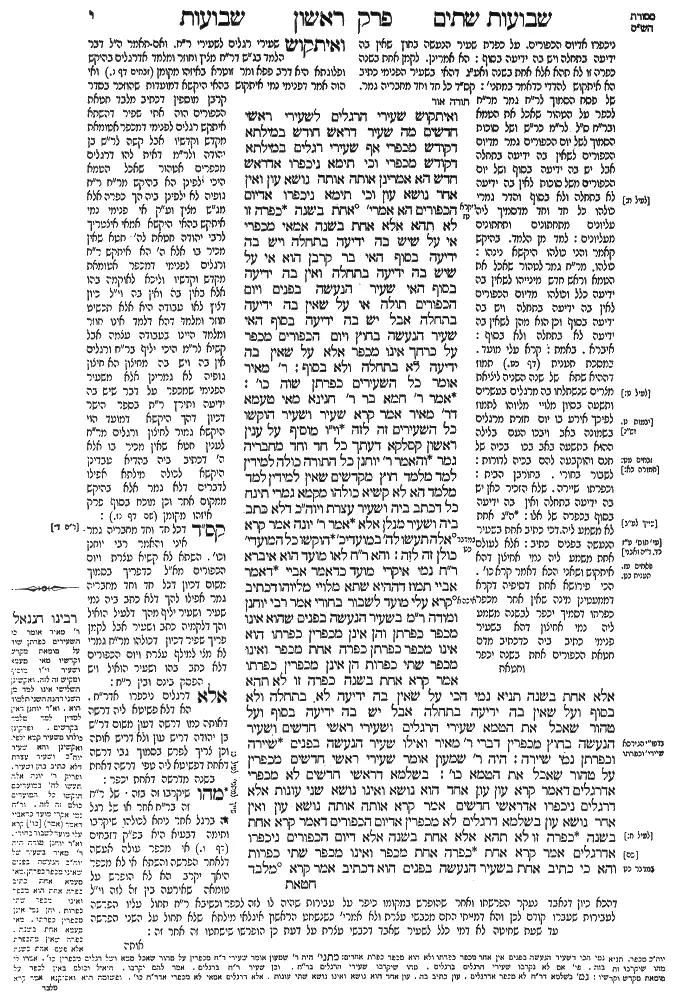
Shevu'ot 10a - Guemara
ואיתקוש שעירי הרגלים לשעירי ראשי חדשים מה שעיר דראש חודש במילתא דקודש מכפרי אף שעירי רגלים במילתא דקודש מכפרי וכי תימא ניכפרו אדראש חדש הא אמרינן אותה אותה נושא עון ואין אחר נושא עון וכי תימא ניכפרו אדיום הכפורים הא אמרי' (ויקרא טז, לד) אחת בשנה כפרה זו לא תהא אלא אחת בשנה אמאי מכפרי אי על שיש בה ידיעה בתחלה ויש בה ידיעה בסוף האי בר קרבן הוא אי על שיש בה ידיעה בתחלה ואין בה ידיעה בסוף האי שעיר הנעשה בפנים ויום הכפורים תולה אי על שאין בה ידיעה בתחלה אבל יש בה ידיעה בסוף האי שעיר הנעשה בחוץ ויום הכפורים מכפר על כרחך אינו מכפר אלא על שאין בה ידיעה לא בתחלה ולא בסוף:
ר' מאיר אומר כל השעירים כפרתן שוה כו':
אמר ר' חמא בר ר' חנינא מאי טעמא דר' מאיר אמר קרא שעיר ושעיר הוקשו כל השעירים זה לזה וי"ו מוסיף על ענין ראשון קסלקא דעתך כל חד וחד מחבריה גמר והאמר ר' יוחנן כל התורה כולה למידין למד מלמד חוץ מקדשים שאין למידין למד מלמד הא לא קשיא כולהו מקמא גמרי תינח כל דכתב ביה ושעיר עצרת ויוה"כ דלא כתב ביה ושעיר מנלן אלא אמר ר' יונה אמר קרא (במדבר כט, לט) אלה תעשו לה' במועדיכ' הוקשו כל המועדי' כולן זה לזה:
והא ר"ח לאו מועד הוא איברא ר"ח נמי איקרי מועד כדאמר אביי דאמר אביי תמוז דההיא שתא מלויי מליוהו דכתיב (איכה א, טו) קרא עלי מועד לשבור בחורי אמר רבי יוחנן ומודה ר"מ בשעיר הנעשה בפנים שהוא אינו מכפר כפרתן והן אינן מכפרין כפרתו הוא אינו מכפר כפרתן כפרה אחת מכפר ואינו מכפר שתי כפרות הן אינן מכפרין כפרתו אמר קרא אחת בשנה כפרה זו לא תהא אלא אחת בשנה תניא נמי הכי על שאין בה ידיעה לא בתחלה ולא בסוף ועל שאין בה ידיעה בתחלה אבל יש בה ידיעה בסוף ועל טהור שאכל את הטמא שעירי הרגלים ושעירי ראשי חדשים ושעיר הנעשה בחוץ מכפרין דברי ר' מאיר ואילו שעיר הנעשה בפנים שיירה וכפרתן נמי שיירה:
היה ר' שמעון אומר שעירי ראשי חדשים מכפרין על טהור שאכל את הטמא כו':
בשלמא דראשי חדשים לא מכפרי אדרגלים דאמר קרא עון עון אחד הוא נושא ואינו נושא שני עונות אלא דרגלים ניכפרו אדראשי חדשים אמר קרא אותה אותה נושא עון ואין אחר נושא עון בשלמא דרגלים לא מכפרין אדיום הכפורים דאמר קרא אחת בשנה כפרה זו לא תהא אלא אחת בשנה אלא דיום הכפורים ניכפרו אדרגלים אמר קרא אחת כפרה אחת מכפר ואינו מכפר שתי כפרות והא כי כתיב אחת בשעיר הנעשה בפנים הוא דכתיב אמר קרא (במדבר כט, יא) מלבד
Comments from Rashi on Masechet Shevu'ot Page 10a
ניכפרו אדיום הכפורים . על כפרת שעיר הנעשה בחוץ שאין בה ידיעה בתחלה ויש בה ידיעה בסוף: הא אמרינן . לקמן אחת בשנה כפרה זו לא תהא אלא אחת בשנה ואע"ג דהאי בשעיר הפנימי כתיב הא איתקוש להדדי כדאמר במתני': קס"ד כל חד וחד מחבריה גמר . של פסח הסמוך לר"ח גמר מר"ח לכפר על הטהור שאכל את הטמא ובר"ח ס"ל לר"מ כר"ש ושל סוכות הסמוך לשל יום הכפורים גמר מדיום הכפורים לשאין בה ידיעה בתחלה אבל יש בה ידיעה בסוף ושל יום הכפורים משל סוכות לאין בה ידיעה לא בתחלה ולא בסוף והדר גמרי כולהו כל חד וחד מדסמיך ליה עליונים מתחתונים ותחתונים מעליונים: למד מן הלמד . בהיקש קאמר והני כולהו היקשא נינהו: כולהו . מר"ח גמר לטהור שאכל את הטמא וראש חדש מינייהו לשאין בה ידיעה כלל וכולהו מדיום הכפורים לאין בה ידיעה בתחלה ויש בה ידיעה בסוף וכן הוא מהן לשאין בה ידיעה לא בתחלה ולא בסוף: איברא . באמת: קרא עלי מועד . במסכת תענית (דף כט.) תמוז דההיא שתא של שנה השניה ליציאת מצרים שנשתלחו בה מרגלים בעשרים ותשעה בסיון מלויי מליוהו לתמוז לפיכך אירע בו יום חזרת מרגלים בשמונה באב ויבכו העם בלילה ההוא בתשעה באב בכו בכיה של חנם והוקבעה להם בכיה לדורות: לשבור בחורי . בחורבן הבית: וכפרתו שיירה . שלא הזכיר כאן יש בה ידיעה בתחלה ואין בה ידיעה בסוף בכפרה של אלו:
Comments from Tosafot - Shevu'ot 10a
ואיתקוש שעירי רגלים לשעירי ר"ח. ואם תאמר ה"ל דבר הלמד בג"ש דר"ח מציץ וחוזר ומלמד אדרגלים בהיקש ופלוגתא היא דרב פפא ומר זוטרא באיזהו מקומן (זבחים דף נ.) ואי הוה אמר דפנימי נמי איתקוש בהאי היקשא דמועדות שהוזכר בסדר קרבן מוספין דכתיב מלבד חטאת הכפורים הוה אתי שפיר דהשתא איתקש רגלים לפנימי דמכפר אטומאת מקדש וקדשיו אבל קשה לר"ש בן יהודה ולר"מ דאית להו דרגלים מכפרים אטהור שאכל הטמא היכי ילפינן הא בהיקש מר"ח ר"ח גופיה לא ילפינן ביה הך כפרה אלא מג"ש מציץ וע"ק אי פנימי נמי איתקש בהאי היקשא אמאי איצטריך לרבי יהודה חטאת לה' חטא שאין מכיר בו אלא ה' הא איתקש ר"ח ורגלים לפנימי דמכפר אטומאת מקדש וקדשיו וליכא לאוקמה בהו אלא באין בה ואין בה וי"ל כיון דציץ לאו עבודה היא אלא תכשיט חוזר ומלמד דהא דלמד אינו חוזר ומלמד היינו בעבודה עצמה אבל קשיא לר"מ היכי יליף בר"ח ורגלים אין בה ויש בה מחיצון הא חיצון גופיה לא גמרינן אלא משעיר הפנימי שמכפר על דבר שיש בה ידיעה ותירץ ר"ת בספר הישר דכיון דהך היקשא דמועד הוי היקשא גמור לחיצון ורגלים מר"ח לענין חטא שאין מכיר בו אלא ה' דכתיב ביה בהדיא עבדינן היקשא לכולה מילתא אפילו לדברים דלא גמר אלא בהיקש ממקום אחר וכן מוכח בסוף פרק איזהו מקומן (שם דף נז.): קס"ד דכל חד וחד מחבריה גמר איני והאמר רבי יוחנן וכו'. השתא לא קשיא עצרת ויום הכפורים מא"ל כדפריך בסמוך משום דכיון דכל חד וחד מחבריה גמר אפילו להך דלא כתב ביה נמי שעיר ושעיר יליף מהך דלעיל הואיל והך דלקמיה כתב ושעיר אבל לקמן פריך שפיר דכיון דכולהו מר"ח גמרי לא מצי למילף עצרת ויום הכפורים דלא כתב בהו ושעיר הואיל ויש הפסק בינם ובין ר"ח: אלא דרגלים ניכפרו אדר"ח. הא דלא פשיטא ליה דרשה דאותה כמו דרשה דעון משום דר"ש בן יהודה דריש עון ולא דריש אותה וכן צריך לפרש בסמוך גבי דרשה דאחת דפשיטא ליה טפי דרשה דאחת בשנה מדרשה דאחת יכפר: מהו שיקרבו זה בזה. של ר"ח זה בר"ח אחר או של רגל זה ברגל אחר ניחא לכולהו שיקרבו ותימה דבעיא היא בפ"ק דזבחים (דף ו.) אי מכפר עולה אעשה דלאחר הפרשה והשתא אי לא מכפר היאך יקרב הא לא הופרש על טומאה שאירעה בין זה לזה וי"ל דהכא כיון דנאבד נעקר הפרשתו ואחר שהופרש במקומו כיפר על עבירות שהיה לו לזה לכפר וכשיבא ר"ח תחול עליו הפרשה לעבירות שעברו קודם לכן והא דמייתי התם מכבשי עצרת ולא אמרי' כשנשחט הראשון איגלאי מילתא שלא תחול על השני הפרשה עד שעת שחיטה לא דמי כלל לשעיר שאבד דכבשי עצרת על דעת כן הופרשו שישחטו זה אחר זה:
Shevu'ot 10a - Mishnah translated into english
And through this additional “and,” the goats of the Festivals are juxtaposed with the goats of the New Moons, indicating that just as the goats of the New Moons atone for a case involving sacrificial food, i.e., where a ritually pure person partook of ritually impure sacrificial food, so too, the goats of the Festivals atone for a similar case involving sacrificial food, i.e., where a ritually impure person partook of ritually pure sacrificial food.
And if you would say: Let the goats of the Festivals atone for that which the goats of the New Moon are sacrificed, that is not possible. Didn’t we say above that the verse states with regard to the goat of the New Moon: “And He gave it to you to bear the sin of the congregation,” which indicates that it bears, i.e., atones for, that sin but another does not bear that sin?
And if you would say: Let the goats of the Festivals atone for that which the goat of Yom Kippur is brought, that is not possible. Didn’t we say above that the verse states with regard to the goat of Yom Kippur: “Aaron shall bring atonement upon its corners once a year” (Exodus 30:10)? The emphasis on “once a year” teaches that this atonement for this case should be only once a year.
The Gemara explains: It must be that the goats of the Festivals atone for cases of defiling of the Temple or its sacrificial foods in which one did not have awareness, neither at the beginning nor at the end, because if not, for what other matter involving sacrificial foods could they atone?
If you say they atone for cases in which one had awareness at the beginning and had awareness at the end, then one can counter that he is liable to bring an offering to atone for his transgression, and therefore the goats of the Festivals will not atone for him. If you say they atone for cases in which one had awareness at the beginning but did not have awareness at the end, then one can counter that the goat whose blood presentation is performed inside the Sanctuary and Yom Kippur itself suspend any punishment that he deserves until he becomes aware of his transgression. If you say they atone for cases in which one did not have awareness at the beginning but did have awareness at the end, then one can counter that the goat whose blood presentation is performed outside the Sanctuary and Yom Kippur itself atone.
Perforce, they atone only for cases in which one did not have awareness, neither at the beginning nor at the end.
§ The mishna teaches that Rabbi Meir says: The atonement effected by all the goats offered as part of the additional offerings, i.e., those of the New Moons, Festivals, and Yom Kippur, is the same. They all atone for various cases of the defiling of the Temple or its sacrificial foods.
Rabbi Ḥama bar Rabbi Ḥanina said: What is the reasoning of Rabbi Meir? With regard to the goat of the Festivals (Numbers, chapters 28–29) the verse could have simply stated: A goat, but instead it states: “And a goat,” which teaches that all the goats are juxtaposed, this one with that one, as the use of the term “and” teaches that the second matter adds to the first matter, and that all the goats effect a similar atonement as the first one listed, that of the New Moon.
The Gemara questions this interpretation: Initially it enters your mind to explain that the atonement effected by each and every one of the goats of the Festivals is derived from the atonement effected by the goat adjacent to it, i.e., the one mentioned in the passage immediately preceding it: The atonement effected by the Passover goat from the atonement effected by the goat of the New Moon and the atonement effected by the Shavuot goat from the atonement effected by the Passover goat and so forth. But this is difficult, as doesn’t Rabbi Yoḥanan say: With regard to the entire Torah, one derives a halakha derived via a juxtaposition from a halakha derived via a juxtaposition, except for halakhot concerning consecrated matters, where one does not derive a halakha derived via a juxtaposition from a halakha derived via a juxtaposition?
The Gemara answers: This is not difficult, because actually the atonement effected by all of the goats is derived directly from the atonement effected by the first goat, i.e., the goat of the New Moon.
The Gemara asks: Rabbi Ḥama bar Rabbi Ḥanina’s explanation works out well for all the goats with regard to which it is written: “And a goat,” but from where do we derive what the goats of Shavuot and Yom Kippur atone for, as with regard to them it is not written: And a goat, but simply: “A goat”?
Rather, Rabbi Yona says: The verse states at the end of the passage detailing the goats of the Festivals: “These shall you offer to the Lord on your Festivals” (Numbers 29:39); with this verse all the goats of the Festivals are juxtaposed, this one with that one, which indicates that they all atone for the same sins. The Gemara challenges: But the New Moon is not regarded as a Festival.
The Gemara refutes this: In truth, the New Moon is also called a Festival, in accordance with what Abaye says with regard to a different issue, as Abaye says: With regard to the month of Tammuz in that year during which the Jewish people sinned by accepting the slanderous report of the spies about Eretz Yisrael, the court made it a full month of thirty days, as it is written: “He proclaimed a festival to crush my young men” (Lamentations 1:15). Abaye understands the verse to mean that by extending the month of Tammuz by an extra day, by proclaiming that the thirtieth day should be celebrated as a New Moon in addition to the first day of the following month, it emerged that the acceptance of the spies’ report occurred on the ninth of Av, and not the eighth, thereby defining the ninth of Av as an ominous day for the Jewish people. From Abaye’s explanation it is apparent that the New Moon is also called a Festival.
The Gemara continues to analyze Rabbi Meir’s opinion: Rabbi Yoḥanan says: And even though he holds that all the goats offered as part of the additional offerings effect atonement for the same sin, Rabbi Meir concedes with regard to the goat whose blood presentation is performed inside the Sanctuary on Yom Kippur that it does not atone their atonement, i.e., does not atone for the sins that they atone for, and they do not atone its atonement.
He elaborates: It does not atone their atonement, because, as the Gemara derived from the verse: “Aaron shall bring atonement upon its corners once a year” (Exodus 30:10), the internal goat effects one atonement for only one case but cannot effect two atonements for two different cases. And they do not atone its atonement, because, as the Gemara explained, the verse states: “Aaron shall bring atonement upon its corners once a year.” The emphasis on the phrase “once a year” teaches that this atonement for the specific case that it atones for should be only once a year.
The Gemara adds: This qualification of Rabbi Meir’s opinion is also indicated by that which is taught in a baraita: For cases of the defiling of the Temple in which one did not have awareness, neither at the beginning nor at the end, and for cases in which one did not have awareness at the beginning but did have awareness at the end, and for a ritually pure person who partook of ritually impure sacrificial food, the goats of the Festivals and the goats of the New Moons and the goat whose blood presentation is performed outside the Sanctuary atone. This is the statement of Rabbi Meir.
The Gemara notes: But in delineating which offerings atone, Rabbi Meir omitted the goat whose blood presentation is performed inside the Sanctuary, and furthermore, when delineating their atonement, i.e., what cases they atone for, he also omitted it, i.e., he did not mention the cases that the internal goat atones for, which are the cases in which one had awareness at the beginning but did not have awareness at the end. Evidently, the atonement of the internal goat is substantively different from the atonement of the other goats.
§ The mishna teaches: Rabbi Shimon would say: The goats of the New Moons atone for a ritually pure person who unwittingly partook of ritually impure sacrificial food. And for defiling the Temple or its sacrificial foods, the goats of the Festivals atone for cases in which one did not have awareness, neither at the beginning nor at the end, and the goats of the additional offerings of Yom Kippur atone for cases in which one did not have awareness at the beginning but did have awareness at the end.
The Gemara challenges: Granted, the goats of the New Moons do not atone for that which the goats of Festivals atone, as the verse states with regard to the goat of the New Moon: “And he gave it to you to bear the sin of the congregation” (Leviticus 10:17), which indicates that it bears, i.e., atones for, one sin but does not bear two sins. But nevertheless, let the goats of the Festivals atone for that which the goats of New Moons atone. The Gemara responds: The verse states: “He gave it to you.” The emphasis on “it” teaches that it bears this sin, but no other offering bears this sin.
The Gemara challenges: Granted, the goats of the Festivals do not atone for that which the goats of Yom Kippur atone, as the verse states with regard to the goat of Yom Kippur: “Aaron shall bring atonement upon its corners once a year” (Exodus 30:10). The emphasis on the phrase “once a year” teaches that this atonement, i.e., the specific case it atones for, should be only once a year. But nevertheless, let the goats of Yom Kippur atone for that which the goats of the Festivals atone. The Gemara responds: The verse states: “Once a year,” which indicates that it effects one atonement for only one case but cannot effect two atonements for two different cases.
The Gemara challenges the use of these derivations: But when it states “once” in this verse, it is with regard to the goat whose blood presentation is performed inside the Sanctuary that it is written, so the derivations from it should have no bearing on the discussion concerning the external goat. The Gemara answers: The verse states: “One goat for a sin-offering aside from
Traduction : The William Davidson digital edition of the Koren Noé Talmud, with commentary by Rabbi Adin Even-Israel Steinsaltz.