 Talmud Bavli
The learning on the whole site is dedicated : For the success of Elyahou ben H'anna & family
The learning on the whole site is dedicated : L'ilui Nishmat Rav Chlomo Ben Jamilla
The learning on the whole site is dedicated : L'ilui Nishmat Yechayahou ben Moche
Shevu'ot 40a : Youtube
Daf TubeYoutube
2 video classes :
Shevu'ot Page 40a
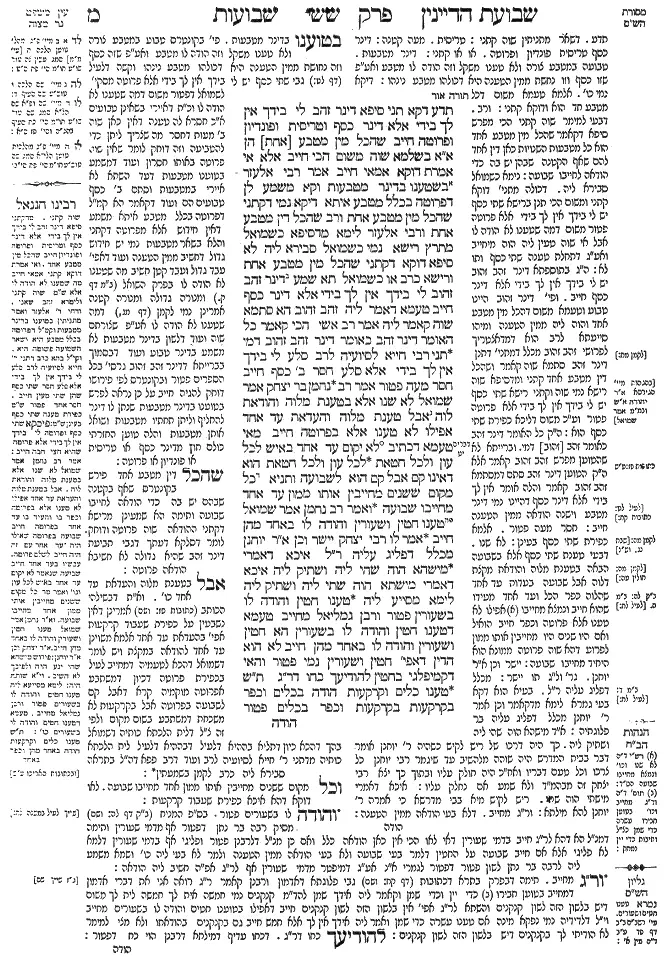
Shevu'ot 40a - Guemara
תדע דקא תני סיפא דינר זהב לי בידך אין לך בידי אלא דינר כסף וטריסית ופונדיון ופרוטה חייב שהכל מין מטבע [אחת] הן א"א בשלמא שוה משום הכי חייב אלא אי אמרת דוקא אמאי חייב אמר רבי אלעזר בשטענו בדינר מטבעות וקא משמע לן דפרוטה בכלל מטבע איתא דיקא נמי דקתני שהכל מין מטבע אחת ורב שהכל דין מטבע אחת ורבי אלעזר לימא מדסיפא כשמואל מתרץ רישא נמי כשמואל סבירא ליה לא סיפא דוקא דקתני שהכל מין מטבע אחת ורישא כרב או כשמואל תא שמע דינר זהב זהוב לי בידך אין לך בידי אלא דינר כסף חייב טעמא דאמר ליה זהב זהוב הא סתמא שוה קאמר ליה אמר רב אשי הכי קאמר כל האומר דינר זהב כאומר דינר זהב זהוב דמי תני רבי חייא לסיועיה לרב סלע לי בידך אין לך בידי אלא סלע חסר ב' כסף חייב חסר מעה פטור אמר רב נחמן בר יצחק אמר שמואל לא שנו אלא בטענת מלוה והודאת לוה אבל טענת מלוה והעדאת עד אחד אפילו לא טענו אלא בפרוטה חייב מאי טעמא דכתיב (דברים יט, טו) לא יקום עד אחד באיש לכל עון ולכל חטאת לכל עון ולכל חטאת הוא דאינו קם אבל קם הוא לשבועה ותניא כל מקום ששנים מחייבין אותו ממון עד אחד מחייבו שבועה ואמר רב נחמן אמר שמואל טענו חטין ושעורין והודה לו באחד מהן חייב אמר לו רבי יצחק יישר וכן א"ר יוחנן מכלל דפליג עליה ר"ל איכא דאמרי מישהא הוה שהי ליה ושתיק ליה איכא דאמרי מישתא הוה שתי ליה ושתיק ליה לימא מסייע ליה טענו חטין והודה לו בשעורין פטור ורבן גמליאל מחייב טעמא דטענו חטין והודה לו בשעורין הא חטין ושעורין והודה לו באחד מהן חייב לא הוא הדין דאפי' חטין ושעורין נמי פטור והאי דקמיפלגי בחטין להודיעך כחו דר"ג ת"ש טענו כלים וקרקעות הודה בכלים וכפר בקרקעות בקרקעות וכפר בכלים פטור
Comments from Rashi on Masechet Shevu'ot Page 40a
תדע . דשאר מתניתין שוה קתני: טריסית . מעה קטנה: דינר כסף טריסית פונדיון ופרוטה . או או קתני: דינר מטבעות . טבועה במטבע צורה ולא טענו משקל וזה הודה לו מטבע ואע"פ שזו כסף וזו נחשת ממין הטענה היא דכולהו מטבע נינהו: דיקא נמי כו' . אלמא טעמא משום דכל מטבע חד הוא ודוקא קתני: ורב . דבעי למימר שוה קתני הכי מפרש סיפא דקאמר שהכל מין מטבע אחד הוא כל מטבעות השנויות כאן דין אחד להם שאף הקטנה שבהן יש בה כדי הודאה לחייבו שבועה: נימא כשמואל סבירא ליה . דכולה מתני' דוקא קתני ומשום הכי תנן ברישא שתי כסף יש לי בידך אין לך בידי אלא פרוטה פטור משום דמה שטענו לא הודה לו אבל אי שוה טעין ליה הוה מיחייב ואע"ג דתחלת טענה שתי כסף ותו לא: ה"ג בתוספתא דינר זהב זהוב יש לי בידך אין לך בידי אלא דינר כסף חייב . ופי' דינר זהוב היינו טבוע וטעמא משום דהכל מין מטבע אחד והוה ליה ממין הטענה ומיהו סייעתא לרב הוא דמדאצטריך לפרושי זהב זהוב מכלל דמתני' דתנן דינר זהב סתמא שוה קאמר ושהכל דין מטבע אחד קתני ומדסיפא שוה רישא נמי שוה וקתני רישא שתי כסף יש לי בידך אין לך בידי אלא פרוטה פטור וע"כ משום דליכא כפירת שתי כסף הוא: ה"ק כל האומר דינר זהב כאומר זהב [זהוב] דמי . וברייתא לא שהטוען מפרש זהב זהוב קאמר אלא ה"ק הטוען דינר זהב סתם דמסתמא זהב זהוב קאמר והלה אומר אין לך בידי אלא דינר כסף דהיינו נמי דינר מטבע וישנה הודאה ממין הטענה חייב: חסר מעה פטור . אלמא כפירת שתי כסף בעינן: לא שנו . דבעי טענת שתי כסף אלא בשבועה הבאה בטענת מלוה והודאת מקצת דלוה אבל שבועה בעדות עד אחד שהלוה כפר הכל ועד אחד מעידו שהוא חייב ונמצא מחייבו אפילו לא טענו אלא פרוטה וכפר חייב הואיל ואם היו שנים היו מחייבין אותו ממון לפרוע דהא שוה פרוטה ממונא הוא היחיד מחייבו שבועה: יישר וכן א"ר יוחנן . גר' ול"ג תו יישר: מכלל דפליג עליה ר"ל . בעיא הוא דקא בעי גמרא לימא מדקאמר וכן אמר ר' יוחנן מכלל דפליג עליה בר פלוגתיה: א"ד מישהא הוה שהי ליה ושתיק ליה . כך היה דרכו של ריש לקיש כשהיה ר' יוחנן אומר דבר בבית המדרש היה שוהה מלהשיב עד שיגמר רבי יוחנן כל צרכו וכל טעם דבריו ואח"כ היה חולק עליו ובתוך כך יצא רבי יצחק זה מבהמ"ד ולא שמע אם נחלק עליו: איכא דאמרי מישתי הוה שתי . ריש לקיש מיא בבי מדרשא כי אמרה ר' יוחנן להא מילתא: ור"ג מחייב . דלא בעי הודאה ממין הטענה:
Comments from Tosafot - Shevu'ot 40a
בטוענו בדינר מטבעות. פי' בקונטרס טבוע במטבע צורה ולא טענו משקל וזה הודה לו מטבע ואע"פ שזה כסף וזה נחושת ממין הטענה היא דכולהו מטבע נינהו וקשה דלעיל (שבועות דף לט:) גבי שתי כסף יש לי בידך אין לך בידי אלא פרוטה מסקי' לשמואל דפטור משום דמה שטענו לא הודה לו וכ"ת דאיירי בשאינן טבועים א"כ חסרא לה טענה דאין כאן שוה ב' מעות דחסר מה שצריך ליתן כדי להטביעה וזה דוחק לומר שאין שוה פרוטה באותו חסרון ועוד דמשמע בטוענו מטבעות דעד השתא לא איירי במטבעות וסתם ב' כסף טבועים הם ועוד דקאמר הא קמ"ל דפרוטה בכלל מטבע איתא משמע דאין חידוש אלא מפרוטה דקתני והלא בשאר מטבעות נמי יש חידוש גדול דחשיב ממין הטענה ועוד דאפי' עבד גדול ועבד קטן חשיב מה שטענו לא הודה לו בפרק השואל (ב"מ דף ק.) ומנורה גדולה ומנורה קטנה אמרינן נמי לקמן (שבועות דף מג.) דמה שטענו לא הודה לו אע"פ שצורתם שוה ועוד דלשון בדינר מטבעות לא משמע בדינר טבוע ועוד דבסמוך בברייתא דדינר זהב זהוב גרסי' בכל הספרים פטור ובקונטרס לפי פירושו דוחק להגיה חייב על כן נראה לפרש בטוענו בדינר מטבעות שנתן לו דינר להחליף וליתן תחתיו מטבעות ושואל אותן מטבעות והלה טוען החזרתי כולם חוץ מדינר כסף או טריסית או פונדיון או פרוטה: שהכל דין מטבע אחד. פירש בקונטרס שאף בקטנה שבהם יש בה כדי הודאה לחייבו שבועה ותימה הא שמעינן מרישא דקתני ההודאה שוה פרוטה ודוחק לומר דסלקא דעתך דגבי תביעת דינר זהב שהיא גדולה לא חשיבא הודאה פרוטה: אבל בטענת מלוה והעדאת עד אחד כו'. וא"ת דבשילהי הכותב (כתובות פז: ושם) אמרינן דאין נשבעין על כפירת שעבוד קרקעות אפי' בהעדאת עד אחד אלמא משוינן עד אחד להודאה במקצת ויש לומר דשמואל דהכא לטעמיה דמחייב לעיל בכפירת פרוטה דכיון דמשתבע אפרוטה מוקמיה קרא דאבל קם לשבועה בפרוטה אבל בקרקעות לא משכחת דמשתבע בשום מקום ולפי זה צ"ל דלית הלכתא כותיה דשמואל בהך דהכא כיון דתליא בההיא דלעיל דבההיא דלעיל לית הלכתא כותיה מדתני ר' חייא לסיועיה לרב ועוד דרב פפא דה"ל בתראה סבירא ליה כרב לקמן בשמעתין: וכל מקום ששנים מחייבין אותו ממון אחד מחייבו שבועה. לאו דוקא דהא איכא כפירת שעבוד קרקעות: והודה לו בשעורים פטור. בס"פ המניח (ב"ק דף לה: ושם) מסיק רבה בר נתן דפטור אף מדמי שעורין ותימה דמנ"ל הא דהא לר"ג חייב בדמי שעורין דאי לאו הכי אין כאן הודאה כלל ואם כן מנ"ל דלרבנן פטור ופליגי אף בדמי שעורין דלמא לא פליגי אלא אם חייב שבועה על החטין דלמר בעי שבועה ולא בעי הודאה ממין הטענה ולמר לא בעי ליה כו' ושמא משמע ליה לרבה בר נתן לשון פטור דפטור לגמרי א"נ אע"ג דמיפטר מדמי שעורין אף לר"ג אפ"ה חשיב ליה הודאה: ור"ג מחייב. תימה דבפרק בתרא דכתובות (דף קח: ושם) גבי פלוגתא דאדמון ורבנן קאמר ר"ג רואה אני את דברי אדמון דמחייב בטוען חבירו כדי יין וכדי שמן וקאמר ליה אידך שמן להד"מ קנקנים נמי חמשה אית לך חמשה לית לך משום דיש בלשון הזה לשון קנקנים והשתא לר"ג אפי' אין בלשון הזה לשון קנקנים חייב דאפילו בטוענו חטים והודה לו בשעורים מחייב וי"ל דלדידיה נמי נפקא מינה אם טענו עשרה כדי שמן ואמר ליה אידך אין לך אלא חמש חייב גם בקנקנים בהודאתו ולא מצי למימר לא הודיתי לך בקנקנים דיש בלשון הזה לשון קנקנים: להודיעך כחו דר"ג. דכחו עדיף דמילתא דרבנן הוי כח דפטור:
Shevu'ot 40a - Mishnah translated into english
The Gemara discusses the basis for Rav’s explanation. Know that the mishna is referring to claims of monetary value, as it teaches in the latter clause that if the claimant said: I have a gold dinar in your possession, and the defendant responded: You have only a silver dinar, or a tereisit, or a pundeyon, or a peruta in my possession, he is liable to take an oath, as they are all of one type; they are all coins. Granted, if you say that the claim was for the value of a gold dinar, it is due to that reason that he is liable to take an oath, as he admitted to a part of the claim. But if you say that the claim was specifically for a dinar of gold, why is he liable? The claim was for gold, and he admitted to owing silver or copper.
The Gemara rejects this proof: Rabbi Elazar says: This mishna is referring to a case where one claimed that the defendant owes him a dinar of coins, i.e., coins worth a dinar. The claim was for specific coins, and not a monetary value. Since the claim concerned coins and not a specific weight of metal, and all coins are used for commercial transactions, all types of coins are considered of the same type. And it teaches us that a peruta is included in the category of a coin. According to this explanation, the language of the mishna is also precise, as it teaches: The defendant is liable to take an oath, as they are all of one type [min]; they are all coins. In other words, even a peruta is a type of coin.
The Gemara asks: And how would Rav, who holds that the claim in this case was for the value of a dinar, explain the fact that the mishna states: As they are all of one type; they are all coins? Why does it matter that they are all of one type? The Gemara answers that according to Rav, the reason the defendant is liable to take an oath is that because the claim is for the value of a dinar, all descriptions of monetary value based on different coins have one status under halakha [din]; they are all coins, and it is of no significance that they are made of different materials.
The Gemara asks: And concerning the opinion of Rabbi Elazar, shall we say that since he explains the latter clause in the mishna as referring to a specific item and not a value, in accordance with the opinion of Shmuel, then also with regard to the former clause, that states the claim must be for two silver ma’a, he apparently holds in accordance with the opinion of Shmuel, i.e., that it is referring to two actual ma’a, and not the value of two ma’a?
The Gemara rejects this suggestion: No, Rabbi Elazar explains that the latter clause of the mishna is referring specifically to actual items in accordance with the opinion of Shmuel, as it teaches explicitly: As they are all of one type; they are all coins. But the former clause can be interpreted either in accordance with the opinion of Rav or in accordance with the opinion of Shmuel.
The Gemara suggests: Come and hear another proof that a claim for a coin is referring to its value: It is taught in a baraita that if the claimant said: I have a coined gold dinar in your possession, and the defendant responded: You have only a silver dinar in my possession, he is liable to take an oath, as the claim and the admission are both referring to a coin. The Gemara infers: The reason this claim is referring specifically to a coin is that the claimant says to him: You owe me a coined gold dinar; but if the claim was for an unspecified gold dinar, i.e., without specifying that it was coined, the claimant is saying to him that he owes him an item with the value of a dinar, not necessarily a coin, in accordance with the opinion of Rav.
Rav Ashi said in response that according to the opinion of Shmuel, this is what the baraita is saying: Anyone who says: A gold dinar, is considered like one who says: A coined gold dinar; i.e., he is referring to the coin and not to its value.
Rabbi Ḥiyya teaches a baraita in support of the opinion of Rav: If the claimant said: I have a sela in your possession, and the defendant responded: You have only a sela minus two silver ma’a in my possession, he is liable to take an oath. If the defendant responded: I owe you only a sela minus one silver ma’a, he is exempt. Clearly, the reason is that he denied less than two ma’a of the claim, in accordance with the opinion of Rav.
§ Rav Naḥman bar Yitzḥak says that Shmuel says: The requirement that the claim be at least the value of two silver ma’a to render the defendant liable to take an oath was taught only with regard to a case where the oath is due to the claim of the creditor and the partial admission of the debtor. But in a case where the defendant’s liability to take an oath is due to the claim of the creditor and the testimony of one witness in support of the claim, even if the claimant claimed from him only one peruta, the defendant is liable to take an oath.
What is the reason for this distinction? As it is written: “One witness shall not rise up against a man for any iniquity, or for any sin” (Deuteronomy 19:15). It is inferred from here that it is for any iniquity or for any sin that he may not rise up, as the testimony of one witness is not enough for this purpose, but he may rise up to render one liable to take an oath. And it is taught in a baraita: In any place where two witnesses render a defendant liable to pay money, the testimony of one witness renders him liable to take an oath. Therefore, since two witnesses render the defendant liable to pay if the claim is worth at least one peruta, so too, one witness renders him liable to take an oath with regard to a claim of this value.
§ And Rav Naḥman says that Shmuel says: If one claimed that another owed him wheat and barley, and the defendant admitted to owing him one of these types, he is liable to take an oath, as he admitted to part of a claim.
Rabbi Yitzḥak said to him: You have spoken well, and so also said Rabbi Yoḥanan. The Gemara asks: By inference, does this mean that Reish Lakish disagrees with Rabbi Yoḥanan with regard to this matter, since Rabbi Yitzḥak mentioned that Rabbi Yoḥanan agreed, and did not reference Reish Lakish, who often engages in disputes with Rabbi Yoḥanan? The Gemara answers: There is no record of Reish Lakish expressing his opinion at that time. There are those who say that this is because he was tarrying and remaining silent, waiting for Rabbi Yoḥanan to finish his statement, and Rabbi Yitzḥak did not find out whether or not he subsequently disagreed with him, and there are those who say that Reish Lakish was drinking at the time, and he therefore remained silent and did not respond to Rabbi Yoḥanan’s statement.
Let us say that the wording of the mishna supports Shmuel’s opinion: If one claimed that another owes him wheat, and the defendant admitted to owing him barley, he is exempt; and Rabban Gamliel deems him liable to take an oath. The Gemara infers: The reason he is exempt according to the first tanna is that he claimed that he owes him wheat and the defendant admitted to owing him barley; but if the claim was for both wheat and barley, and the defendant admitted to owing him one of them, it can be inferred he is liable to take an oath.
The Gemara rejects this proof: No, it is possible that the same is true, i.e., that even if the claim was for both wheat and barley the defendant is exempt. And the fact that the mishna states that the first tanna and Rabban Gamliel disagree with regard to a case where the claim was specifically for wheat and the defendant admitted to owing him barley is in order to convey to you the far-reaching nature of the opinion of Rabban Gamliel, that the defendant is liable to take an oath even if his admission is not at all of the same type as the claim.
The Gemara suggests: Come and hear another proof from the mishna: If one claimed that another owes him vessels and land, and the defendant admitted to owing him vessels but denied the claim of land, or conversely, if he admitted to owing him land but denied the claim of vessels, he is exempt from taking an oath.
Traduction : The William Davidson digital edition of the Koren Noé Talmud, with commentary by Rabbi Adin Even-Israel Steinsaltz.