 Talmud Bavli
Shevu'ot 26a : Youtube
Daf TubeYoutube
2 video classes :
Shevu'ot Page 26a
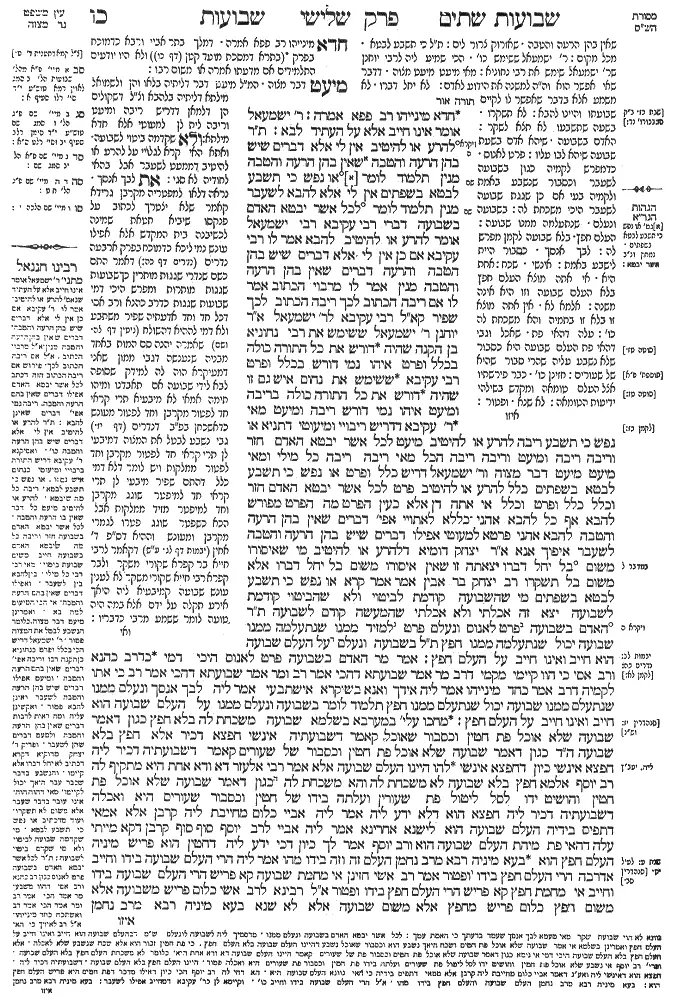
Shevu'ot 26a - Guemara
חדא מינייהו רב פפא אמרה:
ר' ישמעאל אומר אינו חייב אלא על העתיד לבא:
ת"ר (ויקרא ה, ד) להרע או להיטיב אין לי אלא דברים שיש בהן הרעה והטבה שאין בהן הרעה והטבה מנין תלמוד לומר (ויקרא ה, ד) או נפש כי תשבע לבטא בשפתים אין לי אלא להבא לשעבר מנין תלמוד לומר (ויקרא ה, ד) לכל אשר יבטא האדם בשבועה דברי רבי עקיבא רבי ישמעאל אומר להרע או להיטיב להבא אמר לו רבי עקיבא אם כן אין לי אלא דברים שיש בהן הטבה והרעה דברים שאין בהן הרעה והטבה מנין אמר לו מרבוי הכתוב אמר לו אם ריבה הכתוב לכך ריבה הכתוב לכך שפיר קא"ל רבי עקיבא לר' ישמעאל א"ר יוחנן ר' ישמעאל ששימש את רבי נחוניא בן הקנה שהיה דורש את כל התורה כולה בכלל ופרט איהו נמי דורש בכלל ופרט רבי עקיבא ששימש את נחום איש גם זו שהיה דורש את כל התורה כולה בריבה ומיעט איהו נמי דורש ריבה ומיעט מאי ר' עקיבא דדריש ריבויי ומיעוטי דתניא או נפש כי תשבע ריבה להרע או להיטיב מיעט לכל אשר יבטא האדם חזר וריבה ריבה ומיעט וריבה ריבה הכל מאי ריבה ריבה כל מילי ומאי מיעט מיעט דבר מצוה ור' ישמעאל דריש כלל ופרט או נפש כי תשבע לבטא בשפתים כלל להרע או להיטיב פרט לכל אשר יבטא האדם חזר וכלל כלל ופרט וכלל אי אתה דן אלא כעין הפרט מה הפרט מפורש להבא אף כל להבא אהני כללא לאתויי אפי' דברים שאין בהן הרעה והטבה להבא אהני פרטא למעוטי אפילו דברים שיש בהן הרעה והטבה לשעבר איפוך אנא א"ר יצחק דומיא דלהרע או להיטיב מי שאיסורו משום (במדבר ל, ג) בל יחל דברו יצאתה זו שאין איסורו משום בל יחל דברו אלא משום בל תשקרו רב יצחק בר אבין אמר אמר קרא או נפש כי תשבע לבטא בשפתים מי שהשבועה קודמת לביטוי ולא שהביטוי קודמת לשבועה יצא זה אכלתי ולא אכלתי שהמעשה קודם לשבועה ת"ר (ויקרא ה, ד) האדם בשבועה פרט לאנוס ונעלם פרט למזיד ממנו שנתעלמה ממנו שבועה יכול שנתעלמה ממנו חפץ ת"ל בשבועה ונעלם על העלם שבועה הוא חייב ואינו חייב על העלם חפץ:
אמר מר האדם בשבועה פרט לאנוס היכי דמי כדרב כהנא ורב אסי כי הוו קיימי מקמי דרב מר אמר שבועתא דהכי אמר רב ומר אמר שבועתא דהכי אמר רב כי אתו לקמיה דרב אמר כחד מינייהו אמר ליה אידך ואנא בשיקרא אישתבעי אמר ליה לבך אנסך ונעלם ממנו שנתעלם ממנו שבועה יכול שנתעלם ממנו חפץ תלמוד לומר בשבועה ונעלם ממנו על העלם שבועה הוא חייב ואינו חייב על העלם חפץ:
מחכו עלי' במערבא בשלמא שבועה משכחת לה בלא חפץ כגון דאמר שבועה שלא אוכל פת חטין וכסבור שאוכל קאמר דשבועתיה אינשי חפצא דכיר אלא חפץ בלא שבועה ה"ד כגון דאמר שבועה שלא אוכל פת חטין וכסבור של שעורים קאמר דשבועתיה דכיר ליה חפצא אינשי כיון דחפצא אינשי להו היינו העלם שבועה אלא אמר רבי אלעזר דא ודא אחת היא מתקיף לה רב יוסף אלמא חפץ בלא שבועה לא משכחת לה והא משכחת לה כגון דאמר שבועה שלא אוכל פת חטין והושיט ידו לסל ליטול פת שעורין ועלתה בידו של חטין וכסבור שעורים היא ואכלה דשבועתיה דכיר ליה חפצא הוא דלא ידע ליה אמר ליה אביי כלום מחייבת ליה קרבן אלא אמאי דתפיס בידיה העלם שבועה הוא לישנא אחרינא אמר ליה אביי לרב יוסף סוף סוף קרבן דקא מייתי עלה דהאי פת מיהת העלם שבועה הוא ורב יוסף אמר לך כיון דכי ידע ליה דחטין הוא פריש מיניה העלם חפץ הוא בעא מיניה רבא מרב נחמן העלם זה וזה בידו מהו אמר ליה הרי העלם שבועה בידו וחייב אדרבה הרי העלם חפץ בידו ופטור אמר רב אשי חזינן אי מחמת שבועה קא פריש הרי העלם שבועה בידו וחייב אי מחמת חפץ קא פריש הרי העלם חפץ בידו ופטור א"ל רבינא לרב אשי כלום פריש משבועה אלא משום חפץ כלום פריש מחפץ אלא משום שבועה אלא לא שנא בעא מיניה רבא מרב נחמן
Comments from Rashi on Masechet Shevu'ot Page 26a
שאין בהן הרעה והטבה . שאזרוק צרור לים: ת"ל כי תשבע לבטא . מכל מקום: ר' ישמעאל ששימש כו' . הכי שמיע ליה לרבי יוחנן שר' ישמעאל שימש את רבי נחוניא: מאי מיעט מיעט מצוה . דדבר שאי אפשר הוא וה"ה למשנה את הידוע לאדם: לא יחל דברו . לא משמע אלא בדבר שאפשר לו לקיים שבועתו והיינו להבא: לא תשקרו . בשעה שתשבעו לא תצא לשקר: האדם בשבועה . שיהא אדם בשעת שבועה שיהא לבו עליו: פרט לאנוס . כדמפרש לקמיה כגון בשבועה לשעבר וכסבור שנשבע באמת ולקמיה בעי אם כן שגגת שבועה לשעבר היכי משכחת לה: בשבועה ונעלם . שנתעלמה ממנו שבועה: העלם חפץ . בלא שבועה לקמן מפרש לה: לבך אנסך . כסבור היית לישבע באמת: אינשי . שכח: אחת היא . אי אתה מוצא העלם חפץ בלא העלם שבועה וזו היא אינה משנה: אלמא לא . אין אתה מוצא זו בלא זו בתמיה והא משכחת לה כו': עלה דהאי פת . שאכל וגבי דהאי פת העלם שבועה היא כסבור שלא נשבע עליה שהרי סבור שהיא של שעורים: חזינן כו' . כבר פירשתיו אצל העלם טומאה ומקדש בשילהי ידיעות הטומאה: לא שנא . ופטור:
Comments from Tosafot - Shevu'ot 26a
חדא מינייהו רב פפא אמרה. דמלך בתר אביי ורבא כדמוכח בפרק (בתרא דמסכת מועד קטן (דף כו)) ולא היו יודעים התלמידים אם מדעתו אמרה או משום רבו: מיעט דבר מצוה. המ"ל מיעט דבר דליתיה בלאו והן ולשמואל מילתא דליתיה בלהבא וצ"ל דשקולים הן דלמאן דדריש ריבה ומיעט וריבה לית לן למעוטי אלא חדא מילתא: ולא שקדמה ביטוי לשבועה. ואתא האי קרא לגלויי על להרע או להיטיב דממעט לשעבר אבל בהאי לחודיה לא סגי: את לבך אנסך. נראה דלאו למפטריה מקרבן גרידא קאמר שלא יצטרך לכתוב על פנקסו שיביא חטאת שמינה לכשיבנה בית המקדש אלא אפילו עונש נמי ליכא כדמוכח בפרק ארבעה נדרים (נדרים דף כה:) דאמר התם כשם שנדרי שגגות מותרין כך שבועות שגגות מותרות ומפרש היכי דמי שבועות שגגות כדרב כהנא ורב אסי דכל חד וחד אדעתיה שפיר משתבע ולא דמי לההיא דהשולח (גיטין דף לה. ושם) שאמרה יהנה סם המות באחד מבניה שנענשה דגבי ממון שאני דמעיקרא הוה לה למידק שסופה לבא לידי שבועה אם תאבדנו ומיהו תימה אמאי לא מיבעיא תרי קראי חד לפטור מקרבן וחד לפטור מעונש כדאשכחן בפ"ב דנדרים (דף יז.) גבי נשבע לבטל את המצוה דמיבעי לן תרי קראי חד לפטור מקרבן וחד לפטור ממלקות ויש לומר דלא דמי כלל דהתם שפיר מיבעי לן תרי קראי חד למיפטר שוגג מקרבן וחד למיפטר מזיד ממלקות אבל הכא כשפטר שוגג פטרו לגמרי מקרבן ומעונש וההיא דס"פ ד' אחין (יבמות דף לג. ע"ש) דקאמר לרבי חייא בר קפרא שקורי משקר ולבר קפרא רבי חייא שקורי משקר לא לענין עונש שבועה קמיבעיא ליה היאך אירע תקלה על ידם אלא במה היה טועה לומר ששמע מרבי כדבריו:
Shevu'ot 26a - Mishnah translated into english
Rav Pappa said one of those statements, not Abaye.
§ The mishna teaches that Rabbi Yishmael says: One is liable only for an oath on an utterance taken about the future. The Sages taught in a baraita with regard to an oath on an utterance: From the verse: “Or if anyone take an oath clearly with his lips to do evil, or to do good” (Leviticus 5:4), I have derived only that one is liable for an oath on an utterance with regard to matters to which doing evil and doing good apply. From where do I derive that one is liable for an oath on an utterance with regard to matters to which doing evil and doing good do not apply? The verse states: “Or if anyone take an oath clearly with his lips,” which includes other matters.
I have derived only that one is liable for oaths referring to the future. From where do I derive that one is liable for oaths referring to the past? The verse subsequently states: “Whatsoever it be that a man shall utter clearly with an oath” (Leviticus 5:4); this is the statement of Rabbi Akiva. Rabbi Yishmael says: The verse states: “To do evil, or to do good,” referring exclusively to oaths about the future.
The baraita continues: Rabbi Akiva said to him: If so, then I have derived only that one is liable for an oath on an utterance with regard to matters to which doing evil and doing good apply. From where do I derive that one is liable for an oath on an utterance with regard to matters to which doing evil and doing good do not apply? Rabbi Yishmael said to Rabbi Akiva in response: It is derived from an amplification of the meaning of the verse. Rabbi Akiva said to him: If the verse is amplified for this, i.e., to extend the halakha of an oath on an utterance to matters that do not involve doing evil or good, the verse is amplified for that, i.e., oaths about the past.
The Gemara questions: Rabbi Akiva said well his critique of the opinion of Rabbi Yishmael. Why does Rabbi Yishmael disagree?
Rabbi Yoḥanan said: It is because Rabbi Yishmael was the one who served as a disciple of Rabbi Neḥunya ben HaKana, who would interpret the entire Torah with the hermeneutical principle of a generalization and a detail. Therefore, Rabbi Yishmael also interprets the Torah with the method of a generalization and a detail. Rabbi Akiva was one who served as a disciple of Naḥum of Gam Zo, who would interpret the entire Torah with the hermeneutical principle of amplification and restriction. Therefore, Rabbi Akiva also interprets the Torah by amplification and restriction.
What is the specific instance in this context where one finds that Rabbi Akiva interprets with amplifications and restrictions? It is as it is taught in a baraita that when the verse states: “Or if anyone take an oath clearly with his lips” (Leviticus 5:4), it amplifies the range of possible oaths for which one could be liable to bring an offering for an oath on an utterance. When the verse continues: “To do evil, or to do good,” it restricts that range. When it further continues: “Whatsoever it be that a man shall utter clearly with an oath,” it then amplifies again. According to the hermeneutical principle that when a verse amplified, and then restricted, and then amplified, it amplified the relevant category to include everything except for the specific matter that was excluded by the restriction.
What was included when the verse amplified the range of liability? It amplified it to include all matters about which one might take an oath. And in what way did it restrict it when it continued: “To do evil, or to do good”? It restricted the range of liability for an oath on an utterance to exclude an oath that is a matter involving a mitzva, i.e., an oath to refrain from performing a mitzva.
And Rabbi Yishmael interprets the verse following the hermeneutical principle of a generalization and a detail: “Or if anyone take an oath clearly with his lips” (Leviticus 5:4), is a generalization; “to do evil, or to do good,” is a detail; “whatsoever it be that a man shall utter clearly with an oath,” the verse then further generalized. There is a hermeneutical principle that when a verse contains a generalization, and a detail, and another generalization, you may deduce that the verse is referring only to items similar to the detail. Just as the detail in the verse is explicitly an oath referring to the future, so too, all the oaths for which one is liable must be referring to the future.
The generalization serves to include even those matters that do not concern doing evil or doing good when they refer to the future; the detail serves to exclude even matters that concern doing evil or doing good when they refer to the past.
The Gemara challenges: I will reverse it and say that the generalization serves to include oaths concerning the past, and the detail serves to exclude matters that do not involve doing evil or doing good. Why is that not an equally legitimate interpretation of the verse?
Rabbi Yitzḥak said that Rabbi Yishmael understands that liability is extended to one whose oath is similar to an oath “to do evil, or to do good” (Leviticus 5:4). He whose prohibition is due to the verse: “He shall not break his word” (Numbers 30:3), is liable, as liability for an oath about the future entails breaking one’s word. Excluded is that oath whose prohibition is not due to the verse: “He shall not break his word”; rather, it is due to the verse: “You shall not lie” (Leviticus 19:11), since liability for an oath about the past applies when the oath itself was a lie.
Rav Yitzḥak bar Avin says that there is a different explanation of Rabbi Yishmael’s opinion: The verse states: “Or if anyone take an oath clearly with his lips to do evil, or to do good,” referring to one whose oath precedes its clarification, i.e., the action that breaks it, and not to one who takes an oath where the clarification, i.e., the action prohibited in the oath, precedes the oath. Excluded is that oath where one said, for example: I ate, or: I did not eat, where the action precedes the oath.
§ The Sages taught in a baraita: The verse states: “Or if anyone take an oath clearly with his lips to do evil, or to do good, whatsoever it be that a man shall utter clearly with an oath, and it is hidden from him; and, when he knows of it, be guilty in one of these things” (Leviticus 5:4). The phrase “a man…with an oath” serves to exclude a victim of circumstances beyond his control from liability to bring an offering. The term “and it is hidden” serves to exclude from liability one who broke his oath intentionally, as he does not deserve to be able to achieve atonement through bringing an offering.
The baraita continues: The term “from him” teaches that one who was unaware of his oath, i.e., forgot it, and subsequently broke it, is liable to bring an offering. One might have thought that an oath taker is also liable when he broke an oath because he was unaware that a particular item is forbidden as the object of his oath; therefore, the verse states: “With an oath, and it is hidden from him.” He is liable for lack of awareness of the oath but he is not liable for lack of awareness of the object of the oath.
The Master says above in the baraita: The phrase “a man…with an oath” serves to exclude a victim of circumstances beyond his control. The Gemara asks: What are such circumstances?
The Gemara answers: It is as it was with Rav Kahana and Rav Asi, who, when they were standing up in the presence of Rav, their teacher, at the conclusion of a lesson, disagreed with regard to exactly what he said. One Sage said: On my oath Rav said like this, and the other Sage said: On my oath Rav said like that. When they came before Rav to clarify what he had said, he stated his opinion in accordance with what one of them had said. The other said to Rav: Did I then take a false oath?
Rav said to him: Your heart compelled you. It is not regarded as a false oath, since at the time that you took the oath you were certain that you were telling the truth.
§ The baraita teaches: The phrase “and it is hidden from him” teaches that one who was unaware of his oath, i.e., forgot it, and subsequently broke it, is liable to bring an offering. One might have thought that the oath taker is also liable when he broke the oath because he was unaware that a particular item is forbidden as the object of his oath; therefore, the verse states: “With an oath, and it is hidden from him.” He is liable for lack of awareness of the oath, but he is not liable for lack of awareness of the object of the oath.
They laughed at this in the West, Eretz Yisrael, and said: Granted, you find lack of awareness of one’s oath without there being lack of awareness of the object of the oath, as in a case where one said: On my oath I will not eat wheat bread, and he thought he had said: I will eat wheat bread, as in that case his oath is forgotten and the object of it is remembered. But under what circumstances is there a case of lack of awareness of the object of the oath without lack of awareness of the oath itself?
The Gemara suggests: It can be found in a case where he said: On my oath I will not eat wheat bread, and he thought he had said: On my oath I will not eat barley bread, as in that case his oath is remembered by him and the object of it is forgotten. The Gemara rejects this suggestion: Once the object of the oath is forgotten by him, that is a case of lack of awareness of his oath.
Rather, Rabbi Elazar said: The distinction made in the baraita between lack of awareness of one’s oath and lack of awareness of the object of one’s oath is not valid, and both this and that are one and the same.
Rav Yosef objects to this. Is it really the case that you do not find a case of lack of awareness of the object of an oath without lack of awareness of the oath? But you find it in a case where he said: On my oath I will not eat wheat bread, and he extended his hand to the basket to take barley bread, and wheat bread came up in his hand, and he thought it was barley bread and ate it. That is a case where his oath is remembered by him, and it is the object of the oath of which he is unaware.
Abaye said to him: Don’t you deem him liable to bring an offering for breaking his oath only for that which he holds in his hand and eats? When he eats the bread, that is lack of awareness of the oath, since he thinks that the item in his hand is permitted.
The Gemara presents another formulation of this statement. Abaye said to Rav Yosef: Ultimately, the offering he brings for this bread is in any event due to lack of awareness of the oath, as he thinks that the item in his hand is permitted.
And Rav Yosef could say to you: Since were he to know of it that it is wheat bread he would refrain from eating it, this should be regarded as a case of lack of awareness of the object.
Rava asked of Rav Naḥman: In a case where one has a lack of awareness of this, the oath, and that, its object, what is the halakha? Rav Naḥman said to him: He breaks the oath while having a lack of awareness of the oath and is therefore liable. Rava replied: On the contrary, he has a lack of awareness of the object of the oath and should therefore be exempt.
Rav Ashi said: We see: If he refrains from eating due to the oath, i.e., when he is reminded that he took an oath, he had a lack of awareness of the oath and is liable. If he refrains due to the object of the oath, i.e., when he is reminded what it is he is about to eat, he had a lack of awareness due to the object, and is exempt.
Ravina said to Rav Ashi: Doesn’t he refrain from breaking the oath due to his recognition of the object? Doesn’t he refrain from the object due only to the oath? In either case, he needs to remember both the oath and its object, and the manner in which he was reminded does not serve to indicate anything. Rather, there is no difference between the two.
Rava asked of Rav Naḥman:
Traduction : The William Davidson digital edition of the Koren Noé Talmud, with commentary by Rabbi Adin Even-Israel Steinsaltz.