 Talmud Bavli
Shevu'ot 14a : Youtube
Daf TubeYoutube
2 video classes :
Shevu'ot Page 14a
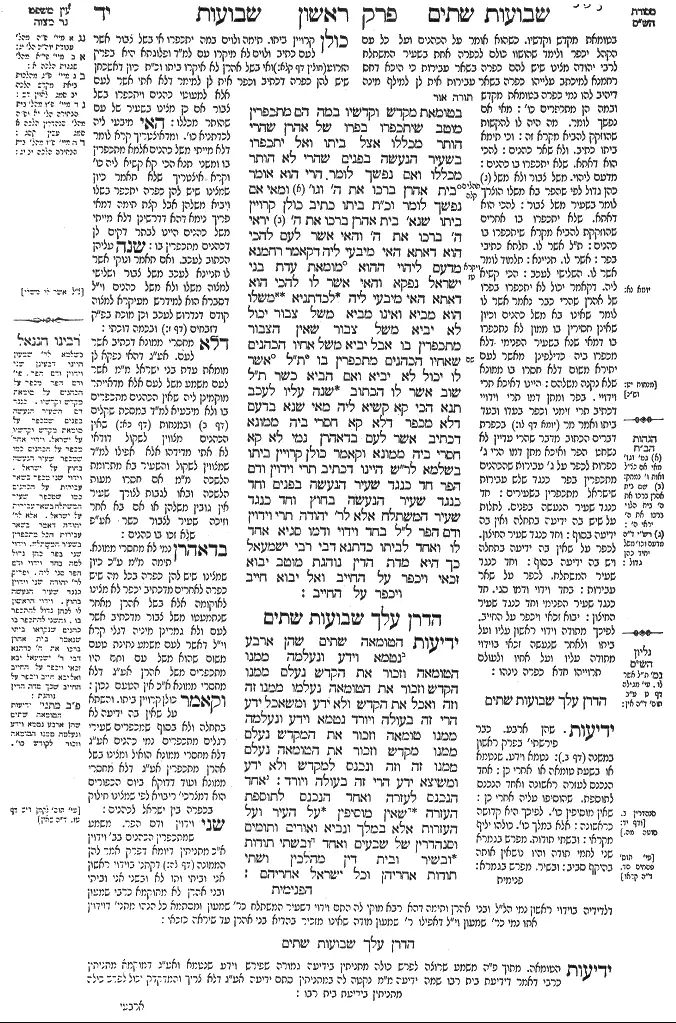
Shevu'ot 14a - Guemara
בטומאת מקדש וקדשיו במה הם מתכפרין מוטב שיתכפרו בפרו של אהרן שהרי הותר מכללו אצל ביתו ואל יתכפרו בשעיר הנעשה בפנים שהרי לא הותר מכללו ואם נפשך לומר הרי הוא אומר (תהלים קלה, יט) בית אהרן ברכו את ה' וגו' ומאי אם נפשך לומר וכ"ת ביתו כתיב כולן קרויין ביתו שנא' בית אהרן ברכו את ה' יראי ה' ברכו את ה' והאי אשר לעם להכי הוא דאתא האי מיבעי ליה דקאמר רחמנא מדעם ליהוי ההוא (ויקרא טז, ה) מומאת עדת בני ישראל נפקא והאי אשר לו להכי הוא דאתא האי מיבעי ליה לכדתניא משלו הוא מביא ואינו מביא משל צבור יכול לא יביא משל צבור שאין הצבור מתכפרין בו אבל יביא משל אחיו הכהנים שאחיו הכהנים מתכפרין בו ת"ל (ויקרא טז, ו) אשר לו יכול לא יביא ואם הביא כשר ת"ל שוב אשר לו הכתוב שנה עליו לעכב תנא הכי קא קשיא ליה מאי שנא בדעם דלא מכפר דלא קא חסרי ביה ממונא דכתיב אשר לעם בדאהרן נמי לא קא חסרי ביה ממונא וקאמר כולן קרויין ביתו בשלמא לר"ש היינו דכתיב תרי וידוין ודם הפר חד כנגד שעיר הנעשה בפנים וחד כנגד שעיר הנעשה בחוץ וחד כנגד שעיר המשתלח אלא לר' יהודה תרי וידוין ודם הפר ל"ל בחד וידוי ודמו סגיא אחד לו ואחד לביתו כדתנא דבי רבי ישמעאל כך היא מדת הדין נוהגת מוטב יבוא זכאי ויכפר על החייב ואל יבוא חייב ויכפר על החייב:
הדרן עלך שבועות שתים:
מתני׳ ידיעות הטומאה שתים שהן ארבע נטמא וידע ונעלמה ממנו הטומאה וזכור את הקדש נעלם ממנו הקדש וזכור את הטומאה נעלמו ממנו זה וזה ואכל את הקדש ולא ידע ומשאכל ידע הרי זה בעולה ויורד נטמא וידע ונעלמה ממנו טומאה וזכור את המקדש נעלם ממנו מקדש וזכור את הטומאה נעלם ממנו זה וזה ונכנס למקדש ולא ידע ומשיצא ידע הרי זה בעולה ויורד:
אחד הנכנס לעזרה ואחד הנכנס לתוספת העזרה שאין מוסיפין על העיר ועל העזרות אלא במלך ונביא ואורים ותומים וסנהדרין של שבעים ואחד ובשתי תודות ובשיר ובית דין מהלכין ושתי תודות אחריהן וכל ישראל אחריהם
Comments from Rashi on Masechet Shevu'ot Page 14a
מאי אם נפשך לומר . מה היה לו להקשות שהוזקק להביא מקרא זה: וכי תימא ביתו כתיב . ולא שאר כהנים: להכי הוא דאתא . שלא יתכפרו בו כהנים: מדעם ליהוי . משל צבור ולא משל כהן גדול לפי שהפר בא משלו הוצרך לומר בשעיר משל צבור: להכי הוא דאתא . שלא יתכפרו בו אחרים שהוזקקת להביא מקרא שיתכפרו בו כהנים: ת"ל אשר לו . תלתא כתיבי בפר: אשר לו . תניינא: תלמוד לומר אשר לו . השלישי לעכב: הכי קשיא ליה . דקאמר יכול לא יתכפרו בפרו של אהרן שהרי כבר נאמר אשר לו לומר שאינו בא משל כהנים וכיון שאינן חסירין בו ממון לא נתכפרו בו דמאי שנא בשעיר הפנימי דלא מכפרו ביה כדילפינן מאשר לעם יתירא משום דלא חסרו בו ממונא שלא נקנה משלהם: היינו דאיכא תרי וידויי . בפר ומתן דמו תרי וידויי דכתיב תרי זימני וכפר בעדו ובעד ביתו ואמר מר (יומא דף לו:) בכפרת דברים הכתוב מדבר שהרי עדיין לא נשחט הפר ואיכא מתן דמו הרי ג' . כפרות לכפר על ג' עבירות שהכהנים מתכפרין בפר כנגד שלש עבירות שישראל מתכפרין בשעירים: חד כנגד שעיר הנעשה בפנים . לתלות על שיש בה ידיעה בתחלה ואין בה ידיעה בסוף: וחד כנגד שעיר החיצון . לכפר על שאין בה ידיעה בתחלה ויש בה ידיעה בסוף: וחד כנגד שעיר המשתלח . לכפר על שאר עבירות: בחד וידוי ודמו סגי . חד כנגד שעיר הפנימי וחד כנגד שעיר החיצון: יבוא זכאי ויכפר על החייב . לפיכך מתודה וידוי ראשון עליו ועל ביתו ולאחר שנעשה זכאי בוידוי מתודה עליו ועל אחיו ולעולם תרוייהו חדא כפרה נינהו: ידיעות. שהן ארבע . כבר פירשתי' בפרק ראשון במשנה (דף ב.): נטמא וידע . שנטמא או בשעת טומאה או אחרי כן: אחד הנכנס לעזרה ראשונה ואחד הנכנס לתוספת . שהוסיפו עליה אחרי כן: שאין מוסיפין כו' . לפיכך היא קדושה כראשונה: אלא במלך כו' . כולהו יליף מקראי: ובשתי תודות . מפרש בגמרא שני לחמי תודה והיו נושאין אותה בהיקף סביב: ובשיר . מפרש בגמרא:
Comments from Tosafot - Shevu'ot 14a
כולן קרויין ביתו. תימה ולוים במה יתכפרו אי בשל צבור אשר לעם כתיב ולוים לא מיקרו עם למ"ד ופלוגתא היא בפרק הזרוע (חולין דף קלא:) ואי בשל אהרן לא איקרו ביתו וכ"ת כיון דאשכחן שיש להן כפרה דכתיב וכפר אית לן למימר דלא אתי אשר לעם אלא למעוטי כהנים ויתכפרו בשל צבור אם כן מצינו בשעיר של עם שהותר מכללו: האי מיבעי ליה לכדתניא כו'. ומדאיצטריך קרא לומר דלא מייתי משל כהנים אלמא מתכפרין בו ומשני תנא הכי קא קשיא ליה כו' וקרא איצטריך שלא תאמר כיון שמצינו שיש להן כפרה יתכפר בשלו ויביא משלהן אבל קצת תימה דמאי פריך נימא דהא דדרשינן דלא מייתי משל כהנים היינו לבתר דקים לן דכהנים מתכפרין בו: שנה עליהן הכתוב לעכב. ואם תאמר ונוקי אשר לו תניינא לעכב משל צבור ושלישי למצוה משלו ולא משל כהנים וי"ל דסברא הוא למידרש מעיקרא למצוה קודם דנדרוש לעכב וכן מוכח בפ"ק דזבחים (דף ז:) ובכמה דוכתי: דלא מחסרי ממונא דכתיב אשר לעם. אע"ג דהאי נפקא לן מומאת עדת בני ישראל מ"מ אשר לעם משמע משל לעם אלא מדאייתר מוקמינן ליה שאין הכהנים מתכפרים בו ולא מיבעיא למ"ד במסכת שקלים (דף ב) ובמנחות (דף כא:) שאין הכהנים מצווין לשקול דודאי לא אתי מדידהו אלא אפילו למ"ד שמצווין לשקול והשעיר בא מתרומת הלשכה מ"מ אם חסרו מעות הלשכה ובאו לגבות לצורך שעיר אין גובין משלהן או אם בא אחר וזיכה שעיר לצבור כשר אע"פ שלא זכו בו כהנים: בדאהרן נמי לא מחסרי ממונא. תימה מ"מ ע"כ כיון שמצינו שיש להן כפרה בכל מה שיש כפרה לאחרים מדכתיב יכפר לא מצינו לאוקומה אלא בשל אהרן מאחר . שנתמעטו משל צבור מדכתיב אשר לעם ולא גמרינן מיניה דגלי קרא וי"ל דאשר לעם משמע נתינת טעם משום שהוא משל עם ואם היו מתכפרים משל אהרן אע"ג דלא מחסרי ממונא א"כ אין הטעם נכון: וקאמר כולן קרויין ביתו. והשתא על שאין בה ידיעה לא בתחלה ולא בסוף שמכפרים שעירי רגלים מתכפרים נמי כהנים אע"ג דלא מחסרי ממונא הואיל ומצינו בשל אהרן מתכפרין אע"ג דלא מחסרי ממונא ועוד דדוקא ביום הכפורים הוא דמצרכי' ריבויא לפי שמצינו חילוק בכפרה בין ישראל לכהנים: שני וידוין ודם הפר. משמע שמתכפרין הכהנים בב' וידוין א"כ מתניתין דיומא דפרק אמר להן הממונה (דף לה:) דקתני בוידוי ראשון אני וביתי ותו לא ובשני אני וביתי ובני אהרן לא מתוקמא כרבי שמעון דלדידיה בוידוי ראשון נמי הל"ל ובני אהרן ותימה דהא רבא מוקי לה התם וידוי דשעיר המשתלח כר' שמעון ומסתמא כל הנהו מתני' דוידוין אתו נמי כר' שמעון וי"ל דאפילו ר' שמעון מודה שאינו מזכיר בהדיא בני אהרן עד שיראה כזכאי: ידיעות הטומאה. מתוך פ"ה משמע שרוצה לפרש כולה מתניתין בידיעה גמורה שפירש וידע שנטמא ואע"ג דמוקמא מתניתין כרבי דאמר דידיעת בית רבו שמה ידיעה מ"מ נקטה לה במתניתין סתם ידיעה אע"ג דלא צריך והמדקדק יכול לפרש כולה מתניתין בידיעת בית רבו:
Shevu'ot 14a - Mishnah translated into english
for their defiling of the Temple or its sacrificial foods. Through which means, then, do they achieve atonement for this? Is it through the internal goat or the bull of Aaron? It is better to say that they achieve atonement through the bull of Aaron, as in any event with regard to his household an exception was made to its rule that it atones only for Aaron. And one should not say that they achieve atonement through the goat whose blood presentation is performed inside the Sanctuary, as it is not found that with regard to Aaron’s household an exception was made to its rule.
And if it is your wish to say that this reasoning can be refuted, one can bring another proof, as it states: “House of Aaron, bless the Lord,” which is referring to all priests and not just to Aaron’s immediate household, and so it is reasonable that Aaron’s bull should atone for them.
The Gemara clarifies the last part of the baraita: And what possible refutation is the baraita referring to when it says: If it is your wish to say that this reasoning can be refuted? The Gemara explains: And if you would say of the preceding proof that it is incorrect to suggest that all priests achieve atonement from the bull of Aaron, as with regard to it the term: “His household” (Leviticus 16:6), is written, which suggests that it atones only for his immediate family, then this can be refuted, as all of the priests are collectively referred to as his household, as is evident from that which is stated: “House of Aaron, bless the Lord; house of Levi, bless the Lord, those who fear the Lord, bless the Lord.”
The Gemara questions some of the expositions of the baraita: And with regard to this phrase: “Goat of the people” (Leviticus 16:15), does it come to teach that which the baraita teaches, i.e., that the priests do not achieve atonement through it? But that phrase is necessary to teach that the Merciful One states that the goat must be purchased with funds collected from the people. The Gemara refutes this: That requirement is derived from the verse: “And from the assembly of the children of Israel he shall take two goats” (Leviticus 16:5).
The Gemara asks further: And with regard to this phrase: “His own bull sin-offering” (Leviticus 16:6), does it come to teach that which the baraita teaches, i.e., that it atones only for Aaron’s transgressions, not for the transgressions of others? But that phrase is necessary for that which is taught in a baraita: The High Priest brings, i.e., purchases, the bull from his own funds, but he does not bring it from funds collected from the public.
One might have thought that he does not bring it from funds collected from the public because the public does not achieve atonement through it, but he may bring it from funds belonging to his brethren the priests because his brethren the priests achieve atonement through it. To counter this, the verse states: “His own bull sin-offering,” to indicate that he must purchase it using only his own funds. One might have thought that he should not bring it from others’ funds, but nevertheless, if he did it would still be valid. To counter this, the verse again states “his own.” The verse repeats the phrase to render the requirement essential.
If both mentions of the phrase “his own” are necessary to teach about the ownership of the bull, how can the above baraita suggest that the phrase indicates that the bull atones only for the High Priest’s transgressions? The Gemara explains: This is what is difficult for the tanna of the baraita: What is different about the goat of the people that explains why it does not atone for the priests? The difference is that the priests did not forfeit any money over the purchase of it. Therefore, it does not atone for the priests, but only for the Israelites, as it is written with regard to the internal goat: “Of the people.” With regard to the bull of Aaron as well, the priests do not forfeit any money over the purchase of it, so it follows that they should not achieve atonement through it. And therefore, to explain why they do achieve atonement, the baraita states that all of the priests are collectively referred to as: His household.
§ The Gemara returns to its discussion of the dispute between Rabbi Yehuda and Rabbi Shimon. The Gemara asks: Granted, according to Rabbi Shimon, who holds that the priests do not achieve atonement through the scapegoat, that is why it is written in the Torah that two confessions are to be recited over the bull and that the blood of the bull is to be presented inside the Sanctuary: Of these three forms of atonement, one corresponds to the atonement provided by the goat whose blood presentation is performed inside the Sanctuary, one corresponds to the atonement provided by the goat whose blood presentation is performed outside the Sanctuary, and one corresponds to the atonement provided by the scapegoat.
But according to Rabbi Yehuda, who holds that the priests do achieve atonement through the scapegoat, why do I need the two confessions recited over the bull and the blood of the bull to be presented inside the Sanctuary? One confession over the bull and its blood being presented inside the Sanctuary would be sufficient.
The Gemara answers: Two confessions are necessary, one for the High Priest himself, and one for his household, i.e., the priests, as the school of Rabbi Yishmael taught: The High Priest must first confess his own transgressions and only afterward those of the priests, because that is how the attribute of justice functions: It is better that the innocent come and atone for the guilty, than that the guilty come and atone for the guilty. When the High Priest confesses the transgressions of those in his house, it is better that he already be considered innocent, having confessed and been absolved of his own transgressions.
MISHNA: With regard to cases of awareness of the defiling of the Temple by entering it while one is ritually impure, or defiling its sacrificial foods by partaking of them while one is ritually impure, there are two types that are actually four. How so? If one became ritually impure and he was aware that he was impure, but afterward his impurity was hidden from him, though he remembered that he was partaking of sacrificial food, which is forbidden to one who is in a state of ritual impurity; this is one of the four types of awareness of impurity.
If the fact that he was partaking of sacrificial food was hidden from him, though he remembered the ritual impurity that he had contracted; this is the second of the four types of awareness of impurity. And the same halakha applies if both this and that were hidden from him, both the fact that he was impure and the fact that he was partaking of sacrificial food. In all these cases, if he partook of the sacrificial food and was unaware either that he was impure, or that the food was sacrificial food, or both, and after he partook of it he became aware of that which he had forgotten, he is required to bring a sliding-scale offering. In this type of offering, the sinner sacrifices an animal, bird, or meal-offering, depending on his financial status.
And similarly with regard to entering the Temple: If one became ritually impure and he was aware that he was impure, but afterward his impurity was hidden from him, though he remembered that he was entering the Temple, which is prohibited for one who is in a state of ritual impurity; this is the third of the four types of awareness of impurity. If the fact that he was entering the Temple was hidden from him, though he remembered the ritual impurity that he had contracted; this is the fourth type of awareness of impurity. And the same halakha applies if both this and that were hidden from him, both the fact that he was impure and the fact that he was entering the Temple. In all these cases, if he entered the Temple and was unaware either that he was impure, or that he was entering the Temple, or both, and after he left he became aware of what was hidden from him, he is required to bring a sliding-scale offering.
As for the boundaries of the Temple with regard to the halakhot of impurity, the same halakha applies to one who enters the area that was part of the original Temple courtyard and to one who enters the later addition to the Temple courtyard, because the additional section is sanctified with the full sanctity of the Temple courtyard. The mishna notes: As, additions can be made to the city of Jerusalem or to the Temple courtyards only by a special body comprising the king, a prophet, the Urim VeTummim, and the Sanhedrin of seventy-one judges, and with two thanks-offerings and with a special song. Once the addition to the courtyard is made by this body and this process, it is given the full sanctity of the original courtyard area.
The mishna provides certain details of the consecration ceremony. And the court would move forward, and two thanks-offerings would be brought after them, and all of the Jewish people would follow behind them.
Traduction : The William Davidson digital edition of the Koren Noé Talmud, with commentary by Rabbi Adin Even-Israel Steinsaltz.