 Talmud Bavli
The learning on the whole site is dedicated : L'ilui Nishmat Yechayahou ben Moche
The learning on the whole site is dedicated : L'ilui Nishmat Amram ben Itshak Loubaton
The learning on the whole site is dedicated : L'ilui Nishmat Reuven ben Rivka SEBBAG
Shevu'ot 31b : Youtube
Daf TubeYoutube
2 video classes :
Shevu'ot Page 31b
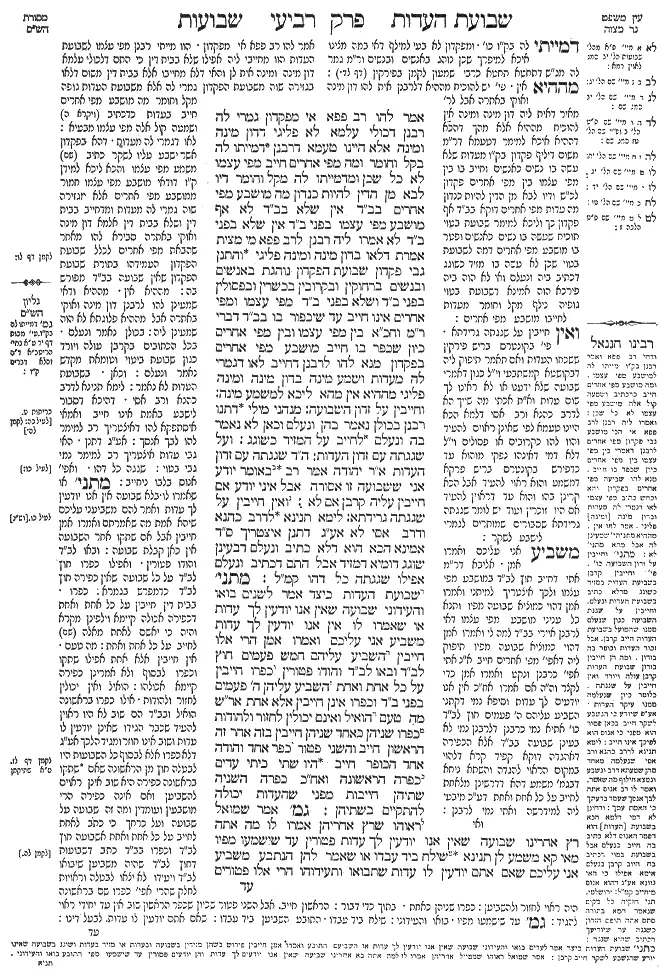
Shevu'ot 31b - Guemara
אמר להו רב פפא אי מפקדון גמרי לה רבנן דכולי עלמא לא פליגי דדון מינה ומינה אלא היינו טעמא דרבנן דמייתו לה בקל וחומר ומה מפי אחרים חייב מפי עצמו לא כל שכן ומדמייתו לה מקל וחומר דיו לבא מן הדין להיות כנדון מה מושבע מפי אחרים בב"ד אין שלא בב"ד לא אף מושבע מפי עצמו בפני ב"ד אין שלא בפני ב"ד לא אמרו ליה רבנן לרב פפא מי מצית אמרת דלאו בדון מינה ומינה פליגי והתנן גבי פקדון שבועת הפקדון נוהגת באנשים ובנשים ברחוקין ובקרובין בכשרין ובפסולין בפני ב"ד ושלא בפני ב"ד מפי עצמו ומפי אחרים אינו חייב עד שיכפור בו בב"ד דברי ר"מ וחכ"א בין מפי עצמו ובין מפי אחרים כיון שכפר בו חייב מושבע מפי אחרים בפקדון מנא להו לרבנן דחייב לאו דגמרי לה מעדות ושמע מינה בדון מינה ומינה פליגי מההיא אין מהא ליכא למשמע מינה:
וחייבין על זדון השבועה:
מנהני מילי דתנו רבנן בכולן נאמר בהן ונעלם וכאן לא נאמר בה ונעלם לחייב על המזיד כשוגג:
ועל שגגתה עם זדון העדות:
ה"ד שגגתה עם זדון העדות א"ר יהודה אמר רב באומר יודע אני ששבועה זו אסורה אבל איני יודע אם חייבין עליה קרבן אם לא:
ואין חייבין על שגגתה גרידתא לימא תנינא לדרב כהנא ודרב אסי לא אע"ג דתנן איצטריך ס"ד אמינא הכא הוא דלא כתיב ונעלם דבעינן שוגג דומיא דמזיד אבל התם דכתיב ונעלם אפילו שגגתה כל דהו קמ"ל:
מתני׳ שבועת העדות כיצד אמר לשנים בואו והעידוני שבועה שאין אנו יודעין לך עדות או שאמרו לו אין אנו יודעין לך עדות משביע אני עליכם ואמרו אמן הרי אלו חייבין השביע עליהם חמש פעמים חוץ לב"ד ובאו לב"ד והודו פטורין כפרו חייבין על כל אחת ואחת השביע עליהן ה' פעמים בפני ב"ד וכפרו אינן חייבין אלא אחת אר"ש מה טעם הואיל ואינם יכולין לחזור ולהודות כפרו שניהן כאחד שניהן חייבין בזה אחר זה הראשון חייב והשני פטור כפר אחד והודה אחד הכופר חייב היו שתי כיתי עדים כפרה הראשונה ואח"כ כפרה השניה שתיהן חייבות מפני שהעדות יכולה להתקיים בשתיהן:
גמ׳ אמר שמואל ראוהו שרץ אחריהן אמרו לו מה אתה רץ אחרינו שבועה שאין אנו יודעין לך עדות פטורין עד שישמעו מפיו מאי קא משמע לן תנינא שילח ביד עבדו או שאמר להן הנתבע משביע אני עליכם שאם אתם יודעין לו עדות שתבואו ותעידוהו הרי אלו פטורים
Comments from Rashi on Masechet Shevu'ot Page 31b
אמר להו רב פפא אי מפקדון . הוו מייתי רבנן מפי עצמו לשבועת העדות הוו מחייבי ליה אפילו שלא בבית דין כי התם דלכולי עלמא דון מינה ומינה אית לן והאי דלא מחייבו אלא בבית דין משום דלאו בגזירה שוה משבועת הפקדון גמרי לה אלא משבועת העדות גופה מקל וחומר מה מושבע מפי אחרים חייב בעדות כדכתיב (ויקרא ה) ושמעה קול אלה מפי עצמו מבעיא: לאו דגמרי לה מעדות . דהא בפקדון אשר ישבע עליו לשקר כתיב (שם) . משמע מפי עצמו והכא ליכא למידן ק"ו דודאי מושבע מפי עצמו חמור ממושבע מפי אחרים אלא מגזירה שוה גמרי לה מעדות ומדחייב בבית דין ושלא בבית דין אלמא דון מינה ואוקי באתרה סבירא להו מאחר שהבאת מפי אחרים לכלל שבועת הפקדון העמידהו בתורת שבועת הפקדון שאין שבועה בב"ד מפורש בה: מההיא אין . מההיא ודאי שמעינן להו לרבנן דון מינה ואוקי באתרה אבל מההיא פלוגתא לא הוה שמעינן ליה: בכולן נאמר ונעלם . בכל הכתובים בקרבן עולה ויורד כגון שבועת ביטוי וטומאת מקדש נאמר ונעלם: וכאן . בשבועת העדות לא נאמר: לימא תנינא לדרב כהנא ורב אסי . דהיכא דסבור לישבע באמת אינו חייב ואמאי איסתפקא להו דאיצטריך רב למימר להו לבך אנסך: אע"ג דתנן . האי גבי עדות איצטריך רב למימר נמי גבי בטוי: שגגה כל דהו . ואפי' אנוס בלבו ניחייב: מתני' או שאמרו לו . בלא שבועה אין אנו יודעין לך עדות ואמר להם משביעני עליכם שיהא אמת מה שאמרתם ואמרו אמן חייבין אבל אם שתקו אחר השבועה אין כאן קבלת שבועה: ובאו לב"ד והודו פטורין . ואפילו כפרו חוץ לב"ד על כל שבועה שאין כפירה חוץ לב"ד כדמפרש בגמרא: כפרו . בבית דין חייבין על כל אחת ואחת דכפירה אכולה קיימא וילפינן מקרא והיה כי יאשם לאחת מאלה (שם) לחייב על כל אחת ואחת: מה טעם . אין חייבין אלא אחת אפילו שתקו וכפרו לבסוף ולא אמרינן כפירה קיימא אכולהו: הואיל ואין יכולין לחזור ולהודות . אילו כפרו בראשונה הואיל ובב"ד הם שוב לא היו ראוין להעיד שכבר הגידו שאינן יודעין לו עדות ושוב אינו חוזר ומגיד הלכך אע"ג דלא כפרו אלא לבסוף כל השבועות היו לבטלה חוץ מן הראשונה שאם שתקו בראשונה כפירה היא שוב אינן ראוים להשביען ואם אינה כפירה הרי מושבעין ועומדין ומה זה שבועה על שבועה ועל כרחך כי כתב לאחת לחייב על כל אחת ואחת אשבועה חוץ לב"ד וכפרו בב"ד כתב דשבועות דחוץ לב"ד שהיה משביען שיבואו לב"ד ויעידו לא יצאו לבטלה וראויות לחלק שהרי אפי' כפרו שם בראשונה היה ראוי לחזור ולהשביען: כפרו שניהן כאחת . בתוך כדי דבור: הראשון חייב . אבל השני פטור שכיון שכפר הראשון שוב אין עד יחידי ראוי להגיד: גמ' עד שישמעו מפיו . בואו והעידוני: שילח ביד עבדו . התובע השביען ביד עבדו: שאם אתם יודעין לו עדות . לבעל דינו:
Comments from Tosafot - Shevu'ot 31b
דמייתי לה בק"ו כו'. ומפקדון לא בעי למילף דאי במה מצינו איכא למיפרך שכן נוהג באנשים ובנשים ור"מ גמר לה מג"ש דתחטא תחטא כרבי שמעון לקמן בפירקין (שבועות דף לד.): מההיא אין. פי' יש להוכיח מההיא דלרבנן אית להו דון מינה ואוקי באתרה אבל לר' מאיר דאית ליה דון מינה ומינה אין להוכיח מההיא אלא מהך דהכא דההיא איכא למימר דטעמא דר"מ משום דיליף פקדון בק"ו מעדות שלא עשה בו נשים כאנשים וחייב בו בין מפי עצמו בין מפי אחרים פקדון לכ"ש ודיו לבא מן הדין להיות כנדון מה עדות מפי אחרים דוקא בב"ד אף פקדון כך וליכא למימר שבועת בטוי תוכיח שעשה בו נשים כאנשים ופטר בו מושבע מפי אחרים דמה לשבועת בטוי שכן לא עשה בו מזיד כשוגג דכתיב ביה ונעלם ואי לא הוה ביה פירכא הוה אמינא דשבועת בטוי גופיה נילף מקל וחומר מעדות לחייבו מושבע מפי אחרים: ואין חייבין על שגגתה גרידתא. פי' בקונטרס בריש פירקין ששכחו העדות ואם תאמר תיפוק ליה דבקושטא קמשתבעי וי"ל כגון דאמרי שבועה שלא ידענו או לא ראינו לך שום עדות וא"ת אכתי מה שייך הא לדרב כהנא ורב אסי דלמא הכא היינו טעמא לפי שאינן ראוים להעיד והוו להו כקרובים או פסולים וי"ל דלא דמי דאינהו נפקי מוהוא עד כדפירש בקונטרס בריש פרקא דמשמע והוא ראוי להעיד אבל הכא קרינן בהו והוא עד דראוין להעיד אם היו זוכרין ועוד יש לומר שגגתה גרידתא שסבורים שמותרים לגמרי לישבע לשקר: משביע אני עליכם ואמרו אמן. אליבא דר"מ אתי דחייב חוץ לב"ד במושבע מפי עצמו ולכך איצטריך למיתני ואמרו אמן דהוי כמוציא שבועה מפיו ותנא כל עניני מושבע מפי עצמו דאי לרבנן איירי בב"ד למה לי ואמרו אמן דהוי כמוציא שבועה מפיו תיפוק ליה דאפי' מפי אחרים חייב א"נ אתי אפי' כרבנן ונקט ואמרו אמן כדי לקצר וה"ה אם אמרו אח"כ אין אנו יודעים לך עדות וסיפא נמי דקתני השביע עליהם ה' פעמים חוץ לב"ד כו' אתיא נמי כרבנן דלרבנן נמי לא בעינן שבועה בב"ד אלא הכפירה דאהגדה דוקא קפיד קרא דלהוי במקום הראוי להגדה והשתא ניחא דבגמ' משמע דהא דדרשינן מלאחת לחייב על כל אחת ואחת דע"כ מיבעי ליה למידרשה ואתי נמי לרבנן:
Shevu'ot 31b - Mishnah translated into english
Rav Pappa said to the Rabbis: If the Rabbis derive liability for one who takes a false oath of testimony on his own by means of a verbal analogy from the oath on a deposit, then everyone agrees: Infer from it and derive the details from it, and even the Rabbis would concede that all of the halakhot of the oath of testimony are derived from the oath on a deposit; therefore, one is liable for an oath taken on one’s own even outside the court.
Rather, this is the reason that the Rabbis hold that there is no liability for the oath of testimony taken on one’s own outside the court: They derive it by means of an a fortiori inference from the halakhot of the oath of testimony itself, as follows: And if one who was administered an oath by others is liable, when one takes the oath on his own, is he not all the more so liable?
And from the fact that they derived the halakha by means of an a fortiori inference, one is bound by the limitations that restrict that derivation: It is sufficient for the conclusion that emerges from an a fortiori inference to be like its source. Therefore, just as one who is administered an oath by others, if the oath is administered in court, yes, he is liable, and if it is not administered in court, no, he is not liable, so too, one who took the oath on his own, before a court, yes, he is liable, and if it is not before a court, no, he is not liable.
The Rabbis said to Rav Pappa: How can you say that it is not with regard to the matter of: Infer from it and derive the details from it, that they disagree? But didn’t we learn in the mishna with regard to the oath on a deposit: The oath on a deposit is practiced with regard to men and with regard to women, with regard to non-relatives and with regard to relatives, with regard to those fit to testify and with regard to those unfit to testify. The oath on a deposit is practiced both in the presence of the court and not in the presence of the court, when the bailee takes the oath on his own. And if the oath is administered by others, he is not liable until he denies responsibility for the deposit in court. This is the statement of Rabbi Meir. And the Rabbis say: Whether the bailee takes the oath on his own or whether the oath is administered by others, once he denied the claim concerning the deposit he is liable.
The question arises: From where do the Rabbis derive that one who is administered an oath on a deposit by others is liable, given that an oath of that kind is not mentioned in the Torah in the context of an oath on a deposit? Is it not that they derive it from the halakhot of the oath of testimony? And conclude from it that it is with regard to the matter of: Infer from it and derive the details from it, that they disagree? The Rabbis hold: Infer the halakha from it but interpret the halakha according to its own place. The fact that one is liable for an oath on a deposit that is administered by others is derived from the oath of testimony, but one does not derive that one is liable only if that oath is administered in the presence of a court. Rather, the oath on a deposit administered by others is derived from an oath on a deposit taken on one’s own; one is liable in both cases for an oath taken not in the presence of the court.
Rav Pappa said to the Rabbis: From that mishna, yes, it is evident that the Rabbis and Rabbi Meir disagree with regard to the matter of: Infer from it and derive the details from it. However, no inference is to be learned from this mishna taught with regard to the oath of testimony, as perhaps the Rabbis derived their opinion by means of an a fortiori inference.
§ The mishna teaches: And one is liable for the act of taking a false oath with intent. The Gemara asks: From where is this matter derived that one is liable to bring a sliding-scale offering for taking a false oath of testimony with intent? It is derived as the Sages taught: In all of the other cases where one is liable to bring a sliding-scale offering (see Leviticus 5:2–4), i.e., the defiling of the Temple or its sacrificial foods, and violating an oath on an utterance, it is stated: “And it is hidden”; but here, with regard to the oath of testimony, it is not stated: And it is hidden, which serves to render one liable for taking the oath intentionally just as he is liable for taking the oath unwittingly.
§ The mishna teaches: And one is liable for an unwitting act of taking a false oath provided that he takes the oath with intent in terms of the testimony. The Gemara asks: What are the circumstances of the case of an unwitting act of taking a false oath with intent in terms of the testimony? Rav Yehuda says that Rav says that this is in the case of one who says: I know that taking this false oath that I do not know the relevant information is prohibited, but I do not know whether or not one is liable to bring an offering for taking that oath.
The mishna teaches: But they are not liable for taking the oath if they were unwitting in terms of the testimony alone. If one actually forgot that he knows about the matter, he is exempt from bringing an offering. The Gemara asks: Shall we say that we learn in the mishna that which Rav said in response to the dispute of Rav Kahana and Rav Asi? The Gemara (26a) cited a dispute between Rav Kahana and Rav Asi with regard to a certain statement of Rav, and each took an oath that his version was accurate. Rav told them that although the version of one of the amora’im was not accurate, he is not liable for taking a false oath, as each amora was convinced that his oath was true. This is not an unwitting oath; rather, it is an oath taken unaware.
The Gemara responds: No, even though we learned this halakha in the mishna, Rav’s statement that the one who did not cite Rav’s statement accurately is exempt was necessary. It may enter your mind to say: It is only here, with regard to the oath of testimony, that one is exempt for unwittingly taking a false oath, as: And it is hidden, is not written concerning it, indicating that in order to be liable, we require that the halakhic status of the unwitting oath is similar to that of an intentional oath, i.e., he knows that he is taking a false oath, but he does not know that he is liable to bring an offering for doing so. Therefore, one who is unaware that it is a false oath is exempt. But there, in the case of Rav Kahana and Rav Asi, where each took an oath on an utterance, where it is written: “And it is hidden,” even if it is entirely unwitting, i.e., they were totally unaware that the oath was false, one might say that he is liable. Therefore, Rav teaches us that even in the case of an oath on an utterance, one who is unwitting to that extent is exempt.
MISHNA: Liability to bring a sliding-scale offering for taking a false oath of testimony, how so? In a case where the plaintiff said to two individuals: Come and testify on my behalf, and they replied: On our oath we do not know any testimony on your behalf, i.e., we do not have any knowledge of the matter you speak of, or in a case where they said to him: We do not know any testimony on your behalf, and he said to them: I administer an oath to you, and they said: Amen; if it was determined that they lied, these two witnesses are liable.
If he administered an oath to them five times outside the court, and they came to court and admitted that they had knowledge of the incident in question and testified, they are exempt. But if they denied knowledge of the incident in court as well, they are liable for each and every one of the oaths administered to them outside the court. If he administered an oath to them five times before the court, and they denied knowledge of the incident, they are liable for taking only one false oath. Rabbi Shimon said: What is the reason for this ruling? Since once they denied that they had any knowledge of the incident they can no longer retract that denial and admit that they have knowledge of the matter. Therefore, there was only one oath of testimony, and there is no liability for the remaining oaths.
If both of the witnesses denied knowledge of the incident together, both of them are liable. If they denied knowledge one after the other, the first who denied knowledge is liable, and the second is exempt, as once the first witness denies knowledge of the incident, the second is an individual witness, whose testimony is not decisive. If one of the two witnesses denied knowledge of the incident, and the other one admitted that he had knowledge and proceeded to testify, the one who denies knowledge of the incident is liable.
If there were two sets of witnesses that took the oath of testimony, and the first set denied knowledge of the matter and then the second set denied knowledge of the matter, both of the sets are liable, because the testimony can exist with either of them, as even after the first set denies knowledge of the incident, the second remains capable of providing decisive testimony.
GEMARA: Shmuel says: If the witnesses saw the plaintiff pursuing them, and they said to him: For what reason are you pursuing us? On our oath we do not know any testimony on your behalf, they are exempt, until they will hear a demand to testify directly from his mouth. The Gemara asks: What is Shmuel teaching us? We learn this in a mishna (35a): If the plaintiff sent a request for testimony with his servant, or if the respondent said to the potential witnesses: I administer an oath to you that if you know any testimony on behalf of the plaintiff, i.e., my opponent in the litigation, you will come and testify on his behalf, and they took a false oath that they have no knowledge of the incident, they are exempt,
Traduction : The William Davidson digital edition of the Koren Noé Talmud, with commentary by Rabbi Adin Even-Israel Steinsaltz.