 Talmud Bavli
The learning on the whole site is dedicated : L'ilui Nishmat Chemouel Eliezer ben Batcheva
The learning on the whole site is dedicated : L'ilui Nishmat Avraham Ben Simha
The learning on the whole site is dedicated : L'ilui Nishmat Jacques Isaac Ben Amram Loubaton
Shevu'ot 45a : Youtube
Daf TubeYoutube
2 video classes :
Shevu'ot Page 45a
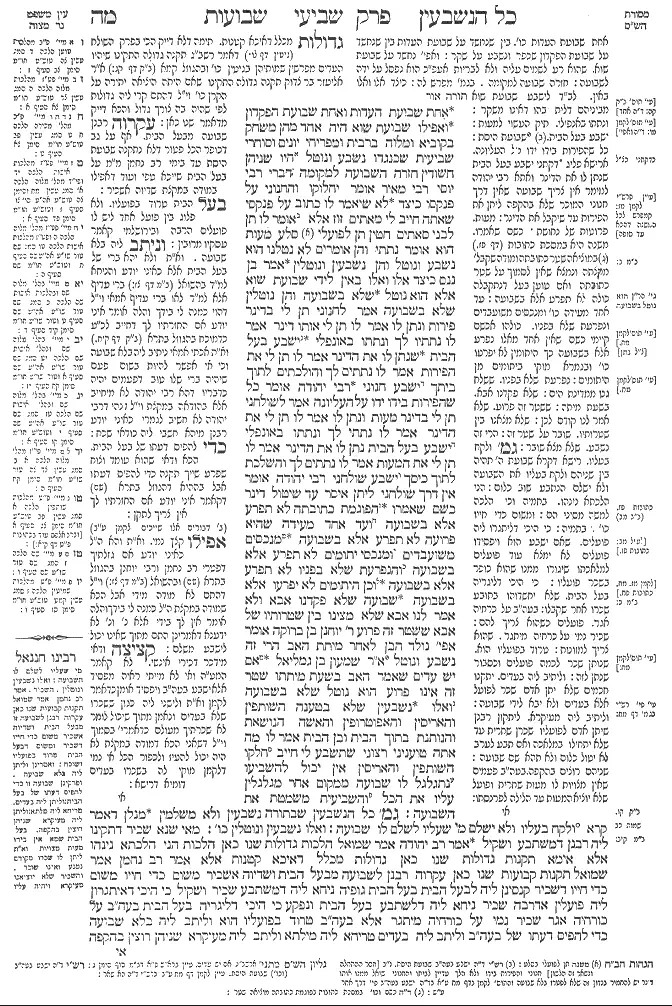
Shevu'ot 45a - Guemara
אחת שבועת העדות ואחת שבועת הפקדון ואפילו שבועת שוא היה אחד מהן משחק בקוביא ומלוה ברבית ומפריחי יונים וסוחרי שביעית שכנגדו נשבע ונוטל היו שניהן חשודין חזרה השבועה למקומה דברי רבי יוסי רבי מאיר אומר יחלוקו והחנוני על פנקסו כיצד לא שיאמר לו כתוב על פנקסי שאתה חייב לי מאתים זוז אלא אומר לו תן לבני סאתים חטין תן לפועלי סלע מעות הוא אומר נתתי והן אומרים לא נטלנו הוא נשבע ונוטל והן נשבעין ונוטלין אמר בן ננס כיצד אלו ואלו באין לידי שבועת שוא אלא הוא נוטל שלא בשבועה והן נוטלין שלא בשבועה אמר לחנוני תן לי בדינר פירות ונתן לו אמר לו תן לי אותו דינר אמר לו נתתיו לך ונתתו באונפלי ישבע בעל הבית שנתן לו את הדינר אמר לו תן לי את הפירות אמר לו נתתים לך והולכתים לתוך ביתך ישבע חנוני רבי יהודה אומר כל שהפירות בידו ידו על העליונה אמר לשולחני תן לי בדינר מעות ונתן לו אמר לו תן לי את הדינר אמר לו נתתי לך ונתתו באונפלי ישבע בעל הבית נתן לו את הדינר אמר לו תן לי את המעות אמר לו נתתים לך והשלכת לתוך כיסך ישבע שולחני רבי יהודה אומר אין דרך שולחני ליתן איסר עד שיטול דינר כשם שאמרו הפוגמת כתובתה לא תפרע אלא בשבועה ועד אחד מעידה שהיא פרועה לא תפרע אלא בשבועה מנכסים משועבדים ומנכסי יתומים לא תפרע אלא בשבועה והנפרעת שלא בפניו לא תפרע אלא בשבועה וכן היתומים לא יפרעו אלא בשבועה שבועה שלא פקדנו אבא ולא אמר לנו אבא שלא מצינו בין שטרותיו של אבא ששטר זה פרוע ר' יוחנן בן ברוקה אומר אפי' נולד הבן לאחר מיתת האב הרי זה נשבע ונוטל א"ר שמעון בן גמליאל אם יש עדים שאמר האב בשעת מיתתו שטר זה אינו פרוע הוא נוטל שלא בשבועה ואלו נשבעין שלא בטענה השותפין והאריסין והאפוטרופין והאשה הנושאת והנותנת בתוך הבית ובן הבית אמר לו מה אתה טועניני רצוני שתשבע לי חייב חלקו השותפין והאריסין אין יכול להשביעו נתגלגל לו שבועה ממקום אחר מגלגלין עליו את הכל והשביעית משמטת את השבועה:
גמ׳ כל הנשבעין שבתורה נשבעין ולא משלמין מנלן דאמר קרא (שמות כב, י) ולקח בעליו ולא ישלם מי שעליו לשלם לו שבועה:
ואלו נשבעין ונוטלין כו':
מאי שנא שכיר דתקינו ליה רבנן דמשתבע ושקיל אמר רב יהודה אמר שמואל הלכות גדולות שנו כאן הלכות הני הלכתא נינהו אלא אימא תקנות גדולות שנו כאן גדולות מכלל דאיכא קטנות אלא אמר רב נחמן אמר שמואל תקנות קבועות שנו כאן עקרוה רבנן לשבועה מבעל הבית ושדיוה אשכיר משום כדי חייו משום כדי חייו דשכיר קנסינן ליה לבעל הבית בעל הבית גופיה ניחא ליה דמשתבע שכיר ושקיל כי היכי דאיתגרון ליה פועלין אדרבה שכיר ניחא ליה דלשתבע בעל הבית ונפקע כי היכי דליגריה בעל הבית בעה"ב על כורחיה אגר שכיר נמי על כורחיה מיתגר אלא בעה"ב טרוד בפועליו הוא וליתב ליה בלא שבועה כדי להפיס דעתו של בעה"ב וליתב ליה בעדים טריחא ליה מילתא וליתב ליה מעיקרא שניהן רוצין בהקפה
Comments from Rashi on Masechet Shevu'ot Page 45a
אחת שבועת העדות כו' . בין שנחשד על שבועת העדות בין שנחשד על שבועת הפקדון שכפר ונשבע על שקר: ואפי' נחשד על שבועת שוא . שהוא רע לשמים עליה ולא לבריות אעפ"כ הוא נפסל על ידה לשבועה: חזרה שבועה למקומה . בגמ' מפרש לה: כיצד אלו ואלו באין . לב"ד לישבע שבועת שוא מביניהם דלית בהו דאינו משקר: ונתתו באנפילי . תיק העשוי למעות: ישבע בעל הבית . שבועת היסת: כל שהפירות בידו ידו על העליונה . ארישא פליג. דקתני ישבע בעל הבית שנתן לו את הדינר ואתא רבי יהודה למימר אין צריך שבועה שאין דרך חנוני המוכר שלא בהקפה ליתן את הפירות עד שיקבל את הדינר: מעות . פרוטות של נחושת: כשם שאמרו . משנה היא במסכת כתובות (דף פז.) במוציאה שטר כתובתה ומודה שקבל' מקצתה ונמצא שאין לסמוך על שטר כתובתה ואם טוען בעל דנתקבלה כולה לא תפרע אלא בשבועה: עד אחד מעידה כו' ומנכסים משועבדים ונפרעת שלא בפניו . כולהו אכשם קיימי כשם שאין אחד מאלו נפרע אלא בשבועה כך היתומין לא יפרעו כו' ובגמרא מוקי ביתומים מן היתומים: נפרעת שלא בפניו . ששלח גט ממדינת הים: שלא פקדנו אבא . בשעת מיתה: ששטר זה פרוע . שלא אמר לנו קודם לכן: שלא מצאנו בין שטרותיו . שובר על שטר זה: הרי זה נשבע . שלא מצא שובר: גמ' ולקח בעליו . רישא דקרא שבועת ה' תהיה בין שניהם ולקח בעליו את השבועה ולא ישלם הנתבע שוב כלום: הני הלכתא נינהו . בתמיה וכי הלכה למשה מסיני הם: ומשום כדי חייו כו' . בתמיה: כי היכי דליתגרו ליה פועלים . שאם ישבע הוא ויפסידו פועלים לא ימצא עוד פועלים למלאכתו שיגורו ממנו שהוא כופר בשכר פועליו: כי היכי דליגריה בעל הבית . שלא יחשדוהו בתובע שכרו אחר שקבלו: בעה"ב על כרחיה אגר . פועלים כשהוא צריך להם: שכיר נמי על כרחיה מיתגר . שהוא צריך למזונות: טרוד בפועליו הוא . שנותן שכר לכמה פועלים וכסבור שנתן לזה: וליתיב ליה בעדים . יתקנו חכמים שלא יתן אדם שכר לפועל אלא בעדים ולא יבא לידי שבועה: וליתיב ליה מעיקרא . ליתקון רבנן שיתן אדם לפועליו שכרן שחרית עד שלא יתחילו במלאכה ואם תבע לערב לא יטול כלום ולא תהא שם שבועה: שניהם רוצים בהקפה . בעה"ב פעמים שאין מצויות לו מעות שחרית ופועל שלא יוציא המעות עד הלילה לפרנסתו:
Comments from Tosafot - Shevu'ot 45a
גדולות מכלל דאיכא קטנות. תימה דלא דייק הכי בפרק השולח (גיטין דף לו.) דאמר רשב"ג תקנה גדולה התקינו שיהיו העדים מפרשין שמותיהן בגיטין כו' ובהגוזל קמא (ב"ק דף קג:) א"ר אליעזר בר צדוק תקנה גדולה התקינו שאם היתה היציאה יתירה על הקרן כו' וי"ל דהתם קרי ליה גדולות לפי שהיה בה צורך גדול והכא דייק מדאמר שנו כאן: עקרוה רבנן שבועה מבעל הבית. אף על גב דכופר הכל פטור דלא נתקנה שבועת היסת עד בימי רב נחמן מ"מ על בעל הבית שייכא טפי ועוד דאפילו במודה במקצת שדיוה אשכיר: בעל הבית טרוד בפועליו. ולא פלוג בין פועל אחד ליש לו פועלים הרבה ובירושלמי קאמר עסקיו מרובין: וניתב ליה בלא שבועה. וא"ת ולא יהא ברי של בעל הבית אלא כאיני יודע והניחא למ"ד בהשואל (ב"מ דף צז:) ברי עדיף אלא למ"ד לאו ברי עדיף אמאי וי"ל דהוי כמנה לי בידך והלה אומר איני יודע אם החזרתיו לך דחייב לכ"ע כדמוכח בהגוזל בתרא (ב"ק דף קיח.) וא"ת אכתי אמאי ניתיב ליה בלא שבועה וכי אי אפשר להיות בשום פעם שיהיה ברי שלו טוב דפעמים יהיה כדבריו דהא רבי יהודה לא מיחייב אלא בהודאה במקצת וי"ל דנהי דרבי יהודה לא חשיב לגמרי כאיני יודע רבנן מיהא חשבי ליה כודאי שכח: כדי להפיס דעתו של בעל הבית. הכא ודאי שהוא עומד וצוח שפרע שייך תקנה כדי להפיס דעתו אבל בההיא דהגוזל בתרא (שם) דקאמר איני יודע אם החזרתיו לך אין צריך לתקן:
Shevu'ot 45a - Mishnah translated into english
One is considered suspect with regard to oaths if he has been found to have taken a false oath, whether it was an oath of testimony, or whether it was an oath on a deposit, or even an oath taken in vain, which is a less severe prohibition. There are also categories of people who by rabbinic decree are considered suspect with regard to oaths: If one of the litigants was a dice player, or one who lends with interest, or among those who fly pigeons, or among the vendors of produce of the Sabbatical Year, then the litigant opposing him takes an oath and receives payment of his claim.
If both litigants were suspect, the oath returned to its place. This is the statement of Rabbi Yosei, and will be explained in the Gemara. Rabbi Meir says: Since neither can take an oath, they divide the disputed amount.
And how does this halakha apply to the storekeeper relying on his ledger? This ruling is not referring to the case where a storekeeper says to a customer: It is written in my ledger that you owe me two hundred dinars. Rather, it is referring to a case where a customer says to a storekeeper: Give my son two se’a of wheat, or: Give my laborers a sela in small coins. And later the storekeeper says: I gave it to them; but they say: We did not receive it. In such a case, where the father or employer admits that he gave those instructions and it is also recorded in the storekeeper’s ledger, the storekeeper takes an oath that he gave the son the wheat or paid the laborers, and he receives compensation from the father or employer; and the laborers take an oath that they were not paid and receive their wages from the employer.
Ben Nannas said: How is it that both these and those come to take an oath in vain? One of them is certainly lying. Rather, the storekeeper receives his compensation without taking an oath, and the laborers receive their wages without taking an oath.
§ If one said to a storekeeper: Give me produce valued at a dinar, and he gave him the produce. And later the storekeeper said to him: Give me that dinar you owe me, and the customer said to him: I gave it to you, and you put it in your wallet [be’unpali], the customer shall take an oath that he gave him the dinar. If, after he gave the storekeeper the money, the customer said to him: Give me the produce, and the storekeeper said to him: I gave it to you and you transported it to your house, the storekeeper shall take an oath that he has already filled the order, and he is exempt from supplying the produce. Rabbi Yehuda says: Whoever has the produce in his possession has the advantage, and his claim is accepted without his taking an oath.
Similarly, if one said to a money changer: Give me small coins valued at a dinar, and he gave him the coins, and subsequently the money changer said to him: Give me the dinar, and the customer said to him: I gave it to you, and you put it in your wallet; the customer shall take an oath that he paid. If the customer gave the money changer the dinar, and then said to him: Give me the coins, and the money changer said to him: I gave them to you and you cast them into your purse, the money changer shall take an oath. Rabbi Yehuda says: It is not a money changer’s way to give even an issar until he receives a dinar. Therefore, the fact that the customer received the coins indicates that the money changer already received his payment.
§ These cases of taking an oath are just like other cases where the Sages said that one takes an oath and receives payment. The mishna (see Ketubot 87a) teaches: A woman who vitiates her marriage contract by acknowledging receipt of partial payment may collect the remainder only by taking an oath; or if one witness testifies that her marriage contract has been paid, she may collect it only by taking an oath. She may collect it from liened property that has been sold to a third party, or from the property of orphans, only by taking an oath, and a woman who collects it from her husband’s property when not in his presence may collect it only by taking an oath. And likewise, orphans may collect a loan with a promissory note inherited from their father only by taking an oath.
Orphans who wish to collect payment of money owed to their father must take the following oath: On our oath our father did not direct us on his deathbed not to collect with this promissory note, and our father did not say to us that this note was paid, and we did not find among our father’s documents a record showing that this promissory note was paid. After taking that oath, they may collect the money. Rabbi Yoḥanan ben Beroka says: Even if the son was born after the father’s death, he needs to take an oath in order to receive the money owed to his father. Rabban Shimon ben Gamliel said: If there are witnesses that the father said at the time of his death: This promissory note has not been paid, the son collects the debt without having to take an oath.
§ And these people are sometimes required to take an oath that they do not owe anything even when there is no explicit claim against them: Partners, sharecroppers, stewards [apotropin], a woman who does business from home, where she manages the property of orphans, and the member of the household appointed to manage the household’s affairs. For example, in a case where one of these people said to one of the people whose property he or she manages: What is your claim against me? If the other replied: It is simply my wish that you take an oath to me that you have not taken anything of mine, the former is liable to take that oath.
Once the partners or the sharecroppers have divided the common property, each taking his share, then one side may not require an oath of the other absent a definite claim. But if an oath was imposed upon him due to some other situation, that oath can be extended to impose upon him any other oath, i.e., it can be extended to apply to any other of their disputes. The mishna adds: And the Sabbatical Year abrogates the obligation to take an oath about a debt, just like it abrogates a debt.
GEMARA: The mishna teaches: All those who take an oath that is legislated by the Torah take an oath and do not pay. The Gemara asks: From where do we derive that oaths mandated by Torah law serve only to exempt one from payment? We derive it from the fact that the verse states: “The oath of the Lord shall be between them both, to see whether he has not put his hand on his neighbor’s goods; and its owner shall accept it, and he shall not make restitution” (Exodus 22:10). According to the verse, with regard to he who would otherwise need to pay, it is on him that the obligation to take the oath is imposed.
§ The mishna teaches: And these litigants take an oath and receive possession of the disputed funds or property, and it lists a hired worker in that category. The Gemara asks: What is different about a hired worker that the Sages instituted for him that he take an oath and receive his wages? Rav Yehuda said that Shmuel said: Great halakhot were taught here. The Gemara asks: Halakhot? Are these oaths actually halakhot transmitted to Moses from Sinai, as is usually indicated by the use of the term halakhot? They are instituted by rabbinic law. Rather, say: Great ordinances were taught here.
The Gemara asks: Since these ordinances are called great, can one conclude by inference that there are also minor ordinances? Are there rabbinic ordinances that are less important?
Rather, Rav Naḥman says that Shmuel says: Permanent ordinances were taught here; the Sages uprooted the oath from the employer and imposed it upon the hired worker due to the fact that his wages are his livelihood. The Gemara asks: Due to the need to protect the hired worker’s livelihood, do we penalize the employer by leaving him vulnerable to a dishonest worker? The Gemara answers: The employer himself is amenable to the hired worker taking an oath and collecting his wages, so that laborers will accept employment from him. If the workers are not protected in this manner, they will be wary of accepting work.
The Gemara asks: On the contrary, isn’t it preferable for the hired worker that in the case of a dispute between them the employer takes the oath and is released from payment? He would agree to this arrangement in order to create conditions in which the employer will readily hire him. If employers are exposed to the risk of being cheated by dishonest workers, they will be wary of hiring. The Gemara answers: The employer perforce hires workers, since he needs the work done. The Gemara asks: Doesn’t the hired worker also perforce accept employment, since he needs it for his livelihood? Rather, the reason the worker takes the oath is that the employer is distracted with managing his laborers, so it is reasonable to assume that he forgot to pay.
The Gemara raises a difficulty: But if it is presumed that the employer forgot to pay, let him give the wages to the worker without the worker taking an oath.
The Gemara explains: The oath was instituted to alleviate the concerns of the employer, to ensure him that he is not being cheated. And why did the Sages not institute that the employer should give the worker his wages in the presence of witnesses so that it could readily be established whether he was paid? The Gemara answers: Finding witnesses whenever he pays wages would be a burdensome matter for him. And why did the Sages not institute that the employer should give him his wages at the outset, when he hires him, so there would be no need for an oath? The Gemara answers: They both want the work to be done on credit, i.e., before the wages are paid, as sometimes the employer has no money ready when he hires a worker, and the worker also prefers receiving his money at the end of the day.
Traduction : The William Davidson digital edition of the Koren Noé Talmud, with commentary by Rabbi Adin Even-Israel Steinsaltz.