 Talmud Bavli
The learning on the whole site is dedicated : L'ilui Nishmat Jamila bat Chlomo Abensour
The learning on the whole site is dedicated : L'ilui Nishmat אליעזר בן רחל
The learning on the whole site is dedicated : L'ilui Nishmat יוסף בן מושה
Shevu'ot 29a : Youtube
Daf TubeYoutube
2 video classes :
Shevu'ot Page 29a
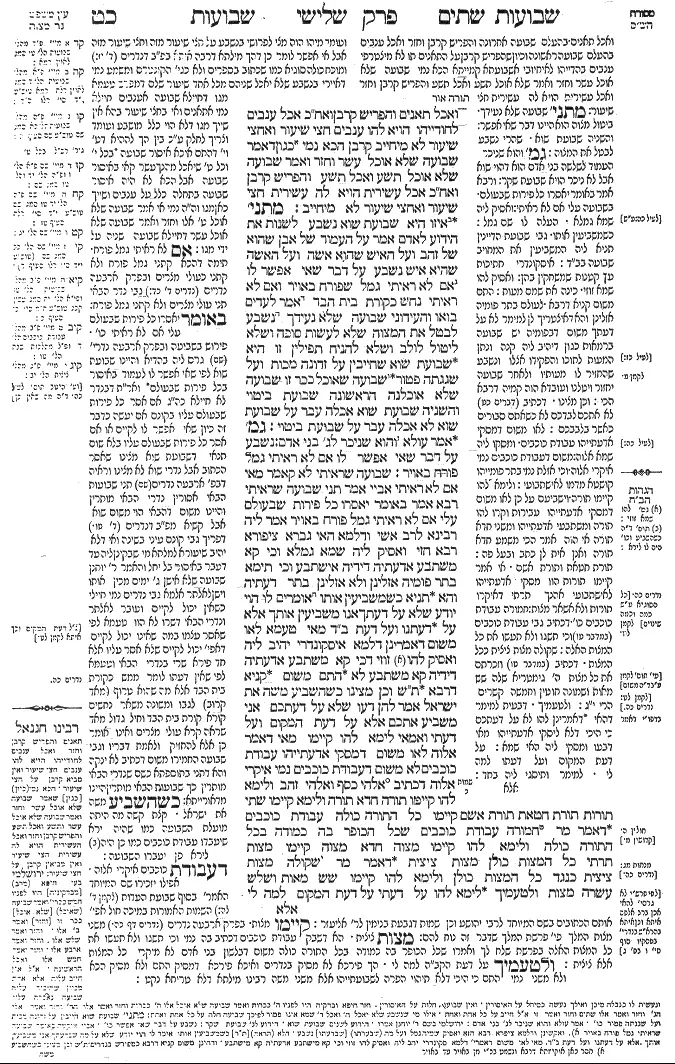
Shevu'ot 29a - Guemara
ואכל תאנים והפריש קרבן ואח"כ אכל ענבים לחודייהו הויא להו ענבים חצי שיעור ואחצי שיעור לא מיחייב קרבן הכא נמי כגון דאמר שבועה שלא אוכל עשר וחזר ואמר שבועה שלא אוכל תשע ואכל תשע והפריש קרבן ואח"כ אכל עשירית הויא לה עשירית חצי שיעור ואחצי שיעור לא מיחייב:
מתני׳ איזו היא שבועת שוא נשבע לשנות את הידוע לאדם אמר על העמוד של אבן שהוא של זהב ועל האיש שהוא אשה ועל האשה שהיא איש נשבע על דבר שאי אפשר לו אם לא ראיתי גמל שפורח באויר ואם לא ראיתי נחש כקורת בית הבד אמר לעדים בואו והעידוני שבועה שלא נעידך נשבע לבטל את המצוה שלא לעשות סוכה ושלא ליטול לולב ושלא להניח תפילין זו היא שבועת שוא שחייבין על זדונה מכות ועל שגגתה פטור שבועה שאוכל ככר זו שבועה שלא אוכלנה הראשונה שבועת ביטוי והשניה שבועת שוא אכלה עבר על שבועת שוא לא אכלה עבר על שבועת ביטוי:
גמ׳ אמר עולא והוא שניכר לג' בני אדם:
נשבע על דבר שאי אפשר לו אם לא ראיתי גמל פורח באויר:
שבועה שראיתי לא קאמר מאי אם לא ראיתי אביי אמר תני שבועה שראיתי רבא אמר באומר יאסרו כל פירות שבעולם עלי אם לא ראיתי גמל פורח באויר אמר ליה רבינא לרב אשי ודלמא האי גברא ציפורא רבא חזי ואסיק ליה שמא גמלא וכי קא משתבע אדעתיה דידיה אישתבע וכי תימא בתר פומיה אזלינן ולא אזלינן בתר דעתיה והא תניא כשמשביעין אותו אומרים לו הוי יודע שלא על דעתך אנו משביעין אותך אלא על דעתנו ועל דעת ב"ד מאי טעמא לאו משום דאמרינן דלמא איסקונדרי יהיב ליה ואסיק להו זוזי דכי קא משתבע אדעתיה דידיה קא משתבע לא התם משום קניא דרבא ת"ש וכן מצינו כשהשביע משה את ישראל אמר להן דעו שלא על דעתכם אני משביע אתכם אלא על דעת המקום ועל דעתי ואמאי לימא להו קיימו מאי דאמר אלוה לאו משום דמסקי אדעתייהו עבודת כוכבים לא משום דעבודת כוכבים נמי איקרי אלוה דכתיב (שמות כ, כג) אלהי כסף ואלהי זהב ולימא להו קיימו תורה חדא תורה ולימא קיימו שתי תורות תורת חטאת תורת אשם קיימו כל התורה כולה עבודת כוכבים דאמר מר חמורה עבודת כוכבים שכל הכופר בה כמודה בכל התורה כולה ולימא להו קיימו מצוה חדא מצוה קיימו מצות תרתי כל המצות כולן מצות ציצית דאמר מר שקולה מצות ציצית כנגד כל המצות כולן ולימא להו קיימו שש מאות ושלש עשרה מצות ולטעמיך לימא להו על דעתי על דעת המקום למה לי
Comments from Rashi on Masechet Shevu'ot Page 29a
ואכל תאנים . בהעלם שבועה אחרונה והפריש קרבן וחזר ואכל ענבים בהעלם שבועה ראשונה וכיון שהפריש קרבן על התאנים תו לא מיצטרפי ענבים בהדייהו לאיחיובי אשבועתא קמייתא הכא נמי שבועה שלא אוכל עשר וחזר ואמר שלא אוכל תשע ואכל תשע והפריש קרבן וחזר ואכל עשירית הויא לה עשירית חצי שיעור: מתני' שבועה שלא נעידך . ביטול מצוה הוא היינו דבר שאי אפשר: והשניה שבועת שוא . שהרי נשבע לבטל את המצוה: גמ' והוא שניכר . העמוד לשלשה בני אדם הוא דהוי שוא אבל לא ניכר הויא שבועת שקר: ורבא אמר באומר יאסרו כל פירות שבעולם . בשבועה עלי אם לא ראיתי: ואסיק ליה שמא גמלא . העלה לו שם גמל: כשמשביעין אותו . גבי שבועת הדיינין תניא ליה המשביעין את המחויב שבועה בב"ד: איסקונדרי . חתיכות עץ קטנות שמשחקין בהן: ואסיק להו שמא זוזי . כינה את שמם מעות: התם משום קניא דרבא . לעולם בתר פומיה אזלינן והא דאיצטריך לן למימר לא על דעתך משום דבפומיה יש שבועה ברמאות כגון דיהיב ליה קנה ונתן המעות לתוכו והפקידו אצלו ונשבע שהחזיר לו מעותיו ולאחר שבועה יחזור ויטלנו ועובדא הוה קמיה דרבא הכי: וכן מצינו . דכתיב (דברים כט) לא אתכם לבדכם לא כשאתם סבורים כאשר בלבבכם: לאו משום דמסקי אדעתייהו עבודת כוכבים . ומסקו ליה שמא אלוה: משום דעבודת כוכבים נמי איקרי אלוה . כי אזלת נמי בתר פומייהו קושטא מדמו לאישתבועי: ולימא להו קיימו תורה . וישביעם על כן לאו משום דמסקי אדעתייהו עבירות וקרו להו תורה ומשתבעי אדעתייהו ומשני חדא תורה אי הוה אמר הכי משמע חדא תורה ואנן אית לן כתב ובעל פה: תורת חטאת ותורת אשם . אי אמר קיימו תורות הוו מסקי אדעתייהו לאישתבועי אהנך תרתי דאיקרו תורות ולא אשאר מצות: חמורה עבודת כוכבים כו' . דכתיב גבי עבודת כוכבים (במדבר טו) וכי תשגו ולא תעשו את כל המצות האלה: שקולה מצות ציצית ככל המצות . דכתיב (במדבר טו) וזכרתם את כל מצות ה' גימטריא שלה שש מאות ושמונה חוטין וחמשה קשרים הרי י"ג: ולטעמיך . דבעית למימר דהאי דאמרינן להו לא על דעתכם כי היכי דלא ליסקי אדעתייהו מאי דבעו ומסקי ליה האי שמא: על דעת המקום ועל דעתו למה לי . למימר ותיסגי ליה בחד:
Comments from Tosafot - Shevu'ot 29a
אם לא ראיתי גמל פורח. תימה דהכא קתני גמל פורח ולא קתני כעולי מצרים ובפרק ארבעה נדרים (נדרים ד' כד:) גבי נדר הבאי תני עולי מצרים ולא קתני גמל פורח: באומר יאסרו כל פירות שבעולם עלי אם לא ראיתי כו'. פירוש בשבועה ובפרק ארבעה נדרי' (שם) גרס ליה בהדיא והיינו שבועת שוא לפי שאי אפשר לו לעמוד באיסור בכל פירות שבעולם ואר"ת דבנדר לא חיילא כה"ג אם אסר כל פירות שבעולם עליו בקונם אם יעשה כדבר זה כיון שאי אפשר לו לקיים או אם אסר כל פירות שבעולם עליו בלא שום תנאי דשבועת שוא מצינו שאסר הכתוב אבל נדרי שוא לא מצינו וראיה דבפ' ארבעה נדרים (שם) תני שבועות הבאי אסורין נדרי הבאי מותרין והיינו משום דהבאי הוי משום שוא אבל קשיא מפ"ב דנדרים (ד' טו.) דפריך גבי קונס עיני בשינה ואי דלא יהיב שיעורא למלתא מי שבקינן ליה עד דעבר באיסור בל יחל והאמר ר' יוחנן שבועה שלא אישן ג' ימים מכין אותו וישן לאלתר אלמא גבי נדרים נמי חיילי כשאין יכול לקיים ועובר לאלתר ונדרי הבאי דשרו לא הוו טעמא לפי שאסר עצמו במה שאינו יכול לקיים דאפי' יכול לקיים שלא אסר עליו אלא חד פירא שרי בנדרי הבאי וטעמא לפי שאין דעתו לומר ממש כקורת בית הבד אלא מה שהוא טרוף (מאד קרוב) לגבו ומשונה משאר נחשים קורא קורת בית הבד וחיל גדול מאד שראה קרא עולי מצרים ואינו אומר כן אלא להחזיק ולאמת דבריו וגבי שבועה החמירו משום דכתיב לא ינקה והא דתני בתוספתא כשם שנדרי הבאי מותרין כך שבועות הבאי מותרין היינו מדאורייתא: משום קניא דרבא. נראה דקפץ ונשבע דמסתמא רבא היה יודע הברייתא והיה משביע אותו על דעת המקום ועל דעת ב"ד: כשהשביע משה את ישראל. קצת קשה מה היתה מועלת השבועה כמו שהיה ירא שיעבדו עבודת כוכבים כמו כן היה לירא פן יעברו השבועה: דעבודת כוכבים איקרי אלוה. אפילו יזכירו שם המיוחד האמר' סוף שבועת העדות (לקמן שבועות ד' לה:) השמות האמורות במיכה חול אפי' אותם הכתובים בשם המיוחד לרבי יהושע וכן שמות דגבעת בנימין לר' אליעזר: קיימו מצות. בפרק ארבעה נדרים (נדרים דף כה.) משני מצות המלך פי' פרשת המלך שדבר זה נוח להם: מצות ציצית. הא דשבק עבודת כוכבים דכתיב בה נמי וכי תשגו ולא תעשו את כל המצות האלה בפרשת שלח לך ואמרו שכל הכופר בה כמודה בכל התורה כולה משום דבלשון בני אדם לא מיקרי כל המצות אלא ציצית: ולטעמיך על דעת הקב"ה למה לי. הך פירכא לא מסיק בנדרים ואיכא פירכא דמסיק התם ולא מסיק הכא ולא משני נמי התם כי היכי דלא תיהוי הפרה לשבועתייהו אלא משני משה רבינו מילתא דלא טריחא נקט:
Shevu'ot 29a - Mishnah translated into english
and he unwittingly ate figs and set aside an offering for breaking the second oath, and afterward he unwittingly ate grapes alone, he is exempt from liability for breaking the first oath. The grapes are tantamount to a half-measure of his first oath, which was not to eat figs and grapes together, and one is not liable to bring an offering for a half-measure. Here also, where he said: On my oath I will not eat ten, and then said: On my oath I will not eat nine, and he ate nine and set aside an offering for breaking his second oath, and later he ate the tenth, this tenth is tantamount to a half-measure of his first oath, and one is not liable to bring an offering for a half-measure.
MISHNA: Which oath is an oath taken in vain, mentioned in the previous mishna (27b)? It is when one takes an oath to deny that which is known to people to be true, for example, one says about a stone column that it is made of gold, or about a man that he is a woman, or about a woman that she is a man.
Another type of oath taken in vain is when one takes an oath about a matter that is impossible, e.g., if he says: If I did not see a camel flying through the air, or: If I did not see a snake as large as the beam of the olive press.
In the case of one who said to witnesses: Come and testify for me, and they replied: On our oath we will not testify for you, that is an oath taken in vain, because it involves taking an oath to refrain from performing a mitzva. Other examples of this include an oath not to build a sukka, or not to take a lulav, or not to don phylacteries. This type of oath is an oath taken in vain, for which one is liable to receive lashes if he takes the oath intentionally, and for which he is exempt if he takes it unwittingly.
If one said: On my oath I will eat this loaf, and later said: On my oath I will not eat it, the first oath is an oath on an utterance, and the second is an oath taken in vain, as he took an oath to perform an action that would violate his previous oath.
If he ate it, he violated the prohibition against taking an oath in vain. If he did not eat it, he violated the prohibition against breaking an oath on an utterance.
GEMARA: With regard to an oath taken in vain that denies that which is known to people, Ulla says: It is considered known to people when it is a fact that is known to three people.
§ The mishna describes an oath taken in vain where one takes an oath about a matter that is impossible, e.g., where one says: If I did not see a camel flying through the air. The Gemara points out: The tanna of the mishna did not say: On my oath I saw. What is the meaning of: If I did not see? Abaye said: Emend the language of the mishna and teach: On my oath I saw. Rava said: This is part of a larger statement where one says: Let all the produce in the world be prohibited for me if I did not see a camel flying through the air.
With regard to the oath: If I did not see a camel flying through the air, Ravina said to Rav Ashi: Perhaps this man who took this oath saw a great bird and named it for himself: Camel, and when he took the oath, he took the oath according to his own understanding.
And if you would say that we follow his mouth, i.e., the generally accepted meaning of what one says, and we do not follow his understanding, i.e., his own private meaning, but isn’t it taught otherwise in a baraita: When they administer an oath to him in court, the judges say to him: Know that it is not according to your own understanding that we administer this oath to you, but according to our understanding and according to the understanding of the court? What is the reason they say this? Is it not because we say: Perhaps he gave tokens [iskunderei] to his creditor but he calls them for himself: Dinars, so that when he takes the oath, it is according to his own understanding that he takes the oath. Since, in principle, it is possible for him to take an oath according to his private meaning of the words, the court insists that the oath it administers is to be understood according to the words’ generally accepted meaning.
Rav Ashi replies: No, the reason the court admonishes the oath taker is not that the oath can be interpreted according to a private meaning. There, when the court administers an oath, they explain that it is according to their meaning due to deceptions like that of the reed in Rava’s court. In that incident, someone handed his creditor a hollow reed, which he had secretly filled with coins, to hold for him, and proceeded to take an oath that he had given him the money owed to him, whereupon he took back the reed, as the creditor was unaware of its contents. The court admonishes oath takers so that they do not think that they have fulfilled their obligation to take an oath if they engage in such chicanery.
The Gemara suggests: Come and hear a baraita: And so we found that when Moses administered an oath to Israel that they would keep the Torah (see Deuteronomy 29:9–12), he said to them: Know that I am not administering this oath according to your understanding but according to the understanding of the Omnipresent and according to my understanding. And why not let him simply say to them: Keep that which God said? Is it not that he insisted on admonishing them because he was concerned lest they direct the oath in their minds to idolatry, saying that they are taking an oath of loyalty to God but privately intending the oath to be for idolatry? This indicates that the content of an oath can be affected by an oath taker’s private meaning.
The Gemara rejects this: No, Moses explicitly indicated that the oath was according to God’s and his own understanding because idolatry is also referred to with the word: God, as it is written: “You shall not make with Me gods of silver or gods of gold” (Exodus 20:20). Therefore, the generally accepted meaning of the oath is ambiguous.
The Gemara suggests: If private meanings do not affect the content of an oath, let Moses merely say to them: Keep the Torah. The Gemara explains: They could then have taken an oath to keep only one Torah, either the Written or the Oral Torah. The Gemara suggests: And let him say: Keep two Torahs. The Gemara explains: The word: Torah, also has a narrower meaning of a set of halakhic procedures. The Jewish people could then have limited the oath to the law of [torat] the sin-offering or the law of [torat] the guilt-offering. The Gemara suggests: Let Moses administer an oath to keep the entire Torah. The Gemara replies: That could have been understood as referring only to the prohibition of idolatry, as the Master says: The prohibition of idolatry is so severe that with regard to one who denies idol worship, it is as if he affirms the entire Torah.
The Gemara suggests: And let him say to them: Keep the mitzva, i.e., that which you are commanded. The Gemara replies: That could have been understood as referring to only one mitzva. The Gemara suggests: Let him say: Keep mitzvot, i.e., in the plural. The Gemara replies: That could be understood as referring to only two mitzvot. The Gemara suggests: Let him say: All the mitzvot in their entirety. The Gemara replies: That could be understood as referring to the mitzva of ritual fringes, as the Master says: The mitzva of ritual fringes is equivalent to all the other mitzvot.
The Gemara suggests: And let him say to them: Keep 613 mitzvot. The Gemara replies: And according to your reasoning, let him simply say: Take the oath according to my understanding. Why do I need for him to say: According to the understanding of the Omnipresent?
Traduction : The William Davidson digital edition of the Koren Noé Talmud, with commentary by Rabbi Adin Even-Israel Steinsaltz.