 Talmud Bavli
Shevu'ot 42a : Youtube
Daf TubeYoutube
2 video classes :
Shevu'ot Page 42a
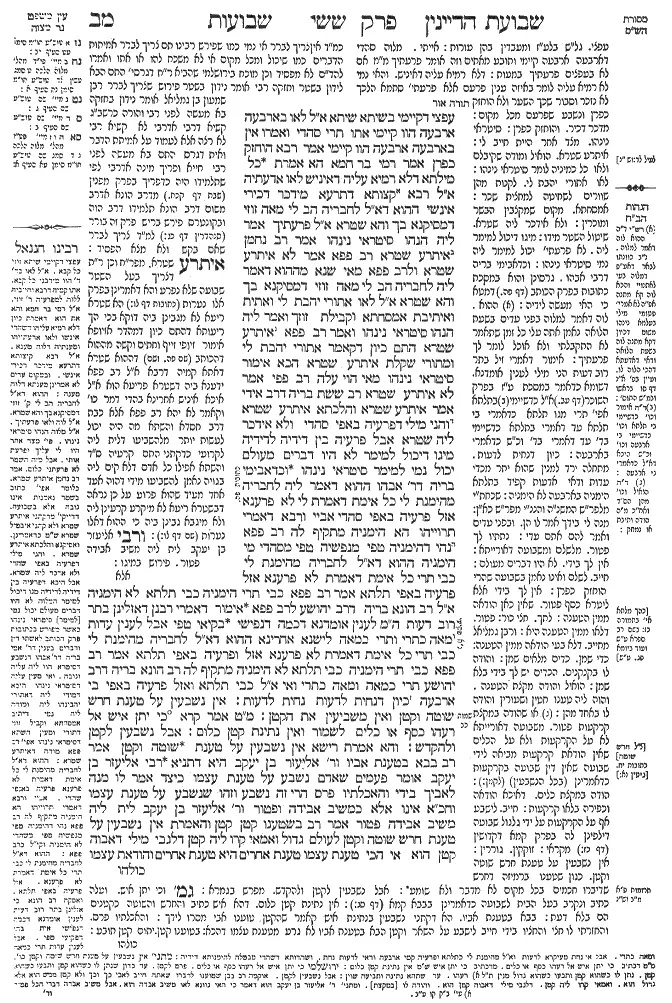
Shevu'ot 42a - Guemara
עפצי דקיימי בשיתא שיתא א"ל לאו בארבעה ארבעה הוו קיימי אתו תרי סהדי ואמרו אין בארבעה ארבעה הוו קיימי אמר רבא הוחזק כפרן אמר רמי בר חמא הא אמרת כל מילתא דלא רמיא עליה דאיניש לאו אדעתיה א"ל רבא קצותא דתרעא מידכר דכירי אינשי ההוא דא"ל לחבריה הב לי מאה זוזי דמסיקנא בך והא שטרא א"ל פרעתיך אמר ליה הנהו סיטראי נינהו אמר רב נחמן איתרע שטרא רב פפא אמר לא איתרע שטרא ולרב פפא מאי שנא מההוא דאמר ליה לחבריה הב לי מאה זוזי דמסיקנא בך והא שטרא א"ל לאו אתורי יהבת לי ואתית ואיתיבת אמסחתא וקבילת זוזך ואמר ליה הנהו סיטראי נינהו ואמר רב פפא איתרע שטרא התם כיון דקאמר אתורי יהבת לי ומתורי שקלת איתרע שטרא הכא אימור סיטראי נינהו מאי הוי עלה רב פפי אמר לא איתרע שטרא רב ששת בריה דרב אידי אמר איתרע שטרא והלכתא איתרע שטרא והני מילי דפרעיה באפי סהדי ולא אידכר ליה שטרא אבל פרעיה בין דידיה לדידיה מיגו דיכול למימר לא היו דברים מעולם יכול נמי למימר סיטראי נינהו וכדאבימי בריה דר' אבהו ההוא דאמר ליה לחבריה מהימנת לי כל אימת דאמרת לי לא פרענא אזל פרעיה באפי סהדי אביי ורבא דאמרי תרוייהו הא הימניה מתקיף לה רב פפא נהי דהימניה טפי מנפשיה טפי מסהדי מי הימניה ההוא דא"ל לחבריה מהימנת לי כבי תרי כל אימת דאמרת לא פרענא אזל פרעיה באפי תלתא אמר רב פפא כבי תרי הימניה כבי תלתא לא הימניה א"ל רב הונא בריה דרב יהושע לרב פפא אימור דאמרי רבנן דאזלינן בתר רוב דעות ה"מ לענין אומדנא דכמה דנפישי בקיאי טפי אבל לענין עדות מאה כתרי ותרי כמאה לישנא אחרינא ההוא דא"ל לחבריה מהימנת לי כבי תרי כל אימת דאמרת לא פרענא אזל ופרעיה באפי תלתא אמר רב פפא כבי תרי הימניה כבי תלתא לא הימניה מתקיף לה רב הונא בריה דרב יהושע תרי כמאה ומאה כתרי ואי א"ל כבי תלתא ואזל פרעיה באפי בי ארבעה כיון דנחית לדעות נחית לדעות:
אין נשבעין על טענת חרש שוטה וקטן ואין משביעין את הקטן:
מ"ט אמר קרא (שמות כב, ו) כי יתן איש אל רעהו כסף או כלים לשמור ואין נתינת קטן כלום:
אבל נשבעין לקטן ולהקדש:
והא אמרת רישא אין נשבעין על טענת שוטה וקטן אמר רב בבא בטענת אביו ור' אליעזר בן יעקב היא דתניא רבי אליעזר בן יעקב אומר פעמים שאדם נשבע על טענת עצמו כיצד אמר לו מנה לאביך בידי והאכלתיו פרס הרי זה נשבע וזהו שנשבע על טענת עצמו וחכ"א אינו אלא כמשיב אבידה ופטור ור' אליעזר בן יעקב לית ליה משיב אבידה פטור אמר רב בשטענו קטן קטן והאמרת אין נשבעין על טענת חרש שוטה וקטן לעולם גדול ואמאי קרו ליה קטן דלגבי מילי דאבוה קטן הוא אי הכי טענת עצמו טענת אחרים היא טענת אחרים והודאת עצמו
Comments from Rashi on Masechet Shevu'ot Page 42a
עפצי . גל"ש בלע"ז ומעבדין בהן עורות: אייתי . מלוה סהדי דארבעה ארבעה קיימי ותובע מאתים וזה אומר פרעתיך מ"מ אם לא בעפצים פרעתיך במעות: דלא רמיא עליה דאיניש . והאי נמי לא רמיא עליה לומר באיזה ענין פרעם אלא פרעתי' סתמא הלכך לא נזכר וסבור שכך השער ולא הוחזק כפרן ונשבע שפרעם מכל מקום: מדכר דכיר . והוחזק כפרן: סיטראי נינהו . מצד אחר היית חייב לי: איתרע שטרא . הואיל ומודה שקיבלם ולאו כל כמיניה לומר סיטראי נינהו: לאו אתורי יהבת לי . לקנות מהן שוורים לשחיטה למחצית שכר: אמסחתא . מקום שמקצבין הבשר ומוכרין: ולא אידכר ליה שטרא . שיטול השטר מידו: מיגו דיכול למימר ליה . לא פרעתי' יכול למימר ליה נמי סיטראי נינהו: וכדאבימי בריה דרבי אבהו . גרסינן והוא במסכת כתובות בפרק הכותב (דף פה.) דמטא כי האי מעשה לידיה: ההוא . לוה דאמר למלוה בפני עדים בשעת הלואה נאמן אתה עלי כל זמן שתאמר לא התקבלתי ולא אוכל לומר לך פרעתיך: אימור דאמרי זיל בתר רוב דעות הני מילי לענין אומדנא . דשומא כדאמר במסכת ע"ז בפרק השוכר (דף עב.) א"ל כדשיימי בתלתא אפי' תרי מגו תלתא כדאמרי בי תלתא עד דאמרי בתלתא כדשיימי בד' עד דאמרי בד' וכ"ש כדאמרי בארבעה: כיון דנחית לדעות . מתחלה ירד למנין שהוא יתר מכדי עדות ודאי אדעות קפיד בתלתא הימניה בארבעה לא הימניה: שכחת"י מלפר"ש המשנ"ה והננ"י מפר"ש כא"ן: מנה לי בידך אמר לו הן . ובפני עדים ואמר להם אתם עדי: נתתיו לך פטור . מלשלם ומשבועה דאורייתא: אין לך בידי . לא היו דברים מעולם: חייב . לשלם ואינו נאמן בשבועה שהרי הוחזק כפרן: אין לך בידי אלא ליטרא כסף פטור . שאין כאן הודאה ממין הטענה: לתך . חצי כור: פטור . דלאו ממין הטענה היא: ורבן גמליאל מחייב . דלא בעי הודאה ממין הטענה: כדי שמן . כדים מלאים שמן: והודה לו בקנקנים . הכדים יש לך בידי בלא שמן: הואיל והודה מקצת הטענה . והוה ליה טענו חטין ושעורין והודה לו באחד מהן: או שהודה במקצת קרקעות פטור . משבועה דאוריירתא לא על הקרקעות ולא על הכלים שאין הודאת קרקעות מביאה לידי שבועה שאין דין שבועה בקרקעות כדאמרינן (בכל הנשבעין) (לקמן:): הודה במקצת כלים . דאיכא הודאה וכפירה בלאו קרקעות: חייב . לישבע אף על הקרקעות על ידי גלגול שבועה דילפינן לה בפרק קמא דקדושין (דף כז:) מקראי: זוקקין . גוררין: אין נשבעין על טענת חרש שוטה וקטן . כגון שטענו ברמיזה דחרש שדיברו חכמים בכל מקום לא מדבר ולא שומע: אבל נשבעין לקטן ולהקדש . מפרש בגמרא: גמ' וכי יתן איש . ועלה כתיב ונקרב בעל הבית לשבועה כדאמרינן בבבא קמא (דף סג:): אין נתינת קטן כלום . דהא איש כתיב והחרש והשוטה כקטנים הם בלא דעת: בבא בטענת אביו . הא דקתני נשבעין בנתינת איש קאמר שהקטן טוענו אבי מסרו לידך: והאכלתיו פרס . והחזרתי לו חצי והחציו בידי חייב לישבע על השאר וקטן הבא בטענת אביו לא גרע מטענת עצמו דהכא: בטוענו קטן . יתום קטן תובע:
Comments from Tosafot - Shevu'ot 42a
איתרע שטרא. מפר"ח וכן ר"ת דצריך בעל השטר שבועה שלא נפרע והא דאמרינן בפרק אלו נערות (כתובות דף לו:) הא שטרא ריעא לא מגבינן ביה דוקא בכי הך ריעותא דהתם כיון דמהדר אזיופא אימור זיופי זייף וחתים וקשה מההוא דהכותב (שם פה. ושם) דההוא שטרא דאתא קמיה דרבא א"ל רב פפא ידענא ביה דשטרא פריעא הוא א"ל איכא איניש אחרינא בהדי דמר כו' וקאמר לא יהא רב פפא אלא כבת דרב חסדא והשתא מה היה יכול לעשות יותר מלהשביעו דלית ליה לקרועי כדקתני התם קרעיה ס"ד והשתא אפילו כל אדם דלא קים ליה בגויה נאמן להשביעו מידי דהוה אעד אחד מעיד שהוא פרוע על כן נראה דבשטרא ריעא לא מיקרע קרעינן ליה ולא מיגבא גבינן ביה כי ההוא דאלו נערות (שם דף לו:): ורבי אליעזר בן יעקב לית ליה משיב אבידה פטור. פירוש במיגו:
Shevu'ot 42a - Mishnah translated into english
of gallnuts [aftzei] that were worth six dinars for each kav at the time? The creditor said to him: Weren’t they worth four dinars for each kav at the time? Two witnesses came and said: Yes, they were worth four dinars per kav. Rava said that the debtor assumes the presumptive status of one who falsely denies his debts. Rami bar Ḥama said: But didn’t you say that anything that is not incumbent upon a person is not on his mind? Perhaps he merely forgot what the price of gallnuts was at the time that he paid. Rava said to him: People remember the standard, set market price.
The Gemara relates: There was a certain person who said to another: Give me the hundred dinars that I claim from you, and this is the promissory note attesting to the debt. The latter said to him: I already repaid you. The creditor said to him: That money you gave me was for a different debt. Rav Naḥman said that the promissory note is undermined by the fact that the creditor admits that he received payment equal to the amount specified in the note, and his claim that there was an additional debt is unsubstantiated. Rav Pappa said that the promissory note is not undermined.
The Gemara asks: But according to Rav Pappa, in what way is this case different from the incident where a certain person said to another: Give me the hundred dinars that I claim from you, and this is the promissory note. The latter said to him: Didn’t you give me that money as an investment to be used for buying oxen to be slaughtered? And you came and sat in the slaughterhouse and received your money, including your share of the profits, from the sale of the slaughtered oxen. And the creditor said to him: That money you gave me was for a different debt. And Rav Pappa said that in that case the promissory note is undermined.
The Gemara answers: There, since the debtor said: You gave me the money for oxen and you took payment from oxen, and the creditor admitted that this had happened, the promissory note is undermined because there is no support for his claim that there was another debt in addition to the acknowledged transaction for the oxen. Here, say that the payment was in fact for a different debt.
What halakhic conclusion was reached about this matter? Rav Pappi said: The promissory note is not undermined, and Rav Sheshet, son of Rav Idi, said: The promissory note is undermined. And the halakha is that the promissory note is undermined.
And this statement applies in a case where he repaid him in the presence of witnesses and did not mention the promissory note to the creditor; but in a case where he repaid him privately, between the two of them, in the absence of witnesses, since [miggo] the creditor can say to him: This matter never happened, i.e., he could deny that he received any payment, he can also say that this money was for a different debt. And this is like the case involving Avimi, son of Rabbi Abbahu, who repaid a debt in the absence of witnesses, and the creditor then claimed that the payment was for another debt (see Ketubot 85a).
The Gemara relates: There was a certain person who said to another who had lent him money: I deem you credible whenever you say to me that I did not repay the debt. He then went and repaid the debt in the presence of witnesses, and the creditor later denied that he had been repaid. Abaye and Rava both say that the witnesses are not deemed credible and the creditor can collect payment, as the debtor deemed him credible at the outset. Rav Pappa objects to this and says: Although he deemed him more credible than himself concerning the possibility that the debtor would claim that he repaid the debt and the creditor would deny having been repaid, did he deem him more credible than witnesses? Therefore, he is exempt.
The Gemara relates: There was a certain person who said to another who had lent him money: I deem you credible like two witnesses whenever you say that I did not repay the debt. He went and repaid the debt in the presence of three witnesses. Rav Pappa said that the creditor cannot deny the testimony of three witnesses, as the debtor deemed him credible like two witnesses; he did not deem him credible like three witnesses.
Rav Huna, son of Rav Yehoshua, said to Rav Pappa: Say that although the Sages say that we follow the majority of opinions, and the opinion of three people is therefore accepted against the opinion of two, this statement applies with regard to assessing value, as the more people there are, the more knowledgeable they are. But with regard to testimony, one hundred witnesses are like two, and two are like one hundred. Therefore, in this case there is no distinction between two witnesses and three witnesses.
The Gemara presents another version of the incident: A certain person said to another who had lent him money: I deem you credible like two witnesses whenever you say that I did not repay. He went and repaid the debt in the presence of three witnesses. Rav Pappa said that the creditor cannot deny their testimony, as the debtor deemed him credible like two witnesses; he did not deem him credible like three witnesses.
Rav Huna, son of Rav Yehoshua, objects to this: Two witnesses are like one hundred, and one hundred are like two. But if the debtor said to the creditor that he deems him credible like three witnesses, and then went and repaid him in the presence of four, then once he entered, by mentioning a larger number than what is necessary for testimony, the realm of opinions, in which three people carry greater weight than two, he has entered the realm of opinions, and four witnesses are deemed more credible than three. Therefore, the creditor is not deemed credible against them.
§ The mishna teaches: One does not take an oath concerning the claim of a deaf-mute, an imbecile, or a minor, and the court does not administer an oath to a minor. The Gemara asks: What is the reason? The Gemara answers that in the passage from which the halakhot of admission to part of a claim are derived, the verse states: “If a man delivers to his neighbor silver or vessels to safeguard” (Exodus 22:6). The word “man” indicates that the reference is only to adults, and delivery by a minor is nothing, i.e., it is not recognized as a halakhically significant act, as a minor is not halakhically competent.
§ The mishna teaches: But one does take an oath to a minor, or to a representative of the Temple treasury with regard to consecrated property. The Gemara asks: But didn’t you say in the first clause that one does not take an oath concerning the claim of a deaf-mute, an imbecile, or a minor?
Rav said: The halakha that one takes an oath concerning the claim of a deaf-mute, an imbecile, or a minor is with regard to one who comes to court with a claim for a debt owed to his late father, and it is in accordance with the opinion of Rabbi Eliezer ben Ya’akov, as it is taught in a baraita that Rabbi Eliezer ben Ya’akov says: There are times when although no one claimed of a person that he owes money, that person takes an oath on the basis of his own claim. How so? If one said to another: Your father had one hundred dinars in my possession, but I provided him with repayment of half that amount, he is liable to take an oath that he repaid half; and that is the case of one who takes an oath on the basis of his own claim. And the Rabbis say: In that case he is only like one returning a lost item, as the son did not claim the money at all, and is exempt from taking an oath.
The Gemara asks: But is Rabbi Eliezer ben Ya’akov not of the opinion that one who returns a lost item is exempt from taking an oath attesting to the fact that he did not take anything from it? Rav said: The baraita is referring to a case where a minor advanced a claim against him. The creditor’s minor son claimed that the debtor did not repay any part of the loan to his father. The debtor’s partial admission came in response to that claim. Therefore, his admission is not comparable to the act of returning a lost item.
The Gemara asks: How can the baraita be referring to the claim of a minor? But didn’t you say in the mishna that one does not take an oath concerning the claim of a deaf-mute, an imbecile, or a minor? The Gemara answers: Actually, the reference is to an adult son; and why did Rav call him a minor? It was due to the fact that with regard to his father’s matters, one is like a minor, as he is uncertain about the particulars of his father’s dealings. Here, too, Rav explains that the halakha in the mishna that one takes an oath to a minor is referring to an adult claiming a debt owed to his late father.
The Gemara asks: If so, if the son making the claim has already reached majority, the language of the baraita is imprecise. Why does the tanna describe the individual as one taking an oath on the basis of his own claim? This is not his own claim; it is the claim of others. The Gemara answers: The baraita employed that language because although it is the claim of others, he is taking an oath on the basis of that claim and his own partial admission.
Traduction : The William Davidson digital edition of the Koren Noé Talmud, with commentary by Rabbi Adin Even-Israel Steinsaltz.