 Talmud Bavli
The learning on the whole site is dedicated : L'ilui Nishmat Nissim ben Barukh Malka
The learning on the whole site is dedicated : L'ilui Nishmat Yechayahou ben Moche
The learning on the whole site is dedicated : L'ilui Nishmat Jamila bat Chlomo Abensour
Shevu'ot 29b : Youtube
Daf TubeYoutube
2 video classes :
Shevu'ot Page 29b
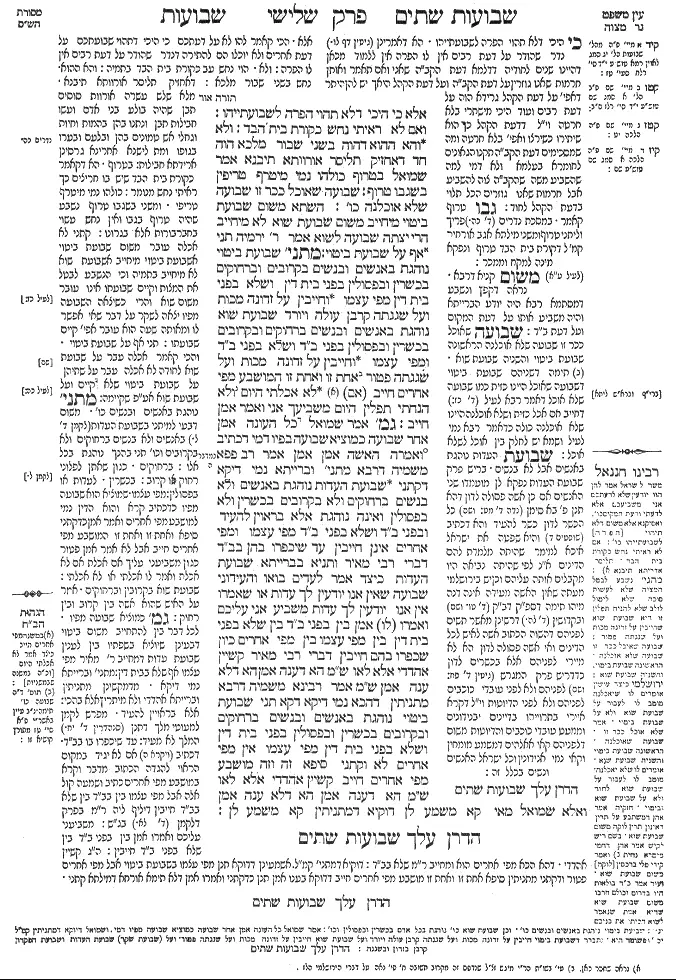
Shevu'ot 29b - Guemara
אלא כי היכי דלא תהוי הפרה לשבועתייהו:
ואם לא ראיתי נחש כקורת בית הבד:
ולא והא ההוא דהוה בשני שבור מלכא הוה חד דאחזיק תליסר אורוותא תיבנא אמר שמואל בטרוף כולהו נמי מיטרף טריפין בשגבו טרוף:
שבועה שאוכל ככר זו שבועה שלא אוכלנה כו':
השתא משום שבועת ביטוי מיחייב משום שבועת שוא לא מיחייב הרי יצתה שבועה לשוא אמר ר' ירמיה תני אף על שבועת ביטוי:
מתני׳ שבועת ביטוי נוהגת באנשים ובנשים בקרובים וברחוקים בכשרין ובפסולין בפני בית דין ושלא בפני בית דין מפי עצמו וחייבין על זדונה מכות ועל שגגתה קרבן עולה ויורד שבועת שוא נוהגת באנשים ובנשים ברחוקים ובקרובים בכשרין ובפסולין בפני ב"ד ושלא בפני ב"ד ומפי עצמו וחייבין על זדונה מכות ועל שגגתה פטור אחת זו ואחת זו המושבע מפי אחרים חייב (אם) לא אכלתי היום ולא הנחתי תפלין היום משביעך אני ואמר אמן חייב:
גמ׳ אמר שמואל כל העונה אמן אחר שבועה כמוציא שבועה בפיו דמי דכתיב (במדבר ה, כב) ואמרה האשה אמן אמן אמר רב פפא משמיה דרבא מתני' וברייתא נמי דיקא דקתני שבועת העדות נוהגת באנשים ולא בנשים ברחוקים ולא בקרובים בכשרין ולא בפסולין ואינה נוהגת אלא בראוין להעיד ובפני ב"ד ושלא בפני ב"ד מפי עצמו ומפי אחרים אינן חייבין עד שיכפרו בהן בב"ד דברי רבי מאיר ותניא בברייתא שבועת העדות כיצד אמר לעדים בואו והעידוני שבועה שאין אנו יודעין לך עדות או שאמרו אין אנו יודעין לך עדות משביע אני עליכם ואמרו (לו) אמן בין בפני ב"ד בין שלא בפני בית דין בין מפי עצמו בין מפי אחרים כיון שכפרו בהם חייבין דברי רבי מאיר קשיין אהדדי אלא לאו ש"מ הא דענה אמן הא דלא ענה אמן ש"מ אמר רבינא משמיה דרבא מתניתין דהכא נמי דיקא דקא תני שבועת ביטוי נוהגת באנשים ובנשים ברחוקים ובקרובים בכשרין ובפסולין בפני בית דין ושלא בפני בית דין מפי עצמו אין מפי אחרים לא וקתני סיפא זה וזה מושבע מפי אחרים חייב קשיין אהדדי אלא לאו ש"מ הא דענה אמן הא דלא ענה אמן ואלא שמואל מאי קא משמע לן דוקיא דמתניתין קא משמע לן:
הדרן עלך שבועת שתים
Comments from Rashi on Masechet Shevu'ot Page 29b
אלא . הכי קאמר להו לא על דעתכם כי היכי דתהוי שבועתכם על דעת אחרים ולא יוכלו הם להתירה דנדר שהודר על דעת רבים אין לו הפרה: ולא . הוי נחש עב כקורת בית הבד בתמיה: והא ההוא . נחש בשני שבור מלכא: דאחזיק תליסר אורוותא תיבנא . מלא שלש עשרה אורוות סוסים תבן שהיה בולע בני אדם ועשו חבילות תבן ונתנו בהן בהמות וחיות וגחלי אש טמונים בהן ובלעם ובערו בגופו ומת לישנא אחרינא גרסינן ארידתא חבילות: בטרוף . הא דקאמר כקורת בית הבד שיש בו חריצים כך ראיתי נחש מנומר: כולהו נמי מיטרף טריפי . ומשני בשגבו טרוף נשבע שהיה טרוף בגבו ואין נחש עשוי בחברבורות אלא בגרונו: קתני לא אכלה עובר משום שבועת ביטוי אשבועת ביטוי מיחייב אשבועת שוא לא מיחייב . בתמיה וכי הנשבע לבטל את המצות וקיים שבועתו אינו עובר משום שוא והרי כשיצאה השבועה מפיו יצאה לשקר על דבר שאי אפשר לו ומאותה שעה הוא עובר אפי' קיים שבועתו: תני אף על שבועת ביטוי . והכי קאמר אכלה עבר על שבועת שוא לחודה לא אכלה עבר על שתיהן על שבועת ביטוי שלא קיים ועל שבועת שוא אע"פ שקיימה: מתני' נוהגת באנשים ובנשים כו' . משום דבעי למיתני בשבועת העדות (לקמן שבועות ד' ל.) באנשים ולא בנשים ברחוקים ולא בקרובים וכו' תני בהנך נוהגת בכל אלו: ברחוקים . כגון שאתן לפלוני רחוק או קרוב: בכשרין . לעדות או בפסולין: מפי עצמו . שמוציא הוא שבועה מפיו כדכתיב קרא והוא הדין נמי למושבע מפי אחרים ואמר אמן כדקתני סיפא ואחת זו ואחת זו המושבע מפי אחרים חייב אבל לא אמר אמן פטור כגון משביעני עליך אם אכלת אם לא אכלת ואמר לו אכלתי או לא אכלתי: שבועת שוא בקרובין וברחוקים . אמר על האיש שהוא אשה בין קרוב ובין רחוק: גמ' כמוציא שבועה מפיו . לכל דבר בין להתחייב משום ביטוי דבעינן שיוציא בשפתיו בין לענין שבועת עדות דמחייב ר' מאיר מפי עצמו אף שלא בבית דין: מתני' וברייתא נמי דיקא . מדמקשינן מתניתין וברייתא אהדדי ולא מיתריץ אלא בהכי: אלא בראויין להעיד . מפרש לקמן למעוטי מלך דתנן (סנהדרין ד' יח.) המלך לא מעיד: עד שיכפרו בו בב"ד . דכתיב (ויקרא ה) אם לא יגיד במקום הראוי להגדה הכתוב מדבר וקרא במושבע מפי אחרים כתיב ושמעה קול אלה אבל מפי עצמו בין בב"ד בין שלא בב"ד חייבין דיליף ליה ר"מ בפרק דלקמן (שבועות ד' לא.) בג"ש: משביעני עליכם ואמרו אמן בין בפני ב"ד בין שלא בפני ב"ד חייבין ה"ג: קשיין אהדדי . דהא הכא מפי אחרים הוא ומחייב ר"מ שלא בב"ד: דוקיא דמתני' קמ"ל . אשמעינן דדוקא תנן מפי עצמו בשבועת ביטוי אבל מפי אחרים פטור ודקתני מתניתין סיפא אחת זו ואחת זו מושבע מפי אחרים חייב דדוקא בענו אמן תנן כדקתני ואמרו אמן דלא תימא אורחא דמילתא קתני:
Comments from Tosafot - Shevu'ot 29b
כי היכי דלא תהוי הפרה לשבועתייהו. הא דאמרינן (גיטין דף לו.) נדר שהודר על דעת רבים אין לו הפרה אין ללמוד מכאן דהיינו שנים לחודיה דדלמא דעת הקב"ה שאני ואם תאמר ואותן חרמות שאנו גוזרין על דעת הקב"ה ועל דעת הקהל היאך יש להן היתר דאפי' על דעת הקהל גרידא הוה על דעת רבים ועוד היכי מישתרי בלא חרטה וי"ל דדעת הקהל כך הוא שיתירו כשירצו ואפי' בלא חרטה ומה שמסכימים דעת הקב"ה תקנו הגאונים לחומרא בעלמא ולא דמי למה שהשביע משה שהקב"ה צוה להשביע אבל חרמות שאנו גוזרים הכל תלוי בדעת הקהל לחוד: גבו טרוף קאמר. במסכת נדרים (ד' כה.) פריך וליתני טרוף ומשני מילתא אגב אורחיה קמ"ל דקורת בית הבד טרוף ונפקא מינה למקח וממכר: שבועה שאוכל ככר זו שבועה שלא אוכלנה הראשונה שבועת ביטוי והשניה שבועת שוא. תימה דשניהם שבועת ביטוי דשבועה שאוכל היינו כזית כמו שבועה שלא אוכל דאמר רבא לעיל (שבועות ד' כז:) דחייב אם אכל כזית ושלא אוכלנה היינו שלא אוכלנה כולה כדאמר רבא נמי לעיל ושמא יש לחלק בין אוכל לשלא אוכל: שבועת העדות נוהגת באנשים אבל לא בנשים. בריש פרק שבועת העדות נפקא לן מועמדו שני האנשים אם כן אשה פסולה לדון דהא תנן פ' בא סימן (נדה ד' מט: ושם) כל הכשר לדון כשר להעיד והא דכתיב (שופטים ד) והיא שפטה את ישראל איכא למימר שהיתה מלמדת להם הדינים א"נ לפי שהיתה נביאה היו מקבלים אותה עליהם וכן יש בירושלמי מעתה שאין האשה מעידה אינה דנה מיהו תימה דספ"ק דב"ק (ד' טו. ושם) ובקדושין (ד' לה.) דרשינן מאשר תשים לפניהם דהשוה הכתוב אשה לאיש לכל הדינים ואי אשה פסולה לדון הא לא מיירי לפניהם אלא בכשרים לדון כדדריש פרק המגרש (גיטין ד' פח: ושם) לפניהם ולא לפני עובדי כוכבים לפניהם ולא לפני הדיוטות וי"ל דקרא איירי בתרוייהו בדיינים ובנידונים וממעט עובדי כוכבים והדיוטות משום דלפניהם קאי אאלהים דמשמע מומחין וקאי נמי אנידונין וכל ישראל האנשים ונשים בכלל זה:
Shevu'ot 29b - Mishnah translated into english
Rather, Moses administered the oath in this manner so that there would not be any possibility of the nullification of their oath. An oath taken with public consent cannot be dissolved. In this case, Moses and God constitute the public that gives its consent to the oath administered to the people. This was the reason for Moses’ insistence that the oath was taken according to his and God’s awareness; it was not because there was a possibility that the people could take the oath according to a private meaning.
§ The mishna teaches with regard to an oath about a matter that is impossible, e.g., If I did not see a camel flying through the air, or: If I did not see a snake as large as the beam of the olive press. The Gemara asks: And are there no snakes that large? But wasn’t there a certain snake during the years of the reign of King Shapur, one snake that could contain, i.e., swallow, thirteen stables of straw?
Shmuel said: The size of the snake is not the subject of the analogy. The oath is referring to a snake that was flat [taruf ] like the beam of an olive press. The Gemara asks: Aren’t they all flat? The Gemara explains: Snakes’ undersides are flat. This oath is referring to a snake whose back is flat.
§ The mishna teaches: If one said: On my oath I will eat this loaf, and later said: On my oath I will not eat it, the first oath is an oath on an utterance, and the second is an oath taken in vain. If he ate the loaf, he violated the prohibition against taking an oath in vain. If he did not eat it, he violated the prohibition against breaking an oath on an utterance. The Gemara asks: Now, if he did not eat it, he is liable because he violated his oath on an utterance. Is he not also liable for an oath taken in vain? An oath was issued in vain when he took the oath not to eat the loaf, as this required a violation of the oath he had taken to eat it.
Rabbi Yirmeya said: Teach the mishna with this emendation: If he did not eat it, he also violated the prohibition against breaking an oath on an utterance.
MISHNA: As opposed to the halakhot of an oath of testimony, which will be discussed in the following chapter, the halakhot of an oath on an utterance apply to men and to women, to relatives and to non-relatives, to those who are fit to testify and to those who are disqualified, whether the oath is taken in the presence of a court or not in the presence of a court, i.e., when one takes an oath on his own, at his own initiative. And for violating an oath intentionally one is liable to receive lashes, and for doing so unwittingly he is liable to bring a sliding-scale offering.
Liability for an oath taken in vain applies to men and to women, to relatives and to non-relatives, to those who are fit to bear witness and to those who are disqualified, whether the oath is taken in the presence of a court or not in the presence of a court, and also when one takes an oath on his own. And for violating an oath intentionally one is liable to receive lashes, and for doing so unwittingly he is exempt.
With regard to both this, an oath on an utterance, and that, an oath taken in vain, even if he is administered the oath by others, he is liable. For example, if one said: If I did not eat today, or: I did not don phylacteries today, and another said to him: I administer an oath to you that your statement is true, and the former said: Amen, he is liable if the statement was false.
GEMARA: Shmuel says: Anyone who answers amen after being administered an oath is like one who expresses an oath with his own mouth, as it is written in the context of the oath administered to a sota, a woman suspected by her husband of having been unfaithful: “And the woman shall say: Amen, amen” (Numbers 5:22).
Rav Pappa said in the name of Rava: An inference from the mishna and a baraita also support this when they are read precisely, as it is taught in the mishna (30a): The oath of testimony is practiced with regard to men but not with regard to women; with regard to non-relatives of the litigants, but not with regard to relatives; with regard to those fit to testify but not with regard to those unfit to testify due to a transgression that they performed. And the oath of testimony is practiced only with regard to those fit to testify. And this oath applies both in the presence of a court and not in the presence of a court, i.e., when the witness takes the oath on his own that he has no knowledge of the matter. But if an oath is administered to the witnesses by others, they are not liable until they deny knowledge of the matter in court and take an oath to that effect; this is the statement of Rabbi Meir.
Before stating the inference from the mishna, Rav Pappa cites the baraita. And it is taught in a baraita: With regard to an oath of testimony, how is one liable to bring a sliding-scale offering? A person said to witnesses: Come and testify for me. They replied: On our oath we do not know any testimony that concerns you, i.e., we have no knowledge of the matter. Alternatively, they said: We do not know any testimony that concerns you, and he said to them: I administer an oath to you, and they said to him: Amen. Whether this oath was taken in the presence of a court or whether it was not in the presence of a court, whether it was taken by each witness by himself or whether it was administered by others, once they denied knowing testimony that they in fact knew, they are liable; this is the statement of Rabbi Meir.
Rav Pappa asks: Aren’t the mishna and the baraita difficult, as they contradict each other? According to the mishna one is liable when the oath is administered by others only if it takes place in the presence of a court, while according to the baraita one is liable even not in the presence of a court. Rather, isn’t it correct to conclude from it that this statement in the baraita, where he is liable even not in the presence of a court, is referring to one who answered amen to the administered oath. That statement in the mishna is referring to one who did not answer amen and is therefore liable only in the presence of a court? The Gemara affirms: Conclude from it that it is so.
Ravina said in the name of Rava: The mishna that is here (29b) also may be read precisely to support this point. As it is taught in the mishna: The halakhot of an oath on an utterance apply to men and to women, to relatives and to non-relatives, to those who are fit to testify and to those who are disqualified, whether the oath is taken in the presence of a court or not in the presence of a court, i.e., when one takes an oath on his own, at his own initiative. Ravina states his inference: On his own, yes, but administered by others, no. And it is taught in the last clause of the mishna: With regard to this, an oath on an utterance, and that, an oath taken in vain, even if he is administered the oath by others, he is liable.
These statements in the mishna are difficult, as they contradict each other. Rather, isn’t it correct to conclude from it that this latter clause of the mishna is referring to one who answered amen to the administered oath. That former clause is referring to one who did not answer amen and is therefore liable only in the presence of a court.
The Gemara asks: But since his statement can be derived from tannaitic sources, what is Shmuel teaching us? The Gemara answers: He is teaching us the precise reading of the mishna. Since that halakha is not stated explicitly in the mishna, Shmuel saw fit to state it.
Traduction : The William Davidson digital edition of the Koren Noé Talmud, with commentary by Rabbi Adin Even-Israel Steinsaltz.