 Talmud Bavli
The learning on the whole site is dedicated : For the success of Elyahou ben H'anna & family
The learning on the whole site is dedicated : L'ilui Nishmat Amram ben Itshak Loubaton
The learning on the whole site is dedicated : L'ilui Nishmat Yaakov ben Myriam
Shevu'ot 30b : Youtube
Daf TubeYoutube
2 video classes :
Shevu'ot Page 30b
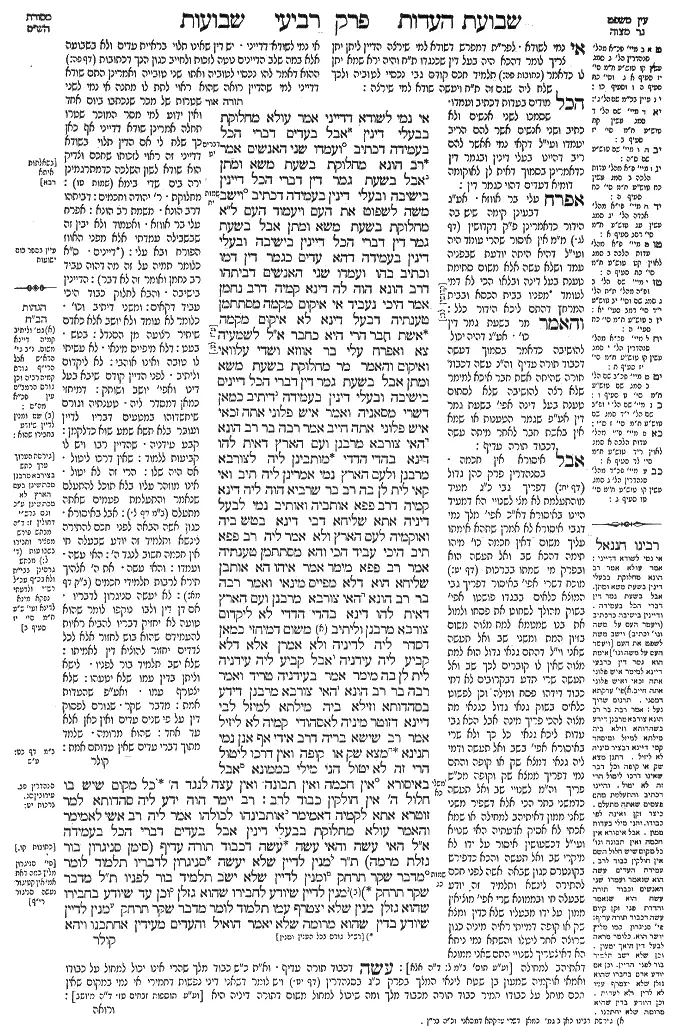
Shevu'ot 30b - Guemara
אי נמי לשודא דדייני אמר עולא מחלוקת בבעלי דינין אבל בעדים דברי הכל בעמידה דכתיב (דברים יט, יז) ועמדו שני האנשים אמר רב הונא מחלוקת בשעת משא ומתן אבל בשעת גמר דין דברי הכל דיינין בישיבה ובעלי דינין בעמידה דכתיב (שמות יח, יג) וישב משה לשפוט את העם ויעמוד העם ל"א מחלוקת בשעת משא ומתן אבל בשעת גמר דין דברי הכל דיינין בישיבה ובעלי דינין בעמידה דהא עדים כגמר דין דמו וכתיב בהו ועמדו שני האנשים דביתהו דרב הונא הוה לה דינא קמיה דרב נחמן אמר היכי נעביד אי איקום מקמה מסתתמן טענתיה דבעל דינא לא איקום מקמה אשת חבר הרי היא כחבר א"ל לשמעיה צא ואפרח עלי בר אווזא ושדי עלוואי ואיקום והאמר מר מחלוקת בשעת משא ומתן אבל בשעת גמר דין דברי הכל דיינים בישיבה ובעלי דינין בעמידה דיתיב כמאן דשרי מסאניה ואמר איש פלוני אתה זכאי איש פלוני אתה חייב אמר רבה בר רב הונא האי צורבא מרבנן ועם הארץ דאית להו דינא בהדי הדדי מותבינן ליה לצורבא מרבנן ולעם הארץ נמי אמרינן ליה תיב ואי קאי לית לן בה רב בר שרביא הוה ליה דינא קמיה דרב פפא אותביה ואותיב נמי לבעל דיניה אתא שליחא דבי דינא בטש ביה ואוקמיה לעם הארץ ולא אמר ליה רב פפא תיב היכי עביד הכי והא מסתתמן טענתיה אמר רב פפא מימר אמר איהו הא אותבן שליחא הוא דלא מפייס מינאי ואמר רבה בר רב הונא האי צורבא מרבנן ועם הארץ דאית להו דינא בהדי הדדי לא ליקדום צורבא מרבנן וליתיב משום דמיחזי כמאן דסדר ליה לדיניה ולא אמרן אלא דלא קביע ליה עידניה אבל קביע ליה עידניה לית לן בה מימר אמר בעידניה טריד ואמר רבה בר רב הונא האי צורבא מרבנן דידע בסהדותא וזילא ביה מילתא למיזל לבי דיינא דזוטר מיניה לאסהודי קמיה לא ליזיל אמר רב שישא בריה דרב אידי אף אנן נמי תנינא מצא שק או קופה ואין דרכו ליטול הרי זה לא יטול הני מילי בממונא אבל באיסורא (משלי כא, ל) אין חכמה ואין תבונה ואין עצה לנגד ה' כל מקום שיש בו חלול ה' אין חולקין כבוד לרב:
רב יימר הוה ידע ליה סהדותא למר זוטרא אתא לקמיה דאמימר אותבינהו לכולהו אמר ליה רב אשי לאמימר והאמר עולא מחלוקת בבעלי דינין אבל בעדים דברי הכל בעמידה א"ל האי עשה והאי עשה עשה דכבוד תורה עדיף (סימן סניגרון בור גזלת מרמה) ת"ר מנין לדיין שלא יעשה סניגרון לדבריו תלמוד לומר (שמות כג, ז) מדבר שקר תרחק ומנין לדיין שלא ישב תלמיד בור לפניו ת"ל מדבר שקר תרחק מנין לדיין שיודע לחבירו שהוא גזלן וכן עד שיודע בחבירו שהוא גזלן מנין שלא יצטרף עמו תלמוד לומר מדבר שקר תרחק מנין לדיין שיודע בדין שהוא מרומה שלא יאמר הואיל והעדים מעידין אחתכנו ויהא
Comments from Rashi on Masechet Shevu'ot Page 30b
אי נמי לשודא דדייני . יש דין שאינו תלוי בראיית עדים ולא בשבועה אלא במה שלב הדיינים נוטה לזכות ולחייב כגון הנך דכתובות (דף פה:) ההוא דאמר להו נכסיי לטוביה ואתו שני טובייה ואמרינן התם שודא דדייני למי שהדיין רואה שהוא ראוי לתת לו מתנה אי נמי לשני שטרות של מכר שנכתבו ביום אחד ואין ידוע למי מסר המוכר שטרו תחלה אמרינן שודא דדייני אף כאן כך שלח לי אם הדין תלוי בשודא דדייני זה ראוי לזכותו שחכם וצדיק הוא שודא לשון השלכה כדמתרגמינן ירה בים שדי בימא (שמות טו): מחלוקת . ר' יהודה וחכמים: דביתהו דרב הונא . משמת רב הונא: אפרח עלי בר אווזא . ואעמוד ולא יבין זה שבשבילה עמדתי אלא מפני האווז הפורח ובא עלי: (דיינים . ס"א כלומר תמיה על זה מה דהוה עביד רב נחמן ואומר זה לא דבר): הדיינין בישיבה . והבא לחלוק כבוד היכי עביד דקאים: ומשני דיתיב וכו' . כלומר לא עומד ולא יושב אלא כאדם שיתיר רצועה מן הסנדל: בטש . בעט: דלא מיפייס מינאי . לא עשיתי לו טובה ואינו אוהבי: לא ליקדום וליתיב . לפני הדיין קודם שיבא בעל דינו ואפי' יושב ושותק: דמיחזי כמאן דמסדר ליה . טענתיה וגורם שיחשדוהו במטעים דבריו לדיין ועובר בלא תשא שמע שוא כדלקמן: קבע עידניה . שהדיין רבו ויש לו קביעות ללמוד: שאין דרכו ליטול . אם היה שלו: הרי זה לא יטול . אינו מוזהר עליו בלא תוכל להתעלם שנאמר והתעלמת פעמים שאתה מתעלם (ב"מ דף ל.): אבל באיסורא . כגון אשה הבאה לפני חכם להתירה לינשא ותלמיד זה יודע שבעלה חי אין חכמה חשוב לנגד ה': האי עשה . ועמדו: והאי עשה . את ה' אלהיך תירא לרבות תלמידי חכמים (ב"ק דף מא:): לא יעשה סניגרון לדבריו . אם דן דין ולבו נוקפו לומר שהוא טועה לא יחזיק דבריו להביא ראיות להעמידם שהוא בוש לחזור אלא לכל צדדים יחזור להוציא דין לאמיתו: שלא ישב תלמיד בור לפניו . לישא וליתן בדין עמו שלא יטעהו: שלא יצטרף עמו . ואע"פ שהעדות אמת: מדבר שקר . שגורם לפסוק דין על פי שנים עדים ואין כאן אלא עד אחד: שהוא מרומה . שלמד מתוך דברי עדים שאין עדותם אמת:
Comments from Tosafot - Shevu'ot 30b
אי נמי לשודא. לפר"ת דמפרש דשודא למי שירצה הדיין ליתן יתן צריך לומר דהכא היה בעל דין שכנגדו ת"ח והיה ירא שמא יתן לו כדאמר (כתובות פה:) תלמיד חכם קודם גבי נכסיי לטוביה ולכך שלח ליה שגם זה ת"ח ויעשה שודא למי שירצה: הכל מודים בעדות דכתיב ועמדו. שסמכו לשני אנשים ולא כתיב ושני אנשים אשר להם הריב יעמדו ועי"ל דקאי נמי אאשר להם ריב דהיינו בעלי דינין ובגמר דין כדאמרינן בסמוך דאית לן לאוקומה דומיא דעדים דהוי כגמר דין: אפרח עלי בר אווזא. אע"ג דבעינן קימה שיש בה הידור כדאמרינן פ"ק דקדושין (דף לג.) מ"מ אין איסור שהרי עומד היה ועי"ל דהיא היתה יודעת שבפניה עמד ושלא עשה אלא משום סתימת טענת בעל דינה ובלאו הכי לא דמי לעומד. מפניו בבית הכסא ובבית המרחץ דהתם ליכא הידור כלל: והאמר מר בשעת גמר דין כו'. אע"ג דהיה יכול להושיבה כדאמר בסמוך דעשה דכבוד תורה עדיף וה"נ עשה דכבוד תורה שהיתה אשת חבר איכא למימר שלא רצה להושיבה שלא לסתום טענת בעל דינה אפי' בשעת גמר דין אע"פ שגמר הטענות או שמא אין באשת חבר לאחר מיתה עשה דכבוד תורה עדיף: אבל איסורא אין חכמה. בסנהדרין פרק כהן גדול (דף יח:) דפריך גבי כ"ג מעיד מוהתעלמת לא מצי לשנויי הא דמעיד היינו באיסורא דא"כ אפי' מלך נמי דגבי איסורא לא אמרן שתהא אימתו עליך משום דאין חכמה כו' מיהו תימה דהכא שב ואל תעשה הוא ובפרק מי שמתו בברכות (דף יט:) מוכח דשרי אפי' באיסור דפריך גבי המוצא כלאים בבגדו פושטו אפי' בשוק מהולך לשחוט את פסחו ולמול את בנו שמטמא למת מצוה משום בזיון המת ומשני שב ואל תעשה שאני וי"ל דהתם גנאי גדול הוא למת מצוה שאין לו קוברים לכך שב ואל תעשה שרי תדע דבקרובים לא דחי כבוד דידהו פסח ומילה וכן לפשוט כלאים בשוק גנאי גדול כגנאי מת מצוה להכי פריך מינה אבל הכא גבי עדות ליכא גנאי כל כך ולא שרי באיסורא אפי' בשב ואל תעשה ודמי ליה גנאי דמצא שק או קופה והתם נמי דפריך ממצא שק וקופה מכ"ש פריך וה"מ לשנויי שב ואל תעשה כדמשני בתר הכי אלא דשפיר משני שאני ממון דאיתיהב למחילה או שמא אכתי לא אסיק אדעתיה האי שנויא ועי"ל דכשעושין איסור על ידו לא מיקרי שב ואל תעשה והכא כדפירש בקונטרס כגון שבאה אשה לפני חכם להתירה לינשא ותלמיד זה יודע שבעלה חי ובממונא שרי אפי' מוציאין ממון על ידו מבעליו שלא כדין ומצא שק או קופה דמייתי ראיה מיניה כגון שרוצה אחר ליטלו והשתא נמי ניחא הא דאיצטריך לשנויי התם שאני ממונא דאתיהב למחילה [וע"ע תוס' ב"מ ל: ד"ה אלא]: עשה דכבוד תורה עדיף. וא"ת כ"ש כבוד מלך שהרי אינו יכול למחול על כבודו ואמאי אוקמיה שמעון בן שטח לינאי המלך בפרק כ"ג בסנהדרין (דף יט.) ויש לומר דשאני דיני נפשות דחמירי אי נמי במקום שאין חכם מוחל על כבודו חמיר כבוד תורה מכבוד מלך ומה שיכול למחול משום דתורה דיליה היא [וע"ע תוספות זבחים טז. ד"ה מיושב]:
Shevu'ot 30b - Mishnah translated into english
Alternatively, Rav Yosef informed me that Rav Ulla is a Torah scholar with regard to circumstances where the ruling is not clear-cut and the decision is rendered based on the discretion of the judges, that is, when the court is unable to rule solely based on the testimony presented in court and the judges arrive at their ruling based on their sense of the matter. Rav Yosef informed Rav Naḥman that if the case is decided based on judicial discretion, Rav Ulla is worthy of having the decision ruled in his favor.
§ Ulla says: The dispute between the Rabbis and Rabbi Yehuda with regard to the obligation to stand in court is only with regard to the litigants; but with regard to the witnesses, everyone agrees that they testify while standing, as it is written: “Then the two men shall stand” (Deuteronomy 19:17). Rav Huna says: The dispute whether the litigants are required to stand is only at the time of the deliberation, but at the time of the verdict, everyone agrees that the judges issue the verdict while sitting and the litigants receive the verdict while standing, as it is written: “And Moses sat to judge the people and the people stood” (Exodus 18:13).
The Gemara presents an alternative version of the statement of Rav Huna: The dispute whether the litigants are required to stand is only at the time of the deliberation, but at the time of the verdict, everyone agrees that the judges issue the verdict while sitting and the litigants receive the verdict while standing, as concerning the witnesses, the status of the stage of their testimony is like that of the stage of the verdict, and it is written concerning them: “Then the two men shall stand.”
The Gemara relates: The wife of Rav Huna had a trial pending before Rav Naḥman. Rav Naḥman said: What should we do? If I will arise before her in deference to her status as the wife of a Torah scholar, the claims of the other litigant will be suppressed, as it will be mistaken as a display of preference for the wife of Rav Huna, since not everyone is aware that one is required to show deference to the wife of a Torah scholar. If I will not arise before her, that would run counter to the principle that in terms of deference, the status of the wife of a ḥaver is like that of a ḥaver, who is devoted to the meticulous observance of mitzvot. Rav Naḥman said to his attendant: Go outside and cause a duck to fly and cast it onto me, and in that way I will be forced to arise in a manner that will fulfill the obligation to rise, without intimidating the other litigant.
The Gemara asks: But doesn’t the Master, Rav Huna, say: The dispute between Rabbi Yehuda and the Rabbis whether the litigants are required to stand is only at the time of the deliberation, but at the time of the verdict, everyone agrees that the judges issue the verdict while sitting and the litigants receive the verdict while standing? How, then, can Rav Naḥman rise? The Gemara responds: One may fulfill both requirements in a case where he sits like one who unties his shoe, neither completely standing nor completely sitting, and says his verdict: So-and-so, you are innocent, and so-and-so, you are guilty.
§ Rabba bar Rav Huna says: In this situation where a Torah scholar [tzurva merabbanan] and an am ha’aretz have a court case with one another, we seat the Torah scholar, and to the am ha’aretz we also say: Sit. And if he chooses to stand due to deference, we have no problem with it.
The Gemara relates: Rav bar Sherevya had a trial pending before Rav Pappa. Rav Pappa seated him and also seated his litigant counterpart, who was an am ha’aretz. An agent of the court came and kicked and stood the am ha’aretz on his feet to show deference to the Torah scholars there, and Rav Pappa did not say to him: Sit. The Gemara asks: How did Rav Pappa act in that manner by not instructing the am ha’aretz to sit again? But aren’t the claims of the am ha’aretz suppressed by Rav Pappa’s perceived preferential treatment of Rav bar Sherevya? The Gemara responds: Rav Pappa said to himself that the litigant will not perceive bias, as he says: The judge seated me; it is the agent of the court who is displeased with me and compelled me to stand.
And Rabba bar Rav Huna says: In this situation where a Torah scholar and an am ha’aretz have a court case with one another, let the Torah scholar not come to court early and sit with the judge in order to learn from him, due to the fact that by doing so he appears as one who is consulting the judge to arrange his legal claims, and that is prohibited. And we said this only in a case where there is not a fixed time for the Torah scholar to study with the judge at that hour; but if there is a fixed time for him to study with the judge at that hour, we have no problem with it, as the other litigant will say: He is occupied with his fixed study time, and the fact that he sat before the judge is unrelated to the case.
§ And Rabba bar Rav Huna says: In the case of a certain Torah scholar who knows testimony relevant to a certain individual, but it is a demeaning matter for him to go to the court consisting of a judge who is less prominent than he in order to testify before him, let him not go and testify. Rav Sheisha, son of Rav Idi, said: We learn that halakha in a mishna (Bava Metzia 29b) as well: If one found a sack or a basket, and it is not his typical manner to take it, he shall not take it in order to return it to its owner. Evidently, a Torah scholar may refrain from performing the mitzva to return a lost item (see Deuteronomy 22:1–3) if it is not in keeping with his stature.
The Gemara notes: This matter applies only with regard to cases involving monetary matters; but in cases involving ritual matters, the dignity of the Torah scholar is not a consideration, as it is written: “There is neither wisdom nor understanding nor counsel against the Lord” (Proverbs 21:30), from which it is derived: Wherever there is desecration of the name of the Lord, one does not show deference to the teacher. Rather, the Torah scholar forgoes the honor due him in order to avoid violation of any prohibition that would desecrate the name of God.
The Gemara relates: Rav Yeimar knew testimony relevant to the case of Mar Zutra. He came before Ameimar, who seated all the witnesses in deference to Rav Yeimar. Rav Ashi said to Ameimar: But doesn’t Ulla say that the dispute between the Rabbis and Rabbi Yehuda with regard to the obligation to stand in court is only with regard to the litigants, but with regard to the witnesses, everyone agrees that they testify while standing? Ameimar said to him: This, i.e., witnesses standing during testimony, is a positive mitzva, and that, i.e., treating Torah scholars with deference and allowing Rav Yeimar to sit, is a positive mitzva, and the positive mitzva of deference to the Torah takes precedence. Ameimar seated Rav Yeimar in deference to the Torah. In order to prevent a miscarriage of justice, he seated all the witnesses.
§ The Gemara provides a mnemonic for the ensuing discussion: Advocacy, ignoramus, robbery, fraud.
The Sages taught: From where is it derived that a judge should not engage in advocacy [saneigeron] for his own statements and devise various pretexts to justify his erroneous rulings? It is derived as the verse states: “Distance yourself from a false matter” (Exodus 23:7). And from where is it derived with regard to a judge that a student who is an ignoramus should not sit before him to discuss the proceedings? It is derived as the verse states: “Distance yourself from a false matter.” When an ignorant student engages in the proceedings, he is apt to cause the judge to err in judgment.
From where is it derived that a judge who knows that another judge is a robber and is disqualified from serving as a judge; and likewise, a witness who knows that another witness is a robber and is disqualified from serving as a witness; from where is it derived that he should not join him in judgment or testimony? It is derived as the verse states: “Distance yourself from a false matter.”
From where is it derived that in a case where a judge who knows that the witnesses testifying before him are lying even though he is unable to prove it through their cross-examination and with regard to the verdict the result will be that it is fraudulent, that he should not say: Since the witnesses are testifying and I cannot prove their deceit, I will decide the case based on their testimony, and let
Traduction : The William Davidson digital edition of the Koren Noé Talmud, with commentary by Rabbi Adin Even-Israel Steinsaltz.