 Talmud Bavli
The learning on the whole site is dedicated : L'ilui Nishmat Margalit bat Ledicia
The learning on the whole site is dedicated : L'ilui Nishmat אסתר בת חיים
The learning on the whole site is dedicated : For the success of Elyahou ben H'anna & family
Sukkah 8a : Youtube
Daf TubeYoutube
3 video classes :
Sukkah Page 8a
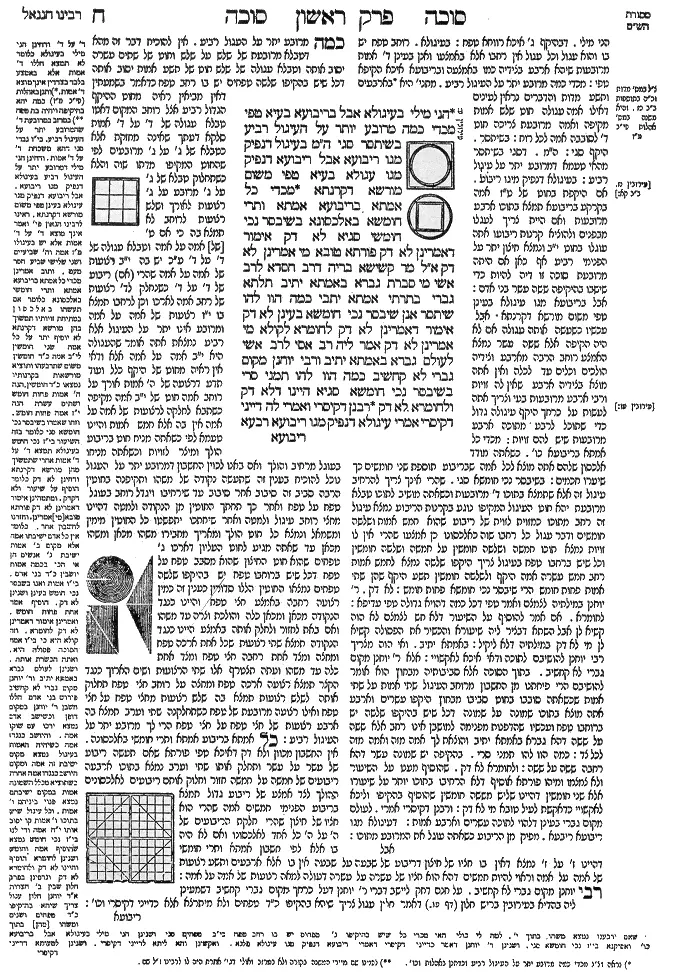
Sukkah 8a - Guemara
הני מילי בעיגולא אבל בריבועא בעיא טפי מכדי כמה מרובע יותר על העיגול רביע בשיתסר סגי ה"מ בעיגול דנפיק מגו ריבועא אבל ריבועא דנפיק מגו עגולא
בעיא טפי משום מורשא דקרנתא מכדי כל אמתא בריבועא אמתא ותרי חומשא באלכסונא בשיבסר נכי חומשי סגיא לא דק אימור דאמרינן לא דק פורתא טובא מי אמרינן לא דק א"ל מר קשישא בריה דרב חסדא לרב אשי מי סברת גברא באמתא יתיב תלתא גברי בתרתי אמתא יתבי כמה הוו להו שיתסר אנן שיבסר נכי חומשא בעינן לא דק אימור דאמרינן לא דק לחומרא לקולא מי אמרינן לא דק אמר ליה רב אסי לרב אשי לעולם גברא באמתא יתיב ורבי יוחנן מקום גברי לא קחשיב כמה הוו להו תמני סרי בשיבסר נכי חומשא סגיא היינו דלא דק ולחומרא לא דק רבנן דקיסרי ואמרי לה דייני דקיסרי אמרי עיגולא דנפיק מגו ריבועא רבעא
Comments from Rashi on Masechet Sukkah Page 8a
הני מילי . דבהיקף ג' איכא רווחא טפח: בעיגולא . רוחב טפח יש בו והוא עגול וכל עגול אין רחבו אלא באמצעו ואנן בעינן ד' אמות מרובעות שיהא ארבע בצידיה כמו באמצעה ובריבועא איכא הקיפא טפי: מכדי כמה מרובע יתר על העיגול רביע . מתני' היא בארבעים ותשע מדות והדברים נראין לעינים דאילו אמה עגולה חוט שלש אמות מקיפה ואמה מרובעת צריכה חוט ד' לסובבה אמה לכל רוח: בשיתסר . היקף סגי: ה"מ . דסגי בשיתסר מהאי טעמא דמרובע יתר על עיגול רביע: בעיגולא דנפיק מיגו ריבוע . אם היקפת בחוט של ט"ז אמה בקרקע בריבועא תמצא בתוכו ארבע מרובעות ואם היית צריך לעגלו מבפנים ולהוציא קרנות ריבועו אתה עוגלו בחוט י"ב ונמצא חיצון יתר על הפנימי רביע אף כאן אם היתה מרובעת סוכה זו דיה להיות כדי שישבו בהיקיפה ששה עשר בני אדם: אבל בריבועא מגו עיגולא בעינן טפי משום מורשא דקרנתא . אבל עכשיו כשעשה אותה עגולה אם לא היה הקיפה אלא ששה עשר נמצא האמצע רוחב הרבה מארבע וצידיה הולכים וכלים עד לכלה ואין אתה מוצא בצידיה ארבע שאין לה זויות ורבי ארבע מרובעות בעי וצריך אתה לעשות על כרחך היקף עיגולה גדול כדי שתוכל לרבע מתוכה ארבע מרובעות שיש להם זויות: מכדי כל אמתא בריבועא כו' . כשאתה מודד אלכסון שלהם אתה מוצא לכל אמה שבריבוע תוספת שני חומשים כך שיערו חכמים: בשיבסר נכי חומשא סגי . שהרי אינך צריך להרחיב עיגול זה אלא שתמצא בתוכו ד' מרובעות וכשאתה מושיב לתוכו טבלא מרובעת יהא חוט העיגול המקיפו נוגע בקרנות הריבוע נמצא עיגול זה רחב מתוכו כמזוית לזוית של ריבוע שהוא חמש אמות ושלשה חומשים ודבר עגול כל רחבו שוה כאלכסונו כן אמצעו שהרי אין לו זויות נמצא תוכו חמשה ושלשה חומשין על חמשה ושלשה חומשין וכל שיש ברחבו טפח בעיגול צריך היקפו שלשה נמצא לחמש אמות רחב חמש עשרה אמה היקף ולשלשה חומשין תשע היקף שהן שתי אמות פחות חומש הרי שיבסר נכי חומשא פחות חומש: לא דק . ר' יוחנן במילתיה לצמצם ואמר טפי דכל כמה דהויא גדולה טפי עדיפא: לחומרא . אם אמר להוסיף על השיעור דלא חש לצמצם לא הוה קשיא לן אבל השתא דבציר ליה שיעורא והכשיר את הפסולה קשיא לן מי לא דק במילתיה דלא ליקיל: באמתא יתיב . ואי הוה מצריך רבי יוחנן להושיבם לתוכה ודאי איכא לאקשויי: אלא ר' יוחנן מקום גברי לא קחשיב . בתוך הסוכה אלא סביבותיה מבחוץ הוא אומר להושיבם הרי פיחתנו מן החשבון מרוחב העיגול שתי אמות על שתי אמות שכשאתה סובבו בחוט סביבו מבחוץ היקפו עשרים וארבע אתה מוצא בתוכו שמונה על שמונה דכל שיש בהיקפו שלשה יש ברוחבו טפח ועכשיו שהדפנות מפנימה למושבן אינו רחב אלא ששה על ששה דהא גברא באמתא יתיב והוצאת לך אמה מזה ואמה מזה לכל צד: כמה הוו להו תמני סרי . בהקיפה יש שמונה עשר דהא רחבה ששה על ששה: ולחומרא לא דק . שהוסיף מעט על השיעור ולא צמצמו ומיהו פורתא אוסיף דלא הרחיבו בתוכו יותר על שיעורו אלא שני חומשין דהיינו שליש מששה חומשין שהוסיף בהקיפו וליכא לאקשויי כדאקשת לעיל טובא מי לא דק: ורבנן דקיסרי אמרי . לעולם מקום גברי בעינן דלהוי לתוכה עשרים וארבע אמות: דעיגולא מגו ריבועא ריבעא . מפיק מן הריבוע כשאתה עוגל את המרובע מתוכו:
Comments from Tosafot - Sukkah 8a
כמה מרובע יתר על העגול רביע. אין להוכיח דבר זה מהא דטבלא מרובעת של שלש על שלש וחוט של שתים עשרה יסוב אותה וטבלא עגולה של שלש חוט של תשע אמות יסוב אותה דכל שיש בהקיפו שלשה טפחים יש בו רחב טפח כדאמר בשמעתין דאין מביאין ראיה מחוט ההיקף הגדול רביע אצל רוחב המקום דאטו טבלא עגולה של ד' על ד' אמות סלקא דעתך שאינה מחזקת אלא כטבלא של ג' על ג' מרובעים לפי שהחוט המקיפו מדתו שוה והלא כשתחלוק טבלא של ג' על ג' מרובע על ג' רצועות לאורך ושלש רצועות לרוחב לא תמצא בה כי אם ט' [של] אמה על אמה  וטבלא עגולה של ד' על ד' ע"כ יש בה י"ב רצועות של אמה על אמה שהרי (אם) ריבוע של ד' על ד' כשנחלק לד' רצועות של רחב אמה לארכו וכן לרחבו תמצא בו י"ו רצועות של אמה על אמה ומרובע אינו יתר על העיגול אלא רביע נמצאת אתה אומר שהעגולה היא י"ב אמה על אמה אלא ודאי אין ראיה מחוט של היקף כלל ועוד תדע דרצועה של ה' אמות אורך על רוחב אמה חוט של י"ב אמה מקיפה כשתבא לחלקה לרצועות של אמה על אמה אין בה אלא חמש אמות והיינו טעמא לפי כשאתה מניח חוט בריבוע הולך ומיצר לזויות וכשאתה מניחו בעוגל מרחיב והולך ואם באנו לכוין החשבון דמרובע יתר על העגול נוכל להוכיח בענין זה שתעשה נקודה של משהו ותקיפנה בחוטין הרבה סביב זה סיבוב אחר סיבוב עד שירחיבו ויגדל רוחב בעוגל טפח על טפח
 ואחר כך תחתך החוטין מן הנקודה ולמטה דהיינו מחצי רוחב עיגול ולמטה ואחר שיחתכו יתפשטו כל החוטין מימין ומשמאל ונמצא כל חוט הולך ומאריך מחבירו משהו מכאן ומשהו מכאן עד שאתה מגיע לחוט העליון דארכו ג' טפחים שהוא חוט החיצון שהוא מסבב טפח על טפח דכל שיש ברוחבו טפח יש בהיקפו שלשה טפחים נמצאו החוטין הללו סדורין כענין זה כמין רצועה רחבה באמצע חצי טפח והיינו כנגד הנקודה מכאן ומכאן כלה והולכת וצרה עד משהו
 ואם באת לחזור ולחלק אותה באמצע היינו כנגד הנקודה תמצא שתי רצועות שכל אחת ארכה טפח ומחצה ומצד אחת רחבה חצי טפח ומצד אחת כלה עד משהו ועתה תצטרף אלו שתי הרצועות ושים הארוך כנגד הקצר תמצא רצועה ארכה טפח ומחצה על רוחב חצי טפח
 תחלוק אותה לשלש רצועות תמצא בה שלש רצועות מחצי טפח על חצי טפח ואילו רצועה מרובעת של טפח כשתחלקנה שתי וערב תמצא בה ארבע רצועות של חצי טפח על חצי טפח הרי לך מרובע יתר על העיגול רביע: כל אמתא בריבוע אמתא ותרי חומשי באלכסונה. אין החשבון מכוון ולא דק דאיכא טפי פורתא שאם תעשה ריבוע של עשר על עשר ותחלק אותו שתי וערב נמצא בתוכו ארבעה ריבועים של חמשה על חמשה חזור וחלוק אותם ריבועים לאלכסונים ההולך לצד אמצע של ריבוע גדול

Sukkah 8a - Mishnah translated into english
The Gemara answers: This applies only in the middle of the circle that has a circumference of twelve cubits, as the diameter of the circle is four cubits; but in order for a square inscribed within a circle to have a perimeter of sixteen cubits, the circle requires a circumference that is more than twelve cubits.
The Gemara asks further: Now, by how much is the perimeter of a square inscribing a circle greater than the circumference of that circle? It is greater by one quarter of the perimeter of the square. If that is the case, a circle with a circumference of sixteen cubits is sufficient. Why, then, does Rabbi Yoḥanan require a circumference of twenty-four cubits?
The Gemara answers: This statement with regard to the ratio of the perimeter of a square to the circumference of a circle applies to a circle inscribed in a square, but in the case of a square circumscribed by a circle, the circle requires a greater circumference due to the projection of the corners of the square. In order to ensure that a square whose sides are four cubits each fits neatly into a circle, the circumference of the circle must be greater than sixteen cubits.
The Gemara calculates precisely how much greater the circumference must be in order to circumscribe the four-by-four-cubit square. Now, in every square whose sides each measure one cubit its diagonal measures one and two-fifths cubits, and in a circle that circumscribes a square, the diagonal of the square is the diameter of the circle. In this case, the circumscribed square measures four by four cubits; therefore, the diagonal of the square, which is the diameter of the circle, measures five and three-fifths cubits. Since the Gemara calculates the circumference of the circle as three times its diameter, a circular sukka with a circumference of seventeen cubits minus one-fifth of a cubit should be sufficient. The Gemara answers: Rabbi Yoḥanan was not precise and rounded the dimensions of the circular sukka to a number higher than the absolute minimum.
The Gemara wonders: Say that we say that the Sage was not precise when the difference between the number cited and the precise number is slight; however, when the difference is great, do we say the Sage was not precise? After all, Rabbi Yoḥanan stated that the minimum measure is twenty-four cubits, a difference of more than seven cubits.
Mar Keshisha, i.e., the elder, son of Rav Ḥisda, said to Rav Ashi: Do you hold that when a man sits, he sits and occupies one cubit, and consequently a sukka that seats twenty-four people must have a circumference of twenty-four cubits? In fact, three people sit and occupy two cubits. The Gemara asks: How many cubits are there in the sukka required by Rabbi Yoḥanan? There are sixteen cubits. But we require a sukka with a circumference of seventeen cubits minus one-fifth, as calculated above. The Gemara answers: He was not precise and rounded the figure down to the lower whole number; actually, the required circumference is four-fifths of a cubit larger.
The Gemara rejects this explanation: Say that we say that the Sage was not precise when the result is a stringency, e.g., he required a sukka whose dimensions are greater than the minimum required dimensions; however, when the result is a leniency, do we say the Sage was not precise? In that case, the lack of precision will lead to establishing a sukka whose dimensions are smaller than the minimum requirement.
Rav Asi said to Rav Ashi: Actually, a man sits and occupies one cubit, and Rabbi Yoḥanan is not factoring the space that the men occupy in his calculation. In other words, to this point, the assumption has been that Rabbi Yoḥanan calculated the circumference of the sukka required to seat twenty-four people. Actually, he merely calculated the circumference of the inner circle formed by the twenty-four people seated.
The Gemara asks: How many cubits are there in the circumference of the inner circle formed by a circle of twenty-four people? There are eighteen cubits. Based on the principle that for every three cubits of circumference there is one cubit of diameter, the diameter of a circle whose outer circumference surrounds twenty-four people is eight cubits. To calculate the circumference of the inner circle, subtract from the diameter the space occupied by two people, each sitting at one end of the diameter. The result is a diameter of six cubits. Based on the above principle, a circle with a diameter of six cubits will have a circumference of eighteen cubits. However, a circumference of seventeen cubits minus one-fifth of a cubit should be sufficient. The Gemara answers: This is the case where he was not precise, and in this case he is not precise when the result is a stringency, as instead of sixteen and four-fifths, Rabbi Yoḥanan required eighteen cubits.
The Sages of Caesarea, and some say that it was the judges of Caesarea, said that Rabbi Yoḥanan’s statement could be explained using a different calculation: The circumference of a circle inscribed in a square is one-quarter less than the perimeter of the square,
Traduction : The William Davidson digital edition of the Koren Noé Talmud, with commentary by Rabbi Adin Even-Israel Steinsaltz.