 Talmud Bavli
Sukkah 32a : Youtube
Daf TubeYoutube
3 video classes :
Sukkah Page 32a
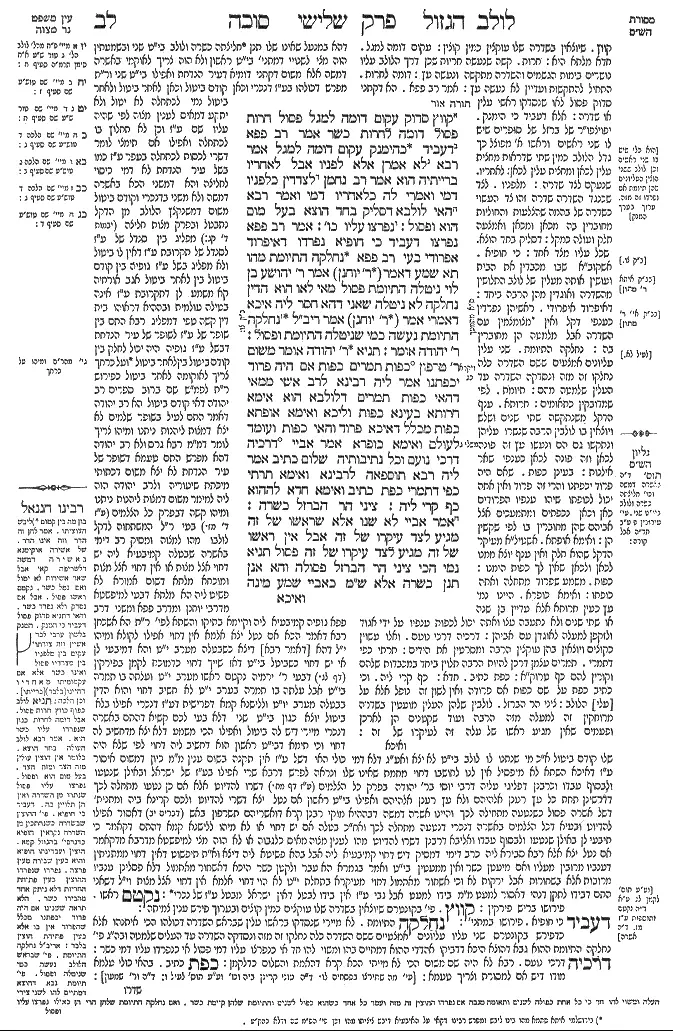
Sukkah 32a - Guemara
קווץ סדוק עקום דומה למגל פסול חרות פסול דומה לחרות כשר אמר רב פפא דעביד כהימנק עקום דומה למגל אמר רבא לא אמרן אלא לפניו אבל לאחריו ברייתיה הוא אמר רב נחמן לצדדין כלפניו דמי ואמרי לה כלאחריו דמי ואמר רבא האי לולבא דסליק בחד הוצא בעל מום הוא ופסול:
נפרצו עליו כו' אמר רב פפא נפרצו דעביד כי חופיא נפרדו דאיפרוד אפרודי בעי רב פפא נחלקה התיומת מהו תא שמע דאמר (ר' יוחנן) אמר ר' יהושע בן לוי ניטלה התיומת פסול מאי לאו הוא הדין נחלקה לא ניטלה שאני דהא חסר ליה איכא דאמרי אמר (ר' יוחנן) אמר ריב"ל נחלקה התיומת נעשה כמי שניטלה התיומת ופסול:
ר' יהודה אומר:
תניא ר' יהודה אומר משום ר' טרפון (ויקרא כג, מ) כפות תמרים כפות אם היה פרוד יכפתנו אמר ליה רבינא לרב אשי ממאי דהאי כפות תמרים דלולבא הוא אימא חרותא בעינא כפות וליכא ואימא אופתא כפות מכלל דאיכא פרוד והאי כפות ועומד לעולם ואימא כופרא אמר אביי (משלי ג, יז) דרכיה דרכי נועם וכל נתיבותיה שלום כתיב אמר ליה רבא תוספאה לרבינא ואימא תרתי כפי דתמרי כפת כתיב ואימא חדא לההוא כף קרי ליה:
ציני הר הברזל כשרה:
אמר אביי לא שנו אלא שראשו של זה מגיע לצד עיקרו של זה אבל אין ראשו של זה מגיע לצד עיקרו של זה פסול תניא נמי הכי ציני הר הברזל פסולה והא אנן תנן כשרה אלא ש"מ כאביי שמע מינה
Comments from Rashi on Masechet Sukkah Page 32a
קווץ . שיוצאין בשדרה שלו עוקצין כמין קוצין: עקום דומה למגל . חדא מלתא היא: חרות . קשה שנעשה חריות שכן דרך הלולב עליו נושרים בימות הגשמים והשדרה מתקשה ונעשה עץ: דומה לחרות . התחיל להתקשות ועדיין לא נעשה עץ: אמר רב פפא . הא דקתני סדוק פסול לאו שנסדקו ראשי עלין או שדרה: אלא דעביד כי הימנק . יפויצפו"ר של ברזל של סופרים שיש לו שני ראשים וראשו א' מפוצל כך גדל הלולב כמין שתי שדראות מחצית עלין לכאן ומחצית עלין לכאן: לאחריו . שנעקם לצד שדרה: מלפניו . לצד שכנגד השדרה שדרה זהו צד העשוי כשדרה של בהמה שהצלעות והחוליות מחוברין בה מכאן ומכאן ואמצעה חלק ועולה כמקל: דסליק בחד הוצא . שכל עליו מצד אחד: כי חופיא . אשקוב"א שבו מכבדין את הבית ועושין אותה מעלין של לולב התלושין מהשדרה ואוגדין מהן הרבה ביחד: דאיפרוד איפרודי . ראשיהן נפרדין כענפי דקל ואין מצומצמין עם השדרה אבל מלמטה הן מחוברין בה: נחלקה התיומת . שני עלין עליונים אמצעים ששם השדרה כלה נחלקו זה מזה ונסדקה השדרה עד העלין שלמטה מהם: תיומת . לפי שמדובקין כתאומים: חרותא . ענף הדקל משנתקשה שתי שנים ושלש ויוצאין בו לולבין הרבה שנשרו עליהן ונתקשו גם הם ונעשו עץ זה פונה לכאן וזה פונה לכאן כענפי שאר אילנות: בעינן כפות . שאם היה פרוד יכפתנו והרי זה פרוד ואין אתה יכול לכופתו שיהו ענפיו הפרודים כאן וכאן נכפתים ומתמעכים אצל אביהם שהן מחוברין בו לפי שקשין הן: ואימא אופתא . אשטיל"א מעיקר הדקל שהוא חלק ואין ענף יוצא ממנו לכאן ולכאן שאין לך כפות הימנו: כפות . משמע שפרוד מתחלה ואתה כופתו: ואימא כופרא . היינו נמי עץ כעין חרותא אלא עדיין בן שנה או שתי שנים ולא נתעבה עצו ואתה יכול לכפות ענפיו על ידי אגוד ולזקפן למעלה לאוגדן עם אביהן: דרכיה דרכי נועם . ואלו עשוין כקוצים ויוצאין בהן עוקצין הרבה ומסרטין את הידים: תרתי כפי דתמרי . תמרים עצמן דרכן להיות הרבה תלוין ביחד במכבדות שלהם וקורין להם כף טרוק"א: כפת כתיב . חדא: כף קרי ליה . וכי כתיב כפת על שם כפות אם פרודה ואין לשון זה נופל אלא על [עלי] הלולב: ציני הר הברזל . לולבין שלהן העלין מועטין בשדרה מרוחקין זה למעלה מזה הרבה ועוד שקטנים הן לארכן ופעמים אין מגיע ראשו של עלה זה לעיקרו של זה:
Comments from Tosafot - Sukkah 32a
קווץ. פי' בקונטרס שיוצאין בשדרה שלו עוקצים כמין קוצים ובערוך פירש ענין צמיתה: דעביד כי חופיא. פירושו במתני': נחלקה התיומת. לא מיירי שנסדקו בראשו עלין שבראש השדרה דכולהו הכי איתנהו אלא כדפירש בקונטרס שני עליו עליונים אמצעיים ששם השדרה כלה נחלקו זה מזה ונסדקה השדרה עד העלים שלמטה ובה"ג פי' נחלקה התיומת ההוא גבא דהוצא היכא דדביקו אהדדי ההוא דמתיים בהו ומשוי להו חד אי כנפרצו עליו דמי פסול אי כנפרדו עליו דמי כשר: דרכיה דרכי נועם. רבא לא היה שם משום הכי לא מייתי הכא קרא דהאמת והשלום כדלקמן: כפת כתיב. בהאי כולי עלמא מודו דיש אם למסורת וצריך טעמא: [עי' מה שתירצו בפסחים לו. ד"ה עוני קרינן ביה וכו' וע"ע תוס' לעיל (סוכה ו:) ד"ה ור' שמעון]:
Sukkah 32a - Mishnah translated into english
that is thorny, split, or curved to the extent that it is shaped like a sickle is unfit. If it became hard as wood it is unfit. If it merely appears like hard wood but is not yet completely hardened, it is fit. Apparently, a split lulav is unfit. Rav Pappa said: The split lulav in the baraita is so split that it is shaped like a fork [heimanak], with the two sides of the split completely separated, and it appears that the lulav has two spines.
The baraita continues: If it is curved to the extent that it is shaped like a sickle, it is unfit. Rava said: We said that it is unfit only when it is curved forward away from the spine; however, if it is curved backward, toward the spine, it is fit for use because that is its nature, and that is the way a lulav typically grows.
Rav Naḥman said: The legal status of a lulav that is curved to either of the sides is like that of a lulav curved forward, and it is unfit. And some say: Its legal status is like that of a lulav curved backward, and it is fit.
And Rava said: This lulav that grew with one leaf, i.e., leaves on only one side of the spine, is blemished and unfit.
§ The mishna continues: If the palm leaves were severed from the spine of the lulav, it is unfit; if its leaves were spread, it is fit. Rav Pappa said: Severed means that the leaves are completely detached from the spine, and one ties them to the lulav, so that the lulav is made like a broom. Spread means that the leaves remain attached but are merely separated from the spine in that they jut outward.
Rav Pappa raised a dilemma: What is the halakha if the central twin-leaf split? The Gemara cites proof to resolve the dilemma. Come and hear that which Rabbi Yoḥanan said that Rabbi Yehoshua ben Levi said: If the central twin-leaf was removed, the lulav is unfit. What, is it not that the same is true if the twin-leaf split? The Gemara answers: No, the case where it was removed is different, because the result is that it is lacking, and an incomplete lulav is certainly unfit. However, if the leaf remains in place, even though it is split, it does not necessarily render the lulav unfit.
Some say that Rabbi Yoḥanan said that Rabbi Yehoshua ben Levi said: If the central twin-leaf split, it becomes as a lulav whose central twin-leaf was removed, and it is unfit. According to this version of the statement, the dilemma is resolved.
§ The mishna continues. Rabbi Yehuda says: If the leaves were spread, one should bind the lulav from the top. It was taught in a baraita that Rabbi Yehuda says in the name of Rabbi Tarfon that the verse states: “Branches [kappot] of a date palm.” The Sages interpret the term to mean bound [kafut], indicating that if the leaves of the lulav were spread, one should bind it.
Ravina said to Rav Ashi: From where is it ascertained that this term, “branches of a date palm,” is referring to the branches of the lulav? Say it is referring to the hardened branch of the date palm. Rav Ashi answered: That cannot be, as we require the lulav to be bound, and there is no binding, since at that stage the hardened leaves point outward, and binding them is impossible.
The Gemara asks: If the fundamental requirement of the mitzva is a lulav that appears as one unit, say that one takes the trunk of the date palm. The Gemara answers: The term bound, from which it is derived that the branch should appear as one unit, indicates that there is the possibility that it could be spread. However, this trunk is perpetually bound, as it can never become separated.
The Gemara asks: And say the verse is referring to the branch of the date palm [kufra] that has not yet hardened completely and could still be bound, albeit with difficulty. Abaye said that it is written in praise of the Torah: “Its way are ways of pleasantness and all its paths are peace” (Proverbs 3:17). At that stage of development, some of the leaves are thorns that potentially wound. The Torah would not command to use that type of branch in fulfilling the mitzva.
Rava, the expert in Tosefta, said to Ravina: Since the verse states “branches of a date palm” in the plural, say that one is obligated to take two palm branches in fulfilling the mitzva of the four species. Ravina answered: Although the word is vocalized in the plural, based on tradition kappot is written without the letter vav, indicating that only one is required. The Gemara suggests: And say that one is required to take only one leaf? The Gemara answers: If that were the intention of the Torah, it would not have written kappot without a vav. That single leaf is called kaf. Kappot without the vav indicates both plural, i.e., multiple leaves, and singular, i.e., one branch.
§ The mishna continues: A lulav from the palms of the Iron Mountain is fit. It has few leaves on its spine, and those leaves are not crowded together like the leaves on a standard lulav. Abaye said: The Sages taught that this type of lulav is fit only in a case in which the top of this leaf reaches the base of that leaf above it on the spine. However, if there are so few leaves that the top of this leaf does not reach the base of that leaf, it is unfit.
That was taught in a baraita as well: A lulav from the palms of the Iron Mountain are unfit. The Gemara asks: But didn’t we learn in the mishna that it is fit? Rather, learn from it in accordance with the statement of Abaye, that there is a distinction based on the configuration of the leaves on the lulav. Indeed, learn from it.
Traduction : The William Davidson digital edition of the Koren Noé Talmud, with commentary by Rabbi Adin Even-Israel Steinsaltz.