 Talmud Bavli
Sukkah 10a : Youtube
Daf TubeYoutube
3 video classes :
Sukkah Page 10a
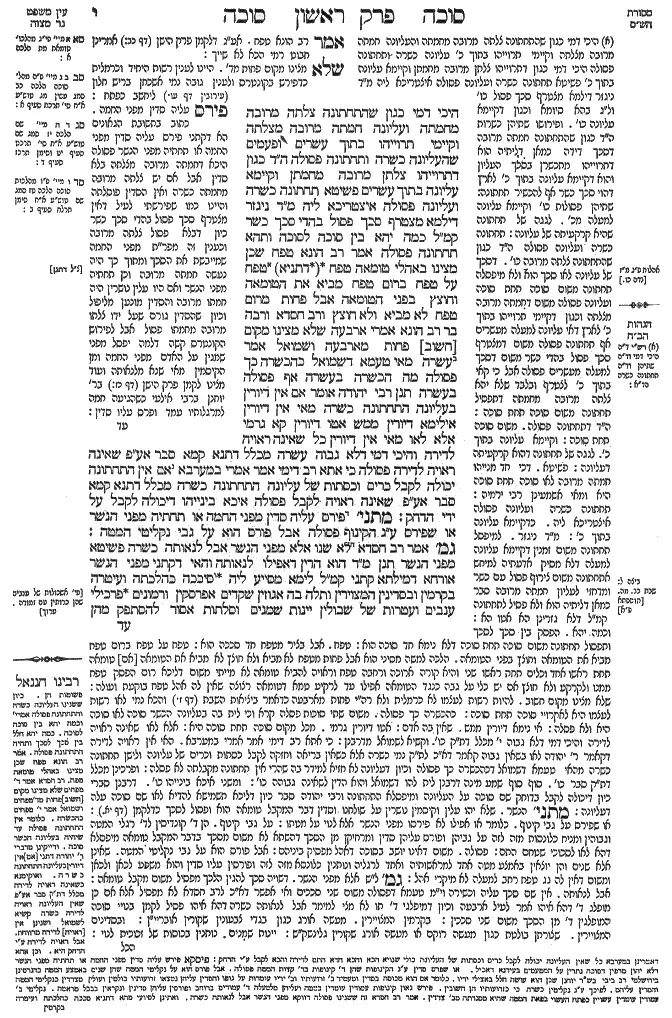
Sukkah 10a - Guemara
היכי דמי כגון שהתחתונה צלתה מרובה מחמתה ועליונה חמתה מרובה מצלתה וקיימי תרוייהו בתוך עשרים ופעמים שהעליונה כשרה ותחתונה פסולה ה"ד כגון דתרוייהו צלתן מרובה מחמתן וקיימא עליונה בתוך עשרים פשיטא תחתונה כשרה ועליונה פסולה איצטריכא ליה מ"ד ניגזר דילמא מצטרף סכך פסול בהדי סכך כשר קמ"ל כמה יהא בין סוכה לסוכה ותהא תחתונה פסולה אמר רב הונא טפח שכן מצינו באהלי טומאה טפח (דתניא) טפח על טפח ברום טפח מביא את הטומאה וחוצץ בפני הטומאה אבל פחות מרום טפח לא מביא ולא חוצץ ורב חסדא ורבה בר רב הונא אמרי ארבעה שלא מצינו מקום [חשוב] פחות מארבעה ושמואל אמר עשרה מאי טעמא דשמואל כהכשרה כך פסולה מה הכשרה בעשרה אף פסולה בעשרה תנן רבי יהודה אומר אם אין דיורין בעליונה התחתונה כשרה מאי אין דיורין אילימא דיורין ממש אטו דיורין קא גרמי אלא לאו מאי אין דיורין כל שאינה ראויה לדירה והיכי דמי דלא גבוה עשרה מכלל דתנא קמא סבר אע"פ שאינה ראויה לדירה פסולה כי אתא רב דימי אמר אמרי במערבא אם אין התחתונה יכולה לקבל כרים וכסתות של עליונה התחתונה כשרה מכלל דתנא קמא סבר אע"פ שאינה ראויה לקבל פסולה איכא בינייהו דיכולה לקבל על ידי הדחק:
מתני׳ פירס עליה סדין מפני החמה או תחתיה מפני הנשר או שפירס ע"ג הקינוף פסולה אבל פורס הוא על גבי נקליטי המטה:
גמ׳ אמר רב חסדא לא שנו אלא מפני הנשר אבל לנאותה כשרה פשיטא מפני הנשר תנן מ"ד הוא הדין דאפילו לנאותה והאי דקתני מפני הנשר אורחא דמילתא קתני קמ"ל לימא מסייע ליה סיככה כהלכתה ועיטרה בקרמין ובסדינין המצוירין ותלה בה אגוזין שקדים אפרסקין ורמונים פרכילי ענבים ועטרות של שבולין יינות שמנים וסלתות אסור להסתפק מהן
Comments from Rashi on Masechet Sukkah Page 10a
תחתונה כשרה ועליונה פסולה ה"ד כגון שהתחתונה צלתה מרובה כו' . דסכך של עליונה לאו סכך הוא ולא מיפסלה תחתונה משום סוכה תחת סוכה ועליונה פסולה משום דחמתה מרובה מצלתה וכגון דקיימי תרוייהו בתוך כ' לארץ דאי עליונה למעלה מעשרים אף תחתונה פסולה משום דמצטרף סכך פסול בהדי כשר משום דסכך למעלה מעשרים פסולה אבל כי קאי בתוך כ' לצטרף ובלבד שלא יהא צלתה מרובה מחמתה דתפסיל תחתונה משום סוכה תחת סוכה: ה"ד דתחתונה פסולה . משום סוכה תחת סוכה: וקיימא עליונה בתוך כ' . לגגה של תחתונה דהוא קרקעיתה דעליונה: פשיטא . דכי חד מנייהו חמתה מרובה לאו סוכה תחת סוכה היא ומאי אשמעינן רבי ירמיה: תחתונה כשרה ועליונה פסולה איצטריכא ליה . כדקיימא עליונה בתוך כ': מ"ד ניגזר . למיפסל תחתונה משום זמנין דקיימא עליונה למעלה דלא מסיק אדעתיה למיחש אתחתונה משום צירוף פסול עם כשר ומדחזי לעליון חמתה מרובה סבר כמאן דליתיה הוא ולא פסיל לתחתונה קמ"ל דלא גזרינן הא אטו הא: וכמה יהא . הפסק בין סכך לסכך ותפסול תחתונה משום סוכה תחת סוכה דלא נימא חד סוכה הוא: טפח . אבל בציר מטפח חד סככה הוא: טפח על טפח ברום טפח מביא את הטומאה וחוצץ בפני הטומאה . הלכה למשה מסיני הוא אבל פחות מטפח לא מביא ולא חוצץ לא מביא את הטומאה [אם] טומאה תחת ראשו אחד וכלים תחת ראשו שני והיא קורה ארוכה ורחבה טפח וראויה להביא טומאה לא מייתי משום דליכא רום הפסק טפח ממנו ולקרקע ולא חוצץ אם יש כלי על גבה כנגד הטומאה אפילו עד לרקיע טמא דטומאה רצוצה שאין לה אהל טפח בוקעת ועולה: שלא מצינו מקום חשוב . להיות רשות לעצמו לא כרמלית ולא רה"י פחות מארבעה כדאמר ביציאות השבת (דף ז.) והכא נמי לאו רשות לעצמו היא לאקרויי סוכה תחת סוכה: כהכשרה כך פסולה . משום שתי סוכות פסלה קרא וכי לית בה בעליונה הכשר סוכה לאו סוכה היא ולא פסלה: אי נימא דיורין ממש . שאין בה אדם: אטו דיורין גרמי . מכל מקום סוכה תחת סוכה היא: אלא לאו שאינה ראויה לדירה והיכי דמי דלא גבוה י' מכלל דת"ק כו' . וקשיא לשמואל מדרבנן: כי אתא רב דימי אמר אמרי במערבא . האי אין ראויה לדירה דקאמר ר' יהודה לאו בשאין גבוה קאמר דא"כ לת"ק נמי כשרה אלא כשאין בריאה וחזקה לקבל כסתות וכרים של עליונה ולישן תחתונה כשרה מהאי טעמא דשמואל דכהכשרה כך פסולה וכיון דעליונה לא חזיא למידר בה שהרי אין תחתונה מקבלתה לא פסלה: ופרכינן מכלל דת"ק סבר כו' . סוף סוף שמע מינה דרבנן לית להו דשמואל והוא הדין לשאינה גבוהה כו': ומשני איכא בינייהו כו' . דרבנן סברי כיון דיכולה לקבל בדוחק שם סוכה על העליונה ומיפסלא התחתונה ורבי יהודה סבר כיון דליכא תשמישא להדיא לאו שם סוכה עלה דעליונה: מתני' הנשר . שלא יהו עלין וקיסמין נושרין על שולחנו וסדין דבר המקבל טומאה הוא ופסול לסכך כדלקמן (סוכה דף יא.): או שפירס על גבי קינוף . כלומר או אפילו לא פירסו מפני הנשר אלא לנוי על מטתו: על גבי קינוף . הן ד' קונדיסין לד' רגלי המטה וגבוהין ומניח כלונסות מזה לזה על גביהן ופורס עליהן סדין ומרחיקן מן הסכך דהשתא לא משום מסכך בדבר המקבל טומאה מיפסלא דהא לאו לסכוכי שטחם התם: פסולה . משום דאינו יושב בסוכה דאהל מפסיק ביניהם: אבל פורס הוא על גבי נקליטי המטה . שאינן אלא שנים והן יוצאין באמצע מטה אחד למראשותיה ואחד לרגליה ונותנין כלונסא מזה לזה ופורסין עליו סדין והוא משפע לכאן ולכאן ומשום דאין לה גג טפח רחב למעלה לא מיקרי אהל: גמ' ל"ש אלא מפני הנשר . דשויה סכך להגין הלכך מפסיל משום מקבל טומאה: אבל לנאותה . אין שם סכך עליה וכשירה וי"מ טעמא דפסולה משום שני סככים ואי אפשר דא"כ לרב חסדא לא מפסיל אלא אם כן מופלג ד' דהא איהו אמר לעיל ארבעה וכיון דמיפלגי ד' תו לא מצי למימר אבל לנאותה כשרה דהא איהו פסיל לקמן בנויי סוכה המופלגין ד' מן הסכך משום שני סככין: בקרמין המצויירין . מעשה אורג כגון בגדי צבעונין שקורין אובריי"ן: ובסדינים המצויירין . שצורתן בולטת כגון מעשה רוקם או מעשה אורג שקורין גלינשק"ש: יינות שמנים . נותנין בכוסות של זכוכית לנוי:
Comments from Tosafot - Sukkah 10a
אמר רב הונא טפח. אע"ג דלקמן פרק הישן (סוכה דף כב:) אמרינן חבוט רמי הכא לא שייך: שלא מצינו מקום פחות מד'. היינו לענין רשות היחיד וכרמלית כדפירש בקונטרס ולענין גובה נמי אשכחן בריש חלון (עירובין דף עו.) ליחשב כפתח: פירס עליה סדין מפני החמה. כתוב בתשובת הגאונים הא דקתני פירס עליה סדין מפני החמה או תחתיה מפני הנשר פסולה היכא דחמתה מרובה מצלתה בלא סדין אבל אם יש צלתה מרובה מחמתה כשרה ואין הסדין פוסלתה והיינו כמו שפירשתי לעיל דאין מצטרף סכך פסול בהדי סכך כשר כיון דבלא פסול צלתה מרובה וכענין זה מפר"ת מפני החמה שמייבשת את הסכך ומתוך כך היה נעשה חמתה מרובה וכן תחתיה מפני הנשר ואם היו עלין נושרין היה חמתו מרובה והסדין מונען מליפול וכיון שהסדין גורם שעל ידו צלתו מרובה מחמתו פסול אבל לפירוש הקונטרס קשה דלמה יפסל מפני שמגין על האדם מפני החמה ומן הקיסמין מאי שנא מלנאותה ועוד מצינו לקמן פרק הישן (סוכה דף כז:) בר' יוחנן ברבי אילעי כשהגיעה חמה למרגלותיו עמד ופרס עליו סדין:
Sukkah 10a - Mishnah translated into english
What are the circumstances? It is in a case where in the lower sukka, its shade is greater than its sunlight, rendering the sukka fit, and in the upper sukka, its sunlight is greater than its shade and it is therefore insignificant, and the roofing of both is within twenty cubits of the ground.
And there are times when the upper sukka is fit and the lower sukka is unfit. What are the circumstances? It is in a case where in both sukkot their shade is greater than their sunlight, and the roofing of the upper sukka is within twenty cubits of the roofing of the lower one. In this case the upper sukka is fit, while the lower sukka is a sukka beneath a sukka and is unfit.
The Gemara asks: This is obvious. There is nothing novel in any of these scenarios. The Gemara answers: It was necessary for the tanna to mention the case where the lower sukka is fit and the upper sukka is unfit, as it contains a novel element. Lest you say: Let us issue a decree and deem the lower sukka unfit, as perhaps the unfit roofing of the upper sukka joins together with the fit roofing of the lower sukka and renders it unfit as well; therefore, the tanna teaches us that the two roofings do not join together and the upper roofing does not render the lower sukka unfit.
The Gemara elucidates this halakha. How much space shall there be between the roofing of the upper sukka and the roofing of the lower sukka for the lower sukka to be considered a discrete entity and therefore disqualified as a sukka beneath a sukka?
Rav Huna said: There must be a handbreadth of space, as we likewise find in tents of ritual impurity the measure of a handbreadth. With regard to the halakhot of ritual impurity imparted by a corpse, the legal status of the space of one handbreadth beneath a roof is that of a tent, as we learned in a mishna: A space measuring one handbreadth by one handbreadth with a height of one handbreadth transmits ritual impurity. If a source of ritual impurity imparted by a corpse is in that space, the impurity is transmitted to all people, vessels, and food in that space. And a space that size serves as a barrier before the spread of ritual impurity beyond that space. However, if the space measures less than the height of one handbreadth, it does not transmit impurity to the objects in that space, and it does not serve as a barrier before the spread of ritual impurity. The impurity breaches the confining walls and rises upward as if there were no covering over it.
Rav Ḥisda and Rabba bar Rav Huna say: For this to be considered a sukka beneath a sukka, the space between the roofing of the upper sukka and that of the lower one must measure at least four handbreadths, as we do not find a significant area that measures less than four handbreadths, e.g., with regard to the domains of Shabbat.
And Shmuel said: The space between the roofing of the upper sukka and that of the lower one must measure at least ten handbreadths. The Gemara asks: What is the rationale for the opinion of Shmuel? The Gemara explains: As the criterion for its fitness, so too is the criterion for its unfitness; just as its fitness is only in a sukka ten handbreadths high, so too, its unfitness as a sukka is engendered only by a sukka ten handbreadths high.
The Gemara questions Shmuel’s statement: We learned in the mishna that Rabbi Yehuda says: If there are no residents in the upper sukka, the lower sukka is fit.
The Gemara clarifies: What is the meaning of: There are no residents? If we say that it means that there are no actual residents, the question arises: Is that to say that residents cause it to be unfit? If the upper sukka is a fit sukka, is there any difference whether or not people reside there? Rather, what is the meaning of: There are no residents? Is it not referring to any sukka that is not suitable to serve as a residence? And what are the circumstances of that case? It is a case where the sukka is not ten handbreadths high, as anything less than ten handbreadths high is not considered a residence. From the fact that it is Rabbi Yehuda who distinguishes between whether or not the upper sukka is at least ten handbreadths high, conclude by inference that the first tanna of the mishna holds that the lower sukka is unfit even if the upper sukka is less than ten handbreadths high and therefore not suitable to serve as a residence. This is contrary to the opinion of Shmuel.
When Rav Dimi came from Eretz Yisrael to Babylonia, he said that the Sages say in the West, Eretz Yisrael, in explanation of the mishna: If the roofing of the lower sukka is not sufficiently sturdy to be able to support the cushions and blankets of the upper sukka, then the lower sukka is fit, as the upper sukka is not suitable to serve as an independent residence. According to this explanation, the mishna does not discuss the height of the upper sukka; it discusses the quality of the roofing.
The Gemara notes: Is that to say by inference that the first tanna holds that even though the roofing of the lower sukka is not sufficiently sturdy to be able to support the cushions and blankets of the upper sukka, the lower sukka is unfit? In that case, the upper sukka is not a suitable residence. Why should the lower sukka be unfit?
The Gemara answers: The first tanna agrees that if the roofing of the lower sukka is unable to support the cushions and the blankets at all, the upper sukka is not considered a sukka and the lower sukka is fit. However, there is a practical difference between the opinions of the first tanna and Rabbi Yehuda in a case where the roofing of the lower sukka is able to support the cushions and the blankets of the upper sukka with difficulty and there is a concern that the roofing might collapse. In that case, the first tanna holds that since the roofing is capable of supporting the cushions and blankets, the upper sukka is considered a separate sukka and renders the lower sukka unfit. According to Rabbi Yehuda, since the roofing is able to support the weight of the cushions and blankets only with difficulty, the upper sukka is not fit. Therefore, the lower sukka is fit.
MISHNA: If one spread a sheet over the roofing as protection for those sitting in the sukka due to the sun, or if one spread a sheet beneath the roofing as protection due to the falling leaves, or if one spread a sheet as a canopy over the frame of a four-post [kinof] bed, the area in the sukka beneath the sheets is unfit. In the first two cases, because the sheet is susceptible to ritual impurity, it renders the otherwise fit roofing unfit. In the case of the canopy, one is not sitting under the roofing of the sukka; rather, he is sitting inside a tent. However, one may spread the sheet over the frame of a two-post [naklitei] bed, which has one post in the middle of each end of the bed. When spreading the sheet over the posts it forms an inclined rather than a flat roof, and a tent with an inclined roof is not considered a significant structure.
GEMARA: Rav Ḥisda said: The Sages taught the ruling that the sheet renders the sukka unfit only when it is placed underneath the roofing due to the falling leaves; however, if his intent was to spread the sheet for decorative purposes to beautify the sukka, it is not in the category of roofing and the sukka is fit. The Gemara asks: This is obvious, as: Due to the falling leaves, is what we learned in the mishna. The Gemara answers: Lest you say that the same is true, i.e., the sukka is unfit, even when the sheet was spread to beautify the sukka, and the reason that the mishna teaches specifically the case where one spread the sheet due to the falling leaves is that the mishna teaches the matter, spreading a sheet in the sukka, in the manner in which it typically occurs. Rav Ḥisda teaches us that the formulation of the mishna is precise and the halakha applies specifically to the case cited. If one spread the sheet for decorative purposes, it does not render the sukka unfit.
The Gemara suggests: Let us say that the following Tosefta supports the opinion of Rav Ḥisda. If one roofed the sukka in accordance with its halakhic requirements, and decorated it with colorful curtains and sheets, and hung in it ornamental nuts, almonds, peaches, and pomegranates, grape branches [parkilei], and wreaths of stalks of grain, wines, oils, and vessels full of flour, it is prohibited to derive benefit and use them
Traduction : The William Davidson digital edition of the Koren Noé Talmud, with commentary by Rabbi Adin Even-Israel Steinsaltz.