 Talmud Bavli
The learning on the whole site is dedicated : L'ilui Nishmat Yechayahou ben Moche
The learning on the whole site is dedicated : L'ilui Nishmat אסתר בת חיים
The learning on the whole site is dedicated : L'ilui Nishmat Amram ben Itshak Loubaton
Sukkah 52a : Youtube
Daf TubeYoutube
3 video classes :
Sukkah Page 52a
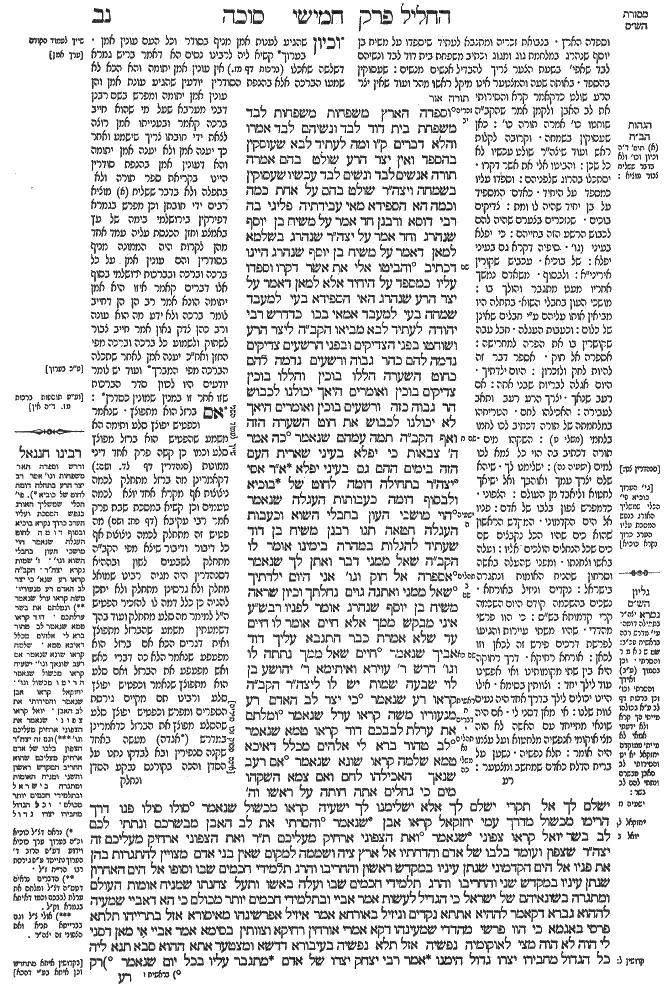
Sukkah 52a - Guemara
(זכריה יב, יב) וספדה הארץ משפחות משפחות לבד משפחת בית דוד לבד ונשיהם לבד אמרו והלא דברים ק"ו ומה לעתיד לבא שעוסקין בהספד ואין יצר הרע שולט בהם אמרה תורה אנשים לבד ונשים לבד עכשיו שעסוקין בשמחה ויצה"ר שולט בהם על אחת כמה וכמה הא הספידא מאי עבידתיה פליגי בה רבי דוסא ורבנן חד אמר על משיח בן יוסף שנהרג וחד אמר על יצה"ר שנהרג בשלמא למאן דאמר על משיח בן יוסף שנהרג היינו דכתיב (זכריה יב, י) והביטו אלי את אשר דקרו וספדו עליו כמספד על היחיד אלא למאן דאמר על יצר הרע שנהרג האי הספידא בעי למעבד שמחה בעי למעבד אמאי בכו כדדרש רבי יהודה לעתיד לבא מביאו הקב"ה ליצר הרע ושוחטו בפני הצדיקים ובפני הרשעים צדיקים נדמה להם כהר גבוה ורשעים נדמה להם כחוט השערה הללו בוכין והללו בוכין צדיקים בוכין ואומרים היאך יכולנו לכבוש הר גבוה כזה ורשעים בוכין ואומרים היאך לא יכולנו לכבוש את חוט השערה הזה ואף הקב"ה תמה עמהם שנאמר (זכריה ח, ו) כה אמר ה' צבאות כי יפלא בעיני שארית העם הזה בימים ההם גם בעיני יפלא א"ר אסי יצה"ר בתחילה דומה לחוט של בוכיא ולבסוף דומה כעבותות העגלה שנאמר (ישעיהו ה, יח) הוי מושכי העון בחבלי השוא וכעבות העגלה חטאה תנו רבנן משיח בן דוד שעתיד להגלות במהרה בימינו אומר לו הקב"ה שאל ממני דבר ואתן לך שנאמר (תהלים ב, ז) אספרה אל חוק וגו' אני היום ילדתיך (תהלים ב, ח) שאל ממני ואתנה גוים נחלתך וכיון שראה משיח בן יוסף שנהרג אומר לפניו רבש"ע איני מבקש ממך אלא חיים אומר לו חיים עד שלא אמרת כבר התנבא עליך דוד אביך שנאמר (תהלים כא, ה) חיים שאל ממך נתתה לו וגו' דרש ר' עוירא ואיתימא ר' יהושע בן לוי שבעה שמות יש לו ליצה"ר הקב"ה קראו רע שנאמר (בראשית ח, כא) כי יצר לב האדם רע מנעוריו משה קראו ערל שנאמר (דברים י, טז) ומלתם את ערלת לבבכם דוד קראו טמא שנאמר (תהלים נא, יב) לב טהור ברא לי אלהים מכלל דאיכא טמא שלמה קראו שונא שנאמר (משלי כה, כא) אם רעב שנאך האכילהו לחם ואם צמא השקהו מים כי גחלים אתה חותה על ראשו וה' ישלם לך אל תקרי ישלם לך אלא ישלימנו לך ישעיה קראו מכשול שנאמר (ישעיהו נז, יד) סולו סולו פנו דרך הרימו מכשול מדרך עמי יחזקאל קראו אבן שנאמר (יחזקאל לו, כו) והסרתי את לב האבן מבשרכם ונתתי לכם לב בשר יואל קראו צפוני שנאמר (יואל ב, כ) ואת הצפוני ארחיק מעליכם ת"ר ואת הצפוני ארחיק מעליכם זה יצה"ר שצפון ועומד בלבו של אדם והדחתיו אל ארץ ציה ושממה למקום שאין בני אדם מצויין להתגרות בהן את פניו אל הים הקדמוני שנתן עיניו במקדש ראשון והחריבו והרג תלמידי חכמים שבו וסופו אל הים האחרון שנתן עיניו במקדש שני והחריבו והרג תלמידי חכמים שבו ועלה באשו ותעל צחנתו שמניח אומות העולם ומתגרה בשונאיהם של ישראל כי הגדיל לעשות אמר אביי ובתלמידי חכמים יותר מכולם כי הא דאביי שמעיה לההוא גברא דקאמר לההיא אתתא נקדים וניזיל באורחא אמר איזיל אפרשינהו מאיסורא אזל בתרייהו תלתא פרסי באגמא כי הוו פרשי מהדדי שמעינהו דקא אמרי אורחין רחיקא וצוותין בסימא אמר אביי אי מאן דסני לי הוה לא הוה מצי לאוקומיה נפשיה אזל תלא נפשיה בעיבורא דדשא ומצטער אתא ההוא סבא תנא ליה כל הגדול מחבירו יצרו גדול הימנו אמר רבי יצחק יצרו של אדם מתגבר עליו בכל יום שנאמר (בראשית ו, ה) רק
Comments from Rashi on Masechet Sukkah Page 52a
וספדה הארץ . בנבואת זכריה ומתנבא לעתיד שיספדו על משיח בן יוסף שנהרג במלחמת גוג ומגוג וכתיב משפחת בית דוד לבד ונשיהם לבד שאפי' בשעת הצער צריך להבדיל אנשים מנשים: שעסוקין בהספד . באותה שעה והמצטער אינו מיקל ראשו מהר ועוד שאין יצר הרע שולט כדקאמר קרא והסירותי את לב האבן ולקמן אמר שהקב"ה שוחטו כו' אמרה תורה כו': כאן שעסוקין בשמחה . וקרובה לקלות ראש ועוד שיצה"ר שולט עכשיו לא כל שכן: והביטו אלי את אשר דקרו . יסתכלו בהרוג שלפניהם: וספדו עליו כמספד על היחיד . כאדם המספיד על בן יחיד שהיה לו ומת: צדיקים בוכים . שנזכרים בצערם שהיה להם לכבוש הרשע הזה בחייהם: כי יפלא בעיני וגו' . סיפיה דקרא גם בעיני יפלא: של בוכיא . עכביש שקורין איריני"א: ולבסוף . משאדם נמשך אחריו מעט מתגבר והולך בו: מושכי העון בחבלי השוא . בתחלה היו מביאין אותו עליהם ע"י חבלים שאינן של כלום: וכעבות העגלה . חבל עבה שקושרין בו את הפרה למחרישה: אספרה על חוק . אספר דבר זה להיות לחק ולזכרון: היום ילדתיך . היום אגלה לבריות שבני אתה: אם רעב שנאך . יצרך הרע רעב ותאב לעבירה: האכילהו לחם . הטריחהו במלחמתה של תורה דכתיב לכו לחמו בלחמי (משלי ט): השקהו מים . תורה דכתיב בה הוי כל צמא לכו למים (ישעיהו נה): ישלימנו לך . שיהא שלם יצרך עמך ואוהבך ואל ישיאך לחטוא וליאבד מן העולם: הצפוני . כדמפרש צפון בלבו של אדם: פניו אל הים הקדמוני . המקדש הראשון שהוא כים שהיו הכל נקבצים שם כים שכל הנחלים הולכים אליו: ועלה באשו וצחנתו . ומפני שהעלה באשה וסרחון שהניח האומות ונתגרה בישראל: נקדים וניזיל באורחא . נשכים בהשכמה קודם היום השכמה קרי קדמותא בש"ס: כי הוו פרשי מהדדי . שהיו משתי עיירות והגיעו לפרשת דרכים פירש זה לכאן וזו לכאן: אורחא רחיקא . דרך רחוקה היא בין שתי מקומותינו ואי אפשינו עוד לילך יחד: וצוותין בסימא . אילו היינו יכולים לילך בדרך אחד היה נעים צוות שלנו: אי מאן דסני לי . אם היה שונאי מתייחד עם האשה לא הוה מצי אוקומי אנפשיה מלחטוא ועל עצמו היה אומר: תלא נפשיה . נשען על בריח הדלת כאדם שמחשב ומצטער:
Sukkah 52a - Mishnah translated into english
It is stated: “The land will eulogize, each family separately; the family of the house of David separately, and their women separately, the family of the house of Nathan separately, and their women separately” (Zechariah 12:12). This indicates that at the end of days a great eulogy will be organized during which men and women will be separate. They said: And are these matters not inferred a fortiori? If in the future, at the end of days referred to in this prophecy, when people are involved in a great eulogy and consequently the evil inclination does not dominate them, as typically during mourning inappropriate thoughts and conduct are less likely, and nevertheless the Torah says: Men separately and women separately; then now that they are involved in the Celebration of the Drawing of the Water, and as such the evil inclination dominates them, since celebration lends itself to levity, all the more so should men and women be separate.
Apropos the eulogy at the end of days, the Gemara asks: For what is the nature of this eulogy? The Gemara answers: Rabbi Dosa and the Rabbis disagree concerning this matter. One said that this eulogy is for Messiah ben Yosef who was killed in the war of Gog from the land of Magog prior to the ultimate redemption with the coming of Messiah ben David. And one said that this eulogy is for the evil inclination that was killed.
The Gemara asks: Granted, according to the one who said that the lament is for Messiah ben Yosef who was killed, this would be the meaning of that which is written in that context: “And they shall look unto Me because they have thrust him through; and they shall mourn for him, as one mourns for his only son” (Zechariah 12:10). However, according to the one who said that the eulogy is for the evil inclination that was killed, does one need to conduct a eulogy for this? On the contrary, one should conduct a celebration. Why, then, did they cry?
The Gemara answers: This can be understood as Rabbi Yehuda taught: In the future, at the end of days, God will bring the evil inclination and slaughter it in the presence of the righteous and in the presence of the wicked. For the righteous the evil inclination appears to them as a high mountain, and for the wicked it appears to them as a mere strand of hair. These weep and those weep. The righteous weep and say: How were we able to overcome so high a mountain? And the wicked weep and say: How were we unable to overcome this strand of hair? And even the Holy One, Blessed be He, will wonder with them, as it is stated with regard to the eulogy: “So says the Lord of hosts: If it be wondrous in the eyes of the remnant of this people in those days, it should also be wondrous in My eyes” (Zechariah 8:6).
Apropos the evil inclination and the battle against it, the Gemara cites that which Rav Asi said: Initially, when it begins to entice someone, the evil inclination is like a strand of a spider’s web [bukhya]; and ultimately it is like the thick ropes of a wagon, as it is stated: “Woe unto them that draw iniquity with cords of vanity, and sin as if it were with a wagon rope” (Isaiah 5:18). Initially, the enticement is almost imperceptible, like a thin strand; however, after one sins, it is like wagon ropes tied tightly around him.
The Sages taught: To Messiah ben David, who is destined to be revealed swiftly in our time, the Holy One, Blessed be He, says: Ask of Me anything and I will give you whatever you wish, as it is stated: “I will tell of the decree; the Lord said unto me: You are My son, this day have I begotten you, ask of Me, and I will give the nations for your inheritance, and the ends of the earth for your possession” (Psalms 2:7–8). Once the Messiah ben David saw Messiah ben Yosef, who was killed, he says to the Holy One, Blessed be He: Master of the Universe, I ask of you only life; that I will not suffer the same fate. The Holy One, Blessed be He, says to him: Life? Even before you stated this request, your father, David, already prophesied about you with regard to this matter precisely, as it is stated: “He asked life of You, You gave it to him; even length of days for ever and ever” (Psalms 21:5).
§ Rabbi Avira, and some say Rabbi Yehoshua ben Levi, taught: The evil inclination has seven names. The Holy One, Blessed be He, called it evil, as it is stated: “For the inclination of a man’s heart is evil from his youth” (Genesis 8:21). Moses called it uncircumcised, as it is stated: “And circumcise the foreskin of your hearts” (Deuteronomy 10:16). David called it impure, as it is stated: “Create for me a pure heart, O God” (Psalms 51:12); by inference, there is an impure heart that is the evil inclination.
Solomon called it enemy, as it is stated: “If your enemy is hungry, give him bread to eat, and if he is thirsty, give him water to drink; for you will heap coals of fire upon his head, and the Lord will reward you” (Proverbs 25:21–22). Do not read it as: And the Lord will reward you [yeshalem lakh]; rather read it as: And the Lord will reconcile it to you [yashlimenu lakh]. God will cause the evil inclination to love you and no longer seek to entice you to sin.
Isaiah called it a stumbling block, as it is stated: “And He will say: Cast you up, cast you up, clear the way, take up the stumbling block out of the way of My people” (Isaiah 57:14). Ezekiel called it stone, as it is stated: “And I will take away the stony heart out of your flesh, and I will give you a heart of flesh” (Ezekiel 36:26). Joel called it hidden one, as it says: “But I will remove the northern one [hatzefoni] far off from you” (Joel 2:20). The Sages taught concerning the verse: “But I will remove the northern one [hatzefoni] far off from you,” that this is referring to the evil inclination. And why is the evil inclination referred to as tzefoni? It is due to the fact that it is always hidden [tzafun] in the heart of man.
The baraita continues interpreting the verse in the book of Joel. “And will drive it to a land barren and desolate” (Joel 2:20), where there are no people for the evil inclination to incite. And what damage does the evil inclination cause? “With its face toward the eastern [hakadmoni] sea” (Joel 2:20), as it set its eyes on the First [mukdam] Temple and destroyed it, and killed the Torah scholars that were in it; “and its end toward the western [ha’aḥaron] sea” (Joel 2:20), as it set its eyes on the Second [aḥaron] Temple and destroyed it, and killed the Torah scholars that were in it; “its foulness may come up, and its ill odor may come up” (Joel 2:20), as it forsakes the nations of the world and incites the enemies of the Jewish people: In this context, the term the nations is a euphemism for the Jewish people. The evil inclination seeks to corrupt the Jews more than it does the members of any other nation. “Because it has done greatly” (Joel 2:20): Abaye said: And it provokes Torah scholars more than it provokes everyone else.
The Gemara illustrates that point. It is like this incident, as Abaye once heard a certain man say to a certain woman: Let us rise early and go on the road. Upon hearing this, Abaye said to himself: I will go and accompany them and prevent them from violating the prohibition that they certainly intend to violate. He went after them for a distance of three parasangs in a marsh among the reeds, while they walked on the road, and they did not engage in any wrongful activity. When they were taking leave of each other, he heard that they were saying: We traveled a long distance together, and the company was pleasant company.
Abaye said: In that situation, if instead of that man it had been one whom I hate, a euphemism for himself, he would not have been able to restrain himself from sinning. After becoming aware of so great a shortcoming he went and leaned against the doorpost, thinking and feeling regret. A certain Elder came and taught him: Anyone who is greater than another, his evil inclination is greater than his. Therefore, Abaye should not feel regret, as his realization is a consequence of his greatness.
Rabbi Yitzḥak said: A person’s inclination overcomes him each day, as it is stated: “Only
Traduction : The William Davidson digital edition of the Koren Noé Talmud, with commentary by Rabbi Adin Even-Israel Steinsaltz.