 Talmud Bavli
Sukkah 46a : Youtube
Daf TubeYoutube
3 video classes :
Sukkah Page 46a
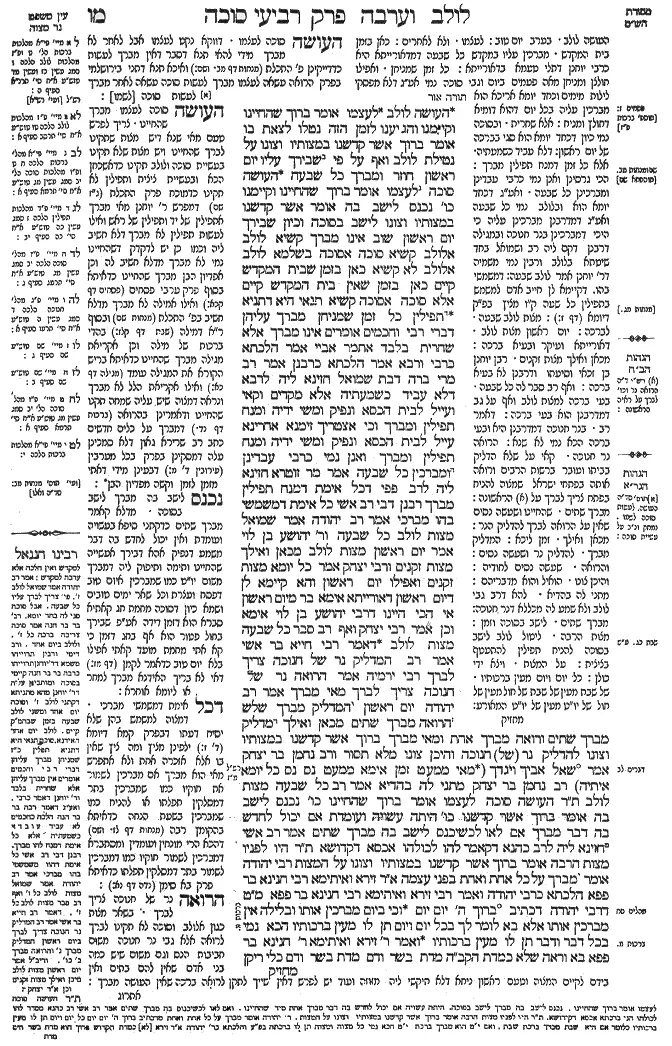
Sukkah 46a - Guemara
העושה לולב לעצמו אומר ברוך שהחיינו וקיימנו והגיענו לזמן הזה נטלו לצאת בו אומר ברוך אשר קדשנו במצותיו וצונו על נטילת לולב ואף על פי שבירך עליו יום ראשון חוזר ומברך כל שבעה העושה סוכה לעצמו אומר ברוך שהחיינו וקיימנו כו' נכנס לישב בה אומר אשר קדשנו במצותיו וצונו לישב בסוכה וכיון שבירך יום ראשון שוב אינו מברך קשיא לולב אלולב קשיא סוכה אסוכה בשלמא לולב אלולב לא קשיא כאן בזמן שבית המקדש קיים כאן בזמן שאין בית המקדש קיים אלא סוכה סוכה קשיא תנאי היא דתניא תפילין כל זמן שמניחן מברך עליהן דברי רבי וחכמים אומרים אינו מברך אלא שחרית בלבד אתמר אביי אמר הלכתא כרבי ורבא אמר הלכתא כרבנן אמר רב מרי ברה דבת שמואל חזינא ליה לרבא דלא עביד כשמעתיה אלא מקדים וקאי ועייל לבית הכסא ונפיק ומשי ידיה ומנח תפילין ומברך וכי אצטריך זימנא אחרינא עייל לבית הכסא ונפיק ומשי ידיה ומנח תפילין ומברך ואנן נמי כרבי עבדינן ומברכין כל שבעה אמר מר זוטרא חזינא ליה לרב פפי דכל אימת דמנח תפילין מברך רבנן דבי רב אשי כל אימת דמשמשי בהו מברכי אמר רב יהודה אמר שמואל מצות לולב כל שבעה ור' יהושע בן לוי אמר יום ראשון מצות לולב מכאן ואילך מצות זקנים ורבי יצחק אמר כל יומא מצות זקנים ואפילו יום ראשון והא קיימא לן דיום ראשון דאורייתא אימא בר מיום ראשון אי הכי היינו דרבי יהושע בן לוי אימא וכן אמר רבי יצחק ואף רב סבר כל שבעה מצות לולב דאמר רבי חייא בר אשי אמר רב המדליק נר של חנוכה צריך לברך רבי ירמיה אמר הרואה נר של חנוכה צריך לברך מאי מברך אמר רב יהודה יום ראשון המדליק מברך שלש הרואה מברך שתים מכאן ואילך מדליק מברך שתים ורואה מברך אחת ומאי מברך ברוך אשר קדשנו במצותיו וצונו להדליק נר (של) חנוכה והיכן צונו מלא תסור ורב נחמן בר יצחק אמר (דברים לב, ז) שאל אביך ויגדך (מאי ממעט זמן אימא ממעט נס נס כל יומא איתיה) רב נחמן בר יצחק מתני לה בהדיא אמר רב כל שבעה מצות לולב ת"ר העושה סוכה לעצמו אומר ברוך שהחיינו כו' נכנס לישב בה אומר ברוך אשר קדשנו כו' היתה עשויה ועומדת אם יכול לחדש בה דבר מברך אם לאו לכשיכנס לישב בה מברך שתים אמר רב אשי חזינא ליה לרב כהנא דקאמר להו לכולהו אכסא דקדושא ת"ר היו לפניו מצות הרבה אומר ברוך אשר קדשנו במצותיו וצונו על המצות רבי יהודה אומר מברך על כל אחת ואחת בפני עצמה א"ר זירא ואיתימא רבי חנינא בר פפא הלכתא כרבי יהודה ואמר רבי זירא ואיתימא רבי חנינא בר פפא מ"ט דרבי יהודה דכתיב (תהלים סח, כ) ברוך ה' יום יום וכי ביום מברכין אותו ובלילה אין מברכין אותו אלא בא לומר לך בכל יום ויום תן לו מעין ברכותיו הכא נמי בכל דבר ודבר תן לו מעין ברכותיו ואמר ר' זירא ואיתימא ר' חנינא בר פפא בא וראה שלא כמדת הקב"ה מדת בשר ודם מדת בשר ודם כלי ריקן
Comments from Rashi on Masechet Sukkah Page 46a
העושה לולב . בערב יום טוב: לעצמו . ולא לאחרים: כאן בזמן בית המקדש . מברכין עליו במקדש כל שבעה דמדאורייתא היא כרבי יוחנן דתלי טעמא בדאורייתא: כל זמן שמניחן . ואפילו חולצן ומניחן מאה פעמים ביום וגבי סוכה נמי אע"ג דלא מפסקי לילות מימים וכחד יומא אריכא הוא מברכין עליה בכל יום דהוא דומיא דחולץ ומניח: אלא שחרית . ובסוכה נמי כיון דכחד יומא הוא סגי בברכה של יום ראשון: דלא עביד כשמעתיה . אלא כל זמן דמנח תפילין מברך: הכי גרסינן ואנן נמי כרבי עבדינן ומברכינן כל שבעה . ואע"ג דכחד יומא הוא ובלולב נמי כל שבעה ואע"ג דמדרבנן מברכינן עליה כי היכי דמברכינן בנר חנוכה ובמגילה דרבנן דקם ליה רב ושמואל בחד שיטתא בלולב ורבין נמי משמיה דר' יוחנן אמר לולב שבעה: דמשמשי בהו . דקיימא לן חייב אדם למשמש בתפילין כל שעה ק"ו מציץ בפ"ק דיומא (דף ז:): מצות לולב שבעה . לברכה: יום ראשון מצות לולב . דאורייתא ועיקר ובעיא ברכה: מכאן ואילך מצות זקנים . רבן יוחנן בן זכאי וסיעתו ודרבנן לא בעיא ברכה: ואף רב סבר לה כל שבעה . בעי ברכה למצות לולב ואף על גב דמדרבנן הוא בעי ברכה: דאמר רב . בנר חנוכה דמדרבנן היא ובעי ברכה הכא נמי לא שנא: הרואה נר חנוכה . קאי על שלא הדליק בביתו ועובר ברשות הרבים ורואה אותה בפתחי ישראל שמצוה להניח בפתח צריך לברך על הראשונה: מברך שתים . שהחיינו ושעשה נסים שאין על הרואה לברך להדליק הנר: מכאן ואילך . זמן ליכא: המדליק מברך . להדליק נר ושעשה נסים: והרואה . שעשה נסים לחודיה: והיכן צונו . הואיל והוא מדבריהם: מתני לה בהדיא . להא דרב גבי לולב ולא שמע לה מכללא דנר חנוכה: מברך שתים . לישב בסוכה וזמן: מצות הרבה . ליטול לולב לישב בסוכה להניח תפילין להתעטף בציצית: על המצות . ויצא ידי כולן: כל יום ויום מעין ברכותיו . של שבת מעין של שבת של חול מעין של חול של יו"ט מעין של יו"ט המאורע:
Comments from Tosafot - Sukkah 46a
העושה סוכה לעצמו. דווקא נקט לעצמו אבל לאחר לא מברך מידי להאי תנא דסבר דאין מברך לעשות כדדייקינן פ' התכלת (מנחות דף מב. ושם:) ואיכא תנא דתני בירושלמי בפרק הרואה עשאה לעצמו מברך לעשות סוכה עשאה לאחר מברך לעשות סוכה [לשמו]: העושה סוכה לעצמו מברך שהחיינו. צריך לפרש טעם מאי שנא דיש מצות שתקינו לברך שהחיינו ויש מצות שלא תקינו בעשיית סוכה ולולב תקינו כדאשכחן הכא ובעשיית ציצית ותפילין לא תקינו כדמוכח פרק התכלת (ג"ז שם) דמפרש ר' יוחנן מאי מברך אתפילין של יד ותפילין של ראש ואילו לעשות תפילין לא מברך דלא חשיב ליה וכמו כן יש לדקדק דשהחיינו נמי לא מברך מדלא חשיב לה וכן אפדיון הבן מברך שהחיינו כדאיתא בסוף פרק ערבי פסחים (פסחים דף קכא:) ואילו אמילה לא מברך מדלא חשיב בפ' התכלת (מנחות שם) ובסוף ר"א דמילה (שבת דף קלז:) בהדי ברכות של מילה וכן אקריאת מגילה מברך שהחיינו כדאיתא בריש הקורא את המגילה עומד (מגילה דף בא:) ואילו אקריאת הלל לא מברך ונראה דמצוה שיש עליה שמחה תקנו שהחיינו ודאמרינן בהרואה (ברכות דף נד.) דמברך על כלים חדשים כתב רב שרירא גאון דלא סמכינן עלה דמסקינן בפרק בכל מערבין (עירובין ד' מ:) דבעינן מידי דאתי מזמן לזמן וקשה מפדיון הבן: נכנס לישב בה מברך לישב בסוכה. מדלא קאמר מברך שתים כדקתני סיפא בעשויה ועומדת ואין יכול לחדש בה דבר משמע דנפיק אהא דבירך אעשייה שהחיינו ותימה ותיפוק ליה דמברך משום יו"ט כמו שמברכין איום טוב דפסח ועצרת וכל שאר ימים טובים ושמא כיון דסוכה מחמת חג קאתיא סברא הוא דזמן דידה אע"פ שבירך בחול פטור הוא אף בחג דזמן כי קא אתי מחמת מועד קאתי אפילו בלא יום טוב כדאמר לקמן (סוכה דף מז:) דאי לא בריך האידנא מברך למחר או ליומא אוחרא: דכל אימת דמשמשי מברכי. דמצוה למשמש בהן שלא יסיח דעתו דבפרק קמא דיומא (ד' ז:) ילפינן מציץ ומה ציץ שאין בו אלא אזכרה אחת ולא אתפרש מאי הוא מברך אם מברכין לשמור את חוקיו כמו שמברכין בתר דמסלקין תפלתו או להניח כמו שמברכין בשעת הנחה כדאיתא בהקומץ רבה (מנחות דף לז. ושם) דהכא הרי מונחין ועומדין ומסתברא דמברכין לשמור חוקיו כמו דמברכין לשמור בתר דמסלקין תפלתו כדאיתא פרק בא סימן (נדה דף נא:): הרואה נר של חנוכה צריך לברך. בשאר מצות כגון אלולב וסוכה לא תקינו לברך לרואה אלא גבי נר חנוכה משום חביבות הנס וגם משום שיש כמה בני אדם שאין להם בתים ואין בידם לקיים המצוה וטעם ראשון ניחא דלא תיקשי ליה מזוזה ועוד יש לפרש דאין שייך לתקן לרואה ברכה שאין העושה מברך:
Sukkah 46a - Mishnah translated into english
One who prepares a lulav for himself, but not one who prepares for others, recites when preparing it on the eve of the Festival: Blessed…Who has given us life, sustained us, and brought us to this time. When he takes it during the Festival in order to fulfill his obligation, he says: Blessed…Who sanctified us with His mitzvot and commanded us concerning the taking of a lulav. And even though he recited the blessing over the lulav on the first day of the Festival, he repeats and recites the blessing over the lulav all seven days when fulfilling the mitzva. One who establishes a sukka for himself recites: Blessed…Who has given us life, sustained us, and brought us to this time. When he enters to sit in the sukka, he recites: “Blessed…Who has sanctified us with His mitzvot and commanded us to reside in the sukka. And once he recited the blessing on the first day, he no longer recites it on the rest of the days, as all seven days are considered a single unit.
Now, the halakha cited in this baraita that the blessing over lulav is recited all seven days is difficult; it contradicts the halakha stated by Rabba bar bar Ḥana in the name of Rabbi Yoḥanan, that the blessing over lulav is recited only on the first day. The halakha cited in this baraita that the blessing over sukka is recited only on the first day is likewise difficult, as it contradicts the halakha that Rabba bar bar Ḥana said that Rabbi Yoḥanan said, that the blessing over sukka is recited all seven days.
The Gemara continues: Granted, the contradiction between the halakha with regard to lulav in the baraita and the halakha with regard to lulav stated in the name of Rabbi Yoḥanan is not difficult. Here, in the baraita, where the halakha is to recite the blessing each day, it is referring to a time when the Temple is in existence, where the mitzva of lulav is performed all seven days. There, in the case of the statement of Rabbi Yoḥanan that the blessing is recited only on the first day, it is referring to a time when the Temple is not in existence. However, the contradiction between one halakha of sukka and the other halakha of sukka remains difficult, as Rabbi Yoḥanan’s statement indicates that the mitzva of sukka during the Festival is considered seven separate mitzvot, while the halakha in the baraita indicates that it is one extended mitzva.
The Gemara answers: This matter is related to a general dispute between tanna’im, as it was taught in a baraita: With regard to phylacteries, every time one dons them he recites the blessing over them; this is the statement of Rabbi Yehuda HaNasi. And the Rabbis say: One recites the blessing only in the morning. Apparently, these tanna’im would dispute the issue of sukka as well: Does one recite the blessing each time he performs the mitzva or only the first time he performs it at the beginning of Sukkot?
Apropos phylacteries, it was stated that Abaye said: The halakha is in accordance with the opinion of Rabbi Yehuda HaNasi, and Rava said: The halakha is in accordance with the opinion of the Rabbis. Rav Mari, son of the daughter of Shmuel, said: I observed Rava, who did not act in accordance with his own halakha and recite the blessing over phylacteries only once. Rather, he rises early, and enters the bathroom, and exits, and washes his hands, and dons phylacteries, and recites the blessing. And when he needs to go another time, he enters the bathroom, and exits, and washes his hands, and then dons phylacteries, and then recites the blessing. And we too, in the case of sukka, act in accordance with the opinion of Rabbi Yehuda HaNasi and recite the blessing all seven days.
Mar Zutra said: I observed Rav Pappi, who recited the blessing whenever he donned phylacteries. The Sages of the school of Rav Ashi recited the blessing whenever they touched the phylacteries that they were donning.
§ Rav Yehuda said that Shmuel said: The blessing over the mitzva of lulav is recited all seven days of the Festival. And Rabbi Yehoshua ben Levi said: On the first day, there is the mitzva of lulav by Torah law, and one recites a blessing. From that point onward it is a mitzva of the Elders, a rabbinic ordinance to commemorate the Temple, and one is not required to recite a blessing. Rabbi Yitzḥak said: On each day of Sukkot it is a mitzva of the Elders. The Gemara wonders: Even on the first day? But don’t we maintain that on the first day the mitzva of lulav is by Torah law? The Gemara emends the citation. Say that Rabbi Yitzḥak said: On each day of Sukkot except for the first day. The Gemara asks: If so, that opinion is the same as that of Rabbi Yehoshua ben Levi; but they appear to disagree. The Gemara answers: Emend the citation and say: And likewise, Rabbi Yitzḥak said, in agreement with Rabbi Yehoshua ben Levi.
The Gemara notes: And Rav also held that the blessing over the mitzva of lulav is recited all seven days, and one recites the blessing even on the six days when the mitzva is by rabbinic law, as Rabbi Ḥiyya bar Ashi said that Rav said: One who lights a Hanukkah light must recite a blessing. Rabbi Yirmeya said: One who sees a burning Hanukkah light must recite a blessing. What blessings does one recite? Rav Yehuda said: On the first day of Hanukkah, the one who lights recites three blessings: To light the Hanukkah light, Who has performed miracles, and the blessing of time. The one who sees burning lights recites two blessings. From this point onward, from the second day of Hanukkah, the one who lights recites two blessings, and the one who sees recites one blessing.
The Gemara asks: And what is the first blessing that one recites? He recites: Blessed…Who has made us holy through His mitzvot and has commanded us to light the Hanukkah light. The Gemara asks: And where did He command us? The mitzva of Hanukkah is not mentioned in the Torah, so how can one say that it was commanded to us by God? The Gemara answers: The obligation to recite this blessing is derived from the verse: “You shall not turn aside from the sentence which they shall declare unto you, to the right, nor to the left” (Deuteronomy 17:11). From this verse, the mitzva incumbent upon all Jews to heed the statements and decrees of the Sages is derived. Therefore, one who fulfills their directives fulfills a mitzva by Torah law. Rav Naḥman bar Yitzḥak said that the mitzva to heed the voice of the Elders is derived from the verse: “Ask your father, and he will declare unto you, your Elders, and they will tell you” (Deuteronomy 32:7).
The Gemara asks: What blessing does he omit on the other days of Hanukkah? The Gemara answers: He omits the blessing of time: Who has given us life, sustained us, and brought us to this time. The Gemara asks: And say that he omits the blessing of the miracle: Who has performed miracles. The Gemara answers: The miracle is relevant on all of the days, whereas the blessing: Who has given us life, is pertinent only to the first time one performs the mitzva each year. In any event, from the statement of Rav it is clear that one recites a blessing over a rabbinic mitzva, and therefore one recites the blessing over the lulav all seven days. Rav Naḥman bar Yitzḥak taught this halakha in the name of Rav explicitly, and it is unnecessary to infer Rav’s opinion from statements in other areas of halakha. Rav said: On all seven days, one recites the blessing over the mitzva of lulav.
§ The Sages taught in a baraita: One who establishes a sukka for himself recites: Blessed…Who has given us life, sustained us, and brought us to this time. When he enters to reside in the sukka, he recites: “Blessed…Who has sanctified us with His mitzvot and commanded us to reside in the sukka. If the sukka was already established and standing and was not constructed for the sake of the mitzva of sukka, then if he is able to introduce a novel element in the sukka for the sake of the mitzva, he recites the blessing: Who has given us life. And if not, then when he enters to reside in the sukka on the Festival he recites two blessings: To reside in the sukka, and: Who has given us life. Rav Ashi said: I observed Rav Kahana, who recites all these blessings over the cup on which he recites kiddush.
The Sages taught: If one had several mitzvot before him to fulfill, he recites: Blessed…Who has sanctified us with His mitzvot, and commanded us concerning the mitzvot. Rabbi Yehuda says: He recites a blessing over each and every one in and of itself. Rabbi Zeira said, and some say that it was Rabbi Ḥanina bar Pappa who said: The halakha is in accordance with the opinion of Rabbi Yehuda. And Rabbi Zeira said, and some say that it was Rabbi Ḥanina bar Pappa who said: What is the rationale for the opinion of Rabbi Yehuda? It is as it is written: “Blessed is the Lord, day by day” (Psalms 68:20). The question arises: Is it so that one blesses Him by day and does not bless Him at night? Rather, the verse comes to tell you: Each and every day, give the Lord the blessings appropriate for that day. Here too, with regard to each and every matter, give Him blessings appropriate to that matter, and do not group the blessings together.
Apropos the halakha transmitted by this pair of amora’im, the Gemara continues: Rabbi Zeira said, and some say that it was Rabbi Ḥanina bar Pappa who said: Come and see that the attribute of flesh and blood is unlike the attribute of the Holy One, Blessed be He. The attribute of flesh and blood is that an empty vessel
Traduction : The William Davidson digital edition of the Koren Noé Talmud, with commentary by Rabbi Adin Even-Israel Steinsaltz.