 Talmud Bavli
Sukkah 8b : Youtube
Daf TubeYoutube
3 video classes :
Sukkah Page 8b
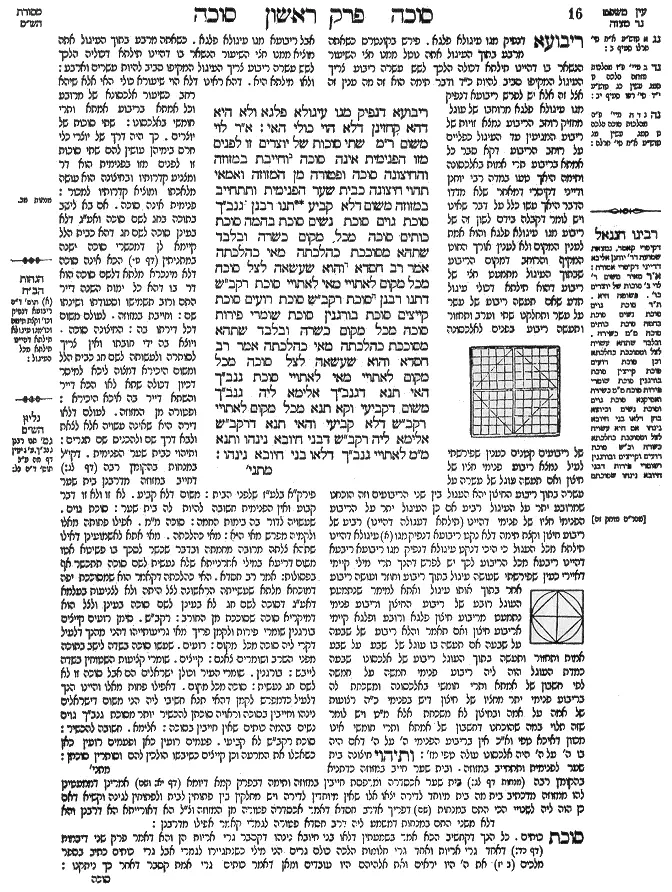
Sukkah 8b - Guemara
ריבועא דנפיק מגו עיגולא פלגא ולא היא דהא קחזינן דלא הוי כולי האי:
א"ר לוי משום ר"מ שתי סוכות של יוצרים זו לפנים מזו הפנימית אינה סוכה וחייבת במזוזה והחיצונה סוכה ופטורה מן המזוזה ואמאי תהוי חיצונה כבית שער הפנימית ותתחייב במזוזה משום דלא קביע תנו רבנן גנב"ך סוכת גוים סוכת נשים סוכת בהמה סוכת כותים סוכה מכל מקום כשרה ובלבד שתהא מסוככת כהלכתה מאי כהלכתה אמר רב חסדא והוא שעשאה לצל סוכה מכל מקום לאתויי מאי לאתויי סוכת רקב"ש דתנו רבנן סוכת רקב"ש סוכת רועים סוכת קייצים סוכת בורגנין סוכת שומרי פירות סוכה מכל מקום כשרה ובלבד שתהא מסוככת כהלכתה מאי כהלכתה אמר רב חסדא והוא שעשאה לצל סוכה מכל מקום לאתויי מאי לאתויי סוכת גנב"ך האי תנא דגנב"ך אלימא ליה גנב"ך משום דקביעי וקא תנא מכל מקום לאתויי רקב"ש דלא קביעי והאי תנא דרקב"ש אלימא ליה רקב"ש דבני חיובא נינהו ותנא מ"מ לאתויי גנב"ך דלאו בני חיובא נינהו:
Comments from Rashi on Masechet Sukkah Page 8b
אבל ריבועא מגו עיגולא פלגא . כשאתה מרבע בתוך העיגול אתה מוציא ממנו חצי השיעור הנשאר בו דהיינו תילתא דכוליה הלכך לשש עשרה ריבוע צריך העיגול המקיפו סביב להיות עשרים וארבע: ולאו מילתא היא . דהא ראינו דלא הוי שיעורא כולי האי אלא שיהא רחב כשיעור אלכסונא של מרובע וכל אמתא בריבוע אמתא ותרי חומשי באלכסונו: שתי סוכות של יוצרים . כך היה דרך של יוצרי כלי חרס בימיהן עושין להם שתי סוכות זו לפנים מזו בפנימית הוא דר ומצניע קדרותיו ובחיצונה הוא עושה מלאכתו ומוציא קדרותיו למכור: פנימית אינה סוכה . אם בא לישב בתוכה לחג לשם סוכה ואע"ג דלא בעינן סוכה לשם חג דהא כבית הלל קיימא לן דמכשרי סוכה ישנה במתניתין (דף ט.) הכא אינה סוכה דלא מינכרא מלתא דלשם סוכה הוא דר בו דהא כל ימות השנה דייר התם ורוב תשמישו וסעודתו ושינתו שם: וחייבת במזוזה . לעולם משום דכל דירתו בה: החיצונה סוכה . ויוצא בה ידי חובתו ואין צריך לסותרה ולעשותה לשם חג כבית הלל ומשום היכירא דמצוה ליכא למיסר דכיון דכולה שתא לאו הכא דייר והשתא דייר בה איכא היכירא: ופטורה מן המזוזה . לעולם דלאו דירה היא שאינה עשויה אלא לצאת ולבא דרך שם ולהכניס שם תגרים: ותיהוי כבית שער הפנימית . דקי"ל במנחות בהקומץ רבה (דף לג:) דחייב במזוזה מדרבנן בית שער פירק"א בלע"ז שלפני הבית: משום דלא קביע . לא זו ולא זו דבר קבוע ואין הפנימית חשובה להיות לה בית שער: סוכת גוים . שעשויה לדור בה בימות החמה: סוכה מ"מ . אפילו פחותה מאלו ולקמיה מפרש מאי היא: מאי כהלכתה . מאי אתא לאשמועינן דאילו שתהא צלתה מרובה מחמתה ובדבר שכשר לסכך בו פשיטא אטו משום דריעא במילי אחרנייתא שלא נעשית לשם סוכה תתכשר אף בפסולות: אמר רב חסדא . האי כהלכתה דקאמר הוא שמסוככת יפה דמוכחא מלתא שעשייתה הראשונה לצל היתה ולא לצניעות בעלמא דאע"ג דסוכה לשם חג לא בעינן לשם סוכה בעינן ולצל הוא דמיקריא סוכה שסוככת מן החורב: רקב"ש . סימן רועים קייצים בורגנין שומרי פירות ולקמן פריך מאי גריעותייהו דהני מהנך דלעיל דקרי ליה סוכה מכל מקום: רועים . שעשו סוכה בשדה לישב בתוכה מפני השרב ושומרים צאנם: קייצים . שומרי קציעות השטוחין בשדה לייבש: בורגנין . שומרי העיר וכולן ישראלים הם אבל סוכה זו לא לשם חג נעשית: סוכה מכל מקום . דאפילו פחות מאלו והיינו הנך דלעיל כדמפרש לקמן דהאי תנא חשיבי ליה הני משום דישראלים נינהו וחייבין בסוכה וראויה סוכתן להכשיר יותר מסוכת גנב"ך גוים נשים בהמה כותים שאין חייבין בסוכה: אלימא . חשובה להכשיר: סוכת רקב"ש לא קביעי . פעמים רועין כאן ופעמים רועין כאן כשאכלו את המרעה וכן קייצים כשיבשו הולכין להם וסותרין סוכתן:
Comments from Tosafot - Sukkah 8b
ריבועא דנפיק מגו עיגולא פלגא. פירש בקונטרס כשאתה מרבע בתוך העיגול אתה נוטל ממנו חצי השיעור הנשאר בו דהיינו תילתא דכולה הלכך לשש עשרה ריבוע צריך העיגול המקיפו סביב להיות כ"ד ודבר תימה הוא זה מה ענין זה אצל זה אלא יש לפרש ריבועא דנפיק מגו עיגולא פלגא מרוחבו של עוגל מחזיק רוחב הריבוע נמצא זויות של ריבוע המגיעין עד העיגול כפליים על רוחב הריבוע דקא סבר כל אמתא בריבוע תרי אמות באלכסונה ותימה היאך טעו במדה רבי יוחנן ודייני דקיסרי דמאחר שלא מדדו הדבר היאך עשו כלל על דבר שאינו ויש לומר דקבלה בידם לשון זה של ריבוע מגו עיגולא פלגא והוא אמת לענין המקום ולא לענין אורך החוט המקיף והרוחב דמקום הריבוע שבתוך העיגול מתמעט חצי של ריבוע דהוא תילתא דכולי עיגול תדע שאם תעשה ריבוע של עשר על עשר ותחלקנו שתי וערב ותחזור ותעשה ריבוע בפנים לאלכסונה של ריבועים קטנים כענין שפירשתי לעיל 
Sukkah 8b - Mishnah translated into english
while the perimeter of a square circumscribed by a circle is smaller than the circumference of that circle by half, i.e., if one adds half the perimeter of the square to the perimeter of the square, that is equal to the circumference of its circumscribing circle. Therefore, a circle with a circumference of twenty-four cubits would circumscribe a square with a perimeter of sixteen cubits, as prescribed by Rabbi Yoḥanan. The Gemara notes: And that is not the case, as we see that the circumference of the circumscribing circle is not that much. The actual circumference is closer to seventeen cubits.
§ Rabbi Levi said in the name of Rabbi Meir: With regard to two craftsmen’s booths, one within the other, as potters would build two booths, an inner one used as living quarters and an outer one for plying their craft and selling their wares, the inner one is not fit for fulfillment of the mitzva of sukka, since the potter resides there year-round and it is not evident during the Festival that he is residing there for the sake of the mitzva of sukka. And since it a permanent residence, it is also obligated in the mitzva of mezuza. And the outer booth is fit for fulfillment of the mitzva of sukka, since he does not reside there year-round, and when he resides there during the Festival it is evident that he is doing so for the sake of the mitzva. Since it is not designated as a year-round residence, but rather serves as an entrance to his residence and a passage for merchants and merchandise, it is not considered a residence and is not obligated in the mitzva of mezuza.
The Gemara asks: Why is the outer booth exempt from the mitzva of mezuza? Let the outer booth be considered like a gatehouse of the inner booth and therefore be obligated in the mitzva of mezuza. The Gemara answers: It is exempt because even the inner booth is not a permanent residence. It requires a mezuza because the potter resides there year-round; however, that alone does not render it a full-fledged residence that would obligate one to affix a mezuza to the outer booth as its gatehouse.
The Sages taught: The booths represented by the mnemonic: Gimmel, nun, beit, kaf, which stands for a booth of gentiles [goyim], a booth of women [nashim], a booth of domesticated animals [behema], a booth of Samaritans [Kutim], a booth of any sort, each is fit for use as a sukka, provided it is roofed in the standard sense. None of them is disqualified due to the one who constructed it or the purpose for which it was constructed.
The Gemara asks: What is the meaning of the term: In the standard sense? Rav Ḥisda said that it means: And provided that one established the booth to provide shade of a sukka from its roofing, it may be used to fulfill the mitzva of sukka.
The Gemara asks: What does the phrase: A booth of any sort, come to include? What other booths are included in this generalization? The Gemara answers: It comes to include the booths listed in another baraita with the mnemonic: Reish, kuf, beit, shin, as the Sages taught: The booth known by the mnemonic reish, kuf, beit, shin, which stands for the booth of shepherds [ro’im], the booth of fig driers [kayyatzim], the booth of guards of fields [burganin], the booth of the guards of produce [shomerei peirot], a booth of any sort, each is fit, provided it is roofed in the standard sense.
The Gemara asks again: What is the meaning of the term: In the standard sense? Rav Ḥisda said that it means: And provided that one established the booth to provide shade of a sukka, it may be used to fulfill the mitzva of sukka.
The Gemara asks: What does the phrase: A booth of any sort, come to include? The Gemara answers: It comes to include the booths listed in the first baraita cited above with the mnemonic gimmel, nun, beit, kaf.
The Gemara explains: This tanna who taught and detailed the halakhot of booths of gimmel, nun, beit, kaf did so because the fitness of the booths of gimmel, nun, beit, kaf for use in fulfilling the mitzva of sukka is powerful and more obvious to him because they are permanent structures, even though their builders are not obligated in the mitzva. And he taught: Booths of any sort, to include the booths of reish, kuf, beit, shin, which, although they are seasonal and not permanent structures, may still be used to fulfill the mitzva of sukka.
And that other tanna who taught and detailed the halakhot of booths of reish, kuf, beit, shin did so because the fitness of the booths of reish, kuf, beit, shin for use in fulfilling the mitzva of sukka is powerful and more obvious to him because those who constructed the booths are obligated in the mitzva of sukka. And he taught: Booths of any sort, to include the booths of gimmel, nun, beit, kaf, which, although those who constructed them are not obligated in the mitzva, may still be used to fulfill the mitzva of sukka.
Traduction : The William Davidson digital edition of the Koren Noé Talmud, with commentary by Rabbi Adin Even-Israel Steinsaltz.