 Talmud Bavli
Sukkah 56a : Youtube
Daf TubeYoutube
3 video classes :
Sukkah Page 56a
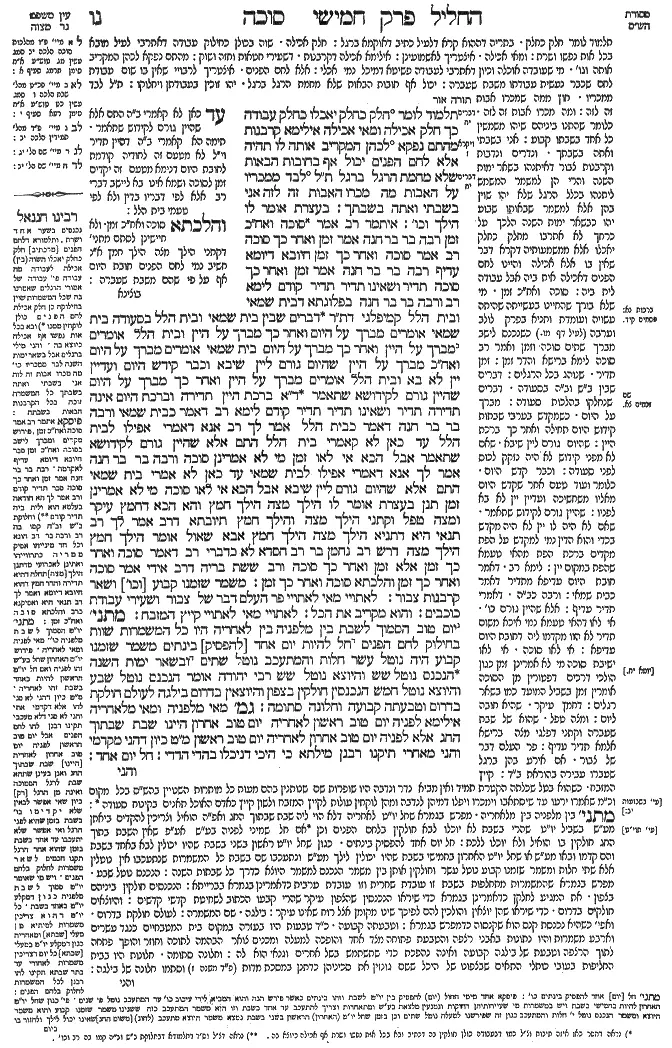
Sukkah 56a - Guemara
תלמוד לומר (דברים יח, ח) חלק כחלק יאכלו כחלק עבודה כך חלק אכילה ומאי אכילה אילימא קרבנות מהתם נפקא (ויקרא ז, ט) לכהן המקריב אותה לו תהיה אלא לחם הפנים יכול אף בחובות הבאות שלא מחמת הרגל ברגל ת"ל (דברים יח, ח) לבד ממכריו על האבות מה מכרו האבות זה לזה אני בשבתי ואתה בשבתך:
בעצרת אומר לו הילך וכו':
איתמר רב אמר סוכה ואח"כ זמן רבה בר בר חנה אמר זמן ואחר כך סוכה רב אמר סוכה ואחר כך זמן חיובא דיומא עדיף רבה בר בר חנה אמר זמן ואחר כך סוכה תדיר ושאינו תדיר תדיר קודם לימא רב ורבה בר בר חנה בפלוגתא דבית שמאי ובית הלל קמיפלגי דת"ר דברים שבין בית שמאי ובית הלל בסעודה בית שמאי אומרים מברך על היום ואחר כך מברך על היין ובית הלל אומרים מברך על היין ואחר כך מברך על היום בית שמאי אומרים מברך על היום ואח"כ מברך על היין שהיום גורם ליין שיבא וכבר קידש היום ועדיין יין לא בא ובית הלל אומרים מברך על היין ואחר כך מברך על היום שהיין גורם לקידושא שתאמר ד"א ברכת היין תדירה וברכת היום אינה תדירה תדיר ושאינו תדיר תדיר קודם לימא רב דאמר כבית שמאי ורבה בר בר חנה דאמר כבית הלל אמר לך רב אנא דאמרי אפילו לבית הלל עד כאן לא קאמרי בית הלל התם אלא שהיין גורם לקידושא שתאמר אבל הכא אי לאו זמן מי לא אמרינן סוכה ורבה בר בר חנה אמר לך אנא דאמרי אפילו לבית שמאי עד כאן לא אמרי בית שמאי התם אלא שהיום גורם ליין שיבא אבל הכא אי לאו סוכה מי לא אמרינן זמן תנן בעצרת אומר לו הילך מצה הילך חמץ והא הכא דחמץ עיקר ומצה טפל וקתני הילך מצה והילך חמץ תיובתא דרב אמר לך רב תנאי היא דתניא הילך מצה הילך חמץ אבא שאול אומר הילך חמץ הילך מצה דרש רב נחמן בר רב חסדא לא כדברי רב דאמר סוכה ואחר כך זמן אלא זמן ואחר כך סוכה ורב ששת בריה דרב אידי אמר סוכה ואחר כך זמן והלכתא סוכה ואחר כך זמן:
משמר שזמנו קבוע [וכו'] ושאר קרבנות צבור:
לאתויי מאי לאתויי פר העלם דבר של צבור ושעירי עבודת כוכבים:
והוא מקריב את הכל לאתויי מאי לאתויי קייץ המזבח:
מתני׳ יום טוב הסמוך לשבת בין מלפניה בין לאחריה היו כל המשמרות שוות בחילוק לחם הפנים חל להיות יום אחד [להפסיק] בינתים משמר שזמנו קבוע היה נוטל עשר חלות והמתעכב נוטל שתים ובשאר ימות השנה הנכנס נוטל שש והיוצא נוטל שש רבי יהודה אומר הנכנס נוטל שבע והיוצא נוטל חמש הנכנסין חולקין בצפון והיוצאין בדרום בילגה לעולם חולקת בדרום וטבעתה קבועה וחלונה סתומה:
גמ׳ מאי מלפניה ומאי מלאחריה אילימא לפניה יום טוב ראשון לאחריה יום טוב אחרון היינו שבת שבתוך החג אלא לפניה יום טוב אחרון לאחריה יום טוב ראשון מ"ט כיון דהני מקדמי והני מאחרי תיקנו רבנן מילתא כי היכי דניכלו בהדי הדדי:
חל יום אחד:
Comments from Rashi on Masechet Sukkah Page 56a
תלמוד לומר חלק כחלק . בתריה דההוא קרא דלעיל כתיב דאוקמא ברגל: חלק אכילה . שוה בכולן כחילוק עבודה דאתרבי לעיל מובא בכל אות נפשו ושרת: ומאי אכילה . איצטריך לאשמועינן: אילימא אכילה דקרבנות . דשעירי חטאות וחזה ושוק: מהתם נפקא לכהן המקריב אותה וגו' . מי שעובדה אוכלה וכיון דאתרבי לעבודה פשיטא דמיכל נמי אכלי: אלא לחם הפנים . איצטריך לרבויי שאין בו שום עבודת לחם שכבר נעשית עבודתו משבת שעברה: יכול אף חובות הבאות שלא מחמת הרגל ברגל . יהו זוכין בעבודתן ויחלוקו: ת"ל לבד ממכריו . חוץ ממה שמכרו אבות זה לזה: ומה מכרו אבות זה לזה . כלומר שהתנו ביניהם שיהו משמשין כל אחד בשבתו קבוע: אני בשבתי ואתה בשבתך . ונדרים ונדבות וקרבנות צבור דאיתנהו בשאר ימות השנה והרי הן למשמר המשמש ליתנהו בכלל הרגל שלא יהו שוין בהן אלא למשמר שבאותו שבוע יהו כבשאר ימות השנה הלכך על כרחך לא אתרבו מחלק כחלק יאכלו אלא ממשמעותיה דקרא דבר שאין בו אלא אכילה והיינו לחם הפנים דאכילה אית ביה אבל עבודה לית ביה: סוכה ואח"כ זמן . מי שלא בירך שהחיינו בעשייתה שהיתה עשוייה ועומדת ותניא בפרק לולב וערבה (לעיל סוכה דף מו.) כשנכנס לישב מברך שתים סוכה וזמן ואמר רב סוכה לימא ברישא והדר זמן: זמן תדיר . שנוהג בכל הרגלים: דברים שבין ב"ש וב"ה בסעודה . דברים שנחלקו בהלכות סעודה: מברך על היום . כשמקדש בערבי שבתות קדוש היום תחילה ואחר כך ברכת היין: שהיום גורם ליין שיבא . שאם לא מפני קידוש לא היה נזקק לכוס לפני סעודה: וכבר קדש היום כלומר ועוד טעם אחר שקדש היום מאליו משחשיכה ועדיין יין לא בא לפניו: שהיין גורם לקידוש שתאמר . שאם לא היה לו יין לא היה מקדש בכדי והוא הדין נמי למקדש על הפת מקדים ברכת הפת מהאי טעמא שהפת במקום יין: לימא רב . דאמר חובת היום עדיפא מתדיר דאמר כבית שמאי: ורבה כב"ה . דאמרי תדיר עדיף: אלא שהיין גורם כו' . אי לאו דהאי טעמא נמי איכא משום תדיר לא הוו מקדמו ליה דחובת היום עדיפא: אי לאו סוכה . אי לאו ישיבת סוכה מי לא אמרינן זמן כגון הולכי דרכים דפטורין מן הסוכה אומרין זמן בשביל המועד כמו בשאר רגלים: דחמץ עיקר . שהיא חובה ליום: ומצה טפל . שהוא של שבת שעברה וקתני דפלגי מצה ברישא אלמא תדיר עדיף: פר העלם דבר של צבור . אם אירע בהן ברגל שעברו עבירה בהוראת ב"ד: קייץ המזבח . כשהוא בטל שכלתה הקטרת תמיד ואין מביא נדר ונדבה היו שופרות שם שנותנין בהם מעות כל מותרות השנויין בהש"ס בכל מקום וכל מקום שאמרו ירעו עד שיסתאבו וימכרו ויפלו דמיהן לנדבה ומהן לוקחין עולות לקייץ המזבח ולשון קייץ כאדם האוכל תאנים בקינוח סעודה: מתני' בין מלפניה בין מלאחריה . מפרש בגמרא שחל יום טוב לאחריה דלא הוי ליה שבת שבתוך החג ואפילו הכי הואיל וצריכין להקדים ביאתן מע"ש בשביל יו"ט שהרי בשבת לא יוכלו לבא חולקין בלחם הפנים וכן אם חל שמיני לפניה בע"ש אע"פ שאין השבת בתוך החג חולקין בו הואיל ולא יוכלו ללכת: חל יום אחד להפסיק בינתים . כגון שחל יו"ט ראשון בשני בשבת שהיו יכולין לבא באחד בשבת והם קדמו ובאו מע"ש או שחל יום טוב האחרון בחמישי בשבת שהיו יכולין לילך מערב שבת ונתעכבו שם בשבת כל המשמרות שנתעכבו אין נוטלין אלא שתי חלות ומשמר שזמנו קבוע נוטל עשר וחולקין אותן בין משמר הנכנס למשמר היוצא כדרך כל שבתות השנה: הנכנס נוטל שבע . מפרש בגמרא שהמשמרות מתחלפות בשבת זו עובדת שחרית וזו עובדת ערבית כדאמרינן בגמרא בברייתא: הנכנסין חולקין ביניהם בצפון . את המגיע לחלקן כדאמרינן בגמרא כדי שיראו הנכנסין שהצפון עיקר שהרי קבעו הכתוב לשחיטת קדשי קדשים: והיוצאים חולקים בדרום . כדי שיראו שהן יוצאין והולכין להם לפיכך שינו מקומן אצל רוח שאינו עיקר: בילגה . שם המשמרה: לעולם חולקת בדרום . ואפי' כשהיא נכנסת קנס הוא שקנסוה כדמפרש בגמרא: וטבעתה קבועה . כ"ד טבעות היו בעזרה במקום בית המטבחים כנגד עשרים וארבע משמרות והיו נתונות באבני רצפה והטבעת פתוחה מצד אחד והופכה למעלה ומכניס צואר הבהמה לתוכה וחוזר והופך פתחה לתוך הרצפה וטבעת של בילגה קבועה ואינה נהפכת כדי שתשתמש בשל אחרים וגנאי הוא לה: וחלונה סתומה . חלונות היו בבית החליפות בעובי כותלי התאים שבצפונו של היכל ששם גונזין את סכיניהן כדתנן במסכת מדות (פ"ד משנה ז) וסתמו חלונה של בילגה:
Comments from Tosafot - Sukkah 56a
עד כאן לא קאמרי ב"ה התם אלא שהיין גורם לקידוש שתאמר. תימה הא קאמרי ב"ה דהיין תדיר וי"ל לא מטעם זה לחודיה קודמת לחובת היום דנימא מטעם זה יקדים זמן לסוכה ושמא אינו בא ליישב דברי רב אלא לפי דבריו בדין ולא לפי טעמי בית הלל: והלכתא סוכה ואח"כ זמן. ולא חיישינן לסתם מתני' דקתני הילך מצה הילך חמץ א"נ חשיב נמי לחם הפנים חובת היום אף על פי שהם משבת שעברה:
Sukkah 56a - Mishnah translated into english
The verse states: “They shall have like portions to eat” (Deuteronomy 18:8); just as all the watches receive an equal portion of the service, so too all the watches receive an equal portion in the eating. The Gemara asks: What is the eating mentioned in this verse? If you say it is the eating of offerings, the verse is superfluous, as it is derived from there: “And every meal-offering…shall be the priest’s that offers it” (Leviticus 7:9), which, although it was written with regard to meal-offerings, applies to all offerings. Moreover, it teaches that a priest who participates in the sacrifice of the offering shares in eating the offering. Rather, the verse is referring to the shewbread that was not part of the service this Shabbat, as it was baked the previous Shabbat.
One might have thought that all the watches should be equal even with regard to obligations that come not due to the Festival but are brought on the Festival nevertheless, as there were many vow-offerings and free-will offerings brought to the Temple that were not part of the Festival rite, but simply the result of people taking advantage of their presence in Jerusalem to fulfill their outstanding obligations. Therefore, the verse states: “Besides the transactions of their fathers’ houses” (Deuteronomy 18:8). What did the forefathers of each watch sell each other? They agreed with regard to the service of the watches: I will serve during my week, and you will serve during your week. Each watch has the right to perform the Temple service during its appointed weeks and to receive all priestly gifts offered during those weeks.
§ The mishna continues: On Shavuot that coincides with Shabbat the priest charged with the distribution says to each priest: Here is matza from the shewbread for you, and here is leavened bread from the two loaves for you. It was stated that there is a dispute between the amora’im, and Rav said: When one enters the sukka, he recites the blessing of the sukka: Who has made us holy through His mitzvot and has commanded us to sit in the sukka, and then the blessing of time: Who has given us life, sustained us, and brought us to this time. Rabba bar bar Ḥana said: One recites the blessing of time, and then the blessing of the sukka.
The Gemara elaborates: Rav said that one recites the blessing of sukka and then the blessing of time because the obligation of the day takes precedence. Rabba bar bar Ḥana said that one recites the blessing of time and then the blessing of the sukka because when a frequent practice and an infrequent practice clash, the frequent practice takes precedence over the infrequent practice, and the blessing of time is recited more frequently.
The Gemara suggests: Let us say that Rav and Rabba bar bar Ḥana disagree in the dispute of Beit Shammai and Beit Hillel. As the Sages taught in a baraita: These are the matters of dispute between Beit Shammai and Beit Hillel with regard to the halakhot of a meal. Beit Shammai say: When one recites kiddush over wine, he recites a blessing over the sanctification of the day and then recites a blessing over the wine. And Beit Hillel say: One recites a blessing over the wine and then recites a blessing over the day.
The Gemara elaborates: Beit Shammai say: One recites a blessing over the sanctification of the day and then recites a blessing over the wine, as the day causes the wine to come before the meal. And Beit Shammai offer an additional reason: The day has already been sanctified and the wine has not yet come. Since Shabbat was sanctified first, it should likewise be mentioned first. And Beit Hillel say: One recites a blessing over the wine and then recites a blessing over the day, as the wine causes the kiddush to be recited. Were there no wine, kiddush would not be recited. Alternatively, Beit Hillel say: The blessing over wine is recited frequently, and the blessing over the day is not recited frequently, and when a frequent practice and an infrequent practice clash, the frequent practice takes precedence over the infrequent practice.
The Gemara suggests: Let us say that it was Rav who stated his opinion in accordance with the opinion of Beit Shammai that the blessing over the sanctification of the day takes precedence over the blessing over the wine, and it was Rabba bar bar Ḥana who stated his opinion in accordance with Beit Hillel, i.e., that the frequent blessing takes precedence.
The Gemara rejects this suggestion. Rav could have said to you: It is I who stated my opinion even in accordance with the opinion of Beit Hillel, as Beit Hillel stated their opinion there in the case of kiddush only due to the additional reason that the wine causes the kiddush to be recited. But here there is no similar connection between the two blessings, and if there was no blessing on time, wouldn’t we recite the blessing of the sukka anyway? The fact is that the blessing on the sukka is recited throughout the week of the Festival, when no blessing on time is recited.
And Rabba bar bar Ḥana could have said to you: It is I who stated my opinion even in accordance with the opinion of Beit Shammai, as Beit Shammai only stated their opinion there in the case of kiddush, and only due to the additional reason that the day causes the wine to come before the meal. However, here, if there was no blessing of sukka, wouldn’t we recite the blessing of time even without sitting in the sukka, simply due to the onset of the Festival?
The Gemara cites proof from that which we learned in the mishna: On Shavuot the priest charged with the distribution of the shewbread and the two loaves says to each priest: Here is matza for you, here is leavened bread for you. But here, where the ḥametz is primary and the matza is subordinate to it, as it is the festival of Shavuot when the two loaves of leavened bread are the offering of the day, and yet the mishna teaches: Here is matza for you, and here is leavened bread for you, it accords precedence to the frequent shewbread over the obligation of the day. This is a conclusive refutation of the opinion of Rav.
The Gemara responds that Rav could have said to you: This matter is a dispute between tanna’im, as it is taught in a baraita that the priest charged with distribution says: Here is matza for you, here is leavened bread for you. Abba Shaul says that he would say: Here is leavened bread for you, here is matza for you.
With regard to the final halakhic decision: Rav Naḥman bar Rav Ḥisda taught: The halakha is not in accordance with the statement of Rav, who said: One recites the blessing of sukka and then the blessing of time; rather, one recites the blessing of time and then the blessing of sukka. Rav Sheshet, son of Rav Idi, said: One recites the blessing of sukka and then the blessing of time, in accordance with the opinion of Rav. And the Gemara concludes that the halakha is: One recites the blessing of sukka and then the blessing of time.
§ The mishna continues: The priestly watch whose time is scheduled during the Festival, sacrifices the daily offerings during the Festival, as well as vow-offerings, free-will offerings, and all other communal offerings. The Gemara asks: What additional communal offerings does the mishna come to include? The Gemara answers: It comes to include a bull brought for an unwitting communal sin, which is brought by the community due to a transgression committed by the community as a whole as a result of an erroneous halakhic decision issued by the Great Sanhedrin, although it has no fixed time and need not be brought during the Festival; and it includes goats brought for the unwitting transgression of the prohibition against idol worship. If these offerings are brought during the Festival, they are sacrificed by members of the watch whose shift is scheduled for that week.
The mishna concludes: And that watch sacrifices all of them. The Gemara asks: What does this phrase come to include? The Gemara explains: It comes to include the summer fruits of the altar. Whenever the altar was inactive, special burnt-offerings were sacrificed as communal donations in deference to the Divine Presence so that the altar would not remain empty. These offerings were sacrificed by the scheduled watch.
MISHNA: In the case of a Festival that occurs adjacent to Shabbat, both when it occurs preceding it and when it occurs following it, all the watches that arrived early or remained late to serve in the Temple were of equal status in the distribution of the shewbread on that Shabbat. If one day happened to separate between the Festival and Shabbat, the watch whose time was scheduled would take ten of the twelve loaves of shewbread, and the watch that was detained after the Festival because there was insufficient time to get home before Shabbat takes two loaves. And during the rest of the days of the year, when the changing of the watches takes place on Shabbat, the incoming watch takes six loaves and the outgoing watch takes six loaves. Rabbi Yehuda says: The incoming watch takes seven loaves and the outgoing takes five.
The standard procedure was that the members of the incoming watch divide the shewbread in the north section of the courtyard, and the outgoing watch in the south. However, there was one exception: The watch of Bilga, due to a penalty imposed upon it, always divides the shewbread to its members in the south, even when it is the incoming watch. And its ring used to facilitate slaughter of the animals was fixed in place, rendering it useless, and its niche among the niches in the wall of the Chamber of Knives, where the priests would store their knives and other vessels, was sealed.
GEMARA: The Gemara asks: What is the meaning in the mishna of preceding it and what is the meaning of following it? If we say preceding it is referring to the first Festival day preceding Shabbat and following it is referring to the last day of the Festival following Shabbat, then this is the case of Shabbat that is during the Festival, and that is how the mishna should have presented it.
Rather, preceding it is referring to the last day of the Festival that precedes Shabbat and following it is referring to the first Festival day that follows Shabbat. What is the reason that the watches share equally in these cases? Since these are coming early, as the arriving watch cannot arrive after Shabbat because the Festival begins right away, and these remain late, as the outgoing watch cannot leave at the end of the Festival due to the immediate onset of Shabbat, the Sages instituted this matter so that they would eat the shewbread together.
The mishna continues: If one day happened. During the rest of the days of the year, the incoming watch takes six loaves and the outgoing watch takes six loaves. Rabbi Yehuda says: The incoming watch takes seven loaves and the outgoing takes five.
Traduction : The William Davidson digital edition of the Koren Noé Talmud, with commentary by Rabbi Adin Even-Israel Steinsaltz.