 Talmud Bavli
Sukkah 31a : Youtube
Daf TubeYoutube
3 video classes :
Sukkah Page 31a
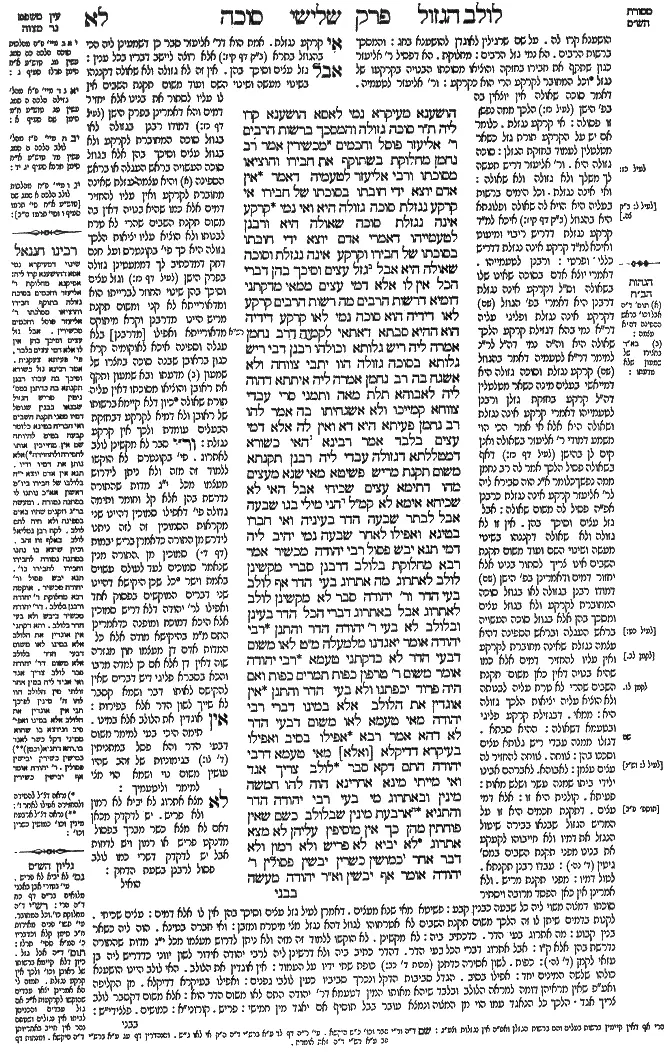
Sukkah 31a - Guemara
הושענא מעיקרא נמי לאסא הושענא קרו ליה ת"ר סוכה גזולה והמסכך ברשות הרבים ר' אליעזר פוסל וחכמים מכשירין אמר רב נחמן מחלוקת בשתוקף את חבירו והוציאו מסוכתו ורבי אליעזר לטעמיה דאמר אין אדם יוצא ידי חובתו בסוכתו של חבירו אי קרקע נגזלת סוכה גזולה היא ואי נמי קרקע אינה נגזלת סוכה שאולה היא ורבנן לטעמייהו דאמרי אדם יוצא ידי חובתו בסוכתו של חבירו וקרקע אינה נגזלת וסוכה שאולה היא אבל גזל עצים וסיכך בהן דברי הכל אין לו אלא דמי עצים ממאי מדקתני דומיא דרשות הרבים מה רשות הרבים קרקע לאו דידיה הוא סוכה נמי לאו קרקע דידיה הוא ההיא סבתא דאתאי לקמיה דרב נחמן אמרה ליה ריש גלותא וכולהו רבנן דבי ריש גלותא בסוכה גזולה הוו יתבי צווחה ולא אשגח בה רב נחמן אמרה ליה איתתא דהוה ליה לאבוהא תלת מאה ותמני סרי עבדי צווחא קמייכו ולא אשגחיתו בה אמר להו רב נחמן פעיתא היא דא ואין לה אלא דמי עצים בלבד אמר רבינא האי כשורא דמטללתא דגזולה עבדי ליה רבנן תקנתא משום תקנת מריש פשיטא מאי שנא מעצים מהו דתימא עצים שכיחי אבל האי לא שכיחא אימא לא קמ"ל הני מילי בגו שבעה אבל לבתר שבעה הדר בעיניה ואי חברו בטינא ואפילו לאחר שבעה נמי יהיב ליה דמי תנא יבש פסול רבי יהודה מכשיר אמר רבא מחלוקת בלולב דרבנן סברי מקשינן לולב לאתרוג מה אתרוג בעי הדר אף לולב בעי הדר ור' יהודה סבר לא מקשינן לולב לאתרוג אבל באתרוג דברי הכל הדר בעינן ובלולב לא בעי ר' יהודה הדר והתנן רבי יהודה אומר יאגדנו מלמעלה מ"ט לאו משום דבעי הדר לא כדקתני טעמא רבי יהודה אומר משום ר' טרפון כפות תמרים כפות ואם היה פרוד יכפתנו ולא בעי הדר והתנן אין אוגדין את הלולב אלא במינו דברי רבי יהודה מאי טעמא לאו משום דבעי הדר לא דהא אמר רבא אפילו בסיב ואפילו בעיקרא דדיקלא [ואלא] מאי טעמא דרבי יהודה התם דקא סבר לולב צריך אגד ואי מייתי מינא אחרינא הוה להו חמשה מינין ובאתרוג מי בעי רבי יהודה הדר והתניא ארבעת מינין שבלולב כשם שאין פוחתין מהן כך אין מוסיפין עליהן לא מצא אתרוג לא יביא לא פריש ולא רמון ולא דבר אחר כמושין כשרין יבשין פסולין ר' יהודה אומר אף יבשין וא"ר יהודה מעשה
Comments from Rashi on Masechet Sukkah Page 31a
הושענא קרו לה . על שם שרגילין לאוגדן להושענא בחג: והמסכך ברשות הרבים . הא נמי גזל הרבים: מחלוקת . הא דפסיל ר' אליעזר כגון שתקף את חבירו בחזקה והוציאו מסוכתו הבנויה בקרקעו של נגזל וכל המחובר לקרקע הרי הוא כקרקע: ור' אליעזר לטעמיה . דאמר סוכה שאולה אין יוצאין בה בפ' הישן (לעיל סוכה כז:) הלכך ממה נפשך זו פסולה: אי קרקע נגזלת . כלומר אם יש על הקרקע תורת גזל כשאר מטלטלין לעמוד בחזקת הגזלן: סוכה גזולה היא . ור' אליעזר דריש תעשה לך משלך ולא גזולה ולא שאולה: ואי אינה נגזלת . וכל הימים ברשות בעליה היא הויא לה שאולה ופלוגתא היא בהגוזל (ב"ק דף קיז:) איכא למ"ד קרקע נגזלת דדריש ריבוי ומיעוט ואיכא למ"ד קרקע אינה נגזלת דדריש כללי ופרטי: ורבנן לטעמייהו . דאמרי יוצא אדם בסוכה שאינו שלו בשאולה וס"ל דקרקע אינה נגזלת דרבנן היא דאמרי בפ' הגוזל (שם) דקרקע אינה נגזלת ופליגי עליה דר"א נמי בהא דגזילת קרקע הלכך שאולה היא וה"ה נמי דה"ל לר"נ למימר דר"א לטעמיה דאמר בהגוזל (שם) קרקע נגזלת וסוכה גזולה היא דמייאשי בעלים מינה כשאר מטלטלין דה"ל קרקע בחזקת גזלן ורבנן לטעמייהו דאמרי קרקע אינה נגזלת ושאולה היא אלא אי אמר הכי הוי משמע דמודי ר' אליעזר בשאולה ואנן קים לן בהישן (לעיל סוכה דף כז:) דאף בשאולה פסיל הלכך אמר לה רב נחמן ממה נפשך כלומר א"נ הוה סבירא ליה לר' אליעזר קרקע אינה נגזלת כרבנן אפ"ה פסיל לה משום שאולה: אבל גזל עצים וסיכך בהן . אין זו לא גזולה ולא שאולה דקננהו בשינוי מעשה ושינוי השם ועוד משום תקנת השבים אינו צריך לסתור בנינו אלא יחזור דמים ודאמרינן בפ' הישן (שם) דמודו רבנן בגזולה לאו בגוזל סוכה המחוברת לקרקע ולא בגוזל עצים ומסכך בהן אלא בגוזל סוכה העשויה בראש העגלה ובראש הספינה דהיא עצמה נגזלת שאינה מחוברת לקרקע ואין עליו להחזיר דמים אלא כמו שהיא בנויה דאין כאן משום תקנת השבים שהרי לא טרח עליה לבנותה ולא הוציא עליה יציאות הלכך גזולה היא: ממאי . דבגזילת קרקע פליגי ובטעמא דשאולה: ההיא סבתא . דגזלו ממנה עבדי ריש גלותא עצים וסככו בהן: צווחה . צווחה להחזיר לה עצים עצמן: לאבוהא . לאברהם אבינו ילידי ביתו שמנה עשר ושלש מאות: פעיתא . קולנית היא זו: אלא דמי עצים . דתקנת חכמים היא זו על המריש הגזול שבנאו בבירה שיטול הנגזל את דמיו ולא חייבוהו לקעקע את בנינו מפני תקנת השבים במס' גיטין (ד' נה.): עבדו רבנן תקנתא . לטול דמיו: מפני תקנת מריש . ולא אמרינן אין כאן הפסד מרובה ויסתיר סוכתו דמצוה משוי ליה כל שבעה כבנין קבע: פשיטא מאי שנא מעצים . דאמרן לעיל גזל עצים וסיכך בהן אין לו אלא דמים: עצים שכיחי . לקנות בדמים שיתן לו זה הלכך משום תקנת השבים לא אטרחוהו לגוזל דהא נגזל מצי מיטרח ומזבן: ואי חברה בטינא . הוה ליה כשאר בנין קבוע: מה אתרוג בעי הדר . כדכתיב ביה: לא מקשינן . לא הוקשו ללמוד זה מזה ולא ניתן לדרוש מעצמו מכל י"ג מדות שהתורה נדרשת בהן אלא ק"ו: אבל אתרוג דברי הכל בעי הדר . דהדר כתיב ביה ולא דרשינן ליה לרבי יהודה אידור לשון יווני כדדריש ליה בן עזאי לקמן (סוכה ד' לה.): כפות . לשון אסירה כדתנן (מכות ד' כב:) כופת שתי ידיו על העמוד: אין אוגדין את הלולב . האי לולב היינו הושענא כולהו שלשה המינים יחד: אפילו בסיב . הגדל סביבות הדקל ונכרך סביביו כעין לולבי גפנים: ואפילו בעיקרא דדיקלא . מן הקליפה ואע"פ שאין מראיהן דומה למראה הלולב ובלבד שיהא מאותו המין דטעמא דר' יהודה התם לאו משום הדר הוא: אלא משום דקסבר לולב צריך אגד . הלכך כל הנאגד עמו הוי מן המצוה ונמצא עובר בבל תוסיף אם יאגד מין חמישי: פריש . קורוני"א: כמושים . פלצידי"ש:
Comments from Tosafot - Sukkah 31a
אי קרקע נגזלת. אמת הוא דר' אליעזר סבר כן דשמעינן ליה הכי בהגוזל בתרא (ב"ק דף קיז:) אלא רוצה ליישב דבריו בכל ענין: אבל גזל עצים וסיכך בהן. אין זה לא גזולה ולא שאולה דקננהו בשינוי מעשה ושינוי השם ועוד משום תקנת השבים אין לו עליו לסתור את בנינו אלא יחזיר דמים והא דאמרינן בפרק הישן (לעיל סוכה דף כז:) דמודו רבנן בגזולה לאו בגוזל סוכה המחוברת לקרקע ולא בגוזל עצים וסיכך בהן אלא בגוזל סוכה העשויה בראש העגלה או בראש הספינה והיא עצמה נגזלת שאינה מחוברת לקרקע ואין עליו להחזיר דמים אלא כמו שהיא בנויה דאין בה משום תקנת השבים שהרי לא טרח לבנותו ולא הוציא עליו יציאות הלכך גזולה היא כך פי' בקונטרס ועל חנם דחק דמדכתיב לך דממעטינן גזולה בפרק הישן (לעיל סוכה דף כז:) וגזל עצים וסיכך בהן שינוי החוזר לברייתו הוא ומדאורייתא לא קני ומשום תקנת מריש היינו מדרבנן וקרא מיתוקם מדאורייתא ואפילו [מדרבנן] בלא עגלה וספינה איכא לאוקומיה קרא כגון בראובן שבנה סוכה בחצרו של שמעון מדעתו ובא שמעון ותקף את ראובן והוציאו מסוכתו דאין עליה תורת שאולה כיון דלא קיימא ברשותו של ראובן ולא דמיא לקרקע דבחזקת הבעלים עומדת ולכך אין קרקע נגזלת: ור"י סבר לא מקשינן לולב לאתרוג. פי' בקונטרס לא הוקשו ללמוד זה מזה ולא ניתן לידרוש מעצמו מכל י"ג מדות שהתורה נדרשת בהן אלא קל וחומר ותימה גדולה פי' דאפילו סמוכין דהיינו שני מקראות הסמוכין זה לזה ניתנו לידרש מן התורה כדאמרן בריש יבמות (דף ד.) סמוכין מן התורה מנין שנאמר סמוכים לעד לעולם עשוים באמת וישר כל שכן היקישא דהיינו שני דברים המוקשים בפסוק אחד ואפילו לר' יהודה דלא דריש סמוכין אלא היכא דמוכח ומופנה כדאמרינן התם מ"מ בהיקישא מודה אלא כל המדות אדם דן מעצמו חוץ מגזרה שוה דאין דן אלא אם כן למדה מרבו והכא בסברא פליגי דיש דברים שאין להקישם לאותו דבר ושמא קסבר לא שייך לשון הדר אלא בפירות: אין אוגדין את הלולב אלא במינו. תימה היכי בעי למימר משום דבעי הדר והא פסל במתניתין (ד' לו:) בגימוניות של זהב שהיו עושין משום נוי ושמא הוי מצי למימר וליטעמיך: לא מצא אתרוג לא יביא לא רמון ולא פריש. יש לדקדק מכאן דאם לא מצא כשר מברך בפסול מדנקט פריש או רמון ויש לדחות אבל יש לדקדק דשרי כמו לולב פסול לרבנן בשעת הדחק:
Sukkah 31a - Mishnah translated into english
it is called hoshana, which is a term used to describe the four species. The Gemara answers: This is not a full-fledged change of name, as occasionally it also happens that they initially refer to a myrtle branch as a hoshana while it is attached to the tree.
§ The Sages taught: With regard to a stolen sukka and with regard to one who roofs a sukka in the public domain, which is tantamount to robbing land from the public, Rabbi Eliezer deems these sukkot unfit for use in fulfillment of the mitzva, and the Rabbis deem them fit.
Rav Naḥman said: This dispute is limited to a case where one assaults another and forcibly evicts him from his sukka, and takes his place in the sukka. In that case, Rabbi Eliezer deems the sukka unfit. And Rabbi Eliezer conforms to his own reasoning, as he said: A person does not fulfill his obligation with the sukka of another. Therefore, in any event, he does not fulfill his obligation with it. If land can be stolen and acquired by the robber, the sukka from which he evicted the owner is a stolen sukka. And if indeed land cannot be stolen, nevertheless, the robber does not fulfill his obligation according to Rabbi Eliezer, as it is a borrowed sukka.
And the Rabbis conform to their reasoning, as they said: A person fulfills his obligation with the sukka of another. And since land cannot be stolen and the sukka is merely a borrowed sukka and not a stolen one, the robber fulfills his obligation, despite the fact that he committed a reprehensible act.
However, if one stole wood and roofed a sukka with it, everyone agrees, as Rabbi Eliezer concedes, that the original owner of the wood has rights only to the monetary value of the wood. The wood itself belongs to the robber, so it is not a stolen sukka.
The Gemara asks: From where does Rav Naḥman draw the conclusion that the dispute is with regard to a stolen sukka and not with regard to a sukka established with stolen building materials?
The Gemara answers: From the fact that the halakha of a stolen sukka is juxtaposed in the baraita to the halakha of a sukka established in the public domain, the baraita teaches that the legal status of the stolen sukka is similar to the legal status of a sukka established in the public domain. Just as one does not fulfill his obligation with a sukka in the public domain because the land is not his, with regard to the stolen sukka too, one does not fulfill his obligation because the land is not his, not because the building materials were stolen.
The Gemara relates: There was a certain old woman who came before Rav Naḥman. She said to him: The Exilarch and all the Sages in his house have been sitting in a stolen sukka. She claimed that the Exilarch’s servants stole her wood and used it to build the sukka. She screamed, but Rav Naḥman did not pay attention to her. She said to him: A woman whose father, Abraham, our forefather, had three hundred and eighteen slaves screams before you, and you do not pay attention to her? She claimed that she should be treated with deference due to her lineage as a Jew. Rav Naḥman said to the Sages: This woman is a screamer, and she has rights only to the monetary value of the wood. However, the sukka itself was already acquired by the Exilarch.
Ravina said: With regard to the stolen large beam of a sukka, the Sages instituted an ordinance that the robber need not return it intact, due to the general ordinance of a beam. By the letter of the law, one who stole a beam and incorporated it in the construction of a new house is required to dismantle the house and return the beam. The Sages instituted an ordinance requiring the robber to repay the monetary value of the beam instead. They instituted this ordinance to facilitate the repentance of the robber, who would be less likely to repent if doing so entailed destruction of the house.
The Gemara asks: This is obvious. In what way is the beam different from other wood used in establishing the sukka? The Gemara answers: Lest you say: Wood is common, and therefore the owners are more likely to despair of recovering the wood and will suffice with receiving monetary restitution and replacing the wood, but, with regard to this large beam, which is not common, say that there is no despair, and the robber is required to return the actual beam, therefore, Ravina teaches us that the ordinance applies even to this beam, and the robber is required to return only its monetary value.
The Gemara notes: This halakha that the robber need not dismantle the sukka and return the beam applies only within the seven days of the Festival. However, after the seven days, the beam returns to the owner intact. And if the robber attached it with mortar and it is affixed permanently to the sukka, then even after the seven days of the Festival, the ordinance remains in effect, and the robber gives the original owner the monetary value of the beam.
§ It was taught in the Tosefta: A dry lulav is unfit. Rabbi Yehuda deems it fit. Rava said: The dispute is specifically with regard to a lulav, as the Rabbis hold: We liken the lulav to the etrog, based on their juxtaposition in the verse. Just as the etrog requires beauty, so too, the lulav requires beauty. And Rabbi Yehuda holds: We do not liken the lulav to the etrog. However, with regard to an etrog, everyone agrees that we require beauty [hadar] as the verse states: “Fruit of a beautiful tree” (Leviticus 23:40) and a dry etrog does not meet that criterion.
The Gemara asks: And with regard to a lulav, does Rabbi Yehuda really not require beauty? But didn’t we learn in the mishna that Rabbi Yehuda says: With regard to a lulav whose leaves have spread out, one should bind the lulav from the top. What is the reason to do so? Is it not because he requires beauty in the case of lulav?
The Gemara rejects this: No, as the reason is taught: Rabbi Yehuda says in the name of Rabbi Tarfon that the same verse states: “Branches [kappot] of a date palm.” The Sages interpret the term to mean bound [kafut], indicating that if the leaves of the lulav were spread, one should bind it.
The Gemara asks: And does Rabbi Yehuda not require beauty with regard to the lulav? But didn’t we learn in a mishna: One binds the lulav only with its own species, this is the statement of Rabbi Yehuda? What is the reason that Rabbi Yehuda requires the binding to be from its own species? Is it not due to the fact that he requires beauty with regard to the lulav?
The Gemara answers: No, that is not the reason, as Rava said: According to Rabbi Yehuda, one may bind the lulav even with fiber that grows around the trunk of the date palm and even with the root of the date palm, even though these do not meet the criterion of beauty. The Gemara asks: Rather, what is the rationale for the opinion of Rabbi Yehuda there, that a lulav must be bound with its own species? The Gemara answers: It is because he holds that a lulav requires binding, and if one brought another species to bind it, they are five species instead of four, violating the prohibition against adding to the mitzvot of the Torah.
The Gemara asks: And with regard to an etrog, does Rabbi Yehuda require beauty? But isn’t it taught in a baraita: With regard to the four species of the lulav, just as one may not diminish from their number, so too, one may not add to their number. If one did not find an etrog, he should not bring a quince, a pomegranate, or any other item instead. If the species are slightly dried, they are fit. If they are completely dry, they are unfit. Rabbi Yehuda says: Even dry etrogim are fit.
And Rabbi Yehuda said: There was an incident
Traduction : The William Davidson digital edition of the Koren Noé Talmud, with commentary by Rabbi Adin Even-Israel Steinsaltz.