 Talmud Bavli
Sukkah 47a : Youtube
Daf TubeYoutube
3 video classes :
Sukkah Page 47a
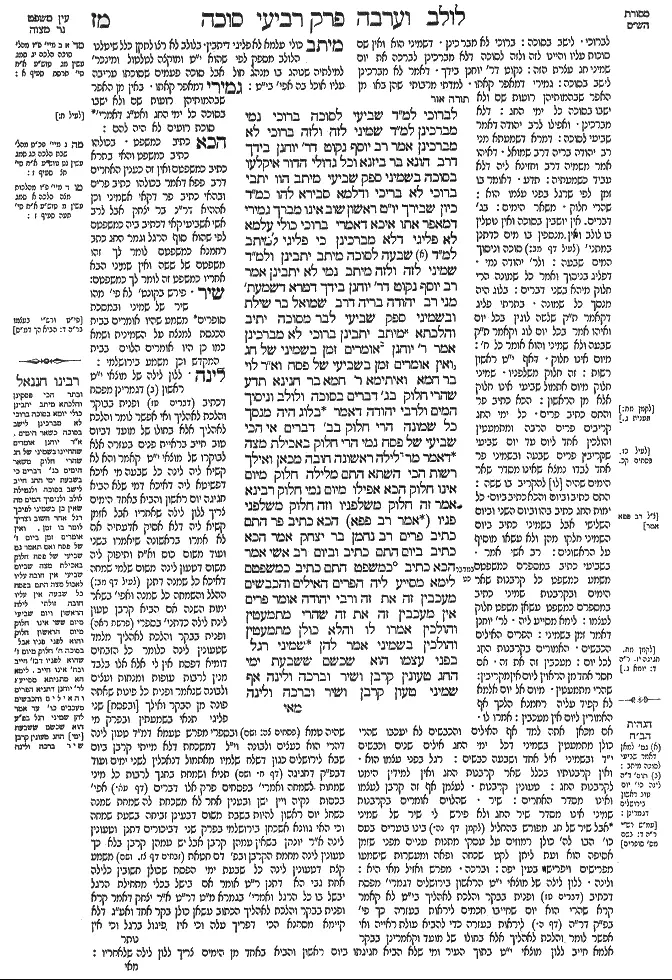
Sukkah 47a - Guemara
לברוכי למ"ד שביעי לסוכה ברוכי נמי מברכינן למ"ד שמיני לזה ולזה ברוכי לא מברכינן אמר רב יוסף נקוט דר' יוחנן בידך דרב הונא בר ביזנא וכל גדולי הדור איקלעו בסוכה בשמיני ספק שביעי מיתב הוו יתבי ברוכי לא בריכי ודלמא סבירא להו כמ"ד כיון שבירך יו"ט ראשון שוב אינו מברך גמירי דמאפר אתו איכא דאמרי ברוכי כולי עלמא לא פליגי דלא מברכינן כי פליגי למיתב למ"ד שבעה לסוכה מיתב יתבינן ולמ"ד שמיני לזה ולזה מיתב נמי לא יתבינן אמר רב יוסף נקוט דר' יוחנן בידך דמרא דשמעת' מני רב יהודה בריה דרב שמואל בר שילת ובשמיני ספק שביעי לבר מסוכה יתיב והלכתא מיתב יתבינן ברוכי לא מברכינן אמר ר' יוחנן אומרים זמן בשמיני של חג ואין אומרים זמן בשביעי של פסח וא"ר לוי בר חמא ואיתימא ר' חמא בר חנינא תדע שהרי חלוק בג' דברים בסוכה ולולב וניסוך המים ולרבי יהודה דאמר בלוג היה מנסך כל שמונה הרי חלוק בב' דברים אי הכי שביעי של פסח נמי הרי חלוק באכילת מצה דאמר מר לילה ראשונה חובה מכאן ואילך רשות הכי השתא התם מלילה חלוק מיום אינו חלוק הכא אפילו מיום נמי חלוק רבינא אמר זה חלוק משלפניו וזה חלוק משלפני פניו (אמר רב פפא) הכא כתיב פר התם כתיב פרים רב נחמן בר יצחק אמר הכא כתיב ביום התם כתיב וביום רב אשי אמר הכא כתיב (במדבר כט, ו) כמשפט התם כתיב כמשפטם לימא מסייע ליה הפרים האילים והכבשים מעכבין זה את זה ורבי יהודה אומר פרים אין מעכבין זה את זה שהרי מתמעטין והולכין אמרו לו והלא כולן מתמעטין והולכין בשמיני אמר להן שמיני רגל בפני עצמו הוא שכשם ששבעת ימי החג טעונין קרבן ושיר וברכה ולינה אף שמיני טעון קרבן ושיר וברכה ולינה
Comments from Rashi on Masechet Sukkah Page 47a
לברוכי . לישב בסוכה: ברוכי לא מברכינן . דשמיני הוא ואין שם סוכות עליו והיינו לזה ולזה לסוכה דלא מברכינן לברכה את יום שמיני חג עצרת הזה: נקוט דר' יוחנן בידך . דאמר לא מברכינן לישב בסוכה: גמירי דמאפר קאתו . למדתי מרבותי שהן באו מן האפר שבהמותיהן רועות שם ולא ישבו בסוכה כל ימי החג: דלא מברכינן . ואפילו לרב יהודה דאמר שביעי לסוכה: דמרא דשמעתא מני רב יהודה בריה דרב שמואל . דאיהו אמר משמיה דרב וחזינא ליה דלא עביד כשמעתיה: תדע . דאומר בו זמן לפי שרגל בפני עצמו הוא: שהרי חלוק . משאר הימים: בג' דברים . אין יושבין בסוכה ואין נוטלין בו לולב ואין מנסכין בו מים כדתנן במתני' (לעיל סוכה דף מב:) סוכה וניסוך המים שבעה: ולר' יהודה נמי . דפליג בניסוך ואמר כל שמונה הרי חלוק מיהא בשני דברים: בלוג היה מנסך כל שמונה . בתרתי פליג דקאמר ת"ק שלשה לוגין בכל יום ואיהו אמר בכל יום לוג וקאמר ת"ק שבעה ולא שמיני והוא אומר כל ח': מיום אינו חלוק . דאף י"ט ראשון רשות: זה חלוק משלפניו . שמיני חלוק מיום אתמול שביעי אינו חלוק אלא מן הראשון: הכא כתיב פר והתם כתיב פרים . כל ימי החג קריבים פרים הרבה ומתמעטין והולכין אחד ליום עד יום שביעי שקריבין פרים שבעה ובשמיני פר אחד לבדו נמצא שאינו מסדר שאר הימים שהיה [לו] להקריב בו ששה: התם כתיב וביום והכא כתיב ביום . כל ימות החג כתיב בהו וביום השני וביום השלישי אבל בשמיני כתיב ביום השמיני חלקו מהן ולא עשאו מוסיף על הראשונים: רב אשי אמר . בשביעי כתיב במספרם כמשפטם משמע כמשפט כל קרבנות שאר הימים ובקרבנות שמיני כתיב במספרם כמשפט עשאן משפט חלוק לעצמו: לימא מסייע ליה . לר' יוחנן דאמר זמן בשמיני: הפרים האילים הכבשים . האמורים בקרבנות החג לכל יום: מעכבין זה את זה . אם חסר אחד מן הראוין ליום אין מקריבין: שהרי מתמעטין . מיום אל יום אלמא לא קפיד עליה רחמנא הלכך אף האמורין ליום אין מעכבין: אמרו לו . אם מכאן אתה למד אף האילים והכבשים לא יעכבו שהרי כולן מתמעטין בשמיני דכל ימי החג אילים שנים וכבשים י"ד ובשמיני איל אחד ושבעה כבשים: רגל בפני עצמו הוא . ואין קרבנותיו בכלל שאר קרבנות החג ואין למידין הימנו לקרבנות החג: טעונין קרבנות . לעצמן אף זה קרבן לעצמו ואינו מסדר האחרים: שיר . שהלוים אומרים בקרבנות שמיני אינו מסדר שיר החג ולא פירש לי שיר של שמיני אבל שיר של חג מפורש בהחליל (לקמן סוכה דף נה.) בינו בוערים בעם כו' הבו לה' כולן רמוזים על עסקי מתנות עניים מפני שזמן אסיפה הוא ועת ליתן לקט שכחה ופאה ומעשרות שישמעו מפרישים ויפרישו בעין יפה: וברכה . מפרש ואזיל מאי היא: ולינה . ללון לילה של מוצאי י"ט הראשון בירושלים דגמרי' מפסח דכתיב (דברים טז) ופנית בבקר והלכת לאהליך בי"ט לא קאמר קרא שהרי הוא יום שחייבו חכמים ליראות בעזרה כך פי' בפ"ק דר"ה (דף ה.) ליראות בעזרה כדי להביא עולת ראייה ואי אפשר לומר והלכת לאהליך אלא בחולו של מועד וקאמרינן בבקר אלמא חייב ללון מוצאי י"ט בתוך העיר ומי שלא הביא חגיגתו ביום ראשון והביא באחד מן הימים צריך ללון לילה שלאחריו:
Comments from Tosafot - Sukkah 47a
גמירי דמאפר קאתו. באין מן האפר שבהמותיהן רועות שם ולא ישבו בסוכה כל ימי החג ואע"ג דאמרי' סוכת רועים לא היה להם: הכא כתיב כמשפט. בכולהו כתיב כמשפט והאי בתרא כתיב כמשפטם ואין זה כענין האחרים דרב פפא דאמר בכולהו כתיב פרים ובהאי כתיב פר דקאי אשמיני וכן אההיא דר"נ בר יצחק אבל לרב אשי אשביעי קאי דכתיב ביה כמשפטם לפי שהוא סוף הרגל וגמר החג כתב רחמנא כמשפטם לומר לך זהו משפטם של ששה ואין שמיני הבא אחריו כמשפט זה לומר לך כמשפטם: שיר. פירש בקונט' לא פי' מהו שיר של שמיני ובמסכת סופרים משמע שהיו אומרים בבית הכנסת למנצח על השמינית ושמא כמו כן היו אומרים הלוים בבית המקדש וכן משמע בירושלמי: לינה. ללון לילה של מוצאי י"ט ראשון דגמרינן מפסח דכתיב (דברים טז) ופנית בבוקר והלכת לאהליך ואי אפשר לומר והלכת לאהליך אלא בחולו של מועד דביום טוב חייב בראיית פנים בעזרה אלא לבוקרו של מוצאי י"ט קאמר והא לא קשיא ליה לינה כל שבעה מי איכא דפשיטא ליה דאיכא דמי שלא הביא חגיגה יום ראשון והביא באחד הימים צריך ללון לילה שאחריו אבל אזמן קשיא ליה דלא אסיק אדעתיה אם לא אמרו בראשונה שיאמרו בשני ועוד משום כוס וא"ת ותיפוק ליה משום דטעון לינה משום שלמי שמחה דאיכא כל שמנה דתנן (לעיל סוכה דף מב:) ההלל והשמחה כל שמנה ואפי' בשאר ימות השנה אם הביא קרבן טעון לינת לילה כדתני' בספרי (פרשת ראה) ופנית בבקר והלכת לאהליך מלמד שטעונין לינה כלומר כל הזבחים דומיא דפסח אין לי אלא אלו בלבד מנין לרבות עופות ומנחות ועצים ולבונה שנאמר ופנית כל פינות שאתה פונה מן הבקר ואילך [ובפסח] שני פליגי תנאי בשמעתין ובפרק מי שהיה טמא (פסחים צה: ושם) ובספרי מפרש טעמא דמ"ד טעון לינה דהרי הוא כעצים ולבונה וי"ל דמשכחת דלא מייתי קרבן ביום שבא לירושלים כגון דשלח שלמיו מאתמול דנאכלין לשני ימים ועוד דבפ"ק דחגיגה (דף ח. ושם) תניא ושמחת בחגך לרבות כל מיני שמחות לשמחה ואמרי' בפסחים פרק אלו דברים (דף עא.) אפי' בכסות נקיה ויין ישן ובענין אחר לא משכחת לה שמחת שמנה כשחל יום ראשון להיות בשבת משום דבעינן זביחה בשעת שמחה וכי האי גוונא אשכחן בירושלמי בפרק שני דביכורים דתנן וטעונין לינה א"ר יונתן בשאין עמהן קרבן אבל יש עמהן קרבן בלא כך טעונין לינה מחמת הקרבן ובפ' דם חטאת (זבחים דף צז. ושם) משמע קצת דטעונין לינה כל שבעת ימי הפסח שכולן חשובין כלילה אחת גבי הא דתנן ר"ט אומר אם בישל בכלי מתחילת הרגל יבשל בו כל הרגל ואמרי' בגמרא מ"ט דר"ט א"ר יצחק דאמר קרא ופנית בבקר והלכת לאהליך הכתוב עשאן כולן בקר אחד ואע"ג דלא קיימא מסקנא הכי דפריך עלה וכי אין פיגול ברגל וכי אין נותר ברגל מ"מ לענין לינה יתכן דעשאן בקר אחד כפשטיה דקרא שאחר הרגל ישוב לביתו וניחא השתא דשמיני עצרת וביכורים דטעונין לינה מיתרבו מדכתיב ופנית ולחג הסוכות בעינן היקישא מחג המצות ולא מיתרבי מדכתיב ופנית כדאמרינן פ"ק דר"ה (דף ה. ושם) למאי הלכתא כתב רחמנא לחג הסוכות לאקושי לחג המצות מה חג המצות טעון לינה אף חג הסוכות טעון לינה דאי משום דכתיב ופנית הוה אמינא לילה אחד ואתיא היקישא לאשמועינן דאסור לצאת מירושלים כל ז' ימי החג שכל הרגל חשוב בקר אחד כחג המצות וניחא נמי הא דקאמרי' הכא שכשם ששבעת ימי החג טעון לינה:
Sukkah 47a - Mishnah translated into english
with regard to whether or not to recite the blessing over residing in the sukka. According to the one who says that the status of the eighth day is like that of the seventh day with regard to the mitzva of sukka, we also recite the blessing: To reside in the sukka. However, according to the one who says that its status is like that of the eighth day both with regard to this and to that, we do not recite the blessing. Rav Yosef said: Take the statement of Rabbi Yoḥanan that on the eighth day outside Eretz Yisrael one does not recite the blessing: To reside in the sukka, in your hand, i.e., adopt it as your practice. As Rav Huna bar Bizna and all the prominent scholars of the generation happened to visit a sukka on the eighth day, with regard to which there was uncertainty that it might be the seventh day, and they were sitting in the sukka, but they did not recite the blessing.
The Gemara suggests: And perhaps the reason they did not recite a blessing is that they hold in accordance with the opinion of the one who said: Once he recited the blessing on the first Festival day he does not recite it again on the subsequent days, and not because it was the eighth day. The Gemara answers: That is not the reason that they did not recite the blessing, as the Sages learned through tradition that these Sages were coming from the fields, where they had been herding their flocks, and that was the first time during the Festival that they sat in a sukka.
Some say a different version of the dispute: Everyone agrees that we do not recite the blessing; when they disagree it is with regard to whether to reside in the sukka. According to the one who says that the status of the eighth day is like that of the seventh day with regard to the mitzva of sukka, we reside in the sukka. However, according to the one who says that its status is like that of the eighth day both with regard to this and to that, neither do we reside in the sukka. Rav Yosef said: Take the statement of Rabbi Yoḥanan in your hand, as who is the Master responsible for dissemination of the halakha? It is Rav Yehuda, son of Rav Shmuel bar Sheilat, and on the eighth day, with regard to which there is uncertainty that it might be the seventh day, he himself resides outside of the sukka. The Gemara concludes: And the halakha is that we reside in the sukka on the eighth day, with regard to which there is uncertainty that it might be the seventh day, but we do not recite the blessing.
§ Rabbi Yoḥanan said that one recites the blessing: Who has given us life, sustained us, and brought us to this time, on the eighth day of the Festival, as the eighth day is a Festival distinct from Sukkot, and one does not recite the blessing of time on the seventh day of Passover because it is not a Festival distinct from Passover.
And Rabbi Levi bar Ḥama said, and some say it was Rabbi Ḥama bar Ḥanina who said: Know that the eighth day of Sukkot is a Festival in and of itself and therefore requires its own blessing, as it is distinct from the seven days of Sukkot with regard to three matters: With regard to sukka, as one is not obligated to sit in the sukka on the eighth day; and with regard to lulav, as one is not obligated to take the four species on the eighth day; and with regard to the water libation, as one does not pour the water libation on the altar on the eighth day. The Gemara notes: And according to Rabbi Yehuda, who said: With a vessel measuring one log the priest pours the water libation all eight days, including the eighth day, the eighth day is nevertheless distinct from the rest of the Festival with regard to the other two matters.
The Gemara asks: If so, the seventh day of Passover should be considered distinct as well, as it is distinct from the first day in terms of the obligation of eating matza, as the Master said: On the first night of Passover, it is an obligation to eat matza. From that point onward, it is optional; if one chooses, he eats matza, and if he chooses not to eat matza, he need not, provided that he does not eat leavened foods. The Gemara retorts: How can these cases be compared? There, in the case of Passover, the halakha of the seventh day is distinct from the first night; however, it is not distinct from the first day, as on the first day there is no obligation to eat matza. Here, in the case of Sukkot, the eighth day of the Festival is distinct even from the first day.
Ravina said a different reason for the distinction between the two Festivals: This, the eighth day of Sukkot, is distinct in terms of its halakhot, even from the day just before it, the seventh day. However, that, the seventh day of Passover, is distinct in terms of its halakhot, only from a day previous to the day before, i.e., the first day alone. There is no distinction between the sixth and seventh days.
Rav Pappa said another reason why the eighth day of Sukkot is considered a distinct Festival. Here, with regard to the additional offering sacrificed on the Eighth Day of Assembly, it is written: “And you shall present a burnt-offering, an offering made by fire, of a sweet savor unto the Lord: One bull” (Numbers 29:36). There, with regard to the additional offering sacrificed on the first day of Sukkot, it is written: “And you shall present a burnt-offering, an offering made by fire, of a sweet savor unto the Lord: Thirteen bulls” (Numbers 29:13), and on each subsequent day one bull fewer is sacrificed: Twelve on the second day, eleven on the third day, and so on, until seven are sacrificed on the seventh day. Were the eighth day part of the festival of Sukkot, the additional offering on that day should have included six bulls. The fact that it includes only one bull indicates that it is a distinct Festival.
Rav Naḥman bar Yitzḥak said: Here, it is written: “On the eighth day you shall have a solemn assembly; you shall do no manner of servile labor” (Numbers 29:35). This indicates that this day is distinct from the others, as there, with regard to the other days of Sukkot, it is written: And on the day, indicating that each of the days from the second through the seventh are all continuations of the first day.
Rav Ashi said: Here, with regard to the eighth day, it is written: “Their meal-offering and their libations, for the bull, for the ram, and for the lambs, shall be according to their number, as per the regulation” (Numbers 29:37). However, there, with regard to the seventh day, it is written: “And their meal-offering and their libations, for the bulls, and for the rams, and for the lambs, according to their number, as per their regulation” (Numbers 29:33). The Gemara understands the use of the plural pronoun: Their, to indicate that the offerings sacrificed on all seven days are related.
The Gemara asks: Let us say that the following supports the opinion of Rabbi Yoḥanan that one recites the blessing of time on the eighth day. Failure to bring either the bulls, or the rams, or the sheep on the Festival prevents fulfillment of one’s obligation with the other animals, as they are considered one offering. Rabbi Yehuda says: Failure to bring the bulls does not prevent fulfillment of one’s obligation with the other animals, since they decrease progressively each day. The Torah displays flexibility with regard to the bulls. Therefore, apparently, even if they are not brought at all one fulfills his obligation with the others.
The Sages said to Rabbi Yehuda: But don’t the numbers of all the animals eventually decrease on the eighth day, as on the other days two rams and fourteen sheep are sacrificed and on the eighth day it is one ram and seven sheep? Rabbi Yehuda said to them: The Eighth Day of Assembly is a Festival in and of itself. As just as the seven days of the festival of Sukkot require an offering, and a song sung by the Levites, and a blessing unique to the festival of Sukkot, and there is a mitzva of staying overnight in Jerusalem after the first Festival day, so too, the eighth day requires an offering, and a song sung by the Levites, and a blessing unique to the Eighth Day of Assembly, and there is a mitzva of staying overnight in Jerusalem at its conclusion.
Traduction : The William Davidson digital edition of the Koren Noé Talmud, with commentary by Rabbi Adin Even-Israel Steinsaltz.