 Talmud Bavli
Sukkah 26a : Youtube
Daf TubeYoutube
3 video classes :
Sukkah Page 26a
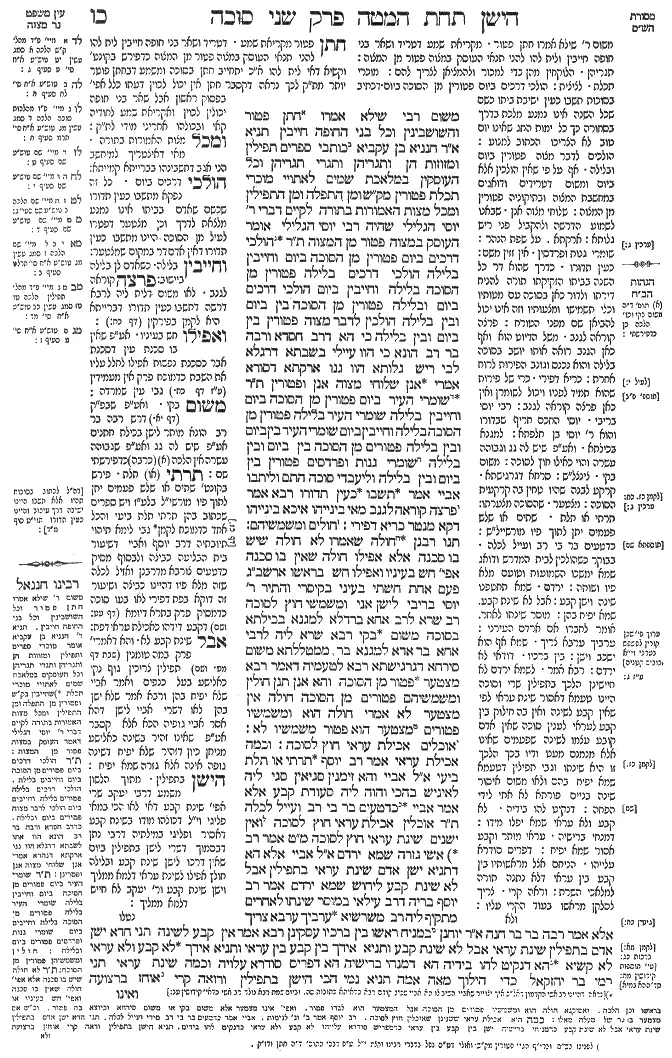
Sukkah 26a - Guemara
משום רבי שילא אמרו חתן פטור והשושבינין וכל בני החופה חייבין תניא א"ר חנניא בן עקביא כותבי ספרים תפילין ומזוזות הן ותגריהן ותגריהן וכל העוסקין במלאכת שמים לאתויי מוכרי תכלת פטורין מק"ש ומן התפלה ומן התפילין ומכל מצות האמורות בתורה לקיים דברי ר' יוסי הגלילי שהיה רבי יוסי הגלילי אומר העוסק במצוה פטור מן המצוה ת"ר הולכי דרכים ביום פטורין מן הסוכה ביום וחייבין בלילה הולכי דרכים בלילה פטורין מן הסוכה בלילה וחייבין ביום הולכי דרכים ביום ובלילה פטורין מן הסוכה בין ביום ובין בלילה הולכין לדבר מצוה פטורין בין ביום ובין בלילה כי הא דרב חסדא ורבה בר רב הונא כי הוו עיילי בשבתא דרגלא לבי ריש גלותא הוו גנו ארקתא דסורא אמרי אנן שלוחי מצוה אנן ופטורין ת"ר שומרי העיר ביום פטורין מן הסוכה ביום וחייבין בלילה שומרי העיר בלילה פטורין מן הסוכה בלילה וחייבין ביום שומרי העיר בין ביום ובין בלילה פטורים מן הסוכה בין ביום ובין בלילה שומרי גנות ופרדסים פטורין בין ביום ובין בלילה וליעבדי סוכה התם וליתבו אביי אמר תשבו כעין תדורו רבא אמר פרצה קוראה לגנב מאי בינייהו איכא בינייהו דקא מנטר כריא דפירי:
חולים ומשמשיהם:
תנו רבנן חולה שאמרו לא חולה שיש בו סכנה אלא אפילו חולה שאין בו סכנה אפי' חש בעיניו ואפילו חש בראשו ארשב"ג פעם אחת חשתי בעיני בקיסרי והתיר ר' יוסי בריבי לישן אני ומשמשי חוץ לסוכה רב שרא לרב אחא ברדלא למגנא בכילתא בסוכה משום בקי רבא שרא ליה לרבי אחא בר אדא למגנא בר ממטללתא משום סירחא דגרגישתא רבא לטעמיה דאמר רבא מצטער פטור מן הסוכה והא אנן תנן חולין ומשמשיהם פטורים מן הסוכה חולה אין מצטער לא אמרי חולה הוא ומשמשיו פטורים מצטער הוא פטור משמשיו לא:
אוכלים אכילת עראי חוץ לסוכה וכמה אכילת עראי אמר רב יוסף תרתי או תלת ביעי א"ל אביי והא זימנין סגיאין סגי ליה לאיניש בהכי והוה ליה סעודת קבע אלא אמר אביי כדטעים בר בי רב ועייל לכלה ת"ר אוכלין אכילת עראי חוץ לסוכה ואין ישנים שינת עראי חוץ לסוכה מ"ט אמר רב אשי גזרה שמא ירדם א"ל אביי אלא הא דתניא ישן אדם שינת עראי בתפילין אבל לא שינת קבע ליחוש שמא ירדם אמר רב יוסף בריה דרב עילאי במוסר שינתו לאחרים מתקיף ליה רב משרשיא ערביך ערבא צריך אלא אמר רבה בר בר חנה א"ר יוחנן במניח ראשו בין ברכיו עסקינן רבא אמר אין קבע לשינה תני חדא ישן אדם בתפילין שינת עראי אבל לא שינת קבע ותניא אידך בין קבע בין עראי ותניא אידך לא קבע ולא עראי לא קשיא הא דנקיט להו בידיה הא דמנחי ברישיה הא דפריס סודרא עלויה וכמה שינת עראי תני רמי בר יחזקאל כדי הילוך מאה אמה תניא נמי הכי הישן בתפילין ורואה קרי אוחז ברצועה
Comments from Rashi on Masechet Sukkah Page 26a
משום ר' שילא אמרו חתן פטור . מקריאת שמע דטריד ושאר בני חופה חייבין ולית להו להני תנאי העוסק במצוה פטור מן המצוה: תגריהן . הלוקחין מהן כדי למכור ולהמציאן לצריך להם: מוכרי תכלת . לציצית: הולכי דרכים ביום פטורין מן הסוכה ביום . דכתיב בסוכות תשבו כעין ישיבת ביתו כשם שכל השנה אינו נמנע מלכת בדרך בסחורה כך כל ימות החג שאינו יום טוב לא הצריכו הכתוב למנוע: הולכים לדבר מצוה פטורין ביום ובלילה . אף על פי שאין הולכין אלא ביום ומשום דטרידים ודואגים במחשבת המצוה ובתיקוניה פטורין מן המצוה: ארקתא . על שפת הנהר: שלוחי מצוה אנן . שבאנו לשמוע הדרשה ולהקביל פני ריש גלותא: שומרי גנות ופרדסין . אין זזין משם: כעין תדורו . כדרך שהוא דר כל השנה בביתו הזקיקתו תורה להניח דירתו ולדור כאן בסוכה עם מטותיו וכלי תשמישו ומצעותיו וזה אינו יכול להביאן שם מפני הטורח: פרצה קוראה לגנב . משל הדיוט הוא ואף כאן הגנב רואה אותו יושב בסוכה בלילה והוא נכנס וגונב הפירות לרוח אחרת: כריא דפירי . כרי של פירות שהוא תמיד לפניו ויכול לשומרן ואין כאן פרצה קוראה לגנב: רבי יוסי בריבי . יוסי החכם חריף שבדורו והוא ר' יוסי בן חלפתא: למגנא בכילתא . ואע"פ שיש לה גג וגבוהה עשרה והוי כאילו חוץ לסוכה: משום בקי . צינצל"ש: סרחא דגרגישתא . קרקע לבנה שהיו טחין בה קרקעית הסוכה: מצטער . שהסוכה מצערתו: תרתי או תלת . שתים או שלש פעמים יתן לתוך פיו מורשייל"ש: כדטעים בר בי רב ועייל לכלה . בבוקר כשהולכין לבית המדרש ודואג שמא ימשכו השמועות וטועם מלא פיו ושותה: ירדם . שמא תחטפנו שינה וישן קבע: אבל לא שינת קבע . שמא יפיח בהן: מוסר שינתו לאחר . אומר לחברו אם ארדם העירני: ערביך ערבא צריך . שמא אף הוא ישכב וישן: בין ברכיו . דודאי לא ירדם: רבא אמר . לשמא ירדם לא חיישינן הלכך בתפילין שרי וסוכה היינו טעמא דאסור שינת עראי לפי שאין קבע לשינה ואין בה חילוק בין קבע לעראי לענין סוכה שאין אדם קובע עצמו לשינה שפעמים שאינו אלא מנמנם מעט ודיו בכך הלכך זו היא שינתו וגבי תפילין דטעמא שמא יפיח בהם ולאו משום איסור שינה בניים פורתא לא אתי לידי הפחה: דנקיט להו בידיה . לא קבע ולא עראי שמא יפלו מידו: דמנחי ברישיה . עראי מותר וקבע אסור שמא יפיח: דפריס סודרא עלייהו . הניחם אצל מראשותיו בין קבע בין עראי דלא נתנה תורה למלאכי השרת: וראה קרי . צריך לסלקן מראשו בעוד הקרי עליו:
Comments from Tosafot - Sukkah 26a
חתן פטור מקריאת שמע. דטריד ושאר בני חופה חייבין לית להו להני תנאי העוסק במצוה פטור מן המצוה כדפירש בקונט' וקשיא דאי לית להו א"כ יתחייב חתן בסוכה ומשמע דבחתן פוטר יותר מת"ק לכך נראה דקסבר חתן אין יכול לכוין דעתו כלל אפי' בפסוק ראשון אבל שאר בני חופה יכולין לכוין ואקריאת שמע לחודיה קאי ובכולהו אחריני מודי לת"ק: ומכל מצות האמורות בתורה. מאי דאיצטריך למיחשב הני אגב דחשבינהו בברייתא קמייתא: הולכי דרכים ביום. כל זה נפקא מתשבו כעין תדורו שכשם שאדם בביתו אינו נמנע מלצאת לדרך וכן מצטער דפטרו לעיל מן הסוכה היינו מתשבו כעין תדורו דאין אדם דר במקום שמצטער: וחייבין בלילה. כשאדם לן בלילה ביישוב: פרצה קוראה לגנב. לאו משום דלית ליה לרבא דרשה דתשבו כעין תדורו דברייתא היא לקמן בפירקין (סוכה דף כח:): ואפילו חש בעיניו. אע"פ שאין בו סכנת עין דסכנת אבר כסכנת נפשות אפילו לחלל עליו את השבת כדמוכח פרק אין מעמידין (ע"ז דף כח.) גבי עין שמרדה: משום בקי. ואע"פ שבפ"ק (דף יא.) דרש רבה בר רב הונא מותר לישן בכילת חתנים אע"פ שיש לה גג ואע"פ שגבוהה עשרה אין הלכה (כרבה) כדפירשתי שם: תרתי (או) תלת. פירש בקונט' שתים או שלש פעמים יתן לתוך פיו מורשי"ל בלע"ז ויש ספרים שכתוב בהן תרתי תלת ביעי והכל אחד כדמוכח לקמן גבי לימא תיהוי תיובתיה דרב יוסף ואביי דשיעור בית הבליעה כביצה ולבסוף מסיק כדטעים צורבא מדרבנן ואזיל לכלה שזה מלא פיו דהיינו כביצה ושיעור זה דוקא בפת דפירי לאו בעו סוכה כדמסיק פרק בתרא דיומא (דף עט: ושם) דקבע דידהו כאכילת עראי דפת: אבל שינת קבע לא. והא דאמרי' פרק במה טומנין (שבת דף מט. ושם) תפילין צריכין גוף נקי כאלישע בעל כנפים ואמר אביי שלא יפיח בהן ורבא אמר שלא ישן בהן לאו דשרי אביי לישן דהא אסר אביי גופיה הכא אלא קסבר אע"פ שאינו זהיר בשינה כאלישע מניחן כיון דזהיר שלא יפיח דשינה גופה אינה אלא גזרה שמא יפיח: הישן בתפילין. מתוך הלשון משמע דרבי יעקב שרי אפי' שינת קבע דאי לאו הכי במאי פליגי וי"ל דכולהו מודו בשינת קבע דאסיר ופליגי במילתיה דרבי נתן דבסמוך דשרי. לישן בתפילין ביום שאין דרכו לישן שינת קבע ובלילה חולץ אפילו לשינת עראי דלמא ממליך וישן שינת קבע ור' יעקב לא חייש דלמא ממליך:
Sukkah 26a - Mishnah translated into english
In the name of Rabbi Sheila they said: A groom is exempt from the mitzva of Shema, but the groomsmen and all the members of the wedding party are obligated.
§ It is taught in a baraita: Rabbi Ḥananya ben Akavya said: With regard to scribes of Torah scrolls, phylacteries, and mezuzot, they themselves, and the merchants who sell them, and the merchants who purchase them from the first merchants and sell them to others, and all who are engaged in the labor of Heaven, which comes to include the sellers of the sky-blue dye for ritual fringes, are all exempt from the mitzva of reciting Shema and from prayer and from donning phylacteries and from all mitzvot that are mentioned in the Torah while they are engaged in that labor. This statement comes to fulfill the statement of Rabbi Yosei HaGelili, as Rabbi Yosei HaGelili would say: One who is engaged in a mitzva is exempt from another mitzva.
The Sages taught in a baraita: Travelers who travel during the day are exempt from the mitzva of sukka during the day and are obligated at night. Travelers by night are exempt from the mitzva of sukka at night and obligated during the day. Travelers both during the day and at night are exempt from the mitzva of sukka both during the day and at night. Those who travel for a matter of mitzva are exempt both during the day and at night, because they are preoccupied with the mitzva, even if they are not traveling at night, as in this recurring incident involving Rav Ḥisda and Rabba bar Rav Huna. The Gemara relates: When they would enter the house of the Exilarch on the Shabbat of the Festival to hear his Festival homily, they would sleep on the bank of the Sura River and not in a sukka. They said in explanation: We are ones on the path to perform a mitzva and are exempt from the mitzva of sukka.
The Sages taught in a baraita: Guardians of the city who guard during the day are exempt from the mitzva of sukka during the day and are obligated at night. Guardians of the city at night are exempt from the mitzva of sukka at night and are obligated during the day. Those who guard the city both during the day and at night are exempt from the mitzva of sukka both during the day and at night.
Guardians of gardens and orchards are exempt from sukka both during the day and at night. The Gemara asks: And let them establish a sukka there in the garden and reside there. Why are they exempt from the mitzva of sukka? Abaye said: The reason for the exemption is the verse: “In sukkot shall you reside” (Leviticus 23:42), which the Sages interpreted to mean: Reside as you dwell in your permanent home. Since preparing a sukka that is a fully equipped dwelling in the orchard far from his house would involve considerable exertion, the mitzva does not apply to him.
Rava said: A breach summons the thief. If the guardian builds a sukka, thieves will know where the guardian is located in the field and they will enter the field elsewhere. The exemption of the watchman from the mitzva of sukka prevents that situation. The Gemara asks: What is the practical difference between the two reasons given? The Gemara answers: There is a difference between them in a case where he is guarding a pile of fruit, which can be guarded from inside the sukka; therefore, according to Rava, in that case the guard would be obligated in the mitzva of sukka. However, since the sukka in the orchard is not like a fully equipped home, in Abaye’s opinion he would still be exempt in that case.
§ It is stated in the mishna: The ill and their caretakers are exempt from the mitzva of sukka. The Sages taught in a baraita: The ill person that they said is exempt from sukka is not only an ill person whose condition is critical, but even an ill person whose condition is not critical, and even one who feels pain in his eyes, and even one who feels pain in his head. Rabban Shimon ben Gamliel said: One time I felt pain in my eyes in Caesarea, and the esteemed Rabbi Yosei ben Ḥalafta permitted me and my attendant to sleep outside the sukka.
The Gemara relates a similar tale: Rav permitted Rav Aḥa Bardela to sleep beneath a canopy in the sukka due to the biting flies [baki]. He permitted this although the canopy was more than ten handbreadths high and in sleeping beneath it he did not fulfill his obligation. Rava permitted Rabbi Aḥa bar Adda to sleep outside the sukka due to the foul odor of the earth [gargishta] floor of the sukka.
The Gemara comments: Rava conforms to his line of reasoning, as Rava said: One who suffers in the sukka is exempt from the mitzva of sukka. The Gemara asks: But didn’t we learn in the mishna that the ill and their caretakers are exempt from the mitzva of sukka? By inference, with regard to an ill person, yes, he is exempt; with regard to one who suffers, no, he is not exempt. The Sages say: With regard to an ill person, he and his caretakers are exempt; however, with regard to one who merely suffers in the sukka, he is exempt but his caretakers are not.
§ The mishna continues: One may eat and drink in the framework of a casual meal outside the sukka. The Gemara asks: And how much food is considered a casual meal? Rav Yosef said: It is two or three egg-bulks of bread. Abaye said to him: But often, doesn’t a person suffice with that measure of food, and then its legal status is that of a formal meal? Rather, Abaye said: A casual meal is like the measure that a student of the academy of Rav tastes and then enters the study hall to hear the lecture.
The Sages taught in a baraita: One may eat a casual meal outside the sukka, but one may not take even a brief nap outside the sukka. The Gemara asks: What is the reason for this distinction? After all, sleeping in the sukka is an obligation just as eating in the sukka is an obligation. Rav Ashi said: It is prohibited to nap outside the sukka due to a decree lest he fall into a deep sleep.
Abaye said to him: But with regard to that halakha which is taught in a baraita: A person may take a brief nap while donning phylacteries but substantial sleep is not permitted. Let us be concerned in that case as well lest he fall into a deep sleep. Rav Yosef, son of Rav Illai, said: There is no concern with regard to phylacteries, as it is a case where one assigns responsibility for ensuring that his sleep will not be prolonged to others.
Rav Mesharshiyya strongly objects to Abaye’s statement: Your guarantor, who ensures that you do not sleep too long, requires a guarantor to ensure that he does not do the same. Rather, Rabba bar bar Ḥana said that Rabbi Yoḥanan said: We are dealing with a case where he places his head between his knees, a position that does not lend itself to deep sleep. Rava said: Neither with regard to sukka nor with regard to phylacteries is there concern lest he fall into a deep sleep. Taking a brief nap outside the sukka is prohibited because there is no concept of substantial duration with regard to sleep, i.e., there is no halakhic difference between a brief nap and a longer-lasting sleep. Depending on circumstances, sleep of any duration can be considered substantial and is therefore prohibited outside a sukka.
The Gemara comments that it is taught in one baraita: A person may take a brief nap with phylacteries, but substantial sleep is not permitted. And it was taught in another baraita: Both substantial sleep and a brief nap are permitted. And it was taught in another baraita: Neither substantial sleep nor a brief nap is permitted. The Gemara explains that this is not difficult: This baraita, where it is taught that even a brief nap is prohibited, is in a case where one holds the phylacteries in his hands. It is prohibited to sleep at all lest he drop them. That baraita, where it was taught that a brief nap is permitted, is in a case where the phylacteries are placed on his head. There is no concern during a brief nap lest he break wind or experience a seminal emission. During deep sleep, that is a concern. That third baraita, where it was taught that even substantial sleep is permitted with phylacteries, is in a case where he removes the phylacteries and spreads a cloth over them and sleeps alongside them.
The Gemara asks: And how much is the duration of a brief nap? Rami bar Yeḥezkel taught: It is equivalent to the time required for walking one hundred cubits. The Gemara comments: That is also taught in a baraita: One who sleeps with phylacteries and experiences a seminal emission grips the strap of the phylacteries to remove them
Traduction : The William Davidson digital edition of the Koren Noé Talmud, with commentary by Rabbi Adin Even-Israel Steinsaltz.