 Talmud Bavli
Sukkah 41b : Youtube
Daf TubeYoutube
3 video classes :
Sukkah Page 41b
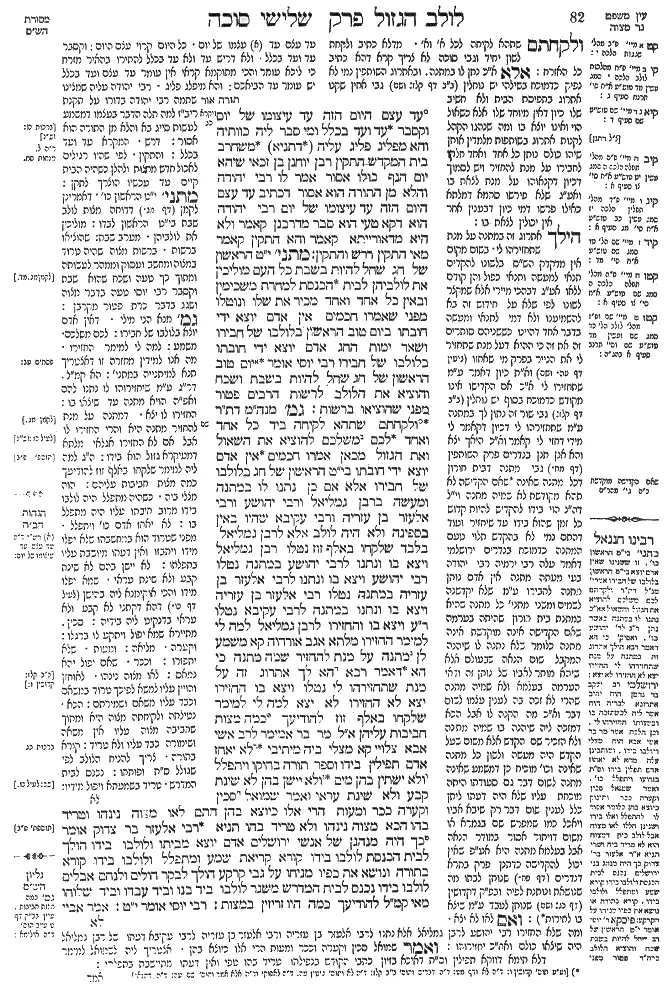
Sukkah 41b - Guemara
(ויקרא כג, יד) עד עצם היום הזה עד עיצומו של יום וקסבר עד ועד בכלל ומי סבר ליה כוותיה והא מפליג פליג עליה (דתניא) משחרב בית המקדש התקין רבן יוחנן בן זכאי שיהא יום הנף כולו אסור אמר לו רבי יהודה והלא מן התורה הוא אסור דכתיב עד עצם היום הזה עד עיצומו של יום רבי יהודה הוא דקא טעי הוא סבר מדרבנן קאמר ולא היא מדאורייתא קאמר והא התקין קאמר מאי התקין דרש והתקין:
מתני׳ י"ט הראשון של חג שחל להיות בשבת כל העם מוליכין את לולביהן לבית הכנסת למחרת משכימין ובאין כל אחד ואחד מכיר את שלו ונוטלו מפני שאמרו חכמים אין אדם יוצא ידי חובתו ביום טוב הראשון בלולבו של חבירו ושאר ימות החג אדם יוצא ידי חובתו בלולבו של חבירו רבי יוסי אומר יום טוב הראשון של חג שחל להיות בשבת ושכח והוציא את הלולב לרשות הרבים פטור מפני שהוציאו ברשות:
גמ׳ מנה"מ דת"ר (ויקרא כג, מ) ולקחתם שתהא לקיחה ביד כל אחד ואחד לכם משלכם להוציא את השאול ואת הגזול מכאן אמרו חכמים אין אדם יוצא ידי חובתו בי"ט הראשון של חג בלולבו של חבירו אלא אם כן נתנו לו במתנה ומעשה ברבן גמליאל ורבי יהושע ורבי אלעזר בן עזריה ורבי עקיבא שהיו באין בספינה ולא היה לולב אלא לרבן גמליאל בלבד שלקחו באלף זוז נטלו רבן גמליאל ויצא בו ונתנו לרבי יהושע במתנה נטלו רבי יהושע ויצא בו ונתנו לרבי אלעזר בן עזריה במתנה נטלו רבי אלעזר בן עזריה ויצא בו ונתנו במתנה לרבי עקיבא נטלו ר"ע ויצא בו והחזירו לרבן גמליאל למה לי למימר החזירו מלתא אגב אורחיה קא משמע לן מתנה על מנת להחזיר שמה מתנה כי הא דאמר רבא הא לך אתרוג זה על מנת שתחזירהו לי נטלו ויצא בו החזירו יצא לא החזירו לא יצא למה לי למימר שלקחו באלף זוז להודיעך כמה מצות חביבות עליהן א"ל מר בר אמימר לרב אשי אבא צלויי קא מצלי ביה מיתיבי לא יאחז אדם תפילין בידו וספר תורה בחיקו ויתפלל ולא ישתין בהן מים ולא יישן בהן לא שינת קבע ולא שינת עראי ואמר שמואל סכין וקערה ככר ומעות הרי אלו כיוצא בהן התם לאו מצוה נינהו וטריד בהו הכא מצוה נינהו ולא טריד בהו תניא רבי אלעזר בר צדוק אומר כך היה מנהגן של אנשי ירושלים אדם יוצא מביתו ולולבו בידו הולך לבית הכנסת לולבו בידו קורא קריאת שמע ומתפלל ולולבו בידו קורא בתורה ונושא את כפיו מניחו על גבי קרקע הולך לבקר חולים ולנחם אבלים לולבו בידו נכנס לבית המדרש משגר לולבו ביד בנו וביד עבדו וביד שלוחו מאי קמ"ל להודיעך כמה היו זריזין במצות:
רבי יוסי אומר י"ט:
אמר אביי
Comments from Rashi on Masechet Sukkah Page 41b
עד עצם עד עצמו של יום . כל היום קרוי עצם היום: וקסבר עד ועד בכלל . ולא דריש עד ולא עד בכלל להתירו בהאיר מזרח כי ליכא עומר והכי מתוקמא קראי אין עומר עד עצם ועד בכלל יש עומר עד הביאכם: והא מיפלג פליג . רבי יהודה עליה שמצינו שתמה רבי יהודה בדורו על תקנת ריב"ז למה תלה הדבר בעצמו דמשמע לעשות סייג בא והלא מן התורה הוא אסור: דרש . המקרא עד ועד בכלל: והתקין . לפי שהיו רגילים לאכול חדש מחצות ולהלן כשהיה הבית קיים עד עכשיו הוצרך לתקן: מתני' י"ט הראשון כו' . דאמרינן לקמן (סוכה דף מג.) דדוחה מצות לולב שבת בי"ט הראשון לבדו: מוליכין את לולביהן . מערב שבת: שהוציאו ברשות . ברשות מצוה שהיה טרוד במצוה ומחשב ועסוק וממהר לעשותה ומתוך כך טעה ושכח שהוא שבת וקסבר רבי יוסי טעה בדבר מצוה ושגג בדבר כרת פטור מקרבן: גמ' מנא הני מילי . דאין אדם יוצא בלולבו של חבירו: לכם משלכם . משמע: למה לי למימר החזירו . מה אנו למידין מחזרה זו דאצטריך תנא למיתנייה במתני': הא קמ"ל . דר"ג ע"מ שיחזירוהו לו נתנו להם ואפ"ה הויא מתנה עד שיצאו בו: החזירו לו יצא . דמתנה על מנת להחזיר מתנה היא והרי החזירו לו אבל אם לא החזירו אגלאי מלתא דמעיקרא גזול הוא בידו: ה"ג למה ליה למימר שלקחו באלף זוז להודיעך כמה מצות חביבות עליהם: הוה מצלי ביה . כשהיה מתפלל היה לולבו בידו מרוב חיבתו עליו היה מתפלל בו: לא יאחז אדם כו' ויתפלל . מפני שטרוד הוא במחשבתו שלא יפלו מידו ויתבזו ואין דעתו מיושבת עליו בתפלתו: לא יישן בהם לא שינת קבע ולא שינת עראי . שמא יפלו מידו והכי אוקימנא ליה בהישן (לעיל סוכה דף כו.) דהא דקתני לא קבע ולא עראי בדנקיט ליה בידיה: סכין . מתיירא שמא יפול ויתקע לו ברגלו: וקערה . מליאה: ומעות . שלא יתפזרו: וככר . שאם יפול יהא נמאס: לאו מצוה נינהו . לאוחזן והויין עליו למשא לפיכך טרוד במשאם וכבד עליו משאם ושמירתם: הכא . נטילתה ולקיחתה מצוה היא ומתוך שחביבה מצוה עליו אין משאה ושימורה כבד עליו ולא טריד: קורא בתורה . צריך להניח הלולב לפי שגולל ס"ת ופותחו: נכנס לבית המדרש . טריד בשמעתא ויפול מידיו:
Comments from Tosafot - Sukkah 41b
ולקחתם שתהא לקיחה לכל א' וא'. מדלא כתיב ולקחת לשון יחיד וגבי סוכה לא צריך קרא דהא כתיב כל האזרח: אלא א"כ נתן לו במתנה. ובאתרוג השותפין נמי לא נפיק כדמוכח בשילהי יש נוחלין (ב"ב דף קלז: ושם) גבי אחין שקנו אתרוג בתפיסת הבית ולא חשיב שלו כיון דאין מיוחד שלו אלא כשאול הוי ואינו יוצא בו ומה שנהגו הקהל לקנות אתרוג בשותפות מלמדין אותן שיהו כולם נותן כל אחד ואחד חלקו לחבירו על מנת להחזיר ויש לסמוך דכיון דקנאוהו על מנת לצאת בו ואע"ג שלא פירשו סתמא דמלתא כאילו פרשו דמי כיון דבענין אחר אין יכולין לצאת בו: הילך אתרוג זה במתנה על מנת שתחזירהו לי. בשום מקום אין מדקדק הש"ס בלשונו להקדים תנאי למעשה ותנאי כפול והן קודם ללאו אע"ג דבהכי מיירי אלא שמקצר לשונו לפי שלא על חידוש זה בא להשמיענו ולא דמי לתנאי ומעשה בדבר אחד דהיינו כששניהם סותרים זה את זה כי ההיא דעל מנת שתחזיר לי את הנייר בפרק מי שאחזו (גיטין דף עה. ושם) וא"ת כיון דאמר ע"מ שתחזירו לי א"כ אם הקדישו אינו מקודש כדמוכח בסוף יש נוחלין (ב"ב דף קלז:) גבי שור זה נתון לך במתנה ע"מ שתחזירהו לי דכיון דקאמר לי מידי דחזי לי קאמר וא"כ היאך יצא והא אנן תנן בנדרים פרק השותפין (דף מח.) גבי מתנה דבית חורון דכל מתנה שאינה שאם הקדישה לא תהא מקודשת לא שמיה מתנה וי"ל דה"נ הוי בידו להקדיש להיות קדוש כל זמן שהוא בידו עד שיחזיר ועוד דהתם נמי לא בהקדש תלוי טעם המתנה כדמוכח בנדרים ירושלמי דאמר עלה רבי ירמיה רבי יהודה בעי מעתה מתנה אין אדם נותן מתנה לחבירו ע"מ שלא יקדשנה לשמים ומשני מתני' כל מתנה שהיא כמתנת בית חורון שהיתה בערמה שאם הקדישה אינה מוקדשת אינה מתנה כלומר שלא נתנה לו שיהנה המקבל שום הנאה שבעולם אלא שיהא מותר לאביו של נותן זה ודאי הערמה בעלמא ולא שמיה מתנה שהרי לא זכה בה לענין עצמו לשום דבר וא"כ מה הקנה לו אבל הכא דמזכה ליה שיהנה בו שמיה מתנה ולא הזכיר שם הקדש אלא משום שעל הקדש היה מעשה ולשון כל מתנה שאינה וכו' מוכיח כן דמשמע שאינה מתנה לשום דבר גם סעודתו היתה מוכחת עליו שלא היה דעתו ליתן כלל לענין שום דבר רק שיבא אביו ויאכל כמו שמפרש שם בגמרא או משום דויתור אסור במודר הנאה אבל בעלמא מתנה היא אע"פ שאין יכול להקדישה כדתנן פרק בתרא דנדרים (דף פח.) שנותן לבתו מה שנושאת ונותנת לפיה ובפ"ק דקדושין (דף כג: ושם) שנותן לעבד ע"מ שיצא בו לחירות: ואם לאו לא יצא. ומה שלא החזירו רבי יהושע לרבן גמליאל אלא נתנו לרבי אלעזר בן עזריה ורבי אלעזר בן עזריה לרבי עקיבא דעתו של רבן גמליאל היה שיצאו כולם ואח"כ יחזירוהו: ואמר שמואל סכין וקערה וככר ומעות הרי אלו כיוצא בהן. אצטריך ליה לשמואל למימר דלא תימא דווקא תפילין וס"ת דאיכא בזיון כתבי הקודש בנפילתו טריד בהו טפי ואין דעתו מתיישבת בתפלתו:
Sukkah 41b - Mishnah translated into english
“And you shall eat neither bread, nor roasted grain, nor fresh grain, until this selfsame [etzem] day, until you have brought the offering of your God” (Leviticus 23:14), indicating until the essence [itzumo] of the day, and not the night before. And he holds that when the verse states: “Until,” the word until is inclusive, meaning that the grain is permitted only after the conclusion of the sixteenth.
The Gemara asks: And does Rabban Yoḥanan ben Zakkai hold in accordance with the opinion of Rabbi Yehuda? But doesn’t he disagree with him, as it is taught in a baraita: Once the Temple was destroyed, Rabban Yoḥanan ben Zakkai instituted that for the entire day of waving the omer offering, it should be prohibited to eat the grain of the new crop. Rabbi Yehuda said to him: Isn’t it prohibited by Torah law, as it is written: “Until this selfsame day,” which means: Until the essence of the day? Apparently, they have two divergent opinions.
The Gemara answers: It is Rabbi Yehuda who is mistaken. He thought that Rabban Yoḥanan ben Zakkai is saying it is prohibited by rabbinic law. And that is not so; he is saying it is prohibited by Torah law. The Gemara asks: But didn’t the mishna say: Rabban Yoḥanan ben Zakkai instituted, indicating that it is a rabbinic ordinance? The Gemara answers: What is the meaning of instituted? It means that he interpreted the verses in the Torah and instituted public notice for the multitudes to conduct themselves accordingly.
MISHNA: If the first day of the festival of Sukkot occurs on Shabbat, all of the people bring their lulavim to the synagogue on Shabbat eve, as it is prohibited to carry in a public domain on Shabbat. The next day, on Shabbat, everyone rises early and comes to the synagogue. Each and every one recognizes his lulav and takes it. This emphasis that each and every one recognizes his own lulav and takes it is because the Sages said: A person does not fulfill his obligation to take the lulav on the first day of the Festival with the lulav of another, and on the rest of the days of the Festival a person fulfills his obligation even with the lulav of another. Rabbi Yosei says: If the first day of the Festival occurs on Shabbat, and he forgot and carried the lulav out into the public domain, he is exempt from liability to bring a sin-offering for this unwitting transgression because he carried it out with permission, i.e., he was preoccupied with the performance of the mitzva and carried it out.
GEMARA: From where are these matters derived, that one does not fulfill his obligation with the lulav of another on the first day of the Festival? It is as the Sages taught that it is written: “And you shall take for yourselves on the first day the fruit of a beautiful tree, branches of a date palm, and boughs of a dense-leaved tree, and willows of the brook” (Leviticus 23:40). The use of second person plural in the phrase: “And you shall take,” indicates that there should be taking in the hand of each and every person. The word yourselves in the phrase “take for yourselves” means: From your own, to exclude a borrowed or stolen lulav. From here the Sages stated: A person does not fulfill his obligation on the first day of the Festival with the lulav of another unless the other gave it to him as a full-fledged gift, as in that case it belongs to him.
There was an incident involving Rabban Gamliel, and Rabbi Yehoshua, and Rabbi Elazar ben Azarya, and Rabbi Akiva, who were all traveling on a ship during the festival of Sukkot and only Rabban Gamliel had a lulav, which he had bought for one thousand zuz. Rabban Gamliel took it and fulfilled his obligation with it and then gave it to Rabbi Yehoshua as a gift. Rabbi Yehoshua took it and fulfilled his obligation with it and gave it to Rabbi Elazar ben Azarya as a gift. Rabbi Elazar ben Azarya took it and fulfilled his obligation with it and gave it to Rabbi Akiva as a gift. Rabbi Akiva took it and fulfilled his obligation with it and returned it to Rabban Gamliel.
The Gemara asks: Why do I need to say that Rabbi Akiva returned the lulav to Rabban Gamliel? The crux of the story is that each of the Sages fulfilled his obligation with the same lulav after receiving it as a gift. The Gemara answers: By including that detail, the tanna teaches us another matter in passing, namely that a gift given on the condition that it be returned is considered a full-fledged gift. Even if the owner stipulates from the outset that the gift would be returned, since he gives it as a gift in the interim, its halakhic status is that of a full-fledged gift.
This is like that which Rava said, that in the case of one who says to another: Here is an etrog for you on condition that you return it to me, and the recipient took it and fulfilled his obligation with it, if he returned the etrog, he fulfilled his obligation of taking the etrog. However, if he did not return the etrog, he did not fulfill his obligation. Since he did not fulfill the condition, retroactively he never acquired the gift at all.
The Gemara asks: Why do I need to say that Rabban Gamliel bought this lulav for one thousand zuz? The Gemara answers: It is to inform you how beloved mitzvot were to them to the extent that he was willing to pay an exorbitant sum to purchase a lulav.
§ Mar bar Ameimar said to Rav Ashi: My father would pray with the four species in his hand in an expression of his love for the mitzva. The Gemara raises an objection: A person should not hold phylacteries in his hand or a Torah scroll in his lap and pray while doing so; neither should he urinate with them in his hand; nor should he sleep with them in his hand, neither a deep sleep nor a brief nap.
And Shmuel said: With regard to a knife, a bowl full of food, a loaf of bread, or money, these items are similar to those mentioned above; since he is concerned lest these items fall from his hand, he is distracted and he unable to concentrate on his prayers. Why, then, is that not the case with regard to lulav? It should be prohibited to hold the lulav during prayer for the same reason. The Gemara answers: There, in the cases listed above, they are not related to performance of a mitzva, and he is preoccupied with them. Therefore, that preoccupation distracts his focus from his prayers. Here, in the case of the four species, they are related to performance of a mitzva, so he is not preoccupied with them in a manner that will distract him from his prayers.
The Gemara cites support for the custom mentioned above, as it is taught in a baraita that Rabbi Elazar bar Tzadok says: This was the custom of the people of Jerusalem during the festival of Sukkot. A person leaves his house, and his lulav is in his hand; he goes to the synagogue, and his lulav is in his hand; he recites Shema and prays, and his lulav is in his hand; he reads the Torah and a priest lifts his hands to recite the priestly benediction, and he places it on the ground because he cannot perform those tasks while holding the lulav. He goes to visit the ill or to console mourners, and his lulav is in his hand; he enters the study hall to study Torah, and he sends his lulav home in the hands of his son, in the hands of his slave, or in the hands of his agent.
The Gemara asks: What is the baraita teaching us by relating all these details that appear to establish the same practice? The Gemara explains: It is to inform you how vigilant they were in the performance of mitzvot and how much they cherished them.
§ The mishna continues: Rabbi Yosei says that if the first day of the Festival occurs on Shabbat, and one forgot and carried the lulav out into the public domain, he is exempt from liability to bring a sin-offering. Abaye said:
Traduction : The William Davidson digital edition of the Koren Noé Talmud, with commentary by Rabbi Adin Even-Israel Steinsaltz.