 Talmud Bavli
The learning on the whole site is dedicated : L'ilui Nishmat Yechayahou ben Moche
The learning on the whole site is dedicated : L'ilui Nishmat Chemouel Eliezer ben Batcheva
The learning on the whole site is dedicated : L'ilui Nishmat Avraham Ben Simha
Sukkah 40b : Youtube
Daf TubeYoutube
3 video classes :
Sukkah Page 40b
Sukkah 40b - Guemara
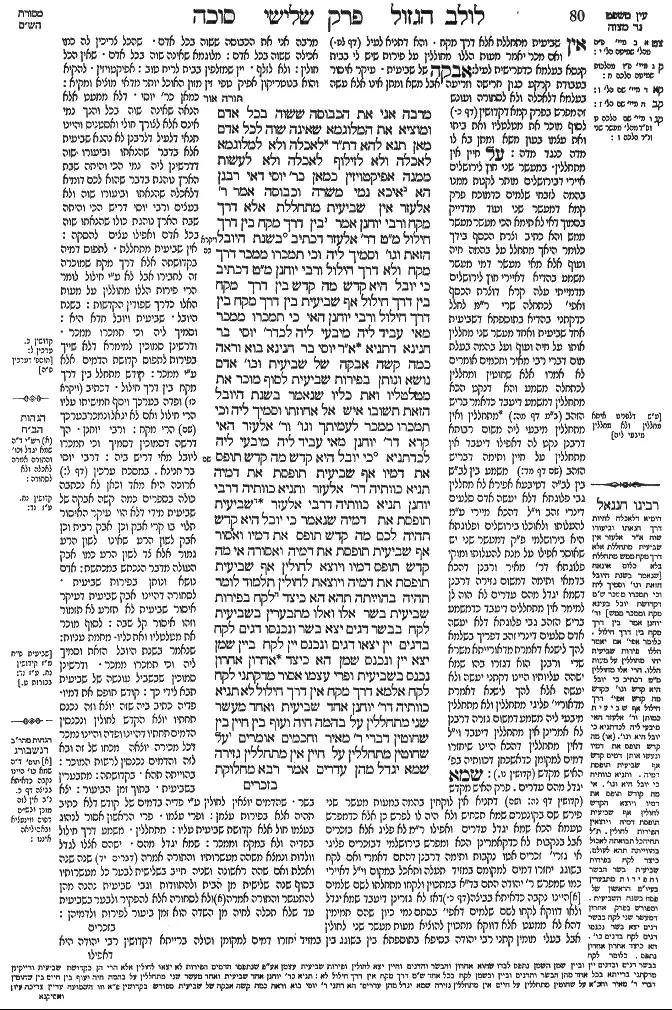
מרבה אני את הכבוסה ששוה בכל אדם ומוציא את המלוגמא שאינה שוה לכל אדם מאן תנא להא דת"ר לאכלה ולא למלוגמא לאכלה ולא לזילוף לאכלה ולא לעשות ממנה אפיקטויזין כמאן כר' יוסי דאי רבנן הא איכא נמי משרה וכבוסה אמר ר' אלעזר אין שביעית מתחללת אלא דרך מקח ורבי יוחנן אמר בין דרך מקח בין דרך חילול מ"ט דר' אלעזר דכתיב (ויקרא כה, יג) בשנת היובל הזאת וגו' וסמיך ליה וכי תמכרו ממכר דרך מקח ולא דרך חילול ורבי יוחנן מ"ט דכתיב כי יובל היא קדש מה קדש בין דרך מקח בין דרך חילול אף שביעית בין דרך מקח בין דרך חילול ורבי יוחנן האי כי תמכרו ממכר מאי עביד ליה מיבעי ליה לכדר' יוסי בר חנינא דתניא א"ר יוסי בר חנינא בוא וראה כמה קשה אבקה של שביעית וכו' אדם נושא ונותן בפירות שביעית לסוף מוכר את מטלטליו ואת כליו שנאמר בשנת היובל הזאת תשובו איש אל אחוזתו וסמיך ליה וכי תמכרו ממכר לעמיתך וגו' ור' אלעזר האי קרא דר' יוחנן מאי עביד ליה מיבעי ליה לכדתניא (ויקרא כה, יב) כי יובל היא קדש מה קדש תופס את דמיו אף שביעית תופסת את דמיה תניא כוותיה דר' אלעזר ותניא כוותיה דרבי יוחנן תניא כוותיה דרבי אלעזר שביעית תופסת את דמיה שנאמר כי יובל היא קדש תהיה לכם מה קדש תופס את דמיו ואסור אף שביעית תופסת את דמיה ואסורה אי מה קדש תופס דמיו ויוצא לחולין אף שביעית תופסת את דמיה ויוצאת לחולין תלמוד לומר תהיה בהוייתה תהא הא כיצד לקח בפירות שביעית בשר אלו ואלו מתבערין בשביעית לקח בבשר דגים יצא בשר ונכנסו דגים לקח בדגים יין יצאו דגים ונכנס יין לקח ביין שמן יצא יין ונכנס שמן הא כיצד אחרון אחרון נכנס בשביעית ופרי עצמו אסור מדקתני לקח לקח אלמא דרך מקח אין דרך חילול לא תניא כוותיה דר' יוחנן אחד שביעית ואחד מעשר שני מתחללין על בהמה חיה ועוף בין חיין בין שחוטין דברי ר' מאיר וחכמים אומרים על שחוטין מתחללין על חיין אין מתחללין גזירה שמא יגדל מהן עדרים אמר רבא מחלוקת
Comments from Rashi on Masechet Sukkah Page 40b
מרבה אני את הכבוסה ששוה בכל אדם . שהכל צריכין לה כמו אכילה ששוה בכל אדם: מלוגמא שאינה שוה בכל אדם . שאין הכל חולין: ולא לזלף . יין שמזלפין בבית לריח טוב: אפיקטויזין . להקיא והוא בנוטריקון אפיק טפי זין מזון האוכל יותר מדאי מוציא ומקיא: כמאן כר' יוסי . דלא ממעט אלא הנאה שאינה שוה בכל והנך נמי אינם אלא לצורך חולי ואסטניס והיינו תנאי דלעיל דלרבנן לא נהגא שביעית אלא בדבר שהנאתו וביעורו שוה דדרשינן ליה נמי הכי והיתה שבת הארץ נוהגת בדבר שהוא לכם דומיא דלאכלה שהנאתו וביעורו שוה ולא בעצים ורבי יוסי דריש הכי והיתה שבת הארץ נוהגת כולו שהנאתו שוה בכל אדם ואפילו עצים להסקה: אין שביעית מתחללת . לתפוס דמיה בקדושתה אלא דרך מקח שמוכרה זה לחבירו אבל לא ע"י חילול לומר הרי פירות הללו מחוללין על מעות האלו כדרך שפודין הקדשות: בשנת היובל . שביעית ויובל חדא היא: וסמיך ליה וכי תמכרו ממכר . ודרשינן סמוכין למימרא דלא שייך בפירות לתפוס קדושת הדמים אלא ע"י ממכר: קודש מתחלל בין דרך מקח בין דרך חילול . דכתיב (ויקרא כז) ופדה בערכך ויסף חמישיתו עליו הרי חילול ואם לא יגאל ונמכר בערכך (שם) הרי מקח: ורבי יוחנן . הך דרשה דסמוכין דסמיך וכי תמכרו ליובל מאי דריש ביה: דרבי יוסי בר חנינא . במסכת ערכין (דף ל:) ארוכה היא מאד וכאן לא נכתבה כולה בספרים כמה קשה אבקה של שביעית מידי דלא הוי עיקר האיסור תלוי בו קרוי אבק וכן אבק רבית וכן אבק לשון הרע שאינו לשון הרע גמור אלא צד לשון הרע כמו אבק העולה מדבר הנכתש במכתשת: אדם נושא ונותן בפירות שביעית . לסחורה דהיינו אבק שביעית דעיקר איסור שביעית לא תזרע לא תזמור וזהו איסור קל שבה: לסוף מוכר את מטלטליו ואת כליו . מחמת עניות: שנאמר בשנת היובל הזאת וסמיך ליה וכי תמכרו ממכר . ודרשינן סמוכין שבשביל עונשה של שביעית תבא לידי כך: קודש תופס את דמיו . פדיה כתיב ביה שזה יוצא וזה נכנס תחתיו יוצא הקדש לחולין ונכנסין הדמים תחתיו דהיינו ופדה והיינו נמכר דכל מכירה יוצאה מכחו של זה ובא לזה והדמים נכנסין לרשות המוכר: בהוייתה תהא . בקדושתה: מתבערין בשביעית . בתוך זמן הביעור: יצא בשר . שהדמים יוצאין לחולין ע"י פדיה בדמים של קודש דלא כתיב תהיה אלא בפירות עצמן: ופרי עצמו . פרי הראשון אסור לנהוג בעצמו חול אלא קדושת שביעית עליו: מתחללין . משמע דרך חילול בפדיה ולא במקח וממכר: שמא יגדל מהם . ישהם אצלו לגדל וולדות ונמצא משהה מעשרותיו והתורה אמרה (דברים יד) שנה שנה ואכלת ואם שהה ראשונה ושניה חייב בשלישית לבער כל מעשרותיו בסוף שנה שלישית מן הבית ולהתוודות וגבי שביעית נהנה מהן להתעשר והתורה אמרה ולא לסחורה אלא להפקיר ולבער בשביעית עד שלא תכלה לחיה מן השדה הוא זמן ביעור לפירות ולדמיהן:
Comments from Tosafot - Sukkah 40b
אין שביעית מתחללת אלא דרך מקח. והא דתניא לעיל (סוכה דף לט.) ואם מכר יאמר מעות הללו מחוללין על פירות שיש לי בבית קנסא בעלמא כדפרישית לעיל: אבקה של שביעית. עיקר איסור בעבודת קרקע כגון חרישה וזריעה אבל משא ומתן אינו אלא עשה בעלמא דלאכלה ולא לסחורה ועונש זה מפרש בפרק קמא דקדושין (דף כ.) לסוף מוכר את מטלטליו ואת ביתו ואת עצמו בעון משא ומתן בא לו מדה כנגד מדה: על חיין אין מתחללין. במעשר שני חוץ לירושלים איירי דבירושלים מותר לקנות ממנו בהמה לזבחי שלמים כדמוכח פרק קמא דמעשר שני ועוד מדדייק בסמוך דאי לא תימא הכי מעשר מעשר ממש והא כתיב וצרת הכסף בידך כלומר היאך מתחלל על בהמה חיה ועוף אלא מאי מעשר דמי מעשר משמע בהדיא דאיירי חוץ לירושלים מדמייתי עלה קרא דוצרת הכסף ואפי' לכתחלה שרי ר"מ לחלל כדקתני בהדיא בתוספתא דשביעית אחד שביעית ואחד מעשר שני מחללין אותו על חיה ועוף ועל בהמה בעלת מום דברי רבי מאיר וחכמים אומרים לא אמרו אלא שחוטין ומחללין לכתחלה משמע והא דנקט הכא מתחללין דמשמע דיעבד כדאמר בריש הזהב (ב"מ דף מה:) מתחללין ואין מתחללין מיבעי ליה משום רבותא דרבנן נקט לה דאפילו דיעבד אין מתחללין על חיין ותימה דבריש הזהב (שם דף מד:) משמע בין לב"ש בין לב"ה דטיבעא אפירא לא מחללין גבי פלוגתא דלא יעשה אדם סלעים דינרי זהב וי"ל דהכא מיירי ע"מ להעלותו ולאוכלו בירושלים ופלוגתא היא בירושלמי פ"ק דמעשר שני יש שאוסר אפילו על מנת להעלותו ומוקי פלוגתא דר' מאיר ורבנן דהכא בדמאי ותימה דמשום גזירה דרבנן דשמא יגדל מהם עדרים לא הוה לן למימר אין מתחללים דיעבד כדמשמע בריש הזהב גבי פלוגתא דלא יעשה אדם סלעים דינרי זהב דפריך בשלמא להך לישנא דאמרת מדאורייתא משרא שרי ורבנן הוא דגזרו בהו שמא ישהה עליותיו היינו דקתני יעשה ולא יעשה אלא להך לישנא דאמרת מדאוריי' פליגי מתחללין ולא מתחללין מיבעי ליה משמע דמשום גזרה דרבנן לא אמרינן אין מתחללין דיעבד וי"ל דאין מתחללין דהכא היינו שיחזרו דמים למקומן כדאשכחן דכוותיה בפ' האיש מקדש (קדושין נו.): שמא יגדל מהם עדרים. פרק האיש מקדש (קדושין דף נה: ושם) דתניא אין לוקחין בהמה במעות מעשר שני פירש שם בקונטרס שמא תכחיש ולא היה לו לפרש כן אלא כדמפרש טעמא הכא שמא יגדל עדרים ואפילו ר"מ לא פליג אלא בזכרים אבל בנקבות לא כדקאמרינן הכא ומפרש בירושלמי דבזכרים פליגי אי גזרי' זכרים אטו נקבות ותימה דרבנן דהתם דאמרי ואם לקח בשוגג יחזרו דמים למקומם במזיד תעלה ותאכל במקום וי"ל דאיירי כמו שמפרש ר' יהודה התם בד"א במתכוין ולקחו מתחלתו לשם שלמים היינו נקבה כדאיתא בביצה (דף כ.) דאז לא גזרינן דיעבד שמא יגדל ולאו דווקא לקחו לשם שלמים דאפי' בסתם נמי כיון שהם תמימין דהא לא ממעט אלא דווקא מתכוין להוציא מעות מעשר שני לחולין אבל בעלי מומין קתני רבי יהודה בסיפא בתוספתא בין בשוגג בין במזיד יחזרו דמים למקומן וכולה ברייתא דקדושין רבי יהודה היא דאפילו למ"ד פרק זה בורר (סנהדרין דף כה. ושם) אימתי דרבי יהודה לפרש ובמה לחלוק היינו דזימנין דבמה לחלוק ומ"מ דזימנין נמי היינו לפרש והא דאמרינן בהגוזל קמא (ב"ק דף צז: ושם) גבי מעות מעשר שני מעות של בבל והם בבבל למאי חזו ומשני דזבין ביה בהמה ומסיק לה התם היינו כרבי מאיר דשרי אפילו לכתחילה אי נמי אפילו כרבנן והתם דלא אפשר בענין אחר ולפי מה שפי' דר' מאיר שרי אפי' לכתחילה לא יתכן מה שפירש בקונטרס פרק הזהב (ב"מ דף נה:) דגבי דמאי מחללין אותו כסף על נחשת נחשת על הפירות ויחזור ויפדה את הפירות דדוקא כך צריך לעשות ולא מעלם לירושלים והכא אשכחן דשרי ר"מ דמאי לחלל על הפירות לכתחילה ובלבד שיעלו ויאכלו במקום דהכי עדיף משיחזור ויפדה את הפירות:
Sukkah 40b - Mishnah translated into english
Rabbi Yosei could respond: I include laundering, which applies equally to every person, as everyone needs clean clothes, and I exclude a remedy, which does not apply equally to every person; it is only for the ill.
The Gemara asks: Who is the tanna who taught that which the Sages taught in a baraita with regard to Sabbatical-Year produce: For food, and not for a remedy; for food, and not for sprinkling wine in one’s house to provide a pleasant fragrance; for food, and not to make it an emetic [apiktoizin] to induce vomiting? In accordance with whose opinion is this baraita? It is in accordance with the opinion of Rabbi Yosei, as, if it were in accordance with the opinion of the Rabbis, isn’t there also soaking and laundering that should have been excluded in the baraita, as in their opinion, use of Sabbatical-Year produce for those purposes is prohibited?
§ Rabbi Elazar said: Sabbatical-Year produce is deconsecrated only by means of purchase; however, it cannot be deconsecrated through redemption. Merely declaring that the sanctity of that produce is transferred to money or other produce is ineffective. Rabbi Yoḥanan said: It is deconsecrated both by means of purchase and by means of redemption.
What is the rationale for the opinion of Rabbi Elazar? It is as it is written: “In this year of Jubilee you shall return every man unto his possession” (Leviticus 25:13), and juxtaposed to it it is written: “And if you sell an item to your neighbor” (Leviticus 25:14); this indicates that in the Jubilee Year, during which the halakhot of the Sabbatical Year are in effect, one deconsecrates the produce by means of purchase and not by means of redemption. The Gemara asks: And Rabbi Yoḥanan, what is the rationale for his opinion? It is as it is written: “For it is a Jubilee; it shall be consecrated unto you” (Leviticus 25:12); this indicates that just as one redeems consecrated items both by means of purchase and by means of redemption, so too, Sabbatical-Year produce can be redeemed both by means of purchase and by means of redemption.
The Gemara asks: And Rabbi Yoḥanan, what does he do with this juxtaposition of the Jubilee Year to the verse: “If you sell an item”? The Gemara answers: He needs it to derive a halakha in accordance with that statement of Rabbi Yosei bar Ḥanina, as it is taught in a baraita that Rabbi Yosei bar Ḥanina says: Come and see how severe even the hint of violation of the prohibition of the Sabbatical Year is; as the prohibition against commerce with Sabbatical-Year produce is not one of the primary prohibitions of the Sabbatical Year, and its punishment is harsh. A person who engages in commerce with Sabbatical-Year produce is ultimately punished with the loss of his wealth to the point that he is forced to sell his movable property and his vessels, as it is stated: “In this year of Jubilee you shall return every man unto his possession” (Leviticus 25:13), and juxtaposed to it, it is written: “And if you sell an item to your neighbor” (Leviticus 25:14).
The Gemara asks: And Rabbi Elazar, what does he do with this verse from which Rabbi Yoḥanan derived his opinion? The Gemara answers: He needs it to derive in accordance with that which is taught in a baraita: “For it is a Jubilee; it shall be consecrated unto you” (Leviticus 25:12); just as the sanctity of consecrated items takes effect on money or objects in exchange for which they are redeemed, so too, the sanctity of Sabbatical-Year produce takes effect on money or objects in exchange for which it is redeemed.
It is taught in a baraita in accordance with the opinion of Rabbi Elazar, and it is taught in a baraita in accordance with the opinion of Rabbi Yoḥanan. The Gemara elaborates that it is taught in a baraita in accordance with the opinion of Rabbi Elazar: Sabbatical-Year sanctity takes effect on money or objects in exchange for which the produce is redeemed, as it is stated: “For it is a Jubilee; it shall be consecrated unto you”; just as the sanctity of consecrated items takes effect on money or objects in exchange for which they are redeemed and it is prohibited to use the money for non-sacred purposes, so too, the sanctity of Sabbatical-Year produce takes effect on money or objects in exchange for which it is redeemed, and it is prohibited to use this money for purposes for which Sabbatical-Year produce may not be used.
Or perhaps extend the analogy and derive that just as the sanctity of consecrated items takes effect on money or objects in exchange for which they are redeemed, and the consecrated item assumes non-sacred status, so too, the sanctity of Sabbatical-Year produce takes effect on money or objects in exchange for which it is redeemed, and the Sabbatical-Year produce assumes non-sacred status. Therefore, the verse states: “It shall be consecrated unto you,” meaning: It shall be as it is. Although the sanctity of Sabbatical-Year produce takes effect on the money, the produce remains consecrated as well.
The Gemara explains: How so? If one purchased meat with Sabbatical-Year produce, both this, the produce, and that, the meat, must be removed during the Sabbatical Year. The meat may be eaten only as long as the produce in exchange for which it was purchased may be eaten, i.e., as long as produce of that kind remains in the field. However, if he purchased fish in exchange for the meat, the meat emerges from its consecrated status, and the fish assumes consecrated status. If he then purchased wine in exchange for the fish, the fish emerges from its consecrated status, and the wine assumes consecrated status. If he purchased oil in exchange for the wine, the wine emerges from its consecrated status, and the oil assumes consecrated status.
How so? The last item purchased assumes the consecrated status of produce of the Sabbatical Year, and the produce itself remains consecrated and forbidden and never loses its consecrated status. The Gemara notes: From the fact that the baraita teaches each case using the term: Purchased, purchased, apparently it means that by means of transaction, yes, the sanctity of the Sabbatical Year takes effect; however, by means of redemption, no, the sanctity of the Sabbatical Year does not take effect.
The Gemara continues: It is taught in a baraita in accordance with the opinion of Rabbi Yoḥanan. Both Sabbatical-Year produce and second-tithe produce are deconsecrated upon domesticated animals, undomesticated animals, and fowl, whether they are alive or whether they are slaughtered; this is the statement of Rabbi Meir. And the Rabbis say: Upon slaughtered animals, they are deconsecrated; upon animals that are alive, they are not deconsecrated. The reason is that a rabbinic decree was issued lest one raise flocks from them. If one breeds a herd from that consecrated animal, the entire herd would be sacred and the potential for misuse of second-tithe property would be great.
Rava said: This dispute between Rabbi Meir and the Rabbis
Traduction : The William Davidson digital edition of the Koren Noé Talmud, with commentary by Rabbi Adin Even-Israel Steinsaltz.