 Talmud Bavli
The learning on the whole site is dedicated : L'ilui Nishmat Margalit bat Ledicia
The learning on the whole site is dedicated : L'ilui Nishmat Jamila bat Chlomo Abensour
The learning on the whole site is dedicated : L'ilui Nishmat Avraham Ben Simha
Sukkah 32b : Youtube
Daf TubeYoutube
3 video classes :
Sukkah Page 32b
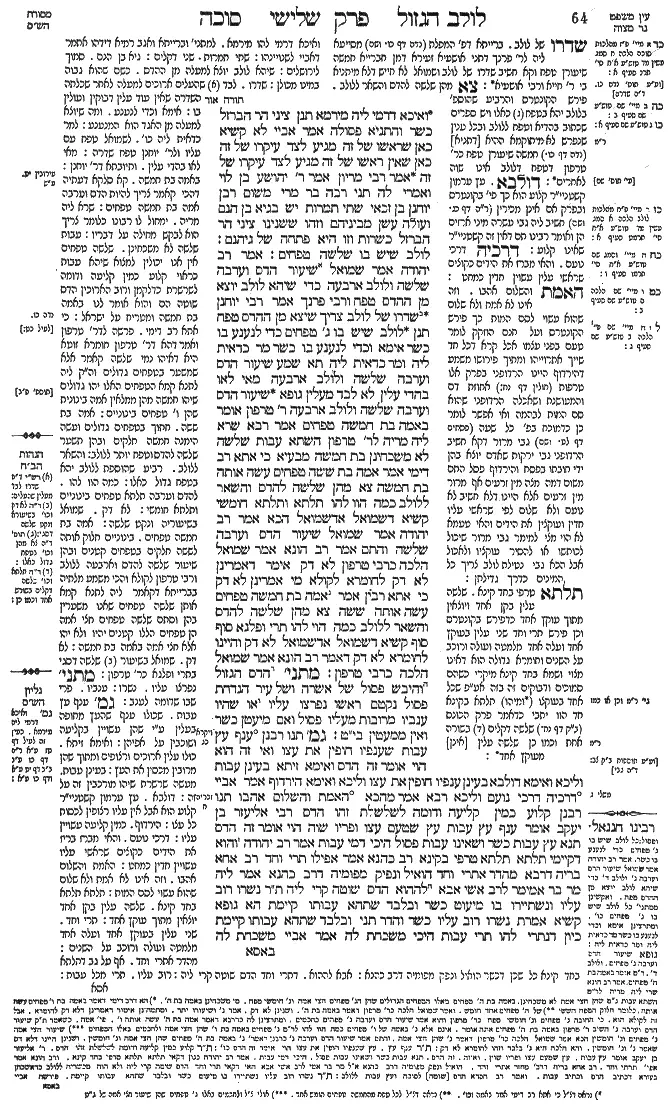
Sukkah 32b - Guemara
ואיכא דרמי ליה מירמא תנן ציני הר הברזל כשר והתניא פסולה אמר אביי לא קשיא כאן שראשו של זה מגיע לצד עיקרו של זה כאן שאין ראשו של זה מגיע לצד עיקרו של זה אמר רבי מריון אמר ר' יהושע בן לוי ואמרי לה תני רבה בר מרי משום רבן יוחנן בן זכאי שתי תמרות יש בגיא בן הנם ועולה עשן מביניהם וזהו ששנינו ציני הר הברזל כשרות וזו היא פתחה של גיהנם:
לולב שיש בו שלשה טפחים:
אמר רב יהודה אמר שמואל שיעור הדס וערבה שלשה ולולב ארבעה כדי שיהא לולב יוצא מן ההדס טפח ורבי פרנך אמר רבי יוחנן שדרו של לולב צריך שיצא מן ההדס טפח תנן לולב שיש בו ג' טפחים כדי לנענע בו כשר אימא וכדי לנענע בו כשר מר כדאית ליה ומר כדאית ליה תא שמע שיעור הדס וערבה שלשה ולולב ארבעה מאי לאו בהדי עלין לא לבד מעלין גופא שיעור הדס וערבה שלשה ולולב ארבעה ר' טרפון אומר באמה בת חמשה טפחים אמר רבא שרא ליה מריה לר' טרפון השתא עבות שלשה לא משכחינן בת חמשה מבעיא כי אתא רב דימי אמר אמה בת ששה טפחים עשה אותה בת חמשה צא מהן שלשה להדס והשאר ללולב כמה הוו להו תלתא ותלתא חומשי קשיא דשמואל אדשמואל הכא אמר רב יהודה אמר שמואל שיעור הדס וערבה שלשה והתם אמר רב הונא אמר שמואל הלכה כרבי טרפון לא דק אימר דאמרינן לא דק לחומרא לקולא מי אמרינן לא דק כי אתא רבין אמר אמה בת חמשה טפחים עשה אותה ששה צא מהן שלשה להדס והשאר ללולב כמה הוי להו תרי ופלגא סוף סוף קשיא דשמואל אדשמואל לא דק והיינו לחומרא לא דק דאמר רב הונא אמר שמואל הלכה כרבי טרפון:
מתני׳ הדס הגזול והיבש פסול של אשרה ושל עיר הנדחת פסול נקטם ראשו נפרצו עליו או שהיו ענביו מרובות מעליו פסול ואם מיעטן כשר ואין ממעטין בי"ט:
גמ׳ תנו רבנן (ויקרא כג, מ) ענף עץ עבות שענפיו חופין את עצו ואי זה הוא הוי אומר זה הדס ואימא זיתא בעינן עבות וליכא ואימא דולבא בעינן ענפיו חופין את עצו וליכא ואימא הירדוף אמר אביי (משלי ג, יז) דרכיה דרכי נועם וליכא רבא אמר מהכא (זכריה ח, יט) האמת והשלום אהבו תנו רבנן קלוע כמין קליעה ודומה לשלשלת זהו הדס רבי אליעזר בן יעקב אומר ענף עץ עבות עץ שטעם עצו ופריו שוה הוי אומר זה הדס תנא עץ עבות כשר ושאינו עבות פסול היכי דמי עבות אמר רב יהודה והוא דקיימי תלתא תלתא טרפי בקינא רב כהנא אמר אפילו תרי וחד רב אחא בריה דרבא מהדר אתרי וחד הואיל ונפיק מפומיה דרב כהנא אמר ליה מר בר אמימר לרב אשי אבא לההוא הדס שוטה קרי ליה ת"ר נשרו רוב עליו ונשתיירו בו מיעוט כשר ובלבד שתהא עבותו קיימת הא גופא קשיא אמרת נשרו רוב עליו כשר והדר תני ובלבד שתהא עבותו קיימת כיון דנתרי להו תרי עבות היכי משכחת לה אמר אביי משכחת לה
Comments from Rashi on Masechet Sukkah Page 32b
ואיכא דרמי להו מירמא . למתני' וברייתא ואגב רמיא דידהו אתמר דאביי לשנויינהו: שתי תמרות . שני דקלים: גיא בן הנם . סמוך לירושלים: שיהא לולב יוצא למעלה מן ההדס . כשם שהוא גבוה במינו מכולן: שדרו . לבד שהעלים ארוכים למעלה לאחר שכלתה השדרה שאין עוד עלין דבוקין ועולין בו: אימא וכדי לנענע . ומה שיוצא למעלה מן האגד הוא המנענע: למר כדאית ליה כו' . לשמואל טפח עם עליו ולר' יוחנן טפח שדרה: מאי לאו בהדי עלין . ותיובתא דר' יוחנן: באמה בת חמשה . קא סלקא דעתיה דהכי קאמר צריך להיות הדס וערבה אמה בת חמשה טפחים: שרא ליה מריה . ימחול לו רבונו כלומר צריך הוא לבקש מחילה על דבריו: עבות שלשה לא משכחינן . שלשה טפחים אין אנו יכולין למצוא שיהא עבות כראוי קלוע כמין קליעה ודומה לשרשרת כדלקמן ורוב הארוכין הדס שוטה הם והוא אומר לנו באמה בת חמשה ומטריח על ישראל: כי אתא רב דימי . פרשה לדר' טרפון ואמר דהא דר' טרפון חומרא זוטא היא דאיהו נמי שלשה קאמר אלא שמשער בטפחים גדולים וה"ק ליה לתנא קמא הטפחים האלו יהו גדולים שיהו חמשה מהן ממלאין אמה בינונית שהן ו' טפחים בינוניים: אמה בת ששה . חתוך בטפחים גדולים ועשה הימנה חמשה חלקים ובהן תשער שלשה להדס וטפח יותר ללולב: והשאר ללולב . רביע שהוספת ללולב יהא בטפח גדול כאלו: כמה הוו להו . להדס וערבה תלתא טפחים בינוניים ותלתא חומשי: לא דק . שמואל בשיעוריה ונקט שלשה: אמה בת חמשה טפחים . בינוניים חלוק אותה לששה חלקים בטפחים קטנים ובהן שיעור שלשה להדס וארבעה ללולב ורבי טרפון לקולא והכי משמע מלתיה בברייתא דקאמר ליה לתנא קמא אותן שלשה טפחים שאנו משערין בהן וסתם שלשה טפחים חצי אמה הן טפחים הללו קטנים יהיו ולא יהיו אלא חצי אמה באמה בת חמשה: לא דק . שמואל בשיעור שלשה דסגי בתרי ופלגא כר' טרפון: מתני' נפרצו עליו . נשרו: ענביו . פרי שבו שדומה לענב: גמ' ענף עץ עבות . שכולו ענף שהעץ מחופה בעלין ע"י שהן עשויין בקליעה ושוכבין על אפיהן: ואימא זיתא . כולו עלין ארוכים ורצופים ומתוך שהן מרובין מכסין את העץ: בעינן עבות . מעשה שרשרת שיהו מורכבין זה על זה: דולבא . עץ ערמון קשטניי"ר קלוע הוא אבל אין עליו רצופין לכסות כל עצו: הירדוף . כמין קליעה עשויין עליו: דרכי נועם . והאי מברז בריז את הידים כקוצים שראשי עליו עשויין חדין כמחט: האמת והשלום אהבו . וזה אינו לא אמת ולא שלום שהוא עשוי לסם המות: תלתא תלתא בחד קינא . שלשה עלין בקן אחד יוצאין מתוך עוקץ אחד: תרי וחד . שני עלין בעוקץ אחד ועלה אחד מלמטה ועולה ורוכב על השנים: מהדר אתרי וחד . אף על גב דתלתא בחד קינא כל שכן דכשר הואיל ונפק מפומיה דרב כהנא: אבא לההוא . דתרי וחד הדס שוטה קרי ליה: רוב עליו . תרי מכל עבות:
Comments from Tosafot - Sukkah 32b
שדרו של לולב. ברייתא דפ' המפלת (נדה דף כו. ושם) מסייעא ליה לר' פרנך דתני אושעיא זעירא דמן חברייא חמשה שיעורן טפח וקא חשיב שדרו של לולב ושמואל לא חייש דלא מיתניא בי ר' חייא ורבי אושעיא: צא מהן שלשה להדס והשאר ללולב. פירש הקונטרס והרביע שהוספ' בלולב יהא בטפח כאלו ויש ספרים שכתוב בהדיא וטפח ללולב ובכל ענין שנפרש לא מיתוקמא ההיא [דתניא] (נדה דף כו.) חמשה שיעורן טפח כר' טרפון דטפח דלולב אינו שוה לאחרים: דולבא. עץ ערמון קשטניי"ר קלוע הוא כך פי' בקונטרס ובפרק אם אינן מכירין (ר"ה דף כג. ושם) חשיב ליה גבי עשרה מיני ארזים הן ואומר רבינו תם דאין זה קשטניי"ר שאינו קלוע: דרכיה דרכי טעם. והאי מברז את הידים כקוצים שראשי עלין עשוין חדין כמחט: האמת והשלום אהבו. וזה אינו לא אמת ולא שלום שהוא עשוי לסם המות כך פירש הקונטרס ועל חנם הוזקק לומר טעם בפני עצמו אכל קרא דכל חד שייך אתרוייהו ומתוך פירושו משמע דהירדוף היינו הרדופני בפרק אלו טרפות (חולין דף נח:) אחוזת דם והמעושנת ושאכלה הרדופני שהוא סם המות לבהמה ואי אפשר לומר כן כדמוכח בפ' כל שעה (פסחים דף לט. ושם) גבי מרור דקא חשיב הרדופני גבי ירקות שאדם יוצא בהן ידי חובתו בפסח והירדוף פסל התם משום דמה מצה מין זרעים אף מרור מין זרעים אלא היינו דלא חשיב לא נועם ולא שלום לפי שראשי עליו חדין ועוקצין את הידים והאי טעמא לא הוי מצי למימר גבי מרור שיכול לכותשו או להסיר עוקציו ולאכול אבל הכא גבי נטילת לולב צריך כל המינים כדרך גדילתן: תלתא טרפי בחד קינא. שלשה עלין בקן אחד ויוצאין מתוך עוקץ אחד כדפירש בקונטרס וכן פירש תרי וחד שני עלין בעוקץ אחד ועלה אחד מלמטה ועולה ורוכב על השנים וחומרא גדולה הוא דאינו מצוי ושמא בחד קינא מיקרי כשהם סמוכים ודבוקים זה בזה אע"פ שכל אחד בעוקצו (ומיהו) תלתא בקינא חד הוו יתבי כדאמר פרק הכונס (ב"ק דף נח.) שלשה דקלים בשורה אחת וכמו כן שלשה עלין [אינן] מעוקץ אחד.:
Sukkah 32b - Mishnah translated into english
And others raise it as a contradiction. We learned in the mishna: A lulav from the palms of the Iron Mountain is fit. But isn’t it taught in a baraita: It is unfit? Abaye said: This is not difficult: Here, in the mishna, where the lulav is fit, it is referring to a case where the top of this leaf reaches the base of that next leaf, whereas, there, in the baraita, where the lulav is unfit, it is referring to a case where the top of this leaf does not reach the base of that next leaf.
The Gemara describes the location of these lulavim. Rabbi Maryon said that Rabbi Yehoshua ben Levi said, and some say that Rabba bar Mari taught this baraita in the name of Rabban Yoḥanan ben Zakkai: There are two date palms in the valley of ben Hinnom, and smoke arises from between them. And this is the place about which we learned in the mishna: A lulav from the palms of the Iron Mountain is fit. And that site is the entrance of Gehenna.
The mishna continues: A lulav that has three handbreadths in length, sufficient to enable one to wave with it, is fit for use in fulfilling the mitzva. Rav Yehuda said that Shmuel said: The minimum measure of a myrtle branch and a willow branch is three handbreadths. And the minimum measure of a lulav is four handbreadths. The difference between the measures is so that the lulav will extend at least one handbreadth from the myrtle branch.
And Rabbi Parnakh said that Rabbi Yoḥanan said: The spine of the lulav, and not merely its leaves, must be at least four handbreadths long, so that it will extend from the myrtle branch at least one handbreadth.
The Gemara asks: Didn’t we learn in the mishna: A lulav that has three handbreadths in length, sufficient to enable one to wave with it, is fit for use in fulfilling the mitzva? That indicates that a lulav three handbreadths long is fit. The Gemara answers: Emend the language of the mishna and say: A lulav that has three handbreadths and an additional handbreadth that is sufficient to enable one to wave with it is fit. This emendation is understood by each amora according to his opinion. It is understood by this Sage, Shmuel, as per his opinion that only one additional handbreadth is required including the leaves; and it is understood by this Sage, Rabbi Yoḥanan, as per his opinion that the additional handbreadth must be in the length of the spine of the lulav, and the leaves are not taken into consideration.
The Gemara cites proof from a baraita. Come and hear: The minimum measure of a myrtle branch and of a willow branch is three handbreadths, and that of a lulav is four handbreadths. What, is it not that this measure is calculated with the leaves, in accordance with the opinion of Shmuel? The Gemara rejects this proof: No, it can be understood that the measure is calculated without the leaves.
Apropos the baraita cited above, the Gemara discusses the matter itself. The minimum measure of a myrtle branch and of a willow branch is three handbreadths, and that of a lulav is four handbreadths. Rabbi Tarfon says: With a cubit of five handbreadths. The preliminary understanding of Rabbi Tarfon’s opinion is that the minimum measure of a myrtle branch is five handbreadths, not three.
Rava said: May his Master, the Holy One, Blessed be He, forgive Rabbi Tarfon for this extreme stringency. Now, we do not find even a dense-leaved myrtle branch three handbreadths long; is it necessary to say that finding one five handbreadths long is nearly impossible?
When Rav Dimi came from Eretz Yisrael to Babylonia, he said that this is the correct understanding of the statement of Rabbi Tarfon: Take a cubit of six handbreadths, and render it a cubit of five handbreadths. Rabbi Tarfon is saying that for the purpose of measuring the myrtle branch, willow branch, and lulav, the standard six-handbreadth cubit is divided into five handbreadths, each slightly larger than the standard handbreadth. Take three of these large handbreadths for the myrtle branch, and three of these handbreadths plus the extra handbreadth for the lulav. The Gemara calculates: How many standard handbreadths are there in the minimum measure of a myrtle branch or willow branch? There are three and three-fifths standard handbreadths.
However, on that basis, there is a difficulty, as one statement of Shmuel contradicts another statement of Shmuel. Here, Rabbi Yehuda said that Shmuel said: The minimum measure of the myrtle branch and of the willow branch is three handbreadths, and there, Rav Huna said that Shmuel said: The halakha is in accordance with the opinion of Rabbi Tarfon, who requires a larger handbreadth. There is a discrepancy of three-fifths of a handbreadth between the measures. The Gemara answers: When Shmuel said that the measure is three handbreadths, he was not precise and merely approximated the measure. The Gemara asks: Say that we say: He was not precise when the approximation leads to stringency, but when it leads to leniency, do we say: He was not precise? That would result in using an unfit myrtle branch in performing a mitzva.
When Rabin came from Eretz Yisrael to Babylonia, he said that this is the correct understanding of the statement of Rabbi Tarfon: Take a cubit of five handbreadths, and render it a cubit of six handbreadths. Rabbi Tarfon said that for the purpose of measuring the myrtle branch, willow branch, and lulav, a five-handbreadth cubit is divided into six handbreadths, each slightly smaller than the standard handbreadth. Take three of these smaller handbreadths for the myrtle branch, and three of these handbreadths plus the extra handbreadth for the lulav. The Gemara calculates: How many standard handbreadths are there in the minimum measure of a myrtle branch or willow branch? There are two and a half standard handbreadths.
The Gemara asks: Ultimately, there remains a difficulty, as one statement of Shmuel contradicts another statement of Shmuel. In one statement he said the minimum measure of a myrtle branch is two and a half handbreadths, and in another he said that the measure is three handbreadths. The Gemara answers: When Shmuel said that the measure is three handbreadths, he was not precise and merely approximated the measure. And this is a case of: He was not precise, where the approximation leads to a stringency, as Rav Huna said that Shmuel said: The halakha is in accordance with the opinion of Rabbi Tarfon. Shmuel holds that the actual measure required is two and a half handbreadths, and he rounded it off to three, which is a more stringent measure.
MISHNA: A myrtle branch that was stolen or that is completely dry is unfit. A myrtle branch of a tree worshipped as idolatry [asheira] or a myrtle branch from a city whose residents were incited to idolatry is unfit. If the top of the myrtle branch was severed, if the leaves were severed completely, or if its berries were more numerous than its leaves, it is unfit. If one diminished their number by plucking berries so that they no longer outnumbered the leaves, the myrtle branch is fit. But one may not diminish the number on the Festival itself.
GEMARA: The Sages taught: It is written: “Boughs of a dense-leaved tree” (Leviticus 23:40); this is referring to a tree whose leaves obscure its tree. And which tree is that? You must say it is the myrtle tree. The Gemara suggests: And say it is the olive tree, whose leaves obscure the tree. The Gemara answers: We require a “dense-leaved” tree, whose leaves are in a chain-like configuration, and that is not the case with an olive tree.
The Gemara suggests: And say it is the Oriental plane tree, whose leaves are in a braid-like configuration. The Gemara answers: We require a tree whose leaves obscure its tree, and that is not the case with an Oriental plane tree.
The Gemara suggests: And say the verse is referring to oleander, which has both characteristics. Abaye said: It is written with regard to the Torah: “Its ways are ways of pleasantness” (Proverbs 3:17), and that is not the case with the oleander tree, because it is a poisonous plant and its sharp, thorn-like leaves pierce the hand of one holding it. Rava said: The unfitness of the oleander is derived from here: “Love truth and peace” (Zechariah 8:19), and poisonous plants that pierce are antithetical to peace.
The Sages taught: Plaited like a braid and chain-like; that is characteristic of the myrtle branch used in the fulfillment of the mitzva. Rabbi Eliezer ben Ya’akov says another characteristic. It is written: “Boughs of a dense-leaved tree,” indicating a tree that the taste of its branches and the taste of its fruit are alike. You must say this is the myrtle branch.
A Sage taught in the Tosefta: A dense-leaved branch is fit, and one that is not dense-leaved is unfit, even though it is a myrtle branch.
The Gemara asks: What are the circumstances of “dense-leaved tree”? Rav Yehuda said: And it is a configuration where three leaves emerge from each base. Rav Kahana said: Even two leaves emerging from one base and one leaf that covers the other two emerging from a lower base is called thick. Rav Aḥa, son of Rava, would purposely seek a myrtle branch configured with two leaves emerging from one base and one emerging from a lower base, since this statement emerged from the mouth of Rav Kahana. Mar bar Ameimar said to Rav Ashi: My father called a myrtle branch with that configuration a wild myrtle branch.
The Sages taught: If most of its leaves fell and only a minority of the leaves remained, the myrtle branch is fit, provided that its dense-leaved nature remains intact.
The Gemara wonders: This matter itself is difficult, as there is an internal contradiction in this baraita. On the one hand, you said: If most of its leaves fell it is fit, and then the baraita taught: Provided that its dense-leaved nature remains intact. Once two of every three leaves fell, how can you find a branch whose dense-leaved nature is intact?
Abaye said: You can find it
Traduction : The William Davidson digital edition of the Koren Noé Talmud, with commentary by Rabbi Adin Even-Israel Steinsaltz.