 Talmud Bavli
Nazir 34b : Youtube
Daf TubeYoutube
2 video classes :
Nazir Page 34b
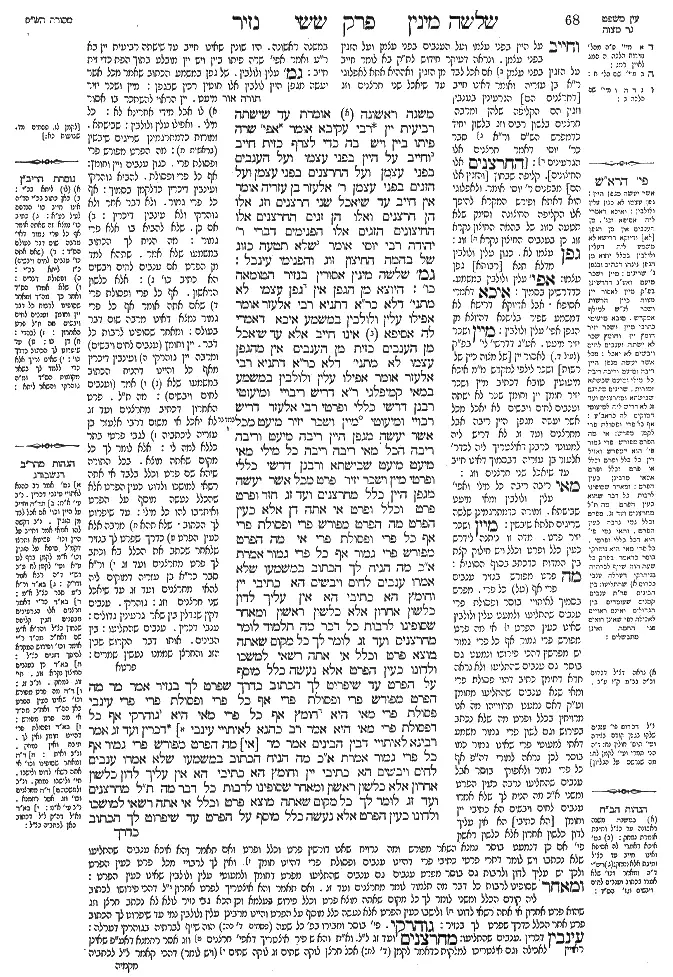
Nazir 34b - Guemara
משנה ראשונה אומרת עד שישתה רביעית יין רבי עקיבא אומר אפי' שרה פיתו ביין ויש בה כדי לצרף כזית חייב וחייב על היין בפני עצמו ועל הענבים בפני עצמן ועל החרצנים בפני עצמן ועל הזגים בפני עצמן ר' אלעזר בן עזריה אומר אין חייב עד שיאכל שני חרצנים וזג אלו הן חרצנים ואלו הן זגים החרצנים אלו החיצונים הזגים אלו הפנימים דברי ר' יהודה רבי יוסי אומר שלא תטעה כזוג של בהמה החיצון זוג והפנימי עינבל גמ׳ שלשה מינין אסורין בנזיר הטומאה כו':
היוצא מן הגפן אין גפן עצמו לא מתני' דלא כר"א דתניא רבי אלעזר אומר אפילו עלין ולולבין במשמע איכא דאמרי לה אסיפא אינו חייב אלא עד שיאכל מן הענבים כזית מן הענבים אין מהגפן עצמו לא מתני' דלא כר"א דתניא רבי אלעזר אומר אפילו עלין ולולבין במשמע במאי קמיפלגי ר"א דריש ריבויי ומיעוטי רבנן דרשי כללי ופרטי רבי אלעזר דריש רבויי ומיעוטי (במדבר ו, ג) מיין ושכר יזיר מיעט מכל אשר יעשה מגפן היין ריבה מיעט וריבה ריבה הכל מאי ריבה ריבה כל מילי מאי מיעט מיעט שבישתא ורבנן דרשי כללי ופרטי מיין ושכר יזיר פרט מכל אשר יעשה מגפן היין כלל מחרצנים ועד זג חזר ופרט פרט וכלל ופרט אי אתה דן אלא כעין הפרט מה הפרט מפורש פרי ופסולת פרי אף כל פרי ופסולת פרי אי מה הפרט מפורש פרי גמור אף כל פרי גמור אמרת א"כ מה הניח לך הכתוב במשמעו שלא אמרו ענבים לחים ויבשים הא כתיבי יין וחומץ הא כתיבי הא אין עליך לדון כלשון אחרון אלא כלשון ראשון ומאחר שסופינו לרבות כל דבר מה תלמוד לומר מחרצנים ועד זג לומר לך כל מקום שאתה מוצא פרט וכלל אי אתה רשאי למשכו ולדונו כעין הפרט אלא נעשה כלל מוסף על הפרט עד שיפרוט לך הכתוב כדרך שפרט לך בנזיר אמר מר מה הפרט מפורש פרי ופסולת פרי אף כל פרי ופסולת פרי פרי עינבי פסולת פרי מאי היא חומץ אף כל פרי מאי היא גוהרקי אף כל דפסולת פרי מאי היא אמר רב כהנא לאיתויי עינבי דכרין ועד זג אמר רבינא לאיתויי דבין הבינים אמר מר [אי] מה הפרט מפורש פרי גמור אף כל פרי גמור אמרת א"כ מה הניח הכתוב במשמעו שלא אמרו ענבים לחים ויבשים הא כתיבי יין וחומץ הא כתיבי הא אין עליך לדון כלשון אחרון אלא כלשון ראשון ומאחר שסופינו לרבות כל דבר מה ת"ל מחרצנים ועד זג לומר לך כל מקום שאתה מוצא פרט וכלל אי אתה רשאי למושכו ולדונו כעין הפרט אלא נעשה כלל מוסף על הפרט עד שיפרוט לך הכתוב
Comments from Rashi on Masechet Nazir Page 34b
במשנה ראשונה . היו שונין שאינו חייב עד שישתה רביעית יין בא ר"ע ואמר אפי' שרה פיתו ביין ויש יין מובלע בתוך הפת כדי זית חייב: גמ' עלין ולולבין . של גפן במשמע הכתוב שאמר מכל אשר יעשה מגפן היין לולבין אלו חוטין רכין שבגפן: מיין ושכר יזיר מיעט . יין הראוי להשתכר בו אסור לו אבל מידי אחרינא לא: כל מילי . ואפילו עלין ולולבין: שבישתא . זמורות כדמתרגמינן שריגים שיבשין (בראשית מ): מה הפרט מפורש פרי ופסולת פרי . כגון ענבים ויין וחומץ: אף כל פרי ופסולת . להביא גוהרקי ועינבין דיכרין כדלקמן בסמוך: אף כל פרי גמור . ולא דבר אחר ולא גוהרקי ולא עינבין דיכרין: אם כן . שלא להביא בו אלא פרי גמור: מה הניח לך הכתוב במשמעו שלא אמר . שתהא למד מן הפרט אם ענבים לחים ויבשים הא כתיב כו': אלא כלשון הראשון . אף כל פרי ופסולת פרי שאם אתה אומר אף כל פרי גמור נמצא דאינו מרבה שום דבר בעולם: ומאחר שסופינו לרבות כל דבר . יין וחומץ (ענבים לחים ויבשים) ומרבה יין גוהרקי ועינבין דיכרין מאף כל והיינו דהניח הכתוב במשמעו שלא אמר (וענבים לחים ויבשים): מה ת"ל . פרט האחרון דכתיב מחרצנים ועד זג לא יאכל אי משום דרבי אלעזר בן עזריה ליכתביה לגבי פרטי בתר כללא למה לי: אלא לומר לך כל מקום שאתה מוצא . בכל התורה שיהא שם פרט וכלל בלבד אי אתה רשאי למושכו ולדונו כעין הפרט אלא שהכלל נעשה מוסף על הפרט ואיתרבו להו כל מילי: עד שיפרוט לך הכתוב . שלא תהא מרבה אלא כעין הפרט כדרך שפרט לך בנזיר שלאחר שכתב את הכלל בא וכתב לך פרט מחרצנים ועד זג ור"א סבר כר"א בן עזריה דמוקים ליה להאי מחרצנים ועד זג עד שיאכל שני חרצנים וזג: גוהרקי . ענבים דקין שגדלין בין שאר גרעינין גדולים: ענבי דכרין . ענבים שהתליעו: בין הבינים . אותו דבר הקרוש שבין הזג והחרצן שממנו נעשין שמרים:
Comments from Tosafot - Nazir 34b
וחייב על היין בפני עצמו ועל הענבים בפני עצמן ועל הזגין בפני עצמן . ונראה דעיקר חידוש לת"ק בא לומר חייב על הזגין בפני עצמן אם אכל לבד מן הזגין ואההיא אתא לאפלוגי ר"א בן עזריה ואומר דאינו חייב עד שיאכל שני חרצנים וזג [דחרצנים הם] הגרעינין בענבין וזגין הם הקליפה שלהן ומרבה חרצנים בלשון רבים וזג בלשון יחיד כדמפרש הש"ס ור"א סבר כר' יוסי דאמר חרצנים אלו הגרעינים: [החרצנים אלו החיצונים] . קליפה שבחוץ [והזגין אלו הם] מבפנים ר' יוסי אומר. ולאפלוגי הוא דאתא ופירש המקרא להיפך אלו הקליפה החיצונה וסימן שלא תטעה כזוג של בהמה החיצון נקרא זוג כן בענבים החיצון נקרא זוג: גפן עצמו לא . כגון עלין ולולבין מדלא תנא [רבותא] גפן עצמו: אפי' עלין ולולבין במשמע . כדדרשינן בסמוך: איכא דאמרי אסיפא . אבל אדיוקא דרישא לא דמשמע שפיר בלישנא דהיוצא מן הגפן אפי' עלין ולולבין: מיין ושכר יזיר מיעט . אע"ג דדרשי' לי' בפ"ק (לעיל נזיר ד.) לאסור יין [של מצוה כיין של רשות] ושכר לילפי למקדש מ"מ איכא מיעוטין טובא דכתיב מיין ושכר יזיר חומץ יין וחומץ שכר לא ישתה וענבים לחים ויבשים לא יאכל מכל אשר יעשה מגפן היין ריבה אבל מחרצנים ועד זג לא דריש ליה למעוטי כרבנן דאיצטריך ליה לכדר' אלעזר בן עזריה דבסמוך דאינו חייב עד שיאכל שני חרצנים וזג: מאי ריבה ריבה כל מילי ואפי' עלין ולולבין ומאי מיעט שבישתא . זמורה כדמתרגמינן שלשה שריגים תלתא שיבשין: מיין ושכר יזיר פרט . מדה זו ניתנה לידרש כעין כלל ופרט וכלל ויש חילוק קצת בין המדות כדכתב בסוף הסוגיא: מה פרט מפורש בנזיר ענבים פרי אף (על) כל פרי . מפרש בסמוך לאיתויי בוסר ופסולת פרי ענבים שהתליעו ולמעט עלין ולולבין שאינו כעין הפרט אי מה פרט מפורש פרי גמור אף כל פרי גמור יש מפרשין דהכי פירושו ונמעט גם בוסר גם ענבים שהתליעו ולא נראה חדא דחומץ כתיב דהוי פסולת פרי ומאי שנא ענבים שהתליעו מחומץ וע"ק דאם נמעט תרווייהו מה אנו מרויחין בכלל ופרט מה שלא נכתב בפירוש וגם לשון פרי גמור משמע דאתי למעוטי פרי שאינו גמור כמו בוסר לכן נראה למורי דה"פ אף כל פרי גמור ולאפוקי בוסר אבל ענבים שהתליעו נרבה כעין הפרט ומשני א"כ מה הניח לך שלא אמרו ענבים לחים ויבשים הא כתיבי יין וחומץ [הא כתיבי] הא אין עליך לדון כלשון אחרון אלא כלשון ראשון פי' אם כן דנמעט בוסר נמצא השאר מפורש ומה נרויח שאנו דורשין פרט וכלל ופרט ואם תאמר והא איכא ענבים שהתליעו שלא נכתבו ויש לומר דתרי פרטי כתיבי פרי דהיינו ענבים ופסולת פרי דהיינו חומץ ואין לך לרבויי מכל פרט כעין הפרט ולכך יש עליך לדון ולרבות גם בוסר מפרט ענבים גם ענבים שהתליעו מפרט דחומץ ולמעוטי עלין ולולבין שאינו כעין הפרט: ומאחר שסופינו לרבות כל דבר מה תלמוד לומר מחרצנים ועד זג . ואם תאמר והא איצטריך לפרט אחרון י"ל דהכי פירושו לכתוב ליה קודם הכלל ומשני לומר לך כל מקום שאתה מוצא פרט וכלל פירוש בעלמא וכן הכא גבי נזיר לולא לא נכתב חרצן וזג שהוא פרט אחרון אי אתה רשאי לדונו ולישבו כעין הפרט אלא נעשה כלל מוסף על הפרט והיינו מרבינן עלין ולולבין נמי עד שיפרוט לך הכתוב פרט אחר הכלל כדרך שפרט לך בנזיר: גוהרקי . פי' בוסר וחבירו בפ' כל שעה (פסחים ד' כה:) הוה שייף לברתיה בגוהרקי דערלה: עינבין דכרין . ענבים שהתליעו: [דבין הבינים] . דהיינו גוף הענב והכי משמע לישנא דקרא מחרצנים ועד זג פירוש מה שבין חרצן לזג וקשה דההיא גוף הענב וכבר כתב ענבים לכן פר"ת דהיינו ענבים קטנים שבין הגדולים שאינם רואין פני החמה ואינם מתבשלין כל כך ולא יהיו גדולים לעולם וא"ת אמאי איצטריך ועד לבין הביניים והלא כבר מרבינן אפי' בוסר מכעין הפרט ושמא י"ל דה"נ גריעי מבוסר לפי שבוסר יבא לכלל ענבים גדולים ועוד י"ל דאי לאו ועד מרבין בין הביניים הוו מרבים מכעין הפרט בין הביניים ולא בוסר ועוד יש לקיים פירוש ראשון והכי פירושו אם ליקט האוכל שבין החרצן כדי כזית ואכלו לוקה ולא אמרי' דבטלה דעתו אצל כל אדם והא לא שמעינן ליה מענבים דקרא: מחרצנים ועד זג ל"ל . וא"ת והא שפיר איצטריך דאפי' חרצנים וזג אסר רחמנא דאע"פ שאינן ראויין לאכילה וגם איצטריכו למלקות כדאמר לקמן (נזיר ד' לח:) אכל חרצן לוקה שתים זג לוקה שתים (ויש לומר) דהכי קאמר ל"ל לכתביה מקמיה וקשה דהיאך סבור דלא יאמר נעשה כלל מוסיף על הפרט לכך נראה דה"ק לכתוב חרצן וזג:
Nazir 34b - Mishnah translated into english
An initial version of the mishna says that a nazirite is liable to receive lashes only if he drinks a quarter-log of wine. Rabbi Akiva says: Even if he soaked his bread in wine and the two together contain enough to combine to the amount of an olive-bulk, he is liable. And furthermore, a nazirite is liable to receive lashes for consuming wine by itself, and for grapes by themselves, and for ḥartzannim by themselves, and for zaggim by themselves, as each of these is forbidden separately by the Torah. Rabbi Elazar ben Azarya says: He is liable only if he eats an olive-bulk that includes at least two ḥartzannim and one zag, in accordance with the verse “From ḥartzannim to zag” (Numbers 6:4), where the first term is in the plural and the second in the singular.
The mishna discusses the meaning of these terms: Which parts are ḥartzannim and which are zaggim? The ḥartzannim are the outside parts, the skin of the grape, while the zaggim are the inner parts, the seeds. This is the statement of Rabbi Yehuda. Rabbi Yosei says: The opposite is the case and this is the mnemonic so that you should not err: It is like a bell [zog] worn by an animal, in which the outer part, which corresponds to the skin of a grape, is called zog, and the inner portion of the bell, the clapper, which corresponds to the seeds in a grape, is called inbal.
GEMARA: The mishna taught that three types of actions are prohibited for a nazirite: Contracting ritual impurity, shaving, and consuming products of the vine. The Gemara infers: That which emerges from the vine, yes, it is included in the prohibition; however, any part of the vine itself, other than its fruit, no, this is not forbidden. The Gemara comments: The mishna is not in accordance with the opinion of Rabbi Elazar. This is as it is taught in a baraita that Rabbi Elazar says: Even the leaves and tendrils of the vine are included in the prohibitions of naziriteship.
Some say this statement with regard to the latter clause of the mishna: He is liable to receive lashes only if he eats an olive-bulk of the grapes. The Gemara infers: If he eats from the grapes, yes, he is liable, but if he eats from the vine itself, no, he is not liable. If so, the mishna is not in accordance with the opinion of Rabbi Elazar. This is as it is taught in a baraita that Rabbi Elazar says: Even the leaves and tendrils are included in the prohibition.
The Gemara asks: With regard to what do Rabbi Elazar and the Rabbis disagree; what is the basis of their dispute? The Gemara explains: Rabbi Elazar interprets the verses employing the hermeneutical principle of amplifications and restrictions, while the Rabbis interpret them employing the hermeneutical principle of generalizations and details. The Gemara clarifies: Rabbi Elazar interprets the verses employing the principle of amplifications and restrictions, as the phrase: “He shall abstain from wine and strong drink” (Numbers 6:3), restricts the prohibition to wine and strong drink, and the subsequent phrase: “Anything that is made of the grapevine” (Numbers 6:4), amplifies the prohibition.
The Gemara elaborates: In this manner, the Torah restricts and amplifies, which, according to the principles of exegesis, amplifies and includes virtually all substances. What does it amplify and include? It amplifies and includes all matters and substances that come from the vine. What does it restrict? After all, the phrase “He shall abstain from wine and strong drink” must be excluding something. According to this interpretation, the verse restricts only one part of a vine, the branches. A nazirite who eats the branches of the vine has not committed a transgression.
And conversely, the Rabbis interpret the verses employing the principle of generalizations and details, as the phrase “He shall abstain from wine and strong drink” (Numbers 6:3) is an example of a detail, the phrase “anything that is made of the grapevine” (Numbers 6:4) is a generalization, and when the verse continues: “From pits to grape skin,” it has given an example of a detail again. This is a detail, and a generalization, and a detail. According to this exegetical method, you may deduce that the verse is referring only to items similar to the detail: Just as the items mentioned in the detail are clearly defined as a fruit or fruit waste, i.e., grape seeds or skins, so too, everything forbidden by the generalization is a fruit or fruit waste, but not leaves or tendrils, as maintained by Rabbi Elazar.
The Gemara asks: If so, one can suggest an alternative derivation: Just as the items mentioned in the detail are clearly defined as a complete, i.e., ripe, fruit, so too, everything forbidden must be a complete fruit, excluding unripe fruit. Why, according to the Rabbis, are unripe grapes included in the prohibition? You will say the following counterargument: If so, what has the verse left you to derive from its meaning that it has not stated? If you say grapes and raisins, these are explicitly written; if you say wine and vinegar, these are also written. What, then, does the generalization come to add? Evidently, you cannot learn in accordance with the last version, which excludes unripe fruit; rather, you must learn in accordance with the first version, which includes this fruit and excludes only leaves and tendrils.
The Gemara asks: And as we eventually include everything that is similar to the detail of fruit and the waste of fruit, what is the meaning when the verse states: “From pits to grape skin”? This serves to tell you a general principle of exegesis that applies throughout the Torah: Wherever you find only a detail and a generalization, you cannot broaden it and learn that the generalization is limited to be like the detail, by saying that the generalization merely clarifies the previous detail.
Rather, the generalization becomes added to the detail so that it includes all matters, even those dissimilar to the detail, until the verse specifies and adds another detail after the generalization, in the manner that it specified with regard to a nazirite, by inserting the phrase “from pits to grape skin” after “anything that is made of the grapevine.” The exegetical method of: A detail, a generalization, and a detail, means that the generalization includes only something that is similar to the detail. In this particular example, leaves and tendrils are excluded.
The Gemara analyzes the details of this baraita. The Master said above: Just as the items mentioned in the detail are clearly defined as a fruit or fruit waste, so too everything forbidden to the nazirite by the Torah is a fruit or fruit waste. The Gemara clarifies: The fruit mentioned by the Torah is grapes. What is fruit waste? Vinegar, as in the verse: “He shall drink no vinegar of wine or vinegar of strong drink” (Numbers 6:3).
What is the statement: So too everything forbidden by the generalization is a fruit, serving to include? It serves to include unripe grapes. And what is the statement: So too everything forbidden by the generalization is a fruit or fruit waste, stated with regard to fruit waste, serving to include? Which fruit waste unspecified by the verse is added by means of this derivation? Rav Kahana said: This serves to include grapes that have become wormy. With regard to the phrase “from pits to grape skin,” Ravina said: This serves to include the part of the fruit that is in between the seeds and the skin.
The Gemara continues to analyze the baraita, which it cites at length. The Master said above: If so, just as the items mentioned in the detail are clearly defined as a complete fruit, so too everything is a complete fruit. You say: If so, what has the verse left you to derive from its meaning that it has not stated? Grapes and raisins, these are written; wine and vinegar, these are written. You cannot learn in accordance with the last version; rather, you must learn in accordance with the first version. And as we eventually include everything, what is the meaning when the verse states: “From pit to grape skin”? This serves to tell you that wherever you find a detail and a generalization, you cannot broaden it and learn that the generalization is limited to be like the detail; rather, the generalization becomes added to the detail, until the verse specifies for you
Traduction : The William Davidson digital edition of the Koren Noé Talmud, with commentary by Rabbi Adin Even-Israel Steinsaltz.