 Talmud Bavli
Nazir 21a : Youtube
Daf TubeYoutube
2 video classes :
Nazir Page 21a
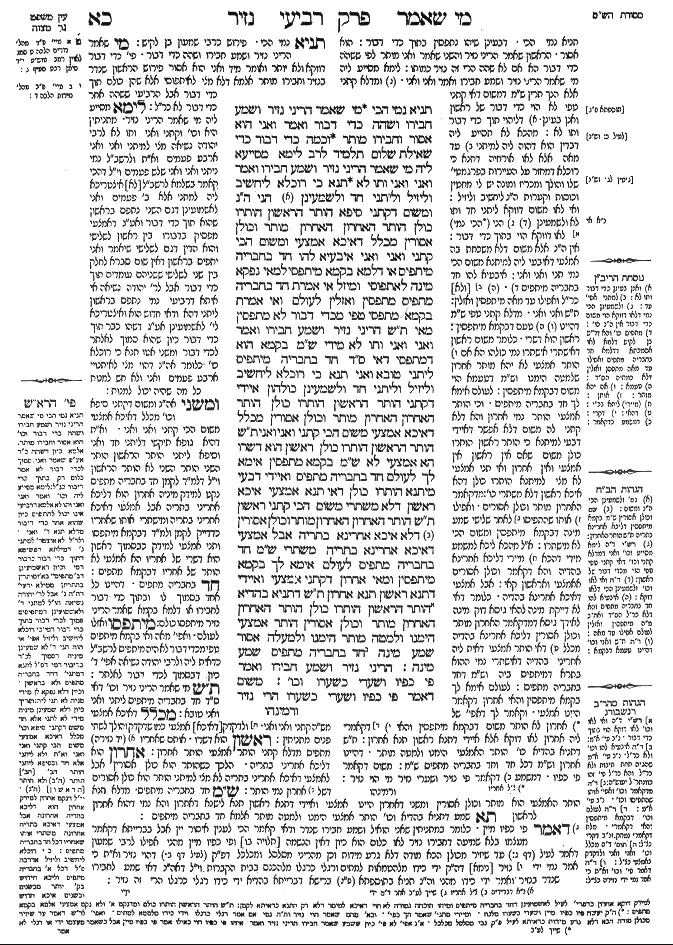
Nazir 21a - Guemara
תניא נמי הכי מי שאמר הריני נזיר ושמע חבירו ושהה כדי דבור ואמר ואני הוא אסור וחבירו מותר וכמה כדי דבור כדי שאילת שלום תלמיד לרב לימא מסייעא ליה מי שאמר הריני נזיר ושמע חבירו ואמר ואני ואני ותו לא תנא כי רוכלא ליחשיב וליזיל וליתני חד ולשמעינן הני ה"נ ומשום דקתני סיפא הותר הראשון הותרו כולן הותר האחרון האחרון מותר וכולן אסורין מכלל דאיכא אמצעי ומשום הכי קתני ואני ואני איבעיא להו חד בחבריה מיתפיס או דלמא בקמא מיתפסי למאי נפקא מינה לאתפוסי ומיזל אי אמרת חד בחבריה מתפיס מתפסין ואזלין לעולם ואי אמרת בקמא מתפסי טפי מכדי דבור לא מתפסין מאי ת"ש הריני נזיר ושמע חבירו ואמר ואני ואני ותו לא מידי ש"מ בקמא הוא דמתפסי דאי ס"ד חד בחבריה מיתפיס ליתני טובא ואני תנא כי רוכלא ליחשיב וליזיל וליתני חד ולשמעינן כולהון איידי דקתני הותר הראשון הותרו כולן הותר האחרון האחרון מותר וכולן אסורין מכלל דאיכא אמצעי משום הכי קתני ואני ואני ת"ש הותר הראשון הותרו כולן ראשון הוא דשרו הא אמצעי לא ש"מ בקמא מתפסין אימא לך לעולם חד בחבריה מתפיס ואיידי דבעי מיתנא הותרו כולן דאי תנא אמצעי איכא ראשון דלא משתרי משום הכי קתני ראשון ת"ש הותר האחרון האחרון מותר וכולן אסורין דלא איכא אחרינא בתריה אבל אמצעי דאיכא אחרינא בתריה משתרי ש"מ חד בחבריה מתפיס לעולם אימא לך בקמא מיתפסין ומאי אחרון דקתני אמצעי ואיידי דתנא ראשון תנא אחרון ת"ש דתניא בהדיא הותר הראשון הותרו כולן הותר האחרון האחרון מותר וכולן אסורין הותר אמצעי הימנו ולמטה מותר הימנו ולמעלה אסור שמע מינה חד בחבריה מתפיס שמע מינה:
הריני נזיר ושמע חבירו ואמר פי כפיו ושערי כשערו וכו':
משום דאמר פי כפיו ושערי כשערו הרי נזיר
Comments from Rashi on Masechet Nazir Page 21a
תניא נמי הכי . דבעינן שיהו נתפסין בתוך כדי דבור: הוא אסור . הראשון שאמר הריני נזיר והשני שאמר ואני מותר לפי ששהה כדי דבור הא אם לא שהה הרי זה נזיר כמותו: לימא מסייע ליה מי שאמר הריני נזיר ושמע חבירו ואמר ואני ואני . ומדלא קתני אלא הנך תרין ש"מ דמשום דאי קתני טפי לא הוי כדי דבור של ראשון ואנן בעינן דליהוי תוך כדי דבור ותו לא: מהכא לא תסייע ליה . דבדין הוא דהוה ליה למיתני עד מאה אלא לאו אורחיה דתנא כי רוכלא דמחזר על העיירות בפרגמטי' שלו והולך ומכריז ומונה יש לי מחטין וכוסות וקערות ה"נ ליחשיב וליזיל: ואי לאו משום דווקא ליתני חד ותו לא ולשמעינן הני (הכי נמי) לאו דווקא הוי בתוך כדי דבור: אין ה"נ אלא משום דלא משכחת בה אמצעי דאיבעי ליה למיתנא משום הכי נמי תני ואני ואני: איבעיא להו חד בחבריה מיתפיס . [ולא] כר"ל ואפילו עד מאה מיתפסין ואזלין: ת"ש ואני ואני . מדלא קתני טפי ש"מ דהיינו טעם דבקמא מיתפסין: ראשון הוא דשרי . כלומר משום ראשון דאישתרי אישתרו נמי כולהו הא אם הותר אמצעי לא יהא מותר אחרון שלמטה הימנו וש"מ דטעמא הוי משום דבקמא מיתפסין: לעולם אימא לך חד בחבריה מיתפיס . וכי הותר אמצעי הותר נמי אחרון והא דלא קתני לה משום דלא אפשר דאיידי דבעי למיתנא כי הותר ראשון הותרו כולן משום שאם אין ראשון אין אמצעי ואין אחרון ואי תני אמצעי לא מצי למיתנא הותרו כולן דהא איכא ראשון דלא משתרי כו': מדקאמר האחרון מותר וכולן אסורים . ואפילו אותו שהתפיסו לאחר שלישי שמע מינה דבקמא מיתפסין ומשום הכי לא מישתרו: א"ל מהכא ליכא למשמע מידי . דהכא מיירי דליכא אחרינא בהדיה והא דקאמר וכולן אסורים אאמצעי ואראשון קאי: אבל אמצעי דאיכא אחרינא בהדיה . כלומר דאי לא דייקת מינה להאי גיסא דוק מינה לאידך גיסא דמדקאמר האחרון מותר וכולן אסורין דליכא אחרינא בהדיה מכלל דאי הותר אמצעי דאית ליה אחריני בהדיה דאישתרי נמי ההוא בתרא דמיתפיס ביה וש"מ דחד בחבריה מתפיס: לעולם אימא לך בקמא מיתפסין והאי אחרון דקאמר היינו אמצעי . וקאמר לך דאפי' של אחרון לא הותר משום דבקמא מיתפסין והאי דקאמרי ליה אחרון לאו דוקא אלא איידי דתנא ראשון תנא אחרון: ת"ש דתניא בהדיא כו' הותר האמצעי הימנו ולמטה מותר . דהיינו אחרון וש"מ דכל חד וחד בחבריה מתפיס ש"מ: משום דקאמר פי כפיו . דמשמע דקאמר פי נזיר ושערי נזיר מי הוי נזיר:
Comments from Tosafot - Nazir 21a
תניא נמי הכי . פירוש כרבי שמעון בן לקיש: מי שאמר הריני נזיר ושמע חבירו ושהה כדי דבור . פי' כדי דבור דווקא ולא יותר ואומר מיד ואני הוא אסור פירוש הראשון שנדר בנזיר וחבירו מותר אלמא דלא מצי לאיתפוסי אלא שהן כולם תוך כדי דבור אבל הרביעי ששהה אחר כדי דבור לא כר"ל: לימא מסייע ליה מי שאמר הריני נזיר . מתניתין היא וכו' וקתני ואני ותו לא לרבי יהודה נשיאה מצי למיתני ואני ואני ארבע פעמים וא"ת ולרשב"ל נמי ניתני ואני ואני שלש פעמים וי"ל דהכי קאמר בשלמא לרשב"ל [לא] איצטריכא ליה למתני אלא ב' פעמים ואני לאשמועינן דגם השני נתפס בראשון שהוא תוך כדי דבור ואע"ג דאמצעי מפסיק בדבורו בין ראשון לשלישי והוא הדין דגם לשלישי שיאמר ואני יתפיס בראשון דאין שום סברא לחלק בין שני לשלישי ששניהם עומדים תוך כדי דבור אבל לר' יהודה נשיאה אי איתא דרביעי נמי נתפס בראשון ליתני דהא ודאי חדוש הוא ואיצטריכא לי' לאשמועינן אע"ג דשהו כבר תוך כדי דבור כיון שהוא סמוך לאלתר לכדי דבור ומשני אטו תנא כי רוכלא כו' כלומר אה"נ דהוי מצי לאיתנויי ארבע פעמים ואני ולא חש למנות כל מה שהיה יכול למנות: ומשני אה"נ ומשום דקתני סיפא וכו' מכלל דאיכא אמצעי משום הכי קתני ואני ואני . וא"ת דהיא גופא תיקשי דליתני חד ואני וסיפא ליתני הותר הראשון הותר השני הותר השני לא הותר הראשון וי"ל דלמ"ד לקמן חד בחבריה מתפיס נקט למידק מיניה אחרון הוא דליכא אחריני בתריה אבל אמצעי דאיכא אחריני בתריה ומישתרי אותו שאחריו כדדייק לקמן ולמ"ד דבקמא מיתפסו ותני אמצעי למידק כבסמוך ראשון הוא דשרי של אחריו הא אמצעי לא הותר של אחריו דבקמא מתפיס: חד בחבריה מתפיס . דהיינו כל אחד בסמוך לו ובתוך כדי דבור לחבירו או דלמא בקמא שאמר הריני נזיר מיתפסו כולם: מיתפסו ואזלו לעולם . ואפי' מאה ואי בקמא מיתפיס טפי מכדי דבור לא היה מיתפיס לרשב"ל כדאית ליה ולרבי יהודה נשיאה אפי' ד' כיון דבסמוך לכדי דבור לאלתר: ת"ש מי שאמר הריני נזיר וכו' דאי ס"ד חד בחבריה מיתפיס ליתני ואני ואני טובא: ת"ש מי שאמר הריני נזיר וכו' . דאי ס"ד חד בחבריה מיתפיס ליתני ואני ואני טובא: מכלל דאיכא אמצעי מש"ה קתני ואני ואני . ולדקדק [דאיכא] אמצעי כמו שדקדק והולך לשתי פנים מתניתין: ראשון הוא דשרו . אותם שאחריו (יד נזירה) מתפיס מדלא קתני הותר אמצעי הותר אחרון: אחרון הוא דליכא אחריני בתריה . הלכך כשהותר הוא כולן אסורין אבל לאמצעי דאיכא אחריני בתריה לא מצי למיתני הותר הוא כולן אסורים דשל אחרון נמי הותר: ש"מ חד בחבריה מיתפיס . מדלא תנא הותר האמצעי הוא מותר וכולן אסורין ומשני דאחרון היינו אמצעי ואיידי דתנא ראשון תנא לישנא דאחרון והא נמי דהוא אחרון לראשון: תא שמע דתניא בהדיא וכו' . הותר אמצעי הימנו ולמטה מותר אלמא חד בחבריה מיתפיס:
Nazir 21a - Mishnah translated into english
This is also taught in a baraita: In the case of one who said: I am hereby a nazirite, and another heard him and waited the time required for speaking a short phrase and then said: And I, the first person is bound by his vow and the other is permitted, as too much time passed between their respective vows. And how much time is the time required for speaking? It is the time necessary for a student to inquire after the welfare of his rabbi.
The Gemara suggests: Shall we say that the mishna supports Reish Lakish’s opinion? As it is taught: In the case of one who said: I am hereby a nazirite, and another heard him and said: And I, and a third person heard him and said: And I, they are all nazirites. The mishna mentions: And I, twice and no more, which indicates that only two people can associate themselves with the vow of the first one. The reason for this must be because too much time has passed since the first person spoke. The Gemara rejects this argument: This is no proof, as should the tanna have continued reckoning cases like a peddler, who announces his wares over and over again, by repeating: And I, and I, over and over again?
The Gemara raises a difficulty: But if the tanna wishes to be concise, let him teach only one example, and teach us these other cases of others who say: And I, by means of a single example. The Gemara answers: Indeed, this is in fact correct, but because the tanna teaches in the latter clause: If the vow of the first was dissolved by a halakhic authority then they are all dissolved, but if the vow of the last individual was dissolved by a halakhic authority then the vow of the last individual is dissolved and all the others remain bound by their vow, one may conclude by inference that there is a middle person between the first and the last. And due to that reason the tanna teaches: And I, and I, so that the case would include three people, but not because a fourth person is unable to associate himself with the vow of the first in the same manner.
With regard to the same issue, a dilemma was raised before the Sages: Does each one take a vow by associating himself with the vow of the other, i.e., the individual who spoke immediately before him, or perhaps they all associate themselves with the vow of the first one? The Gemara asks: What difference is there? The Gemara answers that the difference is whether an unlimited number of people can continue to associate themselves with the vows. If you say that each one associates himself with the vow of the other who spoke immediately before him, others can continue to associate themselves with these vows forever, provided that they each do so immediately after the previous individual. And if you say they all associate themselves with the vow of the first one, they may not associate themselves with the vow if more time has elapsed than the time required for speaking a short phrase since the vow of the first individual. What is the answer to this dilemma?
The Gemara suggests: Come and hear a proof from the mishna: With regard to one who said: I am hereby a nazirite, and another heard this vow and said: And I, and a third person added: And I, they are all nazirites. The mishna mentions only two individuals who associated themselves with the initial vow, and no more. Learn from this that they all associated themselves with the vow of the first one, as, if it should enter your mind that each one associates himself with the vow of the other who came immediately before, let the mishna teach: And I, many times. The Gemara answers as before: This is no proof, as should the tanna have continued reckoning cases like a peddler? It was enough for him to state: And I, twice.
The Gemara asks: But if the tanna wished to avoid repeating: And I, so many times, let him teach it only once, and we would learn that they are all nazirites based on that example. The Gemara answers: Since the tanna teaches in the latter clause: If the vow of the first was dissolved by a halakhic authority then they are all dissolved, but if the vow of the last individual was dissolved by a halakhic authority then the vow of the last individual is dissolved and all the others remain bound by their vows, one may conclude by inference that there is a middle person between the first and the last. It is due to that reason that the tanna teaches: And I, and I, so that the case would include three people, but not because a fourth person is unable to associate himself with the vow of the first in the same manner.
The Gemara suggests: Come and hear a proof from the mishna: If the vow of the first individual was dissolved, they are all dissolved. This indicates that it is only if the first one was dissolved that they are all considered dissolved. However, if the vow of the middle person was dissolved, no, the vows of the individuals following him are not considered dissolved. Learn from this that they all associated themselves with the vow of the first one.
The Gemara refutes this argument: I could say to you that actually, each associates himself with the vow of the other who immediately preceded him, and therefore if the vow of the middle person was dissolved, the vows of all those who came after him are also dissolved. But since the tanna wanted to teach: They are all dissolved, and had he taught the case where the vow of the middle individual was dissolved, he would have had to state that there is still the vow of the first individual that is not dissolved, because his vow is not dependent on that of the middle one. Due to that reason the tanna teaches the case where the vow of the first one was dissolved. Consequently, no proof can be brought from here.
The Gemara suggests another proof from the mishna: Come and hear: If the last was dissolved, the last is dissolved and they are all bound by their vows. It can be inferred from here that only in that case is the vow of the last one alone dissolved, as he is not followed by anyone. However, if the dissolved vow was of the middle one, who is followed by someone else, the vow of the last one who comes after him is also dissolved. One can learn from this that each one associates himself with the vow of the other individual.
The Gemara rejects this claim as well: Actually, I could say to you that they all associate themselves with the vow of the first one, and what is the meaning of: The last one, that the mishna teaches? It means the middle one, the dissolution of whose vow does not cause the vow of the person who followed him to be dissolved. And why is the middle one called the last one? Since the tanna earlier taught: First, here he taught: Last, despite the fact that he is referring to the middle one.
The Gemara further suggests: Come and hear, as it is taught in a baraita explicitly: If the first one is dissolved, they are all dissolved; if the last one is dissolved, the last one is dissolved and they are all bound by their vows. If the middle one is dissolved, the vows of anyone from him and after him are dissolved; those who vowed from him and before him are bound by their vows. One can learn from this that each associates himself with the vow of the other individual. The Gemara concludes: Learn from this that it is so.
§ The mishna taught that one stated: I am hereby a nazirite, and if another heard and said, my mouth is like his mouth, and my hair is like his hair, he is a nazirite. The Gemara asks: Just because he said: My mouth is like his mouth and my hair is like his hair, is he a nazirite?
Traduction : The William Davidson digital edition of the Koren Noé Talmud, with commentary by Rabbi Adin Even-Israel Steinsaltz.