 Talmud Bavli
The learning on the whole site is dedicated : L'ilui Nishmat Rav Chlomo Ben Jamilla
The learning on the whole site is dedicated : L'ilui Nishmat Chemouel Eliezer ben Batcheva
The learning on the whole site is dedicated : L'ilui Nishmat Margalit bat Ledicia
Nazir 11a : Youtube
Daf TubeYoutube
2 video classes :
Nazir Page 11a
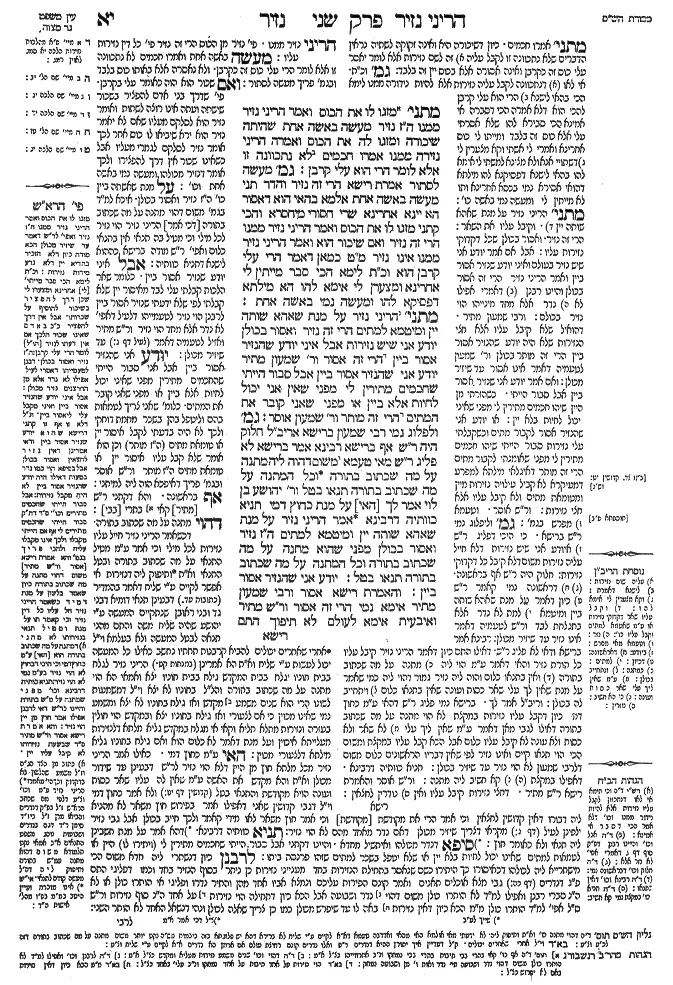
Nazir 11a - Guemara
מתני׳ מזגו לו את הכוס ואמר הריני נזיר ממנו ה"ז נזיר מעשה באשה אחת שהיתה שיכורה ומזגו לה את הכוס ואמרה הריני נזירה ממנו אמרו חכמים לא נתכוונה זו אלא לומר הרי הוא עלי קרבן:
גמ׳ מעשה לסתור אמרת רישא הרי זה נזיר והדר תני מעשה באשה אחת אלמא בהאי הוא דאסור הא יינא אחרינא שרי חסורי מיחסרא והכי קתני מזגו לו את הכוס ואמר הריני נזיר ממנו הרי זה נזיר ואם שיכור הוא ואמר הריני נזיר ממנו אינו נזיר מ"ט כמאן דאמר הרי עלי קרבן הוא וכ"ת לימא הכי סבר מייתין לי אחרינא ומצערן לי אימא להו הא מילתא דפסיקא להו ומעשה נמי באשה אחת:
מתני׳ הריני נזיר על מנת שאהא שותה יין ומיטמא למתים הרי זה נזיר ואסור בכולן יודע אני שיש נזירות אבל איני יודע שהנזיר אסור ביין הרי זה אסור ור' שמעון מתיר יודע אני שהנזיר אסור ביין אבל סבור הייתי שחכמים מתירין לי מפני שאין אני יכול לחיות אלא ביין או מפני שאני קובר את המתים הרי זה מותר ור' שמעון אוסר:
גמ׳ ולפלוג נמי רבי שמעון ברישא אריב"ל חלוק היה ר"ש אף ברישא רבינא אמר ברישא לא פליג ר"ש מאי טעמא משום דהוה ליה מתנה על מה שכתוב בתורה וכל המתנה על מה שכתוב בתורה תנאו בטל ור' יהושע בן לוי אמר לך [האי] על מנת כחוץ דמי תניא כוותיה דרבינא אמר הריני נזיר על מנת שאהא שותה יין ומיטמא למתים ה"ז נזיר ואסור בכולן מפני שהוא מתנה על מה שכתוב בתורה וכל המתנה על מה שכתוב בתורה תנאו בטל:
יודע אני שהנזיר אסור ביין:
והאמרת רישא אסור ורבי שמעון מתיר אימא נמי הרי זה אסור ור"ש מתיר ואיבעית אימא לעולם לא תיפוך התם
Comments from Rashi on Masechet Nazir Page 11a
מתני' אמרו חכמים . כיון דשיכורה היא ואינה זקוקה לשתיה נראין הדברים שלא נתכוונה זו לקבל עליה זה לשם נזירות אלא לומר יאסר עלי כוס זה כקרבן ואינה אסורה אלא בכוס יין זה בלבד: גמ' וכ"ת . אי לאו דנתכוונה לקבל עליה נזירות אלא להיות נידורה ממנו לימא הכי בהאי לישנא הרי הוא עלי קרבן להכי הוא דלא אמרה הכי דסברה אי אמינא הכי סבירא להו שלא אסרתי עלי אלא כוס זה בלבד ומייתו לי כוס אחרינא ואמרי לי אשתי וקא מצערין לי דשתויי אנא ולא מצינא למשתי לי אימא להו בהאי לישנא דפסיקנא להו מילתא דהואי אסירא נמי בכסא אחרינא ותו לא מייתין לי ומעשה נמי באשה כו': מתני' הריני נזיר על מנת שאהא שותה יין . וקיבל עליו את השאר: אבל אם אמר יודע אני שיש נזיר בעולם ואיני יודע שנזיר אסור ביין ואמר הריני נזיר הרי זה אסור בכולן . והיינו רבנן דאמרי אפילו לא נדר אלא מחד מינייהו הוי נזיר בכולם: ורבי שמעון מתיר . דהואיל שלא קיבל עליו אלא חצי הנזירות שלא היה יודע שהנזיר אסור ביין הרי זה מותר בכולן ור' שמעון לטעמיה דאמר אינו אסור עד שיזיר מכולן: ואם אמר יודע אני שנזיר אסור ביין אבל סבור הייתי . כשהזרתי מן היין שיהו חכמים מתירין לי מפני שאיני יכול לחיות בלא יין: או יודע אני שהנזיר אסור לקבור מתים . וכשקבלתי עלי נזירות סבור הייתי שיהו חכמים מתירין לי מפני שאומנתי לקבור מתים הרי זה מותר דאיגלאי מילתא למפרע דמעיקרא לא קביל עילויה נזירות מיין ומטומאת מתים ולא קיבל עליו אלא חצי נזירות: ור"ש אוסר . וטעמא מפרש בגמ': גמ' וליפלוג נמי ר"ש ברישא . כי היכי דפליג ר""ש איודע אני שיש נזירות דלא חייל עליה נזירות משום דלא קיבל כל דקדוקי נזירות: חלוק היה ר"ש אף בראשונה . דראשונה נמי קאמר ר"ש כיון דאמר על מנת שאהא שותה ביין ומיטמא למת לא נדר אלא בתגלחת לבד ור"ש לטעמיה דאמר אינו נזיר עד שיזיר מכולן: רבינא אמר ברישא ודאי לא פליג ר"ש . דאילו התם כיון דאמר הריני נזיר קיבל עליו כל תורת נזיר והאי דאמר ע"מ הוי ליה מתנה על מה שכתוב בתורה ואין בתנאו כלום והוה ליה נזיר גמור דהוי ליה כמי שאמר על מנת שאין לך עלי שאר כסות ועונה שאין בתנאו כלום ויתחייב לה בכולן: וריב"ל אמר לך . ברישא נמי פליג ר"ש דהאי ע"מ כחוץ דמי כיון דקבל עליו נזירות במקצת לא הוי מתנה על מה שכתוב בתורה דאילו לגבי מאן דאמר ע"מ שאין ליך עלי לא שאר ולא כסות ולא עונה לא קיבל עליו כלום אבל הכא קבל עליו במקצת ומשום הכי הוי תנאו קיים ואינו נזיר לפי שאין דבריו הראשונים כלום משום דלרבי שמעון לא הוי נזיר עד שיזיר בכולן: תניא כוותיה דרבינא . דאפילו במקצת קא חשיב ליה מתנה: ור"ש אוסר והאמרת רישא ר"ש מתיר . דחצי נזירות קיבל עליו ואין נודרין לחצאין:
Comments from Tosafot - Nazir 11a
הריני נזיר ממנו . פי' נזיר מן הכוס הרי זה נזיר פי' כל דין נזירות עליו: מעשה באשה אחת ואמרו חכמים לא נתכוונה זו אלא לומר הרי עלי כוס זה כקרבן . ולא נאסרה אלא באותו כוס בלבד ובגמ' פריך מעשה לסתור: ואם שכור הוא הוה כאומר עלי בקרבן . פי' שדרך בני אדם להפציר בשכור שישתה ועתה אינו רוצה לשתות ואומר נזיר הוא לסלקם מעליו שאם לא יאמר נזיר הוא ירא שיביאו לו כוס אחר לכך אומר נזיר לסלקם לגמרי מעליו אבל כשאינו שכור אין דרך להפצירו ולכך אומר דנזיר מכולהו ומעשה נמי באשה אחת וכו': על מנת שאשתה ביין כו' ה"ז נזיר ואסור בכולן . איכא למ"ד בגמ' משום דהוי מתנה על מה שכתוב בתורה [דכי אמר] הריני נזיר הוי נזיר לכל מילי וכי מטיל בה תנאי אין בתנאי כלום ואפי' ר"ש מודה ברישא כההוא לישנא דתניא כוותיה: אבל איני יודע שנזיר אסור ביין . כלומר שאר הלכות קבלתי עלי לבד מאיסור יין שלא קבלתי לפי שלא ידעתי שנזיר אסור ביין לרבנן הוי נזיר לטעמייהו דלעיל דאפי' לא נדר אלא מחד הוי נזיר ור"ש מתיר ואזיל לטעמיה דאמר (לעיל נזיר דף ג:) עד שיזיר מכולן: יודע אני שהנזיר אסור ביין אבל אני סבור הייתי שהחכמים מתירין מפני שאיני יכול לחיות אלא ביין או מפני שאני קובר את המתים . כלומ' שאני צריך לטמאות בהם וליטפל בהן בשכר מחמת דוחקי ולכך לא היה בדעתי לקבל איסור יין או טומאת מתים (ה"ז מותר) וכן הוא אומר שלא קבל עליו איסור יין או טומאת מתים ה"ז מותר ור"ש אוסר ובגמ' פריך דאיפכא הוה ליה למיתני: אף בראשונה . והא דקתני ר"ש [מתיר] קאי בתרי [בבי]: דהוי מתנה על מה שכתוב בתורה . דכשאמר הריני נזיר חייל עליו נזירות לכל מילי וכי אמר ע"מ מטיל התנאי על מה שכתוב בתורה ובטל התנאי וא"ת ותיפוק ליה דנזירות אי אפשר לקיים ע"י שליח דאמר בהמדיר (כתובות עד.) דבעינן תנאי דומיא דבני גד ובני ראובן שנתקיים המעשה ע"י יהושע שהיה שליח משה והתם מהני תנאה לבטל המעשה ולא בעלמא וי"ל אחרי שאחרים יכולים להביא קרבנות תחתיו נחשב כאילו כל המעשה יכול לעשות ע"י שליח וא"ת הא אמרינן (במנחות קט.) הריני נזיר לגלח בבית חוניו יגלח בבית המקדש גילח בבית חוניו יצא ואמאי הא הוי מתנה על מה שכתוב בתורה והל"ל בחוניו לא יצא וי"ל דמשמעות לשונו הרי הוא שנים משמע מקדש ואז גילח בחוניו לא יצא ומשמע נמי שאינו מכוין כי אם לצעורי ואז גילח בחוניו יצא ובמקדש הוי חולין בעזרה ונזירות מתלא תליא וקאי אי מגלח במקדש גליא מלתא דלנזירות מעלייתא איכוין ועל מנת דאמר לא כלום הוא ואם גילח בחוניו גליא מילתא דלצעורי מכוין: האי ע"מ כחוץ דמי . כאילו אמר הריני נזיר מכל מלתא חוץ מן היין דלא הוי נזיר לר"ש דבעינן עד שידור מכולן וא"ת והא מקדש את האשה ע"מ שאין לה עליו שאר כסות ועונה הויא מקודשת והתנאי בטל (קדושין דף יט:) ולא אמר כחוץ דמי וי"ל דגבי קדושין שאני דאפילו אמר בפירוש חוץ משאר לא מהניא ליה דבורו דאין קדושין לחצאין וכי אמר הרי את מקודשת [מקודשת] וכי אמר חוץ משאר לאו מידי קאמר ולכך חייב בכולן אבל גבי נזיר ילפינן לעיל (נזיר דף ג:) מקראי דצריך שיזיר מכולן דאם נדר מאחד מהם לא הוי נזיר: תניא כוותיה דרבינא . דהא אמר על מנת חשבינן ליה תנאי ולא כאומר חוץ:
Nazir 11a - Mishnah translated into english
MISHNA: If they poured one a cup of wine and he said: I am hereby a nazirite and therefore will refrain from it, he is a full-fledged nazirite who must observe all the halakhot of naziriteship. An incident occurred with regard to a certain woman who was intoxicated from wine, and they poured a cup for her and she said: I am hereby a nazirite and therefore will refrain from it. The Sages said: This woman did not intend to accept naziriteship but rather, meant to say: It is hereby forbidden to me as an offering. She vowed against deriving benefit from that cup alone, since she did not want to drink any more.
GEMARA: The Gemara asks: Was an incident cited to contradict the previous ruling? You said in the first clause of the mishna that if one said that he is hereby a nazirite and therefore will refrain from a cup that was poured for him, then he is a nazirite. And the tanna then teaches: An incident occurred with regard to a certain woman who said: I am hereby a nazirite and therefore will refrain from it, which the Sages interpreted as a vow rendering the cup forbidden to her like an offering. Apparently it is only with regard to this cup of wine that is forbidden to her; consequently, any other wine is permitted, and she is not a nazirite.
The Gemara answers: The mishna is incomplete and is teaching the following: If they poured a cup of wine for one and he said: I am hereby a nazirite and therefore will refrain from it, he is a nazirite. And if he is intoxicated and they pour a cup of wine for him and he said: I am hereby a nazirite and therefore will refrain from it, he is not a nazirite. What is the reason for this? He is considered to be like one who said: This cup is forbidden to me like an offering. The Gemara asks: And if you would say that this was his meaning, let him say so explicitly; why would he say: I am hereby a nazirite and therefore will refrain from it? The reason is because he maintains: If I specify this cup, they will bring me another cup and aggravate me with it. It is better that I say to them this statement, which is definitive to them, and they will understand that I do not want to drink any more wine. The mishna continues: And an incident also occurred with regard to a certain woman who was intoxicated and took this vow, and the Sages explained her statement accordingly.
MISHNA: If one says: I am hereby a nazirite on the condition that I will be allowed to drink wine and may become ritually impure from corpses, i.e., he wishes to be a nazirite only with respect to the growth of his hair, he is a full-fledged nazirite and is prohibited from engaging in all of the behaviors forbidden to a nazirite, including consuming products of the vine and contracting impurity from a corpse.
If one stated a vow of naziriteship and then said: I know that there is naziriteship, but I do not know that a nazirite is prohibited from wine, he is prohibited in all the prohibitions of naziriteship. But Rabbi Shimon permits him, since he holds that naziriteship takes effect only if the person accepts all the relevant prohibitions. If one said: I know that a nazirite is prohibited from wine, but I thought that the Sages would permit me to drink wine because I cannot live without wine, or: I thought that the Sages would allow me to contract impurity from corpses because I bury the dead, he is permitted and the vow of naziriteship does not take effect, but Rabbi Shimon prohibits him.
GEMARA: In the second case of the mishna, where one states that he did not know that the prohibitions of naziriteship include wine, Rabbi Shimon says that the naziriteship does not take effect because he did not include all of the prohibitions in his vow. The Gemara therefore asks: Let Rabbi Shimon disagree with the first tanna in the first clause in the mishna as well, where one said: I am hereby a nazirite on the condition that I may drink wine. Rabbi Yehoshua ben Levi said: In fact, Rabbi Shimon disagrees even with the first tanna in the first clause of the mishna, and the mishna’s statement: Rabbi Shimon permits him, is referring to both clauses.
Ravina said: Rabbi Shimon does not disagree with the first tanna in the first clause of the mishna. What is the reason for that? It is because one was stipulating counter to that which is written in the Torah by attempting to limit an explicit Torah law, and with regard to anyone who stipulates counter to that which is written in the Torah, his stipulation is void. The statement: I am hereby a nazirite, remains valid, and he is therefore a nazirite in all regards. Conversely, Rabbi Yehoshua ben Levi could have said to you: This phrase: On the condition, does not mean he accepts upon himself all the halakhot of naziriteship and then adds a stipulation counter to that which is written in the Torah; rather, it is considered like he said: Apart from. It is as though he stated from the outset that he will be a nazirite apart from one particular aspect. According to Rabbi Yehoshua ben Levi, Rabbi Shimon holds that since he is not trying to stipulate alternative halakhot for full naziriteship but is instead accepting a partial naziriteship, his vow takes effect.
The Gemara comments: It is taught in the Tosefta (Nazir 2:2) in accordance with the opinion of Ravina. If one said: I am hereby a nazirite on the condition that I will be allowed to drink wine and may become ritually impure from corpses, he is a nazirite and is prohibited from all of them because he stipulates counter to that which is written in the Torah, and with regard to anyone who stipulates counter to that which is written in the Torah, his stipulation is void.
§ The final clause of the mishna teaches that if one says: I know that a nazirite is prohibited from drinking wine but I thought that the Sages would permit me to drink, the Rabbis say that the vow is void, but Rabbi Shimon disagrees. The Gemara asks: But didn’t you say in the earlier clause of the mishna that with regard to one who says: But I did not know that a nazirite is prohibited from wine, the first tanna holds that he is prohibited and Rabbi Shimon permits him? What is the difference between the two cases? The Gemara answers: Emend the text and say in the final clause as well: He is prohibited, and Rabbi Shimon permits him. And if you wish, say instead: Actually, do not reverse the opinions, and leave the text as it is. Instead, distinguish between the two cases, as there
Traduction : The William Davidson digital edition of the Koren Noé Talmud, with commentary by Rabbi Adin Even-Israel Steinsaltz.