 Talmud Bavli
The learning on the whole site is dedicated : L'ilui Nishmat רינה בת לדיסיה
The learning on the whole site is dedicated : L'ilui Nishmat Reuven ben Rivka SEBBAG
The learning on the whole site is dedicated : L'ilui Nishmat Margalit bat Ledicia
Nazir 18a : Youtube
Daf TubeYoutube
2 video classes :
Nazir Page 18a
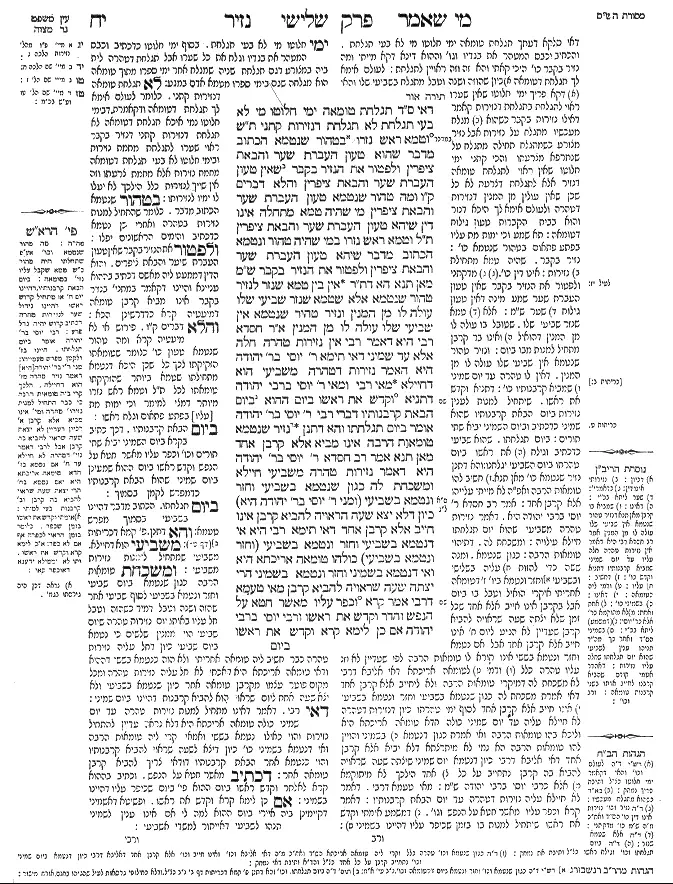
Nazir 18a - Guemara
דאי ס"ד תגלחת טומאה ימי חלוטו מי לא בעי תגלחת לא תגלחת דנזירות קתני ת"ש (במדבר ו, ט) וטמא ראש נזרו בטהור שנטמא הכתוב מדבר שהוא טעון העברת שער והבאת ציפרין ולפטור את הנזיר בקבר שאין טעון העברת שער והבאת ציפרין והלא דברים ק"ו ומה טהור שנטמא טעון העברת שער והבאת ציפרין מי שהיה טמא מתחלה אינו דין שיהא טעון העברת שער והבאת ציפרין ת"ל וטמא ראש נזרו במי שהיה טהור ונטמא הכתוב מדבר שיהא טעון העברת שער והבאת ציפרין ולפטור את הנזיר בקבר ש"מ מאן תנא הא דת"ר אין בין טמא שנזר לנזיר טהור שנטמא אלא שטמא שנזר שביעי שלו עולה לו מן המנין ונזיר טהור שנטמא אין שביעי שלו עולה לו מן המנין א"ר חסדא רבי היא דאמר רבי אין נזירות טהרה חלה אלא עד שמיני דאי תימא ר' יוסי בר' יהודה היא האמר נזירות דטהרה משביעי הוא דחיילא מאי רבי ומאי ר' יוסי ברבי יהודה דתניא (במדבר ו, יא) וקדש את ראשו ביום ההוא ביום הבאת קרבנותיו דברי רבי ר' יוסי בר' יהודה אומר ביום תגלחתו והא דתנן נזיר שנטמא טומאות הרבה אינו מביא אלא קרבן אחד מאן תנא אמר רב חסדא ר' יוסי בר' יהודה היא דאמר נזירות טהרה משביעי חיילא ומשכחת לה כגון שנטמא בשביעי וחזר ונטמא בשביעי (ומני ר' יוסי בל' יהודה היא) כיון דלא יצא שעה הראויה להביא קרבן אינו חייב אלא קרבן אחד דאי תימא רבי היא אי דנטמא בשביעי וחזר ונטמא בשביעי (וחזר ונטמא בשביעי) כולהו טומאה אריכתא היא ואי דנטמא בשמיני וחזר ונטמא בשמיני הרי יצתה שעה שראויה להביא קרבן מאי טעמא דרבי אמר קרא (במדבר ו, יא) וכפר עליו מאשר חטא על הנפש והדר וקדש את ראשו ורבי יוסי ברבי יהודה אם כן לימא קרא וקדש את ראשו
Comments from Rashi on Masechet Nazir Page 18a
דאי סלקא דעתך תגלחת טומאה ימי חלוטו מי לא בעי תגלחת . והכתיב וכבס המטהר את בגדיו וגו' וההוא דינא דקא מייתי ומה נזיר בקבר כו' היכי קאתי והא זה וזה ראויין לתגלחת: לעולם אימא לך תגלחת דטומאה כיון שהוזה ושנה וטבל מתגלח בשביעי שלו והאי דקא פריך ימי חלוטו שאין שערו ראוי לתגלחת בתגלחת דנזירות קאמר דאילו נזירות בקבר כשהוא מגלח מעכשיו מתגלח על נזירות אבל נזיר מצורע כשמתגלח תחילה מתגלח על שנתרפא מצרעתו והכי קתני ימי חלוטו שאין ראוי לתגלחת טומאה דנזיר אלא לתגלחת דצרעת לא כל שכן שאין עולין מן המנין דנזירות דטהרה ולעולם אימא לך היכא דנזר והוא בבית הקברות טעון גילוח דטומאה: תא שמע . וכי ימות מת עליו בפתע פתאום בטהור שנטמא כו': נזיר בקבר . שהיה טמא מתחילת נזירות: אינו דין כו' . מדקתני ולפטור את הנזיר בקבר שאין טעון העברת שער שמע מינה דאין טעון גילוח שער ש"מ: אלא טמא שנזר שביעי שלו . שטובל בו עולה לו מן המנין דהואיל ואינו בר קרבן מתחיל למנות מבו ביום: ונזיר טהור שנטמא אין שביעי שלו עולה לו מן המנין . דאין לו טהרה עד יום שמיני שמביא קרבנותיו כו': דתניא וקדש את ראשו . שיתחיל למנות לענין נזירות ביום הבאת קרבנותיו שהוא שמיני כדכתיב וביום השמיני יביא שתי תורים: ביום תגלחתו . שהוא שביעי כדכתיב וגילח את ראשו ביום טהרתו ביום השביעי יגלחנו: והא דתנן נזיר שנטמא כו' מאן תנא . חשיב להו טומאות הרבה ואפ"ה לא מייתי עלייהו אלא קרבן אחד: אמר רב חסדא ר' יוסי ברבי יהודה היא . דאמר נזירות טהרה משביעי שהוא יום תגלחתו חיילא עילויה: ומשכחת לה . דתיהוי טומאות הרבה: כגון שנטמא . ומנה ששה כדי להזות עליה בשלישי ובשביעי וחזר ונטמא ביו' ז' דטומאה אחריתי איקרי הואיל וטבל בו ביום אבל בקרבן אינו חייב אלא אחד שכל זמן שלא יצתה שעה שראויה להביא קרבן שעדיין לא הגיע ליום ח' אינו חייב אלא קרבן אחד אבל אם נטמא וחזר ונטמא בששי אינו קורא לו טומאות הרבה לפי שעדיין לא חל עליו טהרה כלל ודמי לטומאה אריכתא דאי אליבא דרבי לא משכחת לה דמיקרי טומאות הרבה ולא ליחייב אלא קרבן אחד דאי אמרת משכחת לה כגון שנטמא בשביעי וחזר ונטמא בשביעי אינו חייב אלא קרבן אחד לסוף ימי טהרתו כיון דנזירות דטהרה לא חיילא עליה עד יום שמיני כולה חדא טומאה אריכתא היא וליכא בהו טומאות הרבה ואי אמרת כגון דנטמא בשמיני והויין להו טומאות הרבה הא נמי לא מיתרצתא דלא יביא אלא קרבן אחד דאי אליבא דרבי כיון דנטמא יום שמיני שיצתה שעה שראויה להביא בה קרבן נתחייב על כל אחד הילכך לא מיתוקמא אלא כרבי יוסי ברבי יהודה ש"מ: מאי טעמא דרבי . דאמר לא חיילא עליה נזירות דטהרה עד יום הבאת קרבנותיו: דאמר קרא וכפר עליו מאשר חטא על הנפש וגו' . דמשמע אימתי וקדש את ראשו שיתחיל למנות בו בזמן שכיפר עליו דהיינו בשמיני:
Comments from Tosafot - Nazir 18a
ימי חלוטו מי לא בעי תגלחת . בסוף ימי חלוטו כדכתיב וכבס המטהר את בגדיו וגלח את כל שערו אבל תגלחת דטהרה לית ביה במצורע דגם תגלחת שניה שמגלח אחר ימי ספרו מתוך טומאה הוא מגלחה שגם בימי ספרו מטמא אדם במגע: לא תגלחת טומאה דנזירות קתני . כלומר לעולם אימא לך תגלחת דטומאה ודקאמרת דבימי חלוטו נמי איכא תגלחת דטומאה לא תגלחת דנזירות קתני דנזיר בקבר ראוי שערו לתגלחת מחמת נזירות ובימי חלוטו לא בעי תגלחת דטומאה מחמת נזירות אלא מחמת צרעתו וזה אין שייך לנזירות כלל הילכך לא יעלו לו ימיו לנזירותו: בטהור שנטמא הכתוב מדבר . כלומר שהתחיל למנות נזירות בטהרה ואחרי כן נטמא כדכתיב והימים הראשונים יפלו: ולפטור את הנזיר בקבר שאין טעון העברת שיער והבאת ציפרים . והוא הדין דממעט ליה מאשם דכתיב בההוא עניינא והיינו דקאמר במתני' בנזיר בקבר אינו מביא קרבן טומאה דמיעטיה קרא כדדרשינן הכא: והלא דברים ק"ו . פירוש אי לא מיעטיה קרא ומה טהור שנטמא טעון כו' כלומר שטומאתו הזקיקתו לכך כל שכן היכא דנטמא מתחילתו שטמא ביותר שהזקיקתו טומאתו לכל ת"ל וטמא ראש נזרו מיותר דמצי למימר וכי ימות מת [עליו] בפתע פתאום וגלח ראשו: ביום הבאת קרבנותיו . דכך כתיב בקרא ביום השמיני יביא שתי תורים וכו' וכפר עליו מאשר חטא על הנפש וקדש ראשו ביום ההוא שמעינן ביום שמיני שהוא הבאת קרבנותיו כדמפרש לקמן בסמוך: ביום תגלחתו . הכתוב מדבר דהיינו בשביעי בסמוך מפרש טעמא: והא דתנן . פ' קמא דכריתות (דף ט.): משביעי הוא דחיילא . משביעי שמתחיל לימנות נזירות משביעי: ומשכחת טומאות הרבה כגון שנטמא ביום שביעי וחזר ונטמא בשביעי לסוף שביעי אחר שהזה ושנה וטבל דמיד כשהזה וטבל חל עליו באותו יום נזירות טהרה שיום שביעי הוי ממנין שלשים כי נטמא ביום שביעי כיון דחל עליה נזירות טהרה כבר חשיב ליה טומאה אחריתי ולא הוה כנטמא בששי דההיא ודאי טומאה אריכתא היא דאכתי לא חל עליה נזירות טהרה ומכל מקום פוטר עצמו מקרבן טומאה אחר כיון שנטמא בשביעי ולא יצא שעה אחת ליום שראוי הוא להביא קרבנות דהיינו ביום שמיני: דאי רבי . דאמר דאינו מתחיל למנות נזירות טהרה עד יום שמיני כולה טומאה אריכתא היא דלא נראה עדיין להתחיל נזירות והוי כאילו נטמא בששי ואמאי קרי ליה טומאות הרבה ואי דנטמא בשמיני כו' כיון דיצא לשעה שראוי להביא קרבנותיו והוי כנטמא אחר הבאת קרבנותיו דודאי צריך להביא קרבן טומאה אחר: דכתיב מאשר חטא על הנפש . וכתיב בההוא קרא לאלתר וקדש ראשו ביום ההוא פי' ביום שכיפר עליו דהיינו בשמיני: אם כן לימא קרא וקדש את ראשו . ופשיטא דאשמיני דקיימינן ביה איירי ביום ההוא למה לי אם אינו ענין לשמיני תנהו לשביעי דאייתור למשדי אשביעי:
Nazir 18a - Mishnah translated into english
as if it enters your mind to say that the baraita is discussing the shaving done as a result of the nazirite’s impurity, and contrasts a nazirite with a leper, do the end of a leper’s days of confirmed leprosy not require shaving? A leper must shave when he is purified from his condition, so how can he be described as unfit for shaving? Rather, the baraita must be referring to the nazirite’s shaving of purity, as suggested above (17b). The Gemara rejects this: No, it could be that the baraita is discussing the shaving done as a result of the nazirite’s impurity, and when it states that a leper is unfit for shaving, the baraita is teaching about the shaving of naziriteship, and the baraita is stating that a leper is unfit for any shaving of a nazirite, since he must first shave for his leprosy.
The Gemara suggests another proof to answer the question of whether one who vows naziriteship while in a cemetery must shave upon undergoing purification. Come and hear a baraita: The verse states: “And he defiles his consecrated head, he shall shave his head on the day of his purification, on the seventh day shall he shave it” (Numbers 6:9). The baraita explains: The verse is speaking of a ritually pure nazirite who became impure, who requires hair removal and the bringing of birds as offerings. And this verse comes to exempt a nazirite who vowed while in the grave, i.e., a cemetery, that he does not require hair removal and the bringing of birds.
The baraita continues its analysis of this halakha. For one might have explained differently: And are these matters, the ruling that such a nazirite is exempt, not inferred with an a fortiori inference to reach the opposite conclusion: Just as a nazirite who was pure from the outset and who subsequently became impure requires hair removal and the bringing of birds, if one was impure from the outset, as he took a vow of naziriteship while in a cemetery, is it not logical that he should require hair removal and the bringing of birds?
Therefore the verse states: “And he defiles his consecrated head,” indicating that the verse speaks only of one who was a pure nazirite and later became impure, and that only he requires hair removal and the bringing of birds. And the verse serves to exempt the nazirite who vowed while in a place of a grave, who was ritually impure from the outset. The Gemara concludes: Learn from this that a nazirite who was ritually impure from the outset does not have to shave; this answers the question of Rav Ashi.
§ After resolving the question, the Gemara discusses additional halakhot involving a ritually impure person who took a vow of naziriteship. Who is the tanna who taught this baraita that the Sages taught in the previous discussion: The difference between an impure person who took a vow of naziriteship and a pure nazirite who became ritually impure is only the following halakha: That with regard to an impure person who took a vow of naziriteship, his seventh day of purification counts as part of his tally of the term of naziriteship. But with regard to a pure nazirite who became impure, his seventh day of purification does not count as part of his tally.
Rav Ḥisda said: It is the opinion of Rabbi Yehuda HaNasi, as Rabbi Yehuda HaNasi said: Naziriteship of purity takes effect only from the eighth day. When a nazirite becomes impure during his term, he begins to count his term of observing naziriteship in purity only on the day following his purification. For if you say it follows the opinion of Rabbi Yosei, son of Rabbi Yehuda, didn’t he say that the naziriteship of purity takes effect from the seventh day of his purification process?
The Gemara clarifies: What is the statement of Rabbi Yehuda HaNasi, and what is the statement of Rabbi Yosei, son of Rabbi Yehuda, that Rav Ḥisda referred to? As it is taught in a baraita: The verse states with regard to a ritually impure nazirite who underwent the purification rite: “And he shall sanctify his head on that day” (Numbers 6:11). This means that he renews the sanctity of his hair growth, i.e., begins observing his naziriteship in purity, on the day of the bringing of his offerings, the eighth day of his purification. This is the statement of Rabbi Yehuda HaNasi. Rabbi Yosei, son of Rabbi Yehuda, says: This means that he renews the sanctity of his hair growth on the day of his shaving, the seventh day of his purification.
§ The Gemara cites a related halakha: And that which we learned in a mishna (Karetot 9a): If a nazirite became impure by contracting many consecutive impurities, he brings only one set of offerings. Who taught that? Rav Ḥisda said: It is Rabbi Yosei, son of Rabbi Yehuda, who said the naziriteship of purity takes effect from the seventh day of his purification process. And you find this, that he contracts ritual impurity several times consecutively, in a case where he became ritually impure on the seventh day and, after undergoing the purification process, again became ritually impure on the seventh day. And whose opinion is it? It is that of Rabbi Yosei, son of Rabbi Yehuda. Since the appropriate time to bring an offering had not yet arrived, as all agree that his offerings are only brought on the eighth day, if he became ritually impure a second time he is obligated to bring only one set of offerings.
For if you say it follows the opinion of Rabbi Yehuda HaNasi, how can this mishna be explained? If it deals with a nazirite who became ritually impure on the seventh day, and, after undergoing the purification process, again became ritually impure on the seventh day, and, after undergoing the purification process, again became ritually impure on the seventh day, Rabbi Yehuda HaNasi would hold that all these impurities are in fact one long ritual impurity, because he never reached the eighth day, which would renew his observance of naziriteship in ritual purity, so the mishna would not refer to this as a case of multiple impurities. And if the mishna is referring to a nazirite who became ritually impure on the eighth day and, after undergoing the purification process, again became ritually impure on the eighth day, the appropriate time to bring an offering had already arrived, and if he becomes ritually impure at that stage, it is not viewed as a continuation of the previous ritual impurity, and he is obligated to bring another set of offerings.
The Gemara clarifies the dispute between Rabbi Yehuda HaNasi and Rabbi Yosei, son of Rabbi Yehuda: What is the reason for Rabbi Yehuda HaNasi’s ruling that he begins counting only from the eighth day? The Gemara answers: The verse states: “And the priest shall prepare one for a sin-offering, and the other for a burnt-offering, and make atonement for him, for he sinned by the soul” (Numbers 6:11), and the same verse again states immediately afterward: “And he shall sanctify his head.” This shows that the naziriteship of purity commences only after he has brought his offerings. And Rabbi Yosei, son of Rabbi Yehuda, says in response: If so, if the verse intended to teach us that his naziriteship starts only on the eighth day, let the verse merely state: “And he shall sanctify his head,” since that phrase addresses the bringing of his offerings, which is on the eighth.
Traduction : The William Davidson digital edition of the Koren Noé Talmud, with commentary by Rabbi Adin Even-Israel Steinsaltz.