 Talmud Bavli
Nazir 58a : Youtube
Daf TubeYoutube
2 video classes :
Nazir Page 58a
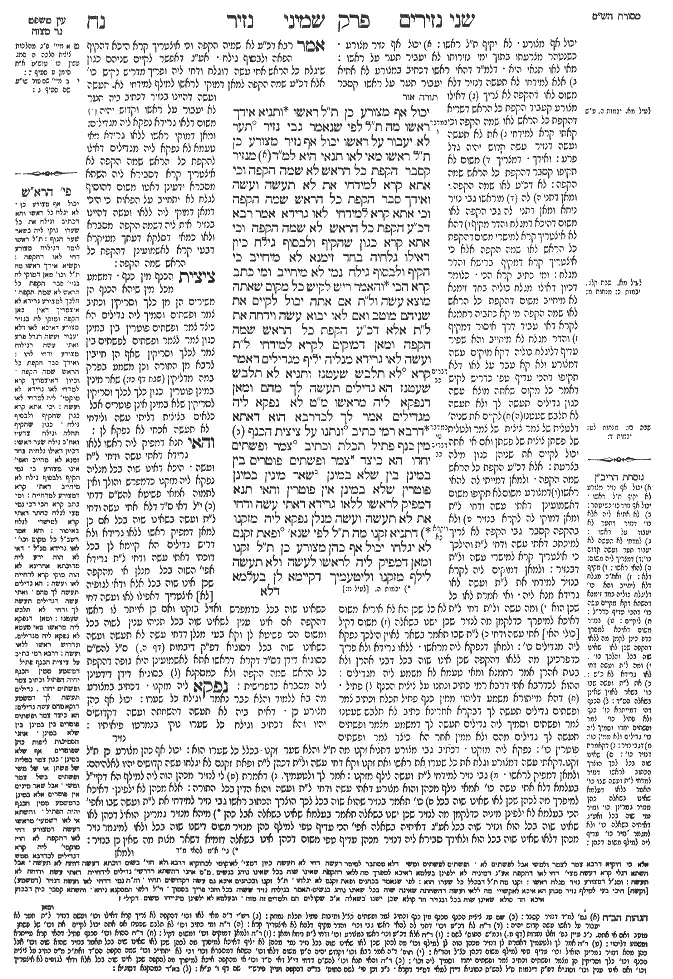
Nazir 58a - Guemara
יכול אף מצורע כן ת"ל ראשו ותניא אידך ראשו מה ת"ל לפי שנאמר גבי נזיר (במדבר ו, ה) תער לא יעבור על ראשו יכול אף נזיר מצורע כן ת"ל ראשו מאי לאו תנאי היא למ"ד מנזיר קסבר הקפת כל הראש לא שמה הקפה וכי אתא קרא למידחי את לא תעשה ועשה ואידך סבר הקפת כל הראש שמה הקפה וכי אתא קרא למידחי לאו גרידא אמר רבא דכ"ע הקפת כל הראש לא שמה הקפה וכי אתא קרא כגון שהקיף ולבסוף גילח כיון דאילו גלחיה בחד זימנא לא מיחייב כי הקיף ולבסוף גילח נמי לא מיחייב ומי כתב קרא הכי והאמר ריש לקיש כל מקום שאתה מוצא עשה ול"ת אם אתה יכול לקיים את שניהם מוטב ואם לאו יבוא עשה וידחה את ל"ת אלא דכ"ע הקפת כל הראש שמה הקפה ומאן דמוקים לקרא למידחי ל"ת ועשה לאו גרידא מנליה יליף מגדילים דאמר קרא (דברים כב, יא) לא תלבש שעטנז ותניא לא תלבש שעטנז הא גדילים תעשה לך מהם ומאן דנפקא ליה מראשו מ"ט לא נפקא ליה מגדילים אמר לך לכדרבא הוא דאתא דרבא רמי כתיב (במדבר טו, לח) ונתנו על ציצית הכנף מין כנף פתיל תכלת וכתיב (דברים כב, יא) צמר ופשתים יחדו הא כיצד צמר ופשתים פוטרים בין במינן בין שלא במינן שאר מינין במינן פוטרין שלא במינן אין פוטרין והאי תנא דמפיק לראשו ללאו גרידא דאתי עשה ודחי את לא תעשה ועשה מנלן נפקא ליה מזקנו דתניא זקנו מה ת"ל לפי שנא' (ויקרא כא, ה) ופאת זקנם לא יגלחו יכול אף כהן מצורע כן ת"ל זקנו ומאן דמפיק ליה לראשו לעשה ולא תעשה לילף מזקנו וליטעמיך דקיימא לן בעלמא
Comments from Rashi on Masechet Nazir Page 58a
יכול אף מצורע . לא יקיף ת"ל ראשו: יכול אף נזיר מצורע . כשנטהר מצרעתו בתוך ימי נזירותו לא יעביר תער על ראשו: מאי לאו תניא היא . דלמ"ד דהאי ראשו דכתיב במצורע לא אתיא אלא למידחי לא תעשה דנזיר דלא יעבור תער על ראשו קסבר משום לאו דהקפה לא צריך דאילו מצורע קעביד הקפת כל הראש דשריא דהקפת כל הראש לאו שמה הקפה וכי קאתי קרא למידחי את לא תעשה ועשה דנזיר עשה קדוש יהיה גדל פרע: ואידך . דמצריך משום לא תקיפו קסבר דהקפת כל הראש שמה הקפה: לא דכ"ע לאו שמה הקפה . ומאן דתני לה מוראשו גבי נזיר ניחא ומאן דתני לה גבי הקפה לאו משום דהיכא דמגלח והדר מקיף דהא לא איצטריך קרא למישרי משום דהקפת כל הראש לאו שמה הקפה אלא כי איצטריך קרא דמקיף ברישא והדר מגלח: ומי כתיב קרא הכי . כלומר דכיון דאילו מגלח כוליה בחד זימנא לא מיחייב משום דהקפת כל הראש לאו שמה הקפה מי קא כתביה רחמנא לקרא דאי עביד דרך איסור דמקיף והדר מגלח לא מיחייב והא שפיר עדיף דליגלח כוליה דקא מוקים עשה דמצורע ולא קא עבר על לאו דלא תקיפו דהכי עדיף טפי כדריש לקיש דאמר כל מקום שאתה מוצא עשה כגון גדילים תעשה לך ולא תעשה לא תלבש שעטנז לקיים את שניה' דלטלית של צמר ציצית של צמר ולטלית של פשתן ציצית של פשתן ואם אי אתה יכול לקיים את שניהן כגון מילה בצרעת: אלא דכ"ע הקפת כל הראש שמה הקפה . ולמאן דמייתי לה להאי ראשו דמצורע משום לא תקיפו משום דאשמועינן דאתי עשה ודחי ל"ת ומאן דמוקי לה לקרא בנזיר ולא בהקפה קסבר גבי הקפה לא צריך למיכתב דאתי עשה ודחי ל"ת והילכך כי איצטריך קרא למישרי עשה ול"ת דבנזיר: ולמאן דנפקא ליה מראשו . ללאו גרידא ולא פריך כדפרכינן מה ללאו דהקפה שכן אינו שוה בכל דבני אהרן ולא בנות אהרן אמר רחמנא ומאי טעמא לא משמע ליה מגדילים: ולמאן דנפקא ליה מראשו . ללאו גרידא ולא פריך כדפרכינן מה ללאו דהקפה שכן אינו שוה בכל דבני אהרן ולא בנות אהרן אמר רחמנא ומאי טעמא לא משמע ליה מגדילים: ההוא לכדרבא אתי דרבא רמי כתיב ונתנו על ציצית הכנף פתיל . דהא מייתורא משמע דליהוי ממין כנף פתיל תכלת וכתיב צמר ופשתים גדילים תעשה לך דבקרא אחרינא כתיב לא תלבש שעטנז צמר ופשתים וסמיך ליה גדילים תעשה לך דמשמע. מצמר ופשתים תעשה לך גדילים מהם ולא ממין אחר הא כיצד צמר ופשתים פוטרין כו': נפקא ליה מזקנו . דכתיב גבי מצורע דתניא זקנו מה ת"ל והלא שער זקנו בכלל כל שערו הוא: יכול אף כהן מצורע כן ת"ל זקנו . דקאתי עשה דמצורע וגלח את כל שערו את ראשו ואת זקנו וקא דחי עשה ול"ת דכהן ל"ת ופאת זקנם לא יגלחו עשה קדושים יהיו לאלהיהם: ולמאן דמפיק לראשו . גבי נזיר למידחי ל"ת ועשה לילף מזקנו: אמר לך ולטעמיך . דאמרת לי לנזיר מכהן הוה ליה למילף הא דקיי"ל בעלמא דלא אתי עשה כו' אמאי נילף מכהן והוא מצורע דאתי עשה ודחי ל"ת ועשה והוא הדין בכל התורה:
Comments from Tosafot - Nazir 58a
אמר רבא דכ"ע לא שמיה הקפה וכי איצטריך קרא היכא דהקיף הפאה ולבסוף גילח . אע"ג דאפשר לקיים שניהם כגון שיגלח כל הראש אתי עשה דוגלח ודחי ליה ופריך מדריש לקיש כו' אלא דכ"ע שמה הקפה למאן דמוקי לראשו למילף למידחי לא תעשה ועשה דהיינו בנזיר דכתיב ביה תער לא יעבור על ראשו וקדוש יהיה משום דלאו גרידא נפקא ליה מגדילים: ומאן דמוקי ראשו ללאו גרידא מאי טעמא לא נפקא ליה מגדילים דאילו להקפת כל הראש שמה הקפה לא איצטריך קרא דסבירא ליה השתא מסברא ידעינן דאטו משום דהוסיף לגלח לא יתחייב על הפאות כי היכי דמאן דמוקי ליה ללאו ועשה דהיינו בנזיר אית ליה דשמה הקפה מסברא ולאו כמאי דסלקא דעתך מעיקרא דבעי קרא לאשמועינן דהקפת כל הראש שמה הקפה: ציצית הכנף מין כנף . דמשמע מכל מין שיהא הכנף הן משירים הן מן כלך וסריקין וכתיב צמר ופשתים וסמיך ליה גדילים הא כיצד צמר ופשתים פוטרין בין במינן כגון צמר לצמר ופשתים לפשתים בין צמר לכלך וסריקין שאף הן חייבין לרבא מן התורה וכן משמע בפרק במה מדליקין (שבת דף כז:) שאר מינין במינן פוטרין כגון כלך לכלך וסריקין לסריקין שלא במינן אינן פוטרים אבל כלאים בציצית דליתי עשה ולידחי לא תעשה אכתי לא נפקא לן: והאי תנא דמפיק ליה ראשו ללאו גרידא דאתי עשה ודחי ל"ת ועשה . היכא דאינו שוה בכל מנליה נפקא ליה מזקנו כדמפרש והולך ואין לתמוה אמאי פשיטא להש"ס דדחי י"ל דאי ס"ד דלא אתי עשה ודחי ל"ת ועשה בשאינו שוה בכל אם כן למאן דמפיק ראשו ללאו גרידא ולא דריש גדילים הא קיימא לן בכל דוכתי דאתי עשה ודחי ל"ת גרידא אפי' השוה בכל מנלן אי מהקפה שכן אינו שוה בכל אלא ודאי לגופיה [לא] איצטריך דאפילו לאו ועשה דחי כשאינו שוה בכל כדמפרש ואזיל בזקנו ואם כן אייתר לו ראשו דהקפה אם אינו ענין לשאינו שוה בכל תניהו ענין לשוה בכל ומשום הכי פשיטא לן וקא בעי מנלן דדחי עשה לא תעשה ועשה כשאינו שוה בכל דסוגיא דפ"ק דיבמות (דף ה.) ס"ל להש"ס כסוגיא דידן דס"ד דקרא דראשו אתא לאשמועינן היא גופה דהקפת כל הראש שמה הקפה ולא כמסקנא בסוגיא דידן דידעינן ליה מסברא כדפרישית: נפקא ליה מזקנו . דכתיב במצורע מה בא ללמוד והלא כבר נאמר וגילח כל שערו: יכול אף כהן מצורע כן . דאית ביה לא תעשה דהשחתה ועשה דקדושים יהיו והא דכתיב וגילח כל שערו נוקי בנמרטו פיאותיו:
Nazir 58a - Mishnah translated into english
one might have thought that even a leper should likewise be prohibited from rounding off his head. The verse therefore specifically states “his head” to teach that the mitzva for a leper to remove all the hair of his head overrides the prohibition against rounding one’s head. And it was taught in another baraita: Why must the verse state: “His head,” with regard to a leper? Since it states, with regard to a nazirite: “No razor shall come upon his head” (Numbers 6:5), one might have thought that even a nazirite leper should likewise be prohibited from shaving upon his purification. Therefore the verse states: “His head,” from which it is derived that a nazirite who contracted leprosy must shave his head like any other leper.
The Gemara explains: What, is it not correct to say that this is a dispute between tanna’im? According to the one who says that the additional term “his head” is to counter a possible prohibition derived from the case of a nazirite, he holds that rounding the entire head is not called rounding, and therefore there is no need for a verse to teach that a leper can shave all the hair off his head. And when the verse “He shall shave all his hair; his head” comes, it comes to override both the prohibition: “No razor shall come upon his head,” and the positive mitzva stated with regard to a nazirite: “He shall be sacred, he shall let the locks of the hair of his head grow long” (Numbers 6:5). And the other tanna holds that rounding the entire head is called rounding, and consequently, when the verse comes, it serves to override only the prohibition against rounding one’s head.
Rava said in refutation of this proof: No; it is possible that everyone agrees that rounding the entire head is not called rounding, even the tanna who maintains that the purpose of the verse is to permit a leper to round his head. And when the verse comes, it serves to address a particular case, such as one in which he rounded off only the corners of the head and ultimately shaved off the rest of his hair. Although shaving only the corners of one’s head is prohibited by the Torah, in this instance he is exempt. The reason is that since if he shaved his entire head at one time he would not be liable, then if he rounded off his head and ultimately shaved he is also not liable. Since a leper is permitted to shave all of his head, he can do so in any manner he chooses.
The Gemara raises a difficulty with this explanation: And does the verse write this? Is it permitted unnecessarily to transgress a prohibition ab initio? But didn’t Reish Lakish say: Any place that you find positive mitzvot and prohibitions that clash with one another, if you can find some way to fulfill both, that is preferable; and if that is not possible, the positive mitzva will come and override the prohibition? If it is not prohibited to round the entire head, the leper can shave his hair in a permitted manner, and the Torah would not have allowed him to do so in a way that involves the violation of a prohibition.
Rather, the Gemara retracts its previous explanation and states the opposite. It is that everyone agrees that rounding the entire head is called rounding. If so, the baraita that states that the verse: “He shall shave all his hair; his head” (Leviticus 14:9), comes to permit the rounding of a leper’s entire head is easily understood, as it is derived from here that a positive mitzva overrides a prohibition. But according to the one who establishes the verse “He shall shave all his hair; his head” as coming to override the prohibition and the positive mitzva of a nazirite, from where does he derive that a positive mitzva overrides only a prohibition?
The Gemara answers: He derives it from the case of ritual fringes. How so? As the verse states: “You shall not wear diverse kinds, wool and linen together” (Deuteronomy 22:11), and it is taught in a baraita that although the command “You shall not wear diverse kinds” applies to most cases, the juxtaposed verse: “You shall make for you fringes” (Deuteronomy 22:12), teaches that one may prepare ritual fringes even from diverse kinds of wool and linen. This teaches that the positive mitzva of ritual fringes overrides the prohibition of diverse kinds.
The Gemara asks: And the tanna who derives the principle that a positive mitzva overrides a prohibition from “his head” stated with regard to a leper, what is the reason that he does not derive it from the verse that deals with ritual fringes? Why does he require another source? The Gemara answers: He could have said to you that the verse concerning ritual fringes does not teach that principle, as it comes for that which Rava said.
As Rava raises a contradiction: It is written: “And that they put on the fringe of each corner a thread of sky blue” (Numbers 15:38). The phrase “the fringe of each corner” indicates that ritual fringes must be of the same type as the corner of the robe itself, upon which they must place “a thread of sky blue.” And yet it is written: “You shall not wear diverse kinds, wool and linen together” (Deuteronomy 22:11). The juxtaposition of these two verses teaches that ritual fringes must be made from wool and linen.
How so? How can ritual fringes be made from the same material as the garment itself and also from wool and linen? The answer is that ritual fringes of wool and linen exempt a garment and fulfill the obligation of ritual fringes whether the garment is of their own type, i.e., wool and linen, or whether it is not of their own type, i.e., all other materials. By contrast, with regard to ritual fringes of other types of materials, they exempt a garment of their own type; but they do not exempt a garment that is not of their type. According to this, the verse juxtaposing ritual fringes to diverse kinds serves to teach that ritual fringes made of wool and linen exempt any garment, not to teach that a positive mitzva overrides a prohibition.
The Gemara continues this line of inquiry: And according to this tanna, who derives from the term “his head” that a positive mitzva overrides only a prohibition, from where do we derive the halakha that the positive mitzva of a leper’s shaving comes and overrides the prohibition and the positive mitzva of a nazirite? From where does this tanna learn that a nazirite who contracted leprosy is obligated to shave? The Gemara answers: He derives it from the verse: “He shall shave all his hair; his head and his beard” (Leviticus 14:9).
As it is taught in a baraita: Why must the verse state: “His beard”? After all, a beard is already included in the phrase “all his hair.” The baraita answers: Since it is stated, with regard to priests: “Neither shall they shave off the corners of their beard” (Leviticus 21:5), one might have thought that even a priest who is a leper is included in this prohibition against shaving his beard. Therefore, the verse states: “His beard” in connection to a leper.
The Gemara asks: And the one who derives from “his head” that the mitzva of shaving overrides both the positive mitzva and prohibition of a nazirite, let him derive this principle from “his beard.” The Gemara refutes this suggestion: And according to your reasoning, that the term “his beard” teaches that a positive mitzva overrides the prohibition and positive mitzva of a nazirite, that which we maintain generally,
Traduction : The William Davidson digital edition of the Koren Noé Talmud, with commentary by Rabbi Adin Even-Israel Steinsaltz.
Nazir 58a : Significance
Next step
Finished studying Nazir 58a? Carry on with the rest of the tractate.
Study Nazir 58bFrequently asked questions: Nazir 58a
Where is Nazir 58a in tractate Nazir?
Nazir 58a is page 113 of 130 in tractate Nazir (Seder Nashim).
When is daf 58 of Nazir studied in Daf Yomi?
Daf Yomi covers one daf a day, both sides. Daf 58 of Nazir will be studied on August 23, 2030.
Is there a video class on Nazir 58a?
Yes, by Daf Tube, Rabbi Dr. Moshe Weisblum. These classes were published on YouTube by their authors and are gathered on this site.
What is tractate Nazir about?
Masechet Nazir is the fourth tractate of the Seder Nashim. The Nazir Gemara is the study of the laws of the Nazir. The Nazir tractate is a gemara that contains 48 chapters.
Your study is also dedicated to them
- L'ilui Nishmat Jacques Isaac Ben Amram Loubaton
- L'ilui Nishmat אסתר בת חיים
- L'ilui Nishmat אליעזר בן רחל