 Talmud Bavli
The learning on the whole site is dedicated : L'ilui Nishmat יוסף בן מושה
The learning on the whole site is dedicated : L'ilui Nishmat Nissim ben Barukh Malka
The learning on the whole site is dedicated : L'ilui Nishmat Reuven ben Rivka SEBBAG
Nazir 45a : Youtube
Daf TubeYoutube
2 video classes :
Nazir Page 45a
Nazir 45a - Guemara
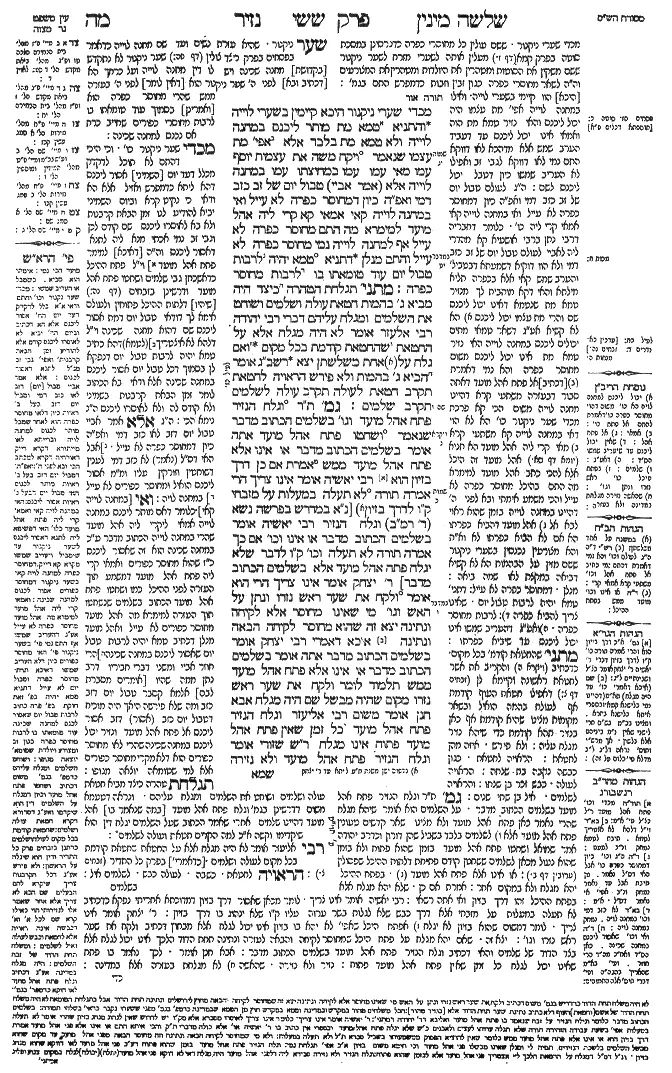
מכדי שערי ניקנור היכא קיימין בשערי לוייה והתניא טמא מת מותר ליכנס במחנה לוייה ולא טמא מת בלבד אלא אפי' מת עצמו שנאמר (שמות יג, יט) ויקח משה את עצמות יוסף עמו מאי עמו עמו במחיצתו עמו במחנה לוייה אלא (אמר אביי) טבול יום של זב כזב דמי ואפ"ה כיון דמחוסר כפרה לא עייל ואי במחנה לוייה קאי אמאי קא קרי ליה אהל מועד למימרא מה התם מחוסר כפרה לא עייל אף למחנה לוייה נמי מחוסר כפרה לא עייל והתם מנלן דתניא (במדבר יט, יג) טמא יהיה לרבות טבול יום עוד טומאתו בו לרבות מחוסר כפרה:
מתני׳ תגלחת הטהרה כיצד היה מביא ג' בהמות חטאת עולה ושלמים ושוחט את השלמים ומגלח עליהם דברי רבי יהודה רבי אלעזר אומר לא היה מגלח אלא על החטאת שהחטאת קודמת בכל מקום ואם גלח על אחת משלשתן יצא רשב"ג אומר הביא ג' בהמות ולא פירש הראויה לחטאת תקרב חטאת לעולה תקרב עולה לשלמים תקרב שלמים:
גמ׳ ת"ר (במדבר ו, יח) וגלח הנזיר פתח אהל מועד וגו' בשלמים הכתוב מדבר שנאמר (ויקרא ג, ב) ושחטו פתח אהל מועד אתה אומר בשלמים הכתוב מדבר או אינו אלא פתח אהל מועד ממש אמרת אם כן דרך בזיון הוא רבי יאשיה אומר אינו צריך הרי אמרה תורה (שמות כ, כו) לא תעלה במעלות על מזבחי ק"ו לדרך בזיון [נ"א במדרש בפרשה נשא (ד' רמ"ב) וגלח הנזיר רבי יאשיה אומר בשלמים הכתוב מדבר או אינו וכו' אם כך אמרה תורה לא תעלה וכו' ק"ו לדבר שלא יגלח פתח אהל מועד אלא בשלמים הכתוב מדבר] ר' יצחק אומר אינו צריך הרי הוא אומר (במדבר ו, יח) ולקח את שער ראש נזרו ונתן על האש וגו' מי שאינו מחוסר אלא לקיחה ונתינה יצא זה שהוא מחוסר לקיחה הבאה ונתינה איכא דאמרי רבי יצחק אומר בשלמים הכתוב מדבר אתה אומר בשלמים הכתוב מדבר או אינו אלא פתח אהל מועד ממש תלמוד לומר ולקח את שער ראש נזרו מקום שהיה מבשל שם היה מגלח אבא חנן אומר משום רבי אליעזר וגלח הנזיר פתח אהל מועד כל זמן שאין פתח אהל מועד פתוח אינו מגלח ר"ש שזורי אומר וגלח הנזיר פתח אהל מועד ולא נזירה
Comments from Rashi on Masechet Nazir Page 45a
מכדי שערי ניקנור . ששם עולין כל מחוסרי כפרה כדגרסינן במסכת סוטה בפרק קמא (דף ז.) מעלין אותה לשערי מזרח לשער ניקנור ששם משקין את הסוטות ומטהרין את היולדות ומטהרין את המצורעים וה"ה לשאר מחוסרי כפרה כגון זבין וזבות כדמפרש התם בגמ': [היכא] הוו קיימי בשערי לוייה . ואילו במחנה לוייה אפי' מת עצמו היה יכול ליכנס והאי נזיר טמא מת הוה ואמאי אינו יכול ליכנס עד דעביד הערב שמש אלא מדהכא לאו דווקא התם נמי לאו דווקא לגבי זב ואפילו לא העריב שמשו כיון דטבל יכול ליכנס לשם: ה"ג לעולם טבול יום של זב כזב דמי ואפ"ה כיון דמחוסר כפרה לא עייל ואי במחנה לוייה קאי אמאי קרי ליה כו' . כלומר דחבריה דרבי נתן ברבי אושעיא קא מהדרי ליה לאביי לעולם טבול יום של זב כזב דמי ולא הוו דוקיא דשמעתא דבטביל' והערב שמש קאי אלא בכפרה תליא מילתא והאי דקא מותבית לך מנזיר טמא מת שנטמא דאינו יכול ליכנס שם והרי מת עצמו יכול ליכנס הא לא קשיא אע"ג דשאר טמאי מתים יכולים ליכנס במחנה לוייה האי נזיר טמא מת אינו יכול ליכנס משום מחוסר כפרה והא נמי דאמרת [דכתיב] אל פתח אהל מועד דאתה סבור דבעזרה משתעי קרא דהיינו מחנה לוייה משום הכי קא פרכת מכדי שער ניקנור כו' הא לא הוי דאי במחנה לוייה קא משתעי קרא מאי קרי ליה אהל מועד הא תניא (יומא דף סא.) אהל מועד זה היכל אלא להכי כתב אהל מועד למימרא מה התם בהיכל מחוסר כפרה לא עייל והכי משמע אימתי ובא לפני ה' דהיינו במחנה לוייה בזמן שהוא ראוי לבא אל אהל מועד דהביא כפרתו הא אם לא הביא כפרתו לא וא"ת והא מצורעין נכנסין בשערי ניקנור ששם מזין על הבהמות הא לא קשיא דביאה במקצת לאו שמה ביאה: מנלן . דמחוסר כפרה לא עייל: דתני' טמא יהיה לרבות טבול יום . שאינו צריך להביא כפרה: לרבות מחוסר כפרה . ואע"ג דהעריב שמשו אינו יכול ליכנס עד שיביא כפרתו: מתני' שהחטאת קודמ' בכל מקום . כדכתיב (ויקרא ה) והקריב את אשר לחטאת ראשונה וקיימא לן (זבחים דף צ:) דאפילו חטאת העוף קודמת אף לעולת בהמה הואיל ובשאר מקומות מצינו שהיא קודמת אף כאן בנזיר תהא קודמת כדי שיהא נזיר מגלח עליה: ולא פירש . איזה מהן לחטאת: הראויה לחטאת . כגון כבשה נקבה בת שנתה: הראויה לעולה . כבש זכר בן שנתו: והראויה לשלמים . איל בן שתי שנים: גמ' ת"ר וגלח הנזיר פתח אהל מועד בשלמים הכתוב מדבר . על השלמים הוא אומר שיהא מגלח שהרי נאמר כאן פתח אהל מועד ולא מצינו שאר קדשים טעונין פתח אהל מועד אלא לשלמים בלבד בשביל שהן דורון וכדרב יהודה אמר שמואל ושחטו פתח אהל מועד בזמן שהוא פתוח ולא בזמן שהוא נעול מכאן לשלמים ששחטן קודם פתיחת דלתות ההיכל שפסולין (ערובין דף ב.): או אינו אלא פתח אהל מועד . בפתח ההיכל יהא מגלח ולא במקום אחר: אמרת אם כן . שלא יהא מגלח אלא בפתח ההיכל זהו דרך בזיון ואי אתה רשאי: רבי יאשיה אומר אינו צריך . לומר מכאן שאסור דרך בזיון דמדוכתא אחריתי נפקא כדכתיב לא תעלה במעלות על מזבחי אלא דרך כבש שלא לגלות בשר ערוה עליו ק"ו שלא ינהוג בו דרך בזיון: ר' יצחק אומר אינו צריך . לומר דמשום שהוא בזיון לא יגלח אפתח היכל שאפי' לא יהא בו בזיון אינו יכול לגלח אלא מבחוץ דכתיב ולקח את שער ראש נזרו וגו': יצא זה . שאם יהא מגלח על פתח היכל שמחוסר לקיחה והבאה לעזרה ונתינה תחת הדוד הלכך אינו יכול לגלח אלא בצד הדוד של שלמים והאי דכתיב וגלח הנזיר פתח אהל מועד בשלמים הכתוב מדבר: אבא חנן אומר . לכך נאמר בו פתח שאינו יכול לגלח כל זמן שאין פתח אהל מועד פתוח: נזיר ולא נזירה . שהאשה לא מגלחת בעזרה אלא במדינה:
Comments from Tosafot - Nazir 45a
שער ניקנור . שהיא עזרת נשים ועד שם מחנה לוייה כדאמר בפסחים בפרק כיצד צולין (דף פה:) שער ניקנור לא נתקדש [בקדושת] מחנה שכינה ויש לו דין מחנה לוייה ועל כרחך הא [דכתיב ובא] לפני ה' שער ניקנור הוא [דאין לומר] לפני ה' בעזרה ממש שהרי מחוסר כפרה הוא [ואמרינן] בסמוך עוד טומאתו בו לרבות מחוסרי כפורים שחייב כרת אם נכנס למחנה שכינה: מכדי שער ניקנור כו' . וכי היכי דהתם לא תוכל לדקדק מכלל דעד יום [השמיני] אסור ליכנס דהא ליתא כדמפרש ואזיל אלא הא ודאי כי נקיט קרא וביום השמיני יביא להודיע לנו זמן הבאת קרבנות ולא בא לאוסרו ליכנס שם קודם לכן וגבי זב נמי אכתי מנא ליה לתנא דאסור ליכנס וה"ה [דאיכא] למימר פתח אהל מועד וי"ל פתח ההיכל כדאשכחן גבי שלמים ושחטו פתח אהל מועד ודרשינן בזבחים (דף נה:) [שיהיו] דלתות ההיכל פתוחין ולעולם אימא לך דודאי טבול יום דמת אסור ליכנס שם דהוא מחנה שכינה וי"ל דלהא לא איצטריך (לטמא) דהא כתיב טמא יהיה לרבות טבול יום דנפקא לן בסמוך דכל טבול יום אסור ליכנס במחנה שכינה אלא ודאי בא הכתוב לומר זמן הבאת קרבנות בשמיני ולא קודם לה ולא לאוסרו ליכנס ה"נ נימא הכי: ה"ג אלא אמר אביי טבול יום דזב לאו כזב דמי ואפ"ה כיון דמחוסר כפרה לא עייל . אבל האי דס"ל (נאמר) לא כזב דמי לענין דשוחטין וזורקין עליו ומ"מ אסור ליכנס הואיל ומחוסר כפורים לא עייל במחנה לויה: ואי [במחנה לוייה קאי] . כלומר דאם מותר ליכנס במחנה לוייה אמאי ליקרי ליה אהל מועד שהרי במחנה לוייה הכתוב מדבר ע"כ במחנה שכינה הוא זה שאסור ליכנס כ"ז שהוא מחוסר כפורים ואמאי קרי ליה פתח אהל מועד דמשמע תוך העזרה לפני ההיכל כמו ושחטו פתח אהל מועד הכתוב בשלמים שנשחטו תוך העזרה למימרא מה אהל מועד מחוסר כפורים לא עייל ואהל מועד מנלן דכתיב טמא יהיה לרבות טבול יום שאסור ליכנס במחנה שכינה הרי חוזר אביי ומשני דברי חביריו דרב נתן ממה שהיו [אומרים מסברת לבם] אלמא קסבר טבול יום דזב כזב ומה שלא פירשה היאך היה מוכיח דטבול יום כזב (אסור) דזב אסור ליכנס אל פתח אהל מועד ונזיר יכול ליכנס במחנה שכינה שהרי לאו מחוסר כפורים הוא דלא מקרי מחוסר כפורים אלא למי שטומאה יוצאה מגופו: תגלחת טהרה כיצד מביא חטאת עולה ושלמים ושוחט את השלמים ומגלח עליהם . ונראה דטעמא משום דדרשינן בגמ' וגלח פתח אהל מועד [במה שנאמר בו] אהל מועד דהיינו שלמים אחרי שאמר הכתוב שעל השלמים יגלח דין הוא שיקדימו וקשה א"כ למה הקדים חטאת ועולה לשלמים: רבי אליעזר אומר לא היה מגלח אלא על החטאת שחטאת קודמת בכל מקום לעולה ושלמים . [כדאמרי'] בפרק כל התדיר (זבחים צ .): הראויה לחטאת. כשבה. לעולה כבש. לשלמים איל: בשלמים הכתוב מדבר . וכרבי יהודה דמתני' דאמר על שלמים יגלח שנאמר בהן ושחטו פתח אהל מועד: רבי יאשיה אומר אינו צריך הרי הוא אומר לא תעלה במעלות . כי הולך לעבוד עבודה ואינו כל כך דרך בזיון וקשה דמאי אינו צריך למדרש מסברא אלא מק"ו ובסיפרי אין הגירסא ר' יאשיה אומר אלא כל זה מדברי ת"ק והכי איתא התם או אינו אלא פתח אהל מועד ממש אמרת א"כ דרך בזיון או אינו אלא ממש כלומר דאין להוציא מסברא הפסוק ממשמעו הרי הוא אומר לא תעלה ק"ו לדבר בזיון: ולא במי שמחוסר הבאה ולקיחה ונתינה . שהרי שלמים נאכלין בכל העיר ואם מגלח פתח אהל מועד ודוד שלמים בעי הרי מחוסר הבאה לקיחה ונתינה: וגילח (את) הנזיר פתח אהל מועד בזמן שהוא פתוח . כלומר ע"כ לאו פתח אהל מועד ממש דא"כ ה"ל דרך בזיון אלא בזמן פתח [פתוח]: ולא נזירה . משמע שטעמא דקרא שמא יתגרו בה פרחי כהונה אם תגלח פתח אהל מועד ממש אלא במדינה מגלחת במקום צנוע ולא יראוה פרחי כהונה:
Nazir 45a - Mishnah translated into english
Abaye continues: Now consider the Gate of Nicanor, where all those lacking atonement stand to bring their offerings; where is it located? In the gates of the Levites. Three camps are detailed in the verses, each having its own restrictions as to who may or may not enter them (see Numbers, chapter 5). The verses speak of the camps of the Jewish people in the wilderness, and the Sages taught that the statuses of certain areas of Jerusalem corresponded to those camps. The camps in the wilderness were the Israelite camp, the Levite camp, and the camp of the Divine Presence. They correspond to Jerusalem, the Temple Mount, and the Temple itself. The Gate of Nicanor had the status of the Levite camp.
Abaye continues: But isn’t it taught in a baraita (Tosefta, Kelim 1:8) that one who is impure due to contact with a corpse is permitted to enter the Levite camp; and not only one impure from a corpse, but even a corpse itself may be brought inside the Levite camp, as it is stated: “And Moses took the bones of Joseph with him” (Exodus 13:19). The baraita explains: What is the meaning of “with him”? The phrase “with him” indicates that Joseph’s bones were taken within Moses’s boundary, with him in the Levite camp. This demonstrates that even a corpse may be brought into the Levite camp. If so, certainly a nazirite who was impure from contact with a corpse and who has been sprinkled and immersed may enter there. Consequently, the halakha that a nazirite must wait until the eighth day to sacrifice his offerings cannot be due to a prohibition against entering the Gate of Nicanor. One can similarly infer that the halakha that a zav who has immersed may not bring his offerings before the eighth day is not because he is prohibited from entering the Gate of Nicanor.
Rather, Abaye says: The baraita should be understood slightly differently than suggested by the assembly of Rav Natan bar Hoshaya: One who immersed himself that day to release himself from the status of a zav, i.e., a full-fledged zav, who experienced three emissions, not merely two, is considered like a zav with regard to the prohibition against entering the Levite camp. But the reason for this prohibition is not that a zav who immersed himself that day may not enter the Levite camp. Rather, granted that he is permitted to enter the Levite camp in terms of his impurity, even so, since he is lacking atonement, as he has yet to sacrifice his offerings, he may not enter the Levite camp.
Abaye elaborates: The reason he may not enter is that the Torah states with regard to a zav: “And he shall come before the Lord to the entrance of the Tent of Meeting” (Leviticus 15:14), and if he is standing in the Levite camp, at the Gate of Nicanor, when he brings his offerings, why does the Torah call it “the Tent of Meeting”? Rather, this verse must be coming to say: Just as there, with regard to the Tent of Meeting itself, i.e., the camp of the Divine Presence, one who is lacking atonement may not enter there, so too, with regard to the Levite camp as well, one who is lacking atonement may not enter there.
The Gemara asks: And from where do we derive that one who lacks atonement may not enter there, i.e., the camp of the Divine Presence? The Gemara answers: As it is taught in a baraita: The Torah states with regard to the prohibition against an impure person entering the Tabernacle: “He shall be impure; his impurity is yet upon him” (Numbers 19:13). The phrase “he shall be impure” serves to include one who immersed himself that day in the prohibition against entering the Temple. “His impurity is yet upon him” serves to include one who lacks atonement, who is prohibited from entering the camp of the Divine Presence until he has sacrificed his offerings of purity.
MISHNA: With regard to a nazirite’s shaving of purity after the completion of his term of naziriteship, how is it performed? He would bring three animals: One for a sin-offering, one for a burnt-offering, and one for a peace-offering. And he slaughters the peace-offering and shaves his hair after he slaughters them. This is the statement of Rabbi Yehuda. Rabbi Elazar says: He would shave only after he slaughtered the sin-offering, as the sin-offering precedes the other offerings in all places, and therefore he sacrifices the sin-offering first. He shaves his hair after he slaughters this offering. And if he shaved after the sacrifice of any one of the three of them, he has fulfilled his obligation after the fact.
Rabban Shimon ben Gamliel says: If a nazirite brought three animals without specifying which of them was for which offering, the one that is fit for a sin-offering, i.e., a female sheep in its first year, is sacrificed as a sin-offering; that which is fit for a burnt-offering, a male sheep in its first year, is sacrificed as a burnt-offering; and that which is fit for a peace-offering, a ram, i.e., a male sheep over the age of one year, is sacrificed as a peace-offering.
GEMARA: The Gemara first addresses the opinion of Rabbi Yehuda, whose reasoning was not stated in the mishna. The Sages taught that when the Torah states: “And the nazirite shall shave his consecrated head at the entrance to the Tent of Meeting” (Numbers 6:18), the verse is speaking of the peace-offering, as the phrase “the entrance to the Tent of Meeting” alludes to a peace-offering, as it is stated: “And if his offering is a sacrifice of peace-offering…and he shall slaughter it at the entrance to the Tent of Meeting” (Leviticus 3:1–2).
Do you say the verse is speaking of the peace-offering, i.e., that the nazirite shaves after bringing his peace-offering? Or perhaps it is only teaching that he shaves at the actual entrance to the Tent of Meeting, at the gate to the Sanctuary, as indicated by a literal reading of the verse? You can say in response: If so, that is a degrading manner of service, to shave at the entrance to the Sanctuary.
Rabbi Yoshiya says: This proof is not necessary, as the Torah states: “And you shall not ascend by steps to My altar, so that you should not reveal your nakedness upon it” (Exodus 20:23). If the Torah is concerned about the disrespect to the altar presented by normal human behavior, then by an a fortiori inference the Torah prohibits acting in a degrading manner by shaving at the entrance to the Sanctuary.
A different version of this derivation is stated in the midrash to the Torah portion of Naso. The Torah states: “And the nazirite shall shave his consecrated head at the entrance to the Tent of Meeting, and shall take the hair of his consecrated head and put it on the fire which is under the sacrifice of the peace-offering” (Numbers 6:18). Rabbi Yoshiya says: The verse is speaking of the peace-offering. Or perhaps it is only teaching that he shaves at the actual entrance to the Tent of Meeting? If so, the Torah said: “And you shall not ascend by steps to My altar” (Exodus 20:23). By an a fortiori inference with regard to this matter it is derived that he should not shave at the entrance to the Tent of Meeting. Rather, the verse is speaking of the peace-offering.
Rabbi Yitzḥak says: It is not necessary to cite an indirect proof that a nazirite may not shave at the entrance to the Sanctuary, as the verse states with regard to a nazirite: “And he shall take the hair of his consecrated head and put it on the fire which is under the sacrifice of the peace-offering” (Numbers 6:18). The verse is referring to one who has not yet performed only the stages of taking and placing his shaven hair under the pot of the peace-offering, which is outside the Sanctuary. These two stages are the only ones he lacks; he does not have to do any other action. That excludes this one, a nazirite who shaved at the entrance to the Sanctuary, as he has not yet performed three actions, taking, bringing the hair from one sanctified area to another, and placing his shaven hair under the pot of the peace-offering.
Some say a different version of this statement. Rabbi Yitzḥak says: The verse is referring to the peace-offering. He clarifies his assertion: Do you say the verse is speaking of the peace-offering, or is it teaching only that he shaves at the actual entrance to the Tent of Meeting? The verse states: “And he shall take the hair of his consecrated head and put it on the fire which is under the sacrifice of the peace-offering” (Numbers 6:18). This indicates that in the same place where he would cook the peace-offering, outside the courtyard, there he would shave.
Abba Ḥanan says in the name of Rabbi Eliezer that the verse “And the nazirite shall shave his consecrated head at the entrance to the Tent of Meeting” (Numbers 6:18) is referring to the time rather than the place of his shaving, i.e., this verse teaches that as long as the entrance to the Tent of Meeting is not open, he may not shave. He may shave only during those hours when the entrance to the Sanctuary is open.
Rabbi Shimon Shezuri says: The phrase “And the nazirite shall shave his consecrated head at the entrance to the Tent of Meeting” does not refer to the place of his shaving. Rather, the masculine form of the word nazirite serves to emphasize that this applies to a male nazirite and not a female nazirite. A woman does not shave her head in the Sanctuary,
Traduction : The William Davidson digital edition of the Koren Noé Talmud, with commentary by Rabbi Adin Even-Israel Steinsaltz.