 Talmud Bavli
Nazir 22a : Youtube
Daf TubeYoutube
2 video classes :
Nazir Page 22a
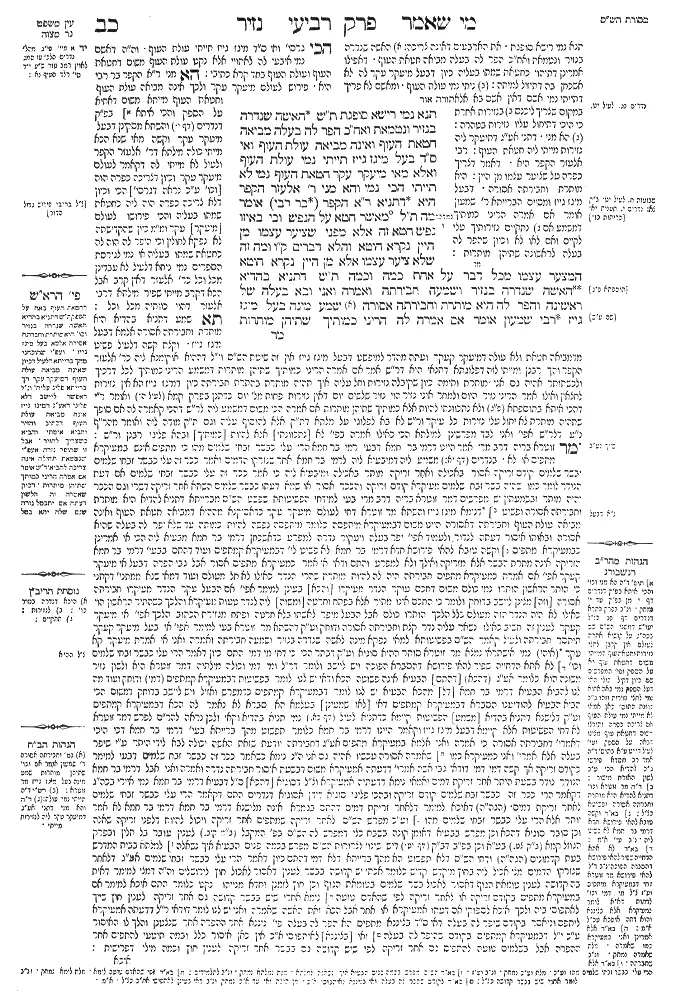
Nazir 22a - Guemara
תנא נמי רישא סופגת ת"ש האשה שנדרה בנזיר ונטמאת ואח"כ הפר לה בעלה מביאה חטאת העוף ואינה מביאה עולת העוף ואי ס"ד בעל מיגז גייז תייתי נמי עולת העוף ואלא מאי מיעקר עקר חטאת העוף נמי לא תייתי הכי נמי והא מני ר' אלעזר הקפר היא דתניא ר"א הקפר (בר רבי) אומר מה ת"ל (במדבר ו, יא) מאשר חטא על הנפש וכי באיזו נפש חטא זה אלא מפני שציער עצמו מן היין נקרא חוטא והלא דברים ק"ו ומה זה שלא ציער עצמו אלא מן היין נקרא חוטא המצער עצמו מכל דבר על אחת כמה וכמה ת"ש דתניא בהדיא האשה שנדרה בנזיר ושמעה חבירתה ואמרה ואני ובא בעלה של ראשונה והפר לה היא מותרת וחבירתה אסורה שמע מינה בעל מיגז גייז רבי שמעון אומר אם אמרה לה הריני כמותיך שתיהן מותרות
Comments from Rashi on Masechet Nazir Page 22a
תנא נמי רישא סופגת . את הארבעים דאינה צריכה: האשה שנדרה בנזיר ונטמאת ואח"כ הפר לה בעלה מביאה חטאת העוף . דאפילו אמרינן דתיהוי כחטאת שמתו בעליה כיון דבעל מיעקר עקר לה לא אשכחן בה דתיזיל למיתה: ניתי נמי עולת העוף . ומאשם לא פריך דתייתי נמי אשם דאין אשם בא אלא במקום שצריך ליכנס בנזירות אחרת כי היכי דתיחול עליו נזירות בטהרה: הא מני . דתני אע"ג דתיעקר ליה נזירות מייתי ליה חטאת העוף: רבי אליעזר הקפר היא . דאמר דצריך כפרה על שציער עצמו מן היין: היא מותרת וחבירתה אסורה . דבעל מיגז גייז ומסיים הברייתא ר' שמעון אומר אם אמרה הריני כמותיך דמשמע אם נתקיים נזירותיך עלי לקיים ואם לאו לא וכיון שהפר לה בעלה לראשונה שתיהן מותרות:
Comments from Tosafot - Nazir 22a
הכי גרסי' ואי ס"ד מיגז גייז תייתי עולת העוף . וה"ה דאשם נמי איבעי לה לאתויי אלא נקט עולת העוף משום דחטאת העוף ועולת העוף בחד קרא כתיבי: הא מני ר"א הקפר בר רבי היא . פירוש לעולם מיעקר עקר ולכך אינה מביאה עולת העוף וחטאת העוף מייתא משום דאתיא על הספק והכי איתא בפ"ק דנדרים (דף י) והשתא מסקינן דבעל מיעקר עקר וקשה מאי שנא הכא מייתי כולה מילתא דר' אלעזר הקפר ולעיל לא מייתי לה דקאמר לעולם מיעקר עקר וכיון דצריכה כפרה הוה [וכו' ע"כ נראה דגרסי'] הכי וכיון דלא צריכה כפרה הוה ליה כחטאת שמתו בעליה והכי פירושו לעולם [מיעקר] עקר ומ"מ כיון שהקדישתה לא נפקא לחולין וכי היפר לה הוה לה כחטאת שמתו בעליה אי נמי לגירסת הספרים נמי ניחא דלעיל לא עבדינן מכל וכל כר' אלעזר דאין קרב אבל הכא דקרב מייתי שפיר מילתא דרבי אלעזר דהוי כוותיה מכל וכל: תא שמע דתניא בהדיא היא מותרת וחבירתה אסורה אלמא דבעל מיגז גייז . וקצת קשה דלעיל פשיט מדמביאה חטאת ולא עולה דמיעקר קעקר ועתה מהדר למיפשט דבעל מיגז גייז אין זה שיטת הש"ס וי"ל דההיא אוקימנא ליה כר' אלעזר הקפר והך רבנן ומייתי לזה דפלוגתא דתנאי היא דר"ש אמר אם אמרה הריני כמותיך שתיהן מותרות דמשמע הריני כמותיך לכל דרכיך ולכשתותר אהיה גם אני מותרת ותימה כיון שקיבלה נזירות וחל עליה איך תהיה מותרת בהתרת חבירתה כיון דמיגז גייז הא אין נזירות לחצאין ואילו אמר הריני נזיר היום ולמחר איני נזיר הוי נזיר שלשים יום דאין נזירות פחות מל' יום כדתנן בפרק קמא (לעיל נזיר ה.) ואומר ר"י דהכי איתא בתוספתא (פ"ג) ולא נתכוונתי להיות אלא כמותיך שתיהן מותרות אם אמרה הכי משום דמשמע ליה לר"ש דהכי קאמרה לה אם סופך שתהיה מותרת לא יחול עלי נזירות כל עיקר ור"ש לא בא לפלוגי על מלתא דת"ק אלא להוסיף עליה וגם ת"ק מודה ליה ואומר מהר"ף נ"ע דלר"ש אפי' ואני לבד מפרשינן למילתא הכי כאילו אמרה בפי' לא [נתכוונתי] אלא להיות [כמותיך] ובהא פליגי רבנן ור"ש:
Nazir 22a - Mishnah translated into english
For this reason the tanna also taught: She incurs, in the first clause, despite the fact that this teaches no novelty.
The Gemara further suggests: Come and hear a proof from a baraita: With regard to a woman who vowed to be a nazirite and she became ritually impure, and afterward her husband nullified her vow, she brings the bird sin-offering, and she does not bring the bird burnt-offering. And if it should enter your mind that the husband severs her vow, let her also bring the bird burnt-offering, to complete the atonement for becoming ritually impure when she was a nazirite. This indicates that the husband uproots the vow, which is why she is not required to bring the bird burnt-offering.
The Gemara refutes this proof: Rather, what then? Will you say that the husband uproots the vow entirely? If so, she should also not bring the bird sin-offering. The Gemara answers: So too, she should not have to bring the bird sin-offering either, but in accordance with whose opinion is this baraita? It is the opinion of Rabbi Elazar HaKappar.
As it is taught in a baraita that Rabbi Elazar HaKappar the esteemed says: What is the meaning when the verse states: “And make atonement for him, for that he sinned by reason of the soul” (Numbers 6:11)? And with which soul did this nazirite sin? Rather, because he deprived himself of wine he is therefore called a sinner. And are not these matters inferred a fortiori: And if this one, who deprived himself only of wine, is nevertheless called a sinner, in the case of one who deprives himself of everything by fasting or other acts of mortification, all the more so is he labeled a sinner. According to this opinion, she brings a sin-offering to atone for uttering the vow itself, despite the fact that her husband later uprooted it entirely.
The Gemara suggests: Come and hear a resolution, as it is taught in a baraita (Tosefta 3:10) explicitly: With regard to a woman who vowed to be a nazirite, and another woman heard her and said: And I, and the husband of the first one came and nullified her vow, she is permitted and the other woman is prohibited. One can learn from this that the husband severs the vow rather than uproots it.
The baraita continues: Rabbi Shimon says that if the second woman said to her, after hearing her vow of naziriteship: I am hereby like you, in that case they are both permitted. Since the second woman made her naziriteship entirely dependent on that of the first, the nullification of the first woman’s vow cancels the second naziriteship as well.
Traduction : The William Davidson digital edition of the Koren Noé Talmud, with commentary by Rabbi Adin Even-Israel Steinsaltz.