 Talmud Bavli
The learning on the whole site is dedicated : L'ilui Nishmat Amram ben Itshak Loubaton
The learning on the whole site is dedicated : L'ilui Nishmat אסתר בת חיים
The learning on the whole site is dedicated : L'ilui Nishmat Avraham Ben Simha
Nazir 44a : Youtube
Daf TubeYoutube
2 video classes :
Nazir Page 44a
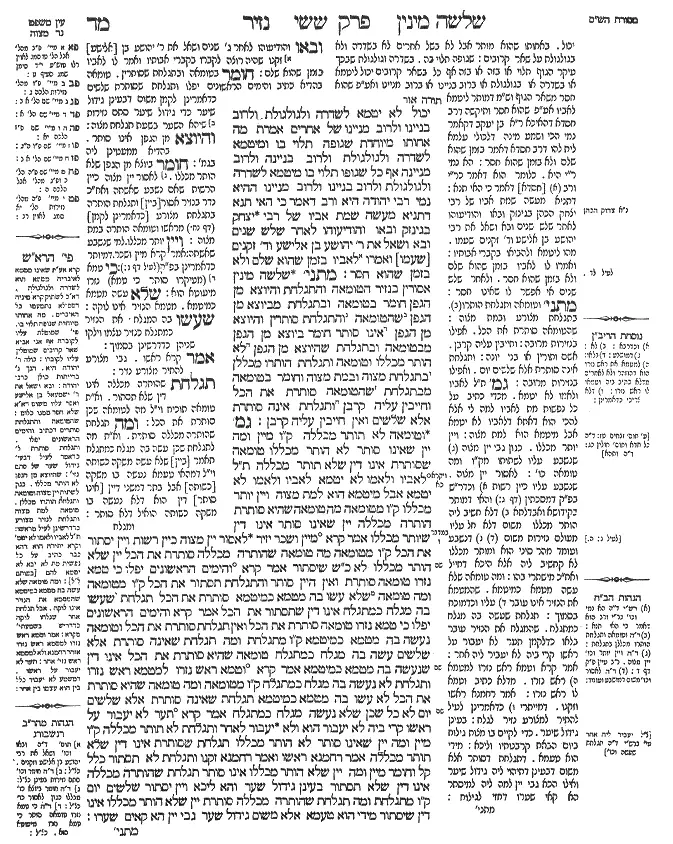
Nazir 44a - Guemara
יכול לא יטמא לשדרה ולגולגולת ולרוב בניינו ולרוב מניינו של אחרים אמרת מה אחותו מיוחדת שגופה תלוי בו ומיטמא לשדרה ולגולגולת ולרוב בניינה ולרוב מניינה אף כל שגופו תלוי בו מיטמא לשדרה ולגולגולת ולרוב בניינו ולרוב מניינו ההיא נמי רבי יהודה היא ורב דאמר כי האי תנא דתניא מעשה שמת אביו של רבי יצחק בגינזק ובאו והודיעוהו לאחר שלש שנים ובא ושאל את ר' יהושע בן אלישע וד' זקנים [שעמו] ואמרו לאביו בזמן שהוא שלם ולא בזמן שהוא חסר:
מתני׳ שלשה מינין אסורין בנזיר הטומאה והתגלחת והיוצא מן הגפן חומר בטומאה ובתגלחת מביוצא מן הגפן שהטומאה והתגלחת סותרין והיוצא מן הגפן אינו סותר חומר ביוצא מן הגפן מבטומאה ובתגלחת שהיוצא מן הגפן לא הותר מכללו וטומאה ותגלחת הותרו מכללן בתגלחת מצוה ובמת מצוה וחומר בטומאה מבתגלחת שהטומאה סותרת את הכל וחייבין עליה קרבן ותגלחת אינה סותרת אלא שלשים ואין חייבין עליה קרבן:
גמ׳ וטומאה לא תותר מכללה ק"ו מיין ומה יין שאינו סותר לא הותר מכללו טומאה שסותרת אינו דין שלא תותר מכללה ת"ל (ויקרא כא, יא) לאביו ולאמו לא יטמא לאביו ולאמו לא יטמא אבל מיטמא הוא למת מצוה ויין יותר מכללו ק"ו מטומאה מה טומאה שהיא סותרת הותרה מכללה יין שאינו סותר אינו דין שיותר מכללו אמר קרא (במדבר ו, ג) מיין ושכר יזיר לאסור יין מצוה כיין רשות ויין יסתור את הכל ק"ו מטומאה מה טומאה שהותרה מכללה סותרת את הכל יין שלא הותר מכללו לא כ"ש שיסתור אמר קרא (במדבר ו, יב) והימים הראשונים יפלו כי טמא נזרו טומאה סותרת ואין היין סותר והתגלחת תסתור את הכל ק"ו מטומאה ומה טומאה שלא עשו בה מטמא כמיטמא סותרת את הכל תגלחת שעשו בה מגלח כמתגלח אינו דין שתסתור את הכל אמר קרא והימים הראשונים יפלו כי טמא נזרו טומאה סותרת את הכל ואין תגלחת סותרת את הכל וטומאה נעשה בה מטמא כמיטמא ק"ו מתגלחת ומה תגלחת שאינה סותרת אלא שלשים עשה בה מגלח כמתגלח טומאה שהיא סותרת את הכל אינו דין שנעשה בה מטמא כמיטמא אמר קרא (במדבר ו, ט) וטמא ראש נזרו למטמא ראש נזרו ותגלחת לא נעשה בה מגלח כמתגלח ק"ו מטומאה ומה טומאה שהיא סותרת את הכל לא עשו בה מטמא כמיטמא תגלחת שאינה סותרת אלא שלשים יום לא כל שכן שלא נעשה מגלח כמתגלח אמר קרא (במדבר ו, ה) תער לא יעבור על ראשו קרי ביה לא יעבור הוא ולא יעבור לאחר ותגלחת לא תותר מכללה ק"ו מיין ומה יין שאינו סותר לא הותר מכללו תגלחת שסותרת אינו דין שלא תותר מכללה אמר רחמנא ראשו ואמר רחמנא זקנו ותגלחת לא תסתור כלל קל וחומר מיין ומה יין שלא הותר מכללו אינו סותר תגלחת שהותרה מכללה אינו דין שלא תסתור בעינן גידול שער והא ליכא ויין יסתור שלשים יום ק"ו מתגלחת ומה תגלחת שהותרה מכללה סותרת יין שלא הותר מכללו אינו דין שיסתור מידי הוא טעמא אלא משום גידול שער גבי יין הא קאים שערו:
Comments from Rashi on Masechet Nazir Page 44a
יכול . באחותו שהוא מותר אבל לא בשל אחרים לא בשדרה ולא בגולגולת על שאר קרובים: שגופה תלוי בה . בשדרה וגולגולת שבכך עיקר הגוף תלוי או בזה או בזה אף כל בשאר קרובים יכול ליטמא או בשדרה או בגולגולת או ברוב בניינו או ברוב מניינו ואע"פ שהוא חסר משאר הגוף וש"מ דמותר ליטמא לאביו אע"פ שהוא חסר ותיקשה דרב חסדא דהאיכא ר"א בן יעקב דקאמר נמי הכי ושמע מינה דלכולי עלמא לית להו דרב חסדא דאמר בזמן שהוא שלם ולא בזמן שהוא חסר: הא נמי ר"י היא . כלומר הוא דאמר כר"י ורב [חסדא] דאמר כי האי תנא: דתניא מעשה שמת אביו של רבי יצחק הכהן בגינזק ובאו והודיעוהו לאחר שלש שנים ובא ושאל את רבי יהושע בן אלישע וד' זקנים שעמו . מהו ליטמא ולהביאו בקברי אבותיו: ואמרו לו לאביו בזמן שהוא שלם ולא בזמן שהוא חסר . ולאחר שלש שנים אי אפשר לו שאינו חסר: מתני' וטומאה ותגלחת הותרו . בתגלחת מצורע ובמת מצוה: שהטומאה סותרת את הכל . אפילו בנזירות מרובה: וחייבין עליה קרבן . אשם ותורין או בני יונה: ותגלחת אינה סותרת אלא שלשים יום . ואפילו בנזירות מרובה: גמ' ת"ל לאביו ולאמו לא יטמא . מכדי כתיב על כל נפשות מת לאביו למה לי אלא להכי הוא דאתא דלאביו לא יטמא אבל מיטמא הוא למת מצוה: ויין יותר מכללו . כגון גבי יין מצוה שנשבע עליו לשתותו מק"ו ומה טומאה כו': לאסור יין מצוה . שנשבע עליו כיין רשות וכדר"ש בפ"ק דמסכתין (דף ג:) והאי דמותר בקידושא ואבדלתא דלא חשיב ליה הותר מכללו משום דלא חל עליו מעולם נזירות משום דנשבע ועומד מהר סיני הוא ומותר מכללו לא קחשיב ליה אלא היכא דחייל ואח"כ מישתרי בהו: ומה טומאה שלא עשה מטמא כמיטמא . שהמטמא את הנזיר אינו עובר עליו וכדמוכח בסמוך: תגלחת שעשה בה מגלח כמתגלח . שהמגלח את הנזיר עובר בלאו כדלקמן תער לא יעבור על ראשו קרי ביה לא יעביר ליה אחר: אמר קרא וטמא ראש נזרו למטמא ראש נזרו . מדלא כתיב וטמא לו ראש נזרו: אמר רחמנא ראשו וזקנו . דמייתרי כדאמרינן לעיל להתיר למצורע נזיר לגלח: בעינן גידול שיער . כדי לקיים בו מצות גילוח ביום הבאת קרבנותיו וליכא: מידי הוא טעמא . דתגלחת דסותר אלא משום דבעינן דתיהוי ליה גידול שיער ואילו הכא גבי יין למה ליה למיסתר הא קאי שערו דחזי לגילוח:
Comments from Tosafot - Nazir 44a
ובאו והודיעוהו לאחר ג' שנים ושאל את ר' יהושע בן [אלישע] . זקנו שהיה רוצה לקברו בקברי אבותיו ואמר לו לאביו בזמן שהוא שלם: חומר בטומאה ובתגלחת שסותרין . טומאה בהדיא כתיב והימים הראשונים יפלו ותגלחת שסותרת שלשים כדאמרינן לקמן משום דבעינן גידול שיער כדי גידול שיער סתם נזירות שיהא השער בשעת תגלחת מצוה: והיוצא מן הגפן אינו סותר . בהדיא ממעטינן ליה בגמ': חומר ביוצא מן הגפן שלא הותר מכללו . לאסור יין מצוה כיין הרשות שאם נשבע שאשתה ואח"כ נדר בנזיר אסור [ביין] ותגלחת הותרה בתגלחת מצורע [כדאמרינן לקמן] (דף נח.) מראשו וטומאה הותרה במת מצוה: ויין יותר מכללו . למי שנשבע שאשתה: אמר קרא מיין ושכר . דמיותר כדאמרינן בפ"ק (לעיל נזיר דף ג:): כי טמא . (מעיקרו סותר כי טמא) נזרו מיעוטא הוא: שלא עשה מטמא כמיטמא . מטמא הנזיר אינו לוקה: שעשו בה המגלח . את הנזיר כמתגלח כנזיר עצמו וילקו שניהן כדדרשינן בסמוך: אמר קרא ראשו . גבי מצורע להתיר מצורע נזיר: תגלחת שהותרה מכללה אינו דין שלא תסתור . וא"ת טומאה תוכיח וי"ל מה לטומאה שכן סותרת את הכל: ומה תגלחת שהותרה מכללה סותרת . וא"ת מה לתגלחת שכן עשה בה מגלח כמתגלח תאמר [ביין] שלא עשה משקה כשותה וי"ל דמהאי טעמא נעשה בו משקה [כשותה] אבל בתר דמשני דיין [אינו סותר] דין הוא דלא נעשה בו משקה כשותה הואיל דלא סותר:
Nazir 44a - Mishnah translated into english
One might have thought that he may not become impure to bury a spine, or for a skull, or to bury most of the skeleton or most of the number of bones of other relatives for whom a priest becomes impure. You say in response: Just as his sister is unique in that her body is dependent upon the brother tending to her burial, and he becomes impure to bury a spine, or to bury a skull, or to bury most of her skeleton, or to bury most of her number of bones, so too, with regard to every person whose body is dependent upon him, i.e., his other close relatives, he becomes impure to bury a spine, or to bury a skull, or to bury most of his skeleton, or to bury most of his number of bones. This presents a difficulty for the opinion of Rav that a priest may not become impure to bury any relative whose head has been severed.
The Gemara answers: That baraita also represents the opinion of Rabbi Yehuda. And Rav stated his opinion in accordance with the opinion of this tanna, as it is taught in a baraita: An incident occurred in which the father of Rabbi Yitzḥak the priest died in Ginzak, and they came and informed him after three years had passed, and he came and asked Rabbi Yehoshua ben Elisha and four Elders who were with him whether he was permitted to become ritually impure by transferring his father’s remains to his ancestral grave, as was the custom.
And they said to Rabbi Yitzḥak that the verse states: “For his father” (Leviticus 21:2), which indicates a priest may become impure only when his father is whole, and not when he is lacking. After three years the father’s body was certainly not whole, and therefore his son, a priest, was no longer permitted to become impure to bury him.
MISHNA: Three types of actions are prohibited for a nazirite: Contracting ritual impurity imparted by a corpse, and shaving his hair, and eating or drinking any substances that emerge from the vine. There is a greater stricture with regard to the prohibitions of impurity and shaving than that of substances that emerge from the vine, as impurity and shaving negate his naziriteship, i.e., he must add thirty days to his term of naziriteship or start it afresh. But if he eats or drinks that which emerges from the vine, this does not negate his naziriteship.
Conversely, there is a greater stricture with regard to substances that emerge from the vine than with regard to impurity and shaving, as in the case of products that emerge from the vine nothing is exempted from its general prohibition in certain circumstances, i.e., there are no exceptions. But with regard to impurity and shaving certain cases are exempted from their general prohibition. For example, there are the cases of obligatory shaving, e.g., a leper who was purified during his naziriteship, and of a corpse with no one to bury it [met mitzva]. A nazirite may tend to the burial of a met mitzva, despite the fact that he will thereby contract ritual impurity from a corpse.
The mishna adds: And there is a greater stricture with regard to impurity than with regard to shaving, as a nazirite’s impurity negates all his days of naziriteship and begins his term afresh, and he is liable to bring an offering for it, before starting his new term of naziriteship. But shaving negates only thirty days at most, and he is not liable to bring an offering for it.
GEMARA: The Gemara asks: And perhaps one should say that the ritual impurity of a nazirite should not be exempted from its general prohibition even for a met mitzva, due to an a fortiori inference from the prohibition of wine: And if wine, whose prohibition is lighter, as it does not negate his naziriteship, is nevertheless not exempted from its general prohibition, then with regard to impurity, which is stringent, as it does negate his naziriteship, is it not logical that it should not be exempted from its general prohibition?
The Gemara answers: Therefore, the verse states, in addition to the general prohibition: “He shall not come near to a dead body” (Numbers 6:6), that: “For his father or his mother, for his brother or for his sister, he shall not become impure when they die” (Numbers 6:7). This verse teaches that it is to bury his father or for his mother that he may not become impure; however, he becomes impure to bury a met mitzva.
The Gemara suggests: If so, one can make the reverse argument. And let wine be exempted from its general prohibition due to an a fortiori inference from the prohibition of impurity: If impurity, which negates naziriteship, is exempted from its general prohibition; with regard to wine, which does not negate naziriteship, is it not logical that it should be exempted from its general prohibition for the sake of a mitzva, e.g., for one who took an oath to drink wine? The Gemara answers: It is for this reason that the verse states with regard to a nazirite: “He shall abstain from wine and strong drink” (Numbers 6:3). The emphasis on the words “wine and strong drink” comes to prohibit obligatory wine like optional wine.
The Gemara further asks: And let wine negate all his days of naziriteship, due to an a fortiori inference from the prohibition of impurity: If impurity, which is exempted from its general prohibition, negates all of his naziriteship, then with regard to wine, which is not exempted from its general prohibition, is it not all the more so logical that it should negate his entire naziriteship?
The Gemara answers: Therefore, the verse states: “But the former days shall be void, for his naziriteship was rendered impure” (Numbers 6:12). The phrase “for his naziriteship was rendered impure” is apparently redundant, as it is clear from the context that the verse is referring to an impure nazirite. Rather, this teaches that only impurity negates his naziriteship, and wine does not negate it.
The Gemara continues to ask along the same lines: And let shaving negate all his naziriteship, due to an a fortiori inference from the prohibition of impurity: And if in the case of impurity, in which the one who renders another impure is not like the one who becomes impure, i.e., one who renders a nazirite ritually impure does not perform a transgression, as only the nazirite who contracts the impurity has performed a transgression, impurity nevertheless negates all his naziriteship; then with regard to shaving, in which the one who shaves is like the one who is shaved, as someone who shaves a nazirite also performs a transgression, is it not logical that it should negate all his naziriteship?
The Gemara answers: Therefore, the verse states: “But the former days shall be void, for his naziriteship was rendered impure” (Numbers 6:12). The emphasis on the phrase “for his naziriteship was rendered impure” teaches that impurity negates all, and shaving does not negate all.
The Gemara suggests: But in that case, one can argue the opposite: With regard to impurity, let the one who renders another impure be like the one who becomes impure, due to an a fortiori inference from the prohibition of shaving: If in the case of shaving, which negates only thirty days, the one who shaves is like the one who is shaved; then, with regard to impurity, which negates all, is it not logical that the one who renders another impure should be like the one who becomes impure?
The Gemara responds: Therefore, the verse states: “And if any man dies very suddenly beside him, and he renders impure his consecrated head” (Numbers 6:9). This teaches that the prohibition of impurity applies only to one who renders impure his consecrated head, but not to others who render him impure.
The Gemara suggests: But if so, one can say the reverse: And with regard to shaving, let the one who shaves not be like the one who is shaved, due to an a fortiori inference from the prohibition of impurity: And if in the case of impurity, which is stringent in that it negates all his naziriteship, the one who renders another impure is nevertheless not like the one who becomes impure; then with regard to shaving, which negates only thirty days, is it not all the more so logical that one who shaves should not be like the one who is shaved?
The Gemara answers: Therefore, the verse states: “No razor shall come upon his head” (Numbers 6:5). Since the verse is written in the passive, read into the verse that he, the nazirite himself, shall not cause a razor to come upon his head; and read the verse as also referring to any other person, who shall not cause a razor to come upon the nazirite’s head.
The Gemara asks: And let shaving not be exempted from its general prohibition in the case of a leper, due to an a fortiori inference from the prohibition of wine: And if wine, which does not negate naziriteship, is not exempted from its general prohibition; then, with regard to shaving, which does negate naziriteship, is it not logical that it should not be exempted from its general prohibition? The Gemara answers: Therefore, the Merciful One states with regard to a leper: “That he shall shave all his hair,” and adds: “Off his head” (Leviticus 14:9). And the Merciful One further states: “And his beard,” which teaches that he shaves despite the prohibition of naziriteship.
The Gemara proposes the reverse argument: And let shaving not negate naziriteship at all, due to an a fortiori inference from the prohibition of wine: And if wine, which is not exempted from its general prohibition, does not negate naziriteship; then with regard to shaving, which is exempted from its general prohibition, is it not logical that it should not negate naziriteship? The Gemara answers: We require hair growth, and there is none at that point. Consequently, the nazirite must necessarily wait until his hair is of sufficient length to shave.
The Gemara asks: And let wine negate thirty days, due to an a fortiori inference from the prohibition of shaving: And if shaving, which is exempted from its general prohibition, nevertheless negates thirty days; then with regard to wine, which is not exempted from its general prohibition, is it not logical that it should negate thirty days? The Gemara answers: As that reason for the halakha that shaving causes a nazirite to negate thirty days is only due to hair growth, so that he has sufficient hair at the end of his naziriteship to shave, the halakha does not apply with regard to wine, since his hair remains in place. The nazirite himself has not changed, so the fact that he has drunk wine is not sufficient reason to negate any time.
Traduction : The William Davidson digital edition of the Koren Noé Talmud, with commentary by Rabbi Adin Even-Israel Steinsaltz.