 Talmud Bavli
Nazir 27b : Youtube
Daf TubeYoutube
2 video classes :
Nazir Page 27b
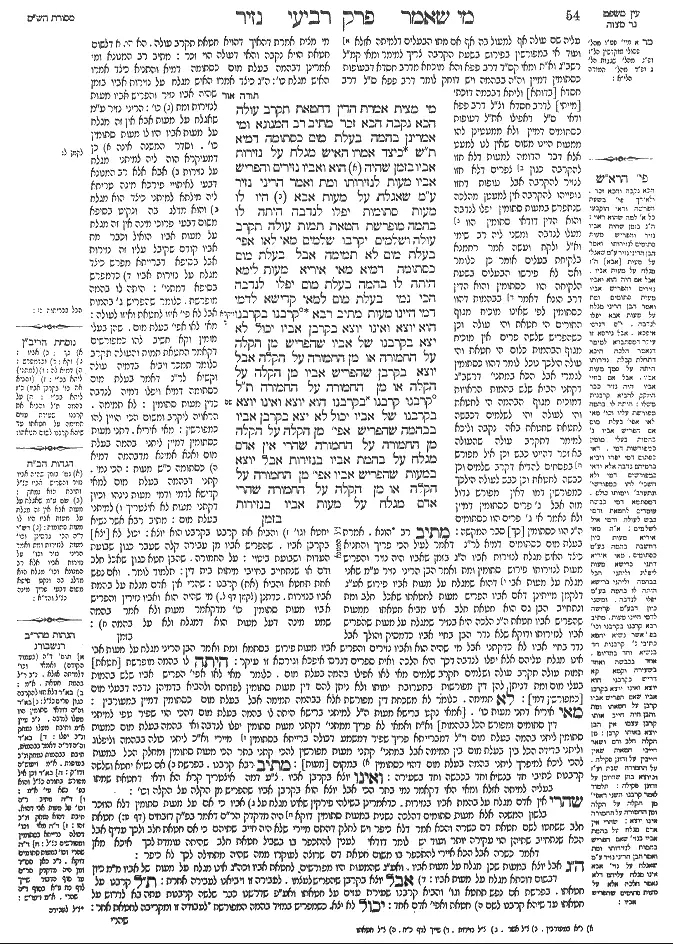
Nazir 27b - Guemara
מי מצית אמרת הדין דחטאת תקרב עולה הכא נקבה הכא זכר מתיב רב המנונא ומי אמרינן בהמה בעלת מום כסתומה דמיא ת"ש כיצד אמרו האיש מגלח על נזירות אביו בזמן שהיה הוא ואביו נזירים והפריש אביו מעות לנזירותו ומת ואמר הריני נזיר ע"מ שאגלח על מעות אבא היו לו מעות סתומות יפלו לנדבה היתה לו בהמה מופרשת חטאת תמות עולה תקרב עולה ושלמים יקרבו שלמים מאי לאו אפי' בעלת מום לא תמימה אבל בעלת מום כסתומה דמיא מאי איריא מעות לימא היתה לו בהמה בעלת מום יפלו לנדבה הכי נמי בעלת מום למאי קדישא לדמי דמי היינו מעות מתיב רבא (ויקרא ד, כג) קרבנו בקרבנו הוא יוצא ואינו יוצא בקרבן אביו יכול לא יצא בקרבנו של אביו שהפריש מן הקלה על החמורה או מן החמורה על הקלה אבל יוצא בקרבן שהפריש אביו מן הקלה על הקלה או מן החמורה על החמורה ת"ל (ויקרא ד, כג) קרבנו קרבנו בקרבנו הוא יוצא ואינו יוצא בקרבנו של אביו יכול לא יצא בקרבן אביו בבהמה שהפריש אפי' מן הקלה על הקלה מן החמורה על החמורה שהרי אין אדם מגלח על בהמת אביו בנזירות אבל יוצא במעות שהפריש אביו אפי' מן החמורה על הקלה או מן הקלה על החמורה שהרי אדם מגלח על מעות אביו בנזירות
Comments from Rashi on Masechet Nazir Page 27b
מי מצית אמרת דהאיך דהויא חטאת תקרב עולה . הא ההיא דלשום חטאת הויא נקבה והאי דעולה הוי זכר: מתיב רב המנונא ומי אמרינן דבהמה בעלת מום כסתומה דמיא והתניא כיצד אמרו האיש מגלח כו': ה"ג כיצד אמרו האיש מגלח על נזירות אביו בזמן שהיה אביו נזיר והפריש אביו מעות לנזירות ומת כו': הריני נזיר ע"מ שאגלח על מעות אבא אין זה מגלח על מעות אביו היו לו מעות סתומין כו' . וסדר המשנה אינה כן דמעיקרא הוה ליה למיתני מגלח על נזירות אבא אלא רב המנונא דבעי לאיתויי פירכא מינה טריחא ליה מילתא למיתני כיצד הוא מגלח והוא מדלג בה ונקיט בסיפא משום דבעי פרוכי מינה אין זה מגלח על מעות אביו הואיל וכבר מת אביו קודם שקיבל עליו זה נזירות אבל בסיפא דברייתא מפרש כיצד מגלח על נזירות אביו כדמפרש בסיפא דמתני': היתה לו בהמה מופרשת . כלומר שהפריש ג' בהמות אבל לא פי' איזו לחטאת ואיזו לעולה: מאי לאו אפי' בעלת מום . שהן בעלי מומין וקא חשיב להו כמפורשים דקאמר החטאת תמות והעולה תקרב כלומר תמכר ויביא בדמיה עולה וקשיא לר"נ דאמר בעלת מום כסתומה דמיא ויפלו דמיה לנדבה כדין מעות סתומין: לא תמימה . הראויה ליקרב ומשום הכי הויין להו כמפורשין: מאי איריא . דתני מעות כסתומין דמיין ליתני בהמה בעלת מום ואנא אמינא מדבהמה דמיא כסתומה כ"ש מעות: הכי נמי . קתני דבהמה בעלת מום למאי קדישא לדמי ודמי מעות נינהו וכיון דקתני מעות לא איצטריך למיתני בעלת מום: מתיב רבא אשר נשיא יחטא וגו' והביא את קרבנו בקרבנו הוא יוצא: יכול לא [יצא] בקרבן אביו . שהפריש אביו מן עבירה קלה שעבר כגון שבועת העדות ושבועת ביטוי: על החמורה . שהבן חטא כגון שאכל חלב ודם או שנתחייב בחייבי מיתות בית דין: תלמוד לומר . ואם נפש אחת תחטא והביא (את) קרבנו: יכול לא [יצא] בקרבן אביו . שהפריש אביו מן עבירה קלה שעבר כגון שבועת העדות ושבועת ביטוי: שהרי אין אדם מגלח על בהמת אביו בנזירות . כדתנן (לקמן נזיר דף ל.) מי שהיה הוא ואביו נזירין והפריש אביו מעות סתומין כו' מדקאמר מעות ולא אמר בהמה שמע מינה דעל מעות הוא דמגלח ולא על בהמה:
Comments from Tosafot - Nazir 27b
מתיב רב הונא . אמרת בעלת מום כסתומים דמיא לר"נ דאמר לעיל הכי פריך והתניא כיצד האיש מגלח לנזירות אביו ה"ג בזמן שאביו היה נזיר והפריש מעות לנזירותו פירוש סתומין ומת ואמר הבן הריני נזיר ע"מ שאני מגלח על מעות אבי דהוא שמגלח על מעות אביו פירוש אע"ג דלקמן מייתינן דאם אביו הפריש מעות לחטאתו שאכל חלב ומת ונתחייב הבן גם הוא חטאת חלב אינו מביא חטאתו ממעות שהפריש אביו חטאת ה"נ הלכה היא בנזיר שמגלח על מעות שהפריש אביו לנזירותו ודוקא שלא נדר הבן בחיי אביו כדמסיק והולך אבל נדר בחיי אביו לא כדקתני אבל מי שהיה הוא ואביו נזירים והפריש אביו מעות פירוש בסתמא ומת ואמר הבן הריני מגלח על מעות אבי אינו מגלח עליהם אלא יפלו לנדבה דכך היא הלכה ואית ספרים דגרסי איפכא וגירסא זו עיקר: היתה לו בהמה מופרשת [חטאת] תמות עולה תקרב עולה ושלמים תקרב שלמים מאי לאו אפילו בהמה בעלת מום . כלומר מאי לאו אפי' הפריש אביו שלש בהמות בעלי מום ומת דניתן להן דין מפורשות בתערובת ימותו ולא ניתן להם דין מעות סתומין לפדותם ולהביא בדמיהן נדבה דבעלי מום [כמפורשין דמי]: לא תמימה . כלומר לא משכחת דין מפורשת אלא בבהמה תמימה אבל בעלת מום כסתומין דמיין במעורבין: מאי איריא דתני מעות כו' . [אמאי נקט ברישא מעות ה"ל למיתני ברישא היתה לו בהמה בעלת מום דהכי הוי שפיר טפי למיתני דין סתומים ומפורש הכל בבהמות] וא"ת ואמאי לא פריך ממתני' דקתני מעות סתומין יפלו לנדבה ואי בהמה בעלת מום כמעות סתומין ליתני בהמה בעלת מום וי"ל דמברייתא פריך שפיר דמשמע דכולה ברייתא בסתומין מיירי וא"כ ליתני כולה בבהמה וליפלוג וליתני בדידה הכל בין בעלת מום בין תמימה אבל במתני' קתני מעות מפורשין להכי קתני בתר הכי מעות סתומין ומחלק הכל במעות להכי ליכא למיפרך ליתני בהמה בעלת מום דהוי כסתומין במקום [מעות]: מתיב רבא קרבנו . בפרשת אם נשיא יחטא ושלשה קרבנות כתיבי חד בנשיא וחד בכבשה וחד בשעירה: ואינו יוצא בקרבן אביו . צ"ע דמה איצטריך קרא הא ודאי דחטאת שמתו בעליה למיתה אזלא ומאי האי דקאמר נמי בתר הכי אבל יוצא הוא בקרבן אביו שהפריש מן הקלה על הקלה וכו': שהרי אין אדם מגלח על בהמת אביו בנזירות . כדאמרינן בשילהי פירקין שאינו מגלח על אביו כי אם על מעות סתומין דלא הוזכר בלשון המשנה אלא מעות סתומים דהלכה נשנית במעות סתומין דוקא היה מדקדק הר"ם דאמר בפ"ק דזבחים (דף ט:) חטאת חלב ששחטו לשם חטאת דם כשרה והכא אמר דלא כיפר ויש לחלק דהתם מיירי שלא היה חייב שתיהם כי אם חטאת חלב ולכך עדיף אבל הכא שנתחייב שתיהן הוי עקירה יותר ועוד יש לומר דודאי לענין להתכפר בו בשביל חטאת חלב שהיתה עומדת לכך איכא מאן דאמר כשרה אבל הכא איירי להתכפר בו משום חטאת דם שרוצה לעוקרו ממה שהיה מתחילה לכך לא כיפר: ת"ל קרבנו על חטאתו . בפרשת אם נפש תחטא וגו' והביא קרבנו שעירת עזים על חטאתו ואע"פ שדרשנו כבר שלשה קרבנות עתה בא לדרוש על חטאתו עד שיהא קרבנו לשם חטאת ואפי' אדם אחד: יכול לא יצא . כשמפריש במזיד בהמה המפורשת לעבודה זו ומקריבה לחטאת אחר:
Nazir 27b - Mishnah translated into english
how can you say that this one that is for the sin-offering shall be sacrificed as a burnt-offering? Here, only a female may be sacrificed as a sin-offering, whereas here, in the case of a burnt-offering, it must be male. Therefore, it is as though he allocated each animal for a specific offering. Consequently, you cannot compare this case to that of items that are not inherently designated for a particular purpose, e.g., a blemished animal or a silver bar, as they have the status of unallocated funds.
§ Rav Hamnuna raised an objection against Rav Naḥman’s statement: And do we say that a blemished animal is considered like unallocated funds? Come and hear a proof to the contrary from the following baraita, which begins: How, in what case, did the Sages say that a man shaves, i.e., bring the offerings sacrificed at the end of a term of naziriteship, for his father’s naziriteship? The Gemara cites a part of that baraita which records a case where the son does not bring the offerings for his father’s naziriteship: When he and his father were both nazirites, and his father separated money for the offerings of his naziriteship and died, and the son said: I am hereby a nazirite on the condition that I will shave, i.e., bring my offerings, through the money my father set aside, in that case he cannot shave for his father’s naziriteship.
Consequently, if the father had unallocated funds, they are allocated for communal gift offerings. If he had allocated animals, that which is for a sin-offering must be left to die, like any sin-offering whose owner has died; the animal for a burnt-offering is sacrificed as a burnt-offering, and the animal for a peace-offering is sacrificed as a peace-offering. What, is it not referring even to the case of a blemished animal, as the baraita differentiated only between money and animals? This indicates that a blemished animal is also considered allocated, which contradicts Rav Naḥman’s ruling.
The Gemara rejects this suggestion: No; it is referring only to an unblemished animal, which is considered allocated because it is suitable for an offering itself. The Gemara asks: However, if that is so, is a blemished animal considered like unallocated funds? In that case, why does the baraita specifically distinguish between animals and unallocated funds? Let the baraita say as follows: If he had a blemished animal its money is allocated for communal gift offerings. The baraita would thereby distinguish between two similar cases that involve animals, from which one could infer the halakha of unallocated funds.
The Gemara answers: So too, this is the meaning of the baraita, and there is no difference between a blemished animal and money. The Gemara clarifies this claim: For what purpose is a blemished animal consecrated? It is for the value of its sale, and this value is provided in money. Consequently, this baraita does not refute Rav Naḥman’s opinion that the halakha of a blemished animal is like that of unallocated funds.
§ Rava also raises an objection against Rav Naḥman’s opinion, from a baraita that deals with sin-offerings. The Torah states: “And he shall bring for his offering” (Leviticus 4:23), which indicates: He fulfills his obligation with his own offering, but he does not fulfill his obligation with his father’s offering, if his father was obligated to bring a sin-offering and died after separating an animal for this purpose. One might have thought that one does not fulfill his obligation with an offering that his father separated only in a case where the son’s transgression is not equal in severity to that of his father’s sin, e.g., sacrificing his offering from animals that his father designated to atone for a minor transgression to atone for his own major transgression, or from animals that his father designated to atone for a major transgression, to atone for his own minor transgression.
However, one might have thought that he does fulfill his obligation with an offering that his father separated if it is from animals his father set aside to atone for a minor transgression and the son atones for his own minor one, or from animals the father set aside to atone for a major transgression and the son atones for his own major one. Therefore, the verse states: “His offering” (Leviticus 4:23), and it repeats: “His offering” (Leviticus 4:28), to emphasize that he fulfills his obligation with his own offering, and he does not fulfill his obligation with his father’s offering even for similar transgressions.
The baraita continues: One might have thought that a son does not fulfill his obligation with his father’s offering, i.e., with an animal that his father separated, even from animals that his father designated to atone for a minor transgression, to atone for the son’s minor one, or from animals the father set aside to atone for a major transgression, to atone for the son’s major one, as stated above, as a person cannot shave, i.e., bring an offering, for naziriteship with his father’s animal. Consequently, the halakhot of inheritance do not apply to this animal. However, it is nevertheless possible that a son can fulfill his obligation by purchasing a sin-offering with money that his father separated for his own sin-offering, even from money the father set aside to atone for a major transgression in a case where the son is atoning for a minor transgression, or from money the father set aside to atone for a minor transgression in a case where the son is atoning for a major one, as a person can shave, i.e., purchase an offering, with the money his father set aside for naziriteship,
Traduction : The William Davidson digital edition of the Koren Noé Talmud, with commentary by Rabbi Adin Even-Israel Steinsaltz.